No Picture
News Briefs

Survey on Catholic belief in the Eucharist prompts calls for better catechesis
August 10, 2019 CNA Daily News 1

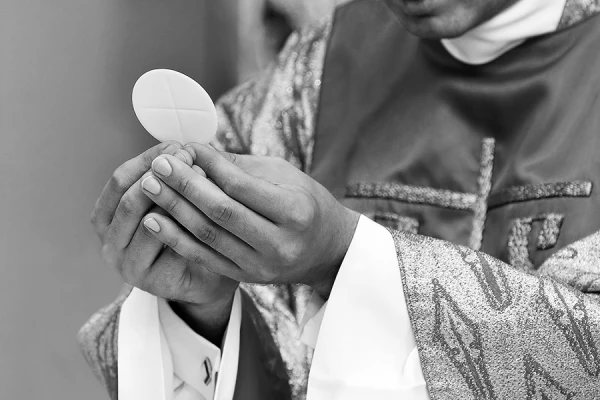
Washington D.C., Aug 10, 2019 / 03:32 pm (CNA).- After a recent survey found that two-thirds of Catholics do not believe Church teaching about the Real Presence of Christ in the Eucharist, Catholic commenters are stressing the importance of better faith formation.

“We should never assume that ‘everyone here knows the basics.’ We have to constantly reiterate the basics and take every advantage that we have to catechize,” said John Bergsma, a professor of Theology at Franciscan University of Steubenville.

A recent Pew Research study found that just 31% of U.S. Catholics they surveyed believe that the bread and wine used in the Eucharist, through a process called transubstantiation, become the body and blood of Jesus— a fundamental teaching central to the Catholic faith, known as the Real Presence.

Sixty-nine percent of Catholics that Pew surveyed reported their belief that the bread and wine used during the Eucharist “are symbols of the body and blood of Jesus Christ.” This mindset made up a majority in every age group surveyed.

“Most Catholics who believe that the bread and wine are symbolic do not know that the church holds that transubstantiation occurs,” Pew reported Aug. 5.

“Overall, 43% of Catholics believe that the bread and wine are symbolic and also that this reflects the position of the church. Still, one-in-five Catholics (22%) reject the idea of transubstantiation, even though they know about the church’s teaching.”

Interestingly, a small percentage of those surveyed— 3%— claimed to believe in the Real Presence despite not knowing that this is what the Church teaches.

Los Angeles Auxiliary Bishop Robert Barron said the study made him angry because it showed poor formation for generations in the Church.

“This should be a wake-up call to all of us in the Church—priests, bishops, religious, laypeople, catechists, parents, everyone—that we need to pick up our game when it comes to communicating even the most basic doctrines of the Church,” Barron wrote on his blog Aug. 6.

The Catechism of the Catholic Church in paragraph 1374 states: “In the most blessed sacrament of the Eucharist ‘the body and blood, together with the soul and divinity, of our Lord Jesus Christ and, therefore, the whole Christ is truly, really, and substantially contained’…it is a substantial presence by which Christ, God and man, makes himself wholly and entirely present.”

Bergsma told CNA that he found the results of the Pew survey unsurprising, as similar polls in the past two decades have turned up similar results.

He said many of the “self-identified” Catholics surveyed probably don’t show up at Mass very often, if at all.

“Really what this poll shows, once again, is that there are large numbers of persons in the United States who consider themselves ‘Catholic’ almost as an ethnic or cultural category, because they received one or more sacraments when they were children, or their family is traditionally Catholic,” Bergsma said.

“However, although these persons consider themselves ‘Catholic’ as a demographic category, they haven’t and don’t practice the Catholic faith, and they haven’t made much effort to learn what the Catholic Church teaches.”

He called for better catechesis, especially in parish and school settings, to counter the lack of belief shown in the survey.

For Bergsma, a former Protestant pastor who once preached vehemently against the Catholic Church, a big factor in his conversion was encountering the Church’s teaching on the Eucharist.

“Jesus said, ‘This is my body … this is my blood.’ Every Christian who claims to follow Christ should take him at his word and believe in the Real Presence,” he said.

“The early Christians surely did, and reading the earliest Christian writings on the Eucharist is what converted me on this issue…For those who don’t know or reject the Church’s teaching, I would encourage them to give it a chance. Read, for example, what the Catechism says about the Eucharist, and ponder it with an open mind.”

Father Bradley Zamora, director of liturgy at Mundelein Seminary in Illinois, told CNA that the Eucharist— and what the Church teaches about it— is the “very core” of the Catholic faith, and the fact that it seems to be so misunderstood is disheartening.

“As a person of faith, as someone who has chosen to follow Christ as a disciple, you have to be willing to enter into the narrative of what we believe,” he said.

“You have to be willing to give your heart completely to Christ, you have to put on eyes of faith, you have to open your ears to the very voice of Christ. This is the disposition, as difficult as it may be, that our faith begs of us. When we gather for the Eucharist we see and hear things happening in front of us, but beneath what we see and what we hear is the very Paschal Mystery coming to life before our eyes.”

Zamora, like Bergsma, emphasized the need for better catechesis and teaching about the basic tenets of the Catholic faith. He also said that Catholics do themselves a “disservice” as a Church when they don’t speak about the mysteries of the faith as often as they can. As a seminary professor, he said he tries to bring his seminarians back to the reality of the Real Presence constantly as he teaches them how to celebrate Mass.

“When we pronounce the words of the institution narrative, ‘This is my body,’ and ‘This is my blood,’ it is Christ Himself who prays those words again in our time and space just as He did at the Last Supper,” Zamora explained.

“What we do when we gather for prayer is not some stage play, but rather we re-present the very mystery Christ instituted.”


[…]

The Dispatch

Church of St. Peter the Denier?

August 9, 2019 Dr. Douglas Farrow 15

Saint-Pierre-Apôtre, which was established by the OMI in the 1850s, has for decades now served the Gay Village near Montreal’s historic Old Port in a very pro-LGBTQ fashion. It claims to be a Catholic assembly […]

No Picture
News Briefs

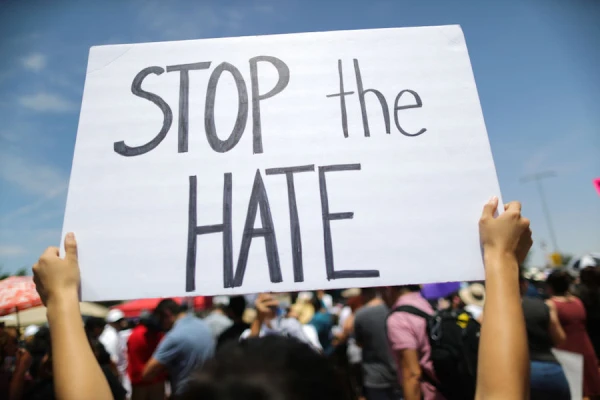
Citing El Paso shooting, US bishops condemn divisive, hateful rhetoric

August 9, 2019 CNA Daily News 1

Washington D.C., Aug 9, 2019 / 04:16 pm (CNA).- Leaders of the U.S. bishops’ conference on issues of immigration and racism denounced xenophobic and dehumanizing language in the United States, warning that it fosters discrimination and hatred.

“The tragic loss of life of 22 people this weekend in El Paso demonstrates that hate-filled rhetoric and ideas can become the motivation for some to commit acts of violence,” the bishops said.

“The anti-immigrant, anti-refugee, anti-Muslim, and anti-Semitic sentiments that have been publicly proclaimed in our society in recent years have incited hatred in our communities.”

The statement was issued Aug. 8 by Bishop Joe Vásquez of Austin, head of the U.S. bishops’ migration committee; Bishop Frank Dewane of Venice, Florida, chair of the domestic social development committee; and Bishop Shelton Fabre of Houma-Thibodaux, head of the ad hoc committee against racism.

On Saturday Aug. 3, an armed man opened fire at a shopping complex in El Paso, Texas, killing 22 and injuring more than two dozen, according to police reports. The suspect is in custody.

The shooter reportedly published a four-page document online in the hours before the attack, detailing his hatred toward immigrants and Hispanics. He also reportedly described the weapons he would use in the shooting. Police said he appeared to have been targeting Latinos during the attack.

Following the shooting, critics quickly turned their attention to President Donald Trump, noting that the suspect’s manifesto had echoed some of his language, such as characterizing immigrants as an “invasion.” They also denounced the president’s derogatory comments aimed at cities and countries with large black populations, and his suggestion that four Democratic congresswomen of color “go back” to their home countries, despite their being U.S. citizens.

“Donald Trump has created plenty of space for hate,” said presidential hopeful Senator Elizabeth Warren. “He is a racist. He has made one racist remark after another. He has put in place racist policies. And we’ve seen the consequences of it.”

Senator Bernie Sanders, who is also running for president, tweeted at Trump after the shooting, “Your language creates a climate which emboldens violent extremists.”

Rep. Alexandria Ocasio-Cortez (D-N.Y.) went a step further, calling Trump’s rhetoric on immigration “directly responsible” for the El Paso shooting.

In his initial response to the shooting, Trump condemned the violence but did not mention white nationalism. In a later televised appearance, he said, “In one voice our nation must condemn racism, bigotry, and white supremacy.”

On the day of the shooting, Cardinal Daniel DiNardo of Galveston-Houston, president of the U.S. bishops’ conference, and Bishop Dewane issued a statement, denouncing the violence as “senseless and inhumane” and calling for legislation to address “the plague that gun violence has become” in the United States.

The second statement from the U.S. bishops comes as criticism mounts against the president for his rhetoric regarding minorities.

In their Aug. 8 statement, the bishops did not reference Trump, or any other political leader, by name. Instead they asked all Americans “to stop using hate-filled language that demeans and divides us and motivates some to such horrific violence.”

The noted that racial hatred was also apparent as a motivation in last year’s Tree of Life Synagogue shooting in Pittsburgh and the Mother Emanuel AME Church shooting in Charleston in 2015.

“[W]e ask our leaders and all Americans to work to unite us as a great, diverse, and welcoming people,” the bishops said.

While the bishops’ statement avoided calling out Trump by name, San Antonio Archbishop Gustavo García-Siller addressed the president in his initial response to the shooting several days earlier.

On his personal Twitter account, the archbishop posted Aug. 5, “President you are a poor man, a very week [sic] man. Stop damaging people. Please!” A second tweet read, “President stop your hatred. People in the US deserve better.”

The tweets were later deleted.

In a video posted to the archdiocesan Facebook page the next day, García-Siller said, “I regret that my recent Tweet remarks were not focused on the issues, but on an individual.”

“All individuals have God-given dignity and should be accorded respect and love as children of God,” the archbishop said, adding, “We should be aware of this in our discourse about the office of the president of the United States, which is due our respect.”

García-Siller encouraged prayers for the victims of violence and said his desire is to bring hope and healing, and act in a way that reflects civility and builds unity.

“If I have added to anyone’s pain at this emotional time, I deeply regret it.”

The archbishop reiterated his condemnation of racism, which he said is still a problem in America today.

“No one has the moral right to make racist statements,” he said, denouncing harassment of immigrants and rhetoric that instigates fear.

“We must pray fervently for peace amidst all the violence which seems to be overwhelming in our society. We must be lights in the darkness,” the archbishop concluded. “We do not need more division, but rather we need to move forward in freedom to discuss these topics more deeply in light of the Gospel.”


[…]

No Picture
News Briefs

Archbishop Fisher ‘deeply saddened’ by advancement of NSW abortion bill

August 9, 2019 CNA Daily News 0

Sydney, Australia, Aug 9, 2019 / 02:28 pm (CNA).- The Archbishop of Sydney has expressed his disappointment at the passage by the lower house of the New South Welsh parliament of a bill to decriminalize abortion, and the failure to pass limiting amendments.

The Reproductive Health Care Reform Bill 2019 passed the Legislative Assembly Aug. 8 by a vote of 59 to 31.

“If a civilisation is to be judged by how it treats its weakest members, New South Wales failed spectacularly today,” commented Archbishop Anthony Fisher, O.P.

The bill “still allows abortion right up to birth. It conscripts all medical practitioners and institutions into the abortion industry by requiring them to perform abortions themselves or direct women to an abortion provider. It still does nothing to protect mothers or their unborn children or to give them real alternatives,” he said.

The bill would allow abortion for any reason up to 22 weeks of pregnancy; after that, it would allow for abortions if two doctors believe an abortion should be performed, considering physical, social, and psychological circumstances.

It does not mandate any counseling or period of consideration for the woman, and it would require doctors with conscientious objections to refer women to other abortion providers.

The bill would also make it a criminal offense for individuals to perform abortions without the proper authorizations, carrying a maximum penalty of seven years imprisonment for doing so.

According to supporters of the bill, it clarifies what they believe were previously ambiguous terms in penal code with regard to abortion.

But opponents believe it opens the possibility of elective abortion at any time, as long as two doctors consent.

Under current law, abortion is only legal in NSW if a doctor determine’s that a woman’s physical or mental health is in danger. “Mental health” has been interpreted by courts to include “economic and social stress.”

The bill was to have been introduced to the state parliament July 30, and debated last week. Debate was delayed, however, until Aug. 6, after concerns it had been rushed through without proper consideration.

Tanya Davies, a Liberal Party member and fomer women’s minister, introduced an amendment that would have barred sex-selective abortion.

The amendment was voted down, with some legislators arguing it could lead to racial discrimination and profiling, and that sex-selective abortion “is not an issue in NSW”, reported The Catholic Weekly, the Archdiocese of Sydney’s publication.

Instead, legislators supported an amendment expressing disapproval of sex-selective abortion and a review of the situation in a year’s time.

Another amendment mandating that a child born alive after a failed abortion be given lifesaving care was also defeated.

“While I do not agree with abortion at any stage, I am horrified that a majority of lower house members deliberately and wilfully ignored the plight of babies born alive and that one member went so far as to state that informed consent (ie. free choice) is a barrier to abortion for pregnant persons,” Dr. Rachel Carling, CEO of Right to Life NSW, commented.

Bishop Richard Umbers, an auxiliary bishop of Sydney and the Australian bishops’ delegate for life, said that despite the bill’s advancement, “the Catholic Church will continue to provide support, advise and care for all women facing any decision surrounding her pregnancy.”

The thanked all who “rallied to oppose the culture of death,” saying: “The graces given by God to the people of Sydney as a result of your fervent and tireless prayers and support for life will bring about great good for NSW in ways we will be blessed to witness and in many unknown ways.”

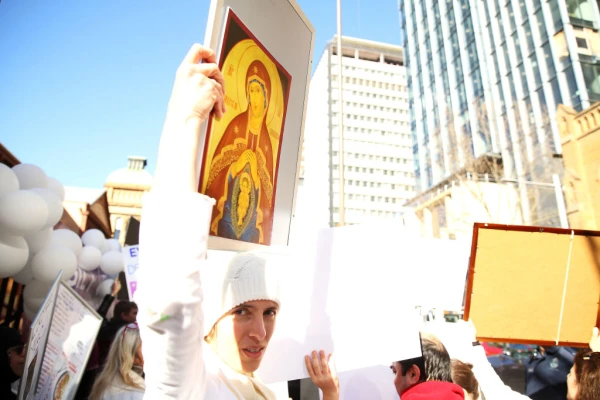
St Mary’s Cathedral in Sydney was opened for 65 hours of continuous Eucharistic adoration from Aug. 5-8, and hundreds of pro-life persons participated in a prayer vigil.

Archbishop Fisher thanked “the thousands of people who spoke up on behalf of the unborn and their mothers by contacting their MPs, by maintaining a consistent presence at Parliament House, and by praying for the defeat of this bill at round‐the‐clock vigils at St Mary’s Cathedral and elsewhere.”

“Please continue to pray for a civilisation of life and love, and to make your views known to the members of the Legislative Council, asking them to vote against this bill,” he urged.

The bill is opposed by the Catholic Church, the Eastern Orthodox Church, the Anglican Church of Australia, and the NSW Presbyterian Church.

“Rather than pursuing laws that will lead to more abortions, we should instead be investing in ways to support pregnant women who feel they have no other choice,” Archbishop Fisher said July 29.

Bishop Michael McKenna of Bathurst said July 31 that “Those who propose the legislation are no doubt sincere in their arguments. However, as so often in this debate, someone is forgotten. That is the human being: unborn, but human, who has no rights when her or his life or death is being decided. Also forgotten are those medical professionals who would conscientiously oppose such procedures, from whom the law could withdraw protection. And thoroughly forgotten are the mothers faced with difficult circumstances in their pregnancies, for whom, instead of genuine care, only the bleak option of a termination is offered.”

And Fr. David Ranson, administrator of the Diocese of Broken Bay, said, “the killing of life, with the liberal possibility allowed for in the proposed legislation, cannot make ours a more human society. If with legal sanction we kill those who are most vulnerable … we rob ourselves of our human dignity which is best demonstrated in a quality of care exercised even in the face of life’s demand and challenge. Such an option represents a gross failure of social imagination and public moral leadership.”

The bill was introduced by Alex Greenwich, an independent member who was instrumental in the legalization of same-sex marriage in Australia.

The Legislative Council is scheduled to table the bill for debate Aug. 20.

[…]

No Picture
News Briefs

Inter-religious leaders in Pakistan urge protections for religious minorities

August 9, 2019 CNA Daily News 1

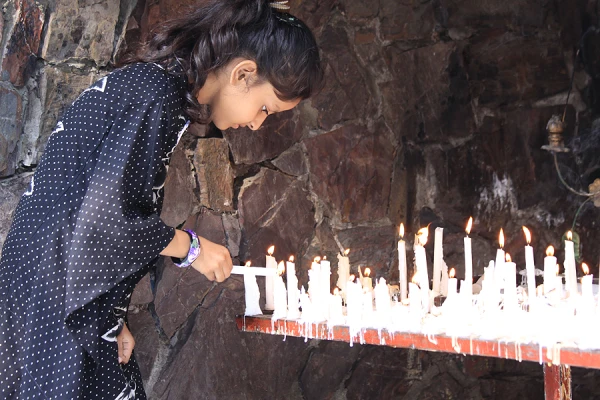
Karachi, Pakistan, Aug 9, 2019 / 10:09 am (CNA).- Catholic and other religious leaders signed a joint resolution Thursday encouraging the Pakistani government to adopt policies to protect religious minorities.

The leaders held a press conference in Karachi Aug. 8 organized by Aid to the Church in Need – Italy and by local advocate Tabassum Yousaf.

In attendence were Fr. Saleh Diego, vicar general of the Archdiocese of Karachi, who represented Cardinal Joseph Coutts. Representatives of the country’s Muslim, Hindu, Sikh, and Baha’i communities  were also present and signed the resolution.

The join resolution, sent to prime minister Imran Khan and obtained by CNA, includes 10 recommendations meant to safeguard the rights of minorities and women.

Pakistan’s state religion is Islam, and around 97 percent of the population is Muslim.

The country’s authorities have consistently failed to implement safeguards on behalf of religious minorities, despite numerous policies in favor of economic and physical protections for members of non-Muslim religions.

The first point adopted in the joint resolution urges that the minimum age for marriage be made 18 years; the current marriage age for women is now 16.

The religious minorities also ask for the opportunity for better economic development, which they are not guaranteed at the moment.

The religious leaders encouraged a federal ministry for religious minorities, and the application of a quota for educational scholarships given to minorities.

In 2013 the then-governing party, the Pakistan Muslim League (N), promised a quota for jobs in the educational institutes and the public sector for members of religious minorities. The Pakistan Peoples Party discussed an Equality Commission to monitor job quotas in Sindh.

Both parties are now in the opposition in the national parliament, and the proposed safeguards have not been put into action.

The joint resolution urges protection of minorities’ houses of worship from government seizure; designated minority worship areas in jails, hospitals, and state institutions; and the passage of legislation to prevent religious discrimination in employment, education, and society.

The religious leaders also asked for government subsidies for security at minorities’ schools. In December 2017, Islamic State group-affiliated suicide bombers attacked a Methodist church in Quetta, killing nine people.

The joint resolution said minorities “should be given particular protection” against the abuse of the country’s blasphemy laws.

Pakistan’s blasphemy laws impose strict punishment on those who desecrate the Quran or who defame or insult Muhammad. Although the government has never executed a person under the blasphemy law, accusations alone have inspired mob and vigilante violence.

Blasphemy laws are reportedly used to settle scores or to persecute religious minorities; while non-Muslims constitute only 3 percent of the Pakistani population, 14 percent of blasphemy cases have been levied against them.

Many of those accused of blasphemy are murdered, and advocates of changing the law are also targeted by violence.

The blasphemy laws were introduced between 1980 and 1986. The National Commission for Justice and Peace said over 1,300 people were accused under this law from 1987 until 2014. The Centre for Research and Security Studies reported that at least 65 people have been killed by vigilantes since 1990.

In the joint resolution the religious leaders also noted that “there is no forced conversion according to the Holy Quran.” On that basis, they urged legislation against abduction, sexual violence, and subsequent forced conversion to Islam, which acts they said do not propagate “the true spirit of Islam.”

The joint resolution also called for the elimination from books of material encouraging hatred.

Earlier this year Sam Brownback, the US ambassador-at-large for international religious freedom, applauded Pakistan for showing a willingness to enhance religious liberty, while also recognizing the need for significant improvement.

Brownback met with Pakistani government and religious leaders Feb. 22-23.

“During these meetings, Ambassador Brownback emphasized the importance the United States places on religious freedom, the protection of religious minorities, and respect,” the US embassy in Pakistan stated.

In December 2018, U.S. Secretary of State Mike Pompeo named Pakistan as one of 10 “Countries of Particular Concern,” a designation given to states that engage in or tolerate egregious, ongoing religious freedom violations.

That designation marked the first year that Pakistan had been placed on the list. The previous year, it had been placed on a “Special Watch List.”

[…]