Washington D.C., Aug 3, 2019 / 04:53 am (CNA).- The U.S. Department of Homeland Security announced August 1 that it is extending Syria’s Temporary Protected Status (TPS) for 18 months, although qualified people who have not yet applied for the program will be ineligible to participate.
The decision to extend means that some 7,000 TPS holders from Syria will be able to remain and work in the U.S. through March 31, 2021. After that, the department will determine whether to again renew the designation or end it.
“The decision to extend TPS for Syria was made after a review of the conditions upon which the country’s designation is based, which was ongoing armed conflict and extraordinary and temporary conditions, as well as an assessment of whether those conditions continue to exist as required by statute,” the Department of Homeland Security said.
The department determined that these conditions are still present in the country, and that Syrian nationals returning to their country would face perilous and life-threatening conditions.
Organizations that work with Syrian TPS holders welcomed the decision, while lamenting that new applicants who are currently in the U.S. will not be accepted.
Americans for a Free Syria, the American Relief Coalition for Syria, and the Syrian American Council have formed a coalition to advocate with Congress and DHS officials, as well as build public awareness and support for Syrian TPS holders.
In a statement, the group applauded the TPS extension, but added that “we remain gravely concerned for the Syrians in this country not protected by TPS.”
“If Syria is unsafe for American travelers and current TPS holders, it’s also unsafe for Syrians who came to the United States more recently. We urge the Administration to take a closer look at redesignation until the country is at peace and ready to accept returning Syrians.”
Nada, a Syrian TPS holder working with the coalition, voiced gratitude at the extension. Nada is an art teacher who just completed her master’s degree last year. She is the mother of two teenage children, and the breadwinner for her family.
“As a TPS holder, I can’t tell you how much my family and I are relieved about this decision,” she said in a statement. “It opens new horizons for us and allows us to feel more at peace.”
The U.S. provides “temporary protected status” to some groups of immigrants who are unable to return home due to temporary emergencies in their homeland, including armed conflicts or natural disasters. TPS beneficiaries must pass background checks and cannot be linked to criminal or terrorist groups. Syrian TPS holders must have been in the U.S. since Aug. 1, 2016.
Syria has been included as a TPS country since 2012, following the outbreak of a civil war in the country. More than 500,000 people have been killed in the ongoing violence, and some 5.6 million people have become refuges, with 6.6 million more believed to have been internally displaced by the violence.
While TPS benefits have been extended for 18 months, the Department of Homeland Security declined for the second time to redesignate TPS for the country, meaning that those qualify for TPS but had not yet applied are ineligible for the program’s protections.
DHS first chose to extend TPS benefits for Syria without redesignating last year, after several years of both extending and redesignating.
The coalition of advocacy groups working with Syrian TPS beneficiaries objected to this failure to redesignate, stressing that “[t]he threat to civilians living in Syria and those returning is still very real.”
“The State Department issued a travel advisory in April of this year stating plainly: ‘No part of Syria is safe from violence.’ Until that changes, no Syrian should be forced back to a war zone,” the group said.
If you value the news and views Catholic World Report provides, please consider donating to support our efforts. Your contribution will help us continue to make CWR available to all readers worldwide for free, without a subscription. Thank you for your generosity!
Click here for more information on donating to CWR. Click here to sign up for our newsletter.
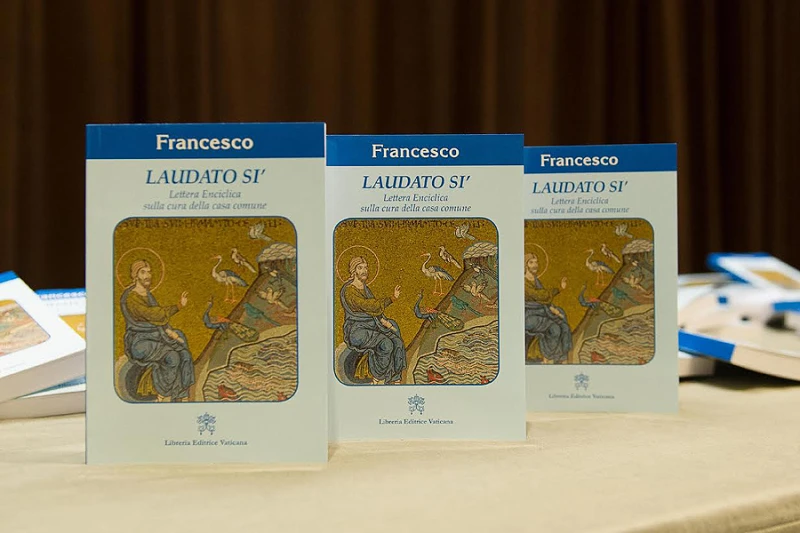
A defining theme of Pope Francis’ papacy has been his urging of humanity to better care for the natural environment, which he has done most prominently in his landmark 2015 encyclical Laudato Si’ and numerous subsequent writings and speeches.
The pope’s emphasis on this topic — especially his foray into climate science via his recent encyclical Laudate Deum — has variously drawn both praise and consternation from Catholics in the United States, about half of whom do not share Pope Francis’ views on climate change, according to surveys.
In Laudate Deum, which was released in October as a continuation to Laudato Si’, Francis wrote that the effects of climate change “are here and increasingly evident,” warning of “immensely grave consequences for everyone” if drastic efforts are not made to reduce emissions. In the face of this, the Holy Father criticized those who “have chosen to deride [the] facts” about climate science, stating bluntly that it is “no longer possible to doubt the human — ‘anthropic’ — origin of climate change.”
The pope in the encyclical laid out his belief that there must be a “necessary transition towards clean energy sources, such as wind and solar energy, and the abandonment of fossil fuels.” This follows a call from Pope Francis in 2021 to the global community calling for the world to “achieve net zero carbon emissions as soon as possible.”
He further lamented what he called “certain dismissive and scarcely reasonable opinions [on climate change] that I encounter, even within the Catholic Church.”
In light of the new encyclical — which extensively cites the U.N.’s Intergovernmental Panel on Climate Change (IPCC) — Pope Francis was invited to speak at this week’s United Nations Climate Change Conference, known as COP28. Though the 86-year-old pope was forced to cancel his trip due to health issues, the Vatican has indicated that he aims to participate in COP28 this weekend in some fashion. It announced today that Vatican Secretary of State Cardinal Pietro Parolin will represent the pope at the conference.
While various Catholic groups have welcomed the pope’s latest encyclical, some Catholics have reacted with persistent doubts, questioning whether the pope’s policy prescriptions would actually produce the desired effects.
How do Americans feel about climate change?
According to a major survey conducted by Yale University, 72% of Americans believed in 2021 — the latest available data year — that “global warming is happening,” and 57% believe that global warming is caused by human activity.
More recent polling from the Pew Research Center, conducted in June, similarly suggests that two-thirds of U.S. adults overall say the country should prioritize developing renewable energy sources, such as wind and solar, over the expansion of the production of oil, coal, and natural gas. That same survey found that just 3 in 10 adults (31%) say the U.S. should completely phase out oil, coal, and natural gas. The Yale study found that 77% of U.S. adults support at least the funding of research into renewable energy sources.
Broken down by party affiliation, Pew found that a large majority of Democratic and Democratic-leaning independents — 90% — favor alternative energy sources, while just under half, 42%, of Republicans and Republican-leaning adults think the same. Within the Republican cohort, however, 67% of Republicans under age 30 prioritize the development of alternative energy sources, compared with the 75% of Republicans ages 65 and older who prioritize the expansion of oil, coal, and natural gas.
In terms of the expansion of alternative energy sources, two-thirds of Americans think the federal government should encourage domestic production of wind and solar power, Pew reported. Just 7% say the government should discourage this, while 26% think it should neither encourage nor discourage it.
How do America’s Catholics feel about climate change?
Surveys suggest that Catholics in the United States are slightly more likely than the U.S. population as a whole to be skeptical of climate change, despite the pope’s emphatic words in 2015 and since.
A separate Pew study suggests that 44% of U.S. Catholics say the Earth is warming mostly due to human activity, a view in line with Pope Francis’ stance. About 3 in 10 (29%) said the Earth is warming mostly due to natural patterns, while 13% said they believe there is no solid evidence the planet is getting warmer.
According to the same study, 71% of Hispanic Catholics see climate change as an extremely or very serious problem, compared with 49% of white, non-Hispanic Catholics. (There were not enough Black or Asian Catholics in the 2022 survey to analyze separately, Pew said.)
One 2015 study from Yale did suggest that soon after Laudato Si’ was released, U.S. Catholics were overall more likely to believe in climate change than before. That same study found no change, however, in the number of Americans overall who believe human activity is causing global warming.
Pope Francis’ climate priorities
Beyond his groundbreaking writings, Pope Francis has taken many actions during his pontificate to make his own — admittedly small — country, Vatican City, more sustainable, including the recent announcement of a large order of electric vehicles, construction of its own network of charging stations, a reforestation program, and the continued importation of energy coming exclusively from renewable sources.
Francis has often lamented what he sees as a tepid response from developed countries in implementing measures to curb climate change. In Laudate Deum, he urged that new multinational agreements on climate change — speaking in this case specifically about the COP28 conference — be “drastic, intense, and count on the commitment of all,” stating that “a broad change in the irresponsible lifestyle connected with the Western model would have a significant long-term impact.”
The pope lamented what he sees as the fact that when new projects related to green energy are proposed, the potential for economic growth, employment, and human promotion are thought of first rather than moral considerations such as the effects on the world’s poorest.
“It is often heard also that efforts to mitigate climate change by reducing the use of fossil fuels and developing cleaner energy sources will lead to a reduction in the number of jobs,” the pope noted.
“What is happening is that millions of people are losing their jobs due to different effects of climate change: rising sea levels, droughts, and other phenomena affecting the planet have left many people adrift. Conversely, the transition to renewable forms of energy, properly managed, as well as efforts to adapt to the damage caused by climate change, are capable of generating countless jobs in different sectors.”
‘Leave God’s creation better than we found it’
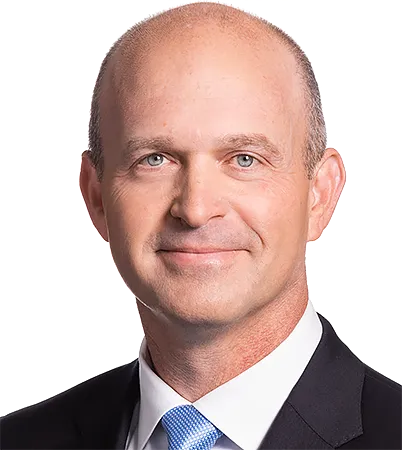
Dr. Kevin Roberts, president of the Washington, D.C.-based Heritage Foundation think tank, told CNA that he has noticed a theme of frustration and confusion among many Catholics regarding the Holy Father’s emphasis on climate change.
A self-described outdoorsman and former president of Wyoming Catholic College, Roberts spoke highly to CNA of certain aspects of Laudato Si’, particularly the pope’s insights into what he called “human ecology,” which refers to the acceptance of each person’s human body as a vital part of “accepting the entire world as a gift from the Father and our common home.”
Dr. Kevin Roberts, president of the Heritage Foundation. Courtesy of Heritage Foundation.
“I like to think [Pope Francis] personally wrote that, because I could see him saying that,” Roberts said of the passage, which appears in paragraph 155 of the encyclical. Roberts said he even makes a point to meditate on that “beautiful and moving” passage during a retreat that he does annually.
That portion of Laudato Si’ notwithstanding, Roberts said he strongly believes that it detracts from other important issues, such as direct ministry to the poor, when Pope Francis elevates care for God’s natural creation as “seemingly more important than other issues to us as Catholics.” He also said he disagrees with Pope Francis’ policy prescriptions, such as a complete phasing out of fossil fuels, contained in Laudate Deum.
“We of course want to pray for him. We’re open to the teaching that he is providing. But we also have to remember as Catholics that sometimes popes are wrong. And on this issue, it is a prudential matter. It is not a matter of morality, particularly when he’s getting into the scientific policy recommendations,” Roberts said.
Roberts said the Heritage Foundation’s research and advocacy has focused not on high-level, multinational agreements and conferences to tackle the issues posed by climate change but rather on smaller-scale, more community-based efforts. He said this policy position is, in part, due to the historical deference such multinational conglomerates of nations have given to China, the world’s largest emitter of greenhouse gases overall.
He said agreements within the U.S. itself, with businesses and all levels of government working together, have produced the best results so far when it comes to improving the environment. He also pointed to examples of constructive action that don’t involve billions of dollars, such as families making the choice to spend more time outdoors or engaging in local activities that contribute to environmental conservation and community life, such as anti-litter campaigns and community gardening. The overarching goal, he said, should be to “leave God’s creation better than we found it.”
Roberts — who said he personally believes humans likely have “very little effect” on the climate — said he was discouraged to read other portions of Laudato Si’, as well as Laudate Deum, that to him read as though they had come “straight out of the U.N.” Despite his criticisms, Roberts urged his fellow Catholics to continue to pray for the Holy Father and to listen to the pope’s moral insights.
“I just think that the proposed solutions are actually more anti-human and worse than the purported effects of climate change,” he added.
‘A far more complex issue’
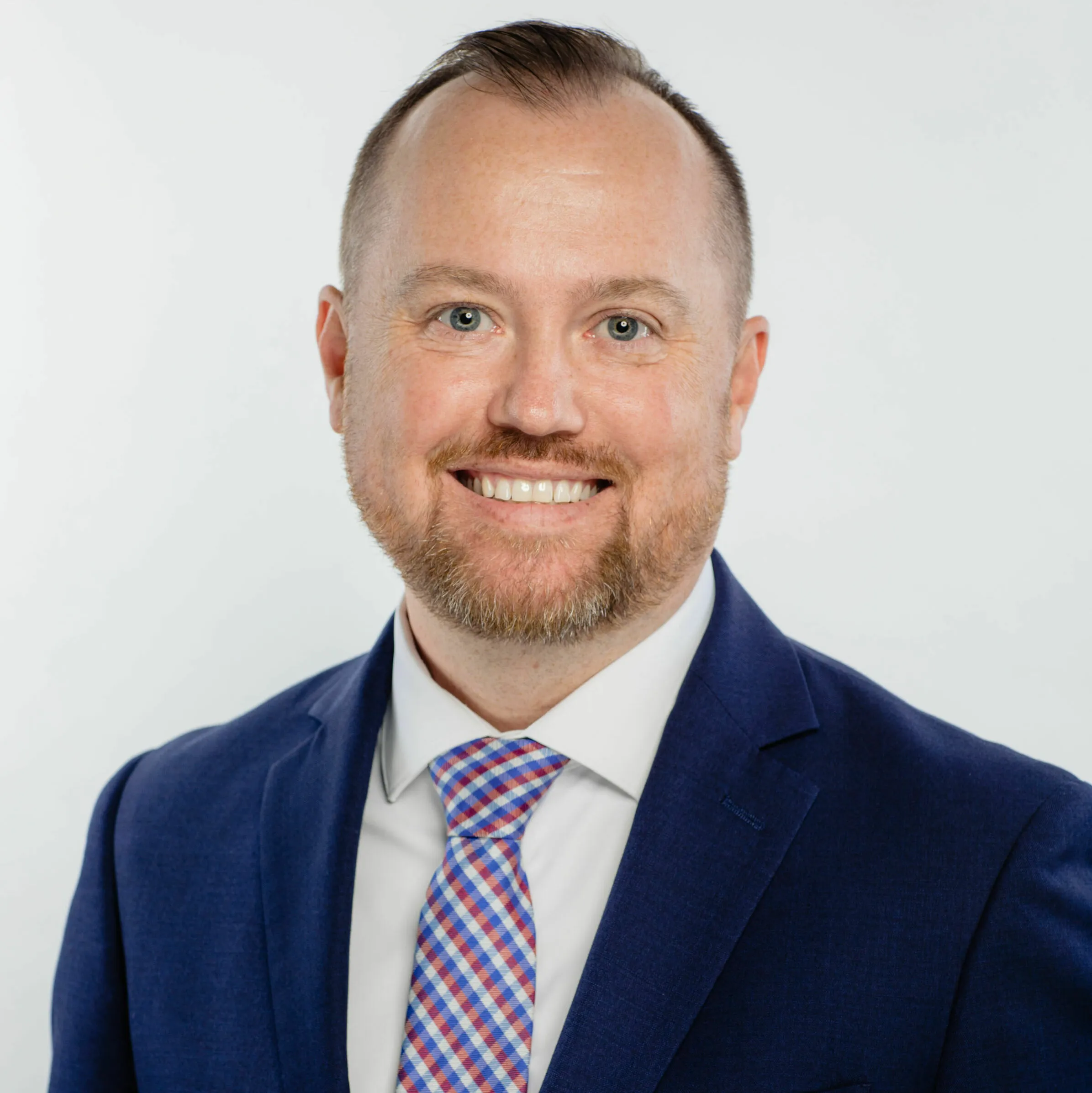
Greg Sindelar, a Catholic who serves as CEO of the Texas Public Policy Foundation (TPPF), a conservative think tank that studies the energy industry, similarly expressed concerns to CNA about the potential impact of certain climate change mitigation policies on human flourishing.
Like Roberts, Sindelar spoke highly of certain aspects of the pope’s message while expressing reservations about some of the U.N.-esque solutions proposed in Laudate Deum.
“I think the pope is right about our duty as Catholics to be stewards and to care for the environment. But I think what we have to understand — what we have to balance this with — is that it cannot come at the expense of depriving people of affordable and reliable energy,” Sindelar said in an interview with CNA.
“There’s ways to be environmentally friendly without sacrificing the access that we all need to reliable and affordable energy.”
Greg Sindelar is CEO of the Texas Public Policy Foundation, a think tank in America’s leading energy-producing state. Courtesy of Texas Public Policy Foundation
Sindelar said TPPF primarily promotes cheap, reliable access to energy as a means of promoting human flourishing. The free-market-focused group is skeptical of top-down governmental intervention, both in the form of regulation and incentives or disincentives in certain areas of the energy sector.
When asked what he thinks his fellow Catholics largely think about the issue, Sindelar said many of the Catholics he hears from express the view that government policies and interventions rarely produce effective solutions and could potentially hinder access to energy for those in need.
“I think it’s a far more complex issue than just saying we need to cut emissions, and we need to transfer away from fossil fuels, and all these other things. What we need to do is figure out and ensure ways that we are providing affordable and reliable electricity to all citizens of the world,” he reiterated.
“When the pope speaks, when the Vatican speaks, it carries a lot of weight with Catholics around the world, [and] not just with Catholics … and I totally agree with him that we need to be thinking about the most marginalized and the poorest amongst us,” Sindelar continued.
“[But] by going down these policy prescription paths that he’s recommending, we’re actually going to reduce their ability to have access to that,” he asserted.
Sindelar, while disagreeing with Pope Francis’ call for an “abandonment of fossil fuels,” said he appreciates the fact that Pope Francis has spoken out about the issue of care for creation and has initiated so much public discussion.
“I think there is room for differing views and opinions on the right ways to do that,” he said.
Effective mitigation efforts
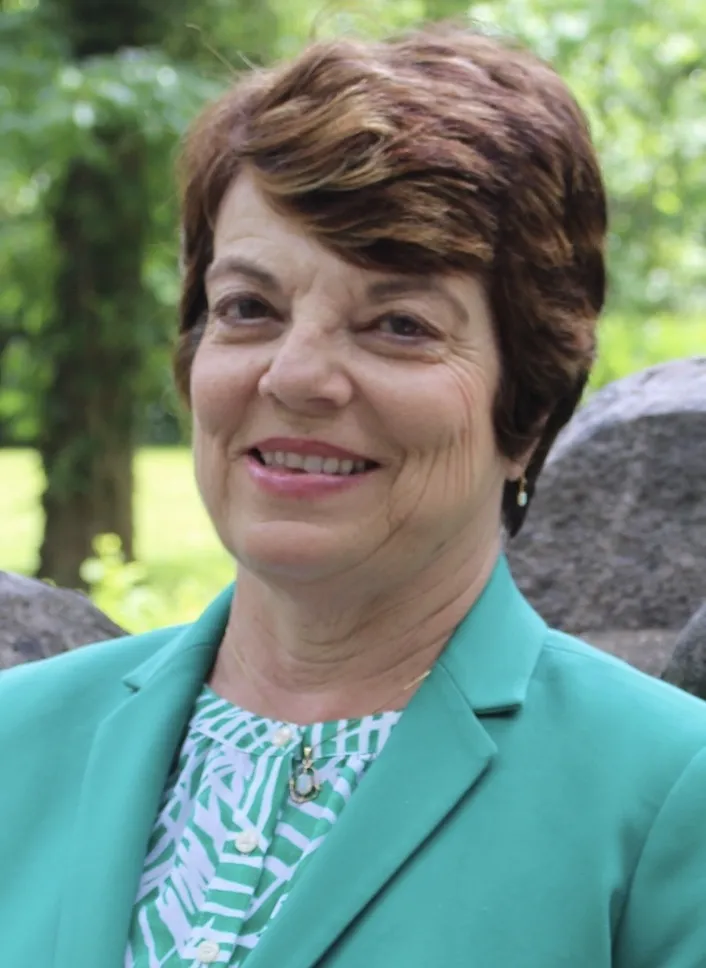
Susan Varlamoff, a retired biologist and parishioner at St. John Neumann Catholic Church in the Atlanta area, is among those Catholics who are committed to Pope Francis’ call to care for creation and to mitigate the effects of climate change. To that end, Varlamoff in 2016 created a peer-reviewed action plan for the Archdiocese of Atlanta to help Catholics put the principles contained in Laudato Si’ into action, mainly through smaller, more personal actions that people can take to reduce their energy usage.
Retired biologist Susan Varlamoff. Photo courtesy of Susan Varlamoff
The Atlanta Archdiocese’s efforts have since garnered recognition and praise, Varlamoff said, with at least 35 archdioceses now involved in an inter-diocesan network formed to exchange sustainability ideas based on the latest version of the plan from Atlanta.
“It’s fascinating to see what everybody is doing, and it’s basically based on their talents and imaginations,” Varlamoff said, noting that a large number of young people have gotten involved with their efforts.
As a scientist, Varlamoff told CNA it is clear to her that Pope Francis knows what he’s talking about when he lays out the dangers posed by inaction in the face of climate change.
“He understands the science, and he’s deeply concerned … he’s got remarkable influence as a moral leader,” she said.
“Part of what our religion asks us to do is to care for one another. We have to care for creation if we’re going to care for one another, because the earth is our natural resource system, our life support, and we cannot care for one another if we don’t have that life support.”
Responding to criticisms about the financial costs associated with certain green initiatives, Varlamoff noted that small-scale sustainable actions can actually save money. She offered the example of parishes in the Atlanta area that have drastically reduced their electric bills by installing solar panels.
“[But,] it’s not just about saving money. It’s also about reducing fossil fuels and greenhouse gas emissions, and protecting the natural resources for future generations,” she said.
Moreover, Varlamoff said, the moral imperative to improve the natural environment for future generations is worth the investment. “When [Catholics] give money, for example, for a social justice issue like Walking with Moms in Need or special needs, the payback is improving lives. We’re improving the environment here,” she emphasized.
Cheyenne, Wyo., Aug 30, 2018 / 07:09 pm (CNA/EWTN News).- The Diocese of Cheyenne announced Wednesday that it has found credible a third allegation of child sexual abuse committed by Emeritus Bishop Joseph Hart.
After the diocese announced in July that a canonical investigation had concluded there was “credible and substantiated” evidence that Bishop Hart had abused two Wyoming boys, “a third individual reported that he, too, was sexually abused by Bishop Hart in 1980,” the diocese said Aug. 29.
“The diocese reported the allegation to the Cheyenne Police Department and is cooperating with their investigation.”
The Cheyenne diocese said Bishop Hart declined to be interviewed as part of the investigation, and that the investigation’s findings were handed over to the Diocesan Review Board.
The review board found the allegation credible and substantiated, and the investigation has been forwarded to the Congregation for the Doctrine of the Faith.
“I commend the victim for having the courage to contact us. If anyone has been abused, no matter how long ago, I encourage you to come forward,” Bishop Steven Biegler of Cheyenne said.
“I want to listen to you and accompany you on a journey of healing. Recently, Pope Francis said of the sex abuse scandal, ‘We abandoned the little ones.’ As we move forward, we must heed the call of the Lord Jesus to be guardians of the least.”
Bishop Hart has denied accusations of abusing minors.
His first accusers came forward in 1989, when he was alleged to have abused boys while serving as a priest in Kansas City. Ten individuals named Hart in lawsuits related to child sexual abuse claims dating from the 1970s. These accusations were part of settlements the Diocese of Kansas City-St. Joseph reached in 2008 and 2014, though Bishop Hart denied the accusations, the Missouri diocese said July 2.
Bishop Hart was ordained a priest for the Diocese of Kansas City – St. Joseph in 1956, where he served until he was named an auxiliary bishop in Cheyenne in 1976, and appointed to lead the diocese two years later. He served as Bishop of Cheyenne until his resignation in 2001 at the age of 70.
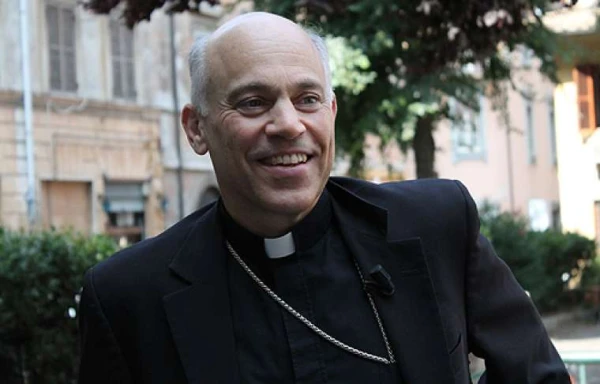
Archbishop Salvatore Cordileone of San Francisco said Friday that the city’s current restrictions on public worship— which prohibit indoor services of any kind, as opposed to other entities such as retail which have been allowed to reopen indoor operations— show “callous unconcern” for people’s spiritual needs.
“Let alone the fact that the city is judging religious services as less important, and treating them more harshly than other activities— the city has no authority at all over the Church’s right to worship,” Archbishop Cordileone told CNA Sept. 4.
“It is not the job of the state to decide what religious services are essential or inessential: that is the Church’s job.”
The San Francisco County Department of Health is currently limiting outdoor worship services to 12 people, with indoor worship services prohibited. The archdiocese covers the city and county of San Francisco— where the cathedral is located— as well as San Mateo and Marin counties.
The state’s legitimate concern for health and safety does have some bearing on how the Church operates, he said— for example, there are good reasons why church buildings must be built with respect to code.
“But the state does not tell the Church how to arrange the liturgical space—that pertains to the internal life of the Church, over which the state has no authority. The same principle applies to worship services: the state has no right whatsoever to tell the Church it cannot worship, but it has every right and responsibility to tell the Church which practices it must observe to keep people safe during worship,” Cordileone continued.
“Those practices, though, cannot be so restrictive as to effectively ban public worship, such as only outdoors with no more than 12 people.”
Cordileone said priests at many parishes around the archdiocese, including the Cathedral of St. Mary of the Assumption, are celebrating multiple Masses every Sunday— outside, and spaced out— in order to adapt to the restrictions.
“The Body and Blood of Christ is the source and summit of our Faith. People are hungry for the Eucharist, and many priests are responding to the call as best they can,” he said.
Cordileone said he himself has noted “very few” violations of the city’s health orders by parishes in the archdiocese, although the few that have occurred have garnered heavy criticism in the secular press.
Even while protesting the city’s apparent unequal application of health restrictions, the archbishop has encouraged his priests to lead their parishes in following the city’s guidelines.
“Wearing a face covering is one of the simplest and most effective things you can do. And if that is not enough, then wear one simply for the sake of good manners,” he appealed.
“Do not show a lack of compassion for people who are afraid of catching a disease that is quite deadly to many people with comorbidities and the elderly, which we Catholics should particularly respect and protect.”
While Cordileone said city officials have been “cordial and respectful” in their dialogue with the archdiocese, Cordileone said the city still has not responded to the archdiocese’ safety plan— outlining how churches could be safely opened for indoor services— which they submitted in May.
“Whereas retail stores sent in safety plans, had them approved by the City, and then resumed indoor retail at 50% capacity. And yet, churches can be safer environments than stores,’ Cordileone noted.
In a letter to San Francisco’s Mayor London Breed and other city officials, Cordileone last week called on the city’s secular authorities to, “at a minimum, remove the excessive limits on outdoor public worship.”
“Particularly for us as Catholics, attending the Mass and receiving the Body and Blood of Christ in person is the source and the summit of our faith, and we have shown we can celebrate the Mass safely,” Cordileone wrote Aug. 31.
Over the last 14 weeks, the doctors said, approximately 17,000 parishes have held three or more Masses each weekend, as well as daily services, combining to equal more than 1 million public Masses celebrated across the United States since shelter-in-place orders were lifted.
By following public health guidelines, these Masses have largely avoided viral spread. The doctors said in their article that there is no evidence that church services are higher risk than similar activities when guidelines are followed, and no coronavirus outbreaks have yet been linked to the celebration of the Mass.
“Catholics have developed responsible safety protocols to conduct the Mass safely. The evidence shows these protocols are working,” Cordileone told CNA.
“San Francisco’s excessive limits on the Mass are not only a violation of Americans’ First Amendment rights, they show a kind of callous unconcern for our parishioners’ emotional and spiritual needs.”
In a July 30 memo, Cordileone exhorted his priests to be as diligent as possible in bringing the sacraments to their people, including celebrating outdoor Masses each Sunday, and providing Confession in a safe manner as often as possible.
“Please regularly remind people to follow the safety practices necessary to curb the spread of the virus. This is real, it is dangerous, and it has to be taken seriously,” he added.
“The resurgence is due in no small part to people becoming lax once the shelter-in-place rules began to be lifted. Please urge these practices upon them; absolutely do not give them the impression that the coronavirus is not a serious threat to the physical health of our community.”
The Benedict XVI Institute for Sacred Music and Divine Worship, which provides liturgical resources in the archdiocese, shared a petition Aug. 31 in support of Cordileone’s statement calling for the lifting of restrictions on the Mass. To date more than 1,400 people have signed.




Leave a Reply