
Washington D.C., Feb 25, 2020 / 04:00 pm (CNA).- The Senate on Tuesday failed to pass two pro-life bills to protect unborn babies who can feel pain, and babies who survive abortion attempts.
The Pain-Capable Unborn Child Protection Act, introduced by Sen. Lindsey Graham (R-S.C.) would ban abortions after 20 weeks gestation, around the time babies in utero can feel pain.
Sen. Ben Sasse’s (R-Neb.) Born-Alive Abortion Survivors Protection Act would require that babies surviving a botched abortion be given the same standard of care as other infants born of the same gestational age.
With votes of 53-44 and 56-41 on Tuesday, the respective bills failed to receive the 60 votes necessary for consideration on the Senate Floor. “Pain-capable” bills that had previously passed the House similarly failed in the Senate in 2015 and 2017, and Graham’s legislation failed in 2018, nine votes short of the 60-vote mark needed to overcome a filibuster and force a final vote on the bill.
Graham’s bill is also named “Micah’s Law,” after seven year-old Micah Pickering who was born prematurely at 22 weeks.
“It gives a face to a name. ‘Micah’s Law’ is not just [about] Micah, but is every little baby that could ever be born,” said Danielle Pickering, Micah’s mother, in an interview with CNA outside the Senate Gallery before the vote.
To the senators voting against the bill, “I would just like to tell them to really think about their grandkids,” she said, “and every little baby that they see out there.”
“For everyone that’s out there, there’s multiple that are just gone, but they’re not forgotten,” Pickering said. “Every single baby has the ability to someday be a person that’s just here like them.”
Sasse’s bill, S. 311, received the support of only three Democrats: Sens. Bob Casey (Pa.), Doug Jones (Ala.) and Joe Manchin (W.Va.).
“If the Senate says that it’s ok to ignore born-alive babies what we’re really saying is we are okay with a society where some people count more than other people,” said Sasse during the debate Tuesday.
“We’d be saying we want a society where some people can be pushed aside if other people decide those folks are inconvenient. A society where we can dispose of you, if you happened to come into the world a certain way.”
“Even if you are unwilling to defend unborn babies, I hope that my colleagues would at least consider joining with us in voting to protect babies that have already been born,” Sasse said.
In a statement to CNA on Tuesday, Sen. Marco Rubio (R-Fla.) said that “protecting the life of a newborn who survived a botched abortion should not be a partisan issue, yet it speaks volumes about how extremism has become mainstream in today’s Democratic Party.”
According to the U.S. Centers for Disease Control (CDC), between 2003 and 2014 there were 143 infant deaths in the U.S. that occurred following a botched abortion. The CDC noted that “it is possible” the actual number is higher.
While the 2002 Born-Alive Infants Protection Act—passed into law with bipartisan support—legally defined babies who survive abortions as persons, Sasse’s 2020 legislation provides enforcement mechanisms against abortionists who fail to provide necessary care to abortion survivors.
The 2002 bill was just a “definitions bill” without penalties, Jill Stanek, national campaign chair of the pro-life Susan B. Anthony List, explained to CNA.
While notorious Philadelphia abortionist Kermit Gosnell was convicted in 2013 on three counts of first-degree murder for cutting the spines of infants, federal law is currently a “gray area” for abortionists who passively allow abortion survivors to die by providing them no care, Stanek said.
The legislation that failed in the Senate on Tuesday provides an enforcement mechanism and is really the “bookend” to the original bill, she said.
The United States Conference of Catholic Bishops issued a statement in reaction to the Senate votes, calling the nation’s abortion laws a “license to kill” and noting that the Born Alive bill offered to do nothing more than “prohibit infanticide.”
Archbishop Joseph Naumann of Kansas City in Kansas, chairman of the USCCB Committee on Pro-Life Activities, said that the Senate “failed to advance two critical human rights reforms that most Americans strongly support.”
“The Pain-Capable Unborn Child Protection Act would ban abortions after 20 weeks post-fertilization when a child can certainly feel pain and has a reasonable chance of survival. And the Born-Alive Abortion Survivors Protection Act helps ensure that Roe v. Wade’s license to kill unborn children does not extend to killing the newborn babies who survive abortion,” Naumann said.
“It is appalling that even one senator, let alone more than 40, voted to continue the brutal dismemberment of nearly full-grown infants, and voted against protecting babies who survive abortion. Our nation is better than this, and the majority of Americans who support these bills must make their voices heard.”
 […]
[…]


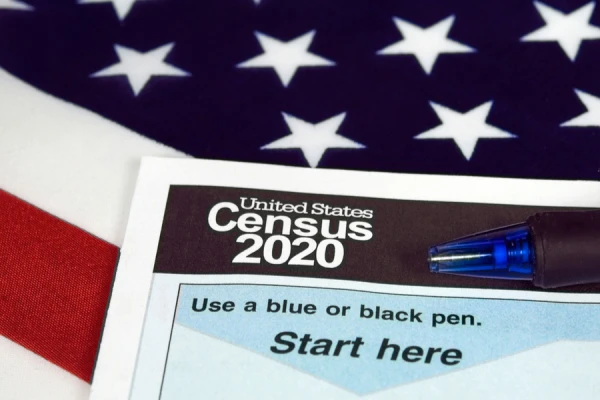


The contrivance is more the efforts of Chief Justice Roberts seeking to enhance his legacy as a moderate jurist assuming the swing vote role of former justice Anthony Kennedy. Rather than seek justice. The USCCB in similar vein is more the religious arm of the socialist egalitarian Democrat Party than defenders of truth and justice – Straws floating on the high seas outweigh astronomical abortion rates. How can a nation remain solvent if illegal entry is rewarded with all the rights and favors of citizenship? Democrats want their vote the USCCB want their empty pews filled and Chief Justice Roberts wants the kudos of Laurence Tribe.
““We affirm last week’s decision by the Supreme Court that the inclusion of a citizenship question must ensure genuine reasons for such inclusion,”
How about “To know how many citizens we have?”
“We reaffirm that all persons in the United States should be counted in the Census regardless of their immigration status”
Which they would be; they need only mark the box that says they’re not citizens.
How is that that it’s okay for the census bureau to ask on the long form all sorts of intrusive questions, but it isn’t okay to ask the simple question about whether the respondent is a citizen?
I would be grateful if the US bishops would spend rather more time on catechesis and on disciplining their priests (and themselves), and rather less on acting as the Democrats’ mouthpiece.
Great reply,Leslie.We need more of it, sorry I can’t as I am an Aussie.
I guess I should go look at historic census records to verify this, but was citizenship a standard question in the past? I remember seeing boxes to check off for one’s place of birth & parents’ place of birth but I’m not sure about US citizen status.
But it does sound like a reasonable thing to ask.
I read that it was there unti 1950, I think.
PS: Sure enough, I looked at a generic federal census record circa 1900 & there are citizenship questions re. year of immigration, naturalization, etc. Ditto for 1930.
A Louisiana state census c. 1860 did not have those questions but did ask place of birth.