Sofia, Bulgaria, May 5, 2019 / 08:54 am (CNA).- In Bulgaria Sunday, Pope Francis said Catholics and Orthodox are united by the blood of the martyrs and the Christians who continue to suffer for the faith even today.
“How many Christians in this country endured suffering for the name of Jesus, particularly during the persecution of the last century! The ecumenism of blood!” the pope said May 5.
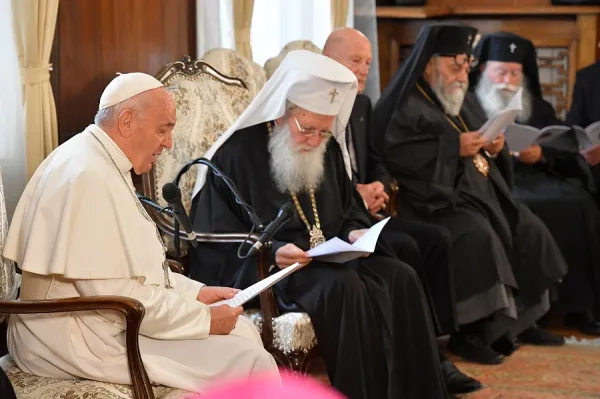
Addressing Patriarch Neophyte, the head of the Bulgarian Orthodox Church, and the Holy Synod, he said, “On this journey, we are sustained by great numbers of our brothers and sisters, to whom I would especially like to render homage: the witnesses of Easter.”
Pope Francis met Patriarch Neophyte and the Holy Synod of the Bulgarian Orthodox Church on a May 5-7 visit to Sofia and Rakovski, Bulgaria, and to Skopje, North Macedonia.
“I believe,” Francis continued, “that these witnesses of Easter, brothers and sisters of different confessions united in heaven by divine charity, now look to us as seeds planted in the earth and meant to bear fruit.”
“While so many other brothers and sisters of ours throughout the world continue to suffer for their faith, they ask us not to remain closed, but to open ourselves, for only in this way can those seeds bear fruit,” he stated.
The pope also spoke about an “ecumenism of the poor” and an “ecumenism of mission,” in the meeting.
The “ecumenism of the poor,” he said, is the call “to journey and act together in order to bear witness to the Lord, particularly by serving the poorest and most neglected of our brothers and sisters, in whom he is present.”
Pointing to the example of Saints Cyril and Methodius, venerated by both Catholics and Orthodox, he urged an “ecumenism of mission,” between Catholics and Orthodox, “as heirs of the faith of the saints… called to be builders of communion and peacemakers in the name of Jesus.”
The meeting with Orthodox leaders was followed by a visit to the Patriarchal Cathedral of Aleksander Nevsky and a moment of silent prayer before the altar dedicated to Saints Cyril and Methodius.
Afterward, the pope led the Regina Coeli from a square outside the church.
Leading the prayer before an icon of Our Lady of Nessebar, whose name means “Gate of Heaven,” Francis asked the Blessed Virgin Mary to intercede before the Risen Lord, that he may grant Bulgaria “the necessary impulse always to be a land of encounter.”
“A land in which, transcending all cultural religious and ethnic differences, you can continue to acknowledge and esteem each other as children of the one heavenly Father.”
The pope addressed the Catholics and Orthodox present with “Christos vozkrese,” which is Slavic for “Christ is risen.”
“These words express great joy for the triumph of Jesus Christ over evil, over death. They are an affirmation and a testimony of the very heart of our faith: Christ is alive! He is our hope, and in a wonderful way he brings youth to our world. Everything he touches becomes young, new, full of life,” he said.
“This faith in Christ, risen from the dead, has been proclaimed for two thousand years in every part of the world, thanks to the generous missionary effort of so many believers,” he continued, “called to give themselves completely and selflessly to the spread of the Gospel.”
If you value the news and views Catholic World Report provides, please consider donating to support our efforts. Your contribution will help us continue to make CWR available to all readers worldwide for free, without a subscription. Thank you for your generosity!
Click here for more information on donating to CWR. Click here to sign up for our newsletter.
Denver Newsroom, Aug 6, 2022 / 04:00 am (CNA).
Bishop Juan Carlos Elizalde of Vitoria, Spain, warned that some young people are “at risk” for self-centeredness because of the way they’re being raised and educated.&… […]
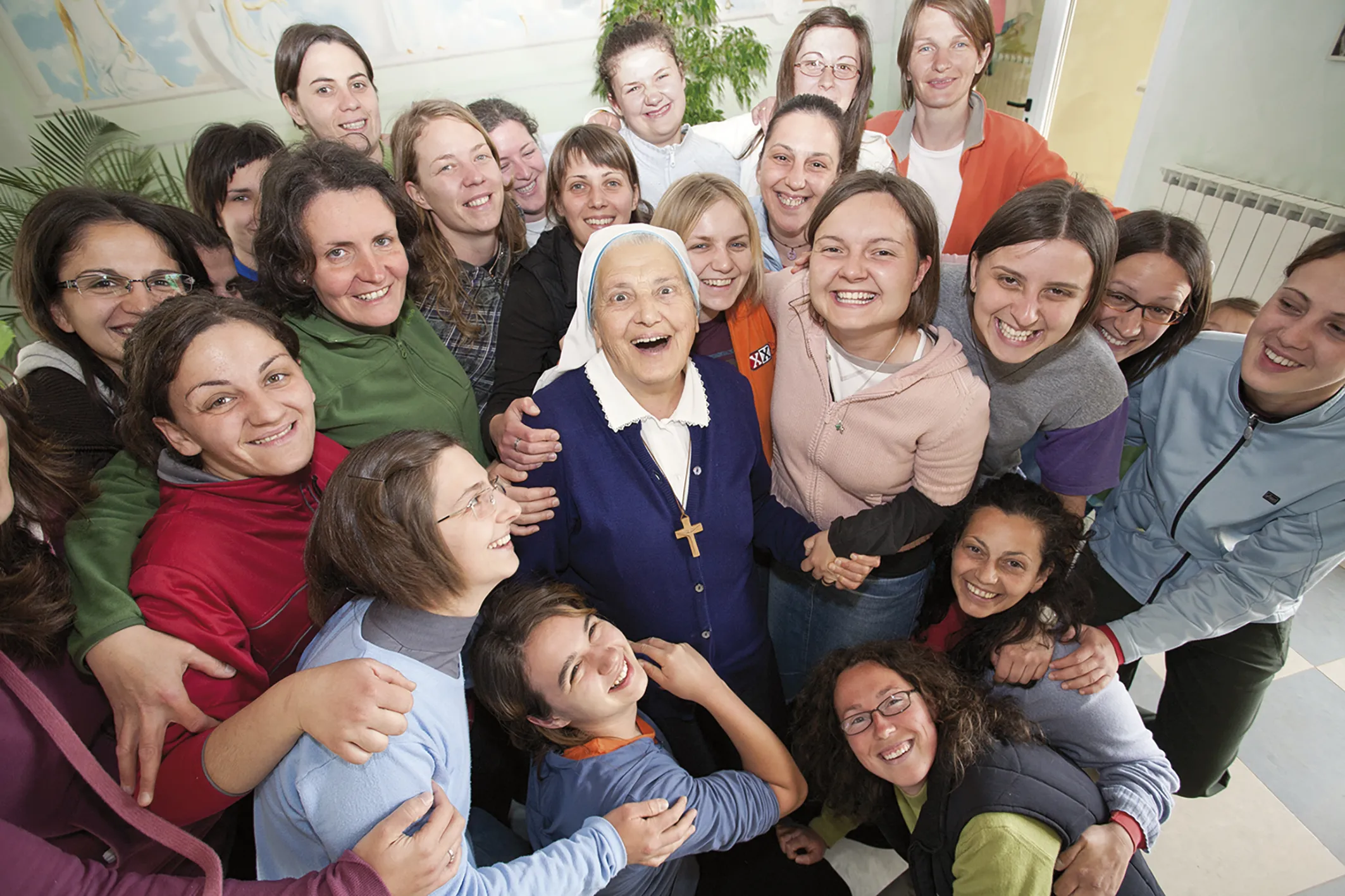
Mother Elvira, the founder of the Comunità Cenacolo, based her efforts to help young people struggling with addiction around the concept of radical trust in God’s mercy and providence. / Courtesy of the Comunità Cenacolo
National Catholic Register, Aug 5, 2023 / 13:00 pm (CNA).
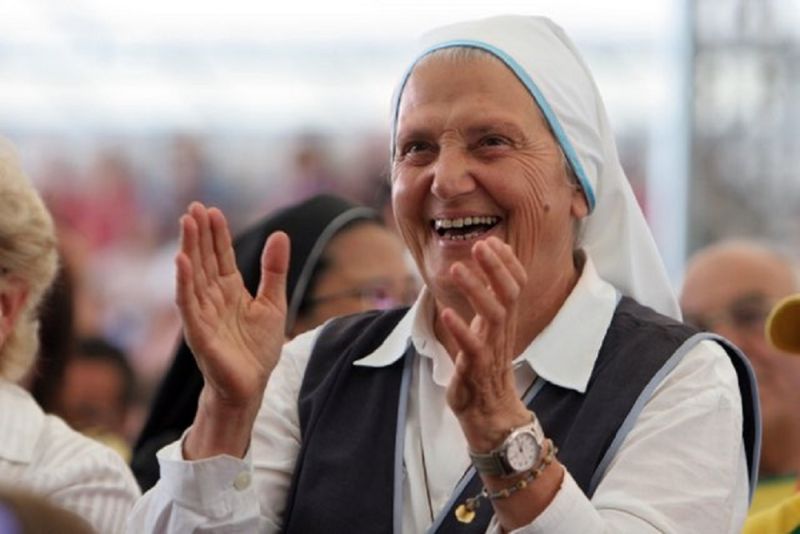
Mother Elvira Petrozzi, who founded Comunità Cenacolo in 1983 to provide hope and healing to those suffering from addiction, died on Aug. 3 in the formation house and residence of her congregation in Saluzzo, Italy. She was 86.
Her death, following a long illness, came just weeks after thousands of people gathered in Saluzzo, a hilltop town in Italy’s northwest Piedmont region about an hour’s drive south of Turin, to celebrate the 40th anniversary of the Cenacolo Community’s founding there in an abandoned home on July 16, 1983.
In the decades since, the community has grown to encompass 72 Cenacolo houses in 20 countries, including four in the United States.
Mother Elvira called the Cenacolo a “School of Life” because it took people off the streets and gave them a “rebirth” that was “based on a simple, family-oriented, orderly life” with the foundation of prayer, physical labor, discipline, and fraternal sharing.
“How could I invent a story like this? Everything happened without me even realizing it,” she once remarked.
“I dove into God’s mercy and I rolled up my sleeves to love, love, love … and serve!” she said. “I am the first to surprise myself with what has happened and what is happening in the life of the Cenacolo Community. It’s a work of God, the Holy Spirit, and of Mary.”
Bishop Robert Baker, bishop emeritus of Birmingham, Alabama, first met Mother Elvira in 1991. The two developed a close friendship and together they co-founded four Comunità Cenacolos in the U.S. Southwest, including one near Hanceville, Alabama.
Baker was among Mother Elvira’s many friends, supporters, and community members who were able to visit with her in her final days.
“I had the blessing of being invited to come to be at her bedside,” he told the National Catholic Register, CNA’s partner news outlet. “I was with her and I was able to give her a blessing.”
Humble beginnings
Born Rita Petrozzi, Mother Elvira was born in Sora, Italy, in 1937 and grew up in a poor family, taking the name Elvira upon entering the Sisters of Charity of St. Jeanne Antide Thouret as a teenager.
It wasn’t until 27 years later that she felt inspired to help young addicts and other youth to change their lives. Rooted in her Catholic faith and God’s love for every person, her methods were so effective that they led to others wanting a Comunità Cenacolo established in their region.
Prior to meeting her, Baker founded a drug addiction center called Our Lady of Hope Community in St. Augustine, Florida. Then visiting Rome when he was rector of the Cathedral Basilica of St. Augustine, he learned of Mother Elvira, spoke with her, and at his invitation agreed to establish a Cenacolo community with her entire program at Our Lady of Hope in 1992. The two friends went on to co-found two other houses in the St. Augustine area and a fourth house in Alabama.
Baker celebrated one of the Masses for the thousands of people attending the 40th anniversary celebration in Saluzzo. In his homily, he reflected on the time when he arranged to use an ornamental nursery to raise funds for the Cenacolo program in Florida, but when community members arrived from Italy they explained that Mother Elvira had instructed them to rely instead on divine providence.
“It was the result of her own closeness to the Lord in the Eucharist, which enabled her to see the immensity of God’s love. And if God loves us so immensely, he will provide for us,” he said.
After 30 years, no one has gone hungry in that Florida house or any of the community’s houses. “The point being, she was right,” Baker said.
Mother Elvira, who died on Aug. 3, 2023, at age 86, was beloved for her infectious trust in God’s providence, her devotion to the Eucharist, and her burning desire to share God’s boundless love with those struggling in life. Courtesy of the Comunità Cenacolo
The daily schedule at these houses includes Mass, eucharistic adoration, Marian devotion with three rosaries minimum a day, and devotion to St. Joseph. Every day members pray simply: “St. Joseph, provide for us.”
“The heart of it is, of course, the Eucharist,” Baker explained.
“Part of Elvira’s training is to divest to get rid of the stuff you don’t need,” he said. “So, the divesting, the trust in divine providence, and then … the Eucharist, praying before the Lord. That’s where her greatest strength was — the Eucharist, where she had all these insights. [You] have to have the sense of God’s immense love, which she had from praying before the Eucharist. And then because you know God loves you immensely, he will provide for you.”
When Baker visited Mother Elvira shortly before her death, he noted upon entering the house a mosaic on the floor that spells out the words “Dio Provvede” (God Provides).
‘Consumed with God’s love’
Florida residents Sean and Elaine Corrigan, who met Mother Elvira in 2000, lived in her community for some time and served in its missions in Brazil.
The couple credits her for saving their marriage.
“She had an extraordinary impact on our lives and on our marriage,” Elaine Corrigan told the Register. “Mother Elvira was a person fully in love with her Savior. She knew, she accepted, and she believed completely in his merciful love, and her great desire was to share him with others.
“I wanted to run after her and soak up all that she had,” she continued. “When we met Mother Elvira, we knew we had encountered a woman completely consumed with the love of God. She knew in the core of her being that he could and would heal people. She shared this hope and mercy with everyone she met.”
Albino Aragno, who started with the Cenacolo more than 30 years ago and today is the director of Comunità Cenacolo America, said Mother Elvira taught him many valuable lessons.
“Mother Elvira always encouraged me. She reminded me that life is precious and that life needs to be lived fully … to never be afraid to do God’s will, and always trust in him,” he said.
“Because of this, I can say that in all these years I can see that our community has kept on going even through so many difficulties, because good always prevails!”
Albino’s wife, Joyce, said Mother Elvira had a profound effect on her from the very beginning.
“Mother Elvira said, ‘Lord, let me know your will in the moment you want me to do it.’ This pierced my heart the first time I heard it and moved me to try to live every moment of my life in surrender and abandonment to his will, as Jesus reveals it at that moment,” she explained.
“It’s so radically opposed to control and trusting ‘in my own understanding,’ as the Psalmist says — my own intellect, perception, and analysis. Jesus calls me to live totally in the moment, not depending on myself.”
Pope Francis paid tribute to the Comunità Cenacolo on its 40th anniversary following his July 16 Angelus reflection.
“I send my heartfelt greeting to the Cenacolo Community, which has been a place of hospitality and human promotion for 40 years,” the pope said. “I bless Mother Elvira, the bishop of Saluzzo, and all the fraternity and friends. What you do is good, and it is good that you exist! Thank you!”
Baker said he observed during a recent Mass how “in periods of the Church there are great saints that get us through the eras in which we live.”
He pointed to St. Benedict in the fourth century, the Dominicans and Franciscans in the 13th century during the Albigensian heresy, and St. Ignatius and the Jesuits in the 16th century at the time of the Reformation.
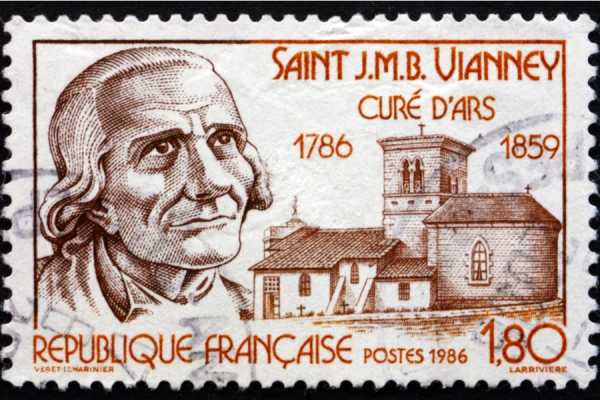
Rome Newsroom, Aug 4, 2020 / 11:58 am (CNA).- Cardinal Pietro Parolin, Vatican Secretary of State, was in Ars Tuesday for the feast of St. John Vianney, the patron of priests.
Parolin offered Mass at the Ars shrine, where St. John Vianney is buried, Aug. 4. He later gave a speech on the saint.
The Curé of Ars, as St. John Vianney was known, is “very relevant,” Parolin said in his homily. “In these difficult times, he teaches us to transmit joy and hope through the witness of our personal life.”
The cardinal also called the saint an example of holiness for all Catholics, because he “teaches us that intimate personal union with Christ helps to conform our desires to the will of God, fills us with joy and happiness, helps us to be salt and light of the world.”
St. John Vianney, Parolin said, is an example of a priest “who comes close to all with tenderness and does not reject those who are wounded in their existence and sinners in their spiritual life.”
Vianney warned people away from the “traps and stratagems of the demon,” including acedia, “that sweet sadness which paralyzes the mind and prevents it from persevering in prayer and in the mission,” Parolin stated.
In his homily, he recalled Benedict XVI’s characterization of St. John Vianney in 2010 as “a model of priestly ministry in our world.”
Parolin pointed out that though there are priests who have been led astray, the examples of good priests “who, in a constant and transparent manner, devote themselves entirely to the good of others” outnumber them.
The cardinal urged people to pray for priests and for priestly vocations “as our first intention of prayer, which we all entrust to the particular intercession of the Holy Curé of Ars.”
Later, in his address titled “Pope Francis and priests on the way with the people of God,” Parolin gave a reflection on St. John Vianney and the “principles which can guide pastoral ministry in our 21st century.”
According to Parolin, the Curé of Ars was a priest who “went out” in search of lost sheep to rebuild the flock, despite the challenges of a post-revolution, de-Christianized France.
“It is not the first time that the Church is forced to renew her missionary commitment,” Parolin said.
“Faced with the novelty of the situations we are facing, the Holy Spirit stimulates creativity to find the best way to approach others,” he continued. “The Holy Father asks that creativity in the Spirit is also empathy in the same Spirit.”
The cardinal also stressed the intense prayer life of Vianney, his dedication to preparing his homilies well, and his charity to the poor.
The saint is best known for his giftedness as a confessor: “His art of listening, of advising, his mercy attracted more and more penitents,” Parolin noted.
Pope Francis “is inexhaustible on the theme of confession because it is the sacrament of mercy,” he added.
“You know that nowadays many faithful no longer go to confession or go very little,” requiring priests to have patience and to constantly teach about mercy and the essential nature of the sacrament, he said.
Parolin concluded his address with a prayer from Pope Francis: “Remember, Lord, your covenant of mercy with your children, the priests of your people. May we be, with Mary, the sign and sacrament of your mercy.”



Leave a Reply