No Picture
News Briefs

Blessed Stanley Rother shrine fundraising campaign surpasses initial goal

September 21, 2018 CNA Daily News 0

Oklahoma City, Okla., Sep 21, 2018 / 03:01 am (CNA/EWTN News).- The Archdiocese of Oklahoma City announced Tuesday that its capital campaign, one of the goals of which is the construction of a shrine for Blessed Stanley Rother, had surpassed its original $65 million goal.

“I have been grateful and humbled by the generosity of families across the archdiocese who have supported this historic campaign,” Archbishop Paul Coakley said Sept. 18. “We have been blessed to have the powerful witness of Blessed Stanley to help guide us as we build upon his legacy for future generations.”

In addition to the shine for the Oklahoma priest who was martyred in 1981 in Guatemala, the One Church, Many Disciples campaign will fund local parishes and schools, renovation of the cathedral, evangelization efforts, faith formation endowments, and retirement for elderly priests.

The Blessed Stanley Rother shrine will be built in Oklahoma City off of I-35, and will house the relics of the martyr. According to the Oklahoma City archdiocese, it will include a 2,000-seat church, a chapel, ministry and classroom buildings, a museum, and a pilgrim center.

One-third of parishes in the archdiocese have completed the capital campaign, 34 are in its midst, and 32 will begin in January 2019.

Given the success of the campaign, Archbishop Coakley has announced a challenge goal of $80 million.

Father Rother was beatified Sept. 23, 2017 in Oklahoma City.

Fr. Rother was born March 27, 1935 in Okarche, Okla., and entered seminary soon after graduating from Holy Trinity High School.

Despite a strong calling, Rother would struggle in the seminary, failing several classes and even out of one seminary before graduating from Mount St. Mary’s in Maryland. He was ordained a priest of the Diocese of Oklahoma City and Tulsa in 1963.

He served for five years in Oklahoma before joining the Oklahoma diocese’s mission in Santiago Atitlan, Guatemala, a poor rural community of mostly indigenous persons where he would spend the next 13 years of his life.

The work ethic Fr. Rother learned on his family’s farm would serve him well in this new place. As a mission priest, he was called on not just to say Mass, but to fix the broken truck or work the fields. He built a farmers’ co-op, a school, a hospital, and the first Catholic radio station.

Over the years, the violence of the Guatemalan civil war inched closer to the once-peaceful village.
Disappearances, killings, and danger soon became a part of daily life, but Fr. Rother remained steadfast and supportive of his people.

In 1980-1981, the violence escalated to an almost unbearable point; Fr. Rother was constantly seeing
friends and parishioners abducted or killed.

In January 1981, in immediate danger and his name on a death list, Fr. Rother did return to Oklahoma for a few months. But as Easter approached, he wanted to spend Holy Week with his people in Guatemala.

The morning of July 28, 1981, three Ladinos, the non-indigenous men who had been fighting the native people and rural poor of Guatemala since the 1960s, broke into Fr. Rother’s rectory. They wished to disappear him, but he refused.

Not wanting to endanger the others at the parish mission, he struggled but did not call for help. Fifteen minutes and two gunshots later, Father Stanley was dead and the men fled the mission grounds.

Though his body was buried in Okarche, Fr. Rother’s heart was enshrined in the church of Santiago Atitlan where he served.

Fr. Rother’s cause for beatification was opened in 2007, and his martyrdom was recognized by the Vatican in December 2016, which cleared the way for his beatification.

His body was exhumed from the Okarche cemetery in May 2017, and re-interred at a chapel at Resurrection Cemetery in Oklahoma City.

Blessed Stanley Rother’s feast is celebrated July 28 in the dioceses of Oklahoma City, Tulsa, and Little Rock.

[…]

No Picture
News Briefs

It’s our duty to fight racism, Pope tells international conference

September 20, 2018 CNA Daily News 1

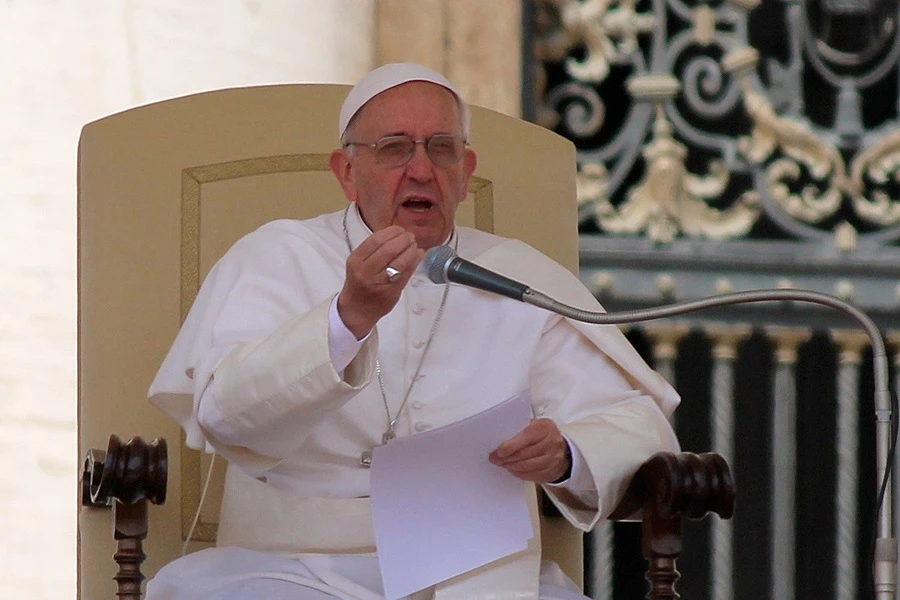
Vatican City, Sep 20, 2018 / 05:21 pm (CNA/EWTN News).- All people have a responsibility to fight new forms of racism in the modern world, Pope Francis told more than 200 participants at a Rome-based conference this week.

“We are living in times in which feelings that many thought had passed are taking new life and spreading,” the pope said Sept. 20.

The international conference on “Xenophobia, Racism and Populist Nationalism in the Context of Global Migration” concluded Thursday. It had been promoted by the Vatican’s Dicastery for Integral Human Development, the World Council of Churches and the Pontifical Council for the Promotion of Christian Unity.

Addressing those present, Pope Francis warned that the modern world appears to be seeing an increase in “feelings of suspicion, fear, contempt and even hatred towards individuals or groups judged for their ethnic, national or religious identity.”

These individuals are “considered not sufficiently worthy of being fully part of society’s life,” and such sentiments “all too often inspire real acts of intolerance, discrimination or exclusion,” he said.

Exclusion of foreigners can also become enshrined in political policy, as some lawmakers exploit fears and misgivings for political gain, he said.

Faced with these social changes, “we are all called, in our respective roles, to cultivate and promote respect for the intrinsic dignity of every human person,” the pope said.

He emphasized the role of religious leaders, educators, and media in this endeavor to promote a culture that respects human life and dignity.

Rev. Olav Fykse Tveit, secretary general of the World Council of Churches, told Vatican News that the conference was intended to show a strong ecumenical commitment to addressing the global issues of racism and xenophobia, to hear from voices across the globe about the issue, and to create common text that can be used as the basis of further efforts.

He stressed the importance of supporting politicians who are standing up for the human rights of migrants, and emphasized the role of religious leaders in upholding human dignity in public discussions surrounding migration.

“There is no easy political answer to all of this: it is a very complex political situation, but we believe that the churches, with our values but also with our networks, our communities, as human beings and as people of faith, can contribute a lot,” he said.

[…]

No Picture
News Briefs

Dolan ‘impatient’ waiting for apostolic visitation in response to McCarrick

September 20, 2018 CNA Daily News 4

New York City, N.Y., Sep 20, 2018 / 05:00 pm (CNA).- The Archbishop of New York said Thursday that while he has confidence in the way Pope Francis is handling the Church’s ongoing sexual abuse crisis, he has grown “impatient” while awaiting a decision from the pope on a request made by U.S. bishops more than one month ago.

Speaking at a press conference Sept. 21, Cardinal Timothy Dolan called for a formal investigation- an apostolic visitation- of the Church in the United States in response to allegations that have surfaced in recent months regarding decades of sexual immorality on the part of Archbishop Theodore McCarrick.

“Part of my people saying ‘we’re beginning to lose trust in bishops’ is their legitimate question as to how could a man continue to rise in the Church with a background like that?’ And that’s a darn good question, that I share. We have got to get to the bottom of that.”

“How [that happens] is an ongoing question. I think particularly an apostolic visitation from the Holy See that included lay professionals would be a particularly effective way to do that. We’ve proposed that to the Holy See and we wait.”

An apostolic visitation was formally proposed to the Vatican in an Aug. 16 statement from Cardinal Daniel DiNardo, president of the U.S. bishops’ conference. It has since been reiterated by several U.S. bishops.

While DiNardo and other leaders of the bishops’ conference met with Pope Francis Sept. 13, there has not yet been any announcement from the Vatican regarding an apostolic visitation.

Within the Church, only the Vatican has the authority to order an investigation into the conduct of those bishops who stand accused of covering up the sexual coercion and assault McCarrick is alleged to have committed.

Dolan said that if an apostolic visitation “doesn’t happen, there has to be an equally effective way” to investigate the circumstances surrounding the ecclesiastical career of Archbishop McCarrick, though he did not offer particular suggestions.

Asked by a reporter why approval for an apostolic visitation had not been forthcoming, Dolan answered: “I tend to get as impatient as you obviously are, so I don’t know the answer to that.”

The cardinal was also asked if the pope is doing enough to address concerns about sexual abuse and misconduct in the Church in the United States.

“So far,” Dolan said in response.

“I mean, you won’t be surprised that I love him and trust him very much and know that he’s on our side. So I think…I mean he has a beautiful posture of reflection, of ‘let’s not act impetuously,’ you know- he’s spoken with prophetic fire in condemning this.

“I trust that he’s going to come through,” Dolan said. “But I don’t mind admitting that I get a little impatient too.”


[…]

The Dispatch

The Sixth Death of the Church

September 20, 2018 Lauren Enk Mann 31

The Church’s “summer of shame” has devastated the faithful. The McCarrick revelations, the Pennsylvania grand jury, and the Viganò testimony have sent reverberations of scandal right through the highest clerical ranks. Catholics in the pews […]

No Picture
News Briefs

Irish doctors question readiness to introduce legal abortion

September 20, 2018 CNA Daily News 0

Dublin, Ireland, Sep 20, 2018 / 04:06 pm (CNA/EWTN News).- Most physicians in the Republic of Ireland are unwilling to perform abortions despite the repeal of an amendment which legally protected the unborn, and many are also concerned about whether there are adequate preparations for the procedure.

“There are concerns about capacity and resourcing issues such as staffing, facilities, training,” Dr. Mary Favier, vice president of the Irish College of General Practitioners, told the Oireachtas Health Committee Sept. 18, the same day the Irish president signed a bill formally repealing the Eighth Amendment.

“They are concerned about the potential lack of appropriate specialist support, the possibility of medical complications for their patients, what will be the public reaction to those who don’t provide and those who do,” the Irish News reported Favier stating.

“They have a fear of litigation, they wish to see an acknowledgement of conscientious objection and how to accommodate this in the clinical pathway but also an acknowledgement of conscientious commitment and how to support this.”

Taoiseach Leo Varadker has said that Catholic hospitals will not be permitted to opt out of performing abortions, though individual medical professionals may.

The removal of the Eighth Amendment follows the decisive result of the national referendum held in May. Only one county, Donegal, voted to keep the amendment.

While it has not yet been determined under what circumstances abortion will become legal, the government is proposing that it be allowed throughout the first 12 weeks of pregnancy. Legislation to this effect will be introduced by the government next month.

It is unknown when Ireland’s first abortion facility will open, but Varadkar said this will likely be by 2019.

Favier noted to the health committee that “there are actually very few clinicians who are trained to deliver this care pathway unless they have received training outside of the jurisdiction,” and Dr Peter Boylan, chair of the Institute of Obstetricians and Gynaecologists, said that introducing abortion by 2019 would be “challenging”.

Boylan noted there is not enough access to ultrasound, and that permitting abortion “without adequate scanning facilities is fraught with risk.”

[…]

No Picture
News Briefs

Catholics in Korea look to martyrs amid nuclear negotiations with Pyongyang

September 20, 2018 CNA Daily News 0

Seoul, South Korea, Sep 20, 2018 / 03:42 pm (CNA/EWTN News).- As nuclear negotiations with North Korea continue, Catholics in South Korea are encouraging devotion to their martyr saints and renewing prayers for peace on the peninsula.

South Korea’s bishops applauded the successful completion of the third inter-Korean summit of Moon Jae-in and Kim Jong-un in Pyongyang, North Korea earlier this week. The meeting resulted in Kim promising to take steps towards denuclearization in exchange for concessions from the United States.

US Secretary of State Mike Pompeo responded with a statement that the U.S. is prepared to “engage immediately in negotiations” with North Korea, and invited North Korea’s foreign minister to meet with him at the United Nations General Assembly meeting in New York City next week, where Moon will also meet with US President Donald Trump.

“This will mark the beginning of negotiations to transform U.S.-DPRK relations through the process of rapid denuclearization of North Korea, to be completed by January 2021, as committed by Chairman Kim, and to construct a lasting and stable peace regime on the Korean Peninsula,” Pompeo said Sept. 19.

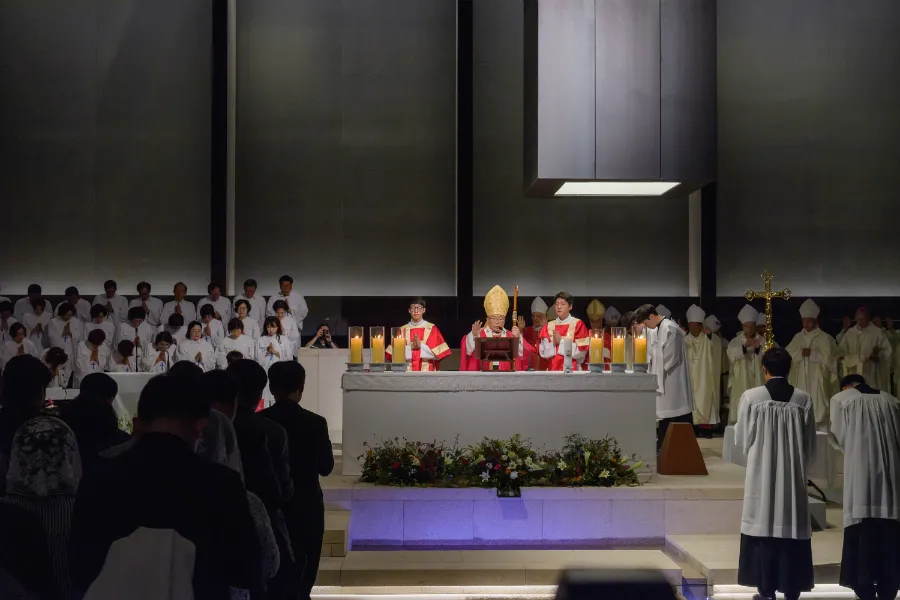
Before heading to Pyongyang the First Lady of South Korea, Kim Jung-sook, attended Mass with Korean bishops in Seoul’s Myeongdong Cathedral and asked for prayers for the upcoming diplomatic negotiations.

The Mass was part of a week-long celebration of Korea’s martyr saints. On Sept. 14, the Vatican approved ‘Seoul’s Catholic Pilgrimage Routes’ as a World Pilgrimage Site.

Monsignor Salvatore Fisichella, president of the Pontifical Council for the Promotion of the New Evangelization, traveled to Seoul for the pilgrimage route’s dedication ceremony.

“These routes can help not only pilgrims coming from Asia and all over the world, but whoever else chooses to walk them, to reflect on the fact that human life laid down out of love and to open their hearts to the transforming power of God’s grace which bestows the gift of faith,” said Fisichella at the Seosomun Martyrs Shrine.

More than 100 Koreans were martyred at Seosomun Park, where Pope Francis prayed before celebrating their beatification Mass in his visit to South Korea in 2014.

“Stained in the blood and sweat of the martyrs, these pilgrimage routes are not just a legacy of the Church in Korea alone,” said Cardinal Andrew Yeom Soo-jung of Seoul. They are a “sacred patrimony … for all citizens on the Korean Peninsula.”

Along the pilgrimage route is Jeoldusan Martyrs’ Shrine, where Korea’s first priest, Saint Andrew Kim Taegon, was tortured and beheaded at age 25.

Saint Andrew Kim was born 1821 into an aristocratic Korean family that eventually included three generations of Catholic martyrs.

Kim traveled over 1,000 miles to attend seminary in Macau. While Kim was away at seminary, his father, Ignatius Kim Chae-jun, was martyred in 1839.

After Kim was ordained in Shanghai in 1845, he returned to his homeland to begin catechising Koreans in secret. Only 13 months later, he was arrested.

In his final letter from prison before his execution, Kim wrote to Catholics in Korea: “When he was in the world, the Lord Jesus bore countless sorrows and by his own passion and death founded his Church; now he gives it increase through the sufferings of his faithful … I urge you to remain steadfast in faith, so that at last we will all reach heaven and there rejoice together. I embrace you all in love.”

The feast of Saint Andrew Kim Taegon and his companions is celebrated Sept. 20.

[…]