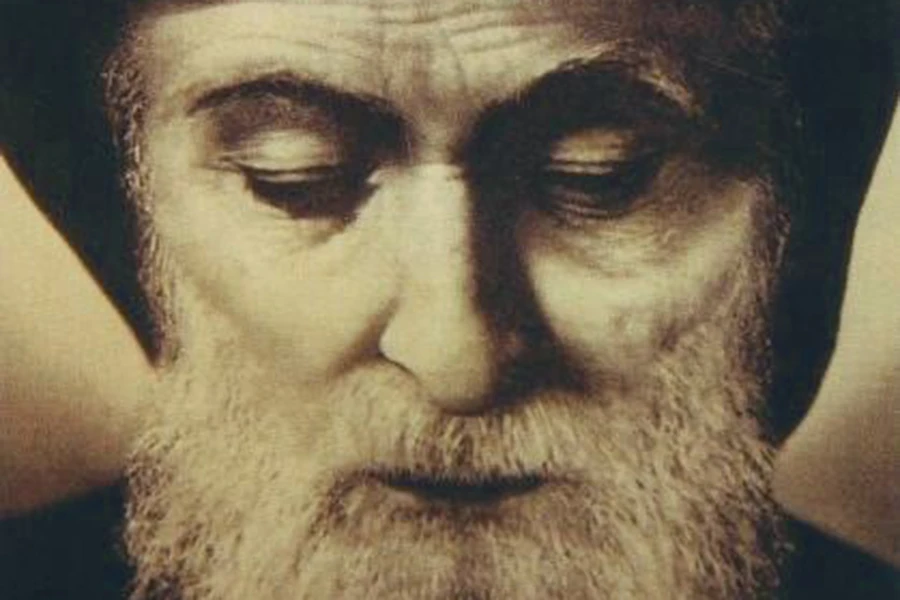
Phoenix, Ariz., Mar 29, 2017 / 11:01 am (National Catholic Register).- When a Phoenix mother lost her eyesight due to a rare medical condition, she feared she would never be able to see her four children again. But then St. Charbel came to her aid.
Dafne Gutierrez suffered from benign intracranial hypertension (BIH), a condition that causes increased pressure in the brain. In 2012, the increased pressure caused her to lose vision in her right eye. Three years later, in November 2015, the Catholic mother lost sight in her left eye, as well.
Phoenix’s local CBS affiliate, KPHO, quoted Gutierrez’s plea to God:
“For me, I was like, ‘Please God, let me see those faces again. Let me be their mother again.’ Because I feel like [my kids] were watching me, taking care of me 24/7.”
Phoenix Mother: St. Charbel Cured My Blindness https://t.co/J9FXeruQUR
— N. Catholic Register (@NCRegister) March 25, 2017
For more than a year, Gutierrez struggled to adjust to her disability, which now included occasional seizures, as well as blindness. Then, in January 2016, when Phoenix’s St. Joseph Maronite Church announced that the relics of St. Charbel Makhlouf (also spelled “Sharbel”) would be visiting the church, Gutierrez’s sister encouraged her to visit and to pray for the saint’s intercession.
Although she is not a member of the Maronite rite, Gutierrez visited the church Jan. 16, prayed before the relics, went to confession and was blessed with holy oil by the pastor, Father Wissam Akiki. Gutierrez recalled that, immediately afterward, her body felt “different.”
The following morning, she rose and returned to the church for Sunday Mass. Again, she experienced a different sensation.
And early in the morning Jan. 18, Gutierrez awoke with a searing pain in her eyes. She remembers how much they burned. And when her husband turned on the lights, she said the brightness hurt her eyes. She claimed, at 4 a.m., that she could see shadows; but her husband insisted that was impossible because she was blind. He later described what he called “an odor of burned meat” coming from her nostrils.
According to The Maronite Voice, the newsletter of the Maronite Eparchies of the U.S., “That morning she called her ophthalmologist, and she was evaluated the next day. Her exam showed that she was still legally blind, with abnormal optic nerves. Two days later, she saw a different ophthalmologist, and her vision was a perfect 20/20, with completely normal optic nerves. Subsequently, she saw her original ophthalmologist one week later, and her vision was documented to be normal, with completely normal exam.”
No Medical Explanation
Dr. Anne Borik, a board-certified internal medicine physician who later testified regarding Gutierrez’s healing, was called in by the Church to review the case. Earlier this month, Borik – a member of St. Timothy’s Roman Catholic parish nearby, but who attends St. Joseph Maronite frequently – talked by phone with the Register about her findings. She explained that the brain condition Gutierrez suffered from causes the optic nerve to constrict. Once the optic disc – the spot at which the optic nerve enters the eyeball – is damaged, it’s too late to fix. Because, when the pressure in the brain reaches high levels, as it did in Gutierrez’s case, the optic nerves become strangulated.
“Unfortunately, once the blindness occurs,” said Borik, “it’s irreversible.”
Images of Gutierrez’s optic disc revealed significant damage: “We have pictures,” said Borik, “to confirm that the optic disc was chronically atrophied. There was significant swelling, or papilledema.”
But after Gutierrez’s vision returned, Borik reported, there was no evidence of the aberrations that were evident on earlier images. “In the post-healing pictures,” Borik said, “her optic disc is back to normal. Her vision is completely restored. She has no more seizures. That is why I, as a medical doctor, have no explanation.”
A medical committee, led by Borik, undertook a thorough review of Gutierrez’s medical records, as well as repeated examinations. The committee wrote, “After a thorough physical exam, extensive literature search and review of all medical records, we have no medical explanation and therefore believe this to be a miraculous healing through the intercession of St. Charbel.”
Unexpected Healing Strengthens Faith
Borik is enthusiastic about the healing, telling the National Catholic Register, “It has changed my practice! It has changed how I relate to patients. Now,” she said, referring to her relationship with those entrusted to her care, “prayer is such an important part of what we do.”
Father Wissam Akiki, pastor of St. Joseph Maronite Church, had a devotion to St. Charbel, and he installed a large picture of the saint in the parish shortly after his arrival in 2014. Then, in 2016, he arranged to bring St. Charbel’s relics to his parish as part of a U.S. tour.
Father Akiki remembers when Gutierrez showed up to venerate the relics. Father Akiki approached her. “I heard her confession,” he told the National Catholic Register. “We prayed together, and I said to her daughter, ‘Take care of your mom, and your mom is going to see you soon.’ Then, in only three days, she called the church to report that she could see.”
Father Akiki acknowledged that Gutierrez’s healing has strengthened the faith and changed the face of St. Joseph Maronite Church. “People are coming here to pray, traveling from Germany, Bolivia, Canada, Australia, Jerusalem.”
Following the healing, Father Akiki planned to erect a shrine to St. Charbel at his parish, with a two-ton sculpture of the saint cut from a single stone and imported from Lebanon. The shrine will be open seven days a week, 24 hours a day. Father Akiki expected that the dedication of the shrine March 26 would draw crowds, including Maronite Bishop A. Elias Zaidan, Phoenix Bishop Thomas Olmsted and many local dignitaries.
Bishop Zaidan attributed Gutierrez’s recovery to the intercession of St. Charbel. “May this healing of the sight of Dafne,” he wrote in The Maronite Voice, “be an inspiration for all of us to seek the spiritual sight, in order to recognize the will of God in our lives and to act accordingly.”
Cristofer Pereyra, director of the Hispanic Office of the Phoenix Diocese, told Fox News that Bishop Olmsted spoke with the doctors and reviewed the case. “The bishop wanted to make sure there was no scientific explanation for the miraculous recovery of Dafne’s sight,” Pereyra reported.
The greatest change, of course, has been for Gutierrez and her children. Since her eyesight was restored, Dafne’s life has changed dramatically: She can once again check her children’s homework, watch them at play with friends, and manage her household chores without extra assistance.
Her prayer was answered.
Who Was St. Charbel?
Born Youssef Antoun Makhlouf in the high mountains of northern Lebanon in 1828, St. Charbel (also spelled Sharbel) was the youngest of five children in a poor but religious family. His baptismal name was Joseph; only when he entered a monastery at the age of 23 was he given the name Charbel, after an early martyr. He studied in seminary and was ordained a priest in 1858. For 16 years, Father Charbel lived with his brother priests; theirs was a communal life of prayer and devotion to God.
In 1875, Father Charbel was granted permission to live a hermit’s life. In his rugged cabin, for the next 23 years, he practiced mortification and sacrifice – often wearing a hair shirt, sleeping on the ground, and eating only one meal a day. The Eucharist was the focus of his life. The holy priest celebrated daily Mass at 11 a.m., spending the morning in preparation and the rest of the day in thanksgiving.
Father Charbel was 70 years old when he suffered a seizure while celebrating Mass. A priest assisting him was forced to pry the Eucharist out of his rigid hands. He never regained consciousness; and eight days later, on Christmas Eve in 1898, Father Charbel died. His body was interred in the ground without a coffin and without embalming, according to the monks’ custom, dressed in the full habit of the order.
For the next 45 nights, a most unusual event occurred: According to many local townspeople, an extraordinarily bright light appeared above his tomb, lighting the night sky. Finally, after the mysterious light persisted, officials at the monastery petitioned the ecclesiastical authorities for permission to exhume Charbel’s body. When the grave was opened four months after Charbel’s death, his body was found to be incorrupt. Twenty-eight years after his death, in 1928, and again in 1950, the grave was reopened, and his body was also found to be without decay.
Numerous medical researchers were permitted to examine the remains, and all confirmed that the saint’s body was preserved from decay. For 67 years, the body remained intact, even when left outdoors unprotected for an entire summer – although it consistently gave off a liquid that had the odor of blood. Finally, though, Charbel’s body followed the natural course. When the tomb was again opened at the time of his beatification in 1965, it was found to be decayed, except for the skeleton, which was deep red in color.
The inexplicable restoration of Dafne Gutierrez’s eyesight is not the first healing credited to St. Charbel. Dr. Anne Borik reported that there have been hundreds – perhaps thousands – of miracles attributed to the saint.
Pope Francis is said to have a deep devotion to St. Charbel. Last Christmas, Borik reported, the Holy Father asked to have a relic of St. Charbel sewn into the hem of his vestments.
This story was originally published at the National Catholic Register.
 […]
[…]


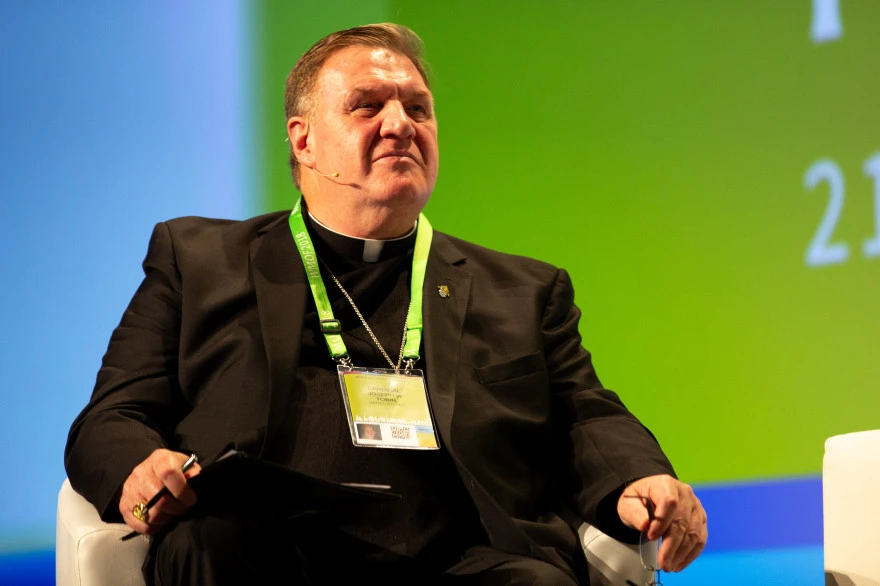


Tobin allowed an lgbtq Mass at the Newark cathedral of in some cases known couples who were free according to the NY Times to receive Communion hopefully based on a sincere bizarre erroneous conscience but the Times did not mention that. We’re in more trouble than Woody Allen doing stand up at an ISIS reunion dinner. It’s simple. Popes since 1960 (allowing for ten previous years to learn) did not put a priority on children being sodomized in some cases. Perhaps they are so used to hearing sexual sins in confession that for them….gross is normal. I don’t get it. Toynbee was correct…with all our pluses, we have aspects of an arrested culture…he didn’t even know at the time, that many of our clergy should have been under arrest.
He did nothing which is a direct violation of the Dallas Charter! It’s nit about whether he thinks it might be true or not. He could have saved a poor victim of McCarrick and Tobin did NOTHING!
Who’s beach house?
If it belonged to the archdioces and seminarians were rumored to be involved and Tobin didnt investigate then out with him. No credibility. Stop all funds to this man he is not thinking about his flock.
Was it really “incredulous” (vs. incredible) to Tobin that seminarians would be invited to a beach house by McCarrick and that “rumors” happened there?
Is it “incredulous” that Cardinal Tobin tweeted “Nighty-night, baby. I love you” to his sister?
Maybe the most honest (and then revised) statement in a long time is Fr. Rosica’s: “Our Church has indeed entered a new phase. With the advent of this first Jesuit pope, it is openly ruled by an individual rather than by the authority of Scripture alone or even its own dictates of tradition plus Scripture.”
They expect us to hand over money to support all this, on the Diocesan and parish level. This rot is not simply from the top down. It’s more like an infection that meets in the middle.
They think we’re stupid.
Tobin is a huckster, a liar, a thug, and a barbarian who doesn’t even know the 4th grade difference between “incredulous” and “incredible”. This is hellish level to which the Church has been reduced in its so-called “shepherds” and “Princes”. He must think we are utter morons to believe he is going “to initiate an archdiocesan investigation into the reasons he was not told about McCarrick’s alleged sexual misconduct” when by his own explicit admission he “told a journalist Friday that he heard rumors shortly after his 2017 arrival in the Archdiocese of Newark about the sexual misconduct of Archbishop Theodore McCarrick. He said he did not investigate those rumors because he found them [unbelievable].”
Tobin’s motto – “Elephant? WHAT elephant?”
It’s the Archdiocese of Newark! President of Seton Hall is being investigated for being part of cover up and at the same time being honored at the University and seminary. I recently heard from a person who reported a priest talking about confession of a mutual acquaintance and when reported this to the bishop, the priest went on a witch hunt after him. No action from the diocese despite multiple witnesses including the confessee whose seal was compromised. Even the person in charge of canon law said, ‘yes, in the past he’s provided me with information on an annulment case he heard in confession.’ Apparantly, there is no confessional seal in Newark!