No Picture
News Briefs

Slain Maltese journalist fought for her convictions, priest says
February 1, 2018 CNA Daily News 1

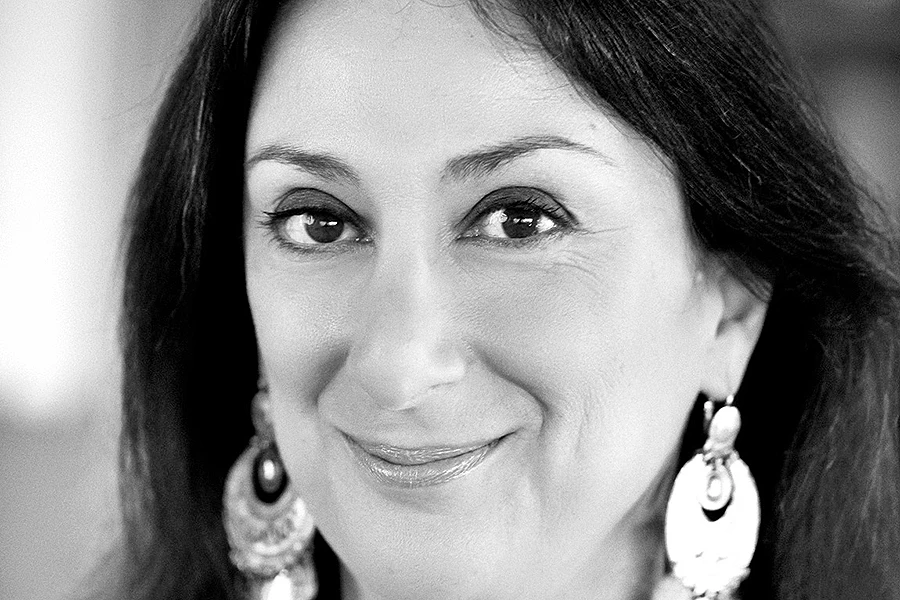
Valletta, Malta, Feb 2, 2018 / 12:00 am (CNA/EWTN News).- A close friend of slain Maltese journalist Daphne Caruana Galizia says the reporter’s life and death is a reminder that “one should have the courage to stand for one’s convictions.”

Maltese priest Fr. Joseph Borg spoke with CNA about Galizia’s legacy.

A well-known Maltese journalist famous for her shocking, in-depth stories exposing government corruption, Galizia was assassinated in October 2017 when a rental car she was driving exploded as she left her home in Bidnija. Three people have been arrested in connection with the bombing.

She was frequently threatened because of her work, and was best known for her investigations into corruption among the Mediterranean nation’s politicians.

Shortly before her death, Galizia had suggested on her blog that Prime Minister Joseph Muscat and his wife had used offshore bank accounts to hide payments from the Azerbaijani ruling family.

Galizia’s claims about the Maltese minister triggered early elections in the country, from which Muscat’s Labour Party managed to come out victorious.

Fr. Borg, Director of the Maltese Catholic radio RTK, was familiar with Galizia and wrote an obituary for her in The Guardian after her death. The two had a friendly relationship and were familiar with each others’ work. He had defended her work publicly, and at one point gave evidence in her defense during a court case against her.

In an interview with CNA, Borg said Galizia, who investigated Maltese connections in the 2015 Panama Papers leak on her blog “Running Commentary,” was aware that her work was unlikely to make an impact, but she was nonetheless committed to telling the truth.

When it came time for the elections after the leak, he said Galizia told him “I know that what I’m writing will not make a difference for the election result, people don’t care, but I have to write it because someone has to write it. We have to document what’s happening.”

Journalists have a responsibility to pursue stories like this, Borg said, stressing that “we can’t be consequentialists. We can’t say, ‘what will be the effect if it’s true?’”

“If it’s public interest we have to write it,” he said, explaining that while it is unethical to publish false information, “you can also be unethical by not writing something that you should write, not writing something that is of public interest…(this) is unethical.”

He said Galizia first got involved with investigative stories on corruption scandals during Malta’s election in 1981, two years after Britain pulled troops off the island in 1979. A constitutional crisis emerged when the Labour Party, despite taking in less votes that the opposing Nationalist Party, managed to end up with more seats in parliament.

Protests erupted, rapidly turning violent. Galizia became active in covering the story, writing for both the The Sunday Times of Malta and the Malta Independent, where she had a regular column, until her death.

In 2008 she launched her blog, which quickly became one of the most popular websites in Malta, as she could publish stories and commentary that weren’t able to be printed in the papers.

In this sense, Borg said one of Galizia’s greatest contributions to journalism is that “she gave hope to people. You go to her with a story and it gets published. She takes risks if she believes in people.”

Despite her high readership and Galizia’s efforts to unveil the shadowy misdeeds of those in power – including a Maltese politician who reportedly visited a brothel during a trip to Germany – Borg said the public was largely indifferent.

“The irony is that the economy was good and it became better, so people didn’t care,” he said.

“Even if you look at the demonstrations that were done after her funeral, one was very great, but then people dwindled. This is the situation. Most people reason out and say ‘I’m okay, what’s the big fuss? All of them are corrupt, so who cares?’”

Borg said if reporters stop covering difficult stories because of indifference, “what use is journalism?”

Using a colloquial Maltese phrase, he said it would be like “’a sun that does not heat’ – is it better that it’s cold?”

Galizia was able to raise the bar for journalism in Malta, Borg said, explaining that many Maltese journalists were in some sense “offended” that people went to her with the good stories, instead of them.  

Because of this, “now we have many people in mainstream journalism who have been trained to compete with her to get better stories,” Borg said, so “that was another contribution.”

He also pointed to Galizia’s “total disregard of a consequentialist approach to journalism,” and her attitude that “you have to do what you have to do” for the sake of public interest.

“She was not perfect, sometimes she got stories wrong, sometimes she also had gossipy parts, [but] most of the time she was incredible,” he said. “The main stories, what she wrote about corruption in Malta, incredible.”

“Her courage has inspired other journalists to go after more stories and we are getting more stories,” he said. And while some of this can be attributed to the fact that people simply need to find someone else to run their story, “journalists feel a bit ashamed if they don’t sort-of take risks like her.”

This is one of Galizia’s “best contributions to journalism in Malta,” Borg said, adding that other people and organizations should have the same courage to stand up for the truth, because “if someone who is alone does it, if you are part of an organization or institution, why shouldn’t you?”
 

[…]

No Picture
News Briefs

Chilean court dismisses case of bishop accused of abuse

February 1, 2018 CNA Daily News 1

Santiago, Chile, Feb 1, 2018 / 05:00 pm (CNA).- The Iquique Court of Appeals in northern Chile has officially closed an investigation against the Bishop Emeritus of Iquique, Marco Órdenes, accused of rape. A canonical investigation into the bishop is still ongoing.

“There is not probable cause to substantiate the charges made in December 2008,” stated a Jan 26. decision, which confirmed the findings of a five year investigation conducted by a lower court judge, Pedro Güiza Gutierrez.

Marco Antonio Órdenes Fernandez, 53, was Bishop of Iquique between 2006 and 2013. In December 2008, he was accused of abuse by Rodrigo Pino, 27.

In October 2012, Pino told ADN Radio that he met the priest in 1997 when he was 15 and an altar server at the Iquique cathedral.

The young man maintained that “at first it was forced” but later a consensual relationship developed. However, in 2008 he met another man who also was allegedly abused by Órdenes, which motivated him to report the incidents.

The Holy See began a canonical investigation in April 2012. The outcome of the investigation has not yet been determined.

In October 2012, Órdenes’ resignation as diocesan bishop was accepted. Immediately afterwards, the Chilean Bishops’ Conference made a statement on the “gravity of the inappropriate conduct that Bishop  Órdenes has publicly acknowledged” and offered its “full cooperation” in the investigation.

In a statement released Saturday Jan. 27, the Diocese of Iquique said that the “Church accepts and abides by the decisions” of the court.

However, they clarified that the Church’s investigation “has not concluded with a verdict.”

The current Bishop of Iquique, Guillermo Vera, asked the faithful “to take the news calmly and with prudence, always keeping uppermost, as the Holy Father asked us during his visit [Jan. 18] to our diocese, respect for individuals.”

This article was originally published by our sister agency, ACI Prensa. It has been translated and adapted by CNA.

[…]

No Picture
News Briefs

An Astros rosary for Pope Francis

February 1, 2018 CNA Daily News 1

Houston, Texas, Feb 1, 2018 / 03:00 pm (CNA/EWTN News).- A Catholic parish in Houston is encouraging sports fans to pray with handmade rosaries in the colors of their favorite professional teams. They’re encouraging the Pope to pray with one too…. […]

No Picture
News Briefs

‘God had his hand on us’- An interview with the real-life heroes of ‘15:17 to Paris’

February 1, 2018 CNA Daily News 0

Denver, Colo., Feb 1, 2018 / 12:04 pm (CNA).- On August 21, 2015, childhood friends Anthony Sadler, Alek Skarlatos and Spencer Stone were just three Americans enjoying a European adventure.

They had planned to stay in Amsterdam an extra day, but changed their minds last minute and boarded the express train to Paris. They didn’t expect to come face-to-face with an armed man who would open-fire in their cabin, which was carrying 554 passengers. But they did.

They didn’t have much time. Stone tackled the gunman first, and worked together with Sadler and Skarlatos to overpower the man and effectively thwart the attack.

The gunman, who was identified as Ayoub El-Khazzani, was a Moroccan national who had been on the radar of several European counterterrorism agencies. He was carrying several weapons, including a Kalashnikov, automatic pistol and razor blades.

However, the three American men – plus one British man named Chris Norman – were able to successfully stop El-Khazzani before the attack turned fatal. Stone sustained serious injuries which required surgery. But they prevented something far worse.

At the time, Sadler was just a senior in college at Sacramento State University, while Skarlatos and Stone were in the military. The three had been friends since middle-school.

Now, the heroic trio are starring in the latest Clint Eastwood film, “15:17 to Paris.” They play themselves and recount the entire event on the big screen.

The film’s will be released in theaters nationwide on Feb. 9.

CNA recently interviewed Sadler, Skarlatos and Stone. Below is the full interview, edited for clarity.

Can you share a little about your faith and the impact it has had on your lives?

STONE:    I was raised in a Christian home, my entire life. Went to church every Sunday with my mom and brother and sister and Wednesday night church, too. I believed [in God] my entire life. God for me is someone that is always there and always will have my back, whether it’s a good or bad situation. And it’s in the Bible, He’s not going to put you through anything that you can’t handle.  And, I think that’s what I fell back on in the moment on the train. I didn’t necessarily at that second think ‘God’s got my back,’ but I knew it. There was an opportunity to do something good. I believe those are the times where we’re vessels to be used by Him, to do His work. And it was an honor to do something that good. 

SADLER:  I’ve been going to church all my life. My dad is a pastor. He became a pastor when I was older. We were a strong Baptist household. We went to church every Sunday, all the services. My family is Christian, faith-believing and I’ve grown up that way. And as far as on the train that day, God had His hand on us, because so many things could’ve went the other way for us.  And the fact that they went the way they did, it’s divine intervention. It’s that by definition. We knew He had His hand on us, because of the calm that we had as we were falling into our different roles that day – looking back on it in hindsight. That calm, I know where that comes from now that I’ve had a chance to evaluate that day. And I’m thankful that He had His hand on us that day. 

SKARLATOS: I grew up next to Spencer’s family. We went to the same church for the longest time. We all met in a Christian school. I’ve been to church pretty much ever since I can remember.  If you look at the statistics of everything that happened, the odds of being in a terrorist attack are astronomical, the odds of surviving it, the odds of surviving it and being the ones that stopped it. There’s so many little circumstances. The odds of our exact situation happening to us are too astronomical to believe that it was purely chance, especially when you look at the fact that we were thinking about staying in Amsterdam another day and we didn’t. The fact that we moved seats from coach to first class. So many different little things that are hard for even us to remember – all the different circumstances that put us there in that exact time and place. But to me it’s too coincidental to be chance. God had a hand in it, because we shouldn’t be here today to be honest.

How did your faith influence your actions on the train? What prompted you to act so heroically in the face of eminent danger?

SADLER:    We were vessels being used. I don’t even know how I got the first aid kit, but somehow it was in my hands. Alek was doing his thing clearing the car. Spencer saw somebody was bleeding and crawled over there. When did we think of that? We didn’t think. We were just being used. 

STONE:    How well everything fell into place, you would think we rehearsed it. It was pretty much like we took over the train. I never felt more calm in my entire life. I knew exactly what we should do in that moment. It almost felt like someone pushed me towards it. I knew in my mind I had to go, and something greater stood me up. I think that’s why they’re still confused about how I got up so fast. I don’t know how I got up so fast either. I’m pretty slow!  

What was your experience like filming “15:17 to Paris,” and reliving those tense moments on the train?

STONE:   It was pretty crazy when we did the scene of Mark bleeding out. That was the only time I really felt like I had a true flashback, because everything was the same. It was the same amount of blood, same clothes. That was probably the most memorable part on the train for me. 

SKARLATOS: It definitely made it easier to get back into character. You have to remember how it was on the actual day. And, I don’t know about the other guys, but it would trigger an adrenaline rush in me and it make it easier to feel the same emotions that we actually felt the day on the train. 

SADLER:  It shows how much the details matter, like same clothes, same people, train attendants, everything. That made it all feel authentic. 

What do you hope viewers will take away from the film?

SADLER:   I want them to take exactly what it is. The fact that we’re three ordinary guys that were faced with an extraordinary, crazy situation. And the reason why we acted the way we did that day is because of our friendship – the back-story matters. And then take away that they can, as people, a regular person, do something great, too. To feel like things are possible that they previously didn’t think were possible. 

STONE:  I want them to take away that in our story, we thought we had no chance at all. I thought I was going to die. We’re all regular people. We’re very regular guys.

How has your experience on the train/filming the movie impacted your lives moving forward? Has it changed the way you live, or taught you any particular lessons?

SKARLATOS: I think making the film taught us a lot about ourselves. Then working through the process ourselves, we discovered a lot of things about ourselves, about our friendship, how we interact. And, for me I learned from the movie not to be afraid to try new things in life.

It cured a lot of my fears, even of public speaking. You know, if I can survive a terrorist attack, when the next challenge in life comes, it’s nothing in comparison.

STONE:    We definitely learned a lot about each other throughout the last two years in general. We’ve known each other our entire lives, but, we’ve spent most our lives apart, going off on our own paths and different avenues. We, in a sense, got to learn more about each other as adults and through this experience. We knew each other, but now we really know each other. And we’re bonded forever through all of our experiences.

SADLER:    For me it was the first time in my life I finally felt like I was on track. I was going to go into my senior year at college and I didn’t know after that year was over what I was going to do next.

And then once the attack happened and everything else that’s happened in the last two years, and the fact that the movie happened, the way it’s all lined up, I feel like I’m finally on the track that I’m supposed to be on. So, I don’t know what comes next, but I’m on the plan that’s been set for me. That’s a good feeling, I have confidence in knowing I’m going in the right direction.


[…]

No Picture
News Briefs

In February prayer video, Pope urges global leaders to resist corruption

February 1, 2018 CNA Daily News 0

Vatican City, Feb 1, 2018 / 10:26 am (CNA).- Pope Francis in his latest prayer video places a spotlight on the problem of corruption, saying that it is the root of most societal evils and praying that those in power would be able to resist its allure.

The video, released Feb. 1, opens with the dramatic image of a young girl with a dirty face and clothes holding an infant, and who appears to be part of a group of migrants or refugees.

This image is followed by a series of others showing child laborers and buildings destroyed by bombs as the Pope speaks in his native Spanish, asking, “What is at the root of slavery, unemployment and disregard for nature and goods held in common?”

As the music transitions to the sound of shattering glass, the Pope says the answer is “corruption,” which he describes as “a process of death that feeds the culture of death.” This, he says, is “because the thirst for power and possessions knows no limits.”

The screen, showing an image of a prostitute soliciting customers, is dissolved and replaced by an image of a beach filled with waste, which in turn is followed by an image of an Italian monument commemorating the 1992 “Strage di Capaci,” referring to a massacre in which Sicilian mafia branch Cosa Nostra killed anti-mafia judge Giovanni Falconi, his wife and their three bodyguards.

This image is then replaced by someone opening a briefcase of money and passing a handful to another person behind his back.

“Corruption,” Francis says, “is not countered with silence. We must speak about it, denounce its evils and try to understand it so as to show our resolve to make mercy reign over meanness, beauty over nothingness.”

As he speaks, images of nature, the Pieta and the Sistine Chapel are shown. Francis then closes his video asking viewers to join him in praying “that those who have material, political or spiritual power may resist any lure of corruption.”

Corruption is one of the topics Pope Francis has been most outspoken about since the beginning of his papacy almost five years ago, saying in one 2016 general audience that to be corrupt “is to become a follower of the devil, the father of lies.”

He recently returned to the topic during his Jan. 18-21 visit to Peru, which is one of several Latin American countries to be hit with a wide-scale corruption scandal involving several of their former presidents, and accusations against sitting President, Pedro Pablo Kuczynski Godard.

In his address to diplomats and civil authorities, the Pope said Peru is a country that has a lot of hope, but warned that “a shadow is growing” through corruption that could smother the potential to do good.

Corruption “increasingly contaminates the whole system of life,” he said.

In a forward for “Corrosion,” a book-length interview of Cardinal Peter Turkson published in June 2017, Pope Francis said corruption is a “cancer that (burdens) our lives.”

He said phenomena such as exploitation, human trafficking, weapon and drug trafficking, social injustices, slavery, unemployment, and carelessness for nature can all be traced back to corruption, which is “a profound cultural question that needs to be addressed.”

And the Church, he said, “must listen, raise herself and bend herself on the sorrows and hopes of people according to mercy, and must do so without fear of purifying herself, assiduously seeking a way to improve.”

An initiative of the Jesuit-run global prayer network Apostleship of Prayer, the Pope’s prayer videos are filmed in collaboration with Vatican Media and Argentinian marketing association La Machi.

The Apostleship of Prayer, which produces the monthly videos on the Pope’s intentions, was founded by Jesuit seminarians in France in 1884 to encourage Christians to serve God and others through prayer, particularly for the needs of the Church.

Since the late 1800s, the organization has received a monthly, universal intention from the Pope. In 1929, an additional missionary intention was added by the Holy Father, aimed at the faithful in particular.

However, as of last year, rather than including a missionary intention, Pope Francis opted to have only one prepared prayer intention – the universal intention featured in the prayer video – and will add a second intention for an urgent or immediate need should one arise.

In a press release for the new video, Cardinal Turkson, prefect of the Dicastery for Promoting Integral Human Development, said “we shouldn’t speak about resolving the issue of corruption in theory.” Rather, “we should confront corruption in every sector. It is the poor who pay for the parties of the corrupt.”

According to the release, the video is the latest in a series of initiatives from the dicastery aimed at drawing attention to the worldwide problem of corruption.

Among these initiatives was a June 15, 2017 conference on corruption that coincided with the release of Turkson’s book. The dicastery will also be hosting a conference on corruption in Naples Feb. 3, where the Pope’s prayer video will be shown.

[…]