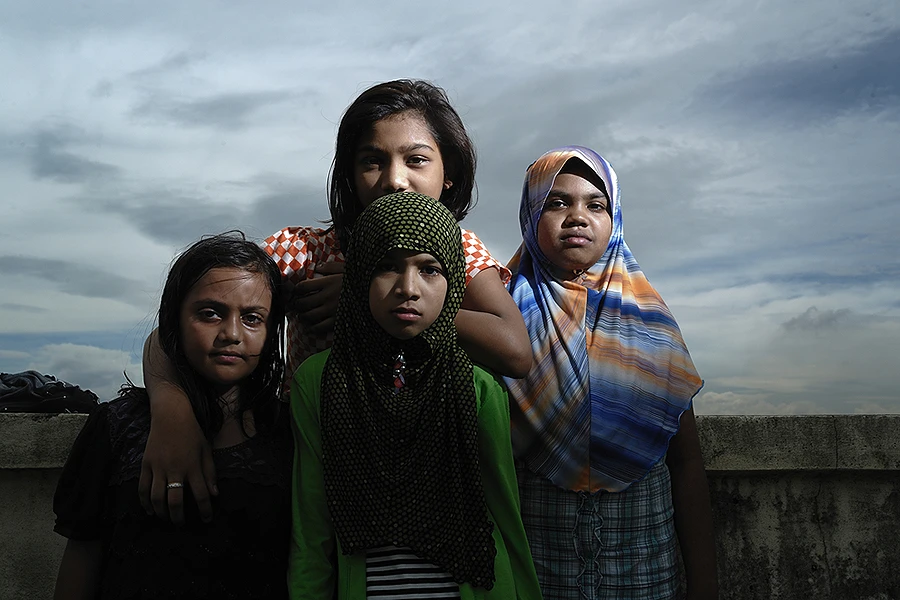
Kolkata, India, Jan 26, 2018 / 01:26 pm (CNA/EWTN News).- Raheema was just 15 years old when she left her home in the Rakhine state in Burma.
“There was no food at home and my mother thought I would be better off if I joined my father,” who was in a refugee camp in Balgadesh, Raheema told the Thomas Reuters Foundation, according to the DailyMail UK.
“But my aunt at the camp sold me to the agent who told her he would get me married in India,” she continued.
When she arrived in Kolkata, however, she was sold into slavery for around $300.
“He was only slightly younger than my father… he would beat me up with electrical wires and not let me leave, saying he had bought me,” Raheema said.
After five years in his captivity, she was allowed to leave. At the time, she had one child and was five months pregnant with another baby.
Raheema’s story is not unique. Over half a million Rohingya Muslim refugees have fled Burma – also known as Myanmar – amid continued state-supported violence in the majority-Buddhist country.
But, migration officials are finding that these refugees are also becoming the prey of human traffickers.
“Marriage is big for young girls and parents are agreeing to it because they see better economic stability,” said Iffat Nawaz, a spokeswoman for the aid organization BRAC, according to the DailyMail UK.
BRAC is working to prevent abuse cases, such as Raheema’s. They have set up educational courses at the refugee camp in Cox’s Bazar, Bangladesh to inform young girls on how to stay safe, and are trained on what to look for among the crowd of strangers.
The anti-trafficking organization Impulse NGO Network works to reunite trafficked girls with their families in Burma. In the past six months, the network has received five cases of girls who were trafficked from Bangladesh into India, according to reports from their families.
According to the BBC, there were around one million Rohingya Muslims in Burma at the start of 2017. They are one of many ethnic minorities in the country and have their own language. The government in Burma is primarily Buddhist, and denies the Rohingya citizenship, going so far as to exclude them from the census.
The military claims the violence is a response to attacks by a small group of Rohingya against border agents in the Rakhine province, which left 12 officers dead. However, the violence – which includes arson, sexual violence, and internal displacement – long precedes those attacks, and other demonstrations within Rohingya communities, said Olivia Enos, a policy analyst in the Asian Studies Center at The Heritage Foundation, who specializes in human rights.
“Maybe some individual Rohingya are acting out in self-defense, but to place blame on Rohingya is misleading,” Enos said.
“The military has a long, long history of burning homes and villages, raping women and children. The track record is so long that to place the blame on any kind of radical agents within the Rohingya would be really inaccurate.”
The crisis has pushed more than 660,000 Rohingya Muslims into Bangladesh since last summer. Some Rohingya have migrated to India, where there are close to 40,000 currently.
The UN has called the situation the “world’s fastest growing refugee crisis.”
If you value the news and views Catholic World Report provides, please consider donating to support our efforts. Your contribution will help us continue to make CWR available to all readers worldwide for free, without a subscription. Thank you for your generosity!
Click here for more information on donating to CWR. Click here to sign up for our newsletter.
Tokyo, Japan, Nov 20, 2019 / 05:25 pm (CNA).- Though it is mostly an irreligious country, seemingly untroubled by matters of the hereafter, Japan is over-run with festivals and holidays dedicated to the Buddhist and Shinto gods.
According to the most recent available data, approximately 35% of Japanese people claim Buddhism as their religion, while around 3-4% claim Shinto or associated folk religions. Only 1-2% of Japanese claim Christianity as their religion, and only around half of Japanese Christians are Catholic.
However, despite the minuscule portion of the general population that actively affiliate themselves with Shinto temples and claim to abide by the Shinto worldview, around 70% of Japanese report participating in some annual Shinto ceremonies.
These ceremonies include Tanabata, the star festival, wherein families visit temples and shrines in order to write wishes on slips of paper and hang them from bamboo plants.
The festival’s mythology claims that the day is the annual meeting of two gods, one male and one female, who are separated lovers – Orihime and Hikoboshi. Tradition states that these two spirits are separated by the Milky Way, and that when there is no rain on the seventh day of the seventh month of the year, the two can be together.
The celebration is so widespread that even Tokyo Disneyland performs a special event for the day, casting Mickey Mouse and Minnie Mouse as the separated god and goddess in love.
Another example of common Shinto-influenced celebrations is Obon, a week-long festival far more solemn than the joyful, carefree festivals of spring and early summer.
Obon is a week-long holiday dedicated to deceased ancestors. Many families come together from across the country to meet at ancestral homes, cleaning graves and leave offerings for the spirits ancestors, including sake and rice.
But are these Shinto holidays off-limits to Catholics?
“A few years ago, the Committee on Inter-religious Dialogue of the Catholic Bishops’ Conference of Japan issued a guideline on this matter,” Archbishop Isao Kikuchi told CNA, ahead of Pope Francis’ Nov. 23-26 visit to Japan.
“In the case of community traditions, there is no problem participating in the event.”
That’s because, according to the committee’s findings, these festivals often carry no spiritual weight for participants.
“In many cases, members of the community do not find religious implications for these events. But rather, they see it as an opportunity to strengthen the community spirit of the neighborhood.”
These Shinto “community events” can perhaps best be compared to, for instance, Halloween in the United States.
While for some Christians, Catholics included, All Saints Day and All Souls Day are very real and religiously charged days on the liturgical calendar, many people celebrate the holiday of Halloween with no awareness of its actual spiritual significance.
The reality of Shinto celebrations (and to a lesser degree Buddhist celebrations) in Japan are largely the same.
However, Archbishop Kikuchi made one clear distinction on the subject of these holidays.
“It is not recommended to actively participate in worship at places such as in a Shinto shrine.”
The Japanese bishops have warned against certain forms of participation in these community festivals that still swerve too close to expressions of real religious devotion. While many visitors to shrines and temples around these times of year are not directly engaging with any religious worship, others can toe the line or fully cross it, the bishops warn.
For example, a common ritual at shrines during the holidays is to toss money into the open area in front of the main worship area, clap thunderously to scare away evil spirits, then clasp your hands and close your eyes in prayer. While there can be debate over what exactly the average Japanese means when they say they “pray” during these events, the practice is still universally condemned for Catholics in the country.
Additionally, a Shinto totem known as a mikoshi is often carried through the streets on festival days. A mikoshi is considered by Shinto believers to be a portable vehicle through which to transport gods and spirits from one shrine to another.
These miniature shrines are carried on the shoulders of dozens of town volunteers, each shouldering a small portion of the very heavy religious object. The transport of mikoshi often brings with it parades, chants, and religious dances.
Mikoshi, too, are strictly banned for Catholics.
The bishops do not see these universally important days in the Japanese calendar as obstacles to evangelization. Instead, they want to break them down and reshape them into something Catholics can use for their own spiritual lives.
And most importantly, it seems that they want to keep Japanese Catholics from being alienated entirely from Japanese life.
“In addition, many parishes have incorporated in their liturgical calendar Japanese customs having no religious character, such as the blessing of children aged 7, 5 and 3,” the archbishop explained.
A few Catholic parishes have even begun to shift their celebrations of the dead, usually reserved for October and November, to August to match with Obon.
“The Church can […] turn such occasions into opportunities for evangelization,” said Archbishop Kikuchi.
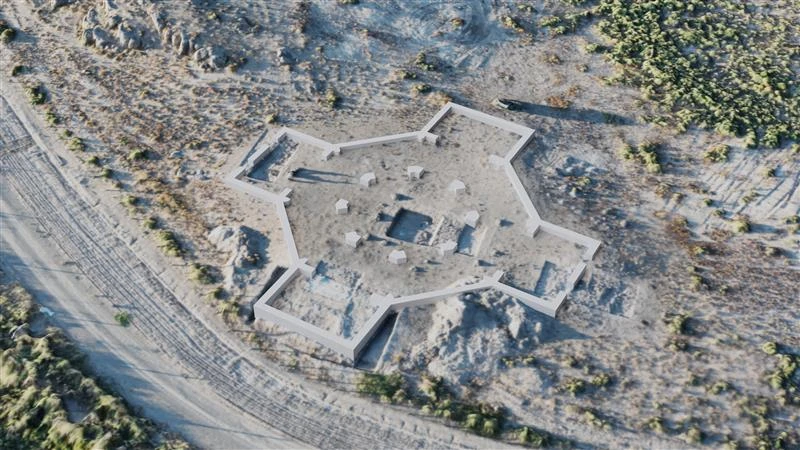
A reconstruction of an ancient church recently discovered in Armenia. The newly discovered church measures about 100 feet across and is shaped like an octagon with “cruciform annexes oriented east-west and north-south,” according to Achim Lictenberger, who noted the discovery of a similar structure from a slightly later period found in Abchazia (Sebastopol). / Credit: AGAP
Washington, D.C. Newsroom, Oct 24, 2024 / 08:00 am (CNA).
A team of German and Armenian researchers made a groundbreaking discovery last week of an ancient church in Armenia dating back to the fourth century, making it the oldest documented church in Armenia, which is considered the first Christian nation in the world.
In an email correspondence with CNA, co-directors of the project Achim Lichtenberger and Torben Schreiber of the University of Münster and Hayk Gyulamiryan of the Armenian Academy of Sciences explained the significance of the discovery made by the team at the site of the ancient city of Artaxata. The project’s fourth co-director, Mkrtich H. Zardaryan, could not be reached for comment by the time of publication.
Historic roots of Christianity in Armenia
“Being the first country which adopted Christianity at the state level, and where the apostles Thaddeus and Bartholomew preached Christianity in the early first century, this discovery is a very important fact for Armenians,” Gyulamiryan told CNA, further stating that “the findings are among the most important in Armenia in recent decades.”
Lichtenberger also emphasized the site’s particular importance, as the church was discovered near the monastery of Khor Virap, where Gregory the Illuminator had been kept in prison before he converted the Armenian king Tiradates III to Christianity in the fourth century.
The monastery of Khor Virap and Ararat in Armenia. Credit: AGAP
As Gyulamiryan stated, although the roots of Christianity may be traced back to the time of the apostles in Armenia, it was not until 301 that Christianity was proclaimed the official religion of Armenia.
According to tradition, Armenia’s conversion is attributed to St. Gregory the Illuminator, a Christian evangelist and convert from Zoroastrianism who miraculously cured the nation’s pagan king of a peculiar “illness” after no other pagan priest was able to do so.
The widely-adopted story of how Armenia became Christian draws from a mythical history promulgated by the fifth-century author Agathangelos, the Armenian researcher explained.
As the legend goes, the pagan king of Armenia had become fascinated by the beauty of St. Hripsime, a nun who had fled with her abbess and community from persecution in Rome. The king offered to marry and make her queen, but Hripsime refused and was able to ward off the king’s advances through miraculous strength.
After the king ultimately had Hripsime and her community killed, historians claim he was “turned into a wild boar who tore at his own flesh” and could not be cured by any priests of pagan or Zoroastrian temples who attempted the feat.
Eventually, the king’s sister persuaded him to appeal to St. Gregory, whom the king had imprisoned for the past 15 years. Once St. Gregory was released, he cured the king of his “disease” and converted him and the entire royal family to the Christian faith.
Artaxata, where these events are believed to have taken place, is “a major place related to early Christianity in Armenia,” Lichtenberger told CNA.
St. Gregory is revered both in the Orthodox Armenian Apostolic Church and in the Catholic Church traditions. In 2005, Pope John Paul II erected a 19-foot statue of St. Gregory in the north courtyard of St. Peter’s Basilica in Vatican City.
The excavation area of the archeological site where the remains of an ancient church were found in Armenia. Credit: AGAP
The discovery
The newly-discovered church measures about 100 feet across and is shaped like an octagon with “cruciform annexes oriented east-west and north-south,” according to Lichtenberger, who noted the discovery of a similar structure from a slightly later period found in Abchazia (Sebastopol).
Although the Araxata site was previously discovered, Lichtenberger told CNA that the church had been buried underground and gone undiscovered until the team carried out its magnetic prospections and excavations this past spring.
The researchers confirmed in September the age of the church to be from about 350 A.D. using radiocarbon dating techniques on a series of samples taken from a wooden platform belonging to the original construction of the building.
Ahead of the autumn excavations this year, Gyulamiryan told CNA he remembered thinking that the team “should confidently dig up the next chapter of the history of Armenia.”
The massive mortar wall of the recently discovered ancient church believed to be the oldest in Armenia. Credit: AGAP
According to Lichtenberger, the radiocarbon date from the wooden samples corresponded with pottery shards that were also discovered inside the church and with “the overall construction technique of the building using substantial amounts of mortar.”
“In the center of the church we encountered significant amounts of marble decoration that suggest that this part was prominently adorned,” he said. Interestingly, the German researcher noted that the state of the building upon discovery indicated that it had perhaps met a hostile end.
“The building was heavily destroyed (maybe intentionally),” he wrote, “the marble construction smashed, parts of the floor tiles removed, the roof set on fire, and all was buried in a huge collapse of roof tiles and burnt roof beams.”
However, according to Lichtenberger, there are no primary literary sources that correspond to the church, as “literary sources only relate to a seventh-century A.D. church in Artaxata.”
By contrast, while the Armenian literary tradition attests that the oldest church in the country is the Etchmiadzin Cathedral, Lichtenberger noted, “archeological evidence from this place does not date back to the mid-fourth century A.D.”
“This does not mean that Etchmiadzin is younger than the Artaxata church, it only means that the Artaxata church provides earlier archaeological evidence,” he added. “Therefore we assume that the Artaxata church is the oldest archaeologicallyattested church in Armenia.”
The Etchmiadzin Cathedral, which Armenian literary tradition attests is the oldest church in the country. But Achim Lichtenberger says this “does not mean that Etchmiadzin is younger than the Artaxata church, it only means that the Artaxata church provides earlier archaeological evidence. Therefore we assume that the Artaxata church is the oldest archaeologically attested church in Armenia.” Credit: Madalaine Elhabbal
Future of the project
Schreiber shared with CNA in another email chain that analysis of data collected from the site will play a significant role in future archeological measures.
“The interaction of the excavation results, the geophysical survey, and the scientific investigations (natural sciences) will keep us busy in the coming year,” Schreiber said. “However, we are certain that these measures will provide us with a very comprehensive picture of this extraordinary and important find.”
Excavations in the ancient ruins of a church recently discovered in Armenia, the oldest Christian nation in the world. Credit: AGAP
The research team from the University of Münster and the Armenian Academy of Sciences have been at the Artaxata site since 2018 and have also made other noteworthy discoveries, including an unfinished Roman aqueduct, a Hellenistic sanctuary, and the remains of an Urartian settlement, according to Lichhtenberger.
The team of researchers also includes 10 students from the German university along with various internal and external specialists who consulted with the team on different groups of materials at the site, including animal and human bones, plants, or “archaeobotanical” matter, marble, plaster, pottery, and roof tiles — “of which we found a lot,” Lichtenberger said.
“We will continue the work of the Armenian-German Artaxata Project in the future,” he told CNA.
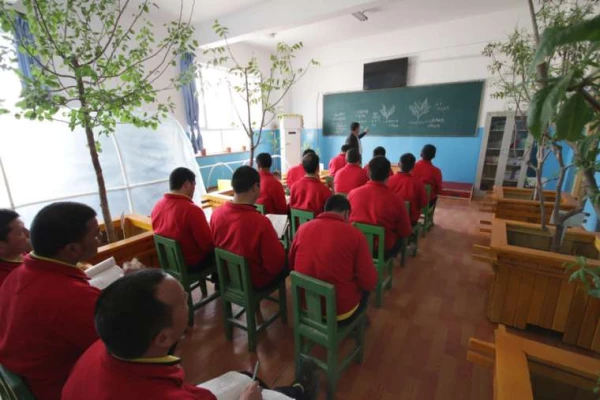
CNA Staff, Sep 24, 2020 / 02:08 pm (CNA).- Researchers at an Australian think tank have found that re-education camps for Muslims in China’s Xinjiang region have expanded in the past year, despite government claims that most detainees had been released.
The Australian Strategic Policy Institute said in a Sept. 24 report that it had “identified and mapped more than 380 suspected detention facilities in the Xinjiang Uyghur Autonomous Region, highlighting ‘re-education’ camps, detention centres and prisons that have been newly built or expanded since 2017.”
“The findings of this research contradict Chinese officials’ claims that all ‘trainees’ from so-called vocational training centres had ‘graduated’ by late 2019. Instead, available evidence suggests that many extrajudicial detainees in Xinjiang’s vast ‘re-education’ network are now being formally charged and locked up in higher security facilities, including newly built or expanded prisons, or sent to walled factory compounds for coerced labour assignments.”
The think tank presented satellite imagery evidence showing construction and expansion at 61 sites since July 2019; half of these, it said, are ‘higher security facilities, which may suggest a shift in usage from the lower-security, ‘re-education centres’ toward higher-security prison-style facilities.”
It added that “at least 70 facilities appear to have been desecuritised by the removal of internal fencing or perimeter walls. This includes 8 camps that show signs of decommissioning, and it is possible they have been closed.”
An estimated 1 million Uyghurs, members of a Muslim ethnoreligious group, have been detained in re-education camps in Xinjiang. Inside the camps they are reportedly subjected to forced labor, torture, and political indoctrination. Outside the camps, Uyghurs are monitored by pervasive police forces and facial recognition technology.
The Chinese government has defended its policy of mass detention and re-education as an appropriate measure against terrorism.
The government at one time denied the camps even existed, but has since shifted to defending its actions as a reasonable response to a national security threat, and claiming they are vocational training centers.
Government officials from the region said in July 2019 that the area’s re-education camps for Muslims have been successful, with most of those held having been reintegrated into Chinese society.
Shohrat Zakir, chairman of Xinjiang, said at a July 30 press conference in Beijing that “most of the graduates from the vocational training centers have been reintegrated into society,” according to the AP. “More than 90% of the graduates have found satisfactory jobs with good incomes.”
Xinjiang vice chairman Alken Tuniaz said detainees were allowed to “request time off” and “regularly go home,” the AP reported.
While they are not permitted to practice their religion during their “period of study”, he said, they may do so at home.
Tuniaz also said that “the majority of personnel who received education and training have returned to society and gone back to their homes,” according to the Wall Street Journal. “The majority have successfully secured employment.”
Uyghurs can be arrested and detained under vague anti-terrorism laws. Violence in the region escalated in the 1990s and again in 2008.
A 2019 document from a Xinjiang county leaked to western media earlier this year gave violation of birth control policies as the most common reason for the “re-education” of some 3,000 Uyghurs, often alongside other reasons.
In June an AP investigation found a systematic campaign by the Chinese Communist Party of pregnancy checks and forced abortions, sterilizations, and implantations of IUDs on Uyghurs and other minorities in Xinjiang.
The US House passed a bill Sept. 22 to ensure goods sold in the country are not made with forced labor from the internment camps, and earlier this year the Trump administration put travel and asset sanctions on several senior officials of the CCP. in Xinjiang for their role in the mass internment of Uyghurs.
The US Commerce Department in October 2019 added 28 Chinese organizations to a blacklist barring them from buying products from US companies, saying they cooperate in the detention and repression of the Uyghurs.
The repression of Uyghurs is part of a widespread effort by the Chinese government to “Sinicize” religion and culture across the country.
In 2018, the Holy See and Beijing signed a two-year deal to unify the underground Catholic Church in China with the communist-administered Chinese Patriotic Catholic Association, and to collaborate on the appointment of bishops in Chinese dioceses. That agreement is expected to be renewed. State officials in various regions of China have continued to remove crosses and demolish church buildings, and underground Catholics and clergy continue to report harassment and detention.
A Sept. 22 report by Adrian Zenz at the Jamestown Foundation said that in the Tibet Autonomous Region hundreds of thousands have been coerced into vocational training or labor camps.
And in the Inner Mongolia Autonomous Region, beginning this month schools are transitioning from teaching three core subjects in Mongolian, to doing so in Mandarin.






Leave a Reply