Lusaka, Zambia, Jan 9, 2018 / 01:42 pm (CNA/EWTN News).- A cholera outbreak in the southern African country of Zambia, centered on the capital Lusaka, has led to an indefinite cancellation of some school openings and church services.
“We have had an outbreak of cholera from October 6, 2017 and it has affected mainly Lusaka Province and we have recorded sporadic cases in various parts of the country,” read a statement from Zambia’s Minister of Health, Chitalu Chilufya, and the Minister of Education, Dennis Wanchinga, according to Africa News.
As of Jan. 9, an estimated 2,802 individuals have been infected by cholera throughout Zambia, including 66 deaths – the majority of which have occurred in Lusaka.
Due to the outbreak, a handful of ecclesial communities in Lusaka have cancelled services as a precaution against the spread of the disease. In addition, schools have indefinitely called off classes for students.
The Zambian bishops' conference has limited the number of Masses in some places, and cancelled the sign of peace at Masses which are still being held.
Representatives of three Christian communities in Zambia – the Catholic Church, the Council of Churches in Zambia, and the Evangelical Fellowship of Zambia – issued a Jan. 8 statement on national dialogue which included a lamentation over the cholera crisis.
“Our hearts go to the many families who have lost their loved ones from the disease. We pray for God’s peace, comfort and encouragement during this time of national crisis. We pray for the various teams working on the ground to fight the cholera outbreak so that this may be overcome quickly and life may be restored to normal,” they said. “We support the efforts of other stakeholders in this battle against cholera and pledge ourselves to collaborate with government in addressing the epidemic.”
Kanyama, one of the poorest townships in Lusaka, has been particularly affected by the disease, according to Reuters. Because of this, government intervention in the area has enforced a curfew, and has also banned street vending and public gatherings while the threat of cholera remains.
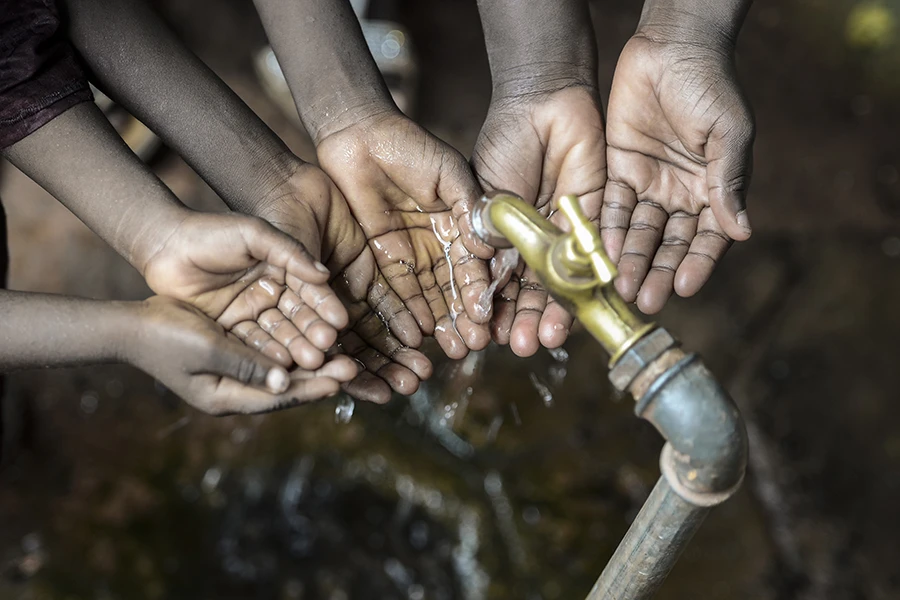
Cholera is caused by bacterial infection. Within a few hours of infection, the disease causes vomiting and diarrhoea, leading to severe dehydration that can be deadly without rapid intervention. Access to clean water and sanitation is critical to control the spread of cholera, and those with mild symptoms can usually be treated with hydration and antibiotics, although some cases require intravenous fluids.
Recent investigations have shown that the cholera outbreak in Zambia has been caused mainly by food contamination, according to Reuters. Three restaurants have been shut down after they were found to contain the cholera bacterium.
Government efforts have been set in place to combat the spread of cholera in the country. A vaccine will be available for administration Jan. 10 in the areas most affected by the disease, according to Lusaka Times.
Zambia’s president also highlighted the work of the Zambia Defence Forces, which have been collaborating with other organizations in the fight against the disease.
“I have directed all three wings of the Defence Force to join the Ministry of Health and the city fathers, Lusaka City Council to escalate efforts to minimize the spread of cholera in our capital city and the rest of the country,” said President Edgar Lungu of Zambia last month.
If you value the news and views Catholic World Report provides, please consider donating to support our efforts. Your contribution will help us continue to make CWR available to all readers worldwide for free, without a subscription. Thank you for your generosity!
Click here for more information on donating to CWR. Click here to sign up for our newsletter.

Juba, South Sudan, Apr 11, 2017 / 12:29 am (CNA/EWTN News).- The president of the Sudanese Catholic Bishops’ Conference called on leaders in South Sudan’s Bahr El Ghazal region to fight segregation and division, uniting to work for peace in the violence-ridden country.
Achieving peace, said Bishop Barani Eduardo Hiiboro Kussala of Tombura-Yambio, “demands of all of us that we act with real respect for human life. It demands that those who still sponsor anger, hate, segregation and violence against one another end such meaningless projects or ideas.”
On April 6, Bishop Kussala published “An Open Letter of Hope and Peace to the Elders of Greater Bahr El Ghazal.”
His letter marked one month since the death of Bishop Rudolf Deng Majak of the Catholic diocese of Wau, which is part of the Bahr El Ghazal region of South Sudan. The 76-year-old bishop died March 6 at a relative’s house in Siegburg, Germany, where he was awaiting an operation that had been scheduled for the following week.
“The wound inflicted by his death remains deep and raw and so, as we pray for him, we carry in prayer those for whom his death has left a painful void,” Bishop Kussala said.
He appealed to the elders of the greater Bahr El Ghazal area to work for peace and alleviate suffering in Bishop Deng’s memory.
“The best gift we can give him forever is being part of the reconstruction, reconciliation, and reintegration, regeneration of our country, ravaged by the war waged by us and against ourselves.”
Working to change the spiral of suffering, revenge killings, hatred and displacement is a difficult task, Bishop Kussala acknowledged.
“It demands new initiatives to move Greater Bahr El Ghazal and our country forward to freedom as quickly as possible. With this letter I am indeed consulting leaders of civil society, religious leaders, community organizations, business, cultural and other leaders in Greater Bahr El Ghazal to seize an opportunity on such initiatives.”
South Sudan has been embroiled in civil war since December 2013, when South Sudan’s President Salva Kiir accused his former deputy, Riek Machar, of attempting a coup. The war has been fought between their supporters, largely along ethnic lines, and peace agreements have been short-lived.
The conflict has created more than 2.5 million refugees. At present some 4.5 million people face severe food insecurity, a number expected to rise one million by July.
“At the core of the crisis within South Sudan’s war-affected communities and regions is the desire to acquire power and secure resources for one group of elites or one ethno-national group at the expense of others,” Bishop Kussala said.
This has created tension and division, and “has undermined the social fabric of our society or nation,” even affecting neighboring countries as refugees seeking the escape the conflict flee to other nations.
“In all of these cases, violence has led to the breakdown of our beloved homes,” Bishop Kussala continued. “Human lives have been lost. Infrastructure has been destroyed, education and health services have suffered, and the environment has been damaged. The ties that link people together…have been broken, social solidarity has collapsed and political tension has been highly generated.”
These conflicts arise from self-interested elites who take advantage of past divisions, the bishop said. However, peace is possible, as evidence by the “relative peace, development and economic growth after our national independence shortly in 2011.”
In an efforts to restore this stability, Bishop Kussala called on the elders of Greater Bahr El Ghazal to “engage all stakeholders” in seeking peace, allowing for dialogue and supporting genuine efforts aimed at reconciliation and healing.
He urged the elders to publically and unequivocally condemn revenge killings, violence against civilians and the use of hate speech which fosters tribal division.
In addition, he said, they should “call urgently for immediate robust humanitarian intervention for the starving people in and outside Wau,” pushing for roads to be opened to aid workers delivering food for the hungry population.
Efforts are needed both to prevent further killings and to foster reconciliation and healing in society, the bishop said. He also recommended an independent investigation into atrocities against the community, in order to hold perpetrators accountable.
In solving these problems, it is important to remember the role of culture, Bishop Kussala said.
“People derive their sense of meaning from their culture…Cultural attitudes and values…provide the foundation for the social norms by which you as a people exist and live,” he noted. “Through internalizing and sharing these cultural attitudes and values with fellow community members, and by handing them down to future generations, societies can – and do – re-construct themselves on the basis of a particular cultural image.”
Achieving peace in Wau State will require an acknowledgement of wrongdoing, repentance and an offering of forgiveness, the bishop said. It will also require “a way for members of these communities to ‘re-inform’ themselves of their rich history of co-existence with a cultural logic that emphasizes sharing and equitable resource distribution.”
“The people of Greater Bahr El Ghazal should draw their strength from each other as one people,” he emphasized. “You have common humanity, heritage, history and you are socially interwoven.”
“For Wau State to live and prosper, we must come together!”
The sisters Madeleine and Marie-Liesse together with Louis Antona at the entrance of Greece. The three young people covered the distance from Paris to Jerusalem on foot, arriving in mid-May 2024. “I needed to walk 4,500 kilometers to understand that Jesus is not just in Jerusalem, but was by my side every step of the way,” Antona told CNA. / Credit: Photo courtesy of French pilgrims Madeleine and Marie-Liesse
Jerusalem, Jun 18, 2024 / 06:00 am (CNA).
On Sept. 17, 2023, two sisters left Paris and walked for approximately eight months to Jerusalem. Madeleine and Marie-Liesse, 19 and 22, who grew up in a Catholic family, decided to become pilgrims to grow in their faith.
“We needed to make the faith our own,” they told CNA. “This pilgrimage was to discover God, to truly search for him and deepen our faith. We learned that we can trust God; he takes care of us in everything. The Gospel is not a joke.”
Two months later, in mid-November 2023, Louis Antona, 24, also left Paris on foot, bound for Jerusalem. The three young people met providentially in Albania, walked together through Turkey, then parted ways and reunited in Jerusalem. They shared the story of their pilgrimage with CNA.
“I needed to walk 4,500 kilometers to understand that Jesus is not just in Jerusalem but was by my side every step of the way,” Antona told CNA. He walked a total of 189 days and arrived in Jerusalem on May 18.
Madeleine and Marie-Liesse — who asked that their last name not be used to protect their privacy — left from the Basilica of the Sacred Heart of Montmartre in the center of Paris with the blessing of their parents and a priest.
“It was a calling from God,” Madeleine said of the decision she and her sister made to leave. “There’s no need for reasons when God calls; you simply need to follow what he tells you.”
Madeleine and Marie-Liesse during a moment of their journey, between Slovenia and Croatia. “The faith of the people struck us: during Advent, tradition dictates that Mass be attended every morning at 6, and every time we went, the church was packed with people,” they told CNA. The two sisters left Paris on September 17, 2023, and walked for about eight months to Jerusalem. Credit: Courtesy of French pilgrims Madeleine and Marie-Liesse
The sisters created a simple blog to keep friends and family updated on their pilgrimage. The photos and brief stories reveal all the freshness of two young people on a journey while not hiding moments of doubt and difficulty.
“We chose to embark on this journey as beggars,” Marie-Liesse told CNA. “We left with just a few clothes and nothing else — no food, no money. We wanted to surrender ourselves into the hands of providence. Every evening, we knocked on people’s doors asking for shelter, a bed, and food. The Lord always provided.”
Their days were marked by walking and prayer.
“We didn’t have a strict rule because we had to adapt every day to the people who hosted us, the place, and the situation,” Marie-Liesse explained. “But we had a framework: We knew we had to pray in the morning, at midday, at night… It was important for us to be faithful to God. Every day, we also recited a rosary, praying for the intentions entrusted to us.”
The most challenging moment was making the decision to continue the journey after hearing that war had broken out in the Holy Land. “We were in Germany and full of doubts about whether to go on.”
Their journey led them to cross Switzerland, Germany, Austria, Slovenia, and Croatia. In Croatia, “the faith of the people struck us: during Advent, tradition dictates that Mass be attended every morning at 6, and every time we went, the church was packed with people,” the sisters wrote on their blog.
They stopped for a month in Medjugorje (Bosnia and Herzegovina), where their family joined them for Christmas.
“It was a difficult time. Again, we didn’t know what to do. But after a period of discernment, we realized that Christ was calling us back on the road again,” Madeleine said.
Madeleine and Marie-Liesse crossed Montenegro and arrived in Albania, where they encountered Antona.
“I had just finished my studies and wanted to offer something to God,” Antona told CNA. “I wasn’t sure what, but I thought that the best thing I had at that time was time itself. So, I decided to offer God a year of my life by embarking on a journey. It was a challenge; I wasn’t sure if I would enjoy walking and being alone.”
Louis Antona, 24, during a moment of his journey. “I had just finished my studies and wanted to offer something to God,” he told CNA. “I thought that the best thing I had at that time was time itself. So, I decided to offer God a year of my life by embarking on a journey.” Credit: Photo courtesy of Louis Antona
Antona decided to leave, despite the war. “I believe the hardest part of a pilgrimage like this is deciding to start. I knew that if I gave up because of the war, I would never do it again. Anyway, I thought that by the time I arrived, the war would already be over.”
Madeleine and Marie-Liesse are filled with wonder at the manifestation of providence in every detail of their pilgrimage, in the beautiful weather and in the rain, in every small encounter — those who hosted them after seeing them at the bus stop, those who taught them how to make bread, the gentleman who opened his door just before a downpour. “If we had arrived a minute later, we wouldn’t have met him,” they said.
The encounter with Antona wasn’t coincidental either. The two sisters had prayed to God to give them a travel companion.
“We planned to not go through Turkey because we were two women alone, but we would have liked to go that way. So we asked God to meet one pilgrim, and we met him,” the sisters explained.
The three crossed Macedonia and Greece, arriving in Turkey on Palm Sunday. In this predominantly Muslim country, they celebrated Easter, warmly welcomed by the small French-speaking community there.
The sisters Madeleine and Marie-Liesse together with Louis Antona received a blessing from a priest during a Mass in Turkey. They arrived in Turkey on Palm Sunday 2024. In this predominantly Muslim country, they celebrated Easter, warmly welcomed by the small French-speaking community there. Credit: Photo courtesy of Louis Antona
“Every day of this pilgrimage was a miracle,” Antona said. “Every day we have met people who smiled or were nice to us. I have to say that in Turkey we found the most welcoming people.”
“It is not uncommon for the Turks to spontaneously lend us a hand,” Madeleine and Marie-Liesse wrote on their blog. “In Turkey, we encountered an infinite respect for passing strangers and for Christianity, even though Christians here are forced to protect themselves from regular attacks.”
The arrival of Madeleine and Marie-Liesse in Albania. In the photo, Marie-Liesse is in front of a statue of Mother Teresa, who was originally from this country. “Every evening, we knocked on people’s doors asking for shelter, a bed, and food. The Lord always provided,” they told CNA. Credit: Photo courtesy of French pilgrims Madeleine and Marie-Liesse
Upon leaving Turkey, the paths of the three pilgrims split again. The sisters’ route went through Cyprus but they could not find a way from there to Jerusalem by sea due to suspension of transportation because of the war. Providentially, they met someone in Cyprus who offered to pay for airfare, and the sisters arrived in Tel Aviv on May 6. Three days later, on the feast of the Ascension, they were in Jerusalem.
“Many times, we thought we couldn’t reach Jerusalem,” Madeleine said. “We learned that the journey is even more important than reaching the goal. Being here is a great gift, just to be here.”
“We unpacked our bags once and for all, knelt before this Holy Land, and prayed. What peace, what a moment of grace! As we admired the sunrise and the golden light that brought color to the roofs of the old city, we could reread the wonders of God and meditate on the Gospels. His infinite love overwhelmed us,” the two sisters wrote on their blog.
The sisters Madeleine and Marie-Liesse received a blessing from a Franciscan friar at the Basilica of the Holy Sepulcher after their arrival in Jerusalem. “The greatest gift is to be here and understand what happened here, to see with our own eyes, to witness the actual places,” Madeleine said. “We were able to pause in every place, to pray and meditate in silence.” Credit: Photo courtesy of French pilgrims Madeleine and Marie-Liesse
Madeleine has no doubts: “Prayer is what carried us. When you’re weak, that’s when you’re strongest because that’s when God can act in you; you don’t take up all the space. Trusting in God can be challenging, but when you understand that God only wants you to be happy and will give you everything you need, then you realize you have everything to be happy in this moment; you can trust him.”
Ten days later, on the eve of Pentecost, Antona also arrived in Jerusalem. “Even if I had to stop somewhere else, at least I would have aimed to reach Jerusalem. This is a very important city for Christians, but the journey you take to reach it is also very important.”
French pilgrim Louis Antona arrived in Jerusalem on May 18, at the vigil of Pentecost. “Every day of this pilgrimage was a miracle,” he said. Credit: Photo courtesy of Louis Antona
The three pilgrims are still in the Holy Land. They have had the opportunity to participate in various celebrations and to visit the holy places in addition to many other sites in the area.
“The greatest gift is to be here and understand what happened here, to see with our own eyes, to witness the actual places,” Madeleine said. “We were able to pause in every place, to pray and meditate in silence.”
A journey like this isn’t for everyone, but all three of the pilgrims agree that “if God calls you, go in peace. If God helps you, everything becomes possible.”
The French pilgrims rest under the portico of the Church of the Beatitudes on a hill overlooking the Sea of Galilee. In the photo is Louis Antona. A journey like this isn’t for everyone, but, the three young people said, “if God calls you, go in peace. If God helps you, everything becomes possible.” Credit: Photo courtesy of French pilgrims Madeleine and Marie-Liesse
It is sad that chorela can lead to the baning of church gathering and school.may God help my country zambia.