Doylestown, Pa., Aug 14, 2017 / 08:02 pm (CNA/EWTN News).- In an effort to draw the ‘selfie generation’ to Marian spirituality, the Pauline Fathers of Doylestown, Pennsylvania collected photos from dozens of countries around the world for a mosaic of Our Lady of Czestochowa.
“In history of Our Lady of Czestochowa, it was a tradition to offer to her new crowns and dresses, made of precious stones and jewels,” said Father Timothy Tarnacki, the coordinator for the Living Crown of Mary Project.
“But today, the world is changing, and we have to find new ways how to reach people, how they can make their faith and their relationship with Jesus and Mary more personal,” he told CNA.
The project was started almost a year ago and the priests will collect photos until Aug. 20 to build a large mosaic of the Marian image, also known as the Black Madonna. It will be revealed on Sept. 10 in the main church in celebration of the 300 anniversary of Poland’s coronation of Our Lady of Czestochowa.
Along with a photo, the Living Crown of Mary project requires the participant to offer a spiritual gift to Mary, which may be an additional Marian prayer or sacrifice.
Fr. Tarnacki said the project originated from the orders’ members in Poland as means to honor Mary and spread Marian spirituality especially among the youth, but also to offer pilgrims the opportunity to participate in a spiritual offering to Mary.
“They offered to the Blessed Mother their entire life, families, difficult situations, unemployment, illnesses. I remember one couple who offered to Mary their resolution to live in chastity before they get married.”
The priests do not have an exact number of the photos sent so far but Fr. Tarnacki estimates the amount to be around 2,000, ranging from cellphone selfies to old black and white photos. All of the photos will be digitalized then a computer software program will arrange the pictures into the image of Our Lady of Czestochowa.
The Pauline Fathers, or the Order of Saint Paul the First Hermit, are the original protectors of the image of the Black Madonna, first established in Poland in 1382 at the Shrine of Jasna Gora. Having a large portion of the Polish immigrant community dedicated to Czestochowa in the U.S., a copy of Mary’s icon blessed by Pope Saint John XXIII was brought to America in 1951 and a shrine was later established in Doylestown in 1955.
The Marian center is a significant piece of history for the Polish-American community, Fr. Tarnacki said, noting his surprise that a project which started off slowly received a large portion of its participates from countries facing political difficulties.
“We were thinking that our project will only cover USA, but it became an international version of the project from Poland, bringing people from every continent into it from about 60 countries.”
If you value the news and views Catholic World Report provides, please consider donating to support our efforts. Your contribution will help us continue to make CWR available to all readers worldwide for free, without a subscription. Thank you for your generosity!
Click here for more information on donating to CWR. Click here to sign up for our newsletter.
Washington, D.C. Newsroom, May 14, 2020 / 10:00 am (CNA).- Catholics have a critical role in bridging the divides of today’s polarized society, one outgoing Catholic congressman says.
“We live in a very polarized society, and I think that&… […]
Washington, D.C. Newsroom, Jul 28, 2022 / 12:45 pm (CNA).
Ahead of a new poll showing overwhelming support for legalized abortion among Massachusetts residents, several cities in the state have taken steps t… […]
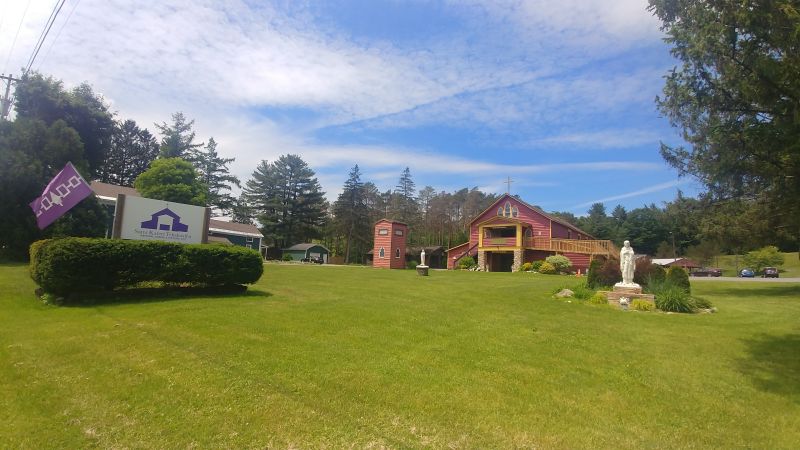
Saint Peter’s Chapel and Native American Museum at Saint Kateri Tekakwitha National Shrine and Historic Site in Fonda, New York. / Photo courtesy of Saint Kateri Tekakwitha National Shrine and Historic Site
Chicago, Ill., Jul 13, 2023 / 12:00 pm (CNA).
Shrines to various saints can be found in every part of the world, including every state in the U.S. Each one is dedicated to faith and prayer, but one shrine in the northeastern United States also has a distinct mission of connecting pilgrims with Native American culture and sharing the fascinating history of Kateri Tekakwitha, the first American Indian to be canonized a saint.
The Saint Kateri Tekakwitha National Shrine and Historic Site in Fonda, New York, honors not only the life of St. Kateri, whose feast day is July 14, but also the life and history of the local Indigenous people to whom she belonged.
“We have cultivated strong ties to both the Catholic Mohawk community and the traditional Mohawk community,” said Melissa Miscevic Bramble, director of operations at the St. Kateri Shrine, in an interview with CNA. “We see it as our mission to educate about her Mohawk culture as well as her Catholic faith.”
Who was St. Kateri?
Called the Lily of the Mohawks, Kateri Tekakwitha was the child of a Mohawk father and a Christian Algonquin mother but was orphaned at age 4 when the rest of her family died of smallpox. Her own early bout with the illness left lasting scars and poor vision.
She went to live with an anti-Christian uncle and aunt, but at age 11 she encountered Jesuit missionaries and recognized their teaching as the beliefs of her beloved mother. Desiring to become a Christian, she began to privately practice Christianity.
Beginning at about age 13, she experienced pressure from her family to marry, but she wanted to give her life to Jesus instead. A priest who knew her recorded her words: “I have deliberated enough. For a long time, my decision on what I will do has been made. I have consecrated myself entirely to Jesus, son of Mary, I have chosen him for husband, and he alone will take me for wife.”
At last, she was baptized at about age 19, and her baptism made public her beliefs, which had been kept private up until then. The event was the catalyst for her ostracism from her village. Some members of her people believed that her beliefs were sorcery, and she was harassed, stoned, and threatened with torture in her home village.
Tekakwitha fled 200 miles to Kahnawake, a Jesuit mission village for Native Amerian converts to Christianity to live together in community. There, she found her mother’s close friend, Anastasia Tegonhatsiongo, who was a clan matron of a Kahnawake longhouse. Anastasia and other Mohawk women took Kateri under their wings and taught her about Christianity, and she lived there happily for several years until her death around age 23 or 24.
Although she never took formal vows, Tekakwitha is considered a consecrated virgin, and the United States Association of Consecrated Virgins took her as its patron. She is also the patron saint of traditional ecology, Indigenous peoples, and care for creation.
A shrine with a special mission
The Saint Kateri Tekakwitha National Shrine and Historic Site has a unique mission of archaeological and historical research related to Kateri Tekakwitha and her people. Welcoming several thousand visitors per year, the shrine ministers not only to Christians but also to all American Indians.
According to its website, the shrine and historic site “promotes healing, encourages environmental stewardship, and facilitates peace for all people by offering the natural, cultural, and spiritual resources at this sacred site.” Describing itself as a sacred place of peace and healing with a Catholic identity, its ministry and site are intended to be ecumenical and welcome people of all faiths.
In keeping with this mission, the shrine’s grounds include an archaeological site, the village of Caughnawaga, which is the only fully excavated Iroquois/Haudenosaunee village in the world. St. Kateri lived in this village, which is on the National Register of Historic Places. Visitors can also visit the Kateri Spring, where Kateri Tekakwitha was baptized.
“The water from the Kateri Spring is considered holy water by the Catholic Church,” Bramble said. “People are welcome to come take the waters, and we regularly get reports of healing. We’ve sent that water all over North America to folks who have requested it.”
Besides the archaeological site, the main grounds of the shrine include St. Peter’s Chapel, housed in a former Dutch barn built in 1782; museum exhibits of Native American culture and history; St. Maximilian Kolbe Pavilion; a Candle Chapel dedicated to St. Kateri; Grassmann Hall and the Shrine office; a friary; a gift shop; an outdoor sanctuary; and maintenance facilities. The 150-acre property includes hiking trails that are open to the public year-round from sunrise to sunset.
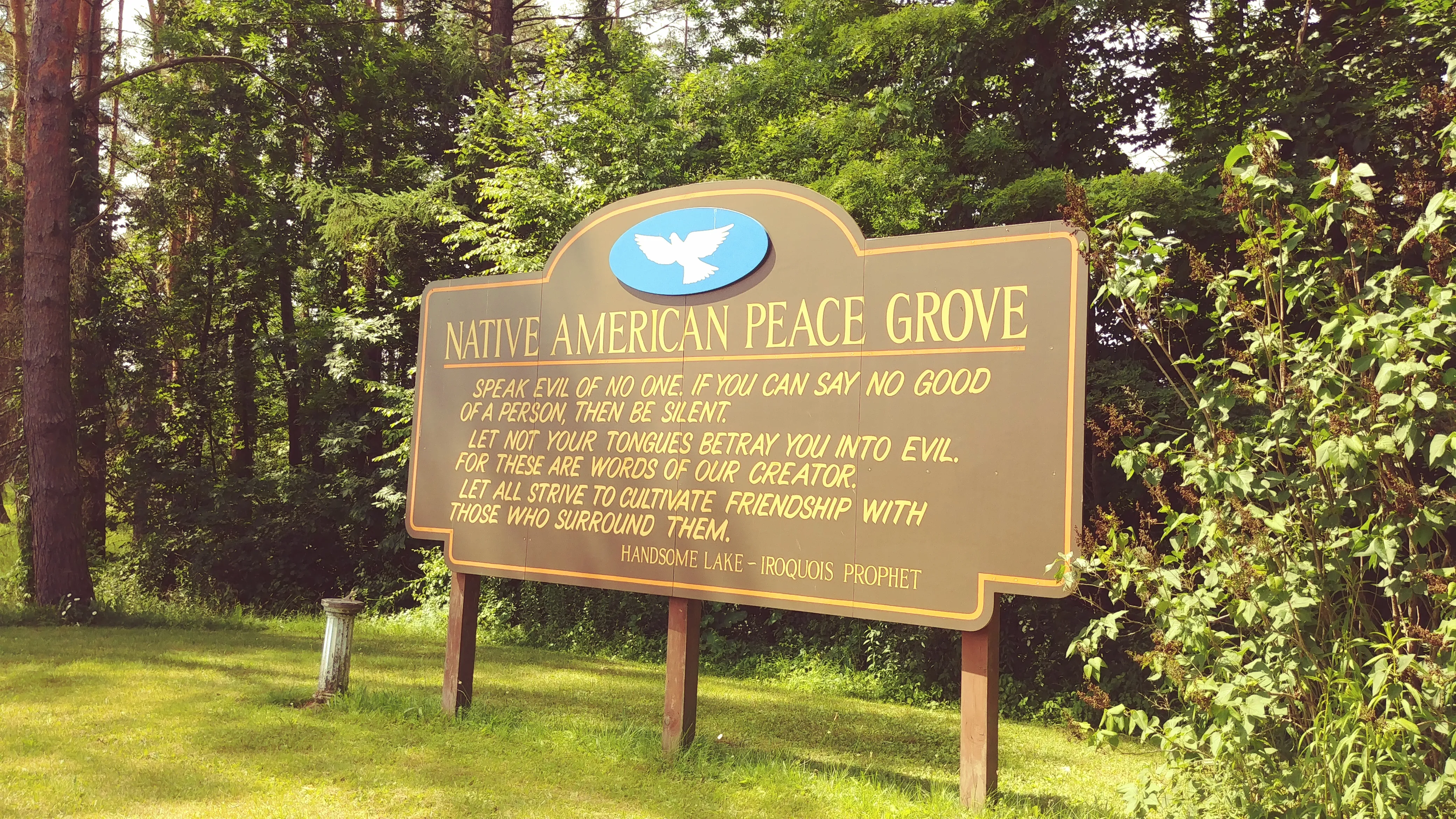
Peace Grove at Saint Kateri Tekakwitha Shrine and Historic Site in Fonda, New York. Photo courtesy of Saint Kateri Tekakwitha Shrine and Historic Site
Outside the Candle Chapel, which is always open for prayer, visitors can participate in a ministry of “Kateri crosses.”
“St. Kateri was known for going into the forest, gathering sticks, binding them into crosses, and then spending hours in prayer in front of crosses she created,” Bramble said. Sticks are gathered from the shrine grounds and visitors are invited to make their own “Kateri crosses” and take them home to use as a prayer aid. Bramble shared that the shrine sends materials for Kateri crosses to those who aren’t able to visit, including recently to a confirmation group.
The feast day weekend
The Saint Kateri Tekakwitha National Shrine has a schedule of special events planned for St. Kateri’s feast day on July 14. Bramble said they anticipate several hundred visitors for the feast day events this year, which include Masses, a healing prayer service, and talks. (A listing of the full schedule can be found here.)
The weekend Masses, which include special blessings and the music of the Akwesasne Mohawk Choir, “incorporate American Indian spiritual practices in keeping with the Catholic Church,” Bramble said. “The Akwesasne Mohawk Choir is made up of descendants of St. Kateri’s community who lived in the area historically.”
Bramble described numerous events each year that partner with the local American Indian community, such as the fun-filled “Three Sisters Festival” in May (celebrating corn, beans, and squash — the “three sisters” that were staples of Native cuisine), healing Masses during Indigenous Peoples’ Week in October, and a recent interfaith prayer service with Mohawk elders.
“There is a reestablished traditional Mohawk community a few miles west of the shrine, and we feel very blessed that we’ve been able to cultivate a very cooperative and mutually respectful relationship with the folks there,” Bramble said.
The Saint Kateri Shrine is also a great place for families. Events often include activities and crafts for children, there is an all-ages scavenger hunt available at the site, and the shrine’s museum is “a phenomenal educational opportunity.”
Bringing together American Indian archaeology and history with the story of St. Kateri, the shrine and its programs shed light on the saint’s story and keep alive the traditions and history of her people.



Leave a Reply