No Picture
News Briefs

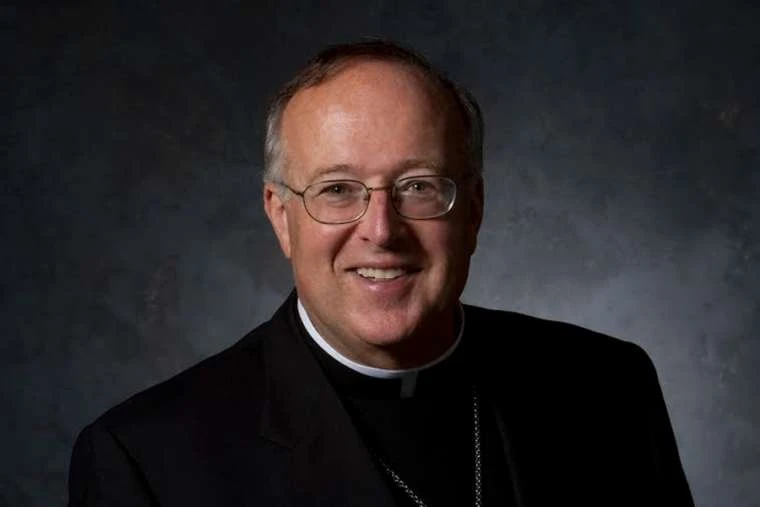
Why San Diego’s Bishop McElroy wants disruption in the Trump era

February 22, 2017 CNA Daily News 1

Stockton, Calif., Feb 22, 2017 / 12:04 am (CNA).- If President Donald Trump is the candidate of “disruption,” similar disruption is needed to build a better society, Bishop Robert McElroy of San Diego told a gathering of faith-based groups co-sponsored by the Vatican.

“Well now, we must all become disruptors,” the bishop said Feb. 18 at the U.S. regional gathering for the World Meeting of Popular Movements, which aims to promote structural changes for greater justice in racial, social, and economic areas.

“We must disrupt those who would seek to send troops into our streets to deport the undocumented, to rip mothers and fathers from their families. We must disrupt those who portray refugees as enemies rather than our brothers and sisters in terrible need. We must disrupt those who train us to see Muslim men, women and children as forces of fear rather than as children of God.”

“We must disrupt those who seek to rob our medical care, especially from the poor,” he continued. “We must disrupt those who would take even food stamps and nutrition assistance from the mouths of children.”

At the same time, the bishop told the multi-religious audience of the need for constructive action: “as people of faith, as disciples of Jesus Christ, as children of Abraham, as followers of the Prophet Muhammad, of people of all faiths and no faith, we cannot merely be disruptors, we also have to be rebuilders.”

The Feb. 16-19 conference was held in Modesto, about 30 miles southeast of Stockton. It was organized with the support of the Dicastery for Promoting Integral Human Development, the Catholic Campaign for Human Development, and the PICO National Network.

The PICO network is composed of faith-based community organizations. It claims 1,000 member institutions representing over 1 million families in 17 U.S. states. The network’s Latin American branch has been supported for a decade by Cardinal Oscar Rodriguez Maradiaga of Tegucigalpa, who now coordinates the Council of Cardinals advising Pope Francis. The cardinal addressed a launch event PICO’s “Year of Encounter with Pope Francis” campaign in early 2015.

The Pope himself sent a message to the California meeting that praised the gathering’s “constructive energies” and criticized the brutality of an economic system “that has the god of money at its center.” He encouraged their efforts “to fight for social justice, to defend our Sister Mother Earth and to stand alongside migrants.”

For Bishop McElroy, the meeting was an opportunity to call to rebuild the country.

“Let us disrupt and rebuild. And let us do God’s work,” he said, advocating the advancement of human dignity and equality.

“We must rebuild a nation in solidarity, what Catholic teaching calls the sense that all of us are the children of the one God,” he said, calling for a $15 minimum wage, decent housing, food for the poorest, and attention to environmental issues in the face of industrial threats.

“We must identify the ways in which our very ability to see, judge and act on behalf of justice is being endangered by cultural currents which leave us isolated, embittered and angry.”

Citing Benedict XVI, he said that truth itself is “under attack” and “whole industries have arisen to shape public opinion in destructively isolated and dishonest patterns.”

He said social issues like jobs, housing, immigration, economic disparities and the environment must be made “foundations for common efforts rather than of division.”

Bishop McElroy flatly criticized free market ideology as a rival to human dignity.

“The fundamental political question of our age is whether our economic structures and systems in the United States will enjoy ever greater freedom or whether they will be located effectively within a juridical structure which seeks to safeguard the dignity of the human person and the common good of our nation,” he said.

“In that battle, the tradition of Catholic social teaching is unequivocally on the side of strong governmental and societal protections for the powerless, the worker, the homeless, the hungry, those without decent medical care, the unemployed.”

He placed property and wealth in the context of Catholic teaching that sees creation as God’s gift to all humanity.

“Wealth is a common heritage, not at its core a right of lineage or acquisition,” he said. “For this reason, free markets do not constitute a first principle of economic justice. Their moral worth is instrumental in nature and must be structured by government to accomplish the common good.”

The bishop stressed the “intrinsic human rights” to medical care, decent housing, protection of human life, food, and work. These rights are not merely negotiating points to discuss after the free market system has distributed wealth, he said.

“Rather, these rights are basic claims which every man, woman and family has upon our nation as a whole,” he said, warning that these rights are being denied to large numbers of people.

Bishop McElroy cited Pope Francis’ 2013 apostolic exhortation Evangelii gaudium and its description of an economy that excludes some people from meaningful participation in social, political, and economic life.

The bishop said that statements like “this economy kills” are not simply exaggerations. He suggested many people have known someone the economy has killed: a senior citizen who can’t afford medicine or rent; a mother or father who is working two or three jobs and is “really dying because even then they can’t provide for their kids;” and young people who turn to drugs, gangs, or suicide because they cannot find a job.

“Now mourn them,” he said. “And now call out their name; let all the world know that this economy kills.”

At other times, Bishop McElroy has been outspoken against the proposed removal of a statue of St. Junípero Serra from the U.S. Capitol, and against a California law barring health plans that restrict abortion coverage.

He urged in 2015 an overhaul of the US bishops’ voting guide to reflect how Pope Francis has “radically transformed the prioritization of Catholic social teaching and its elements.” And following the release of Amoris laetitia, he suggested that the divorced-and-remarried may make a “discernment of conscience” that “God is calling them to return to full participation in the life of the Church and the Eucharist.”

In addition to Bishop McElroy, other scheduled speakers at the Modesto conference included Bishop Stephen Blaire of Stockton; Cardinal Peter Turkson, prefect of the Dicastery for Promoting Integral Human Development; Cardinal Joseph Tobin of Newark; Bishop Shelton Fabre of Houma-Thibodaux; Archbishop José Gomez of Los Angeles; and Bishop Oscar Cantú of Las Cruces.

One co-sponsor of the event, PICO Network, came to public attention in August 2016 when a cache of documents attributed to billionaire financier George Soros’ Open Society Foundations were hacked and posted to the site DCLeaks.com.

The documents said the foundations committed $650,000 in funds for PICO Network and Faith in Public Life in 2015 to use Pope Francis’ visit to the U.S. to influence the 2016 elections and cultivate influence within the Catholic Church.

It claimed the grantees were involved in “the long-term project of shifting the priorities of the U.S. Catholic Church to focus on issues of injustice and oppression” and claimed that some U.S. bishops sought to curb Pope Francis’ influence on social justice issues. The documents are not always accurate and erroneously indicated the World Meeting of Popular Movements would take place in 2016, rather than 2017.

The same cache of documents indicated that the Soros network funds abortion advocates in Ireland as part of a strategic model to overturn abortion restrictions in Catholic countries. The Soros foundations also took part in a multi-million dollar effort to respond to videos appearing to show the politically powerful abortion provider Planned Parenthood was involved in the illegal sale of fetal tissue and body parts from aborted babies.

According to the documents, the Soros foundations gave $450,000 to the group Catholics in Alliance for the Common Good from 2006-2010, crediting the group for changing Catholic voters’ priorities on abortion. Emails to and from leading Democratic Party strategist John Podesta, published on WikiLeaks, claimed that Catholics in Alliance was a group founded with the intent of creating a “Catholic Spring” revolution against the U.S. bishops.

Christopher Hale, who became Catholics in Alliance’s executive director in late 2013, told CNA in October 2016 that the group was not concerned with the internal politics of the Catholic Church. The group has become more critical of abortion groups in recent years.

[…]

No Picture
News Briefs

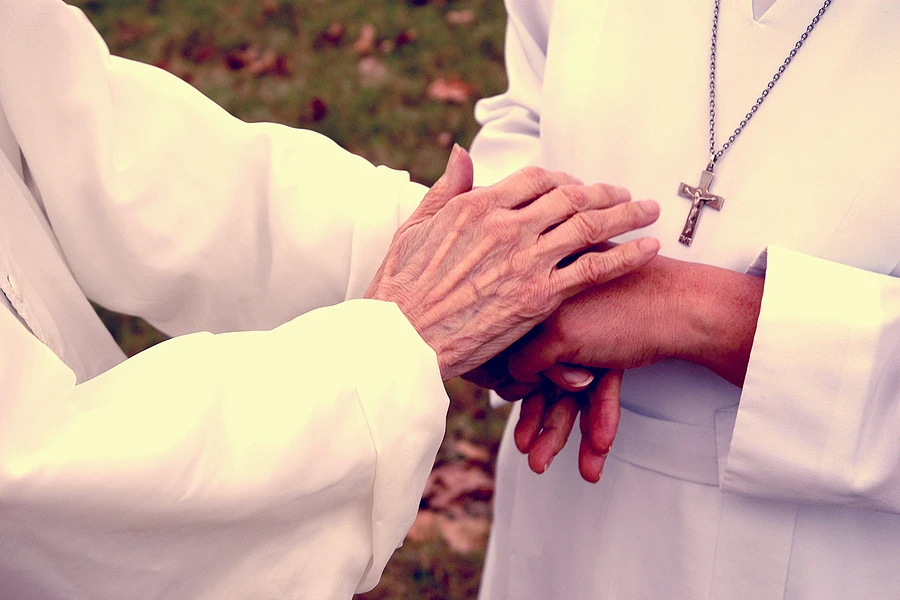
World’s oldest Dominican Sister dies at age 110

February 21, 2017 CNA Daily News 0

Paris, France, Feb 21, 2017 / 02:36 pm (CNA/EWTN News).- A French diocese announced that Dominican Sister Marie Bernardette, the oldest sister in her order, passed away last week at 110 years of age.

The religious sister died Feb. 13, according to the Diocese of Aire-et-Dax, France.

Funeral rites for the beloved sister were held in the monastery chapel in the town of Dax where she lived. Sister Marie Bernardette had turned 110 on January 5. She would have been a religious sister for 90 years on April 18.

<iframe src=”https://www.facebook.com/plugins/post.php?href=https%3A%2F%2Fwww.facebook.com%2Fdominicainsbordeaux%2Fposts%2F1839373612985885&width=500″ width=”500″ height=”789″ style=”border:none;overflow:hidden” scrolling=”no” frameborder=”0″ allowTransparency=”true”></iframe>

The religious sister had spent 44 years at the Dax convent, near Bayonne. She lived through two world wars and was able to see 10 popes.

Sister Marie Bernardette was born Jan. 5, 1907 in Orsanco, a small village in French Basque Country. Her parents named her “Gracious,” and she was one of 12 children. Three of her sisters would also go on to become religious sisters.

Last year, the French Catholic newspaper La Croix featured the sister in an article. In that piece, Prioress Sister Véronique explained that age has changed Sister Marie-Bernadette’s tasks: “When she could no longer do house work, she made rosaries. And since she can’t make them anymore, she prays (the rosary) all day” in French, Latin and Basque.

“She prays a lot for the pope, for vocations and for our order,” the prioress said.

At the Dax monastery, the Dominican sisters lead a life of prayer, contemplation and also do sewing and baking to support themselves.

In 2016, the Dominicans – whose formal name is the Order of Preachers – marked the 800th anniversary of their founding by Saint Dominic.

This order has produced many blesseds and saints, including Saint Rose of Lima, Saint Martin de Porres, Saint John Macias, Saint Vincent Ferrer, Pope Saint Pius V, and Saint Thomas Aquinas, a Doctor of the Church.


[…]

No Picture
News Briefs

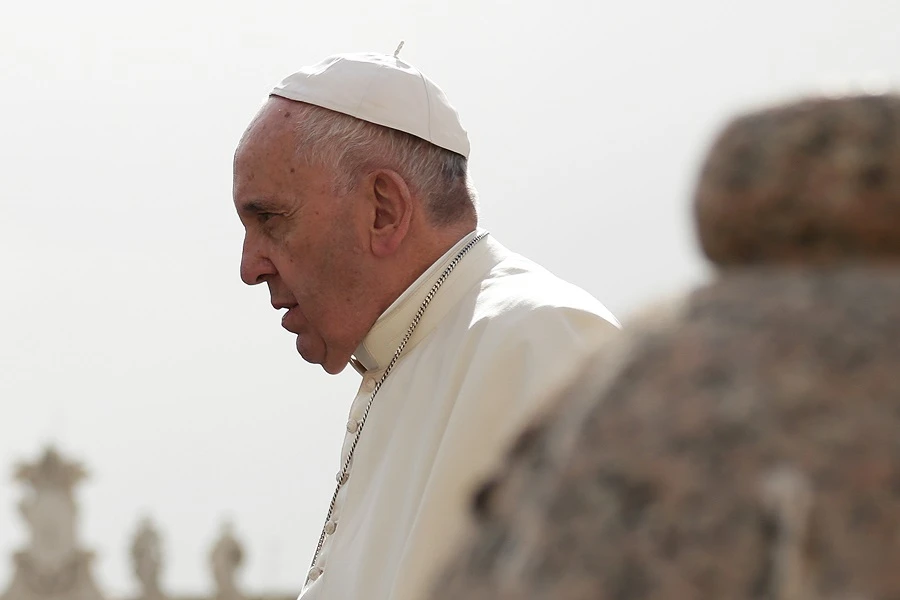
Pope Francis: protecting migrants is a ‘moral imperative’

February 21, 2017 CNA Daily News 0

Vatican City, Feb 21, 2017 / 08:30 am (CNA/EWTN News).- On Tuesday Pope Francis said that it is our duty to defend the dignity of migrants, particularly by enacting just laws that offer protection to those forced to flee from dangerous or inhumane situations.

“Defending (migrants’) inalienable rights, ensuring their fundamental freedoms and respecting their dignity are duties from which no one can be exempted,” the Pope said Feb. 21.

“Protecting these brothers and sisters,” he said, “is a moral imperative which translates into adopting juridical instruments, both international and national, that must be clear and relevant; implementing just and far reaching political choices.”

Although sometimes it takes longer, we must also implement timely and humane programs that fight against human trafficking, since migrants are an especially vulnerable population, the Pope observed.  
 
Pope Francis’ speech was addressed to participants of the sixth international forum on Migration and Peace at the Vatican. The meeting, which runs Feb. 21-22, is titled “Integration and Development: From Reaction to Action.”

It was organized by the Vatican’s Congregation for Integral Human Development, the Scalabrini International Migration Network (SIMIN) and the Kondrad Adenauer Foundation.

In his speech, Francis noted that our current millennium is characterized by migration involving nearly “every part of the world.” The forced nature of this phenomenon, he added, “amplifies the urgency for a coordinated and effective response” to challenges.

“Unfortunately, in the majority of cases this movement is forced, caused by conflict, natural disasters, persecution, climate change, violence, extreme poverty and inhumane living conditions,” he said.

This is why it is more necessary than ever to affirm the dignity of the migrant as a human person, “without allowing immediate and ancillary circumstances, or even the necessary fulfilment of bureaucratic and administrative requirements, to obscure this essential dignity.”

During the meeting, Pope Francis heard the testimony of three people and their families, all of whom have emigrated from their homelands to a new country.

One woman, her husband and their young son were migrants from Eritrea. They fled across the Red Sea to Yemen, but because of the war, they later fled to Jordan, where they were again confronted by “dangerous conditions” on their journey to Italy, including a perilous journey from Libya across the Mediterranean before landing on the island of Lampedusa.

After sharing their story, the woman raised “a heartfelt appeal” to Pope Francis for better legal channels of entrance so that others seeking asylum will not have to “risk their lives in the hands of traffickers” or by crossing the desert and the sea.

Another woman then told her story of migrating to Chile in 1997. Although she had been a professor in her home country of Peru, when she arrived in Chile she was forced work in domestic servitude to support herself, sleeping in the metro station on the weekends when she had nowhere to stay.

She said that one day after seeing fellow migrants arriving at the metro station, she was inspired to help people in her situation.

“I am sure that this inspiration was God’s providence,” she said, because soon after she went to a parish in Santiago and a priest there invited her to be the director of the center for integration of migrants that they were launching.

She has now worked there since 2000, helping to provide various services to migrants including healthcare, food, professional formation and psychological and religious support. In the past 17 years, the woman said more than 70,000 women have come to Chile as migrants to rebuild their lives, with more than half passing through the center she directs.

The third family was Italian, but has lived in Canada for more than 50 years. The brother immigrated to Canada when just 14-years-old, joining his father to work in construction in order to save money for the rest of the family to eventually join them.

“We are truly blessed as immigrants that we went to Canada,” the sister of the family said. “With God’s help, with a lot of faith, determination and perseverance…we today have realized a universal dream of all migrants to fulfill the dreams of providing a better home, a better life for our family and our loved ones.”

For the past 40 years they have volunteered with the Congregation of the Missionaries of St. Charles, also called Scalabrinians, to assist fellow migrants.

After hearing their testimonies, the Pope in his speech used four words to explain what our shared response to the contemporary challenges of the migration issue should be: to welcome, to protect, to promote and to integrate.

To welcome the migrant, he said, we must change our attitude of rejection, “rooted ultimately in self-centeredness,” in order “to overcome indifference and to counter fears with a generous approach of welcoming those who knock at our doors.”

A responsible and dignified welcome begins with offering decent and appropriate shelter, he said.

Large gatherings of refugees and asylum-seekers, such as in camps, has created more issues, not fewer, he said, noting that more widespread programs which emphasize personal encounter have appeared to have better results.

We protect the migrant when we enact just laws, especially in recognition of the fact that migrants are more vulnerable to exploitation, abuse and violence, he said, referring to a point previously made by Benedict XVI.

Development, according to the social doctrine of the Church, is “an undeniable right of every human being,” the Pope said.

As such, development “must be guaranteed by ensuring the necessary conditions for its exercise, both in the individual and social context, providing fair access to fundamental goods for all people and offering the possibility of choice and growth.”

This takes a coordinated effort from everyone, he said, placing specific emphasis on the political community, civil society, international organizations and religious institutions.

On the point of integration, Francis emphasized that it is not the same as “assimilation” or “incorporation,” but is rather a “two-way process.” This, he said, means it requires joint recognition on the part of both the migrant and the person in the receiving country.

We must beware of a sort-of cultural “superimposing” of one culture over another, he said, and also cautioned against a “mutual isolation” which has the “dangerous risk of creating ghettoes.”

Above all, policies should favor the reunion of families, the Pope said, but stressed that those who arrive in a new country are “duty bound not to close themselves off from the culture and traditions of the receiving country, respecting above all its laws.”

Through welcoming, protecting, promoting and integrating, we discover the “sacred value of hospitality,” he said. “For us Christians, hospitality offered to the weary traveler is offered to Jesus Christ himself, through the newcomer.”

And in the duty of solidarity we find a counter to the “throwaway culture,” he said, adding that “solidarity is born precisely from the capacity to understand the needs of our brothers and sisters who are in difficulty and to take responsibility for these needs.”

[…]

No Picture
News Briefs

This 200 year-old black Catholic school is a ‘gem’ in Baltimore’s inner city

February 21, 2017 CNA Daily News 0

Baltimore, Md., Feb 21, 2017 / 06:02 am (CNA/EWTN News).- Nestled among the mix of shiny new storefronts, foreclosed row houses, parks, and public housing, lies what locals call the “gem of East Baltimore:” St. Frances Academy. Perduring the Civil War, social tumult, economic growth and decline in the neighborhood, the 189-year-old Catholic school still operates from the principles of its foundress, Servant of God Mother Mary Lange.

Along with the building, Mother Mary Lange’s legacy has been preserved as well: to educate and form children left behind by society, particularly those of African descent. While the kinds of challenges faced by many of Baltimore’s students have changed over nearly 200 years, what has not is the need for strong, Christ-centered education in the heart of the inner city, say educators at the school.

“The kids really understand and appreciate the legacy. They know the story, they know the history,”  Sister John Francis Schilling, OSP told CNA. “They will tell you in a minute,” she added of the students’ eagerness to share Mother Mary Lange’s story, “and are very proud of it.”

Dr. Curtis Turner, Ed.D,  principal of St. Frances Academy and a deacon of the Archdiocese of Washington, noted that St. Frances Academy still has its eyes on the same goal their founders did –  Christ.

“You’d have 180 souls really in jeopardy if we weren’t here,” the principal said to CNA.

In 1828, a Haitian refugee named Elizabeth Lange began teaching children of African descent, both slave and free, out of her home in Baltimore – a slave state with a large free African-American population.

“Mother Lange started this school because she wanted to teach the children of slaves about the Bible, about religion and realized they couldn’t read,” Sister John Francis recounted. While it wasn’t illegal to teach slaves in Maryland at that time, educating persons of color was socially taboo. Despite this, Lange was determined to teach the girls from her home.

A year later, Sulpician Father Nicholas Joubert approached Lange and asked if she and her co-teacher, Marie Balas, would be willing to start a religious order while continuing their work in girls’ education. Lange responded that she had been wanting to dedicate her life to God, and with the blessing of the Archbishop of Baltimore she took vows and the name “Sister Mary.”

Mother Mary Lange was named the superior of the new congregation, the Oblate Sisters of Providence – the first religious community for women of African descent in the United States.

The new order also rented a house for the community to live in and use as a school house. Today, the school continues to operate in the building it moved into in 1871, and the Oblate Sisters of Providence still help to teach and form St. Frances Academy’s hundreds of students.

Within the building, next to an English classroom and under a science lab, the room of Mother Mary Lange remains virtually undisturbed from how it was left after Lange’s death in 1882. “The kids see it and walk by,” Deacon Turner commented, adding that the emphasis on Mother Lange’s present preserves her legacy at the school. “She lived, died and prayed here.”

“It’s one of the few places where we can all claim to be third-class relics,” he joked.

Since the 1820s, both the school and the order have gone through several changes. The main school building has served as a school, a dormitory, and an orphanage over the years, and the campus has expanded to include a gym, classrooms, computer labs, and other facilities. The school has become a co-educational preparatory school.

The order has expanded, with presences in Maryland, New York, Florida, and Costa Rica, and sisters from around the globe. Mother Mary Lange’s cause for sainthood was opened in 1991 by Cardinal William Keeler of Baltimore.

In spite of, or perhaps because of, this growth, St. Frances Academy has persisted as the nation’s oldest African-American Catholic educational institution. In addition, the school is the oldest continually operating black educational facility in the United States, predating the founding of  Cheyney University of Pennsylvania – the nation’s oldest Historically Black College – by nearly a decade.

Today, the school remains dedicated to Mother Lange’s vision and her desire to educate all those in need of a good education. “We’re carrying out her mission,” Sister John Francis said. The school continues its work despite the challenges of this mission. “She was a risk-taker, and we’re risk takers,” Sister said.

One of those risks is accepting kids who are deemed high-risk or who are suspended or expelled from school. “We take kids who are risks. Sometimes they call us the second-chance school because we allow kids the opportunity to fail and then come back,” she explained. “We’re pretty much always willing to give them a second chance.”

Another risk is the school’s decision five years ago to house a number of boys who are homeless or who don’t have stable housing or family situations, in the Fr. Joubert Housing Program. “It’s been very successful … These kids are considered to be ‘throwaway’ kids by the city,” Sister John Francis explained. The first class of students to go through the program have graduated and are now in college; both made the National Honor Society while at the Joubert program.

Deacon Turner noted that he and the lay staff who oversee the housing programs seek to treat the boys as their own children, making sure they have home-cooked meals, clothes, things to do on the weekends, and adequate furnishings for their bedrooms: “It’s like we have 16 sons on campus.”

It also doesn’t hurt that the boys are also under the sisters’ watchful eye from the convent across the street. “They know that the second they step outside of the Joubert house, they’re within sight of the convent,” Deacon Turner laughed.

The program takes some of the most at-risk students in the city and turns them into the stars of the school, the principal continued. “The funny part is what takes them a while is that they’re the kids who are the most needy, economically, but then they get here and they actually end up being the envy of the rest of the school community.”

As with the success of the boys within the Fr. Joubert Housing Program, St. Frances Academy has managed to thrive in the face of challenges – and do just as well as many area schools with more privileged students. In the past several decades, Catholic schools in Baltimore have faced wave after wave of school closings.

Deacon Turner said that 11 of the academy’s 14 feeder schools have been closed in the past 15 years, and all of its partner Catholic schools in West Baltimore have also been shuttered. “We feel like we’re the last person standing in the breach right now.”

But despite the struggles facing Baltimore’s inner city, the school itself is doing very well: “We’re a poor school, but not a broke school.”  Because of their success, the faculty and administration are focusing on making sure that the tuition remains accessible for the school’s students, more than 84 percent of whom receive federal food aid for lunches.

Yet even though their tuition is considerably less than many of the city’s other Catholic and secular high schools “our kids are going to those same colleges.” The drive – and the stakes – are what set the academy’s students apart.

“The difference that we make isn’t just college or a better college, it’s college or no college – sometimes, it’s life or death without us,” Deacon Turner reflected.

Without St. Frances, many students also would not have had an introduction to what a life with Christ looks like, Deacon Turner said.  “The majority of our students are not Catholic – the vast majority are not Catholic – and I would say at least half are unchurched altogether, so we’re their first introduction to a life with Christ.” In many cases, he continued, a student’s turnaround can be traced to their introduction to a Christian lifestyle and Christ himself.

 “I’ve seen other organizations try to work in the city from a purely secular point of view, and of course they meet with some marginal success, but our success rate is that virtually all our kids go to college. If we tried to do that without Christ in the equation, there’s no way we’d be at that statistic,” Deacon Turner stated.   

“All the challenges that an inner city child faces – economically, socially– in my opinion, can only be overcome with the help of Christ, by introducing them to Jesus.”

[…]