No Picture
News Briefs

Pope Francis: God ‘weaves our history’
June 30, 2021 Catholic News Agency 1
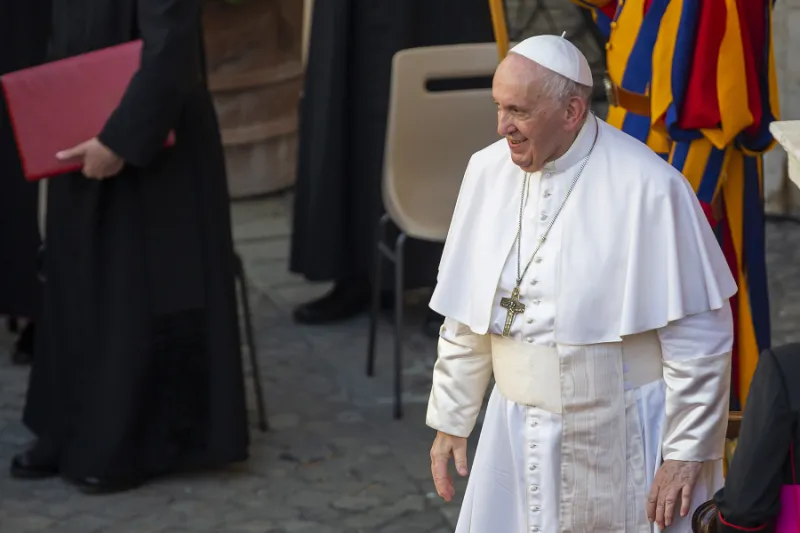
Pope Francis smiles during the general audience in the Vatican’s San Damaso Courtyard on June 30, 2021. / Credit: Pablo Esparza/CNA.

Vatican City, Jun 30, 2021 / 05:05 am (CNA).

Pope Francis said on Wednesday that the dramatic conversion of St. Paul should remind us that God has a plan for our lives.

Speaking at the general audience June 30, the pope noted that Paul experienced a “radical transformation” from a persecutor to an Apostle.

“How often, in the face of the Lord’s great works, does the question arise: how is it possible that God uses a sinner, a frail and weak person, to do His will?” the pope asked.

“And yet, none of this happens by chance, because everything has been prepared in God’s plan. He weaves our history, the history of each of us: He weaves our history and, if we correspond with trust to His plan of salvation, we realize it.”

The pope’s livestreamed address, dedicated to “Paul, the true Apostle,” was the second in a new cycle of catechesis on St. Paul’s Epistle to the Galatians.
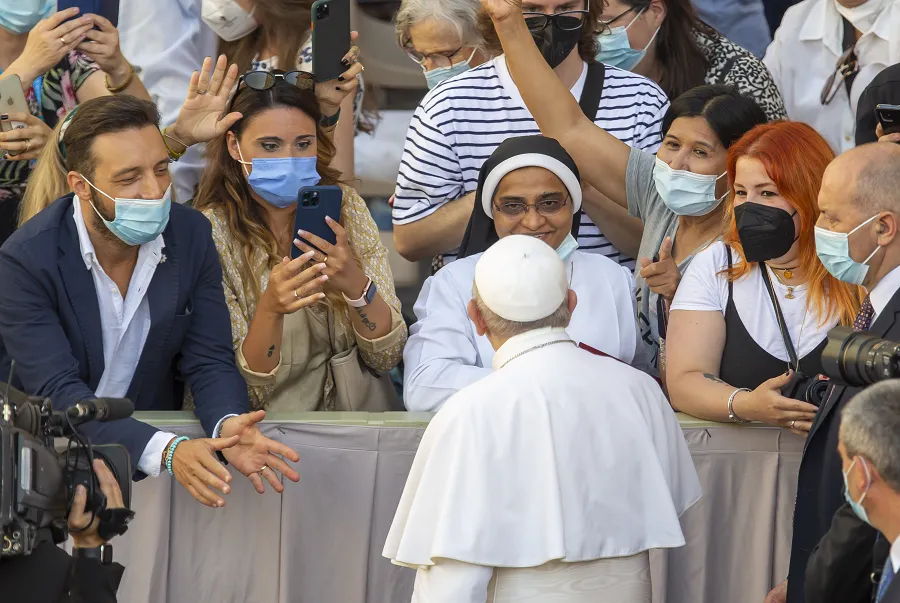
/ Pablo Esparza/CNA.

He observed that Paul began the letter by reminding the Christians in Galatia, present-day Turkey, of his deep love for them.

But Paul also recognized that the community was divided. He responded, the pope said, by underlining the novelty of the Gospel.

“We immediately discover that Paul has a profound knowledge of the mystery of Christ. From the beginning of his Letter he does not follow the low arguments used by his detractors,” the pope said.

“The Apostle ‘flies high’ and shows us, too, how to behave when conflicts arise within the community. Only towards the end of the Letter, in fact, is it made explicit that at the heart of the diatribe is the question of circumcision, hence of the main Jewish tradition.”
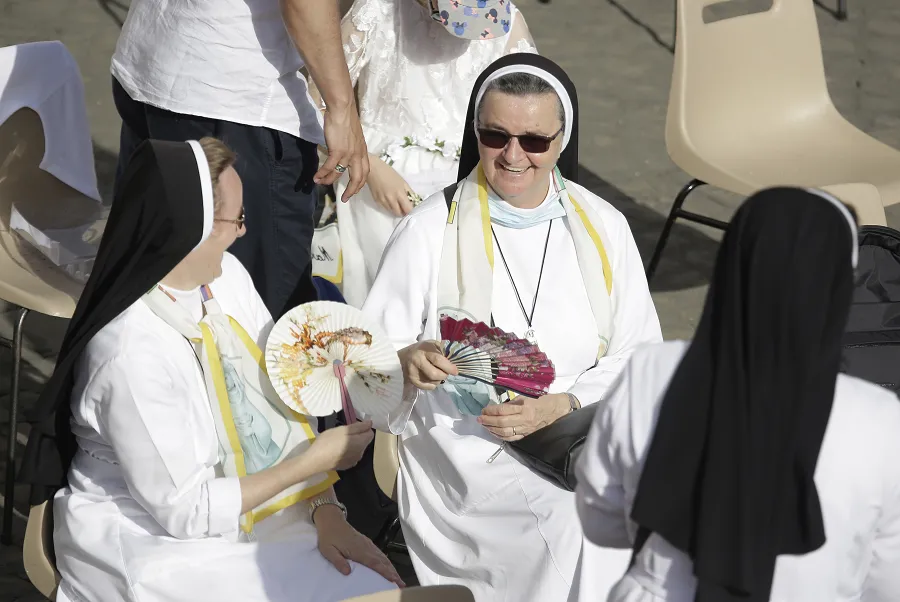
/ Pablo Esparza/CNA.

The pope praised Paul for identifying the issue that lay beneath the dispute, rather than seeking a quick fix.

“Paul chooses to go deeper, because what is at stake is the truth of the Gospel and the freedom of Christians, which is an integral part of it,” he said.

“He does not stop at the surface of the problems, as we are often tempted to do in order to find an immediate solution that deludes us into thinking that we can all agree with a compromise.”

“This is not how the Gospel works, and the Apostle chose to take the more challenging route.”

Paul reminded the Galatians that he was a true Apostle, the pope said, by telling the story of how he was called by God on the road to Damascus.

“On the one hand, he insists in underlining that he had fiercely persecuted the Church and that he had been a ‘blasphemer, a persecutor, and a man of violence’ (1 Timothy 1: 13); on the other, he highlights God’s mercy towards him, which led him to experience a radical transformation, well known to all,” he observed.

Commenting on Paul’s journey from “a blameless observer of the Mosaic Law” to “a herald among the pagans,” the pope said: “We must never forget the time and the way in which God entered our lives: keep fixed in your heart and mind that encounter with grace, when God changed our existence.”
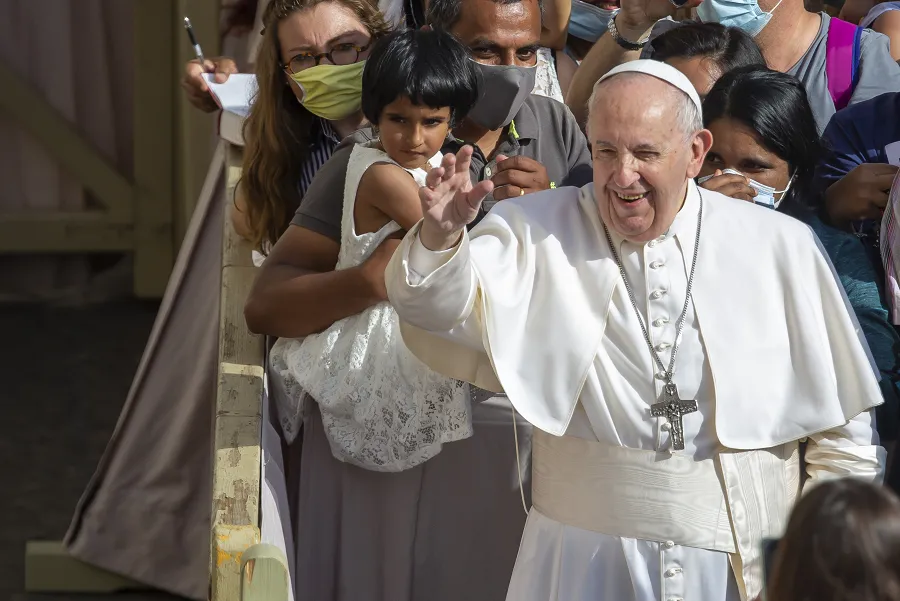
/ Pablo Esparza/CNA.

Concluding his catechesis, the pope said that when we are called by God, we also receive a mission that He wishes us to undertake.

“That is why we are asked to prepare ourselves seriously, knowing that it is God Himself who sends us, God himself who supports us with His grace,” he said.

“Let us allow ourselves to be led by this awareness: the primacy of grace transforms existence and makes it worthy of being placed at the service of the Gospel.”
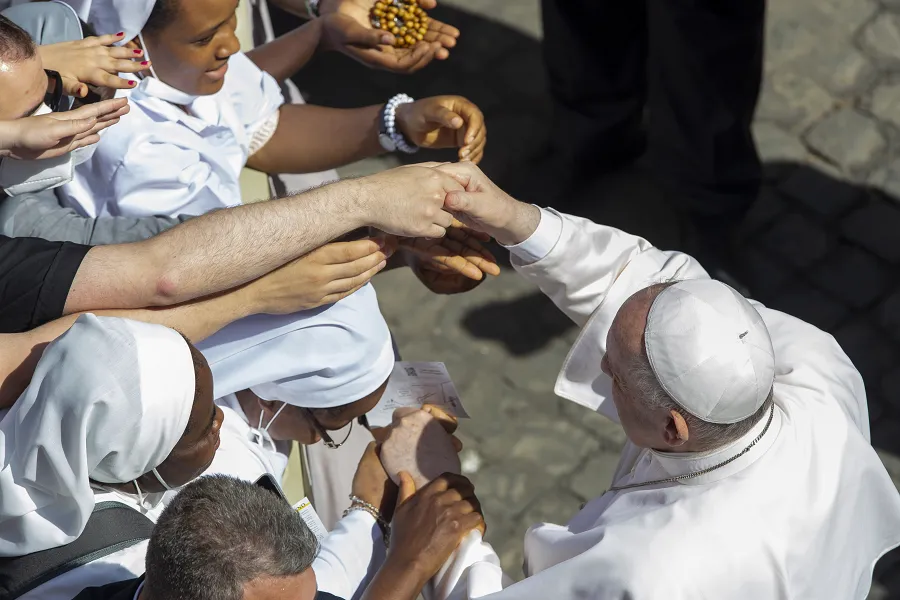
/ Pablo Esparza/CNA.

A precis of the pope’s catechesis was then read out in seven languages. After each summary, he greeted members of each language group.

One of the greetings was to pilgrims from Slovakia, a country that the Vatican is considering for a possible papal visit in September.

He said: “I greet with affection the Slovakian faithful, especially the participants in the Pilgrimage of Thanksgiving of the Eparchy of Košice, which celebrates the 350th anniversary of the miraculous weeping of the icon of Our Lady of Klokočov, led by their ordinary Archbishop Cyril Vasiľ.”
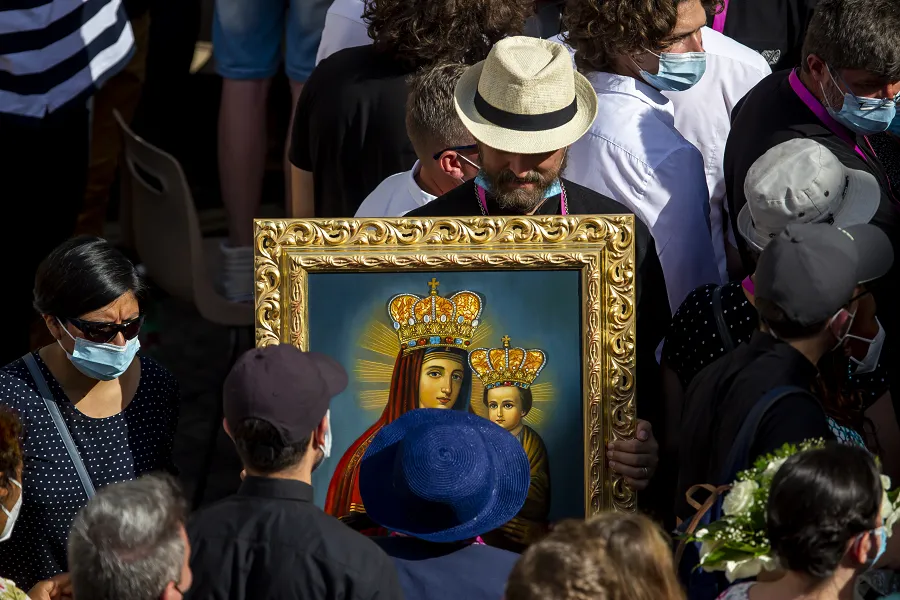
/ Pablo Esparza/CNA.

“Brothers and sisters, may this celebration of the Mother of God renew in your people the faith and the lively sense of her intercession on your journey.”

Addressing Italian speakers, the pope thanked his senior driver Renzo Cestiè, who he noted was retiring that day.

“He started working when he was 14, he came by bicycle,” the pope said. “Today he is the pope’s driver: he did all of this. An applause for Renzo and his faithfulness.”
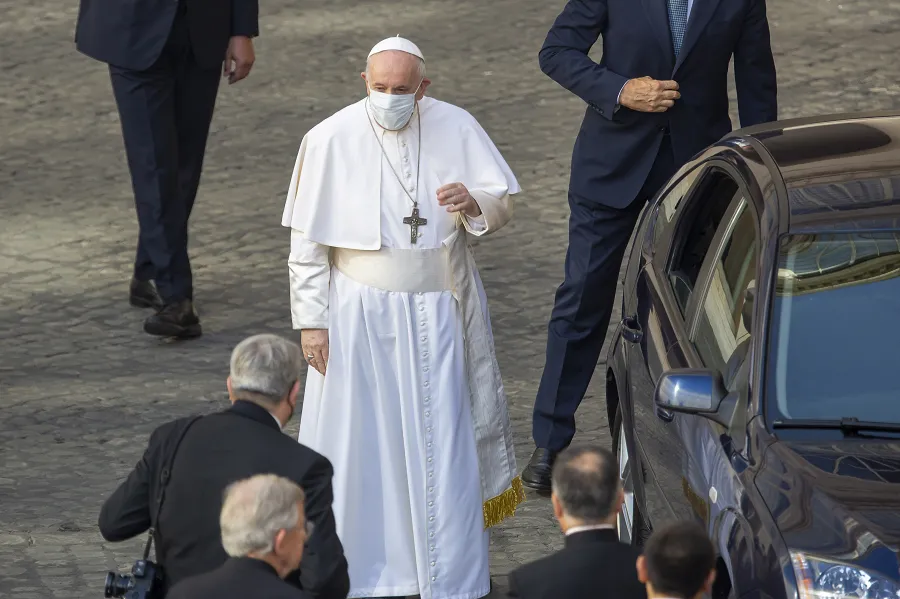
/ Pablo Esparza/CNA.

“He is one of those people who carries the Church forward with his work, with his benevolence and with his prayer. I thank him and also take the opportunity to thank the many lay people who work with us in the Vatican,” he said.

The general audience ended with the recitation of the Our Father and the Apostolic Blessing.

[…]

No Picture
News Briefs

Canadian bishops, Indigenous leaders will meet with pope in December

June 29, 2021 Catholic News Agency 0
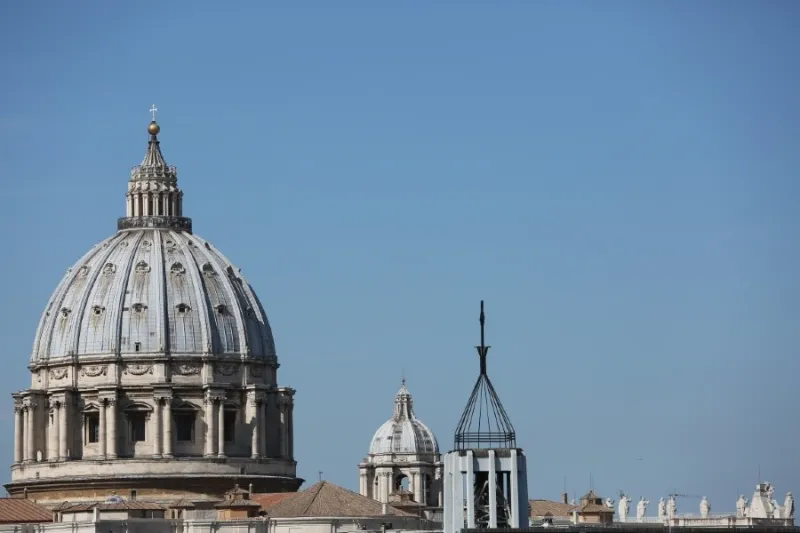
Cupola of St. Peter’s Basilica, Vatican City / CNA

Washington D.C., Jun 29, 2021 / 16:01 pm (CNA).

Some Canadian bishops, along with Indigenous leaders, will meet with Pope Francis at the Vatican in December 2021, according to the Canadian bishops’ conference.

The delegations of a “small” group of Canadian bishops, along with Indigenous First Nations, Inuit, and Métis leaders, will be scheduled for papal meetings at the Vatican from Dec. 17-20, 2021, “to foster meaningful encounters of dialogue and healing,” the Canadian bishops’ conference stated on Tuesday.

Pope Francis is inviting each group of Indigenous delegations – First Nations, Métis and Inuit – to a distinct meeting, the bishops said, praising “the Holy Father’s spirit of openness.”

First Nations communities are Indigenous peoples who lived south of the Arctic region in modern-day Canada, while Inuit peoples resided in the Arctic region. Métis communities share both Indigenous and European heritage.

All delegations will share a final audience with Pope Francis on Dec. 20. They will include Indigenous elders, residential school survivors, youth, and a small group of Bishops and Indigenous leaders,” the bishops’ conference said.

“Pope Francis is deeply committed to hearing directly from Indigenous Peoples, expressing his heartfelt closeness, addressing the impact of colonization and the role of the Church in the residential school system, in the hopes of responding to the suffering of Indigenous Peoples and the ongoing effects of intergenerational trauma,” the Canadian bishops’ conference announced in the statement.

“The Bishops of Canada reaffirm their sincere hope that these forthcoming encounters will lead to a shared future of peace and harmony between Indigenous Peoples and the Catholic Church in Canada,” they wrote.

The announcement comes after the recent discovery of unmarked graves of 215 Indigenous children at a former Catholic-run residential school in British Columbia.

That discovery on the weekend of May 22 prompted leaders of the Assembly of First Nations and the Métis National Council to plan a visit to the Vatican, with the Canadian Conference of Catholic Bishops (CCCB), to request a formal papal apology for the Church’s role in the residential school system.

At his June 6 Sunday angelus, Pope Francis expressed “sympathy” over the discovery of children’s remains, urged healing and reconciliation, and called for a “turn away from the colonizing model,” but he did not issue a formal apology. Other Canadian bishops have apologized for the Church’s role in the residential school system, including the bishops of Alberta in 2014 and, recently, the archbishops of Vancouver and Ottawa.

The residential school system was set up by the Canadian federal government, beginning in the 1870s, as a means of forcibly assimilating Indigenous children and stripping them of familial and cultural ties. Catholics and members of other Christian denominations ran the schools, although the Catholic Church or Catholics oversaw more than two-thirds of the schools. The last remaining federally-run residential school closed in 1996.

According to the Truth and Reconciliation Commission, a Canadian body set up to investigate abuses in the schools, at least 4,100 children died from “disease or accident” at the schools. One of the commission’s calls was for a formal papal apology for the Church’s role in the residential school system.

At the site of the former Kamloops Indian Residential School in British Columbia, the remains of 215 Indigenous children were discovered on the weekend of May 22 with ground-penetrating radar. It is unclear when or how the children died.

On June 24, Cowesses First Nation leaders announced that 751 unmarked graves had been discovered at the site of the former Marieval Indian Residential School.

One scholar who worked with the Truth and Reconciliation Commission issued a report following the Kamloops discovery, explaining that the schools were historically underfunded and under-regulated by the federal government. More work is needed to accurately document the location of residential school cemeteries amid the recent discovery of unmarked graves, he wrote.

Dr. Scott Hamilton, a professor in the Department of Anthropology at Lakehead University in Thunder Bay, wrote that the federal government for decades did not establish or implement proper health care and cemetery care regulations at the schools.

In at least some cases, the government had a policy of only paying for deceased residential school students to be transported home for funerals when the cost of transportation was less than the cost of a burial at a residential school, he noted. When the government took control of residential schools from religious groups in the late-20th century, cemeteries and burial grounds were not adequately documented.

As a result, the locations of many cemeteries could fade from memory over time due to lack of regulation and documentation, Hamilton said, and individual grave markers could have been moved or succumbed to the elements.


[…]

No Picture
News Briefs

Pope Francis prays for victims of Florida building collapse

June 26, 2021 Catholic News Agency 0
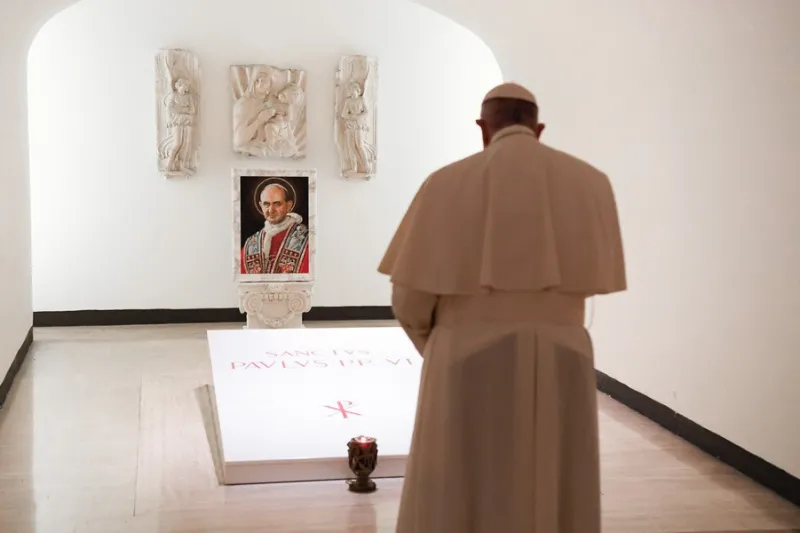
Pope Francis prays before the tomb of St. Paul VI in the crypt of St. Peter’s Basilica, Nov. 2, 2020. / Vatican Media/Catholic News Agency

Washington D.C., Jun 26, 2021 / 13:01 pm (CNA).

Pope Francis on Saturday offered prayers and condolences to all those affected by a deadly condominium building collapse in Florida this week.

Early on Thursday morning, the 12-story Champlain Towers beachfront condominium building in Surfside, Florida, partially collapsed. As of Saturday morning, four people had been declared dead and 159 people were still unaccounted for in the collapse, Miami-Dade Mayor Daniella Levine Cava said.

In a June 26 message of solidarity on behalf of Pope Francis to Archbishop Thomas Wenski of Miami, Vatican Secretary of State Cardinal Pietro Parolin said the Holy Father wished to “express his deep sadness at the grievous loss of life” in the building collapse.

Pope Francis “offers heartfelt prayer that Almighty God will grant eternal peace to those who have died, comfort to those who mourn their loss, and strength to all those affected by this immense tragedy,” the Vatican stated.

“With gratitude for the tireless efforts of the rescue workers and all engaged in caring for the injured, the grieving families and those left homeless, Pope Francis invokes upon the entire community the spiritual gifts of consolation, fortitude and perseverance in every good,” the message stated.

The Apostolic Nuncio to the United States, Archbishop Christophe Pierre, transmitted the message to Archbishop Wenski.

Mayor Cava noted at a Saturday morning press conference that 127 people had been accounted for in the collapse.

The pastor at nearby St. Joseph’s Catholic parish, located just several blocks away from the condominium complex, told CNA on Friday afternoon that nine families from the parish who lived in the complex were still missing. Some of them were daily communicants, the pastor, Fr. Juan Sosa, said.

The total number of persons unaccounted for in the collapse, 159, had not changed in between Friday and Saturday morning, according to authorities.

Three other parish families who lived in the complex were either not present at the time of the collapse, or evacuated the building in time, Fr. Sosa said, and “for this, I am grateful,” he added.

“The entire community, however, is praying for those we do not know about,” he said. A Mass was scheduled to be offered at St. Joseph’s on Friday morning for all those affected by the collapse.

“May the Lord grant us much hope and peace at this time and always!” he said.

Mayor Cava on Saturday said that a fire in the rubble of the collapse has become an obstacle to the search and rescue team on site. The smoke has spread laterally in the rubble, she said.

“Our top priority now continues to be search and rescue,” she said. “Our teams have not stopped.”

Jackie Carrion, a senior staffer with the archdiocesan Catholic Charities, told Florida Catholic of the sadness at the scene at the collapse.

“I have worked hurricanes, but nothing like this: It is just a look of sadness you see on everyone’s face. It is heartbreaking,” she said.

The chairman of the Miami-Dade board of county commissioners, Jose “Pepe” Diaz, on Saturday urged continued prayer for the victims and the rescue teams.

“Your prayers have been extremely well-received. Please continue the prayers, they’re very important,” he said at the Saturday morning press conference.

On Friday, Archbishop Wenski also offered prayers for the victims and their families.  

A staffer for Catholic Charities of the Archdiocese of Miami told CNA on Friday that the organization is accepting financial donations for families affected by the tragedy, is providing counseling, and is looking into temporary housing for residents who are homeless due to the collapse.

Belen Jesuit Preparatory School in Miami reported in a Facebook post on Friday morning that members of the school community were among those still unaccounted for. Another post on the school’s page asked followers to pray a rosary on Monday, June 28, at 8 p.m. local time, in the Garrido Family Plaza.

“In times of such sadness, we must remain faithful to our heavenly Father and place our trust in Him,” the post stated. “Under the statue of the Sacred Heart of Jesus and together as a Belen family, we will place all those affected by this tragedy in the hands of Our Lady of Belen.”

St. Patrick Catholic parish, located in nearby Miami Beach, also reported a parishioner missing in the collapse, Florida Catholic noted.


[…]