The Dispatch

Analysis: What does Pope Francis’ new ‘Fundamental Law’ mean for Vatican City State?

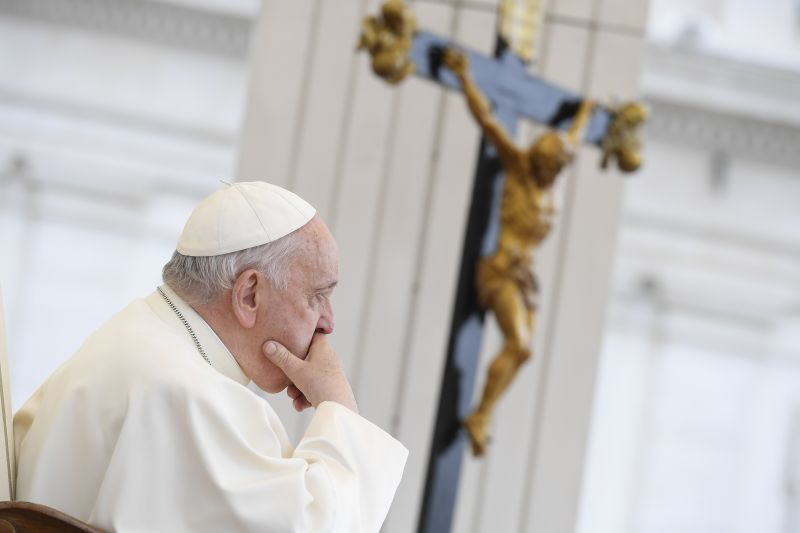
Pope Francis speaks in St. Peter’s Square on March 8, 2023. / Vatican Media

Rome Newsroom, May 18, 2023 / 09:10 am (CNA).

Is the new Fundamental Law issued by Pope Francis last week simply a modernization of Vatican City’s civil constitution or something much more — perhaps even a Copernican revolution in how the city-state functions and understands itself?

Pope Francis said he issued the new law “to respond to the needs of our times.” And Professor Vincenzo Buonomo, a councilor of the Vatican City State and rector of the Lateran University, stressed this week that this reform, the first in 23 years, merely aims at emphasizing and valuing some of the aspects of the state, while at the same time giving it what he called a renewed “missionary push.”

Yet in some respects, Francis’ May 13 promulgation moves the state closer to the model of a modern, secular state.

To be sure, the new law leaves no doubt that the civil government remains very much an absolute monarchy, with the supreme pontiff possessing all “legislative, executive, and judicial powers.”

But the new law gives Vatican City’s civil entities a more central role, even in international relations, and it now emphatically makes the city-state the guarantor of the Holy See’s sovereignty.

Other notable changes include allowing for lay appointees to its legislative body, the Pontifical Commission for Vatican City State; restructuring the state councilors who advise the commission as a “college”; and modernizing and tightening fiscal oversight.

In addition, the role of the secretary of state is de-emphasized while the pope’s powers are centralized, as has been manifested in other reforms during Francis’ pontificate.

Guaranteeing independence

Francis’ new constitution is the third Fundamental Law since 1929, the year in which the Vatican City State was founded with the Lateran Treaty.

The treaty put an end to the so-called “Roman question.” After Rome and the Papal States had been annexed to the Kingdom of Italy in 1871, the problem arose of how to guarantee the independence of the Holy See, which was by then in Italian territory.

It was not just an Italian question because the material and moral independence of the pope and of the bodies through which he carries out his service to the universal Church is in the interest of all Catholics and all states.

From the birth of modern states, the Holy See had understood that the only guarantee of independence would be to manage its own state. And so, the solution to the Roman question involved the creation of a territory so small as to seem almost symbolic but with all the constituent elements of a state: territory, population, sovereignty, and legal system.

Today, the civil government provides security, public order, civil protection, health protection, health care, general hygiene, the environment and ecology, economic activities, postal, philatelic, customs services, connectivity and network infrastructures, construction activities, technical systems, plumbing, and electricity.

It also is responsible for the Vatican Museums’ conservation, enhancement, and use, as well as “superintendence over the assets of the entire artistic, historical, archaeological, and ethnographic heritage.”

After 1929 there were, over time, various adjustments to the state constitution, but it was only under John Paul II that a new Fundamental Law was promulgated, on Nov. 26, 2000.

In 1929, it was envisaged that the legislative power would be exercised directly by the pope, with the possibility of “delegating the legislative power for certain matters or individual objects to the governor of the state.”

The 2000 law instead established that the Pontifical Commission directly exercised legislative power, except for cases in which the pontiff reserved it for himself. The state remained an absolute monarchy, but John Paul II handed over the management of power and administration, making concrete the fact that the pope, despite being king, did not act like a king.

‘Functions,’ not ‘powers’

The Secretariat of State was mentioned four times in the law of 2000 and, in all cases, acted as an intermediary for presenting draft laws or the state budget to the pope.

However, with Pope Francis’ new Fundamental Law, the pope returns to the center of everything.

The Secretariat of State is mentioned only once — in Article 2, which underlines that “the representation of the Vatican City State in relations with States and with other subjects of international law, in diplomatic relations and for the conclusion of treaties, are reserved to the Supreme Pontiff who exercises them through the Secretariat of State.”

This article remains practically unchanged from the previous law, except that it sets forth a more decisive role of the civil administration, which “participates in the international institutions of which the Holy See is a member in the name and on behalf of the State” and which “maintains relations and subscribes, with bodies and foreign bodies, acts necessary to ensure supplies, connections, facilities, and public services.” In this way, the state takes on a more critical role.

But the centralization of the pope’s authority is highlighted in the new constitution by the fact that power is reserved to the pope while other entities are assigned only functions. For this reason, the new law does not refer to the “powers” of the Secretariat of State, the administration, and the Pontifical Commission. Instead, the various bodies have legislative, executive, and judicial functions.

The new law also confirms the legislative function of the Pontifical Commission, until now composed of a cardinal president and other cardinals appointed by the pope. But now there is this novelty: “other members” may also be designated in the commission, including lay men and women.

Yet another change is a requirement for more robust fiscal management.

Under the new law, a three-year financial plan approved by the commission is to be submitted “directly for the approval of the Supreme Pontiff” without going through the Vatican economic bodies or the Secretariat of State, as the old law required. In addition, the budget of the Vatican City State administration is to be “subjected to the control and auditing of a Board, made up of three members, appointed for a three-year term by the Pontifical Commission, to which it reports.”

How this new constitution will affect the Holy See is yet to be understood.

The Vatican City State remains, in the end, the pope’s domain. Nonetheless, the new law suggests that the city-state is no longer merely considered a support to the Holy See but an entity closer to the secular and modern states, as it has never been in the past. It might be a necessary and welcome update to the state’s structure, but could it also undermine the institution of the Holy See?

[…]

No Picture
News Briefs

Rome prepares for 35 million pilgrims during 2025 Jubilee Year

May 18, 2023 Catholic News Agency 0
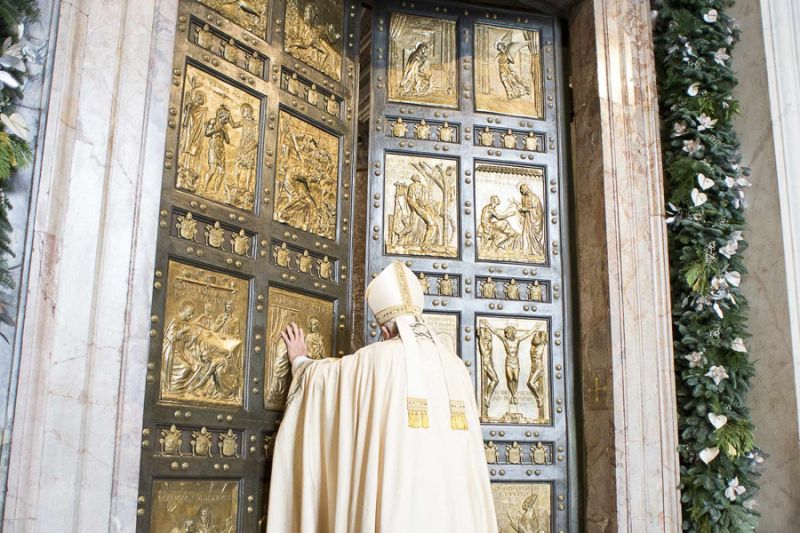
Pope Francis opens the Holy Doors at St. Peter’s Basilica to begin the Year of Mercy, Dec. 8, 2015. / L’Osservatore Romano.

Vatican City, May 18, 2023 / 08:00 am (CNA).

As Rome and the Vatican prepare for an influx of millions of people for a special year focused on hope, one experienced jubilee attendee is offering her advice for a fruitful pilgrimage.

“A pilgrimage as massive as that of a jubilee year should be a wonderful, unique, spiritual experience,” Joan Lewis, author of “A Holy Year in Rome: The Complete Pilgrim’s Guide for the Jubilee of Mercy,” told CNA. 

“Watching people from all over the world praying… it’s an experience of the universal Church. For me, it reinforces my faith.”

The Vatican and the city of Rome are expecting an estimated 35 million people to flock to the Eternal City for the 2025 Jubilee Year of Hope — the first ordinary jubilee since the Great Jubilee of 2000.

A jubilee is a special holy year of grace and pilgrimage in the Catholic Church. It typically takes place once every 25 years, though the pope can call for extraordinary jubilee years more often, such as in the case of the 2016 Year of Mercy or the 2013 Year of Faith.

A central part of any jubilee are the Holy Doors. These doors, found at St. Peter’s Basilica and Rome’s other major basilicas, are sealed from the inside and only opened during a jubilee year. In 2016, Catholic dioceses also had their own Holy Doors.

The opening of the Holy Door symbolizes the offering of an “extraordinary path” toward salvation for Catholics during a jubilee. Pilgrims who walk through a Holy Door can receive a plenary indulgence under the usual conditions. 

Jubilees have biblical roots, as the Mosaic era established jubilee years to be held every 50 years for the freeing of slaves and forgiveness of debts as manifestations of God’s mercy. The practice was reestablished by Pope Boniface VIII in 1300.

Jubilees are planned years in advance, with the 2025 Year of Hope being no exception. The theme was announced in January 2022. Now, the city of Rome is preparing to launch a number of infrastructure projects to make the experience better for pilgrims.

The Vatican said an estimated 20.4 million people attended Year of Mercy events at the Vatican over the course of 2016.

Lewis, who participated in the Jubilees of 1983, 1987, 2000, and 2016, noted that if people can plan their visit in nonpeak times it could be helpful but to be prepared for throngs regardless.

“If they can choose ‘the road less traveled’ that will probably augment their appreciation,” she said, noting that the busiest times will probably be the summer, holidays, and the opening and closing of the Holy Door.

“Be prepared for crowds. Bring patience along with your comfiest walking shoes,” Lewis added.

For the 2025 Jubilee, Rome has allocated approximately $2.5 billion to go into 87 public works projects, though this may increase to $4.3 billion.

The city is planning to improve its public transport and public bathroom facilities, repave roads, build underground parking and pedestrian underpassages, and clean up the area around the central Termini train station.

For the Jubilee Year in 2000, Rome built a large parking garage for tour buses under the nearby Janiculum Hill. Lewis said they also worked hard to make the ancient city a little bit more accessible for people in wheelchairs by adding sidewalk ramps and ramps at church entrances.

“The Vatican does a lot of work with the city — anything that can make the trip easier for a pilgrim,” she said. The Vatican and Rome “want to help make the trip enjoyable.”

Sometime early next year the pope will publish the official bull declaring the Jubilee and establishing the date for the opening of the Holy Door, which will likely be in December 2024.

Registrations for the Jubilee will open in September, the Vatican said.

Lewis said much of the practical tips she would offer individuals or families hoping to come to Rome for the Jubilee would be similar to the typical advice for any tourist to the Eternal City.

A digital “pilgrim’s card,” created by the Vatican, will be a useful tool, facilitating access to the most important sites connected to the Holy Year. An additional “service card” will also be available for a small price and will offer additional discounts to museums, transportation, and other services.

The Vatican also recently published the full list of themed Jubilee celebrations that will happen throughout 2025, such as the jubilees of families, artists, and seminarians.

Lewis recommended that families traveling with young children make sure that part of every day there is something for them and pointed out that Rome has greenspaces, parks, and playgrounds, good for a picnic or letting kids run around.

She also said it is important to emphasize the “spiritual celebration of pilgrimage” and the “difference between a pilgrimage experience versus being a tourist.”

[…]

No Picture
News Briefs

Pope Francis offers condolences after 9 die in northern Italy floods

May 18, 2023 Catholic News Agency 1
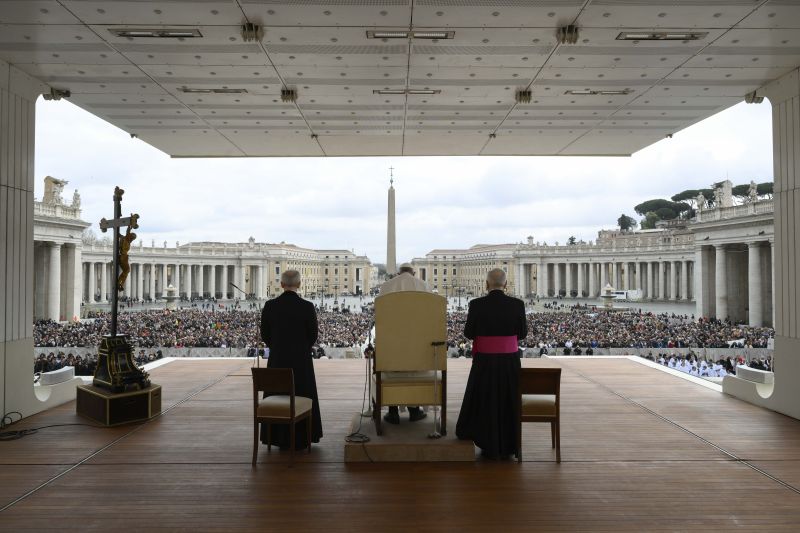
Pope Francis at his general audience in St. Peter’s Square on May 17, 2023. / Vatican Media

Rome Newsroom, May 18, 2023 / 07:00 am (CNA).

Pope Francis offered his condolences Thursday after at least nine people died in devastating floods in northeastern Italy.

The pope sent a condolence telegram to Cardinal Matteo Maria Zuppi, the archbishop of Bologna, on May 18 after intense rainfall across the Italian region of Emilia Romagna caused severe flooding and landslides.

Thousands have been evacuated from the worst-hit areas, which include Ravenna, a city famous for its Catholic churches’ sixth-century Byzantine mosaics.

Images from the towns of Faenza and Cesena show cars almost entirely submerged in muddy water. Rescue workers used helicopters and dinghies to help people escape from flooded buildings.

According to local officials, some parts of the region received nearly 20 inches of rain in 36 hours. The heavy rains caused 23 rivers across the region to burst their banks and 120 landslides.

Catholic bishops in Emilia-Romagna have called for the region to remain united in the face of the emergency and committed to doing everything necessary to collaborate with relief efforts to aid those in need. Zuppi has asked for priests to notify Caritas of emergency situations that need to be addressed.

The telegram sent on the pope’s behalf by Archbishop Edgar Peña Parra, the Substitute (Sostituto) of the Vatican Secretariat of State, said: “While assuring fervent prayers of repose for the deceased and expressing condolences to their families, the Supreme Pontiff invokes from God comfort for the wounded and consolation for those suffering consequences from the grave calamity.”

“Pope Francis thanks all those who in these hours of particular difficulty are working to bring relief and alleviate all suffering, as well as the diocesan communities for their expressions of communion and fraternal closeness to the most afflicted populations. The Supreme Pontiff sends apostolic blessing to all as a sign of his spiritual closeness.”

[…]