No Picture
News Briefs

Catholic nuns in Hawaii shaken but hopeful after robbery

June 8, 2020 CNA Daily News 1

Denver Newsroom, Jun 8, 2020 / 06:01 pm (CNA).- A community of Dominican nuns in Hawaii is shaken but hopeful after a burglar broke into their convent last week and stole a minivan that the nuns use for their ministry.

“It was still a good running car, even if it was 13 years old,” Sister Bernarda Sindol told CNA.

Donations have poured in from far and wide to help the nuns replace the stolen vehicle.

“It’s a blessing in disguise, because now we’re going to buy a new car,” she laughed. 

The sisters awoke May 30 to find their convent had been broken into during the night.

No one was hurt in the robbery; the nuns live on the upper floor, and for their safety have a heavy gate on the door leading upstairs.

In addition to stealing most of the nuns’ food from the kitchen, the assailant took the keys to their minivan— which were hanging on a bulletin board downstairs— and made off with the vehicle.

Six Dominican Sisters of the Rosary live at the convent, which is located behind St. Elizabeth Catholic Church and School in Aiea, about 10 miles northwest of Honolulu on Oahu.

The police are still investigating and have not yet located the stolen vehicle.

The minivan was important for the nuns’ ministry, Sister Bernarda said, because many of them teach at the school adjacent to the convent— which the order has managed since the 1960s— and also at other schools around town.

Having the car made it easier for the nuns to get around, for their ministry and also for things like shopping and errands, without them having to rely on public transportation.

Sister Bernarda said the robber must have known which windows and areas of the convent were not alarmed, and broke in with relative ease.

The thief removed a painting of the Last Supper hanging in the nuns’ dining room, apparently hoping to find a wall safe.

The town lies on Pearl Harbor in a relatively safe area, Sister Bernarda said, so they never really expected a break-in like this.

“Some people just don’t have any respect for the Church. And those are the people we have to pray for,” she said.

As of Monday, a GoFundMe page set up by St. Elizabeth’s pastor had collected more than $31,000 toward a new vehicle for the nuns.

Sister Bernarda said donations have poured in from all over— the last one she saw was from a trucker in Nebraska, who donated $20.

“Twenty dollars is twenty dollars. It’s from people’s hearts, and we appreciate it. People are just so generous,” she said.

Sister Bernarda asked for prayers for an end to the pandemic, as she suspects the thief likely broke into their convent out of desperation.

“People are frustrated, they’ve lost their jobs, they have to feed their families. So we just pray that this coronavirus will go away so that people can live more normally,” she said.

[…]

No Picture
News Briefs

George Floyd’s death shows need for ‘sanctity of life’ police training, researcher says

June 7, 2020 CNA Daily News 4

Washington D.C., Jun 7, 2020 / 03:54 pm (CNA).- A researcher who studies policing best practices told CNA this week that George Floyd’s arrest and death in Minneapolis reaffirm the need for de-escalation training and, ultimately, a culture of policing that recognizes “the sanctity of all human life.”

In the video of the May 25 arrest, an officer with the Minneapolis Police Department can be seen kneeling on Floyd’s neck for several minutes after he was taken into custody. Floyd could be heard saying “I can’t breathe” several times. He died soon after.

The Police Executive Research Forum (PERF)— a Washington D.C.-based independent research and policy organization that studies best practices in policing— in 2016 released a report detailing 30 Guiding Principles on the Use of Force and training guide for police departments.

“Ultimately, this report is about the sanctity of all human life,” the opening line of the report reads.

“It’s so important because it really, in one term, one sentence, really crystallizes what policing is all about: the sanctity of human life, the importance of putting others before yourself, recognizing that even though someone may have committed a crime, they deserve to be treated decently and with respect,” Chuck Wexler, executive director of PERF, told CNA June 4.

The report does not deal with situations where a suspect is using deadly force— such as when a person is shooting at officers or bystanders— in which case, a police officer must act to protect themselves or members of the public.

Instead, it focuses on incidents where a suspect is unarmed, or armed with a weapon other than a gun— what it describes as “incidents where officers do have time to assess the threat and develop a response that best protects everyone, including themselves.”

In the vast majority of these cases, Wexler said, a suspect may be suffering from mental illness, a disability, or may be impaired because of alcohol or drugs.

Though all the details of George Floyd’s arrest are not yet clear, videos of the incident seem to show that Floyd was in some way impaired, Wexler says. He was not armed.

“There was something going on in his life that was altering his behavior,” Wexler observed.

“He looked like he was having trouble standing; he’s definitely impaired in some way…I didn’t see any violent behavior. I didn’t see the necessity of what they did, of having to hold him down.”

No shots were fired during George Floyd’s arrest, but nevertheless, Wexler said he “didn’t see at all the necessity for the force that was used on him.”

“It’s a tragedy. It’s just a tragedy on so many levels,” Wexler commented.

He added that another of their guidelines is “Duty to Intervene.” He explained, “if someone was doing something wrong and there were other officers there, the other officers had a duty to intervene, meaning to try to change what that officer was doing.”

Wexler said in the case of a person behaving erratically, officers should be trained to slow down the situation, keep a safe distance, and above all, communicate as clearly as they can with the suspect.

Wexler himself was inspired, in part, by UK police departments, who usually have to respond to incidents without using deadly force. In Scotland, fewer than 2% of the country’s 17,000 officers are armed.

As part of the process, PERF took 25 police chiefs from the United States to Scotland to learn de-escalation techniques.

Scottish officers have to rely on their communications skills, tactical defense skills, and typically non-lethal equipment such as a baton, chemical spray, and handcuffs.

“They step back, and then they start talking and communicating, because they don’t have a gun. In the United States, if someone pulls out a knife, the first thing a police officer will do was reach for his gun and aim it at the person. There’s a big difference in approach,” he said.

In addition to impairment or mental illness, a suspect may also have other disabilities that officers have not been trained to handle appropriately.

In 2013, a man with Down syndrome named Ethan Saylor died of injuries sustained after three off-duty sheriff deputies forcibly removed him from a Maryland movie theater when he tried to enter without a ticket.

The report recommends that police departments coordinate with local mental health professionals to train officers on how to engage with people with disabilities.

PERF’s 2016 report contains many evidence-based recommendations to reduce the number of people killed by police, and the number of officers killed in the line of duty.

For example, the report recommends a ban on police shooting at moving vehicles unless the suspect is using deadly force from the vehicle— a move which greatly reduced the deaths of both suspects and officers in New York City after it was implemented in 1972. Cities like Boston, Chicago, Cincinnati, Denver, Philadelphia, and Washington D.C. have since adopted similar policies.

In crafting the original report, PERF consulted with hundreds of police chiefs over the course of two years, and looked at countless case studies and reports to put together their findings and then their training program.

PERF also consulted with Cardinal Timothy Dolan of New York— who was at that time the chair of the U.S. bishops’ Committee on Pro-Life Activities— as well as with Cardinal Blase Cupich of Chicago, who lent his support in helping the group’s training programs for the Chicago Police Department.

Wexler said Cardinal Dolan was particularly supportive of the language of “sanctity of life” in the report. Over the years, he said, “I’ve gotten some really wonderful feedback about the sanctity of human life.”

The report emphasized that most officers involved in controversial use-of-force incidents should not be faulted, because their actions reflected the training they received.

One of the biggest problems in changing the culture of policing is the patchwork of 18,000 police departments all across the country, each with its own training for officers.

“There are no national guidelines on de-escalation,” Wexler said.

“When people would say, ‘We want to de-escalate this situation,’ that term hadn’t been defined. What we did is we operationalized that term and we now teach it.”

When PERF first released its guidelines in March 2016, they were met with harsh criticism from both the International Association of Chiefs of Police and the Fraternal Order of Police.

“We cannot reasonably expect law enforcement officers to walk away from potentially dangerous situations and individuals in the hope that those situations resolve themselves without further harm being done,” the organizations said at the time in a joint response to PERF’s initial report.

Wexler said today, after four years, the report’s recommendations are “no longer controversial.”

“Many of the larger agencies have adopted them. The number one guideline, the sanctity of human life guideline, has been embraced by many departments,” he said.

Many U.S. police departments that have already incorporated de-escalation techniques into their training have seen positive results.

The report points to the Seattle police department, whose officers interact with some 10,000 people a year with mental illness and, thanks to their training, very rarely have to resort to force of any kind.

Seattle has a large number of people experiencing homelessness, and Wexler said training that helps officers understand their situation can help to avoid fatal conflicts.

For example, some homeless people sleep with a knife for protection, he said. So if an officer confronts them, their first reaction may be to go for their knife— not to attack the officer, but as a measure of self-defense.

“In those kinds of situations, we ask the police to step back, begin communicating, get cover, get yourself safe. We don’t want any police officers to get hurt,” he said.

In addition, it recommends a prohibition on deadly force on suspects who pose a danger only to themselves; that departments document use of force incidents and report them to the public; and that departments make de-escalation a core theme of their training programs.

Wexler said he hopes police departments will use the various videos from the George Floyd incident to assess what went wrong and determine how such an incident can be prevented in future.

“This unfortunate video in Minneapolis will be a ‘training video,’ in the sense that they will ask officers to look at [the video], and then say, ‘Pick this apart. Tell me what happened here. Tell me what should have happened.’ That’s what’s different today— there’s a sense that we need to learn from these situations,” he said.


[…]

No Picture
News Briefs

Catholic priests may be feeling ‘nonessential’ during the pandemic- here’s how you can help

June 6, 2020 CNA Daily News 2

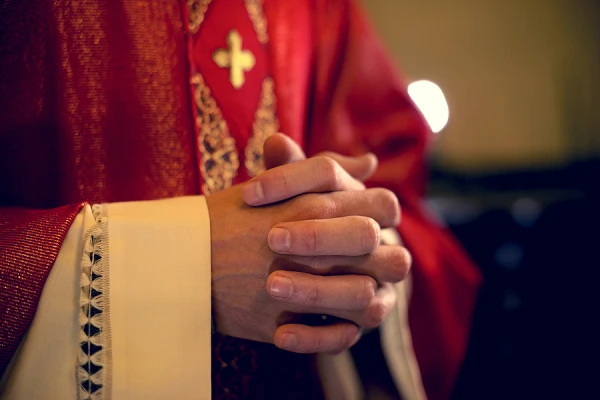
Denver, Colo., Jun 6, 2020 / 05:06 pm (CNA).- As restrictions meant to slow the spread of the novel coronavirus have forced churches to close or limit their activity in recent months, priests across the U.S. may be feeling “nonessential” as they struggle to support or even engage with their parish community, one psychologist said.

Dr. Christina Lynch, a supervising psychologist for Denver’s St. John Vianney Theological Seminary, told CNA the quarantine measures around the country may be causing priests to feel unneeded and to struggle with their priestly identity. She said priests need encouragement to overcome these challenges.

“Shepherds have been removed from their flocks, and flocks and been removed from their shepherds. They’re losing their sense of priestly identity and purpose. A newly ordained priest [told me], ‘I am not a minister without a community, and it’s been really hard,’” she said.

“This is the time God created [these priests] to be here, at this juncture in this country during the terrible time of pandemic and riots. There’s a purpose and a mission for [priests who were] ordained for that, to bring the sacraments to the people of the Catholic Church, and they need to support each other in that.”

As the novel coronavirus spread in March, all U.S. Catholic dioceses curtailed public Masses to prevent the spread of the disease.

Beginning in mid-April, many dioceses have begun resuming the offering of public Masses, although with limitations on attendees and regulations including the use of masks and hand sanitizer. Other dioceses have not yet resumed public Masses.

Over the Memorial Day weekend, Lynch issued a questionnaire to about a dozen priests, representing different parts of the country and different priestly demographics – including vocation directors and seminary rectors, middle-aged pastors and recently ordained priests.

The survey asked questions about how the pandemic has affected the priests’ mental health, what type of support they need, and what pressures they expect to arise in the future. Lynch expressed hope that the questionnaire would help her better understand the current condition of priests, so she can help prepare psychologists to support them.

The results, she found, were that clergy said they were experiencing a greater psychological strain from the pandemic, resulting in loneliness, depression, cynicism, anger, and fear.

“The number one message I heard was that this quarantine has brought to the surface a growing crisis in priestly identity,” she said.

Being without parishioners over the last few months has in some cases led to a feeling of isolation and purposelessness among priests, Lynch explained. Because priests are limited in their interactions and ministerial duties, she said, they may feel like they are trapped and lacking control.

While marijuana dispensaries, abortion clinics, and porn shops have remained open, she said, religious institutions have been deemed nonessential by state governments. In some cases, state regulations have demanded that churches open more slowly, or with a smaller number of people than other social gatherings. In many cases, courts have rejected these rules, although the U.S. Supreme Court recently upheld a regulation on churches in California.

“They’re getting that message from the secular. In other words, the governments. They’re opening all these other kinds of stores and saying they’re essential. [But] the churches can’t open… They don’t consider the spiritual, and yet people thrive when they have faith and when they’re in community,” Lynch said.

She said the pandemic has also caused “decision fatigue” and forced priests to make choices they may never have faced before, such as large staff cutbacks. The lack of normalcy and community may also increase temptations among priests, who find it more difficult to pray.

To combat these difficulties, she said, parishioners need to show their appreciation for their pastors, and priests need to offer fraternal support to one another. She said it is important to remind priests that things will be back to normal and highlight the value of their ministry during these difficult times.

“The laity needs to reach out and send them notes and tell them they’re essential and tell them how important they are,” she said.

Priests can also play a role in helping one another recognize that they are essential, she said.

“I think building comradery, calling priests in your fraternity when you’re friends with them or not, and just reaching out and supporting each other. I think that’s one of the best things priests can do to help each other.”


[…]

No Picture
News Briefs

Catholic law school offers free help to arrested protesters

June 6, 2020 CNA Daily News 1

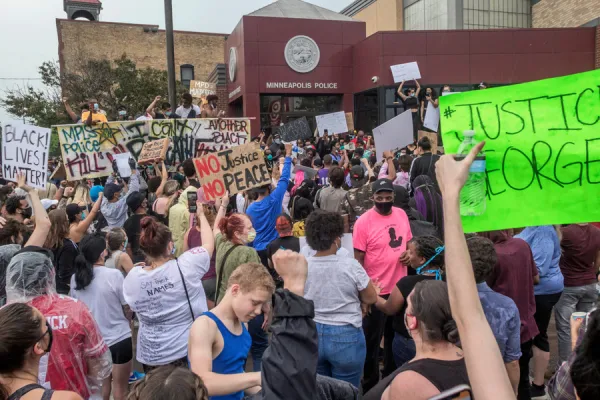
St. Paul, Minn., Jun 6, 2020 / 06:01 am (CNA).- Since Friday, there have been 612 arrests in the Twin Cities metroplex associated with protests following the killing of George Floyd, according to the Minnesota Department of Public Safety.

In response to the arrests, the University of St. Thomas School of Law in St. Paul, Minnesota, announced that it would defend those arrested for non-felony offenses associated with the protests free of charge. The school ranks second in the nation for practical training, according to a 2020 ranking by the National Jurist.

Defending the marginalized of society, who otherwise would not be able to afford representation, has been a long-standing goal of the Criminal and Juvenile Defense Clinic at the University of St. Thomas School of Law, which is taking on the cases associated with the protests.

The center will defend anyone charged with “gross misdemeanors, misdemeanors, petty offenses, delinquency offenses” that are associated with the protests, such as curfew violation. The center will not defend those charged with burglary and arson, which accounted for some of the arrests accompanying the protests.

“There have been a lot of cases coming in regarding violations of the curfew and other peaceful violations,” said University of St. Thomas School of Law Dean Robert Vischer. “That’s been the focus, rather than destruction of property.”

While the charges these defendants face are petty, if a defendant does not pay the fees associated with their arrest, their charges can quickly accumulate.

“There are huge collateral consequences for a juvenile who gets a misdemeanor charge or even an adult who gets a misdemeanor charge,” said Leyla Bari, a 2020 graduate from St. Thomas School of Law and an alumna of the clinic.
 
“The way that Minnesota law is written means [that] your driver’s license will get suspended, and then often people will still have to drive to work… and when your license gets suspended, that results in more fees, and often people will have to drive out of necessity, and it just creates a whole cycle of debt that it makes really difficult to get out of,” Bari said. “So it’s a small, little, tiny charge that just snowballs.”
 
Sarah Koziol, a rising third year law student who has been responding to calls made to the clinic, said that these kinds of cycles “plague poor people.”
 
“These types of fines create a pathway for criminalizing people who weren’t even found guilty in the first place,” Koziol said.
 
“It is critical to perpetuating the mission of St. Thomas [and] perpetuating Catholic social teaching pillars in the community in a very tangible, real way, to make sure we stand up for each protestor, each indigent person who is down there fighting for their rights, to make sure these small, little minute charges do not snowball and ruin their life,” Bari said.

Although the commitment to serving the under-represented is part of the center’s mission, this particular initiative arose in immediate response to community need and will require the volunteer work of a team of 13 law students over the summer, during a time when the center does not usually accept new cases.

“We were not planning on this being our summer, but who was?” said Rachel Moran, who founded and directs the Criminal and Juvenile Defense Clinic. “It was just a very organic response to community need.”

On the second night of protests following the death of George Floyd, Moran received a message from Bari asking if the clinic would be able to provide representation for protesters who were being arrested.

“I saw protesters out on the streets very early on, and I was very distraught at seeing so many young black and brown youth who were the first on the front lines to be picked out by officers, being intimidated by officers, getting arrested, getting maced, and sprayed with tear gas, and I wanted to do something, so I reached out to Professor Moran,” said Bari.

“I said yes,” said Moran. “We are a clinic that prioritizes being responsive to community need.”

Vischer said that the response of the community has been “largely enthusiastic.”

“Of course, whenever you’re delving into the representation of participants in controversial social actions, it won’t be uniformly enthusiastic,” he said. “But that’s part of being a criminal defense attorney; you are representing those who may not otherwise have a voice, and you may not be embraced by the larger community.”

The calls of complaints he has received from the public have expressed concern that the center is “supporting the protesters,” Vischer said.

“I point out that representing someone who is accused of a crime is separate from whether you support the underlying action that they have been arrested for,” said Vischer. “Ensuring that someone has representation doesn’t mean that the person will escape all punishment for violating the law.”

“Defense attorneys broadly have to represent everyone,” said Bari. “That is our duty as attorneys. We have to represent people, we have to give people a fair shot at justice in our justice system.”
 
Koziol said that the voices that criticize the clinic often point to the destruction that ensued with protests, often saying, “look at the destruction of Minneapolis and other cities, you are supposed to be taking care of creation, not destroying it,” Koziol reported.
 
Bari challenged that assertion, saying that “by amplifying and standing up for communities who have traditionally been pushed down and silenced, we’re helping to not just keep our gardens and yards looking nice, we’re helping to actually deliver true justice, which is the fulcrum that any kind of creation needs to be premised on.”
 
“The protests are legitimate and the tactics that have turned violent were turned violent by police,” said Koziol. “When protestors can speak up, they can create meaningful change.”

As a former public defendant in Chicago, Moran said that she is accustomed to being criticized for her work.

“I’d like to have a longer conversation with them,” said Moran. “We have a duty to advocate for the marginalized and we have a duty to stand up for those who have been wronged, particularly when they have been wronged by an abusive authority. That should be very consistent with Catholicism.”

The center believes that in defending the protesters it is living its Catholic identity.

“I think a Catholic law school should be instrumental in helping provide a voice for the voiceless and that the views of those on the margins of society are heard, and I think that a criminal defense clinic, generally, is aligned well with that mission, and that includes protesters who are arrested for protests,” Vischer said.

“By protecting freedom of speech and expression, that doesn’t just help one person, it helps all of us, which is directly tied to our mission, which is ‘for the common good,’” said Bari, quoting the University of St. Thomas motto. “It’s not isolated as one incident.”

“It is deeply Catholic to affirm the dignity of every person, and that’s really the starting point for what we’re doing here,” said Moran. “We are affirming the dignity of George Floyd. After the police denied that dignity and treated him as if he had no value, we are affirming that his life mattered.”

[…]