No Picture
News Briefs

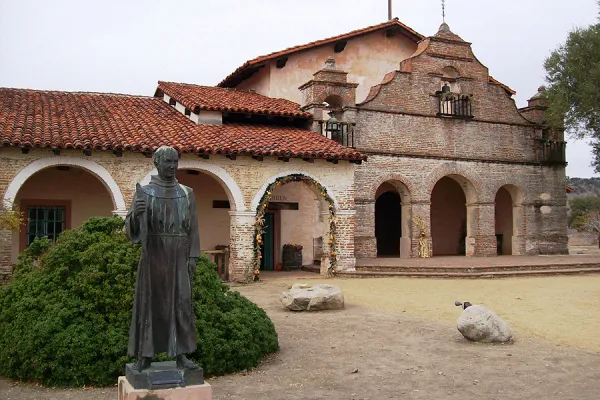
Teacher completes walking pilgrimage to California’s 21 missions
June 28, 2020 CNA Daily News 0

Denver Newsroom, Jun 28, 2020 / 02:01 pm (CNA).- A Catholic teacher who finished a pilgrimage to the Spanish Missions in California this week has emphasized his devotion to the first missions’ founder, St. Junipero Serra, and their influence on him as an educator.

Over the last two years, with a total of 45 days of walking, theology teacher Christian Clifford has trekked the California El Camino Real trail connecting all 21 missions. He finished the 781-mile pilgrimage June 22.

He told CNA that it has been an opportunity to walk in the shoes of the 18th-century friars, such as Serra, and to grow in virtues relevant to his experience as a teacher.

“I started visiting the missions and I really fell in love with them. I immerse[d] myself in learning more about it in the process. I [began] a real deep relationship with Junipero Serra,” he said.

“Those friars must have been very patient because they sacrificed a lot,” he added.

After he began teaching theology at Serra High School in San Mateo, he decided to learn more about the school’s patron and drove to the state’s 21 missions.

During this time, he authored three books about Spanish-Mexican history in California to help high school students understand the beautiful life of the missionary friars. One of the books, “Saint Junipero Serra: Making Sense of the History and Legacy,” tackles the controversial opinions of Serra, who is sometimes scrutinized by secular groups for his participation in Spanish colonialism.

“Saint Junipero Serra is such an amazing thing here. For those that don’t know him, his life has been under a magnifying glass for a long time. We know so much about him … He can teach us so many things about being courageous evangelizers,” he said.

In May 2018, he began his pilgrimage on foot, starting at the northernmost mission in Sonoma, Mission San Francisco Solano, and made his way south to Petaluma in the North Bay. He said it was difficult, especially the first day, and even dangerous at times, as he had to walk along highways.

“I thought I prepared myself, got all my bag together,” he said. “By the time I reached my hotel, I thought I was going to die. My blisters were horrible, I had the wrong shoes. But, what happens is over time, you speak with other people and you learn new tricks. By the end of it, I was very comfortable, even in difficult situations,” he said.

A majority of the miles were covered last year, which marked the 75th anniversary of Serra High School and the 250th anniversary of the establishment of the first California mission in San Diego.

Clifford’s last portion was 138 miles from Mission San Fernando to Mission Santa Ines, in which he also visited Mission San Buenaventura and Mission Santa Barbara. He ended his journey marking the fifth anniversary of Serra’s canonization.

He said it has been a positive influence on his role as a teacher and a person, helping him grow in virtue and undergo similar experiences the friars went through. He said that during this year’s difficulties the pilgrimage helped him be patient with and understand students who were struggling.

“I think the thing that I learned the most is patience. So I try to be a more patient person with my students and my family life,” he said.

“I think in my life as a professional in particular, I need to be a little more patient with the young men that I teach, a little more understanding.”

He said the major goals of the pilgrimage were to draw attention to the holiness of Serra, and to raise awareness of the Mission San Antonio de Padua, which is struggling financially to meet earthquake codes required by the government.

“The Mission Saint Anthony of Padua is first of all, really cool, because it’s the most isolated mission out of the 21, and it’s located on a military base, but you don’t need base access … You’re literally walking back in time when you go there,” he said.

“I created a Go Fund Me … So overall [I raised] $1500, $1,600. But, I’m hoping that just by doing [the pilgrimage] more people go out there and visit it because it’s so remote.”

He expressed the importance for Californians to understand the Catholic roots of the state, pointing to the significance of the names of cities, like San Francisco, Los Angeles, and San Diego. He said this rich history has meaning to not only the faith but practical arts like farming and ranching.

“The Catholic roots, all you have to do is look around right,” he said. “You can argue the El Camino Real path [is] probably based on Indian trails [and] it links to these major cities – San Francisco, the city of Saint Francis; San Jose, the city of Saint Joseph; Los Angeles, the city of angels … so these major population centers are all basically where the missions once were,” he said.
[…]

No Picture
News Briefs

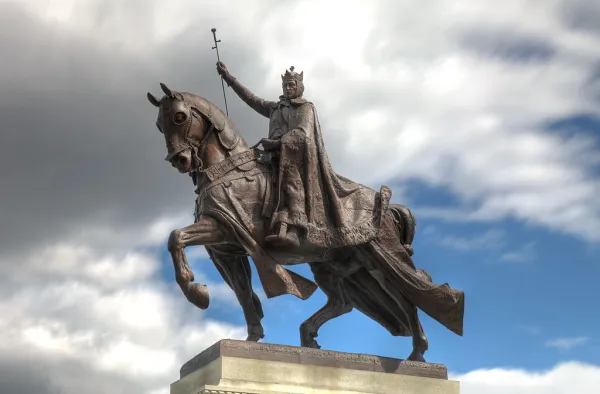
Catholic priest among defenders of St Louis statue

June 27, 2020 CNA Daily News 1

CNA Staff, Jun 27, 2020 / 09:36 pm (CNA).- Fr. Stephen Schumacher, a priest of the Archdiocese of St. Louis, was among the defenders of a prominent statue of the city’s namesake as protesters called for its removal Saturday.

Umar Lee, an organizer of the protests, said June 27 that the statue “is gonna come down,” reported Joel Currier of the St. Louis Post-Dispatch. “This guy right here represents hate and we’re trying to create a city of love. We’re trying to create a city where Black lives matter. We’re trying to create a city where there is no antisemitism or Islamophobia … this is not a symbol of our city in 2020.”

Fr. Schumacher, whose priestly ordination was in May 2019, addressed a shouting mob, attempting to inform them about St. Louis’ life, saying, “St. Louis was a man who willed to use his kingship to do good for his people.”

<blockquote class=”twitter-tweet”><p lang=”en” dir=”ltr”>Video from this moment earlier. <a href=”https://t.co/PXLMoT3s1c”>https://t.co/PXLMoT3s1c</a> <a href=”https://t.co/WE6vHeEsJH”>pic.twitter.com/WE6vHeEsJH</a></p>&mdash; Joel Currier (@joelcurrier) <a href=”https://twitter.com/joelcurrier/status/1276969627025911809?ref_src=twsrc%5Etfw”>June 27, 2020</a></blockquote> <script async src=”https://platform.twitter.com/widgets.js” charset=”utf-8″></script>

Moji Sidiqi of the Regional Muslim Action Network, another organizer of the protest,  said: “It’s a revolution. It’s time for change … right now, our number one mission is to take this thing down and sit down with people who want to see positive change take place and continue to heal our country.”

Sidiqi added that she thought the city should be renamed.

The statue, Apotheosis of St. Louis, sits in the city’s Forest Park in front of the Saint Louis Art Museum. It was erected in 1906 and depicts Louis IX of France, for whom the city is named.

According to the St. Louis Post-Dispatch, some 200 people were at the protest.

Catholics defending the statue at the protest prayed the rosary and sang, and several police officers separated them from the protesters.

Maria Miloscia told the Post-Dispatch that St. Louis “symbolizes deep faith and convictions. I stand for him. And I stand for those Catholic virtues and those Catholic values that I think are important, like courage, faith and love. But ultimately, I’m here for Christ the King.”

St. Louis was King of France from 1226-70, and he partook in the Seventh and Eighth Crusades. He restricted usury and established hospitals, and personally cared for the poor and for lepers. He was canonized in 1297.

Numerous statues of historic figures have been pulled down in recent weeks amid ongoing protests and riots throughout the country. While some protests have torn down the statues of Confederate figures as part of a call to end systemic racism, other statues have also been torn down from prominent locations, including one of George Washington.

Several statues of St. Junipero Serra have been pulled down or protested against.

In a June 23 letter, Bishop Donald Hying of Madison wrote that “If we allow the commemorative and visual history of our nation to be destroyed by random groups in the current moment of anger, how will we ever learn from that history? Does toppling and vandalizing a statue of George Washington because he owned slaves, really serve our country and our collective memory?”

“The secular iconoclasm of the current moment will not bring reconciliation, peace, and healing. Such violence will only perpetuate the prejudice and hatred it ostensibly seeks to end…Only the love of Christ can heal a wounded heart, not a vandalized piece of metal,” the bishop added.

[…]

No Picture
News Briefs

After backlash, EWTN radio host Gloria Purvis says she will persevere

June 26, 2020 CNA Daily News 9

Denver Newsroom, Jun 26, 2020 / 03:55 pm (CNA).-  


Gloria Purvis, host of a Catholic morning radio show produced by EWTN, said she will keep speaking out for racial justice, amid news that her show will not be broadcast by a large radio network which carries EWTN’s syndicated radio content.

News that the Guadalupe Radio Network would no longer air Purvis’ “Morning Glory” radio show broke on social media Thursday night. Purvis confirmed to CNA that she has been informed the Guadalupe network would no longer carry the show and is “not happy with the direction of the show right now,” but that Guadalupe Radio has not reached out to her directly.

The EWTN radio network will continue to produce and broadcast “Morning Glory” , which is available on terrestrial and satellite radio, as well as online.

“EWTN is still carrying the show,” Purvis said, adding that EWTN executives told her “that nothing has changed, that they are going to continue to broadcast Morning Glory, and they have no plans to change the show.”

Michael Warsaw, EWTN’s CEO and board chairman, told CNA that “EWTN is the producer and distributor of the ‘Morning Glory’ radio program. There have been no changes to the show and none are planned. EWTN does not speak for its local radio affiliates, who make their own programming decisions and have the right to carry or not carry specific EWTN radio shows. ‘Morning Glory’ remains part of the EWTN lineup and is still going strong!”  

Purvis, who is black, has in recent weeks been a frequent speaker in Catholic media on topics related to racial justice and police brutality. She told CNA she has faced considerable backlash from listeners and readers for expressing her views on the subject, even though, she says, her views do not conflict with Catholic teaching.

“If you look at what the Holy Fathers have talked about in terms of use of force, they’re saying that we need to approach each person as made in the image and likeness of God. And who are we as Catholics not to have a position on police brutality, in light of that teaching?” Purvis asked.

“This is a huge moment in our country, where now we have people’s attention, and shame on us if we as Catholics shy away from preaching the Gospel, shy away from those difficult discussions. No one should expect to encounter the Gospel and remain unchanged.”

Purvis said her show might be misunderstood, because she aims to emphasize an approach that tries to give a fair hearing to all voices on the issues, and “then talk from there about what the faith says, or how the faith impacts the topic. Sometimes people miss that because their focus is on how to ‘win’ and not about how we have to serve.”

Despite backlash, she said, she is not going to think twice about offering her views on racial justice. “All of this has not made me second guess. I am going to persevere.”

“Every time a citizen’s life is taken, we need to question that vigorously, not because of who is taking the life, but because of who we are as Catholics.”

Adding that she has an opinion “informed by Church teaching,” Purvis told CNA that “anytime there could be an injustice against someone else— whether it’s in the womb or in the street — we have to speak out, to help try to build a culture of life.”

In a statement released June 26, Purvis said that she “will continue to speak the truth about the human person and that includes discussing racism and other evils.”

“I do not fear the hard work of bringing the light of the Gospel to bear on these issues. Not everyone will receive the message joyfully and there will be opposition but because I love Jesus and believe in the beauty and truth of His message, I will persevere.”

“I will use whatever means the Lord gives me to spread His truth about the dignity of the human person from the womb to the tomb, from the immigrant to the citizen, from the powerful to the vulnerable. There are no throw-away people.”

Purvis has said that she feels it is her Christian obligation to speak out against racism and injustice- on “Morning Glory,” and to other media and in other platforms.

Earlier this month, she told a panel at Georgetown University that she watched the video of George Floyd’s arrest and death in horror, wanting to yell at the police officer kneeling on his neck, “Stop in the name of God! Stop!”

“I just thought the image of God is being abused right here in front of me,” she said.

She has faced backlash for her use of the popular racial justice slogan “Black Lives Matter,” although she told CNA this month that her use of the phrase does not constitute support for national Black Lives Matter organizations, whose platforms are at odds with Catholic teaching.

“For me, as a Catholic, a devout Catholic, as a loyal daughter of the Church, I have no problem saying ‘Black Lives Matter,’” she said.

“I know it doesn’t make me a member of the organization.”

Some Catholics hesitate to attend protests or other events because they say that not only “black lives matter,” but that “all lives matter,” she noted.

Purvis explained that the phrase “Black Lives Matter” is not meant to devalue the lives of others, and while all lives do matter, she has observed that “in practice” in the U.S., “what we’ve seen is that black lives don’t.”

As a pro-life Catholic, Purvis said she recognizes the eugenist roots of abortion, but said fighting racism in America shouldn’t be limited to opposing abortion. She said racism is manifested through police misconduct, housing policies, and other aspects of American public life.

Purvis converted to Catholicism when she was 12 years old, after an experience at Eucharistic adoration in her Catholic school. She later called it a “mystical experience with the Eucharist…just coming to know it was real, that it was alive, and feeling like I was consumed with a fire all over my body, but it didn’t burn.”

The host is a frequent speaker on pro-life and catechetical issues; she and her husband have been active in pro-life ministry and other parish ministry in the Archdiocese of Washington.

Purvis has served on the archdiocesan pastoral council in the Archdiocese of Washington, is a board member for the Northwest Pregnancy Center and Maternity Home in Washington, D.C. and an advisory board member on the Maryland Catholic Conference’s Respect for Life Office. She is a member of the National Black Catholic Congress’ Leadership Commission on Social Justice, and is the chairperson for Black Catholics United for Life, which seeks to increase the size and strength of active Black Catholics participating in the pro-life movement.

Catholic News Agency is a service of EWTN News.

The Guadalupe Radio Network could not be reached for comment, despite numerous telephone calls from CNA.

On Friday afternoon, the radio network released a statement online, saying it had “temporarily suspended airing the show on the GRN.” (Ed. note: emphasis original.)

“We are not bothered in the least that ‘Morning Glory’ took on the difficult, but needed, topic of the evil of racism. In fact, we feel our audience is looking for a clear Catholic response to all they are seeing in our society right now. It is our hope and prayer that the issues we have raised with EWTN, in regards to “Morning Glory” will be addressed properly so that we can once again proudly air this program across the GRN.”

“During these last couple of weeks we have heard a ‘spirit of contention’ growing among the Hosts live on-air,” the statement continued. “We feel it is clear that there is a real disconnect among the team, becoming more and more obvious, and we feel that should be addressed. We do not feel that this type of exchange is edifying, nor is it clarifying for anyone, especially a Catholic radio listener who wants clarity.”

“Never before have we received as many complaints about any EWTN show as we have about Morning Glory as of late. Our efforts to try and correct the situation before were not successful. So, we felt we had no other option other than to temporarily suspend airing this program.”

“The unfounded and uncharitable accusations hurled at GRN, without the facts, have been terrible. As you well know, Satan is the father of lies. Unfortunately, that is what is happening here in this situation – lies are being told, and spread around, on the internet about us. We hope you will help in sharing the true story!” the statement said.

The Guadalupe network, which both distributes content syndicated by EWTN and other Catholic media apostolates and produces its own content, is based in Midland, Texas, but operates more than 30 radio stations in Texas, Florida, Alabama, New Mexico, and Washington, D.C.

Purvis told CNA that she is grateful for the support she has received from listeners, but admitted that her work can be draining.

“I am tired, because, honestly, this is a lot of spiritual battle. But I am still very determined— I can’t stop bringing the light of the Gospel to today’s most pressing issues.”

“I hope you all will join me in making our culture one that is truly a culture of life. We have much work to do — together. Thank you for your ongoing support and prayers and be assured of my prayers for our human family,” Purvis said in her June 26 statement.

“Our Lady of Prompt Succor, pray for us.”


Gloria Purvis is featured in this episode of CNA Newsroom, and this bonus episode of CNA Editor’s Desk.

[…]

No Picture
News Briefs

Judge rules New York churches can reopen in line with businesses

June 26, 2020 CNA Daily News 2

Washington, D.C. Newsroom, Jun 26, 2020 / 02:00 pm (CNA).- A federal judge on Friday ruled that New York must allow indoor and outdoor religious services in the same way it would allow mass outdoor protests, or indoor shopping malls.

Judge Gary Sharpe of the Northern District of New York said that the state cannot limit outdoor religious services during the pandemic, provided that attendees follow social distancing requirements. For indoor services, he said, the state has to make the same allowances for churches as it does for other businesses.

The judgement follows a lawsuit filed on behalf of several different religious groups by the Thomas More Society. No Catholic diocese or parish was party to the suit.

The New York State Catholic Conference, which represents the bishops of the state, told CNA on Friday that churches would probably continue to follow state health guidelines for reopening, even though they are no longer bound by law to do so.

“Bishops must weigh many factors in reopening, the most important being the safety and well being of our congregations, clergy and parish staffs,” a spokesman for the conference told CNA. “We believe the guidance offered by the state is important to achieving that goal.”

The state had already allowed some churches in the state to hold services at 33% indoor capacity, where that particular jurisdiction had reached phase IV of reopening. Churches in other areas have been allowed to offer Mass at 25% capacity.

New York City, currently in the second reopening phase, had allowed some indoor offices, retail stores, and salons to operate at 50% capacity while churches were restricted to 25% capacity.

Judge Sharpe on Friday said that those businesses are “not justifiably different than houses of worship” in the risk they pose to the spread of the virus.

Furthermore, state officials showed preferential treatment by allowing or even encouraging mass outdoor protests and 150-person outdoor graduation ceremonies, while subjecting religious gatherings to ten or 25-person outdoor gathering limits, he said.

Governor Cuomo and Mayor de Blasio have both appeared to condone or even encourage mass outdoor anti-racism protests attended by hundreds and thousands of people in recent weeks, despite strict state limits on the size of outdoor gatherings to 10 or 25 people.

On June 2, de Blasio defended his selective enforcement of gathering restrictions, saying that “[w]hen you see a nation, an entire nation simultaneously grappling with an extraordinary crisis seeded in 400 years of American racism, I’m sorry, that is not the same question as the understandably aggrieved store owner or the devout religious person who wants to go back to services.”

By their words, Cuomo and de Blasio endorsed “what they knew was a flagrant disregard of the outdoor limits and social distancing rules,” the judge said, thus sending “a clear message that mass protests are deserving of preferential treatment.”

They could have verbally discouraged or remained silent on the protests while suspending any enforcement of outdoor gathering restrictions, Judge Sharpe said, and thus could have remained within the law.

Christopher Ferrara, special counsel for the Thomas More Society, stated that Judge Sharpe “was able to see through the sham of Governor Cuomo’s ‘Social Distancing Protocol’ which went right out the window as soon as he and Mayor de Blasio saw a mass protest movement they favored taking to the streets by the thousands.”

Lawyers from the Thomas More Society originally brought the lawsuit on June 10, on behalf of three Orthodox Jewish congregants from Brooklyn and two priests of the Society of St. Pius X, a group in irregular communion with the Catholic Church, which operates independently of the dioceses of the state, and does not recognize the local bishops’ authority.

The lawsuit charged that Cuomo, state attorney general Letitia James, and de Blasio all violated religious freedom, free speech, and due process in their public health restrictions during the pandemic.

The state and city put more burdensome restrictions on churches than they did on some businesses and mass protests, the lawsuit alleged, creating “a veritable dictatorship” where they “selectively enforced ‘social distancing’ under a ‘lockdown’” in the state, while carving out “numerous exceptions” in line with “their value judgments.” 

De Blasio has on multiple occasions during the pandemic threatened houses of worship with fines, permanent closure, and mass arrests if they would not comply with public health orders.

[…]

No Picture
News Briefs

Missouri’s last abortion clinic receives license

June 26, 2020 CNA Daily News 0

CNA Staff, Jun 26, 2020 / 12:09 pm (CNA).- The Missouri health department issued a license to the state’s only abortion clinic Thursday. Its license had been revoked a year ago over regulators’ concerns about health and safety problems at the clinic.

The state’s Administrative Hearing Commission had ruled last month that the Missouri Department of Health and Senior Services was wrong not to renew Reproductive Health Services of Planned Parenthood of the St. Louis Region’s license to perform abortions.

The health department inspected the clinic in St. Louis before granting the license June 25. If it should want to appeal the ruling from the Administrative Hearing Commission, the health department must do so by June 29.

The license had been revoked in June 2019, but the administrative commission and a state judge both granted a temporary stay of the health department’s decision, allowing the clinic to remain open while the case was reviewed.

The health department has cited an “unprecedented lack of cooperation” on the part of the St. Louis clinic, as well as a “failure to meet basic standards of patient care,” identifying four instances of failed abortion procedures at the clinic; among these, one of the mothers developed sepsis, and another was hospitalized with life threatening complications.

According to the health department, Planned Parenthood went back on its agreement to perform pelvic examinations as a “preoperative health requirement.” Several doctors at the clinic refused requests to provide interviews with the health department, and the clinic would not have been prepared for a case of a woman who suffered “severe hemorrhaging” at a hospital before being referred to Planned Parenthood.

A 2016 report on an inspection of the clinic by the health department shows that the clinic at that time was in violation of multiple state standards involving the sterilization and storing of equipment, and the proper documentation of medication and procedures.

Planned Parenthood has accused the state of weaponizing the regulatory process and claimed the state has admitted the pelvic exams are “medically unnecessary.”

In October 2019 Planned Parenthood opened a new clinic in Fairview Heights, Ill., just 15 miles east of St. Louis.

Yamelsie Rodriguez, CEO of Planned Parenthood of the St. Louis Region and Southwest Missouri, said that women are seeking abortions in Illinois due to more permissive abortion laws. Missouri also has a 72-hour waiting period for abortion.

Earlier this month a federal appellate court dismissed a lawsuit filed by a member of the Satanic Temple against Missouri’s informed consent abortion law, rejecting the argument that the law established Catholic religious belief by stating that life begins at conception.

“Any theory of when life begins necessarily aligns with some religious beliefs and not others,” said U.S. Circuit Judge David R. Stras in a June 9 decision from the U.S. 8th Circuit Court of Appeals. Under the plaintiff’s theory, the decision said, “Missouri’s only option would be to avoid legislating in this area altogether.”

State law requires abortion providers to distribute a booklet from the Missouri Department of Health and Senior Services which includes the statement: “The life of each human being begins at conception. Abortion will terminate the life of a separate, unique, living human being.”

Missouri enacted a comprehensive abortion ban in 2019, which Republican Gov. Mike Parson signed into law. The legislation was supported by Archbishop Robert Carlson of St. Louis.

Missouri’s law set up a multi-tier ban on abortions after eight weeks, 14 weeks, 18 weeks and 20 weeks, as well as bans on abortions conducted solely because of the baby’s race, sex, or Down syndrome diagnosis. In August 2019 a federal judge struck down all of the bans related to the stages of pregnancy, but left intact the disability, race, and sex-selective abortion bans.

[…]

No Picture
News Briefs

With release of sex abuse report, National Review Board cautions against complacency 

June 26, 2020 CNA Daily News 2

CNA Staff, Jun 26, 2020 / 03:00 am (CNA).- The head of the National Review Board has called for increased action to fight sex abuse and avoid complacency, following the release this week of a report on sex abuse in the U.S. Catholic Church.

“We know that many current bishops have seriously confronted clerical sexual abuse, which is borne out in the Annual Report,” said Francesco C. Cesareo, chairman of the National Review Board. “Yet, the Report also evidences areas in need of improvement that will necessitate an on-going effort in addressing this issue in a way that will require courageous leadership, as well as an openness to the co-responsibility of the laity in responding to this ever-present crisis.”

He warned that even limited failures can present a significant problem for the Church in the U.S. The National Review Board is calling for a more in-depth audit and updates to the Charter for the Protection of Children and Young People, he said.

“We continue to see the failure to publish reporting procedures in the various languages in which the liturgy is celebrated; poor recordkeeping of background checks; dysfunctional Diocesan Review Boards; lack of a formal monitoring plan for priests who have been removed from ministry; failure to update policies and procedures in light of the 2011 Charter revisions,” he said.

While these problems are not widespread, they do recur and are evident in 25% to 30% of dioceses. Cesareo said this indicates “lack of diligence that puts children’s safety at risk.”

“The apparent resistance by some parishes and schools to provide safe environment training places children at greater risk,” he said. “Although dioceses continue to do good work in creating cultures of protection and healing, the fact remains the Church’s efforts will be measured based on the weakest links. If one diocese is at risk, the whole Church is also at risk.”

The annual report on Findings and Recommendations on the Implementation of the Charter for the Protection of Children and Young People was released June 25 by the U.S. bishops’ Secretariat for Child and Youth Protection. It is the seventeenth report since the charter was implemented in 2002.

The Rochester, New York-based consulting firm StoneBridge Business Partners conducted the audit. The Center for Applied Research in the Apostolate conducted a survey included in the report.

The audit found three instances of non-compliance with the charter: the Oakland diocese failed to evaluate a visiting priest’s background and there were a non-functioning review boards in both the Ukrainian Archeparchy of Philadelphia and the St. Thomas Syro-Malabar Catholic Diocese.

Additionally, non-participants in the audit were the Eparchy of St. Mary Queen of Peace, the Eparchy of St. Peter the Apostle, and the Eparchy of St. Nicholas of Chicago.

Out of more than 37,000 diocesan and religious order priests, there were 37 allegations involving current year minors, of which 8 were substantiated and the priests were removed from ministry. Twelve allegations are still under investigation, 7 were ruled unsubstantiated, 6 were unable to be proven. Another three have been referred to religious orders, and one was referred to another diocese.

Archbishop Jose Gomez of Los Angeles, president of the U.S. Conference of Catholic Bishops, said in the report’s preface that all of these allegations were reported to law enforcement. He said the numbers indicate that new cases of sex abuse by clerics are rare.

“Of course, every case is one too many, and we remain vigilant and determined to prevent this evil,” the archbishop said. He stressed the efforts to implement policies and programs to protect young people and create safe environments in parishes, schools and other Catholic ministries.

Hundreds of thousands of adults have been trained to prevent abuse and to report it, while leaders have been put through extensive background checks, Gomez said. Dioceses have implemented strict reporting requirements, and work closely with law enforcement to report alleged abuse and to remove accused abusers from ministry, he said.

“My brother bishops and I want to apologize to all those who have endured abuse at the hands of someone in the Church and we want to express our pastoral commitment to helping every victim-survivor find healing and hope,” the archbishop said.

“From out of the failures of our past, Catholic dioceses across the country have worked hard to put in place policies and programs to protect young people and to create safe environments in our parishes, schools and other ministries.”

The report concerns the audit period of July 1, 2018 to June 30, 2019. In that time, 4,220 adults brought forward 4,434 allegations. This is a significant increase in allegations, which the report attributed in part to additional allegations received in the wake of lawsuits, compensation programs, the reviews of clergy files, and bankruptcies.

By comparison, last year’s report for the 2017-2018 audit period said 1,385 adults reported 1,455 new allegations, the vast majority of which concerned historical instances of abuse. Those numbers represent a marked rise over the 2016-2017 reporting period. Last year’s report attributed the escalation to the state-wide adoption of Independent Reconciliation and Compensation Programs by Catholic dioceses of New York State.

The latest reporting period followed the June 2018 revelations that the deeply influential ex-cardinal Theodore McCarrick, the former Archbishop of Washington, had for decades sexually abused teen boys and young men, including seminarians. A Pennsylvania grand jury report released later in 2018 also examined sexual abuse by Catholic clergy.

About 80% of newly reported victims of diocesan clergy were male, while 20% were female. The report said 59% of alleged abuse began when the victim was aged 10-14, while 22% involved victims aged 9 or under.

Among the newly reported allegations, abuse by diocesan clergy peaked in 1970-1974. According to the report, 50% of alleged abuse occurred or began before 1975, 45% between 1975 and 1999, and 5% after 2000.

About 43% of alleged perpetrators in diocesan clergy did not have prior allegations against them, while 57% did. Ninety percent of alleged diocesan offenders are deceased, already removed from ministry, already laicized, or missing. Forty priests or deacons identified as alleged abusers in 2019 were permanently removed from ministry.

Diocese and eparchies that responded to the survey reported over $281 million in costs related to sex abuse allegations in the 2018-2019 period. About 71% of this went to settlements for victims, while 15% went to attorney fees. Religious institutes, which are handled in a separate category, paid over $41 million. Besides settlements and legal expenses, these costs include support for offenders and other payments to victims for purposes including therapy, living expenses, or legal expenses.

In last year’s audit period, dioceses and eparchies provided outreach and support to 1,138 families who had newly reported abuse, while they provided continued support to 1,851 survivors and their families who had previously reported abuse.

Catholic churches and organizations conducted over 2.6 million background checks on clergy, employees and volunteers. More than 2.6 million adults and 3.6 million children and young people were trained in abuse awareness and reporting.

In February 2019, Pope Francis held the first-ever global summit on protecting minors in the Church. In May 2019, the pope issued new norms in the document “Vos Estis,” aiming to hold bishops and religious superiors accountable when they are accused of abuse or when they are accused of mishandling abuse allegations.

Cessario said the promulgation of Vos Estis and U.S. bishops’ efforts to enact it “signaled an important and positive response” in the wake of revelations about McCarrick.

“Nonetheless, subsequent revelations of episcopal wrongdoing, the establishment of compensation plans for victims, the announcement of new grand jury investigations in several states, the filing of new lawsuits regarding abuse, and a growing desire among the laity for greater involvement in addressing this issue has led many to question whether the audit is sufficiently adequate to determine if a culture of safety within dioceses has taken root,” he said.

Cessario said the National Review Board has called for a “more in-depth audit,” as well as “a further revision of the Charter that will incorporate new practices, such as parish audits, offering greater assurance of compliance.”

Deacon Bernie Nojadera, executive director of the U.S. bishops’ Secretariat of Child and Youth Protection, wrote a Feb. 28 letter included in the report. He reflected on how the abuse crisis has affected Catholics’ faith.

“For some, this crisis has strengthened their faith and resolve – has confirmed the importance of keeping the faith and ultimately relying on the mercy, goodness, and plan of God,” he said. “For others, this crisis has destroyed lives and faith and trust in God. The theological implications point to the need to reconnect appropriately with God and with each other. Understanding what is happening in the Church and Her response is part of the solution.”

Nojadera noted the need to develop and maintain “right relationships” with young people and the vulnerable to help the Church learn and grow amid the sex abuse crisis.

“Only by promoting a culture of protection and healing can we prevent the evil of sexual abuse and bring true healing to those affected by this crime,” he said, emphasizing the need for continued vigilance.

The U.S. bishops’ statement on the report’s release said that the audit and the continued application of zero-tolerance policies are “two important tools in the Church’s broader program of creating a culture of protection and healing that exceeds the requirements of the Charter.”


[…]

No Picture
News Briefs

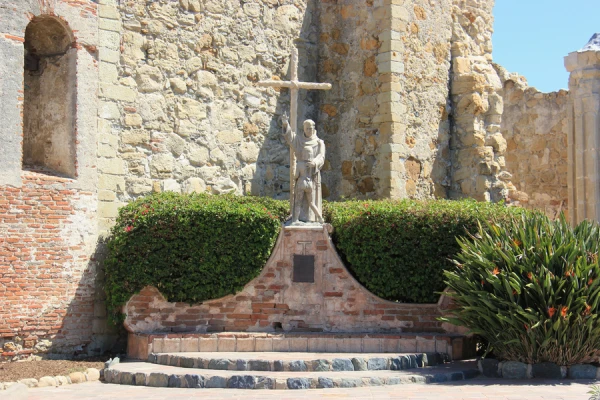
San Juan Capistrano Mission relocates St. Junipero Serra statues for protection 

June 25, 2020 CNA Daily News 1

CNA Staff, Jun 25, 2020 / 04:34 pm (CNA).- Two statues of St. Junipero Serra have been moved from a Catholic mission and church in southern California amid fears of vandalism as protests around the state continue to topple statues.

The Mission San Juan Capistrano and its neighboring church have removed statues of Serra from their outside displays this week.

Diocese of Orange spokeswoman Tracey Kincaid told the OC Register that the Mission Basilica San Juan Capistrano moved the statue “out of precaution.” The statue, which was anchored to a pedestal at the entrance, was removed on June 23.

The mission next door relocated the statute from its front courtyard to its Sala building. The 104-year-old statue has been displayed for almost 80 years. It will soon be part of a mission exhibit on the life of Serra.

“The statue was moved to ensure its protection and was relocated to also ensure its continued access to the public,” mission staff said in a June 24 Facebook post.

The basilica was built in 1986 to accommodate the growing Catholic community, which outgrew the mission’s smaller Serra Chapel. The Mission San Juan Capistrano was established by Serra in 1776.

Serra statues are among numerous depictions of historic figures pulled down in the past week amid ongoing protests and riots throughout the country. While some protests have torn down the statues of Confederate figures, as part of a call to end systemic racism, other statues have also been torn down from prominent locations, including one of George Washington.

During the eighteenth century, Serra founded nine Catholic missions in the area that would later become California, many of those missions would go on to become the centers of major California cities.

Serra helped to convert thousands of native Californians to Christianity and taught them new agricultural technologies. Critics have lambasted Serra as a symbol of European colonialism and said the missions engaged in the forced labor of Native Americans, sometimes claiming Bl. Serra himself was abusive.

But Serra’s defenders say that Serra was actually an advocate for native people and a champion of human rights. They note the many native people he helped during his life, and their outpouring of grief at his death.

Biographers note that Serra frequently intervened for native people when they faced persecution from Spanish authorities. In one case, the priest intervened to spare the lives of several California natives who had attacked a Spanish outpost.

Archbishop Salvatore Cordileone of San Francisco issued a June 20 statement highlighting the saint’s good works, saying, “St. Serra made heroic sacrifices to protect the indigenous people of California from their Spanish conquerors, especially the soldiers…”

“For the past 800 years, the various Franciscan orders of brothers, sisters and priests that trace their inspiration back to him have been exemplary of not only serving, but identifying with, the poor and downtrodden and giving them their rightful dignity as children of God,” the archbishop said.

The California Catholic Conference of Bishops similarly defended Serra, saying, “The historical truth is that Serra repeatedly pressed the Spanish authorities for better treatment of the Native American communities. Serra was not simply a man of his times.”

“In working with Native Americans, he was a man ahead of his times who made great sacrifices to defend and serve the indigenous population and work against an oppression that extends far beyond the mission era,” they said.

“And if that is not enough to legitimate a public statue in the state that he did so much to create, then virtually every historical figure from our nation’s past will have to be removed for their failings measured in the light of today’s standards.”


[…]