No Picture
News Briefs

‘Scrambling’ Catholic schools push for ‘equitable’ coronavirus relief funding

July 14, 2020 CNA Daily News 0

Denver, Colo., Jul 14, 2020 / 02:50 pm (CNA).- Though federal rule makers have clarified that coronavirus relief funds must help non-public schools, including Catholic schools, Catholic school advocates and other backers of private schools are working to rally support to ensure aid is distributed in a way that benefits all students.

Elias Moo, superintendent of the Archdiocese of Denver Catholic schools, said CARES Act funds could be critical to school operations. Schools need masks, funds for more cleaning services, and access to technology for school needs including remote learning.

“Our Catholic schools have been really hard-hit, as have families impacted by the pandemic,” Moo said. A drop in tuition payments has harmed school revenue, and schools linked to parishes have been hurt by declines in donations to the parish offertory.

Moo said that federal coronavirus school assistance should aid students in both private and public schools, and that some parish schools are depending on the help.

“We want to open our facilities in a safe and healthy manner but we also know that there are financial challenges. Without this funding, it will be a real challenge for some schools to be able to open effectively and safely,” he told CNA.

“Private schools have been impacted by COVID-19 at the same rate as public schools have, and in some cases more heavily,” Ross Izard, national director of public policy with the private school scholarship fundraiser and school choice advocate ACE Scholarships, told CNA July 10.

“These schools are hurting. They’re in need of help. They’re in need of aid,” said Izard. His Colorado-based ACE Scholarships works to provide partial tuition scholarships to K-12 private schools for low-income families. It also advocates for school choice. The organization is active in eight states and served 7,000 children in 800 schools in 2019.

The interim rule’s goal, according to Izard, is equity, the need to ensure “the same treatment for private school students as public school students.”

ACE Scholarships has asked its supporters, its families, partner schools and partner advocacy groups to circulate a letter and submit comment to the federal government in support of private school support.

“COVID-19 has devastated all sectors of education, and private schools have not been spared,” the letter says. “These schools, many of which are small and lack the resources of larger school districts, are struggling to safely and effectively serve their families as a result of the pandemic.”

“For many private schools, CARES Act equitable services will provide the emergency assistance needed to ensure that students can return this fall for a safe, successful school year. These schools should be entitled to a full, fair share of CARES aid in accordance with the law and previous U.S. Department of Education Guidance.”

The rule is open for a 30-day comment period, ending July 31. Izard said that people “have an opportunity to make their voices heard.”

“We are anticipating that the folks who are opposed to private schools generally, or to school choice, are going to participate at a very high level in that public comment campaign,” he said. “We want to make sure the U.S. Department of Education is hearing from the schools and the families in the private sector about how important that aid is to them.”

The Department of Education rule was previously non-binding guidance. Since funds are distributed through state and local education agencies, education officials in several states had ruled that private schools would receive fewer funds than many schools deemed sufficient.

In early June, before the new federal rule was announced, the Pennsylvania Catholic Conference asked the U.S. Department of Education to reverse state decisions that gave insufficient coronavirus relief funds to Catholic and other private schools

Before the guidance became a mandatory rule, the Colorado Catholic Conference had circulated an action alert objecting to Colorado officials’ decisions. Education officials had disregarded federal guidance in a way that withheld relief funds for Catholic schools, the conference said.

“Without a fair share of relief funding for our Catholic schools, our already financially stretched Catholic schools will be faced with an additional hardship in trying to absorb the expenses needed to ensure schools can reopen safely and continue to provide a quality education to students in the midst of a pandemic,” said the action alert.

Brittany Vessely, executive director of the Colorado Catholic Conference, explained the motivation behind continued advocacy for relief aid to Catholic schools.

“We’re talking about being treated equitably and fairly based upon a pandemic that has impacted everybody,” she told CNA. “We want to make sure that relief funding gets to our schools and to our students.”

“All families have been impacted by the coronavirus, we are all in this together,” she said. Any state or local education agency that tries to block funding to non-public schools, she said, is being “discriminatory” against families that have chosen these schools as “the best education option for their child.”

Relief funds in the large east Denver suburb of Aurora, Colorado are distributed through the Aurora School District, one of the largest districts in the state. But the school district decided to postpone a decision until December.

In Aurora, the postponement meant a loss of “significant funding” Catholic schools were expecting, said Moo, who worried other districts in the state might delay the provision of resources.

“Now we’re scrambling to figure out how to pay for certain things that are needed from the first day of school, when students are back,” said Moo, adding that the Catholic archdiocesan schools are considering how to fund raise for some of the costs.

Corey Christiansen, public information officer for Aurora Public Schools, told CNA that the Colorado Department of Education has set December as the deadline for the allocation of these funds.

“Guidance on COVID-19 related federal funds has been limited in general and has changed several times since the original allocations were made,” he said. “We intend to apply and hope that additional clarification from Congress, the U.S. Department of Education or (Colorado Department of Education) helps clarify guidance prior to the December deadline.”

Jeremy Meyer, director of communications for the Colorado Department of Education, told CNA that in the department’s view, the CARES Act requires that local education agencies “must provide equitable services to students and teachers in non-public schools, not direct funding.” Control of the federal funds must remain with the local agency. Calculations for these services have been “in flux” due to differences between the act’s language and the federal guidance.

“The reality of education is that it’s an ecosystem,” Izard told CNA, who added both public and private schools serve the same neighborhoods and the same people.

“What happens to one sector is going to impact the other sector,” he added. “If private schools don’t get what they need in the form of emergency aid, and they’re not able to effectively serve their students, those students have to go somewhere.”

“That can result in really significant costs on taxpayers and on the public system.”

Moo echoed Izard’s description of schools as an ecosystem.

“We really see ourselves as collaborators with public forms of education in the overall educational efforts in our state,” Moo told CNA. “In this educational educational ecosystem, here in Colorado in particular, we would say there is a symbiotic relationship between public and non-public education.”

“Our mutual strength ultimately ensures that children in Colorado are properly educated,” he said.

Under the new federal rule, two options are provided for local authorities. The first option requires that if a local education agency uses CARES Act funds for students in all its public schools, it must calculate funds for private schools based on all students enrolled in private schools in the district.

Under the second option, a local agency may choose to use funds only for students in both public and private schools with a high concentration of low income students, a program known as Title I.

According to Vessely, 17 states have decided to distribute funds proportionate to all private school students, while 21 states will follow the option to distribute funds proportionate to Title I beneficiaries in public and private schools.

Five states, California, Maine, Michigan, New Mexico, and Wisconsin, have filed a lawsuit against the U.S. Department of Education and Secretary of Education Betsy DeVos, claiming that the federal rule unlawfully interprets the CARES Act in a way that diverts relief funds from public schools to private schools.

California Attorney General Xavier Becerra said July 7 the lawsuit is “about stopping the Trump administration’s latest effort to steal from working families to give it to the very privileged”

Department of Education Press Secretary Angela Morabito said that “this pandemic affected all students, and the CARES Act requires that funding should be used to help all students.”

In Vessely’s view, the states’ lawsuit is unlikely to succeed.

“The majority of this country is not going the lawsuit route,” she said. There’s not a lot of precedent for them to win something like that.”

Vessely said that Catholic schools in Colorado serve a large number of low-income students.

Moo noted the high number of schools providing federal nutrition programs… and some schools serve a high percentage of students who qualify for free or reduced lunch programs.

“This idea that our schools are for the wealthy or the affluent is not entirely rooted in the reality we live everyday.” he said, pointing to Catholic school success in helping students from disadvantaged backgrounds to close gaps in achievement with public school peers.

Moo said Catholic education is “an education rooted in cultivating the virtues.”

“That’s for everyone, not just the affluent,” he added.

The National Catholic Education Association has said Catholic schools should be included in the Health and Economic Recovery Omnibus Emergency Solutions Act, known as the HEROES Act, which is now before Congress.

Ten percent of any new Covid-19 education funding should go to emergency grants to low- and middle-income private school families, the organization said. Both private and public schools have been hard hit by the epidemic and its economic effects, and any children who are forced to enroll in public school would further burden the public school system.

The NCEA is also advocating a “comprehensive” federal tax credit to ensure long-term funds for education.
 

[…]

No Picture
News Briefs

State Department: ‘Threats’ from China won’t stop US fight for Uyghur human rights

July 14, 2020 CNA Daily News 0

Washington D.C., Jul 14, 2020 / 12:45 pm (CNA).- The State Department on Monday said that Chinese sanctions of U.S. officials will not stop the U.S. from holding China accountable for abuses of Uyghurs.

“These threats will not deter us from taking concrete action to hold CCP officials accountable for their ongoing campaign of human rights abuses against members of ethnic and religious minorities in Xinjiang,” a state department spokesperson told CNA July 13.

Earlier on Monday, China’s foreign ministry announced sanctions on U.S. officials for speaking out about the mass detention of Uyghurs and other ethnic minorities in Xinjiang.

“It must be stressed that Xinjiang affairs are purely China’s internal affairs. The US has no right and no cause to interfere in them,” Hua Chunying, spokesperson for China’s foreign ministry, said on Monday.

China sanctioned U.S. religious freedom ambassador Sam Brownback, along with the Congressional-Executive Commission on China, Sens. Marco Rubio (R-Fla.) and Ted Cruz (R-Tex.), and Rep. Chris Smith (R-N.J.). China did not specify the details and scope of the sanctions, although Rep. Smith said in a press release that his sanctions denial of an entry visa into the country.

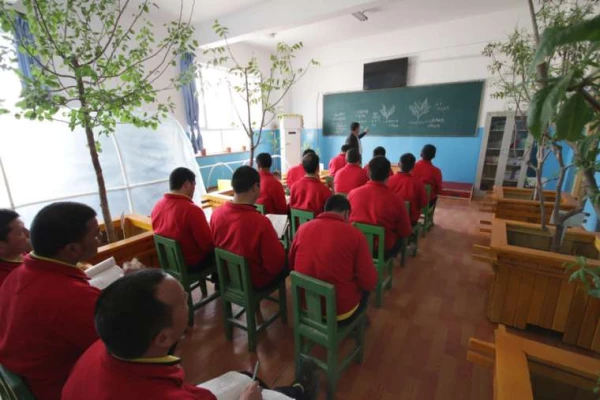
According to observers, anywhere from 900,000 to 1.8 million Uyghurs and other ethnic minorities have been imprisoned in Xinjiang, China’s far northwest province. The government has set up more than 1,300 detention camps where survivors have reported experiencing indoctrination, torture, beatings, and forced labor.

The AP reported on June 29 that many Uyghurs had also reported being forced by authorities to implant IUDs and take other forms of birth control, as well as being forced to undergo abortions and sterilizations in order to enforce China’s family planning policies. One expert told the AP that the campaign is “genocide, full stop.”

In addition, authorities have set up a system of mass surveillance in the region to track the movements of people, one that includes DNA sampling and facial recognition technology, as well as predictive policing platforms.

The bipartisan Congressional-Executive Commission on China—listed for sanctions by China—warned in its most recent annual report that authorities in Xinjiang “may be committing crimes against humanity against the Uyghur people and other Turkic Muslims.”

Rubio and Smith were among the members of Congress sanctioned by China on Monday, and they each authored versions of the Uyghur Human Rights Policy Act which imposed sanctions on Chinese officials complicit in the abuses committed against Uyghurs.

Rubio’s version of the legislation was eventually signed into law by President Trump on June 17, but the administration did not immediately impose the sanctions on culpable officials.

On July 9, the U.S. issued visa sanctions against Chen Quanguo, Communist Party Secretary of Xinjiang, and two other party officials of the region, Zhu Hailun and Wang Mingshan, as well as their immediate family members.

The Treasury Department also issued financial sanctions against Chen, Zhu, Wang, and Huo Liujun, a former police official in Xinjiang, blocking their assets and entities in the U.S. and forbidding U.S. persons from doing business with them.

On Monday, China imposed sanctions on U.S. officials in response. The State Department said that the retaliatory measures “further demonstrates the CCP’s refusal to take responsibility for its actions.”

“There is no moral equivalency between these PRC sanctions and actions taken by countries holding accountable CCP officials for their human rights abuses,” the State Department said on Monday.
 
Smith said that in remarks on the House floor, he had accused Chinese president Xi Jinping of direct culpability in “the genocide against the Muslims” in Xinjiang.
 
“The U.S. sanctions Chinese officials for egregiously abusing human rights and Beijing responds by sanctioning Members of Congress for defending human rights,” he stated on Monday.


[…]

No Picture
News Briefs

California Catholic university puts St. Junipero Serra statue in storage

July 14, 2020 CNA Daily News 0

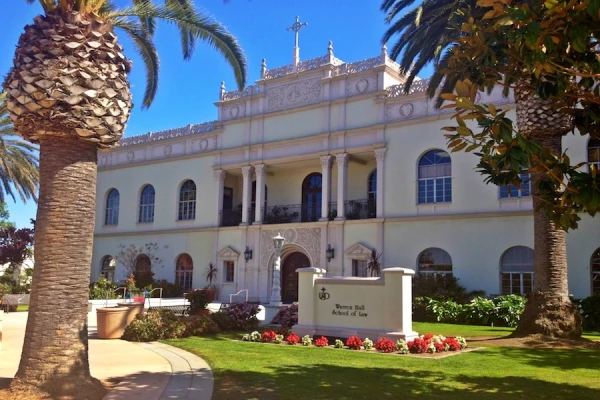
Denver Newsroom, Jul 14, 2020 / 11:30 am (CNA).- A California Catholic university has placed a statue of St. Junipero Serra in storage after at least three statues of the saint have been toppled by protestors in the state.

“In response to a statement from Archbishop Gomez, an outdoor statue of St. Junipero Serra on the University of San Diego campus was moved to temporary storage after several outdoor statues of the saint have been damaged in California,” a spokesman for the University of San Diego told CNA July 14.

The university referenced a June 29 letter from Archbishop Jose Gomez of Los Angeles, who wrote that while “those attacking St. Junípero’s good name and vandalizing his memorials do not know his true character or the actual historical record,” increased security precautions meant that some California churches would “probably have to relocate some statues to our beloved saint or risk their desecration.”

Public statues of the saint were in June toppled in Los Angeles and San Francisco, and on July 4, a statue of Serra on the grounds of California’s state capitol in Sacramento was torn down, burned, and beaten with sledgehammers.

“The sad truth is that, beginning decades ago, activists started ‘revising’ history to make St. Junípero the focus of all the abuses committed against California’s indigenous peoples,” Gomez wrote in his June 29 letter.

“But the crimes and abuses that our saint is blamed for — slanders that are spread widely today over the internet and sometimes repeated by public figures — actually happened long after his death.”

For its part, the University of San Diego told CNA that although he “has become a touchstone for past cruelties to the indigenous peoples of California…St. Serra, America’s first Hispanic saint and missionary who brought Christianity to these lands, worked tirelessly to eliminate oppression that was clearly a part of the mission era.”

Serra was also a founder of the city of San Diego itself. In 1769, the Mission San Diego de Alcalá was founded by Franciscan missionaries led by Serra; the city grew up around that mission.

The university told CNA that it had in the last year “addressed some of the issues surrounding the recognition of injustice to Native Americans and in the mission era.” In April, the university renamed a campus building – Serra Hall – as “Saints Kateri Tekawitha and Junipero Serra Hall.” St. Kateri Tekakwitha, a convert to Catholicism who died at 24 in 1680, is the first Native American to be canonized a saint.

In an April 17 letter, the university’s president wrote that “it is hoped that by placing these two Catholic saints together, we will recognize that indigenous peoples preceded the Catholic missionaries who settled here. It is also meant to encourage continued dialogue on the important topics of colonialization, the spread of the Catholic faith and the impact both had on Native American populations.”

A university spokesman told CNA the college had commissioned and hung tapestries of Saints Serra and Tekawitha, and hung them in the newly renamed hall.

Also in April, the university announced that it would rename a campus building to Mata’yuum, a word which means “gathering place” in the language of the Kumeyaay people native to Southern California. At the same time, the university said it would name campus plazas for St. Teresa of Calcutta and Venerable Francis Cardinal Xavier Nguyễn Văn Thuận, both of whom had visited the University of San Diego, and would work to strengthen its relationship with Missionaries of Charity working in nearby Tijuana, Mexico.

The University of San Diego was founded in 1949 by then San Diego Bishop Charles Buddy and Mother Rosalie Hill, RSCJ, of the Society of the Sacred Heart of Jesus. A Catholic university, it is now administered by a lay board on which San Diego’s bishop sits.

News that the university’s Serra statue was moved comes days after California’s San Gabriel Mission, founded by the saint, caught fire and burned Saturday night. Federal and local authorities are investigating the possibility of arson.

[…]

No Picture
News Briefs

First federal execution in 17 years lamented as ’unnecessary and avoidable’ 

July 14, 2020 CNA Daily News 1

CNA Staff, Jul 14, 2020 / 09:50 am (CNA).- The federal government executed its first federal inmate in 17 years on Tuesday, following numerous delays and requests for clemency from the family of the victims.

Daniel Lewis Lee was executed on Tuesday morning and pronounced dead at 8:07 a.m. He was executed at the U.S. Penitentiary in Terre Haute, Indiana. An eyewitness told the Indianapolis Star that it took approximately two to three minutes for Lee to die after the lethal injection drugs were administered.

The execution was permitted by the Supreme Court one day after a lower court blocked it due to overwhelming evidence that the drug protocol the government wanted to use causes “extreme pain and needless suffering,” including feelings of panic and the sensation of drowning as fluid accumulates in the lungs.

A Catholic organization opposed to the death penalty condemned the execution as “unnecessary and avoidable.”

“The federal government relentlessly plotted its course to execute Daniel Lee despite a historic decline in public support for the death penalty, clear opposition by the victims’ family, unwavering Catholic opposition to the restart of federal executions, and an unyielding global pandemic which has already taken more than 135,000 American lives,” said a statement from Kirsanne Vallancourt Murphy, the executive director of Catholic Mobilizing Network.

Lee was sentenced to death in the 1996 murders of a family of three, including an eight-year-old girl. He insisted upon his innocence, and his final words were, “I didn’t do it. I’ve made a lot of mistakes in my life but I’m not a murderer. You’re killing an innocent man.”

Lee, a onetime white supremacist, along with a man named Chevie Kehoe, was found guilty of robbing William Mueller, a gun dealer in Tilly, Arkansas, of cash, ammunition, and firearms before killing him, his wife Nancy, and stepdaughter Sarah. Kehoe and Lee were part of the Aryan People’s Republic, a white supremacist group which Kehoe reportedly founded. The two reportedly planned to use the stolen goods to establish a whites-only nation.

Kehoe was sentenced to life in prison. Family members of the Muellers had requested that Lee also receive a life sentence.

In June, Nancy Mueller’s mother Earlene Peterson stated that she did not wish to see Lee executed.

“As a supporter of President Trump, I pray that he will hear my message: the scheduled execution of Danny Lee for the murder of my daughter and granddaughter is not what I want and would bring my family more pain,” said Peterson.

Family members of the victims were also concerned about the safety of doing an execution during the coronavirus pandemic, as they were nervous about traveling to a prison and being in a confined room to view the execution. Prisons have been the sites of widespread coronavirus outbreaks.

The last federal execution took place in 2003. In 2014, President Barack Obama ordered a Department of Justice (DOJ) review of the federal death penalty after several botched executions by lethal injection in states including Oklahoma and Ohio.

Last summer, Attorney General William Barr instructed the Bureau of Prisons to resume execution of federal prisoners on death row.

Two more federal inmates are set to be executed this week.

On July 7, Archbishop Joseph Kurtz of Louisville, Bishop William Medley of Owensboro, Kentucky, Bishop Oscar Solis of Salt Lake City, Bishop Thomas Zinkula of Davenport, Iowa, and Bishop Richard Pates who is the apostolic administrator of Joliet, Illinois, all joined more than 1,000 faith leaders in calling for a stop to scheduled executions of four federal death row inmates.

“As our country grapples with the COVID 19 pandemic, an economic crisis, and systemic racism in the criminal legal system, we should be focused on protecting and preserving life, not carrying out executions,” the faith leaders stated.

The Catechism of the Catholic Church paragraph 2267 on the death penalty was updated in 2018 with a statement from Pope Francis, calling the death penalty “inadmissible because it is an attack on the inviolability and dignity of the person.”

[…]

No Picture
News Briefs

Catholics in US called to solidarity with Japan ahead of atomic bomb anniversary

July 13, 2020 CNA Daily News 1

CNA Staff, Jul 13, 2020 / 07:19 pm (CNA).- For the upcoming anniversary of the detonation of two atomic bombs on Japan, the US bishops have encouraged Catholics to pray for peace alongside the Church in Japan.

Issued by the USCCB’s Committee for International Justice and Peace, a statement was released July 13, a few weeks ahead of the 75th anniversary of the bombings of Hiroshima and Nagasaki.

“August 6 and 9 mark the 75th anniversary of the bombings of Hiroshima and Nagasaki, the first, and one hopes the last, times that atomic weapons are employed in war,” the bishops said.

“The 21st century continues to witness geopolitical conflicts with state and non-state actors, increasingly sophisticated weapons, and the erosion of international arms control frameworks. The bishops of the United States steadfastly renew the urgent call to make progress on the disarmament of nuclear weapons.”

Since St. John Paul II visited Japan in 1981, the Catholic Church in Japan has observed Ten Days of Prayer for Peace beginning Aug. 6. For the 75th anniversary, the USCCB has encouraged Catholics in the United States to join Japan in prayer by offering intentions of peace at Mass Aug. 9.

“The Church in the U.S. proclaims her clarion call and humble prayer for peace in our world which is God’s gift through the salvific sacrifice of Christ Jesus,” they said.

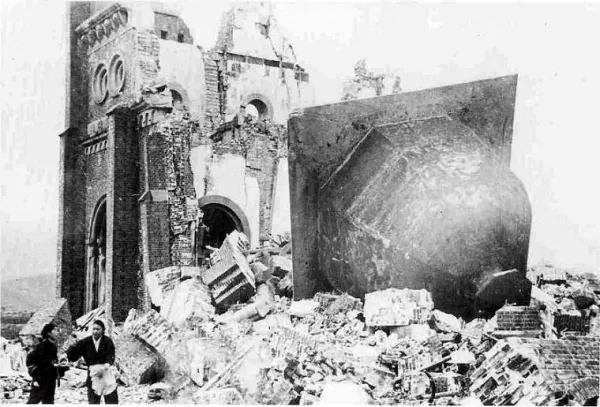
The only wartime use of nuclear weapons took place in 1945’s Aug. 6 attack on Hiroshima and Aug. 9 attack on Nagasaki by the United States.

The Hiroshima attack killed around 80,000 people instantly and may have caused about 130,000 deaths, mostly civilians. The attack on Nagasaki instantly killed about 40,000, and destroyed a third of the city.

Pope Francis visited Nagasaki and Hiroshima in November 2019. There, he spoke against nuclear arms and promoted international harmony, noting that peace will not be ensured by a threat of nuclear war.

“A world of peace, free from nuclear weapons, is the aspiration of millions of men and women everywhere,” he said. “Our response to the threat of nuclear weapons must be joint and concerted, inspired by the arduous yet constant effort to build mutual trust and thus surmount the current climate of distrust.”

In February, Pope Francis once again spoke against nuclear arms and the Committee of International Justice and Peace reemphasized the Pope’s position. They said fear is not a stable enough platform to sustain peace.

“Recently, we, the bishops of the USCCB’s Committee on International Justice and Peace re-affirmed the Holy Father’s call to ‘renewed effort to bring about a world of peace and justice that is not based upon fear or the threat of nuclear annihilation but justice and human solidarity.’”

“Fear, distrust, and conflict must be supplanted by our joint commitment, by faith and in prayer, that peace and justice reign now and forever.”


[…]

No Picture
News Briefs

Court halts scheduled federal executions

July 13, 2020 CNA Daily News 0

CNA Staff, Jul 13, 2020 / 02:35 pm (CNA).-  

A federal court on Monday ordered a delay of the first scheduled federal execution in 17 years, along with other executions scheduled for this week, saying that the drug with which the federal court pl… […]