
No Picture
News Briefs

Philadelphia archdiocese opens home for young adults with disabilities
November 25, 2020 CNA Daily News 1

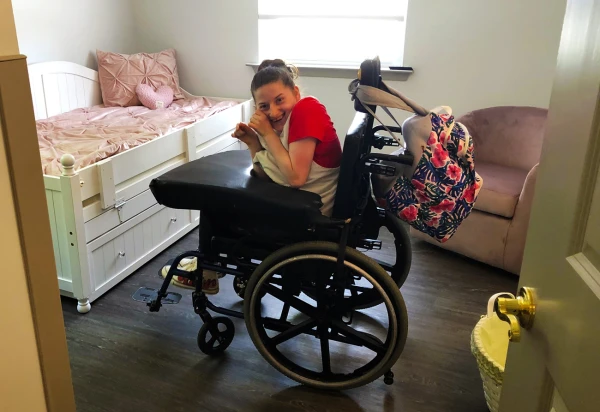
Denver Newsroom, Nov 25, 2020 / 04:49 am (CNA).- A Philadelphia bishop last month blessed Saint Philomena Cottage, a new archdiocesan home for young adults with disabilities.

Auxiliary Bishop John McIntyre, who oversees the Secretariat for Catholic Human Services of the Archdiocese of Philadelphia, led the blessing Oct. 23 at the facility in Delaware County.

The event occurred a few months after new renovations permitted residence to three new clients who had difficulty finding a home that matched their complex needs.

Present at the event were James Amato, secretary for Catholic Human Services; members of The Women’s Auxiliary of St. Edmond’s Home for Children; and Denise Clofine, administrator for Saint Edmond’s Home for Children.

During the ceremony, Clofine expressed gratitude for the completion of the project and for the support of the Women’s Auxiliary, who helped fund the project.

“Today is the beginning of a long held dream to have a home like Saint Philomena Cottage where those we serve can continue to be with friends and staff who have become family. There is true love and compassion shared between the two,” she said, according to a Nov. 10 statement from the archdiocese.

“I am deeply grateful to the Women’s Auxiliary who exemplify a deep commitment to our mission. Sometimes in life we are fortunate to meet someone who makes a difference in the lives of others.  I have been truly blessed to have met an entire group of women who exemplify dedication, care, and love. Their legacy is so very admirable.”

St. Edmond’s Home for Children purchased the house in November 2017. The house was renovated to include wheelchair accessible bathrooms, doorways, ramps, and elevator lifts.

The renovations were completed over the summer and three ladies from St. Edmond’s Home moved into their house at the end of July. The facility includes a 24-hour nurse and activities such as arts, crafts, cooking, and baking.

Clofine told CNA that it has been more difficult for clients with complex disabilities to find permanent homes after they turned 21. She said the facility was established at the request of parents, and added that families have formed meaningful bonds with the staff of St. Edmond’s Home for Children.

“They have trusted us with their children and their children have been placed [with us] for 10, 15, sometimes 20 years. To have to then take their child to another placement, it’s very, very difficult,” she said.

“We took our best staff – very committed, dedicated. We did not hire from the outside for this hall, [but moved] staff over to the hall who already knew those three young adults really well.”

Saint Edmond’s Home for Children was founded in 1916 by Archbishop Edmond Prendergast to help children with polio. It operates under Philadelphia’s Catholic Social Service and provides intermediate care for children and young adults with intellectual and physical disabilities.

Clofine expressed the importance of providing services to vulnerable individuals in the community. She said the Archdiocese of Philadelphia has a history of charitable service and further added that it was a blessing to open the facility during the pandemic.

“This really has made my whole year, especially in the midst of COVID, we were able to open. It was wonderful,” she said.

“It is our responsibility to do God’s work. It is extremely important to help the most vulnerable in our community … We’re just so thrilled to be able to do this not only for the three young ladies that are in the hall, but for their families,” she said.

[…]

No Picture
News Briefs

What connection does Moderna’s vaccine have to aborted fetal tissue? 

November 24, 2020 CNA Daily News 1

Denver Newsroom, Nov 24, 2020 / 06:33 pm (CNA).- Amid debate over the ethics of a COVID-19 vaccine candidate under development by Moderna, a Catholic microbiologist told CNA that while research connected to aborted fetal cells may have contributed to the knowledge base being used in the vaccine’s development, the actual production of the vaccine does not use cells of any kind, fetal or otherwise.

Deacon Robert Lanciotti, a microbiologist and the former chief of the Center for Disease Control and Prevention’s diagnostic and reference laboratory in Fort Collins, Colorado, told CNA that the manner of production for the Moderna vaccine is ethically uncontroversial— in contrast to several other common vaccines, which are grown in aborted fetal cells.

Traditional vaccines use dead or altered viruses, and viruses have to be grown in cell lines, Lanciotti said. Some vaccines that are based on altered viruses are produced by growing them in aborted fetal cell lines, rendering them morally illicit for Catholics to take except for grave reasons.

In contrast, the production of RNA vaccines does not use cells at all, he said. During his 30 years as a CDC scientist, Lanciotti’s specialty was producing RNA in the same reaction used to produce the Moderna vaccine.

Moderna’s vaccine is based on the coronavirus’ RNA, and uses a spike protein, or peplomer, from SARS-CoV-2 rather than cell lines derived from aborted fetuses.

The RNA is injected into the recipient, which induces their cells to produce the spike protein. This triggers the production of antibodies and T-cells by the recipient.

Moderna’s vaccine is not completely free of any connection to abortion, as there is evidence that the vaccines have some connection with the use of aborted fetal cells in the early stages of vaccine design.

However, Lanciotti said, there is a distinction between “design” and “production.” Although it may seem like a subtle difference, he said in this case it makes more sense to assess the ethicality of the production of the vaccine itself, rather than any pre-existing knowledge and understanding that went into its development.

“The association with aborted fetal cells and these RNA vaccines is so distant that I don’t think you would find a Catholic moral theologian that would say there’s a problem at all,” Lanciotti said.

A complete bibliography of the Moderna vaccine reveals the HEK-293T cell line mentioned in some of the work that led to the vaccine’s development.

The HEK-293 cell line is derived from a baby who was aborted in the Netherlands in the 1970s. However, the HEK-293T cells in question are not the direct descendants of these aborted fetal cells, but rather are genetically distinct variants.

The HEK-293T cell line was used by scientists to test the spike protein which was later used in the Moderna vaccine. Moderna scientists were among the researchers collaborating on the project, although it is unclear to what extent Moderna was involved in that specific part of the research.

Laciotti emphasized that the HEK-293T cells in question were not used to evaluate the vaccine itself, since the vaccine had not yet been designed, but rather went into the background knowledge that enabled the vaccine’s design.

He also explained that the spike protein itself is not contaminated with fetal cells, as the spike protein produced by the vaccine comes directly from the synthetic RNA injected, and is “100% newly derived and pure.”

Lanciotti also noted that there exists a knowledge base that was generated years ago— likely decades ago— about the basic biology of coronaviruses, which Moderna, a ten-year-old company, likely did not create themselves.

Moderna recently announced that a trial of its vaccine demonstrated it to be 94.5% effective. The trial involved 30,000 people, half of whom were given two doses of the vaccine, and half of whom received a placebo.

In an internal memo dated Nov. 23, Bishop Kevin Rhoades, who chairs the bishops’ committee on doctrine, and Archbishop Joseph Naumann, the head of the committee on pro-life activities, wrote to the bishops of the United States that the two RNA vaccine candidates appear to be ethically sound.

“Neither the Pfizer nor the Moderna vaccine involved the use of cell lines that originated in fetal tissue taken from the body of an aborted baby at any level of design, development, or production,” the bishops wrote.

“They are not completely free from any connection to abortion, however, as both Pfizer and Moderna made use of a tainted cell line for one of the confirmatory lab tests of their products,” the bishops wrote, referring to the HEK-293T cell line.

“There is thus a connection [to fetal tissue], but it is relatively remote,” the bishops concluded.

The Vatican has said that researchers have a duty to avoid using cell lines derived from aborted children in vaccine production, and have an obligation to “denounce and reject publicly the original immoral act [of abortion].”

The Church has allowed the use of vaccines produced in fetal cells if no alternative exists, while stressing the importance of protesting the vaccine’s production and encouraging “vigorous efforts to promote the creation of alternatives.”

The Pontifical Academy for Life, in a Nov. 22 statement posted to Twitter, said based on its own 2005 and 2017 guidance on the origin of vaccines, the academy has found “nothing morally prohibitive with the vaccines developed” by Moderna or Pfizer.

The Charlotte Lozier Institute, research arm of the pro-life Susan B. Anthony List, has listed the Moderna vaccine among the “ethically uncontroversial CoV-19 vaccine programs.”

However, Dr. Stacy Transankos, a PhD chemist, argued in a Nov. 20 National Catholic Register op-ed that listing a vaccine which has even a remote connection to aborted tissue as “ethically uncontroversial” could undermine the Catholic fight for ethical medicines.

“Instead of assigning this vaccine to a category that suggests no more caution is needed, I think it is better to slow down and look at the big picture…We need to speak up loudly with clarity and courage about the ethics and insist upon an ethical option. It could redirect this entire issue towards the good,” she wrote in her op-ed.

For his part, Lanciotti said that while all the COVID-19 vaccines remain in the testing phases, it appears that two of the three leading candidates are at least produced in an ethical manner free from the use of aborted fetal cells— which is more than can be said for some common vaccines such as MMR, polio, and chickenpox.

“We as Catholics should actually be very pleased that the two leading COVID vaccine candidates are both RNA vaccines with no ethical concerns,” he said.

“The third leading candidate, the AstraZeneca vaccine, is in fact a modified virus that is produced in HEK-293 cells. Therefore, that vaccine clearly has ethical problems and should be rejected by Catholics.”


[…]

No Picture
News Briefs

What Biden foreign policy picks mean for religious freedom

November 24, 2020 CNA Daily News 0

Washington, D.C. Newsroom, Nov 24, 2020 / 09:30 am (CNA).- President-elect Joe Biden announced several foreign policy appointments to his cabinet on Monday, including a nominee for Secretary of State. If confirmed, nominees will shape U.S. foreign policy on a range of subjects, especially religious freedom.

Biden will nominate Antony Blinken, former Deputy Secretary of State under President Obama, to be the next Secretary of State. Binken also served as assistant and a national security advisor to Obama, and worked on the National Security Council in the Clinton administration.

The appointment of a former Obama official to lead the State Department could signal a shift in U.S. policy on international LGBTQ issues and on promoting religious freedom abroad.

Under the Obama administration, the U.S. invested tens of millions of dollars to promote LGBTQ concerns while being criticized by some religious freedom advocates for deemphasizing or taking a softer approach to promoting international religious freedom.

Some advocates pointed out lengthy gaps in time under the Obama administration where a key position at the State Department, the Ambassador at-Large for International Religious Freedom, remained vacant. The administration, meanwhile, established and appointed the first-ever Special Envoy for LGBTQ issues at the department in 2015.

Dr. Tom Farr, president of the Religious Freedom Institute, told CNA that through the special envoy, the U.S. could go further than simply trying to end violence against persons with same-sex attraction; the State Department could actively influence public opinion on the LGBT agenda in developing countries including by pressuring non-governmental organizations to change their beliefs on marriage.

In promoting international religious freedom, the State Department produces an annual report on the matter and lists certain countries in a tier rating system depending upon how poorly they protect religious freedom.

The Trump administration took a strong approach in presenting the report, condemning religious persecution and calling out bad actors by name. Secretary of State Mike Pompeo condemned China’s abuses of largely-Muslim Uyghurs in Xinjiang more than two dozen times in less than a year.

The U.S. also formed the International Religious Freedom Alliance, and hosted the first-ever ministerial on religious freedom with religious and civic leaders attending from more than 100 countries.

Blinken, if confirmed, would also have to navigate these and other pressing humanitarian concerns, such as violence in Nigeria that has displaced millions of Muslims and Christians, and a dwindling Christian population in the Middle East.

The Biden administration could take a softer approach to dealing with bad actors, as some advocates, such as former USCIRF commissioner James Zogby, have called for a shift in the strategy of “naming-and-shaming” violators of religious freedom.

When he introduced the State Department’s 2015 religious freedom report, Blinken emphasized that “[t]he purpose of this annual report is not to lecture,” but rather “is to inform, to encourage, and ultimately to persuade.”

In Obama’s State Department, Blinken was part of an administration that pursued the nuclear deal with Iran and U.S. participation in the Paris Climate Accord—agreements that were supported by the U.S. bishops’ conference and the Holy See.

While the Trump administration withdrew from both agreements and ratcheted up “maximum pressure” sanctions on Iran, Blinken may work to revive U.S. relations with Iran and participation in international climate agreements.

Also on Monday, Biden named Linda Thomas-Greenfield as his pick for U.S. Ambassador to the United Nations.

Greenfield served in the Obama administration as U.S. Assistant Secretary of State for African Affairs, and before that as Ambassador to Liberia. Among other issues, she fought laws that she said discriminated against the LGBT community, including criminalization of same-sex relations in countries like Uganda and Nigeria.

The Obama administration promoted LGBT concerns in Africa, but backlash in African countries reportedly led to some stricter laws against persons with same-sex attraction and violence against them.

At an April, 2014 congressional hearing, Greenfield spoke out against proposed “anti-LGBT legislation” in Africa that was leading to “renewed violence against the LGBT community.” Uganda had just enacted a law criminalizing homosexuality.

“We’re in the process of reviewing that relationship and our funding to see where changes can be made and in particular changes that will take funding away from those organizations and entities that discriminate against the LGBT community,” Greenfield said.

In 2015, around a visit of the Nigerian president to the U.S., she reportedly said that “As a policy, we will continue to press the government of Nigeria as well as other governments who have provided legislation that discriminate against the LGBT community.” 

After President Obama promoted “the rights of gays and lesbians” during a 2015 trip to Kenya, Nigerian Cardinal John Onaiyekan of Abuja responded that “our Church has always said homosexuality is unnatural and marriage is between a man and a woman.”

During the Trump administration, the U.S. also spoke out against abortion as an international human right at the United Nations General Assembly. As Biden has pledged to support legal abortion and overturn a ban on funding of foreign abortion promoters and providers, his administration might also promote legal abortion as part of diplomacy.

When senior advisor to the president Ivanka Trump tweeted that she was “unapologetically pro-life” on Oct. 30, Greenfield replied “Good! Pro life means supporting the lives of children taken from their parents at the border, poor children and people with Covid…”.

Biden has also tapped former Secretary of State John Kerry to serve in his cabinet, as Special Presidential Envoy for Climate.

Kerry in 2015 praised Pope Francis’ ecology encyclical Laudato Si’ as “powerful,” telling TIME magazine that the pope “thoughtfully applied” the value of environmental stewardship “to the very real threat our planet is facing today.”


[…]

No Picture
News Briefs

Catholic mental health council applauds Bishop Conley’s candor on mental illness

November 23, 2020 CNA Daily News 2

CNA Staff, Nov 23, 2020 / 03:30 pm (CNA).- When Catholic bishops and leaders share their experiences with mental illness, it encourages other Catholics to seek help and to know that recovery is possible, a national Catholic group has said.

In a statement issued Monday, the National Catholic Partnership on Disability’s Council on Mental Illness applauded Bishop James Conley of Lincoln, Nebraska “on his complete candor regarding his recent experience of coping with mental illness.”

“Based on Bishop Conley’s public testimony, other individuals in leadership positions are more likely to be upfront about their mental wellbeing. They too are seen as capable of recovery and are finding ways to become more effective and committed to ministry than ever before.”

“An illness is an illness not a weakness of character,” the group said.

In an interview with CNA earlier this month, Conley shared his experiences after being diagnosed with depression and anxiety, and while taking an 11-month mental health leave of absence for his recovery.

“I was trying to fix myself and as time went on, I realized that I couldn’t fix myself while I was still on the job, so to speak,” Conley told CNA in an interview published Nov. 14.

The misconduct of Catholic clergy, both locally and at large, weighed heavily on Conley, starting in the summer of 2018. There were also some difficult school closings and the death of a young priest, those events were triggers for the anxiety and depression that Conley experienced.

He tried first to get help while continuing his duties as a bishop, but in late 2019 Conley presented his case to the apostolic nuncio, who advised the bishops to take some time off and receive professional help. Conley spent 11 months on leave, receiving help in Phoenix, Arizona from doctors and psychologists and a spiritual director.

His return to the Diocese of Lincoln was announced earlier this month.

Conley told CNA he has been open about his experience because he wants to encourage others to seek help when they need it.
Such testimonies can be a helpful step in increasing awareness and advocacy for others with mental illness, the NCPD explained.

Conley told CNA this month he had initially been afraid that his mental illness would be seen as a sign of weakness. But he said that after he announced his mental health leave, people reached out to him, saying they were grateful for his willingness to share about his experience.

The group encouraged other Catholic leaders to share their testimonies of mental illness and recovery, and to work to connect their communities to mental health resources.

“Through the awareness made possible by such testimonies as Bishop Conley’s, doors can open to ensure that anyone seeking help, including family and friends, will have easy access to information, referrals, and good sound advice,” the NCPD said.

The NCPD was founded in 1982, with the mission of providing resources and advocacy for disabled Catholics, with a focus on participation in the sacraments and parish life of the Church.

The NCPD’s Council on Mental Illness was founded in 2006, with this mission: “Following Jesus who embraced all, we reach out to accompany our brothers and sisters with mental illness and their families while assisting the Catholic community by providing resources and education for spiritual and pastoral support.”

Advocacy for people with mental illness “promotes a just society and an end to stigma, which is the biggest obstacle towards healing and recovery,” the group said in its statement.


[…]