No Picture
News Briefs

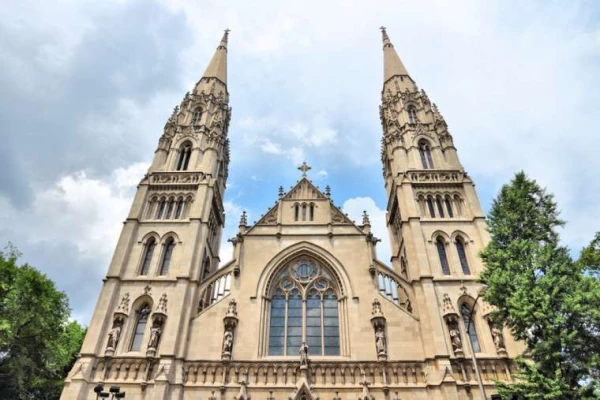
Diocese of Pittsburgh announces its third round of parish mergers

November 30, 2020 CNA Daily News 2

CNA Staff, Nov 30, 2020 / 06:08 pm (CNA).- The Diocese of Pittsburgh has announced that it will initiate its third round of parish mergers early next year, reducing its current 107 parishes to 81.

The mergers will take effect January 4, creating 14 groupings of parishes from 40 current parishes. The merger is the most recent step in the diocese’s “On Mission for The Church Alive” initiative.

“This is a pivotal time for our diocese as we plan for the future of the Church of Pittsburgh,” Bishop David Zubik said in a Nov. 28 statement.

“Southwestern Pennsylvania is radically different than it was 100, 50, 20, even 10 years ago, yet the work of the Church and our call from God to bring His love to everyone continues as strong as ever,” the bishop said.

“As we address the challenges we face in the Church today, the witness of working and growing together reflects the unity of the Body of Christ that is essential to our mission.”

Among others, the new parishes will include Mary, Queen of Peace, which brings together the parishes of Saint Mary of the Mount and Prince of Peace; and the Most Sacred Heart of Jesus, which brings together the parishes of Saint Catherine of Siena, Saint Joseph, and Saint Margaret Mary.

Each merger is taking place following consultation with parishioners, and a request by the priest-administrator of each grouping, which was approved by the diocesan Priest Council and Vicars General.

The merger is the latest step in the “On Mission for The Church Alive” initiative, which is reorganizing what began as 188 parishes into what ultimately will be fewer than 60 parish groupings.

The diocese’s strategic planning initiative began in 2015 in part as a response to declining Mass attendance, the financial struggles of some parishes, and fewer priests.

The situation was exacerbated by the 2018 Pennsylvania grand jury report, which detailed sexual abuse allegations in six of Pennsylvania’s eight Latin-rite dioceses, including Pittsburgh. CBS Pittsburgh reported earlier this year that since the report’s release, Mass attendance had dropped 9% and offertory donations declined 11%.

In a letter to parishioners, Zubik stressed that the mergers, while difficult, are necessary to strengthen the local Church’s ministries and make them more effective for the future.

“This has not been a simple task. Jesus never promised that it would be easy to carry his message of love and mercy to others. He was clear that sacrifice would be necessary,” the bishop said.

“However, you are positioning your new parish for more effective ministry by addressing financial needs, sharing resources and allowing your clergy to focus on the spiritual work for which they were ordained,” he continued. “With your faith in Jesus and empowered by the Holy Spirit, I invite you to warmly welcome and serve each other as you become one parish family.”


[…]

No Picture
News Briefs

March for Life gears up for pandemic conditions

November 30, 2020 CNA Daily News 1

CNA Staff, Nov 30, 2020 / 03:05 pm (CNA).- With the annual March for Life scheduled to occur in January, how different might it look from previous years due to the ongoing pandemic?

The 48th annual March for Life is scheduled to take place on Jan. 29,… […]

No Picture
News Briefs

‘Tolton’ play in spotlight as Church addresses racial division

November 27, 2020 CNA Daily News 0

Denver Newsroom, Nov 27, 2020 / 04:00 am (CNA).-  

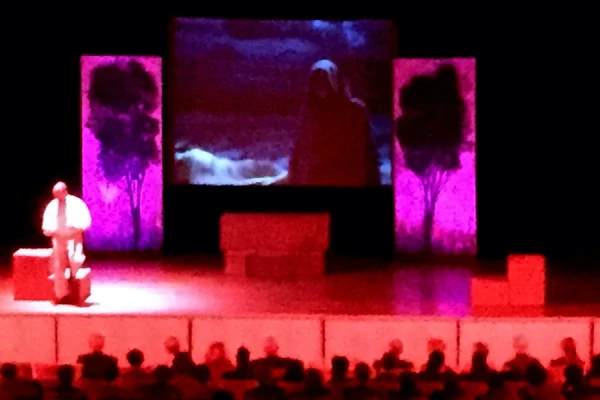
During the U.S. bishops’ meeting last week, Bishop Jaime Soto of Sacramento said his diocese had hosted a one-man play honoring the first African-American slave to become a Catholic priest, as part of its efforts to address racism.

The play is “Tolton: From Slave to Priest,” the work of St. Luke Productions. It has been performed in front of thousands of people since it was released three years ago.

Leonardo Defilippis, director and president of St. Luke Production, told CNA that the witness of Fr. Agustus Tolton is important at a moment of racial division, especially Tolton gives witness to Christian unity beyond racial barriers.

“We’re the only show in the whole country and it’s the only instrument like it in the Catholic Church,” he told CNA. “It’s so powerful. [It helps] you realize all men are created equal.”

Fr. Tolton is played by James Coleman – a television and film actor of almost 30 years. During the show, Tolton engages with memories of his past, meeting his mother, his friends and enemies, and the devil himself.

Since it opened in 2017, the play has been performed over 200 times at Catholic venues across the United States. The goal of the play is to bear witness to a holy man who confronts hatred and segregation with charity, said Defilippis.

He said this show provides the best example of a persecuted person who encountered trials with compassion and faith. Rather than with violence or revenge, Tolton responded to racial hatred with the virtues of a saint, Defilippis added.

Speaking of facing injustice, Defilippis said that “saints have a way of showing you how to do it.”

“You have to do it through love. You have to do it through forgiveness. You have to have faith. You have to have hope. That’s what leads us to that oneness, that unity.”

Tolton was born into slavery in Monroe County, Missouri, in 1854. During the Civil War, Tolton and his family escaped slavery.

He entered St. Peter’s Catholic School in Quincy, Illinois, when he was young. The school’s pastor, Fr. Peter McGirr eventually baptized Tolton, instructed him for his first Holy Communion, and recognized his vocation to the priesthood.

Tolton studied for the priesthood in Rome because no American seminary would accept an African-American student. When he returned to the U.S. after his ordination in 1889, he was greeted by thousands of people. A brass band played hymns, and black and white people processed together into the local church.

Tolton served for three years at a parish in Quincy before moving to Chicago to start a parish for black Catholics, St. Monica’s, where he remained until his death in 1897.

Coleman has performed as Tolton for the past two years. He said he was reluctant to audition at first because he was not interested in theater roles. But he said he’s glad for the experience.

“The experience of doing a true story [about] someone’s life and actually using the words that he said, … I started to take on a lot of the things that he experienced … I always pray before every show in rehearsal to allow Fr. Tolton to tell his story,” he told CNA.

Coleman expressed hope that the play might be a catalyst for racial healing. He said the show pushes the audience to see past the color of a person’s skin, and to see the unity of the human race.

“The goal of this show is to let people know that we are all one in the spirit, we are all one in Christ. Racism is a divide to the human family … In order to heal that divide, we have to heal our hearts as well as our minds of racism,” he said.

“It lets you know that in order for us to achieve, it’s not going to always be the people of the same race. It takes all of us to create greatness. It takes all of us to succeed.”


[…]

No Picture
News Briefs

Warning of donor harassment, Trump administration backs foes of Calif. disclosure rule

November 26, 2020 CNA Daily News 3

CNA Staff, Nov 26, 2020 / 11:01 am (CNA).- The Trump administration has asked the Supreme Court to review a challenge to a California requirement that charitable organizations disclose their major donors to the state attorney general, siding with groups like the Thomas More Law Center that say the requirement will make their donors vulnerable to retaliation, harassment, and violence.

The move from the U.S. Solicitor General’s Office drew praise from John Bursch, senior counsel and vice president of appellate advocacy at the Alliance Defending Freedom legal group.

“Charitable entities shouldn’t be required to disclose confidential donor information to state officials who do not need it and who fail to adequately protect donor identities from disclosure to the public,” Bursch said Nov. 24. “We are pleased that the United States agrees that this case presents critically important issues that the Supreme Court should decide immediately. Forced donor disclosure is a threat to everyone and discourages both charitable giving and participation in the marketplace of ideas.”

Alliance Defending Freedom is backing the Michigan-based Thomas More Law Center’s complaint in the case. The center promotes issues related to religious freedom, moral and family values, and the sanctity of human life, Alliance Defending Freedom said in August 2019. Another challenger to the California rules is the Americans for Prosperity Foundation, which tends to take conservative or libertarian positions on questions of economics and other issues, including opposition to labor unions.

Acting Solicitor General Jeffrey B. Wall filed a brief asking the Supreme Court to grant a hearing on the case, which was victorious in federal district court but suffered a defeat in the Ninth Circuit Court of Appeals

“As this court’s precedents make clear, compelled disclosures that carry a reasonable probability of harassment, reprisals, and similar harms are subject to exacting scrutiny, which requires a form of narrow tailoring,” said the brief to the Supreme Court. The solicitor general’s office said the appeals court ruling “compromises important associational interests protected by the First Amendment.”

“Petitioners alleged that their contributors had in the past suffered harassment, reprisals, and similar harms because of their association with petitioners,” the brief said. Disclosure would likely “expose their substantial contributors to those harms, and thereby deter those contributors and others from making future contributions.”

At issue is a matter of non-profit tax forms and the crucial information they contain.

Qualified tax-exempt organizations already must submit to the IRS a Form 990 federal information form, including the names of “all substantial contributors” in a section called Schedule B. Substantial donors are defined as those who give $5,000 or more to the organization in a year or 2% of total annual contributions. However, the information about these donors must be kept confidential on pain of civil and criminal law.

Non-profits that ask for donations in California must file their tax returns with California’s Registry of Charitable Trusts, administered by the state attorney general, currently Xavier Becerra.

Beginning in 2010, the California attorney general said that disclosures must include this Schedule B. The incoming U.S. vice-president Sen. Kamala Harris, D-Calif., was California attorney general from 2011 to 2017, and the rule change began under her predecessor Jerry Brown.

Both the Thomas More Law Center and the Americans for Prosperity Foundation have alleged that there is a high risk their information will be made public and disrupt their freedom of association.

Alliance Defending Freedom alleged that in March 2012, the California Attorney General’s Office began to “harass the law center and demand the names and addresses of its major donors even though the center’s donors, clients, and employees have faced intimidation, death threats, hate mail, boycotts, and even assassination attempts from ideological opponents.”

The legal group said that for those associated with charities like the Thomas More Law Center that “speak on contentious matters,” the disclosure of donor information “poses an imminent danger of hate mail, violence, ostracization, and boycotts.”

“Only the most stalwart supporters will give money under such a toxic cloud. Most will reasonably conclude that the risk of association is too great, with the result that groups who make the most threats will effectively shut down those with whom they disagree,” said the legal group’s request for Supreme Court review.

“Charities will continue to find as-applied exemptions impossible to achieve, and support for groups advocating contentious ideas will dry up,” the legal group said. “This Court should intervene now while there are still dissenting voices left to save.”

The request said California law has “deprived charities of resources, chilled their speech for nine years, and blocked dissemination of their ideas in our Nation’s most populous state.”    

Alliance Defending Freedom has cited the Supreme Court’s 1958 ruling in the case NAACP v. Alabama, which ruled against the Alabama Attorney General’s demands that the civil rights group produce its membership list or cease operations. The restrictions on the group crippled the organization in Alabama at a key time when black Americans sought to secure civil rights.

The NAACP Legal Defense and Education Fund filed a friend-of-the-court brief on behalf of the Americans for Prosperity Foundation.

The district court found that California’s required disclosures were not “substantially related” to its interest in regulating charities, as auditors and attorneys seldom use the Schedule B section when they audit or investigate charities. Even when the information was relevant, it could be obtained from other sources. The disclosure requirement was not narrowly tailored.

The district court said petitioners presented “ample evidence” that their contributors had previously suffered “harassment, reprisals, and similar harms” when their involvement became known. The California attorney general’s office had “systematically failed to maintain the confidentiality of Schedule B forms.” This failure included making hundreds of the forms available on its registry website.

The court of appeals, however, overturned the district court. It said confidentiality measures had been tightened and said California had a compelling interest in policing fraud in charitable organizations, and disclosing major donors advances this interest, Reuters reported.
It compared the rule to political disclosure cases such as Doe v. Reed, where the Supreme Court said that the disclosure of the names of people who signed a petition referendum was relevant to state interests in protecting the electoral process.

Alliance Defending Freedom’s summary of the case said, “the California Attorney General’s office has a history of posting supporter’s information online and offers no protection against employees, contractors, or summer interns downloading, e-mailing, or printing supporters’ names and addresses and then disclosing them publicly.”

“We’ve already seen how publicly revealing political donors with the intent of doing harm (or ‘doxing’) can ruin careers and corrode civil discourse,” the legal group said. “Givers would have good reason to fear being doxed—especially in today’s toxic cultural climate.”

The Thomas More Law Center’s president and chief counsel is Richard Thompson, who came to prominence for opposing prominent assisted suicide advocate Jack Kevorkian. Thompson co-founded the law center in in 1998 with Thomas Monaghan, the founder of Domino’s Pizza who continues to be a prominent Catholic philanthropist. Alliance Defending Freedom said about 5% of donors to the law center are California residents.

Besides issues related to religious freedom and family values, the law center’s website also provides resources for critics of the Common Core curriculum. It names other key issues as “confronting the threat of radical Islam” and “defending national security.”

The similarly-named Thomas More Society, based in Illinois, is not connected to the law center.

For its part, Americans for Prosperity was founded in 2004. It has had strong financial support from two wealthy brothers, David and Charles Koch, whose combined net worth is in the billions of dollars.


[…]

No Picture
News Briefs

Ransomware attack cripples St. Louis archdiocesan websites

November 25, 2020 CNA Daily News 2

CNA Staff, Nov 25, 2020 / 02:00 pm (CNA).-  

A ransomware attack crippled the websites of the Archdiocese of St. Louis last week, but data has not been compromised by the attack, the archdiocese told CNA. Several archdiocesan affiliated sites have been taken offline in response to the attack.

“On November 16th, our website hosting company experienced a coordinated ransomware campaign. To ensure integrity of our data, the limited number of impacted sites–including ours–have been taken offline,” the Archdiocese of St. Louis informed Catholics last week.

“Upon further investigation and out of an abundance of caution, our hosting company took down their entire system to ensure that we were not compromised. Our hosting security team are working diligently to eliminate the threat and restore our website to full capacity.”

Seven urls are impacted, among them archstl.org, stlreview.org, and pages for archdiocesan cemeteries and fundraising. A spokesperson for the archdiocese told CNA Tuesday “we do not have information regarding an expected timeline for the restoration of our website.”

“We have been told that none of the Archdiocese of St. Louis’ information has been compromised, and the hosting company has taken down our sites to protect us,” the spokesperson added.

Ransomware is a kind of hacking measure by which websites are taken over unless a ransom is made. In some cases, hackers threaten to release confidential data gained from the attack unless the ransom is paid.

Maria Lemakis, archdiocesan multimedia manager, told CNA that because the attack happened with the company that hosts websites, a decision about whether to pay the ransom is not up to the archdiocese.

“Whether or not the ransom will be paid is at the discretion of the hosting vendor,” Lemakis explained.

 “It is our understanding that the vendor is working with federal authorities on the issue,” she added.


[…]

No Picture
News Briefs

Arkansas senate passes abortion ban in new challenge to Roe

November 25, 2020 CNA Daily News 0

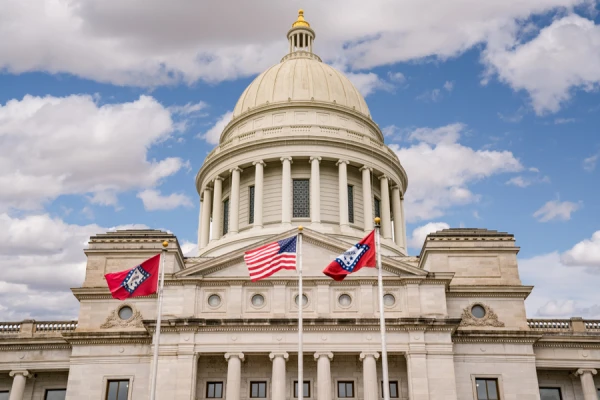
CNA Staff, Nov 25, 2020 / 10:30 am (CNA).- Arkansas lawmakers have introduced a bill to ban nearly all abortions in the state in what lawmakers and pro-life advocates hope will serve as a new challenge to Roe v. Wade.

On Nov. 18, State Sen. Jason Rapert (R) and Rep. Mary Bentley (R) introduced Senate Bill 6, to create the Arkansas Unborn Child Protection Act. The bill criminalizes abortions except when done to save the life of the mother, but does not carry charges or convictions for mothers of unlawfully aborted children.

Doctors who perform an unlawful abortion would commit a felony punishable by a fine of up to $100,000, or up to ten years in prison.

According to KUAR, the bill will be considered during the legislature’s January session.

Jerry Cox, president of the Arkansas-based Family Council, praised the bill in a statement this week.

“Many people have been saying for almost 50 years that abortion should be illegal. The time has come for us to make it so,” Cox stated.

“This is an opportunity for Arkansans to be the real leader in the effort to end abortion in America,” he said.

The proposed bill also allows for the use of emergency contraceptives if a pregnancy has not yet been determined.

A federal appeals court upheld other Arkansas state abortion restrictions in August. The Eighth Circuit court allowed a 2017 state law to go into effect, which banned sex-selective abortions and the “dilation and evacuation” abortion method used in the second trimester.

Senate Bill 6 is not expected to survive in court—a similar measure in Alabama was struck down by a federal district court in Oct., 2019.

Nevertheless, Arkansas is also seeking to force a reconsideration of Roe v. Wade at the Supreme Court. The state has already passed a law outlawing abortion if Roe v. Wade were to be overturned, a “trigger ban” that has also been adopted by several other states. 

“It is time for the United States Supreme Court to redress and correct the grave injustice and the crime against humanity which is being perpetuated by their decisions in Roe v. Wade, Doe v. Bolton, and Planned Parenthood v. Casey,” states one of the findings in the bill.

“New scientific advances have demonstrated since 1973 that life begins at the moment of conception and the child in a woman’s womb is a human being.”

Arkansas and other states have passed various abortion restrictions in recent years. According to the Guttmacher Institute, five states in 2019 passed “heartbeat” bills, or bans on abortion when a fetal heartbeat is detected. Other states, such as Missouri, have enacted abortion bans at different stages in pregnancy.


[…]