No Picture
News Briefs

The congresswoman who was almost aborted

March 18, 2021 CNA Daily News 1

Washington D.C., Mar 18, 2021 / 07:00 pm (CNA).- The youngest Republican female member of Congress says her mother’s courageous decision to choose life is a narrative the pro-life movement needs more of.

“The thing that we struggle with,&r… […]

No Picture
News Briefs

Human embryo, or a model? Resist ‘depersonalizing’ research, ethicist cautions

March 18, 2021 CNA Daily News 1

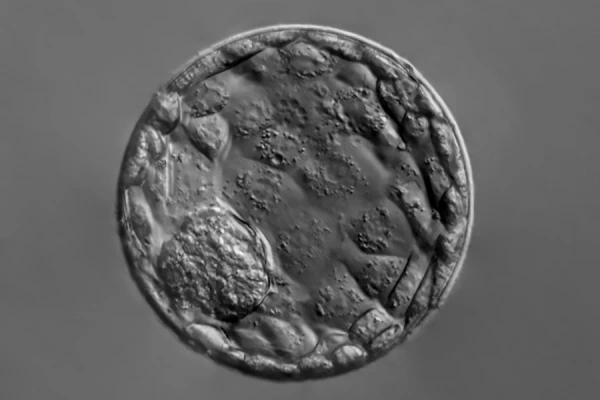
Denver Newsroom, Mar 18, 2021 / 05:04 pm (CNA).- New “models” of early human embryos that cannot grow into full human beings provoke ethical questions about whether they are human beings. One ethicist warns that research should be halted out of caution until more is known, because of the ethical dangers and temptations in the experiments.

 
“Scientists face the perennial temptation to depersonalize early human life, and to treat embryos as objects. Human beings are so sacred, that we must particularly reverence them in their origins, in the way they come into the world,” Father Tadeusz Pacholczyk, a National Catholic Bioethics Center staff ethicist with a background in medical research, told CNA March 18.
 
“Researchers should err on the side of caution, because it remains always and everywhere wrong to create young human beings in petri dishes or laboratory glassware,” he said. “Doing so indicates a disordered eagerness to manipulate early human life and a willingness to exploit our own human offspring at the earliest stages of their existence.”
 
Two different research teams have created human embryo-like entities by creating hollow balls of cells that resemble blastocysts, called blastoids. The blastocyst stage is normally about five to six days after conception, at which time the developing embryo has rapidly dividing cells, according to the Mayo Clinic.
 
“The recently-reported human blastoids are pieced together out of stem cells, and at this point, they appear to be very embryo-like, though the jury is still out on whether they could ever be fully functional or complete human embryos,” Pacholczyk said.
 
The models are different enough from naturally conceived embryos that they will never become a viable fetus or baby, but they are very close to functioning like the early stages of a human being, National Public Radio reports.
 
The research could contribute to understanding how a single cell grows into a fully formed human being, and could help develop treatment for genetic diseases and prevent birth defects, miscarriages, or infertility problems.
 
The exact nature and ethical status of the models themselves is unclear, some observers said.
 
Kirstin Matthews, a fellow in science and technology policy at Rice University, told NPR she was concerned about “growing these sort-of humans in a test tube and not even considering the fact that they are so close to being human.”
 
Pacholczyk was similarly concerned.
 
“One of the ethical questions around such experiments is whether researchers may actually be making a handicapped, but genuine, human embryo, a young human that is doomed to death as he or she grows because of various defects in the way they were originally constituted by researchers,” he said, comparing the experiments to creating a child with a serious defect that kills them at a young age.

“If it were true that researchers are producing ‘disabled’ human embryos, entities that genuinely partake of our human form and essence, this would involve serious moral objections.”
 
“Because we don’t know yet whether we are creating crippled embryos in this way, we should be careful, and not perform these experiments using human cells,” he said. “Rather they should be done exclusively in animals, including non-human primates, to help us figure out, with reasonable certainty, whether any human entities we might later make would be human creatures or not.”
 
Jun Wu, a molecular biologist at the University of Texas Southwestern Medical Center in Dallas, led one research team’s experimental model development, while Jose Polo, a developmental biologist at Monash University in Australia, led a different team.
 
Polo’s team created blastoid models from adult skin cells, while Wu’s team created models using a combination of induced-pluripotent stem cells from adult human cells and human embryonic stem cells. The use of human embryonic stem cells has drawn ethical scrutiny from critics, including Catholic critics, because the cells are derived from the destruction of human embryos.
 
Insoo Hyun, a bioethicist at Case Western Reserve University and Harvard University, told National Public Radio that the models are so close to being a human embryo that they raise “a very interesting question of, at what point does an embryo model become a real embryo.”
 
“This work is absolutely unnerving for many people because it really challenges our tidy categories of what life is and when life begins,” Hyun continued. “This is what I call the biological-metaphysical time machine.”
 
In Pacholczyk’s view, the experiments described extend a mindset accepting of in vitro fertilization. The Catholic Church has long said this “is never acceptable as a way to engender new human life.”

“Regrettably, developmental biologists, such as Jacob Hanna at the Weizmann Institute of Science, are rationalizing precisely this kind of embryo experimentation by saying that researchers have already been destructively studying early embryos from IVF clinics for so long that there shouldn’t be anything wrong with it,” the ethicist added.
 
“He is advocating a very disturbing idea, namely, that of growing embryos and/or embryo-like entities ‘until day 40 and then disposing of it’,” said Pacholczyk. “He proposes, ‘Instead of getting tissues from abortions, let’s take a blastocyst and grow it.’

Hyun, one of the embryo model researchers, agrees on the need for clear ethical guidelines. However, he supports revisions to an international guideline that allows embryonic human experimentation on embryos up to 14 days old. He wants more exceptions “case by case in an incremental fashion,” he told NPR.
 
There is “growing pressure” to eliminate the 14-day rule in order to grow embryos for longer periods, Pacholczyk told CNA.

“Those who originally set up the 14-day rule devised a clever stratagem to offer lip service to the moral status of the human embryo, while enabling serious human rights violations to proceed apace in the world of embryology,” he said. “The 14-day rule objectively demonstrates no more respect for vulnerable humanity than would a declaration by the National Institutes of Health that researchers will now be permitted to do lethal experimental research on newborns up to the age of 14 months. Whether 14-days, 14-months, or anywhere in between, such ‘rules’ remain contrivances to justify the most unethical kinds of science and to allow for the exploitation of our own vulnerable human offspring.”
 
The U.S. National Institutes of Health funds work on human embryo-like structures but must follow a federal provision called the Dickey-Wicker Amendment, which bars government funding for research that creates or destroys human embryos.
 
Some researchers are pushing for this amendment to be changed, including some who aim to create synthetic human embryos, Nature reported in January 2020.

Catholic authorities have consistently rejected destructive human embryo research. In May 2017, Pope Francis told a gathering of Huntington’s disease patients and their families, “we know that no ends, even noble in themselves, such as a predicted utility for science, for other human beings or for society, can justify the destruction of human embryos.”
 
The October 2020 issue of Ethics & Medics, a commentary published by the National Catholic Bioethics Center, also discusses the ethics of embryo models in an article by Kevin Wilger, a research engineer.


[…]

No Picture
News Briefs

Senate confirms Xavier Becerra as HHS secretary

March 18, 2021 CNA Daily News 1

Washington D.C., Mar 18, 2021 / 12:30 pm (CNA).- Xavier Becerra, California’s attorney general and former congressman, was confirmed Thursday by the Senate as secretary of the Department of Health and Human Services. 

The narrow confirmation vote of 50-49 took place mostly along party lines, with Democrats in support and Sen. Susan Collins of Maine being the only Republican to cross the aisle and support Becerra’s confirmation. Sen. Mazie Hirono (D-Hawaii) did not vote. 

Becerra wrote on Twitter that he is “honored and humbled” by his confirmation, and he is “ready to get to work.” 

Becerra was one of Biden’s most controversial nominations due to his previous positions on abortion and conscience protections. The Senate Finance Committee was ultimately deadlocked on a favorable recommendation for his confirmation, forcing Senate Majority Leader Chuck Schumer to file a discharge petition for the whole chamber to vote to advance the confirmation.

He will take the helm of the health agency amid the ongoing COVID-19 pandemic with legal experience – but critics have pointed to his lack of public health experience. 

Pro-life advocates from both parties expressed alarm at Becerra’s confirmation, pointing to his previous defense of coercive state abortion coverage and abortion advertising mandates. 

In a statement, Democrats for Life of America said Becerra’s record on abortion “should shock and horrify every American.”  

Becerra as health secretary will be “a clear and present danger for Catholics and all people of faith,” said CatholicVote.org president Brian Burch.

Jeanne Mancini, president of March for Life, said in a statement that Becerra’s confirmation “is alarming given the fact that he has spent his career expanding pro-abortion policies and persecuting pro-life groups and individuals.” 

Thomas Glessner, president of the National Institute of Family and Life Advocates (NIFLA), said in a statement that the institute was “disheartened by the confirmation of anti-life extremist Xavier Becerra” during March, Women’s Health Month.

NIFLA sued the state of California over its Reproductive FACT Act, which required pro-life pregnancy centers to post signs advertising where free or low-cost abortion procedures could be obtained. Becerra defended that law in court, and lost at the Supreme Court in 2018 in the case of NIFLA v. Becerra.

Mancini added that Becerra “utilized his power as Attorney General of California to punish groups like the Little Sisters of the Poor for their faith as well as the journalists who exposed Planned Parenthood’s trafficking in baby body parts.” 

Becerra continued the state’s prosecution of pro-life activist David Daleiden for his undercover videos claiming that Planned Parenthood illegally profited from the sale of fetal tissue of aborted babies. He also sued the Trump administration in order to take away broad religious and moral exemptions to the HHS contraceptive mandate – exemptions which included the Little Sisters of the Poor. 

Lawsuits by Becerra and Pennsylvania’s attorney general Josh Shapiro forced the sisters to go back to court to defend their religious exemptions, and the Supreme Court sided with the Little Sisters in July.

Mancini said that “If his record is any indication, Becerra will weaponize the more than trillion-dollar budget of the Department of Health and Human Services to attack or disadvantage those with whom he disagrees, and advance unpopular pro-abortion policies.”

“From his new role, we expect Mr. Becerra will continue his attack on the civil liberties of those with whom he disagrees,” said Kristin Waggoner, general counsel with the group Alliance Defending Freedom.

Pro-life groups on Thursday also stated their disappointment that no Democrats opposed Becerra’s nomination – including Sen. Joe Manchin (D-W.Va.) who was endorsed by Democrats for Life. 

“We are deeply disappointed in @Sen_JoeManchin and @SenBobCasey for their votes today,” Democrats for Life tweeted.

“Becerra is infamous in the pro-life movement, well known for his record of attacking pro-life policies protecting unborn life, as well as assaulting the conscience rights of pro-life Americans,” said Marjorie Dannenfelser, president of the pro-life group Susan B. Anthony List, in a statement. “President Biden could not have picked a more eager and enthusiastic partner to destroy pro-life policy and expand abortion on demand.”

Meanwhile, Alexis McGill Johnson, President and CEO of both Planned Parenthood and its lobbying arm, tweeted she “[c]ouldn’t be more excited” to have Becerra lead HHS. 

During his Senate confirmation hearings, Becerra wouldn’t name a single abortion restriction he supported and claimed “I have never sued any nuns,” despite his lawsuit that ultimately drove the Little Sisters of the Poor to return to court. 

He also defended his push for the abortion pill regimen to be prescribed and dispensed remotely, saying remote health care practice is “something that we should really build on” in response to a question about federal restrictions on the abortion pill regimen.

Supporters of Becerra’s nomination pointed to his advocacy for the Affordable Care Act. He also received unlikely support from Republican attorneys general Jeff Landry of Louisiana and Herbert Slatery of Tennessee. Both officials hailed Becerra’s work on combatting the opioid crisis.


[…]

No Picture
News Briefs

House advances ratification efforts for the Equal Rights Amendment

March 18, 2021 CNA Daily News 1

Washington D.C., Mar 18, 2021 / 11:01 am (CNA).- The House on Wednesday voted to remove the deadline for the ratification of the Equal Rights Amendment to the U.S. Constitution, attempting to allow its ratification nearly 40 years after the original deadline. 

The joint resolution removing the Equal Rights Amendment (ERA) deadline passed 222-204 on a largely party-line vote, with four Republicans joining Democrats in support. 

The ERA prohibits sex discrimation, stating that “[e]quality of rights under law shall not be denied or abridged by the United States or by any State on account of sex.” The U.S. bishops’ conference (USCCB) is among those who have opposed the measure, arguing it could be interpreted to allow taxpayer-funded of abortion and overturn abortion restrictions. 

Marjorie Dannenfelser, president of the pro-life group Susan B. Anthony List, said in a statement on Wednesday that the ERA “may as well be called the Abortion Rights Act, as it would usher in extreme policy implications by enshrining a ‘right’ to abortion in the U.S. Constitution alongside the foundational principles of our great nation.” 

“Its ratification would mean the indefinite blocking of state and federal policy to protect the rights of children in the womb,” Dannenfelser said. 

In their March 12 letter to members of Congress, the USCCB praised the amendment’s goal of ensuring “just wages and the fair treatment of women,” but they warned it would go far beyond that and require government funding of abortion. Two states’ versions of the ERA have already done just that, the USCCB noted.  

It could also threaten conscience protections of religious groups opposed to abortion, the conference warned, if the amendment was interpreted to make abortion a “right.”

Although Congress approved the amendment, it was never ratified by the 38 states necessary to add it to the U.S. Constitution. The original congressionally-mandated deadline for its ratification expired in 1982, but some states, including Virginia, have ratified the amendment in recent years. Supporters of the ERA say those ratifications – in addition to the previous state votes to ratify the amendment – should all count. 

According to CNN, some of the states that recently voted to ratify the Amendment sued the archivist of the United States last year in order to push for the ratification of the ERA as the 28th Amendment to the Constitution.

A federal judge dismissed the case earlier this month, writing that the congressionally-mandated deadline had long expired. “Plaintiffs’ ratifications came after both the original and extended deadlines that Congress attached to the ERA, so the Archivist is not bound to record them as valid,” Judge Rudolph Contreras wrote.

Rep. Jackie Walorski (R-Ind.), who opposed the House measure on Wednesday, said it “is not about equality or women’s rights.” 

“It’s about enshrining unrestricted abortion in the Constitution and allowing full taxpayer funding for abortion,” Walorski said. “That’s why I voted no. Now is not the time to weaken pro-life protections. Now is the time to defend the unborn and uphold the sanctity of life.”

In a statement, Rep. Mikie Sherrill (D-N.J.), who supported the measure, said she recalled learning about the amendment “when I was in kindergarten.” 

“We’ve been debating a version of this amendment for almost 100 years, since it was authored by a New Jersey woman named Alice Paul,” Sherrill said. “The fact that the effort to enshrine women’s rights in the Constitution has been so long and hard is not surprising, but I’m proud that with this vote we continue that work. I hope the Senate will join us in paving the way to finally ratify the Equal Rights Amendment after all this time.


[…]

No Picture
News Briefs

White House claims that Pope Francis approved the ‘efficacy’ of COVID vaccines

March 18, 2021 CNA Daily News 0

Washington D.C., Mar 18, 2021 / 08:38 am (CNA).- The White House on Wednesday claimed that Pope Francis has affirmed “the safety and efficacy” of the three COVID vaccines approved for use in the U.S.

However, the latest statement of the Vatican’s Congregation for the Doctrine of the Faith (CDF) on the morality of some COVID vaccines limited its judgement to “moral aspects” of their use, and not their “safety and efficacy.” And while Pope Francis has strongly recommended that people be vaccinated against COVID-19, he has not commented on the safety of specific vaccines.

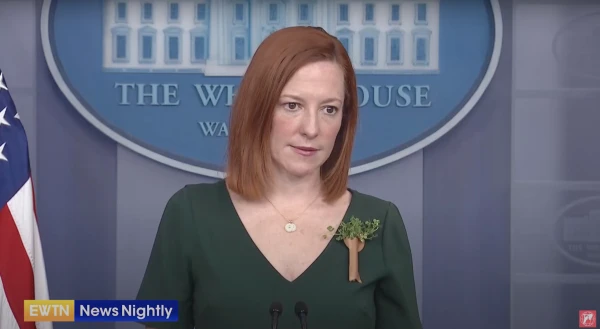
On Thursday, White House press secretary Jen Psaki was asked by Owen Jensen of EWTN News Nightly about “ethical concerns” regarding the COVID-19 vaccine produced by Johnson & Johnson.

Jensen asked Psaki if President Biden could speak to concerns of Americans about the vaccine; the Johnson & Johnson vaccine utilized cell lines derived from what is believed to be a baby aborted in the 1970s. The cell lines were used in the design, production, and testing of the vaccine.

Psaki replied that Pope Francis has upheld the safety of the vaccines.

“He [Biden] would say, I know the Pope has spoken to the safety and efficacy of all three vaccines, and the American people—these vaccines have been validated by health and medical experts. They’re trying to save people’s lives, keep people safe, and return our country to normal,” Psaki said.

The Vatican’s CDF and the U.S. bishops’ conference have both said that vaccines derived from the problematic cell lines are morally acceptable for Catholics to receive, due to the gravity of the pandemic. However, Catholics should seek to receive a vaccine with a lesser connection to the cell lines if one is available to them, both offices have said.

The CDF, in its Dec. 21 statement, noted that its judgment was on the moral application of the vaccines, and not their efficacy.

“We do not intend to judge the safety and efficacy of these vaccines, although ethically relevant and necessary, as this evaluation is the responsibility of biomedical researchers and drug agencies,” the Vatican stated.

When he received a COVID vaccine in January, Pope Francis said in a television interview “I believe that, ethically, everyone has to get the vaccine. It is an ethical option because it concerns your life but also that of others.”

He said that people should accept a vaccine if doctors advise them it is safe, but did not comment on any specific vaccine. Although the Pfizer/BioNTech vaccine was made available to Vatican employees and officials in January, it was not reported which specific COVID vaccine Pope Francis received.

“I don’t understand why some say this could be a dangerous vaccine,” Pope Francis said. “If doctors present it to you as something that can be fine and has no special dangers, why not take it?”

Currently, three COVID-19 vaccines have been approved for use in the U.S. In addition to the Johnson & Johnson vaccine, the companies Pfizer and Moderna each produced a vaccine that was approved late in 2020. Both the Pfizer and Moderna vaccines utilized the controversial cell lines in some tests, but had no direct connection to the cell lines in design and production.

The Vatican’s statement acknowledged situations where Catholics may not have a choice of vaccine—such as local health authorities only making one vaccine available to residents, or when “special storage and transport conditions” inhibit the distribution of one vaccine in a particular area. Both the Pfizer and Moderna vaccines require special cold storage and are administered in two shots, whereas the Johnson & Johnson vaccine can be kept at refrigerator temperature and is administered in one shot.

Other vaccine candidates without any connection to the controversial cell lines are still being developed. When “ethically irreproachable” vaccines are not available, the Vatican said, “it is morally acceptable to receive Covid-19 vaccines that have used cell lines from aborted fetuses in their research and production process.”

Although reception of a vaccine would be “passive material cooperation” in the abortion from which the cell lines are believed to have originated, such cooperation would be “remote” and can be justified in light of the gravity of the pandemic, the Vatican said.

“It must therefore be considered that, in such a case, all vaccinations recognized as clinically safe and effective can be used in good conscience with the certain knowledge that the use of such vaccines does not constitute formal cooperation with the abortion from which the cells used in production of the vaccines derive,” the Vatican stated.


[…]

No Picture
News Briefs

‘Everybody needs a little Jesus’: How a Catholic repair man brings his faith into his work

March 18, 2021 CNA Daily News 0

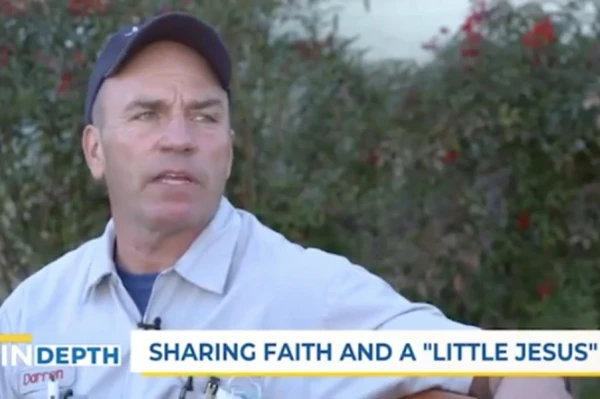
Washington D.C., Mar 18, 2021 / 04:00 am (CNA).- Darren Stern, a Catholic HVAC repairman near Baltimore, Maryland, is not shy about sharing his faith with customers.

In an interview with EWTN News In Depth that aired on March 10, Stern talked about how he provides customers with a small “wind-up Jesus” figure to keep near their air conditioner.

“Well, a lot of times I’m like, if you want this air conditioner to keep running keep this little Jesus by it because I think it’s the only thing that’s going to make it work,” Stern said. When customers ask him if their unit’s problem is “that bad,” he says he replies “it’s that bad!”

“Everybody needs a little Jesus in their life,” Stern said.

Stern says his faith carried him through his sufferings from chronic anxiety, which he says he struggled with for nearly 20 years.

“I was like a perfectionist, and I didn’t want to let people down,” Stern told EWTN News In Depth. His worry and stress affected him so much that he couldn’t eat.

“I would just keep going because it’s in my mind. It was all you could do, just keep going, just keep going, keep running,” he said of dealing with his anxiety.

Stern turned to God when all else failed. “It got so bad that I was ready to give up and I said, ‘Jesus you got to help me. I got to get through this, and I didn’t know how to get through it. I didn’t know what was going to happen,’” Stern recalled.

“When you have nothing, then Jesus is all you have, and I was down at the end,” he said.

After years of prayer, Stern said he learned to abandon himself to God. “Just talk to Him and just listen,” he said of his prayer to Jesus.

“I surrendered. I said to myself, ‘let Jesus take all the bad stuff,’” he said.

“I started embracing all that energy that just had stored up inside me, stopped worrying so much about what other people thought and about all the problems,” he said. “Just go out and do the best you can, and that’s what I kept focusing on.”

And Stern’s faith gave him hope as well. “You know I still wake up with anxiety, everybody does. You’re gonna have that, but now it’s different.”  

“You know Jesus is right there, what can go wrong?” 


[…]