No Picture
News Briefs

Was Squanto Catholic? What we know about this hero of the first Thanksgiving

November 24, 2022 Catholic News Agency 0
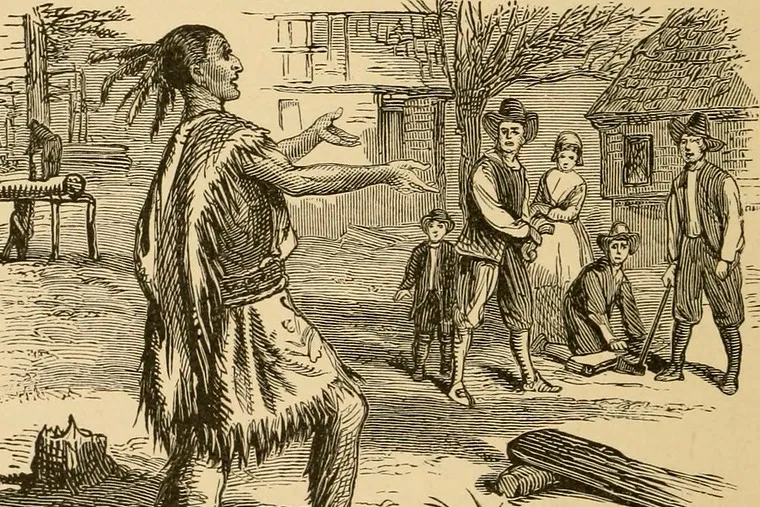
Image from page 155 of “Young Folks’ History of the United States” (1903). / Public Domain

St. Louis, Mo., Nov 24, 2022 / 08:00 am (CNA).

In 1621, lacking both the skills and the resources necessary to survive in the harsh territory of New England, European pilgrims encountered a miracle: a Native American who not only spoke English but who also used his skills and knowledge to help the Pilgrims adapt to their environment and survive the brutal winter. 

This was Squanto, a man who occupies a special place in the hearts of many people who celebrate Thanksgiving because of his willingness and ability to help the newcomers to his land. 

Squanto’s full name was Tisquantum, and he was a member of the Patuxet tribe, which lived in and around modern-day Plymouth, Massachusetts. He was probably born around 1585 in the area that is now Boston. 

Little is known about Tisquantum’s early life, but what is known is that he was abducted from his homeland as a slave by an Englishman, Thomas Hunt, in 1614. He ended up in Malaga, Spain, where a group of Franciscans bought him in order to free him. It is apparently thanks to these Franciscans that he received baptism and became Catholic, though it is not clear to what extent he was catechized and practiced his new faith. 

Damien Costello, a Catholic historian and theologian, told CNA that the historical record portrays “a very skillful agent” in Tisquantum who was able to change his situation and engage with European culture. He was able to find employment as a translator in England and later convinced a wealthy financier to fund an expedition back to his homeland. 

When Tisquantum finally made it back to where his tribe lived in present-day Massachusetts, his life took a tragic turn. He found that his entire tribe, while he was in Europe, had been wiped out by disease — he was the sole survivor.  

The Pilgrims arrived in New England in 1620 and were far from the first Europeans to set foot on those shores — this was many years after Jesuit missionaries had started missionary activity in the area but hadn’t settled. When the Pilgrims arrived in what had once been Patuxet territory, the empty land made a good place to settle. Tisquantum, no doubt mourning the loss of his people, was nevertheless able to deftly reinvent himself as an intermediary between the Pilgrims and Native leaders. 

In March 1621, the chief of the Wampanoag confederation, Massasoit, went to meet with the Pilgrims and brought Tisquantum along to translate. After negotiations fell apart, Tisquantum stayed with the Pilgrims and helped to facilitate what we now know as the first Thanksgiving — a meal between the Pilgrims and the Natives of the area. Tisquantum died the next year, in 1622.

So, was Tisquantum a Catholic? Costello says it is likely he was baptized and thus, theologically, he was indeed a Catholic. Native American culture was very spiritual, and Costello said he doesn’t think it unlikely that Tisquantum saw his baptism as a positive spiritual experience. 

“Catholicism was a crucial ingredient in Squanto’s resiliency, the regenerative principle that gave spiritual power to sustain the disjunction of being a global citizen in a world forever turned upside down,” Costello later wrote in an article for U.S. Catholic

As to whether Tisquantum continued to practice his Catholic faith for the rest of his life, there’s little evidence to say for sure. In a very real sense, God only knows. 

his article was adapted from an episode of Catholic News Agency’s award-winning storytelling podcast, CNA Newsroom. You can listen to that episode here.

[…]

No Picture
News Briefs

Emails raise questions about Philadelphia children’s hospital transgender surgeries on minors

November 23, 2022 Catholic News Agency 6
Exterior of Children’s Hospital of Philadelphia. / Shutterstock

Boston, Mass., Nov 23, 2022 / 14:30 pm (CNA).

In a 2017 email, a doctor at the transgender clinic at Children’s Hospital of Philadelphia said she was not aware of any medical studies at the time that supported the irreversible surgeries the clinic had been performing on minors, public records show.

The statement is contained in internal emails, obtained by a private citizen through a public documents request, between Dr. Nadia Dowshen — co-director of the Gender and Sexuality Development Clinic at Children’s Hospital of Philadelphia — and Dr. Rachel Levine. At the time Levine, a biological male who identifies as a transgender female, was Pennsylvania’s physician general. Today Levine serves as assistant secretary for health for the U.S. Department of Health and Human Services.

Critics of so-called “gender-affirming” surgeries and treatments for young people with gender dysphoria were outraged by the disclosure, which one leading pediatrician says suggests that these procedures amount to “a giant experiment on children” that lack a clear understanding on the part of health care professionals and their young patients of the risks and long-term consequences involved.

But in a statement to CNA, Levine said there was “nothing unusual” about the email exchange and maintained that the “medical validity” of these procedures has been “affirmed.”

In one of the emails, Levine asked Dowshen and another co-director of the Gender & Sexuality Development Clinic, Dr. Linda Hawkins, about what Levine called “gender confirmation surgery” for “young people under 18 years of age,” which Levine said could include “top surgery for trans young men and top and bottom surgery for trans young women.”

“Top” and “bottom” surgery are the common parlance among transgender supporters for major, irreversible surgical changes to make a person appear to be a different sex. These include the removal of women’s breasts and the removal and reconstruction of male sexual organs.

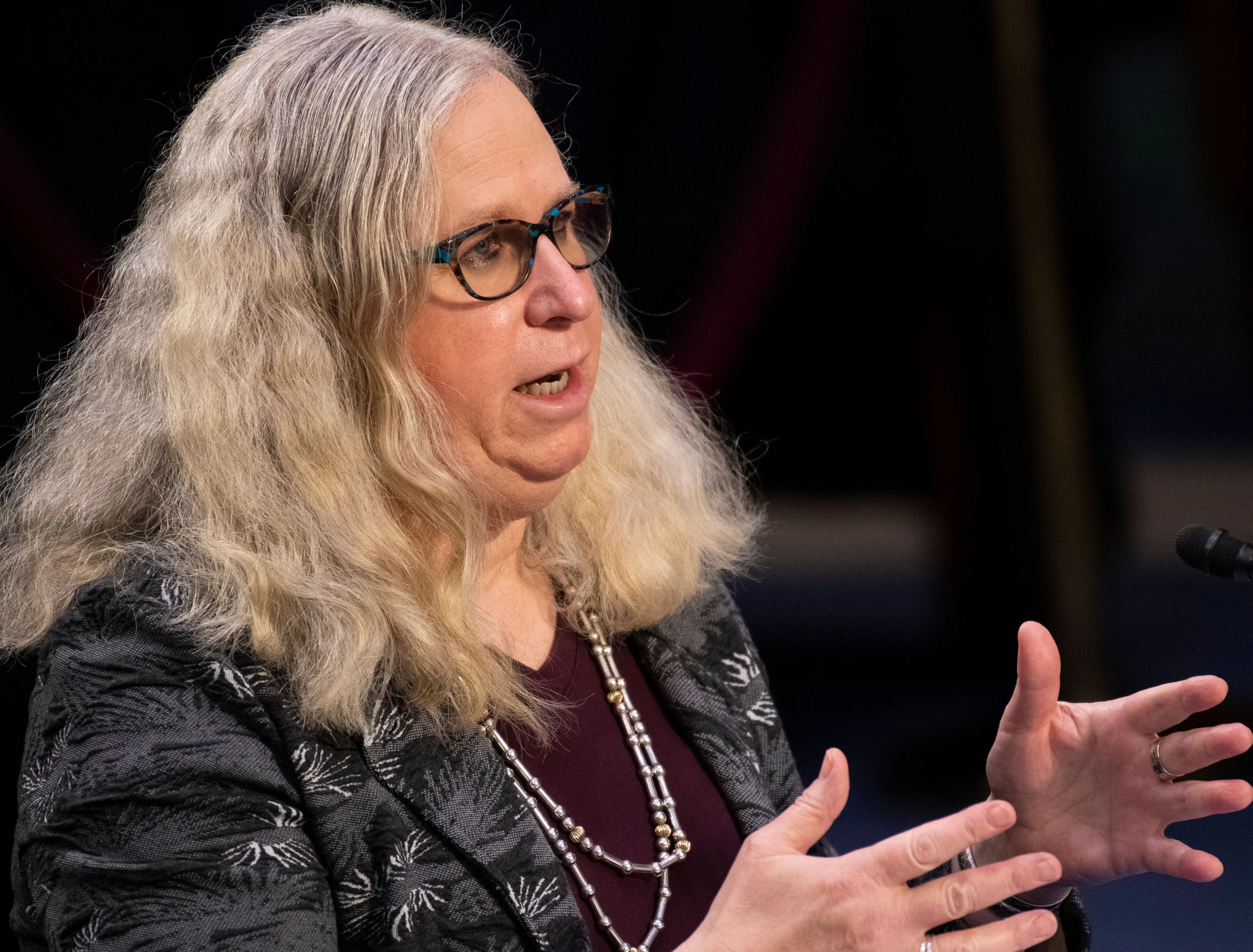
Rachel Levine, then a nominee for assistant secretary of Health and Human Services, testifies before the Senate Health, Education, Labor, and Pensions committee in Washington, D.C., on Feb. 25, 2021. Caroline Brehman/AFP via Getty Images

“Is there any literature to support this protocol?” Levine asked in the May 4, 2017, email. “Please let me know if you have any references.”

The same day, Dowshen responded and wrote: “Hi Rachel, I’m not aware of existing literature but it is certainly happening. I think we’ve had more than 10 patients who have had chest surgery under 18 (as young as 15) and 1 bottom surgery (17).”

Dowshen said she was currently working with colleagues to “get some pre-post data for top surgeries for youth under 18” and suggested that a research assistant could do a literature search to make sure they were “not missing anything,” to which Levine agreed.

“A lot of our youth are being denied coverage for top surgery if under 18,” Dowshen said.

In a statement to CNA Wednesday, Levine downplayed the significance of the email exchange.

“As physician general of the state of Pennsylvania, I worked to remain aware of the latest science in a number of health areas. This allowed me to offer policy recommendations to the governor, to offer strong managerial oversight on behalf of the people of Pennsylvania, and to coordinate effectively with my peers,” Levine said.

“My question about the existing literature on surgeries for minors was asked in the same spirit as many of the other questions I asked in that role — that of making sure I was aware of the latest and most relevant data on an issue of public interest,” Levine said.

“There was nothing unusual about that exchange, and in the years since it occurred, the medical validity of gender affirming care has only been reaffirmed and strengthened,” Levine said. “It is important to note the standards of care for patients include psychological and medical evaluations and, if necessary, treatment and support for the young person and their family. Children who have not yet started puberty do not receive medical treatment — at that age, care focuses on counseling and being mindful of the needs of the young person, their family, and their school.”

CNA also contacted Children’s Hospital of Philadelphia for comment but did not receive a response.

‘A giant experiment on children’

Dr. Quentin Van Meter, president of the American College of Pediatricians — an organization of pediatricians that advocates for children’s health and well-being — criticized the email exchange. He told CNA that it is wrong for any doctor to be doing experimental surgeries when there are no long-term studies to support them.

Van Meter said the result of the doctors doing experimental sex-change surgeries on minors is that “the lives of what will be tens of thousands of children are ruined.”

He said that there are no long-term studies in existence to support sex-change surgeries, whether that be for minors or adults.

“This is a giant experiment on children,” he said. “Medicine cannot be practiced that way.”

Van Meter also took issue with Levine’s response to CNA. 

Van Meter said Levine is wrong about transgender surgeries being “affirmed” by science, saying that “it’s actually been torn to shreds by science.”

“It’s the most embarrassing, non-scientific facade in a very scientific environment,” he said.

The original publicizer of the emails, Twitter user Megan Brock, told CNA she gained access to the emails through a Pennsylvania Right to Know Law public document request.

Children’s Hospital of Philadelphia (CHOP) is the latest hospital to come under fire after media exposés have shown that gender transition surgeries on minors have been taking place at medical institutions across the nation.

In August, Boston Children’s Hospital took heavy criticism when news broke that it was offering gender transition treatments and surgeries for kids. The hospital has since updated its website and says that only 18-year-olds qualify for “phalloplasty or metoidioplasty and for vaginoplasty surgeries.”

The website still says that the hospital will perform “chest surgery” on 15-year-olds.

In October, Vanderbilt University Medical Hospital paused gender transition surgeries on children after an investigation into the hospital was called for by Tennessee Gov. Bill Lee. Vanderbilt’s surgeries on minors — and the lucrative nature of its transgender surgeries in general — were originally exposed by Matt Walsh, an internet host for The Daily Wire.

[…]

No Picture
News Briefs

Catholic publisher pulls book on princess saints after illustrator says it was her idea

November 22, 2022 Catholic News Agency 1
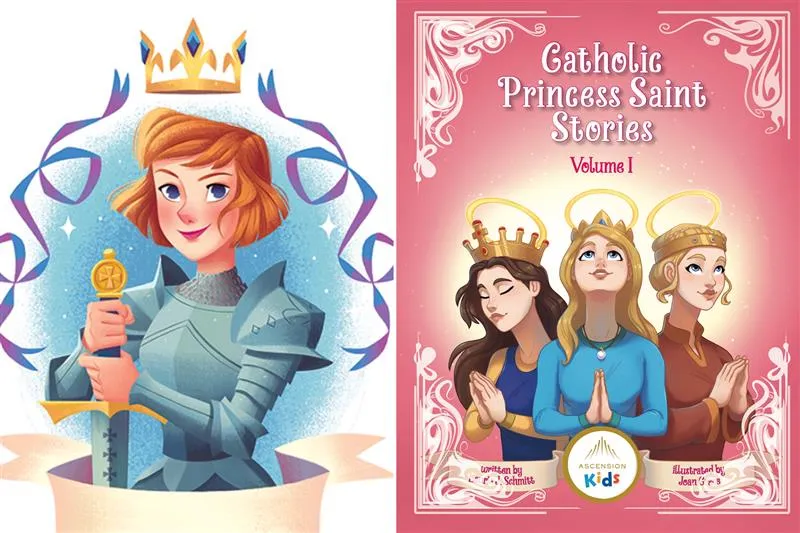
An illustration by Fabiola Garza (left) and the cover of Ascension Press’ book, “Catholic Princess Saint Stories, Volume I.” / Images courtesy of Fabiola Garza and Ascension Press

Washington, D.C. Newsroom, Nov 22, 2022 / 17:30 pm (CNA).

A major Catholic publishing house is pulling a book on Catholic princess saints days after an illustrator took to social media saying that the company had published the book based on her ideas and illustrations. 

Ascension, a publisher of Catholic books and digital media, including Father Mike Schmitz’s “Bible in a Year” podcast, emailed a statement to CNA Tuesday announcing that it would no longer be selling the book, “Catholic Princess Saint Stories, Volume I,” which was released earlier this month.

Fabiola Garza, the illustrator who is at odds with Ascension, posted on social media that she had spent months talking with the publisher about plans for a book on princess saints. When those talks did not lead to a contract, she decided to shop her idea around, and eventually signed a contract with Word on Fire to publish a book on princess saints. 

Garza, who works as an illustrator for the Disney Design Group in Orlando, Florida, published an account of her dealings with Ascension on Instagram, Facebook, and Twitter following the publication of the publisher’s book on princess saints.

PLEASE SHARE Hold Ascension accountable,” Garza wrote. “MY EXPERIENCE WITH ASCENSION HAS BEEN THE MOST AWFUL OF MY CAREER. I like many artists cannot afford a lawyer, and my hope is that by making this known no other Catholic creative will have to go through this,” she wrote.

In her social media post, Garza said that in 2019 she was approached by an editor at Ascension about a book on saints who were princesses.

“Ascension contacted me because he heard me speaking on Leah Darrow’s Podcast about my idea to do a PRINCESS SAINTS BOOK,” she wrote, adding that she signed a mutual non-disclosure agreement with the publisher.

“In the end, I decided not to sign with ASCENSION,” she wrote in the social media post.

In its statement, Ascension said it had decided to pull the book after Garza went public with her story.

“An illustrator Ascension worked with several years ago recently posted on social media about her experience working with us. We strongly disagree with the allegations in her post and we are confident that our approach was consistent with the law and industry standards,” the statement said. 

“Nevertheless, as a leader in Catholic publishing, Ascension aspires to hold itself to a higher standard and we will therefore be voluntarily discontinuing sales of the book in question,” the statement said.

‘Different creative visions’

In its statement Ascension said that after Garza told the publisher that she had decided not to work with the company it went ahead with plans to come out with a book about princess saints by a different author and illustrator. Ascension maintains that the book it published was different from the one it had discussed with Garza.

Over the eight months Ascension had discussed the project Garza had provided one illustration of St. Joan of Arc, and when it went with a new illustrator, it chose different saints to highlight, Ascension said.

“As we each had different creative visions for the project, we continued our vision with a new illustrator. We chose different saints for our book alongside a different storytelling style and different illustrations,” Ascension said.

“For background on the project, we provided the new illustrator with the single image of St. Joan of Arc that Fabiola had shared publicly. Our new illustrator went on to create illustrations for 80 pages of stories about St. Margaret of Scotland, St. Bathild of France, and St. Jadwiga of Poland,” read the statement.

Garza posted photos of her illustration of St. Joan of Arc alongside an illustration from Ascension’s book, noting the similarities between the two. Both illustrations feature blue ribbons and banners surrounding the drawings of the saints.

In its statement, Ascension denied any wrongdoing but said it regretted showing the new illustrator Garza’s original drawing.

“Any similarities between Fabiola’s St. Joan of Arc drawing and our illustrator’s depiction of St. Margaret of Scotland (such as a banner, ribbons, a crown, and a blue garment) are incidental and common in portraits of princesses in works by other artists,” the company said.

“Nevertheless, we understand and respect that Fabiola is deeply invested in her artwork, and we acknowledge that a better course of action would have been to use other public sources rather than her drawing as a reference for our illustrator.”

Garza posted emails she had exchanged with Ascension. In their correspondence, she says that on Oct. 7, 2020, she decided to discontinue talks on the book because no contract had been signed.  

Garza wrote to Ascension explaining her reason for looking for another publisher. 

She said she had asked for “some details on contract and compensation before I continued to work.” She said she was told “that we hadn’t got to the contract stage because we didn’t yet have a complete sample chapter.” She said she was told that the firm was “contemplating bringing in another author entirely, who I would have no ability to vet, interview, or apparently control in any way.”

In an email to CNA, Ascension said that it never signed a contract in part because Garza “wanted to be both the author and illustrator.”

“This creative difference was one of the key reasons that Fabiola and Ascension never signed a contract together,” Ascension said in its statement.

Garza told CNA that she decided to break off talks with the publisher because she began to get nervous when no contract was proposed.

After emailing Ascension earlier this month to express her disappointment that it had published a book on princess saints, the publishing house offered to compensate her for the time spent on the project.

Garza then took to social media because, she told CNA, she could not afford to get legal help. She explained that she felt that by going public she could help other “Catholic creatives” facing similar situations.

“So many people have emailed me with similar stories, and nobody has ever talked about it publicly. I could see that I’m in a position to do this, and perhaps I owe it to the community to start a conversation on it,” she said. “But if everything has always been treated in a very hush hush way, I was like, ‘There’s never going to be any change.’”

Upon being informed by CNA that Ascension had pulled its book, Garza said she was relieved.

“Oh, my gosh, I’m gonna cry,” she said after reading Ascension’s statement. “I know that it’s not a direct apology. I mean, it’s corporate speak, you know. I understand that they have to protect themselves as much as possible. I would have loved a direct apology,” she said. 

“But even the fact that because of people helping this is able to happen without having to go to court is amazing, because that sounded awful. Yeah, that sounded awful,” Garza said. Later, Garza thanked Ascension for pulling the book.

Her book with Word on Fire is written but still being edited and won’t be published for over a year, adding that she works full-time.

[…]

No Picture
News Briefs

Louisiana ex-priest pleads guilty to filming pornographic material on parish altar

November 22, 2022 Catholic News Agency 5
Fr. Travis Clark after his Sept. 30 arrest. / St. Tammany Parish Sheriff’s Office.

Washington, D.C. Newsroom, Nov 22, 2022 / 15:40 pm (CNA).

Travis Clark, formerly a priest of the Archdiocese of New Orleans, pled guilty Monday to a felony count of obscenity for his actions in filming pornographic material with two hired women atop the altar of Saints Peter and Paul Parish in Pearl River, Louisiana. 

Clark admitted his guilt as part of a plea deal in the state district court in Covington, Louisiana.

Clark received a suspended three-year prison sentence, three years supervised probation and a $1,000 fine, WAFB.com reported

On Sept. 30, 2020, the now-defrocked priest was arrested, along with the two women involved. A bystander called the police after seeing the lewd actions occurring while passing by the church windows. When authorities arrived at the scene, they removed Clark, the two women, multiple articles of sexual paraphernalia as well as lights and recording devices. 

In the wake of the arrest, Archbishop Gregory Aymond of New Orleans called Clark’s behavior “obscene,” “deplorable,” and “demonic.” Aymond ordered the burning and replacement of the desecrated altar. 

The two women arrested with Clark pled guilty in July to misdemeanor counts of institutional vandalism. Both received two years probation. One of the women refers to herself as “Satanatrix” and had posted on social media the day before that she planned to “defile a house of God.” 

Though the desecrated altar had to be destroyed, the Archdiocese of New Orleans released a statement at the time saying that, “there was no desecrating of the Blessed Sacrament” and that no other sacred vessels were known to be involved. 

[…]