No Picture
News Briefs

Trump administration announces changes to travel ban

September 25, 2017 CNA Daily News 0

Washington D.C., Sep 25, 2017 / 04:42 pm (CNA/EWTN News).- Just weeks before the Supreme Court was to hear a challenge to the Trump administration’s travel ban, the administration announced new restrictions to the ban on Sunday.

“Following an extensive review by the Department of Homeland Security, we are taking action today to protect the safety and security of the American people by establishing a minimum security baseline for entry into the United States,” President Donald Trump stated on Sunday.

“Our government’s first duty is to its people, to our citizens – to serve their needs, to ensure their safety, to preserve their rights, and to defend their values,” Trump stated.
 
On Sunday evening, the Trump administration announced it was continuing the travel ban indefinitely just before it was set to expire, expanding the number of countries of restricted travel to eight, as part of “enhanced national security measures.” It also set new security standards for other countries to help the U.S. vet visa applicants and immigrants.

In March, President Donald Trump had signed an executive order “on Protecting the Nation from Foreign Terrorist Entry into the United States.” It was a revision from his January executive
order on immigration.

In the revised order, foreign nationals from six countries would be temporarily barred from travelling to the U.S. except in special cases. The countries were Iran, Somalia, Yemen, Libya, Syria, and the Sudan.

Then before the travel ban was set to expire on Sunday evening, the administration increased the number of restricted countries to eight, dropping the Sudan and adding North Korea, Chad, and Venezuela. The policy will be continued indefinitely, and the new countries experiencing “certain travel limitations and restrictions” will be added to the list on Oct. 18.

The administration also announced that it would, “for the first time in history,” set up minimum standards for other countries to comply with, for vetting of visa applicants and immigrants looking to travel to the U.S.

President Trump said the revised policy would improve U.S. national security and establish “a minimum security baseline for entry into the United States.”

“We cannot afford to continue the failed policies of the past, which present an unacceptable danger to our country,” Trump stated. “My highest obligation is to ensure the safety and security of the American people, and in issuing this new travel order, I am fulfilling that sacred
obligation.”

The March executive order on immigration had directed the Secretary of Homeland Security to investigate whether “additional information would be needed from each foreign country” to issue
visas and admit immigrants.

Then in July, the administration said it came up with new minimum standards for other countries, with regard to the vetting of visa applicants and other immigrants. The standards related to the issuing of electronic passports, “sharing criminal data” and helping identify
potential security threats to the U.S. looking to enter.

The administration gave countries 50 days “to work with the United States to make improvements” to their existing standards.

According to the administration, the eight countries remaining on the restricted travel list “remain currently inadequate in their identity-management protocols and information-sharing practices or present sufficient risk factors that travel restrictions are required.”

The countries can be removed from the list once they comply. Iraq, however, did not comply with the standards but Trump “determined” that “entry restrictions are not warranted.”

Iraq was originally on a list of countries with restricted travel in the President’s first executive order on immigration in January, but was not listed in the revised executive order in March, reportedly because of a deal with the U.S. to accept Iraqi nationals living in the U.S. who had been given a final order of removal from an immigration judge, in exchange for being removed from the list.

A challenge to the constitutionality of the previous order was scheduled to be heard by the Supreme Court on Oct. 10 in oral arguments. However, the court canceled those arguments after
Sunday’s revisions were announced.

Bishop Joe Vasquez, chair of the U.S. bishops’ migration and refugee services committee, had voiced serious concerns before about the travel and refugee bans. The immigration executive order had also shut down refugee admissions for 120 days and set a cap on refugee admissions for FY 2017 at 50,000, less than half of the 110,000 set as a goal by the previous administration.

Bishop Vasquez said he was “deeply troubled by the human consequences of the revised executive order on refugee admissions and the travel ban,” saying it “still leaves many innocent lives at risk.”

“The U.S. Catholic Bishops have long recognized the importance of ensuring public safety and would welcome reasonable and necessary steps to accomplish that goal,” he said. Yet the current refugee resettlement process is secure, with “the most vigorous vetting process of anyone who enters the United States.”

Lawyers and advocates for Muslim immigrants said on Monday that the administration’s new travel ban still constitutes a “Muslim ban” since most of the eight countries’ populations are Muslim-majority, and that Trump had on the campaign trail proposed a ban on Muslims seeking to the enter the U.S.

There are also reports that the administration will consider lowering its cap on refugees even more in the next fiscal year, to below 50,000. The new quota is expected to be announced by the
end of September.

[…]

No Picture
News Briefs

How do we heal racial tensions? Start by admitting errors, US bishop says

September 25, 2017 CNA Daily News 0

Washington D.C., Sep 25, 2017 / 04:12 pm (CNA).- To address the longstanding racial divide within the United States – and within the Catholic Church in the country – Catholics should learn more about the history of that divide, and honestly engage with that history, and with others attempting to tackle similar issues themselves.

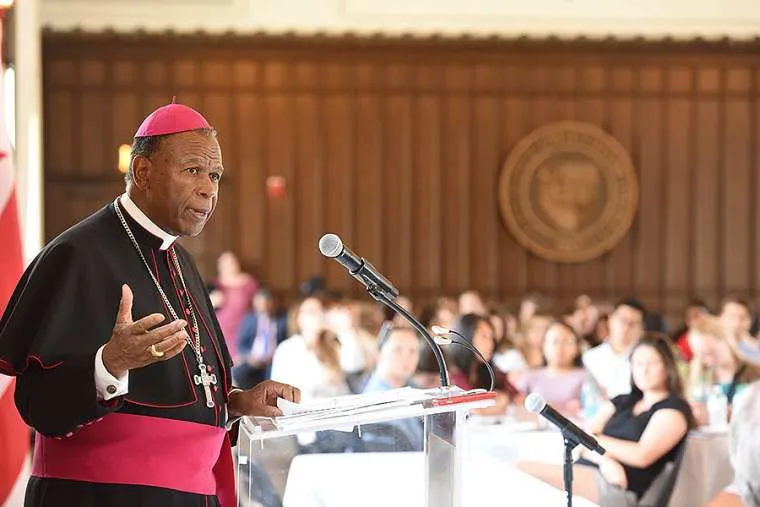
“Don’t whitewash the misdeeds and silence of our history,” said Bishop Edward Braxton, of Belleville, Ill. in a Sept. 21 lecture at The Catholic University of America in Washington, D.C.

Bishop Braxton urged participants to teach children the history of the Catholic Church – including parts of the history which are painful or shameful – “not to belittle those people, not to harshly judge them as bad people, but to understand but they are all people of our own era and history and if they have blind spots so do we.”

The bishop’s talk was one of two held at the university on the theme of the racial divide in the United States and the Church. The first talk, which focused more on how to address the racial divide, was part of a “teach in” sponsored by the university’s National Catholic School of Social Service, and a second talk, part of the campus Theology on Tap program, discussed the Black Lives Matter movement and how Catholics can respond to racism.

Bishop Braxton, originally from Chicago, is the bishop of Belleville, Ill., outside of his hometown, and one of nine African-American bishops in the United States.

The bishop’s talks discussed what he described as the “flaw at the foundation” of racial relations in America – particularly within the American Church – and how it lead to many of the tensions seen today in American politics.

Bishop Braxton pointed to the Dred Scott Supreme Court decision, which in 1857 ruled that African-Americans could not be citizens. That opinion was penned by Chief Justice Robert Taney – a Catholic.

The bishop also noted that some American bishops in the years leading up to the Civil War actively opposed abolition efforts. Furthermore, early American bishops and religious organizations, such as Bishop John Carroll and the Jesuits, owned slaves themselves

These actions, the bishop said, beg the question “Is there a flaw at the foundation?” of racial relations. He added that many Catholic churches and religious orders remained segregated after slavery’s end.

This history has impacted both the African-American Catholic community and the Church’s efforts to evangelize within the broader African-American community, he said. On top of that, the Church’s previous efforts to address the racial divide, such as the 1979 pastoral letter “Brothers and Sisters to Us,” have yet to be fully implemented.

Knowing this “painful, shameful history,” Bishop Braxton said, is necessary for the Church to help the country heal its racial divides in the future. “We can’t rewrite history. We must acknowledge it and never repeat it,” he told the crowds.  

Pointing to the shortfalls and blind spots of those who came before is not judgment, he said, nor does admitting flaws pose a threat to the universal teachings of the Church. “We don’t know what we would have done in the 1840s or ’50s or ’60s,” Bishop Braxton reminded listeners, and even saints “have blind spots.” Instead, acknowledging the full truth and history can help us to appreciate the fullness of the task ahead of us and make us more attentive to the moral blind spots and shortfalls of our own age.

With the need for a comprehensive education on race in mind, Bishop Braxton urged Catholic schools – seminaries in particular – to educate children and future priests on American and Catholic history regarding race, and urged all Catholics to learn more about African-Americans who have open causes for canonization.

While education is a key component in mending the racial divide, so too is engaging and listening to others involved in similar efforts, Bishop Braxton said. He urged Catholics at both talks to “Listen. Learn. Think. Pray. Act.” and shared his own experiences dialoguing with members of the Black Lives Matter movement.

Before discussing the movement itself, Bishop Braxton noted that he does not believe that “Black Lives Matter and All Lives Matter are necessarily incompatible.”

However, he continued the “point of Black Lives Matter is that some in the African American community face existential threats that cannot be ignored.”

Pointing to those concerns in particular – such as the increased likelihood for African Americans to face violence during routine police interactions, while other offenders like Dylan Roof can be apprehended without being shot – does not negate that other issues of human dignity exist, he said. “In this instance, while all lives matter, their lives are in peril.”

He also explained that while there are Catholics within the Black Lives Matter movement, and that not all members hold the same views, many within the movement are cautious when dealing with the Church because of some of its history.  

Some members perceive the Church as being opposed to addressing the racial issues the movement sees as a problem, he said. In addition, Bishop Braxton explained that many – though not all – members of the movement have fundamental differences with the Church on matters of sexuality, marriage and abortion.

Bishop Braxton challenged the movement to address the issue of abortion in particular, affirming the life of the unborn child, and noting that the “alarmingly” high number of abortions within the African-American community brings “an abrupt end to the nascent black lives in their mothers’ wombs. Those lives also matter.”

By listening and learning from the members of Black Lives Matter within his community, Bishop Braxton said that he was also able to explain the richness of the Church’s social teaching and its applicability to issues of race, poverty and discrimination. “I also pointed out that Catholic beliefs on marriage, the meaning of human sexuality and the dignity of human life from conception to natural death are not mere cultural norms or social issues,” he added. “These beliefs represent what the Church holds to be fundamental moral principles, natural law, biblical revelation and the teachings of Jesus Christ.”

Overall, conversations like this have been fruitful and can provide a way for engagement in addressing the racial divide, Bishop Braxton offered. “They did not lead to agreement on every point, but they lead to a focus on the need to be open to hear those with whom we disagree with an open mind and an open heart.”  


[…]

No Picture
News Briefs

Michigan lawsuit could imperil religious adoption agencies

September 24, 2017 CNA Daily News 0

Lansing, Mich., Sep 24, 2017 / 03:02 am (CNA/EWTN News).- Faith-based adoption agencies won’t be able to adhere to their religious mission in Michigan if a lawsuit challenging state law succeeds, critics say.

“This suit challenging Michigan’s law is mean-spirited, divisive and intolerant,” the Michigan Catholic Conference said Sept. 20.

“It is counter-productive toward efforts to assist vulnerable persons and to promote a variety of opportunities for differing families. It is imperative for the state law to be defended from yet another egregious attack on religious faith in public life.”

The conference defended the law as necessary “to promote diversity in child placement and to maintain a private/public partnership that would stabilize the adoption and foster care space for years to come.”

The federal lawsuit, filed Wednesday, is backed by the American Civil Liberties Union. It charges that the state law allows groups to use a religious test in carrying out public services like foster child or adoption placement. It contends this is unconstitutional and violates both the equal protection and establishment clauses of the U.S. Constitution.

The 2015 law, which was passed with the backing of the Michigan Catholic Conference, prevents state-funded adoption and foster agencies from being forced to place children in violation of their beliefs. The law protects them from civil action and from threats to their public funding. When the law was passed, about 25 percent of Michigan’s adoption and foster agencies were faith-based.

These agencies have worked in the state for decades and have helped place thousands of vulnerable children, the Michigan Catholic Conference said.

David M. Maluchnik, a spokesperson for the Michigan Catholic conference, told the Wall Street Journal that the law aimed to protect “the right of these agencies to operate in accordance with their religious mission.”

“We play a primary role in providing homes for loving families looking to adopt or foster a child,” he said.

The law requires agencies that decline to place children with same-sex couples to refer the couples to other providers.

ACLU attorney Jay Kaplan contended that the law allows agencies to discriminate and puts a child in a situation between “finding a permanent loving home or staying in the system.”

Kristy Dumont, one of the plaintiffs in the lawsuit, said she and her civilly recognized spouse Dana Dumont had wanted to adopt in Ingham County but were turned down by Catholic Charities and Bethany Christian Services.

Maluchnik said that there are many Michigan agencies that would place a child with the couple. He questioned why the plaintiffs sued rather than go to another agency.

Before the law was passed, Bethany Christian Services warned that future policies could force faith-based agencies to “choose between their desire to help children and families and their fidelity to their religious principles,” the Michigan-based MLive Media Group reported in 2015.

[…]

No Picture
News Briefs

Vatican at UN: Nukes won’t save us – let’s seek a better path

September 22, 2017 CNA Daily News 0

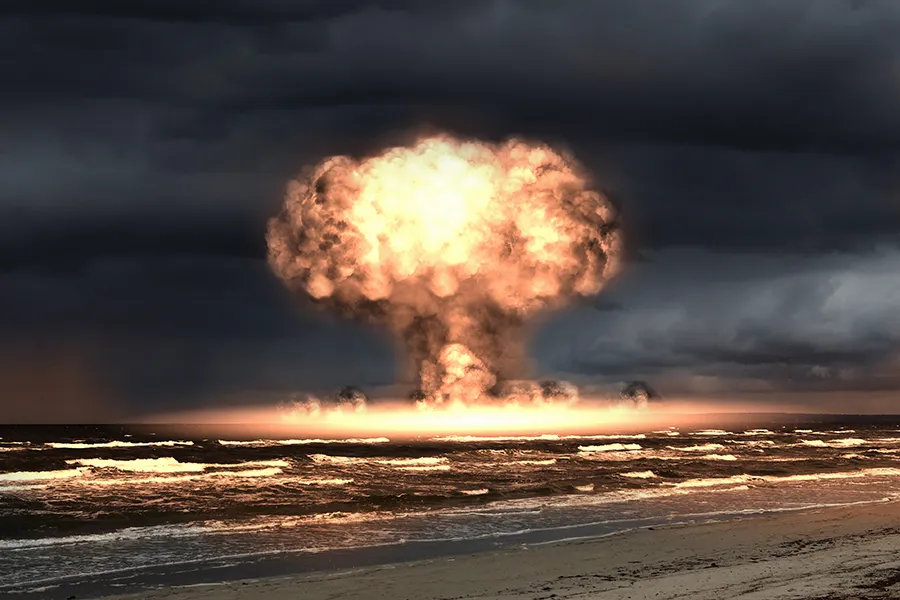
New York City, N.Y., Sep 22, 2017 / 08:02 pm (CNA/EWTN News).- Nuclear weapons are a force for instability and any claims they promote peace are chasing illusions, the Holy See’s Secretary for Relations with States told leading diplomats seeking a nuclear test ban treaty.

“While having no illusions about the challenges involved in achieving a world free of nuclear weapons, the challenges posed by the status quo ante of growing tensions, continuing proliferation, and new modernization programs are far more daunting,” Archbishop Paul Gallagher said.

“Nuclear arms offer a false sense of security. The uneasy peace promised by nuclear deterrence has time and time again proved a tragic illusion. Nuclear weapons cannot create a stable and secure world. Peace and international stability cannot be founded on mutually assured destruction or on the threat of annihilation.”

The U.K.-born archbishop’s words came in remarks to the 10th Conference on Facilitating Entry into Force of Comprehensive Nuclear Test Ban Treaty, held at the United Nations in New York City. The Holy See signed the treaty in 1996.

“The rising tensions over North Korea’s growing nuclear program are of special urgency,” he said. “The international community must respond by seeking to revive negotiations. The threat or use of military force have no place in countering proliferation, and the threat or use of nuclear weapons in countering nuclear proliferation are deplorable.”

“We must put behind us the nuclear threats, fear, military superiority, ideology, and unilateralism that drive proliferation and modernization efforts and are so reminiscent of the logic of the Cold War,” he said.

Putting the treaty into force is even more urgent considering contemporary threats to peace, he said, citing continued nuclear proliferation and some nuclear states’ major new modernization programs.

Archbishop Gallagher said political analysis that relies on nuclear weapons is misleading. The supposed peace based on a balance of power and “threats and counter-threats, and ultimately fear” is “unstable and false.” He called for the replacement of “a logic of fear and mistrust” with “an ethic of responsibility” that would foster multilateral dialogue and consistent cooperation between all members of the international community.

The archbishop said the Holy See is troubled by “the continued lack of progress” in making sure the treaty enters into force. The two decades since the treaty’s launch have been a lost two decades in achieving “our common goal of a world without nuclear weapons.”

The Holy See welcomes the opportunity to join other states that have ratified the treaty in appealing to remaining states whose ratification is necessary, he added.

“In ratifying this treaty, these States have an opportunity to demonstrate wisdom, courageous leadership, and a commitment to peace and the common good of all,” he said.

The comprehensive test ban is “a critical component to broader nuclear disarmament efforts.”

He cited Pope Francis’ Sept. 25, 2015 speech urging the U.N. General Assembly “to work for a world free of nuclear weapons” and for a full application of the Non-Proliferation Treaty that aims for “a complete prohibition of these weapons.”

“An ethics and a law based on the threat of mutual destruction – and possibly the destruction of all mankind – are self-contradictory and an affront to the entire framework of the United Nations, which would end up as ‘nations united by fear and distrust,” the Pope said.

Pope Francis has also written to Elayne Whyte Gómez, president of the U.N. conference seeking a nuclear weapons ban, urging the international community to go beyond nuclear deterrence and adopt “forward-looking strategies to promote the goal of peace and stability and to avoid short-sighted approaches to the problems surrounding national and international security.”

On Thursday, the Holy See was among the first to sign and ratify a new treaty that prohibits nuclear weapons. Archbishop Gallagher signed on behalf of the Holy See and Vatican City at the U.N. in New York, Vatican Radio reports. The Treaty on the Prohibition of Weapons has over 40 signatories and it will take effect 90 days after at least 50 nations formally ratify it.

That treaty bars the development, production, testing, acquisition, possession or stockpiling of nuclear weapons or other nuclear devices. It also bars the use or threat of use of these weapons. Most nuclear powers did not take part in the negotiations.

[…]