No Picture
News Briefs

Bishops’ letter on sexual identity prompts LGBT counter-lobbying

January 5, 2018 CNA Daily News 0

Washington D.C., Jan 5, 2018 / 12:05 pm (CNA/EWTN News).- Several Catholic bishops’ call for clarity and compassion on sexual identity issues such as transgenderism drew the ire of a dissenting Catholic group which is part of a well-funded LGBT activism network.

New Ways Ministry’s executive director Francis DeBernardo encouraged his group’s supporters Dec. 18 to write the four bishops who signed the recent letter. Claiming gender transition helps people “become closer to God,” he said the letter is “denying transgender experience” and “promotes a false scenario about how gender topics are being taught to children.”

The Dec. 15 letter “Created Male and Female” was published on the website of the U.S. Conference of Catholic Bishops. Catholic signers included Archbishop Charles Chaput of Philadelphia, who chairs the U.S. bishops’ Committee on Laity, Marriage, Family Life and Youth; Bishop James Conley of Lincoln, chair of the bishops’ Subcommittee for the Promotion and Defense of Marriage; Archbishop Joseph Kurtz of Louisville, chair of the bishops’ Committee for Religious Liberty; and Bishop Joseph Bambera of Scranton, who chairs the Committee on Ecumenical and Interreligious Affairs.

Other signers included religious leaders from Orthodox, Anglican, Lutheran, Presbyterian, Pentecostal, Baptist, and Muslim backgrounds.

The religious leaders stressed that male and female are God-given differences that must be publicly acknowledged, and that those who are confused about their own identity deserve authentic support.

Their letter voiced the belief that “God created each person male or female; therefore, sexual difference is not an accident or a flaw – it is a gift from God that helps draw us closer to each other and to God. What God has created is good.” They cited the Book of Genesis on the creation of humankind: “male and female he created them.”

DeBernardo, however, contended the letter was based on a scientifically false idea of gender. He rejected the idea that gender is a choice, portraying it as something discovered through one’s biological and sociocultural development.

“To force someone to live inauthentically is neither healthy nor holy,” said DeBernardo. “Reading this statement makes one wonder if any of these leaders have ever listened to the journey of transgender people. If they had, they would find that transgender people often experience their transition as not only a psychologically beneficial step, but one that also involves important spiritual dimensions. Transitioning helps people become closer to God. That is something religious people should support.”

The religious leaders’ letter said the movement to enforce the idea that a man can become a woman or a woman can become a man is “deeply troubling.”

They voiced concern that children are affected by current trends in sexual identity and are harmed when told they can change their sex or are given hormones that can affect their development or render them infertile.

Desires to be identified as the opposite sex are “a complicated reality that needs to be addressed with sensitivity and truth” and with a response of “compassion, mercy and honesty,” the letter said.

The letter is in line with writings from Pope Francis, who has addressed sexual identity issues several times. In his 2016 apostolic exhortation Amoris laetitia, he said young people “need to be helped to accept their own body as it was created.” And in his 2015 encyclical Laudato si’, he linked the acceptance of the human body as God’s gift to accepting the entire world as a gift from God. “[T]hinking that we enjoy absolute power over our own bodies turns, often subtly, into thinking that we enjoy absolute power over creation,” he warned.

New Ways Ministry has faced correction from leading U.S. bishops in the past, including a March 2011 statement from Cardinal Donald Wuerl of Washington. A February 2010 statement from Cardinal Francis George of Chicago, then-president of the U.S. bishops’ conference, said the group’s claim to be Catholic “only confuses the faithful regarding the authentic teaching and ministry of the Church with respect to persons with a homosexual inclination.”

In 1999 the Congregation for the Doctrine of the Faith, headed by the future Pope Benedict XVI, said New Ways Ministry’s founders took an approach to homosexuality that had “ambiguities and errors” which cause confusion among Catholics and harm the community of the Church.

New Ways Ministry’s current backers include the Arcus Foundation, founded by billionaire heir Jon Stryker. The foundation also backs the Equally Blessed Coalition, of which the group is a part. A 2014 grant for this coalition aimed “to support pro-LGBT faith advocates to influence and counter the narrative of the Catholic Church and its ultra-conservative affiliates” in connection with the Catholic Church’s Synod on the Family and World Youth Day.

In 2016 New Ways Ministry gave its Bridge Building Award to Father James Martin, S.J., editor-at-large of America Magazine. The priest’s lecture at the award ceremony was the basis for his book Building a Bridge, on Catholic-LGBT relations.

Catholic pastoral approaches to sexual identity and transgender issues in line with Church teaching are underway, though rarely on an organized basis.

In February 2017 a spokesperson for the U.S. Bishops’ Conference Office of Public Affairs told CNA most pastoral care has largely taken place “at a local and personal level.”

“As attention to and awareness of this experience has grown, we are seeing more efforts regionally and nationally to respond in a way faithful to the Catholic understanding of the human person and God’s care for everyone,” the spokesperson said.

The spokesperson said that dioceses with their own chapter of Courage, which aims to accompany Catholics with same-sex attraction, are in a good position to respond to people with questions about their sexual identity.

[…]

No Picture
News Briefs

Commentary: A Catholic moment in US politics?

January 5, 2018 CNA Daily News 1

Washington D.C., Jan 5, 2018 / 02:51 am (CNA).- It’s been a little over a year since the 2016 election that polarized the nation and left deep political divides among family and friends.

Another election may be the last thing many Americans want to think about, but with midterm races just 10 months away, the already tense political rhetoric is about to become even more heated.

This election season comes at a time of broad dissatisfaction with America’s major political parties. Harvard’s Institute of Politics recently found that only 29% of young Americans age 18-29 had a strong party affiliation.

An NBC / University of Chicago survey found that just 26% of American adults said the Republican and Democratic parties are doing an adequate job representing the American people, while 71% said a third party is needed.

What would a viable third party look like? Is a third party even possible, or is it more likely that we will see major party leaders scramble to recover eroding loyalties by redefining party values and principles?

It’s always tough to predict what will happen in politics. But since Catholics make up roughly 1 in 4 U.S. voters, they have a chance to shape the trajectory of existing and new political parties over the next few years.

And in fact, Catholics have a duty to shape the political landscape. The US bishops have repeatedly taught that Catholics should take an active role in the political process; discouraging blind partisanship, and encouraging that, “our participation should help transform the party to which we belong.”

In order to do this, we first have to understand what the Church teaches about politics. What exactly is the nature and purpose of the state? Catholics on both sides of the aisle often claim that their party’s view of government embodies the vision of Christ. But is that true?

In 1991, as the Soviet Union collapsed and the Cold War drew to a close, Pope John Paul II penned a momentous encyclical, Centesimus annus. In it, he reflected on another encyclical, Rerum novarum, the work by Pope Leo XIII that had laid out the foundations of Catholic social thought one hundred years earlier.

Through the lens of Rerum novarum, and looking at the events taking place in his own time, John Paul II wrote:

“The Marxist solution has failed, but the realities of marginalization and exploitation remain in the world, especially the Third World, as does the reality of human alienation, especially in the more advanced countries. Against these phenomena the Church strongly raises her voice.”

However, the Pope didn’t stop there. He continued:

“Vast multitudes are still living in conditions of great material and moral poverty. The collapse of the Communist system in so many countries certainly removes an obstacle to facing these problems in an appropriate and realistic way, but it is not enough to bring about their solution. Indeed, there is a risk that a radical capitalistic ideology could spread which refuses even to consider these problems, in the a priori belief that any attempt to solve them is doomed to failure, and which blindly entrusts their solution to the free development of market forces.”

The words of John Paul II have been echoed by his successors. Both Benedict XVI and Francis have had sharp criticisms for Marxism and for an “unbridled capitalism” that relies entirely upon the machinations of the free market, without recognizing the need for values that can only be upheld through intentional human action.

So what does the Church propose? John Paul II clarifies: “The Church has no models to present; models that are real and truly effective can only arise within the framework of different historical situations, through the efforts of all those who responsibly confront concrete problems in all their social, economic, political and cultural aspects, as these interact with one another.”

In other words, it’s up to Catholics to work for the best solution we can in our current circumstances.

What does it mean to put the Church’s social teaching into practice in 21st century America? It’s a complex question, but before we can even start proposing answers, we need to know what the Church’s social teaching is.

What does it mean to say that the dignity of the human person “is the foundation of all the other principles and content of the Church’s social doctrine,” or to say that “society and the State exist for the family”? What are the principles of the common good, solidarity, and subsidiarity? What is the universal destination of goods and how does it relate to private property? What is the preferential option for the poor?

Again and again, the bishops have clarified that it is not the Church’s role to tell people whom to vote for at the ballot box. Rather, the Church talks about issues and principles. To understand what the Church teaches about the issues – from abortion to migration – and to exercise the prudential judgment necessary to turn those ideas into policies, we must first understand the foundational principles. John Paul II describes the Church’s social teaching as “an indispensable and ideal orientation,” a viewpoint, and a framework on which to build.

As we enter into what is certain to be a heated election year, why not make it a (belated) New Years Resolution to learn more about Catholic social teaching? Centesimus Annus is a great place to start. So is the Compendium of the Social Doctrine of the Church. To catechists, teachers, and members of the clergy: Why not resolve to teach the Church’s social doctrines more frequently, to help equip Catholics as they prepare to vote?

Educating ourselves on these issues can help us be better citizens, and better Catholics. In the words of Pope Francis: “A good Catholic meddles in politics, offering the best of himself, so that those who govern can govern.”

[…]

No Picture
News Briefs

Assisted suicide opponent remembered for his strength, determination

January 4, 2018 CNA Daily News 0

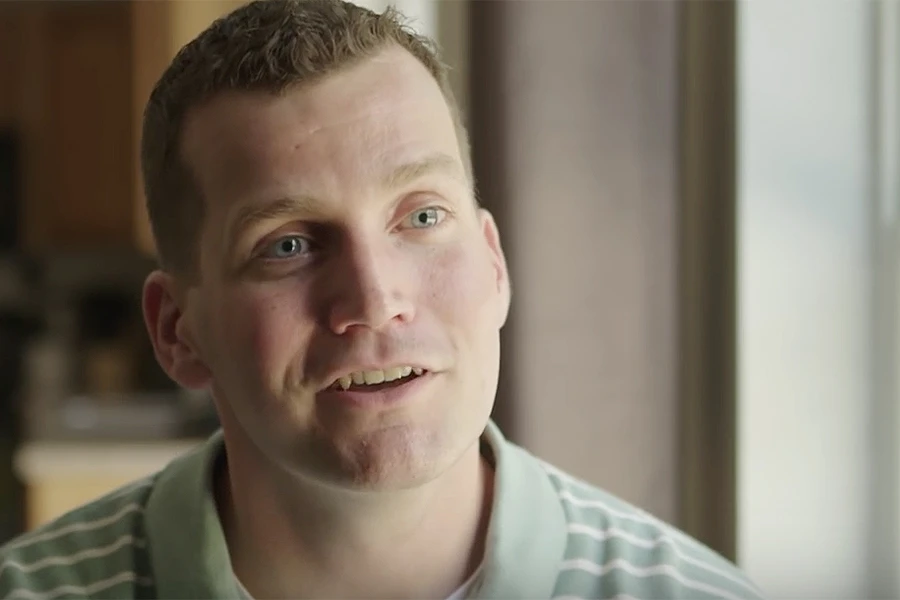
New York City, N.Y., Jan 4, 2018 / 05:08 pm (CNA/EWTN News).- The funeral for J.J. Hanson, an outspoken assisted suicide opponent, was celebrated Thursday. He was remembered for his strength, faith, and determination.

Hanson died of brain cancer on Saturday at the age of 36. He is survived by his wife, Kristen, and his sons James and Lucas.

“He [J.J.] was one of the most optimistic persons I’ve met in my life,” said Fr. Joselin Berkmans during the homily at Hanson’s Mass of Christian Burial, held Jan. 4 at the Church of St. Anthony of Padua in Yulan, N.Y., about 90 miles northwest of New York City.

“What a great spirit he had. He never worried about his life, but always wanted to be the hope for all who were around him,” Fr. Berkmans continued.

Hanson’s death was felt by many in the New York area, including Bishop Edward Scharfenberger of Albany.

“As we mourn the loss of our friend and fellow advocate, James “J.J.” Hanson, we choose not to focus on the great sorrow surrounding his death,” Bishop Scharfenberger said on Twitter.

“Instead, today, we choose to focus on the great good J.J. did during his time on earth, especially during the past few years of his life when his battle with cancer became for him an opportunity to show the strength of his faith and the power of love and determination,” Bishop Scharfenberger continued.

In 2014, Hanson was diagnosed with glioblastoma, a terminal brain cancer, the same illness that led Brittany Maynard to take her own life in California three years ago, and given four months to live.

While given a life expectancy of only a few months, Hanson was surrounded by a positive support group and a loving family. Hanson said that during his darkest moment, he might have opted for assisted suicide, but instead chose to pursue alternative treatments. He lived three years longer than expected.

“Here I am three years later, enjoying the arrival of our second son and living life to the fullest,” Hanson said in October 2017.

Throughout his battle with cancer, Hanson became a passionate opponent of physician-assisted suicide and was the president of the Patients Rights Action Fund, an organization which fights efforts to legalize assisted suicide.

He was also actively involved with the New York State Catholic Conference and the New York Alliance Against Assisted Suicide, where he fought against the passage of a bill that would have legalized assisted suicide in the state of New York.

Hanson additionally served as a former aide to Govs. Eliot Spitzer and David Paterson.

“He outlived that death sentence by more than three years, giving hope and inspiration to thousands of people during that time,” remembered Kathleen M. Gallagher, director of pro-life activities for the New York State Catholic Conference, according to the conference website.

“J.J. lived his motto: ‘Every day is a gift, and you can’t ever let that go,’” Gallagher continued.

[…]

No Picture
News Briefs

State Department names 10 countries as worst religious freedom offenders

January 4, 2018 CNA Daily News 0

Washington D.C., Jan 4, 2018 / 04:02 pm (CNA/EWTN News).- The State Department on Thursday unveiled its list of countries designated as the worst offenders against religious liberty. Advocates of religious freedom applauded the list, but said that several additional countries should have been added.

The countries of Burma, China, Eritrea, Iran, North Korea, Sudan, Saudi Arabia, Tajikistan, Turkmenistan, and Uzbekistan were labeled as “Countries of Particular Concern” (CPC) in the State Department’s report. The 10 countries on the CPC list are unchanged from last year.

In addition, Pakistan was placed on a “Special Watch List,” which is a new category below that of Countries of Particular Concern.

A country is labeled as a CPC after it engages in “systemic, ongoing, [and] egregious” violations of religious liberty. The “Special Watch List” is for countries that “engage in or tolerate severe violations” of religious liberty, but not to the extent of a CPC.

The U.S. Commission on International Religious Freedom (USCIRF), a government commission created in 1998 to study religious liberty around the world, praised the inclusion of the 10 CPC counties, but said that several others should have been added.

The commission had recommended that Russia, Vietnam, Syria, Nigeria, and the Central African Republic be added, and that Pakistan should have been included on the list of CPCs, rather than the lower designation of “Special Watch List.”

“The designation of these countries is a key step in ensuring continued U.S. engagement in support of international religious freedom. Although USCIRF agrees with the 10 countries on the State Department’s list, it does not go far enough,” said Daniel Mark, chairman of the commission, in a press release.

Mark said it was a “surprise and disappointment” that Pakistan was not added to the list of CPCs, especially given President Donald Trump’s past criticism of the nation, which has engaged in state-sponsored discrimination against religious minority groups, and has anti-blasphemy laws.

Vietnam was previously designated as a CPC, but was taken off the list about a decade ago, in opposition to USCIRF’s recommendation. The commission has since called for it to be re-added to the list.

House Foreign Affairs Committee Chairman Rep. Ed Royce (R-Calif.) questioned why Vietnam was omitted from the list of CPCs. Royce said Vietnam has regularly violated both religious liberty and other basic human rights, and that it is the United States’ responsibility to call out these violations.


Chairman Royce writes: “Religious freedom is a fundamental human right, yet far too  many people around the world are still persecuted, imprisoned, and killed solely  because of their beliefs. It is our responsibility, as Americans, to speak for those with no voice.”

— Jason Calvi (@JasonCalvi) January 4, 2018


Russia was also among the countries that the State Department omitted from its list of CPCs. USCIRF had called for it to receive the designation, in part due to an anti-extremism law that has been used to label Jehovah’s Witnesses as an extremist group, banning them from legally gathering or preaching in the country.

<blockquote class=”twitter-tweet” data-lang=”en”><p lang=”en” dir=”ltr”>????RUSSIA notes in this thread. <br>State Dept. doesn't name Russia a <a href=”https://twitter.com/hashtag/ReligiousFreedom?src=hash&amp;ref_src=twsrc%5Etfw”>#ReligiousFreedom</a> Country of Particular Concern, even though the US Commission on International Religious Freedom recommended that designation. <a href=”https://t.co/s9She8I9KD”>https://t.co/s9She8I9KD</a></p>&mdash; Jason Calvi (@JasonCalvi) <a href=”https://twitter.com/JasonCalvi/status/948987873843400704?ref_src=twsrc%5Etfw”>January 4, 2018</a></blockquote>
<script async src=”https://platform.twitter.com/widgets.js” charset=”utf-8″></script>


[…]

No Picture
News Briefs

US bishops extend sympathy at death of Mormon Church president

January 4, 2018 CNA Daily News 5

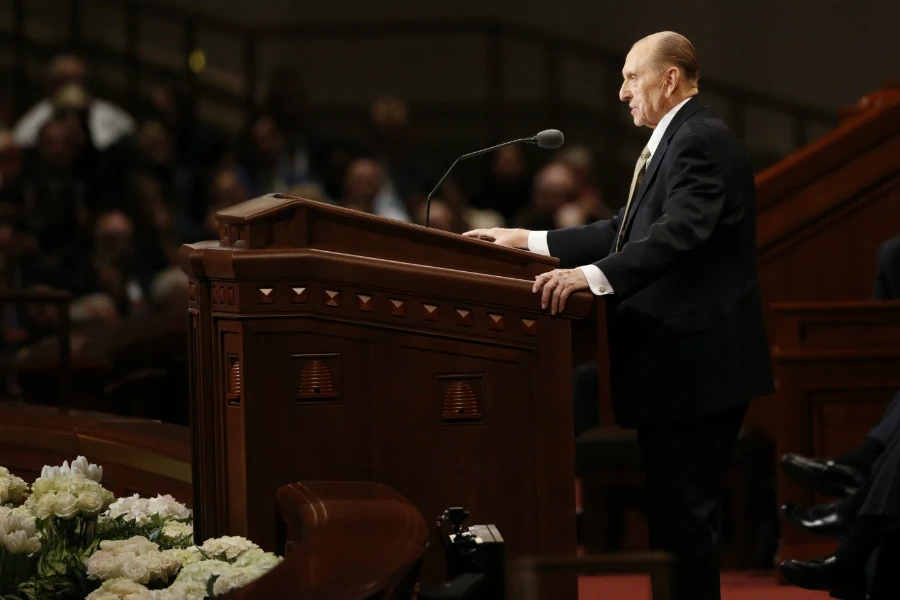
Salt Lake City, Utah, Jan 4, 2018 / 11:40 am (CNA/EWTN News).- Thomas Monson, president of the Mormon Church, died Tuesday at the age of 90, leading Catholic bishops to offer not prayer and praise for a man dedicated to philanthropic works.

“President Monson was an advocate of unity and believed in the goodness of each person. He embraced people regardless of faith, seeing in them the image of Jesus,” Bishop Oscar Solis of Salt Lake City said Jan. 3.

“He was a ‘human’ touch of kindness and dignity that will long be treasured. We join in prayer with the LDS faithful at this difficult time.”

Monson, 16th president of the Church of Jesus Christ of Latter-day Saints, died of natural causes Jan. 2 at his home in Salt Lake City. The leader of the 15.8 million-member religion had a strong dedication to the poor. He had been president of the religion since 2008.

According to The Salt Lake Tribune, Monson would make surprise visits to sick children or bereaving widows. Additionally, former Utah legislator Stuart Reid said Monson had modified the LDS Church’s three-fold mission to include a fourth – an outreach to the poor.

“The President has been a good friend and supporter in our mutual efforts to support the common good and care for the most vulnerable both at home and abroad,” continued Bishop Solis.

“Catholic Community Services as well as the Good Samaritan Program have benefited from his commitment to the poor.”

Born in 1927 in Salt Lake City, Monson was always an active member of the Mormon Church. He served on one of the religion’s governing bodies, the Quorum of the Twelve Apostles, from 1963 until his 2008 appointment as president.

Monson’s funeral services will be held Jan. 12 in Salt Lake City.

Cardinal Daniel NiNardo of Galveston-Houston, president of the US bishops’ conference, offered his condolences to the leaders and members of LDS Church and promised to pray for Monson, whom he said aided friendship between Catholics and Mormons.  

“During his tenure as president, understanding and friendship developed between our two communities on national and local levels,” he said Jan. 3. “As we engage important questions on family and the dignity of the human person, Catholics and Mormons work together and support each other. Today, Catholics join their Latter-day Saints brothers and sisters in commending his soul to the mercy and love of God.”

The Mormon Church, a nontrinitarian religion, was founded in the 19th century in New York.

[…]

No Picture
News Briefs

Report: Government funds largest source of Planned Parenthood revenue

January 4, 2018 CNA Daily News 0

Washington D.C., Jan 4, 2018 / 05:00 am (CNA/EWTN News).- Planned Parenthood reported that it received more than $500 million in government funding last year, while performing more than 300,000 abortions across the United States.

The country’s largest abortion provider released its 2016-2017 annual report this weekend, reporting that while the organization is seeing fewer patients than in previous years, revenue from government sources remains mostly stable. The report also showed increased excess revenues for the organization.

In the 2016-2017 fiscal year, Planned Parenthood saw 2.4 million patients at its 600 health centers, and performed 321,384 abortions. Though the number of abortions decreased slightly from the prior year, Planned Parenthood’s abortion numbers have increased 10 percent over the past decade, despite seeing about 600,000 fewer patients. In 2006, Planned Parenthood reported that they performed 289,750 abortions, and served 3.1 million patients.

Planned Parenthood’s excess revenue increased from the prior fiscal year, from $77.5 million to $98.5 million, an increase of 27 percent.

Despite seeing fewer patients, Planned Parenthood’s taxpayer funding has increased by 61 percent in the past decade, from $336.7 million in 2006 to $543.7 million in 2016.

CEO Cecile Richards bemoaned a “historic threat” to Planned Parenthood in the report, stemming from legislative efforts at the state and federal level to regulate or defund Planned Parenthood.

Despite defunding efforts, the organization received only two percent fewer tax dollars in 2016 than in 2015. “Government Health Services Reimbursements & Grants” constituted the largest source of funding for Planned Parenthood in 2016-2017, providing 37 percent of the organization’s revenue.  

The majority of Planned Parenthood’s expenses, 60 percent, were for “medical services.”

The report showed that the number of patients receiving contraceptive services from Planned Parenthood declined last year, as it has since 2009. That year, Planned Parenthood provided 4,009,549 contraceptives to patients, a number that was nearly halved by 2016. Most of Planned Parenthood’s birth control services are oral contraceptives, the report said, although there was an increase in the number of IUDs implanted in 2016 compared to 2015.

Cancer screenings and prenatal care also declined over the past year. While adoption referrals increased, Planned Parenthood performed about 82 abortions for every child that was referred for adoption.

In light of the report showing a significant, growing, profit, pro-life advocates are continuing to calling for Planned Parenthood to be defunded by state and federal legislatures.

“Enough is enough,” said Marjorie Dannenfelser, president of the pro-life Susan B. Anthony List, in a Jan. 3 statement. “Community health centers vastly outnumber Planned Parenthood facilities nationwide and offer comprehensive primary and preventative care for women and families. Congress must follow through on the promise to redirect tax dollars away from Planned Parenthood without further delay.”

<blockquote class=”twitter-tweet” data-lang=”en”><p lang=”en” dir=”ltr”>In looking at <a href=”https://twitter.com/PPact?ref_src=twsrc%5Etfw”>@PPact</a>'s latest annual report, more than 82 abortions were performed for every 1 adoption referral. You have to ask –  how much choice is Planned Parenthood advocating for their vulnerable patients?</p>&mdash; Catherine Szeltner (@CatSzeltner) <a href=”https://twitter.com/CatSzeltner/status/948263568440426497?ref_src=twsrc%5Etfw”>January 2, 2018</a></blockquote>
<script async src=”https://platform.twitter.com/widgets.js” charset=”utf-8″></script>

<blockquote class=”twitter-tweet” data-lang=”en”><p lang=”en” dir=”ltr”>As I’ve stated before (and setting aside the fungible aspect of $), I don’t care if the dollars that Planned Parenthood receives from the government go to purchase fish tanks for waiting rooms. Their organization takes lives, and that is unacceptable.</p>&mdash; Kimberly Ross (@SouthernKeeks) <a href=”https://twitter.com/SouthernKeeks/status/948347629590728704?ref_src=twsrc%5Etfw”>January 3, 2018</a></blockquote>
<script async src=”https://platform.twitter.com/widgets.js” charset=”utf-8″></script>

Left unmentioned in the report was that 32 Planned Parenthood facilities have closed during the last year.


[…]

No Picture
News Briefs

Reversing course, FEMA allows religious groups to receive disaster aid

January 3, 2018 CNA Daily News 0

Washington D.C., Jan 3, 2018 / 04:30 pm (CNA/EWTN News).- The Federal Emergency Management Agency announced Tuesday that houses of worship will now be eligible to receive federal disaster relief funds, after outcry from religious leaders in the wake of Hurricane Harvey.

Previously, these FEMA funds were limited to private nonprofits that were not affiliated with a religion, such as museums, libraries, community centers, and homeless shelters.

“Effective for any major disaster declared on or after August 23, 2017, private nonprofit organizations operating a house of worship are now eligible under the FEMA Public Assistance Program,” the agency’s administrator wrote to Texas Gov. Greg Abbott Jan. 2.

Abbott and Texas Attorney General Ken Paxton announced Wednesday that FEMA had granted their request to permit houses of worship to gain access to these disaster relief funds.

Abbott and Paxton had sent President Donald Trump a letter in September arguing that houses of worship were no different than other nonprofits, and had even assisted FEMA with their recovery efforts. Yet due to past FEMA policy, these organizations were barred from funds.

Three Texas churches that were damaged during Hurricane Harvey had filed suit saying that they were being discriminated against for their religious beliefs as their requests for aid had been denied by FEMA.

Now, FEMA will permit houses of worship damaged during the hurricane to retroactively apply for aid, and any other church damaged in a storm in the future will also be eligible for these funds.

Abbott praised FEMA for changing this policy, and also thanked various religious organizations for playing a “vital role” in the area’s ongoing recovery since Harvey made landfall in late August.

“Churches and other houses of worship continue to play a vital role in the ongoing recovery effort, and their ability to receive the same assistance available to other nonprofits should never have been in doubt. I thank FEMA and the Administration for their commitment to helping Texans and the churches that have helped their communities throughout the recovery and rebuilding process,” said Abbott in a statement.

Catholic and Jewish leaders penned an opinion piece in USA Today in September encouraging legislation which would end discrimination against religious organizations in disaster aid.

Echoing Abbott’s praise was Knights of Columbus CEO Carl Anderson, who said the Knights were grateful FEMA had agreed to assist churches, and that the damage caused by these particular storms had necessitated government help.

“Having stepped into the breach to help meet the great needs of the affected communities, we welcome the significance of FEMA’s decision.The destruction due to the flooding and hurricanes is of such a magnitude that the government must help in the response.”

The Knights of Columbus raised $3.8 million for disaster assistance in the immediate aftermath of the 2017 hurricane season. In addition to relief efforts in Texas, the Knights of Columbus donated $100,000 to the Archdiocese of San Juan to assist with rebuilding efforts in Puerto Rico following Hurricane Maria.

[…]

No Picture
News Briefs

Bishop Barron: Don’t water down Christianity

January 3, 2018 CNA Daily News 1

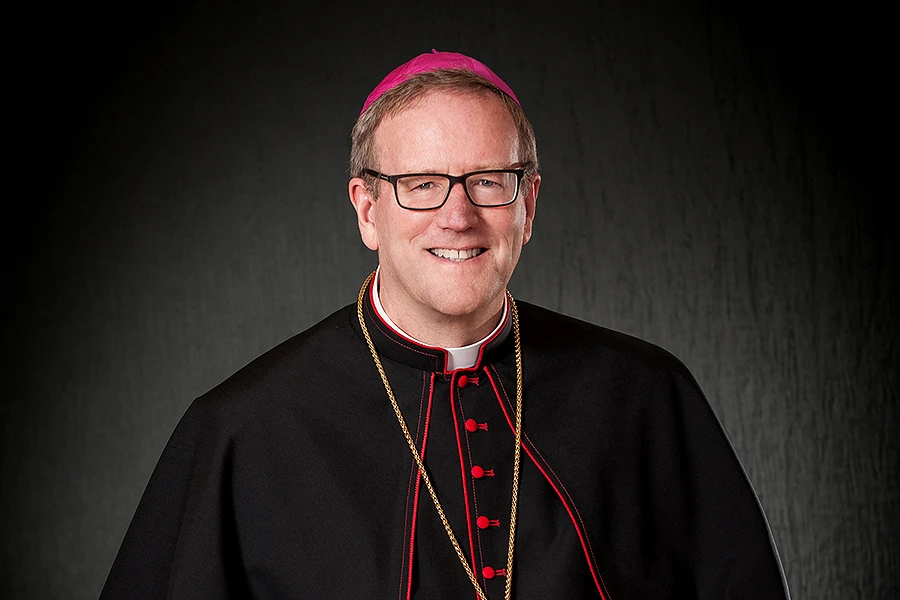
Chicago, Ill., Jan 3, 2018 / 01:21 pm (CNA/EWTN News).- Speaking to some 8,000 people at a Catholic leadership conference, Bishop Robert Barron said on Tuesday that trust in the risen Christ should give us the courage to preach the truth boldly.

“Through the Holy Spirit, the ascended, risen Christ commands his mystical Body the Church to do what he did, and to say what he said. That’s it…that’s the task of the Church to the present day.”

Barron, the auxiliary bishop of Los Angeles, is also the founder of Word on Fire Catholic Ministries and host of the award-winning “Catholicism” documentary.  

He delivered one of the opening keynotes at this year’s Student Leadership Summit in Chicago. Known as SLS, the summit is hosted by the Fellowship of Catholic University Students (FOCUS) every other year. It aims to train student leaders and other ministers with tools for evangelization and missionary work, largely on college campuses.

This year’s SLS drew more than 8,000 participants, more than double the attendance of the last summit, hosted in 2016 in Dallas with approximately 3,400 participants.

In his talk, Bishop Barron focused on the Acts of the Apostles, a Biblical book that he said “sets the agenda for us” in the work of evangelization.

He noted that this book begins with an account of Jesus’ ascension, comparing Christ’s glorified position in heaven to that of a general who commands his army at a vantage point from above.

“It tells us very clearly who’s in charge, and what I mean by that is, the ascended Christ who now commands his Church.”

Moving on from the Ascension to the account of Pentecost, Barron said that the descent of the Holy Spirit compels us to spread the Word of God. The Holy Spirit comes to earth to guide the Church, he said, led by the ascended Christ from heaven.

“In a myriad ways, according to your particular missions, bring something of heaven to earth, doing as Jesus did,” the bishop exhorted attendants.

In bringing the message of heaven to earth, Catholics should be careful not to water down the Gospel or fall for bland and uninspiring half-truths, he said.

He recalled an encounter that he had with Biblical scholar Scott Hahn, who remarked that “there is no historical basis for the for the claim that St. Francis said, ‘Preach always, and when necessary, use words.’”

While indeed “our whole life should be a kind of preaching,” Barron said, the statement attributed to St. Francis can become a problem when it is “used as a justification for a kind of pastoral reductionism,” for example, the idea that “what it all really comes down to is taking care of the poor.”

While caring for the poor is important, Barron said, this work “in and of itself can never be evangelically sufficient.”

“This is not the time for anti-intellectualism in our Church! We have lots of young people, you know them, they’re your friends and colleagues, who are leaving the Church for intellectual reasons,” Barron said.

He called for a kind of “bold speech” needed to proclaim the Gospel, pointing to the preaching in the early Church, which challenged the widely held belief at the time that “Casear is Lord.”

“The bold speech of the Church is that not ‘Caesar,’ or any of his colleagues or predecessors or successors, but rather Jesus is Lord, Jesus is the king. And he is also Christos, anointed.”

The Roman empire at the time, Barron said, was rather liberal with regards to new religions, yet still rejected the early Christians because they identified Jesus – and not Caesar – as the only Lord.

“If he is Lord, everything in your life belongs to him. Your personal life, yes. Your body, yes. Your friendships, yes. Your political life, yes. Your entertainment, yes. All of it.”

When Christianity becomes reduced to a mere message that can be gained from the dominant culture, Bishop Barron said, it moves from the faith of early persecuted Christians to one which is rewarded lavishly by others.

“That’s what happens to a weakened, attenuated Christianity,” he said.

“In the Acts of the Apostles we hear that when those first disciples spoke, people were cut to the heart. Still true, still true to this day. Bland spiritual teachings, saying what everybody else says, that won’t cut anyone to the heart, but trust me, declaring the lordship of Jesus, that’ll cut them to the heart.”

Bishop Barron highlighted Jesus’ role in light of the Old Testament, saying that only as a fulfillment of laws and the prophets does Jesus make sense. He pointed to St. Stephen’s speech to the Sanhedrin before his martyrdom, in which the saint summarized the entire Old Testament and then described Jesus’ ministry.

When Jesus is cut off from his roots in Israel, he becomes just a philosopher or wise figure, a “flattened out, uninspiring Jesus,” the bishop warned.

In contrast, he said, “when you present Jesus as the fulfillment of the great story of Israel, Jesus as the fulfillment of the temple that was meant to bring humanity and divinity together, when you preach him as the fulfillment of the law and the covenant and the Torah, when you preach him as the culmination of all the proclamation of the prophets, people will be cut to the heart.”

Bishop Barron related a story he commonly tells of a little girl he met while working in Chicago who presented to him a detailed account of George Lucas’ “Star Wars” movies. He said that kids’ aptitude to memorize such complex plotlines and character names dispels the notion that they cannot understand the Bible.

“This great, rollicking, complex, rich story that we have, full of weird names, yeah, but no weirder than Obi-Wan Kenobi, right? The kids have no trouble with that. Don’t tell me they can’t understand the Bible. And therefore don’t tell me that they can’t appreciate Jesus as the culmination of that great story.”

The bishop ended his talk by encouraging conference attendees in prayer and asking them to help “remind the world whom they are to worship.”

“Everybody worships somebody or something,” he said. “Everyone’s got a king, right? Our job is to stand up boldly and say, ‘No, Christ is your king. Everything in your life belongs to him’.”


[…]