No Picture
News Briefs

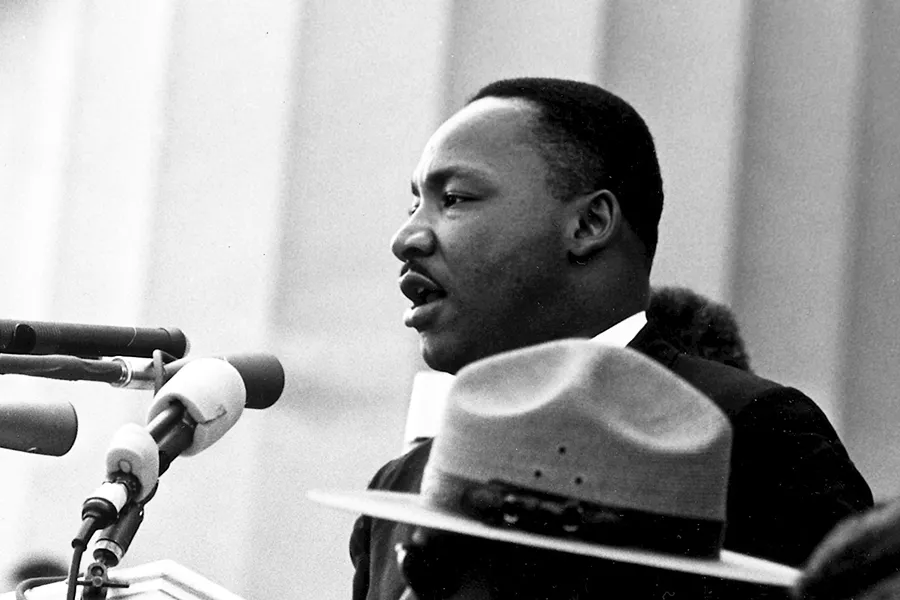
What the pope said when Martin Luther King was killed
April 3, 2018 CNA Daily News 0

Memphis, Tenn., Apr 3, 2018 / 06:00 pm (CNA/EWTN News).- On April 4, 1968, Martin Luther King, Jr., was fatally shot outside his room at the Lorraine Motel in Memphis, Tennessee.

King is remembered as the most visible leader of the civil rights movement, for which he was awarded the Nobel Peace Prize in 1964, and as the founding president of the Southern Christian Leadership Conference. But he was first a pastor at Dexter Avenue Baptist Church in Montgomery, Alabama, and remained active in pastoral leadership throughout his life.

On the day after King was killed, Pope Paul VI expressed remorse during his Angelus address, saying that the civil rights leader was “a Christian prophet for racial integration.”

Shortly after King’s death, the National Conference of Catholic Bishops, the National Council of Churches, the Synagogue Council of America, and the Standing Conference of Orthodox Bishops in the Americas released an interfaith statement, mourning their colleague in ministry.

We “bow together in grief before the shameful murder of Dr. Martin Luther King, Jr., a unique apostle of the non-violent drive for justice, [and] affirm that no service of remembrance or local memorial is equal to the greatness of his labor or the vastness of our national need.”

The faith leaders also applauded the efforts of Congress to pass the Civil Rights Act of 1968, encouraged Americans to support measures favoring integration, and pled with government officials to fund legislation aimed at fighting poverty.

We “affirm that only through massive contributions by the American people can this nation duly honor the life-offering of Martin Luther King, Jr. and responsibly lift up the burden of the poor and oppressed in our land.”

The statement also promised to implement coordinated efforts among religious communities to fight poverty.

We “declare our intention to take immediate steps to develop a coordinated sacrificial effort on the part of the American religious community to help the disadvantaged,” the statement read.
 
Faith leaders were not the only ones to pay tribute to King after his assassination.

On the night King was killed, Senator Robert Kennedy, a Catholic, spoke to the people of Indianapolis, urging them to greater compassion and a deterrence from violence. Kennedy spoke during a stop on his 1968 campaign for President, delivering the news to a multiracial crowd that King had been assassinated.

“What we need in the United States is not division; what we need in the United States is not hatred; what we need in the United States is not violence or lawlessness; but love and wisdom, and compassion toward one another, and a feeling of justice toward those who still suffer within our country, whether they be white or they be black,” he said on April 4, 1968.

Kennedy referenced the assassination of his own brother, President John F. Kennedy, which had taken place in 1963.

“For those of you who are black and are tempted to be filled with hatred and distrust at the injustice of such an act, against all white people, I can only say that I feel in my own heart the same kind of feeling. I had a member of my family killed, but he was killed by a white man. But we have to make an effort in the United States, we have to make an effort to understand, to go beyond these rather difficult times,” Kennedy said.

The senator urged Americans to take up King’s efforts, pray for King’s family and the nation, and join in solidarity those longing for peace.  

“The vast majority of white people and the vast majority of black people in this country want to live together, want to improve the quality of our life, and want justice for all human beings who abide in our land,” he added.

“I shall ask you tonight to return home, to say a prayer for the family of Martin Luther King, that’s true, but more importantly to say a prayer for our own country, which all of us love–a prayer for understanding and that compassion of which I spoke.”
[…]

No Picture
News Briefs

Founder of 40 Days for Life enters Catholic Church on Easter

April 3, 2018 CNA Daily News 2

Fredericksburg, Va., Apr 3, 2018 / 01:07 pm (CNA).- David Bereit, the founder of 40 Days for Life, entered the Catholic Church on Easter, giving thanks for the inspiration of influential Catholics, including his wife and children.

“After years of prayer, discernment, and a whole lot of wrestling with God, I was received into full communion with the Catholic Church at last night’s Easter Vigil,” wrote Bereit in an April 1 Facebook post.

Bereit celebrated Easter with his family at St. Mary of the Immaculate Conception Church in Fredericksburg, Virginia. His wife Margaret was his sponsor, and his son Patrick was an altar server at the Mass. His daughter Claire and mother-in-law Helen were also in attendance.

Bereit said that he had been attending Sunday Mass with his wife – who is Catholic – every week for the last 28 years, ever since their second date at St. Mary’s Catholic Center at Texas A&M in 1990.

But while he and Margaret shared many things in common as Christians, Bereit said he also longed to be more unified in their church affiliation and therefore spent years wrestling with the Catholic Church.

“I struggled with many questions, misconceptions, and hangups along the way. I have endeavored to continually learn and grow through prayer, studying Scripture, theology, and church history, reading, and seeking wise counsel,” he said.

“Throughout my life I have also been surrounded by many amazing Catholic Christians whose faithful, loving witness has continually inspired and attracted me – most notably the beautiful example lived out by my incredible wife and wonderful children.”

Last September, Bereit experienced a profound encounter of faith during Eucharistic adoration. Soon after, he began attending RCIA classes, which he said led to a more fruitful Lent and Easter this year.

“Lent took on far more meaning than usual for me, as I prayed and fasted more intensely than ever with a focused desire to continue growing closer to Christ. Now I am filled with joy, and am at complete peace, about this next step in my life-long journey of faith.”

In 2004, Bereit began 40 Days for Life as a local prolife advocacy group in Bryan-College Station, Texas. The group has grown into an international organization, holding Christian campaigns of prayer and activism to end abortion. Over the course of 40 days, participants hold a 24/7 prayer vigil outside of a single abortion facility in the community. The organization also engages in community outreach, through partnerships with churches and door-to-door petitions.

Bereit stepped down as CEO in 2016, but continues to be actively involved in the pro-life movement.

He said in his Facebook post that his decision to become Catholic may be surprising to some, but it will not change his dedication to serve the entire body of Christ.

“This journey has deepened my appreciation for a wonderful Christian upbringing, my years of experiences within the Presbyterian Church, the time I was involved with Evangelical ministries while in college, and the blessing of getting to work and pray alongside the many different parts of the Body of Christ in my 15+ years of pro-life work.”


[…]

No Picture
News Briefs

Retreat fosters healing for adult children of divorce

April 2, 2018 CNA Daily News 0

Washington D.C., Apr 2, 2018 / 03:39 am (CNA).- According to the Pew Research Center, only 46 percent of Americans under the age of 18 live in a traditional family with two parents in their first marriage.

For those who are now adults and grew up in a divorced family, the Saint John Paul II National Shrine in Washington, D.C. is seeking to help heal wounds that remain after parents divorce.

Many suffer silently from their parents’ divorce, according to Daniel Meola, who leads the ‘Recovering Origins” healing retreats for the shrine.

“Regardless of the amount of individual love our parents give us, what we’ve lost is the love of our parents together,” Meola explained to CNA, drawing on his own experience of his parents’ divorce. “We have to recognize that we have something to grieve.”

“Children of divorce are not, as a rule, asked how they feel about their parents’ divorce — not as a child and not in the decades that follow,” Catholic writer, Leila Miller, wrote in her 2017 book, “Primal Loss: The Now-Adult Children of Divorce Speak.”

“Our society says that the kids should be alright. There should be no problem. There’s a lot of happy divorce talk … so that can kind of silence us,” explained Meola.

Although many children of divorce learn to silence their feelings, their wounds really begin to show themselves in young adulthood and in the ability to form and maintain relationships, according to Meola.

There can be “this deeper anxiety that many of us have that any good thing can turn bad at the drop of the hat or always expecting the piano to fall,” said Meola, who added that trust issues, anger, and depression are other common struggles.

Many participants in past retreats have expressed fear of repeating their parents’ mistakes. The key to addressing this concern is practicing the Church’s teaching of merciful love, Meola said.

“The form of marriage is merciful love … I think that if we can forgive our parents or even just start to forgive them that we will be starting a really good foundation for our own love and our own marriages,” he commented.

“You can love your parents and still hate the divorce,” explained Meola. “We have this beautiful distinction in the Church, at least I found very comforting, between the person and his acts. I found this very comforting actually for grieving that ‘Ok, I can hate this act my parents did, but I can still love this person deeply and profoundly.’”

“I’ve always found it really beautiful and fascinating that Christ’s strongest words on marriage in Matthew 19, saying it is indissoluble, are preceded by his strongest words on forgiveness in Matthew 18 where he tells people to forgive 77 times 7 times,” he continued. “I think that what the Scripture is suggesting there is that the form of indissolubility is merciful love.”

The Church’s teaching on self-giving love in marriage can also seem counterintuitive to adult children of divorce. “I think that one of the temptations when you are wounded is you just want to self-protect rather than give, even though giving is what is key for happiness, especially in love,” explained Meola. “Another sign of self-protecting is leaving at the first sign of problems and not addressing conflicts.”

“Cohabitation can also be a form of self-protecting,” he added.

The goal of the retreats is for the participants to bring these wounds and anxieties to Christ’s healing love. “As John Paul II said in Salvifici Doloris, if we have eyes of faith and we encounter Christ in the wound, then it can awaken love. That is the deepest level of healing that we are looking for.”

At the heart of each retreat is a detailed meditation on the Our Father. Small group discussions focus on more practical aspects of navigating healthy boundaries with one’s parents and in relationships after divorce.

“When your parents divorce, they are in survival mode and so are you, and what often happens is that you feel like you need to be the parent to the parent, rather than the child. And what I mean by that is that they often turn to you as their emotional confidant because they do not have their spouse any longer, so what happens is you don’t feel the permission to share your feelings with them because they are dumping so much on you and you feel the need to help them figure out their emotional life. But in a healthy marriage, it is flipped — the child is supposed to be getting direction about their emotional life from the parent … when you are married, you need to be each other’s emotional confidant… We do have to draw a boundary,” explained Meola.

“We tend to think of boundaries as pushing the other person away, but they are actually at the service of reconciliation and having a good relationship. Because what is going to push you away is if you have an unhealthy relationship. You are going to collapse and get really angry. Boundaries are actually at the service of a good relationship with your parents,” he continued.

“Verbal abuse can be very prolific. Because we are a child of both parents, when one parent bashes the other parent, that really hurts us, because we are a fruit of that, we have qualities of that parent that they might be bashing,” continued Meola who said that the retreat can empower young people to speak up when this occurs.

“Each parent is half of who the child is. When the parents reject each other, they are rejecting half of the child. They may tell the child, ‘We still love you; we just don’t love each other.’ The child cannot make sense of this impossible contradiction. In my opinion, this is the underlying reason for the well-documented psychological, physiological, and spiritual risks that children of divorce face,” wrote Dr. Jennifer Roback Morse, the founder and president of the Ruth Institute, in the introduction to Miller’s book on adult children of divorce.

The “Recovering Origins” healing retreat was born out of an earlier symposium hosted by the Pontifical John Paul II Institute for Studies on Marriage and Family in 2012 that brought together scholars who have studied the impact divorce has had on children, including Elizabeth Marquardt, whose groundbreaking book, “Between Two Worlds: The Inner Lives of Children of Divorce,” was one of the first studies on the impact of divorce on young people.

Carl Anderson, Supreme Knight of the Knights of Columbus, saw how fruitful the symposium was, and decided that the Church should offer more opportunities for healing. The Knights of Columbus and the John Paul II Institute developed the retreat, which was first held in 2016.

Each retreat is usually capped at 25 participants to encourage discussion. Speakers at the last retreat at the Saint John Paul II National Shrine on March 23-25 included Fr. Jim McCormick, MIC and Dr. Jill Verschaetse, both of whom are adult children of divorce.

The next retreat is scheduled for September 7-9 in Arlington, Virginia.


[…]

No Picture
News Briefs

For former inmates, returning to society comes with challenges

March 29, 2018 CNA Daily News 0

Washington D.C., Mar 29, 2018 / 04:18 pm (CNA/EWTN News).- For the fourth time in his pontificate, Pope Francis will wash the feet of inmates at a prison on Holy Thursday this year.

The pope, who will celebrate the Mass of the Lord’s Supper at the Regina Coeli prison in Rome’s Trastevere neighborhood, has previously spoken of the importance of reintegrating former prisoners back into society.

In the United States, 65 million people have a criminal record, which can limit access to employment, housing, and education, according to James Ackerman, the president and CEO of Prison Fellowship, the nation’s largest Christian ministry serving prisoners.

“Nearly 700,000 men and women will return to our communities this year alone. Thus, it is smart…for us to implement a more restorative approach for to criminal justice, re-entry, and, in particular, employment for people with a criminal record,” said Ackeman at a prison reform panel at the National Press Club on March 28.

Lily Gonzalez was one of the panelists at the “Second Chances: Removing Barriers to Returning Citizens” event. She shared the difficulties she faced in pursuing an education after being released from prison, in which she spent extensive time in solitary confinement.

Homeboy Industries, a ministry founded by a Jesuit priest, Father Greg Boyle, helped her through their “pathways to college program.”

“It really did take a village,” reflected Gonzalez, who said that the generosity of others helped her pay for her books and parking. However, she continued to face obstacles due to her criminal record after she graduated from college.

“I had a bachelor degree and no one wanted to hire me,” she said.

This barrier to employment and other necessities to reintegrate into society can often feel like a “second prison” after one has served their time, according to Ackerman. A conviction can become a life sentence to joblessness, which can increase the likelihood of future arrests.

This issue has led several U.S. states pass laws that “Ban the Box,” which prevents inquiries about someone’s criminal record on initial job applications, postponing the inquiries until later in the application process.

“I think that when you have a box on the application you are asking the person, ‘Tell me about the worst thing that you have ever done in your life,’ and then as a recruiter I’m going to judge you based on that. I wouldn’t ask anyone that, and I don’t need to know that at that point in the process,” said a human resources executive with Butterball Farms, Bonnie Mroczek.

She shared the positive results Butterball has seen hiring former inmates.

“We’ve been hiring returning citizens for 23 years. We’ve had tons of success with it and we are sharing information with other companies about the success that we’ve had,” she said.

“In states and localities where there has been an evaluation of Ban the Box programs, we see that there is about a 40% increase in people with records getting hired as a result of simply postponing an inquiry about their record,” added Judy Conti, who is the federal advocacy coordinator at the National Employment Law Project.

“If you haven’t met me, you haven’t had a chance to talk to me and get to know who I am,” said Dennis Avila, one of the former prisoners who shared his story.

“I have convictions that involve drugs and firearms … If you just look at some of the worst things that I have done, you would just think that I was this crazy person, which isn’t true at all …coming out of prison and trying to get a job to sustain me and my family was really really hard.”

Avila had a son when he was convicted, and he was not alone in that fact. There are 2.7 million children in the U.S. with a parent in prison, according to Prison Fellowship.

Avila eventually went on to found his own nonprofit organization that uses music to positively impact people from challenging backgrounds and circumstances.

“We are proud that today a full 25% of our field staff are people who were once caught up in the cycle of crime and incarceration, but today are now part of the cycle of renewal,” shared the CEO of Christian Prison Fellowship, who spoke of the importance of engaging prisoners in “a dignified manner and help them to become healthier and more productive citizens.”

Prison Fellowship is currently active in 428 prisons across the country. According to their website, the ministry is “founded on the conviction that all people are created in God’s image and that no life is beyond God’s reach. As Christians, we believe that Jesus – Himself brought to trial, executed, buried, and brought to life again – offers hope, healing, and a new purpose for each life. He can make even the most broken people and situations whole again.”

The fellowship was founded in 1976 by Charles Colson in 1976 after he served seven months prison for his involvement in Watergate as a former aid to President Richard Nixon.

Colson rediscovered his faith during his time in prison. In a book entitled “Loving God: The Cost of Being a Christian,” Colson wrote the following about founding a prison ministry that has impacted the lives of thousands of people:

“My life of success was not what made this morning so glorious — all my achievements meant nothing in God’s economy. No, the real legacy of my life was my biggest failure — that I was an ex-convict. My greatest humiliation — being sent to prison — was the beginning of God’s greatest use of my life; He chose the one thing in which I could not glory for His glory.”


[…]