No Picture
News Briefs

Central African Republic reaches peace deal with rebel groups

February 6, 2019 CNA Daily News 0

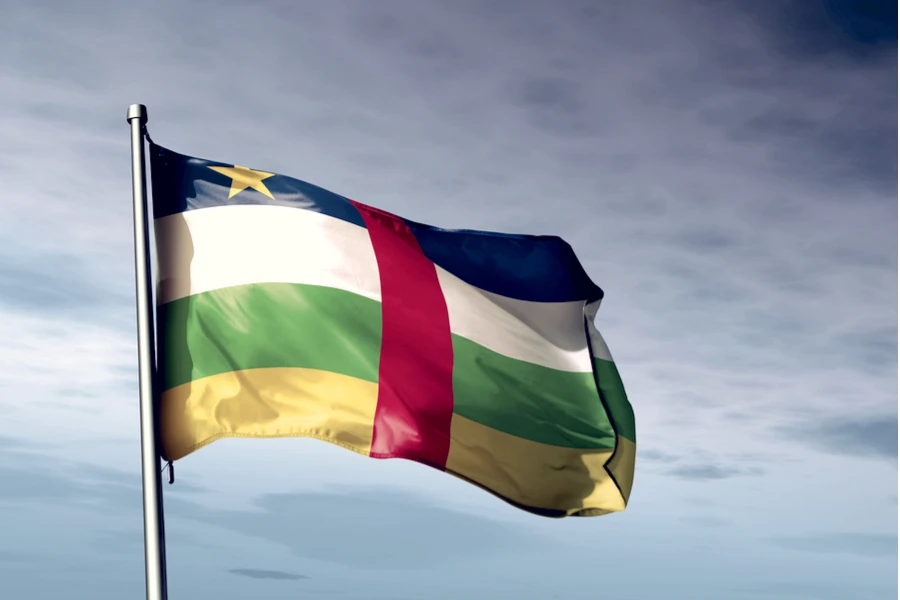
Bangui, Central African Republic, Feb 6, 2019 / 05:53 pm (CNA).- The Central African Republic government has signed a peace deal with more than a dozen armed groups this week.

The deal was announced by the African Union Saturday, according to Reuters, but details were not publicly released.

Several previous peace deals in the last five years have failed.

The latest deal, between government forces and 14 rebel groups, comes after two weeks of discussions. Both sides are hopeful that the deal will last, Reuters reported.  

The Central African Republic has suffered violence since December 2012, when several bands of mainly Muslim rebel groups formed an alliance, taking the name Seleka, and seized power.

In reaction to the Seleka’s attacks, some Central Africans formed self-defense groups called anti-balaka. Some of these groups, mainly composed of Christians, began attacking Muslims out of revenge, and the conflict took on a sectarian character.

Many Catholic churches in the country have offered refuge to Muslims and Christians alike fleeing violence, included churches in the Diocese of Bangassou, some 140 miles to the east of Alindao, where several Catholic institutions took in displaced Muslims facing violence at the hand of anti-balaka.

The country held a general election in 2015-16 which installed a new government, but militant groups continued to terrorize local populations. Thousands of people have been killed in the violence, and at least a million have been displaced. At least half of Central Africans depend on humanitarian aid, the U.N. reported last year.

The U.N. humanitarian chief for CAR, Najat Rochdi, has warned that the country will see a famine within a few years “if the situation is remaining the same and people are not going back to work their fields.”

The CAR bishops have repeatedly issued pleas for peace. They declared December 1 last year as a day of mourning and prayer for victims of violence. The day is normally celebrated as the anniversary of the nation’s establishment as a republic after French colonial rule.

[…]

No Picture
News Briefs

Ghanaian bishops condemn election-related violence

February 6, 2019 CNA Daily News 0

Accra, Ghana, Feb 6, 2019 / 04:10 pm (CNA).- The Catholic bishops of Ghana are condemning the actions of those involved in a violent incident during a Jan. 31 local election. According to local media reports, unidentified assailants injured eighteen people in a shooting near the capital city of Accra.

“We condemn in no uncertain terms the reported shootings and assaults perpetrated by some unidentified groups resulting in injuries,” the Ghana Catholic Bishops’ Conference wrote in a joint statement Feb. 1.

“Of particular concern is the reported use of vigilante groups to disturb the peace and quiet of the by-election.”

The bishops warned that “such manifestations of lawlessness and insecurity” are a threat to the country’s democracy, especially as the country prepares for a general election in 2020. They encouraged the police to conduct a thorough investigation of the incident and the country’s Election Commission to “liaise with the political parties to address all the challenges and fears of stakeholders in the conduct of peaceful elections.”

“Finally, we also call on all citizens to remain law-abiding and eschew all forms of violence,” the bishops concluded.

The by-election was being held to fill a parliamentary seat in the constituency of Ayawaso West Wuogon in the capital city. One of the candidates, Delali Kwasi Brempong, reportedly tried to withdraw from the race after the violent incident but the election went ahead anyway, according to the Graphic Online.

Brempong’s party, the National Democratic Congress, accused the New Patriotic Party of fomenting the violence “to discredit Ghana’s electoral system to the international community,” an accusation that the NPP’s communications director has denied.

Ghanaian president Nana Akufo-Addo congratulated the winner of the election, Lydia Seyram Alhassan, calling it a “free, fair, transparent and credible election.” Alhassan is a member of the president’s New Patriotic Party and was pitted against a candidate from the opposition National Democratic Congress.

“The isolated incident of violence, which occurred in the early stages of the election, was unfortunate and regrettable, and I condemn it in no uncertain terms,” Akufo-Addo said in a statement.

“A by-election should be a peaceful and happy event, no matter how competitive. The Police is committed to conducting a rapid inquiry into the matter, and I expect all persons who are found culpable, at the end of the process, to face the full rigours of the law.”

[…]

No Picture
News Briefs

Seek Christ and his humble love, Pope Francis exhorts Catholics in UAE

February 5, 2019 CNA Daily News 0

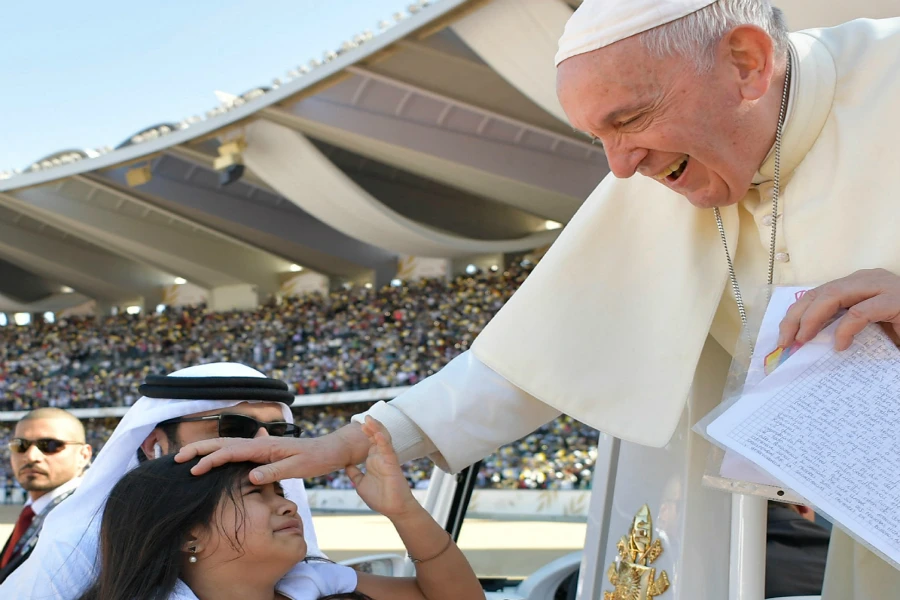
Abu Dhabi, United Arab Emirates, Feb 5, 2019 / 02:32 am (CNA).- Preaching on the Beatitudes during his visit to the United Arab Emirates on Tuesday, Pope Francis called on those present to seek communion with Christ before all else.

“Let us together ask here today for the grace of rediscovering the attraction of following Jesus, of imitating him, of not seeking anyone else but him and his humble love,” the pope said Feb. 5 during Mass at Zayed Sports City, a stadium in Abu Dhabi.

“For here is the meaning of our life: in communion with him and in our love for others,” he added.

Pope Francis is in the Emirati capital Feb. 3-5 to promote interreligious dialogue and to give support to the country’s Christian minority. During his visit he also attended an interreligious meeting and met privately with the Muslim Council of Elders.

Christ pronounced the Beatitudes to “fix in our hearts,” the pope said, the “essential message” that “if you are with Jesus, if you love to listen to his word as the disciples of that time did, if you try to live out this word every day, then you are blessed.”

“The Christian life, first and foremost, is not … simply a list of external prescriptions to fulfil or a set of teachings to know,” but “rather, it is the knowledge that, in Jesus, we are the Father’s beloved children.”

“The Christian life means living out the joy of this blessedness, wanting to live life as a love story, the story of God’s faithful love, he who never abandons us and wishes to be in communion with us always,” Francis stated. “This is the reason for our joy, a joy that no one in the world and no circumstance in our lives can take from us. It is a joy that gives peace also in the midst of pain, a joy that already makes us participate in that eternal happiness which awaits us.”

The Beatitudes are “an overturning of that popular thinking, according to which it is the rich and the powerful who are blessed, those who are successful and acclaimed by the crowds,” he said.

“Let us look at how Jesus lived: poor in respect to things, but wealthy in love; he healed so many lives, but did not spare his own. He came to serve and not to be served; he taught us that greatness is not found in having but rather in giving. Just and meek, he did not offer resistance, but allowed himself to be condemned unjustly. In this way Jesus brought God’s love into the world. Only in this way did he defeat death, sin, fear and even worldliness: only by the power of divine love.”

Pope Francis thanked the Catholics living in the UAE for “the way in which you live the Gospel we heard.”

He added that following Christ doesn’t mean “always being cheerful,” saying that one “who is afflicted, who suffers injustice, who does everything he can to be a peacemaker, knows what it means to suffer.”

Many of the Catholics in Abu Dhabi are guest workers from Africa, Bangladesh, India, Pakistan, and the Philippines, though some are local Arabs.

The pope noted that many of the UAE’s Catholics “live far from home, missing the affection of your loved ones, and perhaps also feeling uncertainty about the future.”

“The Lord is faithful and does not abandon his people,” Pope Francis said. He recalled the life of St. Anthony the Great, who was accompanied by Christ amid his torments, saying: “The Lord is close. It can happen that, when faced with fresh sorrow or a difficult period, we think we are alone, even after all the time we have spent with the Lord. But in those moments, where he might not intervene immediately, he walks at our side. And if we continue to go forward, he will open up a new way for us; for the Lord specializes in doing new things; he can even open paths in the desert.”

Living the Beatitudes does not require “great works”, Pope Francis said, but “the imitation of Jesus in our everyday life.”

The Beatitudes “invite us to keep our hearts pure, to practice meekness and justice despite everything, to be merciful to all, to live affliction in union with God,” and they are “for those who face up to the challenges and trials of each day.”

“Those who live out the Beatitudes according to Jesus are able to cleanse the world. They are like a tree that even in the wasteland absorbs polluted air each day and gives back oxygen. It is my hope that you will be like this, rooted in Jesus and ready to do good to those around you. May your communities be oases of peace.”

The pope singled out two of the Beatitudes: Blessed are the meek, and Blessed are the peacemakers.

Concerning meekness, he said: “Those who attack or overpower others are not blessed, but rather those that uphold Jesus’ way of acting, he who saved us, and who was meek even towards his accusers.”

The pope quoted from St. Francis of Assisi’s Earlier Rule regarding approaches to “Saracens and non-Christians”: “Let them not get into arguments or disagreements, but be subject to every human creature out of love for God, and let them profess that they are Christians”.

“Neither arguments nor disagreements,” the pope stressed. “At that time, as many people were setting out, heavily armed, Saint Francis pointed out that Christians set out armed only with their humble faith and concrete love. Meekness is important.”

Turning to “Blessed are the peacemakers”, Pope Francis said that a Christian “promotes peace, starting with the community where he or she lives.”

“I ask for you the grace to preserve peace, unity, to take care of each other, with that beautiful fraternity in which there are no first or second class Christians,” he told the Catholics living in the UAE.

Pope Francis concluded: “May Jesus, who calls you blessed, give you the grace to go forward without becoming discouraged, abounding in love ‘to one another and to all’.”

At the conclusion of Mass, Pope Francis was addressed by Bishop Paul Hinder, Vicar Apostolic of Southern Arabia, who thanked him for his visit.

Bishop Hinder said that the pope had “come to a Muslim country with the intention to do as Saint Francis did in the year 1219,” when he met in “mutual respect” with Al-Kamil, Sultan of Egypt.

“We Christians try to implement the order Saint Francis gave at his time to his brothers and to ‘live spiritually among the Muslims … not to engage in arguments and (simply) to acknowledge that (we) are Christians.’”

The bishop also thanked the Emirati authorities, especially Mohammed bin Zayed Al Nahyan, “who generously have made possible this visit and given us this space in order to have a public Mass with as many faithful as possible.”

[…]

No Picture
News Briefs

Pope Francis signs peace declaration on ‘Human Fraternity’ with Grand Imam

February 4, 2019 CNA Daily News 12

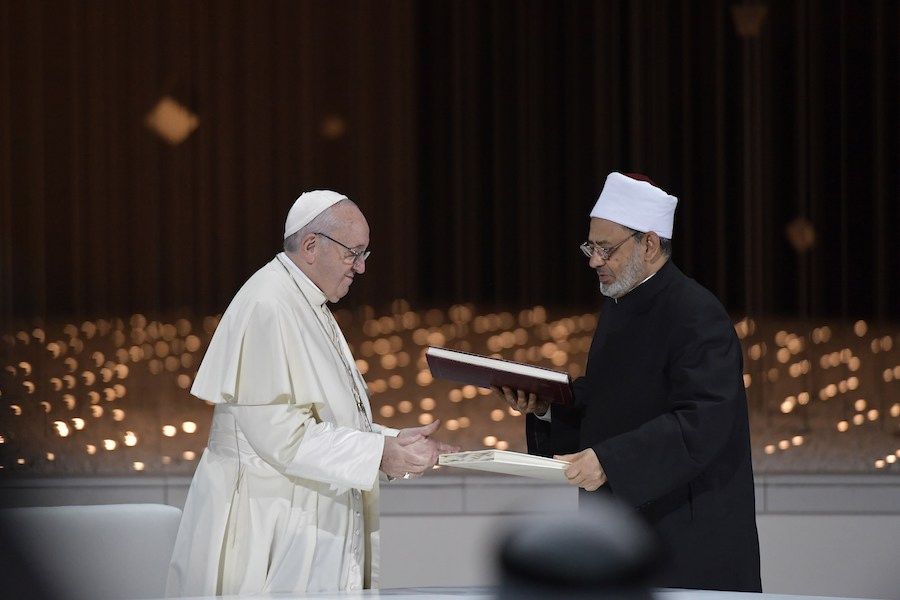
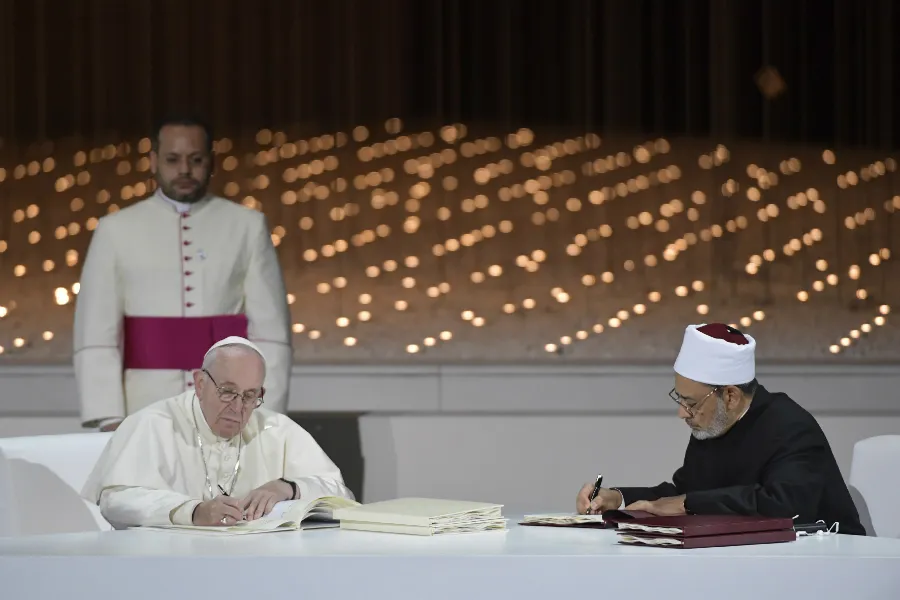
Abu Dhabi, United Arab Emirates, Feb 4, 2019 / 05:08 pm (CNA).- Catholics, Muslims and all who believe in God must work together to build a culture of love, peace and human fraternity, Pope Francis said in a joint statement he signed with Ahmed el-Tayeb, Grand Imam of al-Azhar, during an interreligious meeting in Abu Dhabi.

The document, entitled “A Document on Human Fraternity for World Peace and Living Together,” invited “all persons who have faith in God and faith in human fraternity to unite and work together so that it may serve as a guide for future generations to advance a culture of mutual respect in the awareness of the great divine grace that makes all human beings brothers and sisters.”

The signing took place Feb. 4 during Pope Francis’ visit to Abu Dhabi, capital of the United Arab Emirates, a trip intended to promote interreligious dialogue and give support to the country’s Christian minority. Francis is the first Pope ever to visit the Arabian peninsula.

The document discussed the importance of religion in building a peaceful and free society and the challenges of an increasingly secular world. It condemned all practices and policies detrimental to human life and freedom.

Within a paragraph about human freedom, the document states that religious plurality is willed by God. “The pluralism and the diversity of religions, colour, sex, race and language are willed by God in His wisdom, through which He created human beings,” the document states. “This divine wisdom is the source from which the right to freedom of belief and the freedom to be different derives. Therefore, the fact that people are forced to adhere to a certain religion or culture must be rejected, as too the imposition of a cultural way of life that others do not accept.”

The Catholic Church holds that Catholicism is the one true religion.

This statement must be read in the proper context and perspective, said Dr. Chad Pecknold, associate professor of systematic theology at The Catholic University of America in Washington, D.C.

“In sensitive inter-religious contexts, it is fitting for the Holy See to acknowledge that despite serious theological disagreements, Catholics and Muslims have much in common, such as a common belief that human beings are ‘willed by God in his wisdom,’” Pecknold told CNA.  

“The idea that God wills the diversity of color, sex, race and language is easily understood, but some may find it puzzling to hear the Vicar of Christ talk about God willing the diversity of religions,” he noted. “It is puzzling, and potentially problematic, but in the context of the document, the Holy Father is clearly referring not to the evil of many false religions, but positively refers to the diversity of religions only in the sense that they are evidence of our natural desire to know God.”

“God wills that all men come to know Him through the free choice of their will, and so it follows that a diversity of religions can be spoken about as permissively willed by God without denying the supernatural good of one true religion,” he added. In the Catechism of the Catholic Church, paragraph 841 speaks about the Church’s relationship with the Muslims: “The plan of salvation also includes those who acknowledge the Creator, in the first place amongst whom are the Muslims; these profess to hold the faith of Abraham, and together with us they adore the one, merciful God, mankind’s judge on the last day.”

Among other things, the document also condemned terrorism. It called for equal rights and access to education for women, called on believers to care for the poor and vulnerable, and called on world leaders “to work strenuously to spread the culture of tolerance and of living together in peace; to intervene at the earliest opportunity to stop the shedding of innocent blood and bring an end to wars, conflicts, environmental decay and the moral and cultural decline that the world is presently experiencing.”

As Grand Imam of al-Azhar, Tayeb holds one of the most prominent titles in Sunni Islam, and is head of the the al-Azhar Mosque and al-Azhar University in Egypt.

Tayeb is considered a tolerant and moderate Muslim leader, and has rejected connections to the Muslim Brotherhood and condemned ISIS. He also allowed a woman to remain at al-Azhar University after she was facing expulsion for allegedly hugging a male student. However, he has also said he believes that apostasy from Islam is punishable by death.

In the interreligious meeting, Pope Francis said that people of different religions must work to build the future together “or there will not be a future.”

“The time has come when religions should more actively exert themselves, with courage and audacity, and without pretense, to help the human family deepen the capacity for reconciliation, the vision of hope and the concrete paths of peace,” he said.


[…]

No Picture
News Briefs

Evangelizing Arabia: Parish life in Abu Dhabi

February 4, 2019 CNA Daily News 0

Abu Dhabi, United Arab Emirates, Feb 4, 2019 / 11:14 am (CNA/EWTN News).- On Tuesday, Pope Francis will visit St. Joseph’s Cathedral in Abu Dhabi — one of two total Catholic churches for the Arabian city with a population of 1.42 million.

While… […]

No Picture
News Briefs

Justice and peace are inseparable, Pope Francis says in UAE

February 4, 2019 CNA Daily News 1

Abu Dhabi, United Arab Emirates, Feb 4, 2019 / 10:35 am (CNA/EWTN News).- In an interreligious meeting in Abu Dhabi Monday, Pope Francis said that for peace to flourish among religions, there must be justice, and respect for human dignity and freedom.

“Justice is the second wing of peace. No one, therefore, can believe in God and not seek to live in justice with everyone, according to the Golden Rule,” the pope said Feb. 4. “So whatever you wish that men would do to you, do so to them; for this is the law and the prophets.”

“Peace and justice are inseparable!”

Speaking at Abu Dhabi’s “Founder’s Monument,” which commemorates the founder and first president of the United Arab Emirates, Zayed bin Sultan Al Nahyan, the pope emphasized that is the task of religions to promote human dignity, particularly for the least and the poor.

Religions “should keep watch as sentinels of fraternity in the night of conflict. They should be vigilant warnings to humanity not to close our eyes in the face of injustice and never to resign ourselves to the many tragedies in the world,” he said.

This “human fraternity” also comes with the duty of rejecting and condemning war, he stated, noting its “miserable crudeness” and “fateful consequences.”

“I am thinking in particular of Yemen, Syria, Iraq and Libya,” he said. “Together, as brothers and sisters in the one human family willed by God, let us commit ourselves against the logic of armed power … let us oppose all this with the sweet power of prayer and daily commitment to dialogue.”

Pope Francis, the first pope to visit the Arabian peninsula, is in Abu Dhabi, capital of the UAE, Feb. 3-5 to promote interreligious dialogue and give support to the country’s Christian minority.

Before the interreligious meeting, he met for around 30 minutes with the Muslim Council of Elders. He then visited the city’s Grand Mosque with the Grand Imam of al-Azhar, Ahmed el-Tayeb, before paying his respects at Zayed’s tomb.

At the interreligious meeting, the pope praised last November’s meeting, the first, of the Forum of the Interreligious Alliance for Safer Communities, which was on the theme of child dignity in the digital world.

“I thank, therefore, all the leaders who are engaged in this field,” he said, “and I assure them of my support, solidarity and participation and that of the Catholic Church, in this very important cause of the protection of minors in all its forms.”

Reflecting on interreligious dialogue, he said the point of departure is recognizing God as the origin of “one human family,” that “He who is the Creator of all things and of all persons wants us to live as brothers and sisters, dwelling in the common home of creation which he has given us.”

Francis pointed out that to honor the creator requires valuing the sacredness of each human life, “equally precious in the eyes of God.”

“Thus, to recognize the same rights for every human being is to glorify the name of God on earth. In the name of God the Creator, therefore, every form of violence must be condemned without hesitation, because we gravely profane God’s name when we use it to justify hatred and violence against a brother or sister,” he said.

An important part of effective dialogue and human fraternity is prayer, he said. It “purifies the heart from turning in on itself. Prayer of the heart restores fraternity.”

Quoting The Brothers Karamazov, by Fyodor Dostoevsky, he said: “May our prayer – each one according to his or her own tradition – adhere fully to the will of God, who wants all men and women to recognize they are brothers and sisters and live as such, forming the great human family in the harmony of diversity.”

“There is no alternative: we will either build the future together or there will not be a future,” he continued. “The time has come when religions should more actively exert themselves, with courage and audacity, and without pretense, to help the human family deepen the capacity for reconciliation, the vision of hope and the concrete paths of peace.”

During the meeting, Pope Francis and Tayeb signed a joint declaration “on human fraternity for world peace and living together,” asking that the document “become the object of research and reflection in all schools, universities and institutes of formation.”

The four-and-a-half-page declaration condemned issues such as the taking of innocent human life, terrorism, world hunger, materialism, and a lack of equitable distribution of natural resources.

It also stated that the family is “the fundamental nucleus of society and humanity,” and noted that to attack, to regard with contempt, or to doubt the importance of the institution of the family “is one of the most threatening evils of our era.”

“In conclusion, our aspiration is that … this Declaration may be a sign of the closeness between East and West, between North and South, and between all who believe that God has created us to understand one another, cooperate with one another and live as brothers and sisters who love one another,” it stated.

[…]