No Picture
News Briefs

French police make second arrest in Nice attack

October 30, 2020 CNA Daily News 2

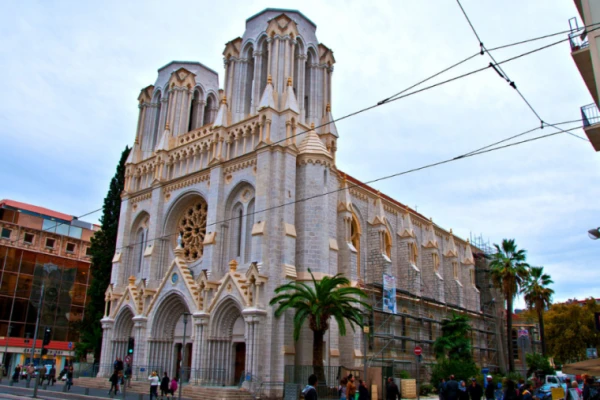
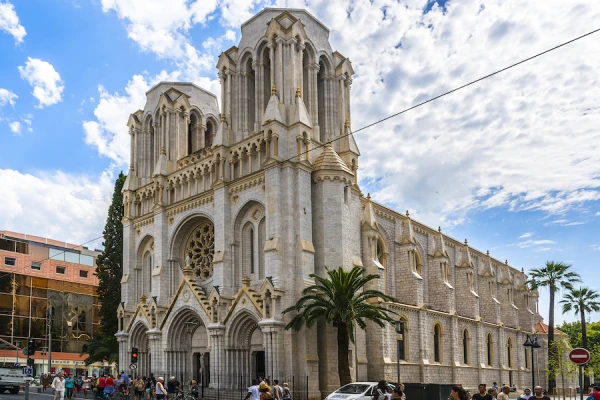
CNA Staff, Oct 30, 2020 / 03:01 pm (CNA).- An unnamed French official told the New York Times on Friday that police have arrested a 47-year-old man in connection with a deadly terrorist attack inside Notre-Dame de Nice.

The attacker on Oct. 29 killed three people in the church, including a 44-year-old mother of three; a 60 year old woman who had come to the church to pray; and the church’s 55 year old sacristan.

The attacker used a knife to carry out the killings and reportedly shouted “Allahu Akbar” as he did so.

French police shot and arrested the perpetrator, who has been identified as Brahim Aouissaoui, 21. Aouissaoui reportedly arrived in Europe in late September, first at the Italian island Lampedusa before traveling to France.

The second man arrested is reportedly suspected of being in contact with the assailant, the New York Times reported Oct. 30.

The French bishops asked churches across the country to toll their bells Thursday in memory the three people killed.

The attack in Nice follows the beheading of Samuel Paty, a Paris school teacher, in an Islamist terror attack earlier this month. The attacker in that incident reportedly was angered that Paty had shown cartoons of Muhammad during his classes.

Other attacks took place in France Oct. 29. In Montfavet, near Avignon, a man waving a handgun made threats and was killed by the police two hours after the Nice attack. Radio station Europe 1 said the man was also shouting “Allahu Akbar.”

Reuters also reported a knife attack on a guard at the French consulate in Jeddah, Saudi Arabia.

Mohammed Moussaoui, president of French Council of Muslim Faith, condemned the terrorist attack and asked French Muslims to cancel their festivities for Mawlid, the Oct. 29 celebration of Muhammad’s birthday, “as a sign of mourning and solidarity with the victims and their loved ones.”

Cardinal Robert Sarah, prefect of the Congregation for Divine Worship, responded to the news of the attack on the basilica, writing on Twitter: “Islamism is a monstrous fanaticism which must be fought with force and determination … Unfortunately, we Africans know this too well. The barbarians are always the enemies of peace. The West, today France, must understand this.”


[…]

No Picture
News Briefs

Irish bishops petition government to lift ban on religious gatherings

October 30, 2020 CNA Daily News 0

Rome Newsroom, Oct 30, 2020 / 12:01 pm (CNA).- Irish bishops met with the prime minister this week to petition the government to lift the current coronavirus restrictions on public worship as soon as possible.

“We have been doing everything possible to keep our church buildings safe, and there is no evidence that the church buildings and church worship have actually been a source of contagion or spreading the infection, so I have to say that I was disappointed and I said that to the Taoiseach,” Archbishop Eamon Martin of Armagh said in a radio interview Oct. 30, after the meeting.

Public worship has been suspended in the Republic of Ireland since Oct. 7 due to an Irish government decree that placed the entire country under “Level 3” restrictions as a result of an increase in coronavirus cases. It is the second time that public Masses in Ireland have been suspended this year.

Archbishop Martin, Archbishop Diarmuid Martin of Dublin, Archbishop Michael Neary of Tuam, Archbishop Kieran O’Reilly of Cashel and Emly, and Bishop Dermot Farrell of Ossory met with Taoiseach Micheál Martin Oct. 28 to express their “great desire to return to worship as soon as possible.”

“The Archbishops emphasised that they are fully supportive of the Public Health messages but highlighted that the coming together in prayer and worship, especially for Mass and the Sacraments, is fundamental to Christian tradition and a source of nourishment for the life and well-being of whole communities,” according to a statement from the Irish bishops’ conference.

In the meeting, the bishops also stressed the “mammoth effort that has been made by priests and volunteers at parish level to ensure that gatherings in Church are as safe as possible,” as well as the “importance of gathering for worship as a source of consolation and hope at Christmas time.”

“We were hopeful when we left,” Martin said in an interview with LMFM Radio Oct. 30. “I’m hopeful that the Taoiseach will now bring our message to the cabinet … and the further health authorities.”

The Irish government has yet to announce any changes to the coronavirus restrictions, which are currently at “Level 5”.

Bishops in France also met with their prime minister on the eve of France’s second lockdown to discuss security measures regarding the coronavirus as well as the attack on Notre-Dame de Nice.

Archbishop Éric de Moulins-Beaufort of Rhiems, president of the French bishops’ conference, and Archbishop Michel Aupetit of Paris met with Prime Minister Jean Castex in Paris Oct. 29.

Arcbhishop Moulins-Beaufort had written to French President Emmanuel Macron earlier this week requesting that public worship be allowed to continue during France’s lockdown and that Catholics would be allowed to visit cemeteries for All Souls’ Day.

The bishop also requested that the French government allow Catholic chaplaincies in hospitals, nursing homes, and prisons to continue to take place during the lockdown.

Other French bishops spoke out on social media. Bishop Marc Aillet of Bayonne wrote on Twitter Oct. 28: “It seems to me that freedom of worship is at stake, especially since schools remain open.”

<blockquote class=”twitter-tweet”><p lang=”fr” dir=”ltr”>Le Président n’a rien dit sur les lieux de culte, mais Mgr de Moulins Beaufort lui a écrit hier pour lui demander qu’en cas de confinement, les célébrations cultuelles demeurent. Il en va, me semble-t-il, de la liberté de culte, d’autant que les écoles restent ouvertes.</p>&mdash; Mgr Marc Aillet (@MgrMAillet) <a href=”https://twitter.com/MgrMAillet/status/1321573765797584896?ref_src=twsrc%5Etfw”>October 28, 2020</a></blockquote> <script async src=”https://platform.twitter.com/widgets.js” charset=”utf-8″></script>

France’s lockdown went into effect Oct. 30 and will last until at least Dec. 1. Under the current restrictions, people are not permitted to go 1 kilometer beyond their homes, except for essential work or medical reasons. All non-essential businesses, including restaurants, are closed, but schools will remain open.

La Croix has reported that the French Minister of the Interior Gérald Darmanin specified in a video conference with religious leaders Oct. 28 that churches will be allowed to remain open, however all religious ceremonies throughout the country, including public Masses, weddings, and funerals will be suspended from Nov. 2 until at least Dec. 1.

The French bishops’ conference and local dioceses have not made any official announcements, except to clarify that All Saints’ Day Masses will be allowed to take place.

Europe is currently experiencing a second wave of coronavirus cases which has led Italy and Spain to impose curfews and Germany to close all bars and restaurants for one month.

More than 1 million people have tested positive for COVID-19 in France, where 35,823 people have died after contracting the coronavirus, according to the John Hopkins Coronavirus Resource Center.

Following the Oct. 29 terrorist attack at Notre-Dame de Nice, a spokesperson for the French Bishops’ Conference, Vincent Neymon, argued for the importance of France’s churches to remain open for Christians.

“To close the churches would be to bend one’s knee in the face of this threat which seeks to sow anxiety among our compatriots,” Neymon said in a radio interview with RTL.


[…]

No Picture
News Briefs

Controversy continues over Scotland’s hate crime bill

October 29, 2020 CNA Daily News 2

CNA Staff, Oct 29, 2020 / 03:01 pm (CNA).- Amid a contentious debate in Scotland over a proposed hate crimes law, which the Catholic bishops of the country oppose, a cabinet minister this week suggested that the law could apply to speech uttered within a private dwelling if the speaker intends to stir up hatred.

The Scottish government introduced the Hate Crime and Public Order (Scotland) Bill April 23 in response to an independent review of hate crime laws led by Alastair Campbell, Lord Bracadale, a retired judge. The government argues the bill modernizes, consolidates, and extends existing hate crime legislation. It also abolishes the offence of blasphemy.

The proposed legislation creates a new crime of stirring up hatred against any of the protected groups covered by the bill, which include race, religion, sexual orientation, and transgender identity.

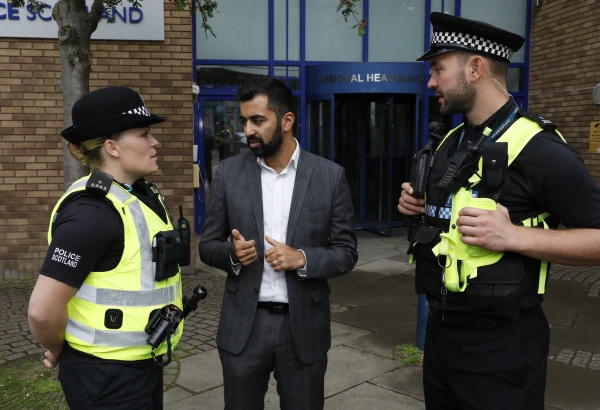
During an Oct. 27 hearing, a Scottish parliament member questioned Justice Secretary Humza Yousaf about whether the bill might include a defense for speech uttered in the privacy of one’s home, a so-called “dwelling defense.”

“My concern with the dwelling defense…as a parliament, [and] even as a society, are we comfortable with giving a defense in law to somebody whose behavior is threatening or abusive— as an example, that is intentionally stirring up hatred against Muslims— are we saying that that is justified because it is in the home?” Yousaf replied. 

“Are we saying that as a society we are comfortable with no criminal sanctions being applied to people because that has been done in the confines of their dwelling? Whereas if they stepped out into the street outside of the house, then that would be a criminal offense? I’m just not convinced as a point of policy or principle that it is one that I agree with, but I will continue to keep an open mind.”

Conservative MSP Adam Tompkins subsequently questioned Yousaf on how you can commit an “offence of public order” in private, to which Yousaf replied that if the intent to stir up hatred is present in a private dwelling, then that could deserve criminal sanction.

Bishop Joseph Toal of Motherwell wrote in a letter earlier this month that “we can only truly respect other people’s point of view if we first allow them to express it.”

“In the hope that we will remain a country, where constructive dialogue flourishes, the Catholic Church will continue to argue for further change to this legislation to include; more equitable and robust freedom of expression provisions; greater clarity around the definitions of ‘hatred’, ‘abusive’ and ‘insulting’ which remain precariously vague and urge consideration be given to appropriate defenses which reflect the change to intent only,” Toal wrote Oct. 13.

The bill has proven controversial with the Scottish public. In the 12 week consultation period after the bill’s introduction, members of the public made nearly 2,000 submissions to the Scottish Parliament.

On Sept. 23, Yousaf told the Scottish Parliament that the bill would now only cover offences where the stirring up of hatred is intentional, the BBC reported.

The bill originally provided for penalties for “stirring up hatred” “with the intention” of doing so, or “where it is a likely consequence that hatred will be stirred up against such a group.”

In a statement issued July 29, the Catholic bishops of Scotland argued that the bill could lead to censorship of Catholic teaching.

The Scottish bishops stated that the bill “creates an offense of possessing inflammatory material which, if taken with the low threshold contained therein, could render material such as the Bible, the Catechism of the Catholic Church and other texts such as Bishops’ Conference of Scotland submissions to government consultations, as being inflammatory under the new provision.”

The bishops also noted that pronouncements of Catholic teaching on sex and gender “might be perceived by others as an abuse of their own, personal worldview and likely to stir up hatred.”

In their submission, the bishops said they had no objection to the proposal to abolish the common law of blasphemy, which has not been prosecuted in Scotland for more than 175 years. But the bishops said they were concerned the bill could feed “cancel culture.”

“The growth of what some describe as the ‘cancel culture’— hunting down those who disagree with prominent orthodoxies with the intention to expunge the non-compliant from public discourse and with callous disregard for their livelihoods— is deeply concerning,” they wrote.

The original text of the bill includes a provision meant to protect religious freedom of expression, stating that “behaviour or material is not to be taken to be threatening or abusive solely on the basis that it involves or includes…discussion or criticism of…religion, whether religions generally or a particular religion…religious beliefs or practices…proselytising, or…urging of persons to cease practising their religions.”

Yousaf also stated during the Oct. 27 hearing that he would be open to including freedom of speech protections to cover all of the protected categories in the bill; currently it only includes protections for certain statements about religion and about sexual orientation.

The Parliament’s Justice Committee is reviewing the 2,000 public comments received and is currently hearing testimony. The committee will aim to complete its Stage 1 report by Dec. 18, though the date could be pushed back, the BBC reported.

Scotland has experienced significant sectarian division since the Scottish Reformation of the 16th century, which led to the formation of the Church of Scotland, an ecclesial community in the Calvinist and Presbyterian tradition which is the country’s largest religious community.

Sectarianism and crimes motivated by anti-Catholicism have been on the rise in Scotland in recent years, and Catholics in Scotland are increasingly concerned that the government could consider their faith “hate speech,” according to local reports.


[…]

No Picture
News Briefs

Italian cardinal tests positive for COVID-19

October 29, 2020 CNA Daily News 1

Rome Newsroom, Oct 29, 2020 / 02:00 pm (CNA).- Cardinal Gualtiero Bassetti, the president of the Italian bishops’ conference, has tested positive for COVID-19.

Bassetti, the archbishop of Perugia-Città della Pieve, is 78 years old. His co… […]

No Picture
News Briefs

Nice basilica terrorist attack: Who were the victims?

October 29, 2020 CNA Daily News 1

Rome Newsroom, Oct 29, 2020 / 12:02 pm (CNA).- This story is developing and will be updated:

Bells tolled in Catholic parishes across France in memory of the three people killed in a knife attack at the Basilica of Notre-Dame in Nice Thursday morning.

This is what is known so far about the victims:

Vincent L., sacristan:

One of the victims has been identified as the sacristan of Notre-Dame Basilica in Nice, Vincent L., who was 55 years old and a father of two daughters. He had served the basilica as sacristan for 10 years.

Catholics in Nice remembered Vincent for his dedicated service to the Church. Fr. Jean-Louis Giordan, the former rector of the basilica, told Vatican News that he first hired Vincent as sacristan of the basilica a decade ago.

A person familiar with the basilica told the French daily Le Parisien: “He’s not just a sacristan. He helped a lot the priest who was old. … He was the handyman. The candles were always well lit … He was very discreet and very efficient. He didn’t speak much. He acted with great humility and respect. He is the first person we thought of when we learned of the attack,”

“He was an ordinary man, in the good sense of the word: nice, open,” Fr. Gil Florini, parish priest of Saint-Pierre-d’Arène-de-Nice church, told Le Figaro.


«Une personne dévouée et appréciée de tous»
➡ Chargé de l’accueil des fidèles, Vincent, 55 ans, est une des victimes de l’attentat de #Nice. Sous le choc, un paroissien décrit ce sacristain comme «un bon vivant» et «quelqu’un d’expansif et sympathique» https://t.co/Z7MhZ9CQzC pic.twitter.com/Luwu0kpHjq

— Le Parisien (@le_Parisien) October 29, 2020


An elderly woman who came to pray:

A woman described as elderly by French reports came to pray at the basilica on the morning of Oct. 28. Le Figaro reported that she was found dead with her throat cut, “nearly beheaded,” near the holy water font inside of the basilica.

A mother:

A third victim, whom French media have identified as a mother in her 40s, was attacked inside the church and is said to have taken refuge in a nearby cafe, where she died from stab wounds. According to the French television news channel BFMTV, a witness heard her say, “Tell my family that I love them,” as she died.


In addition to those killed in the attack, police report that others were injured in the basilica.

Police arrest perpetrator:

French police say they arrested the perpetrator, who has been identified as Brahim Aouissaoui, 21, who reportedly arrived from Tunisia at the Italian island of Lampedusa in late September. After spending some weeks in virus quarantine, Aouissaoui is reported to have arrived in France in early October. Aouissaoui is reported to have been taken to the hospital by police with a gunshot wound.


[…]