No Picture
News Briefs

PHOTOS: Scenes from the feast of saints Peter and Paul in Rome

July 2, 2022 Catholic News Agency 1
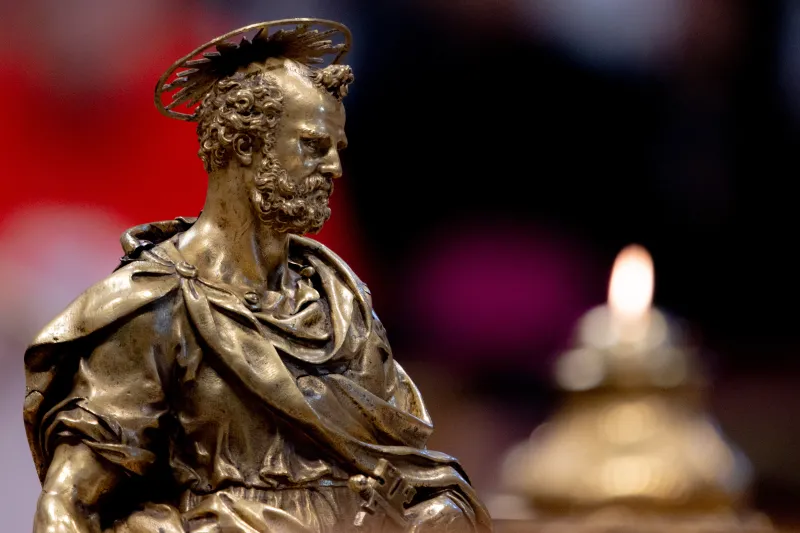
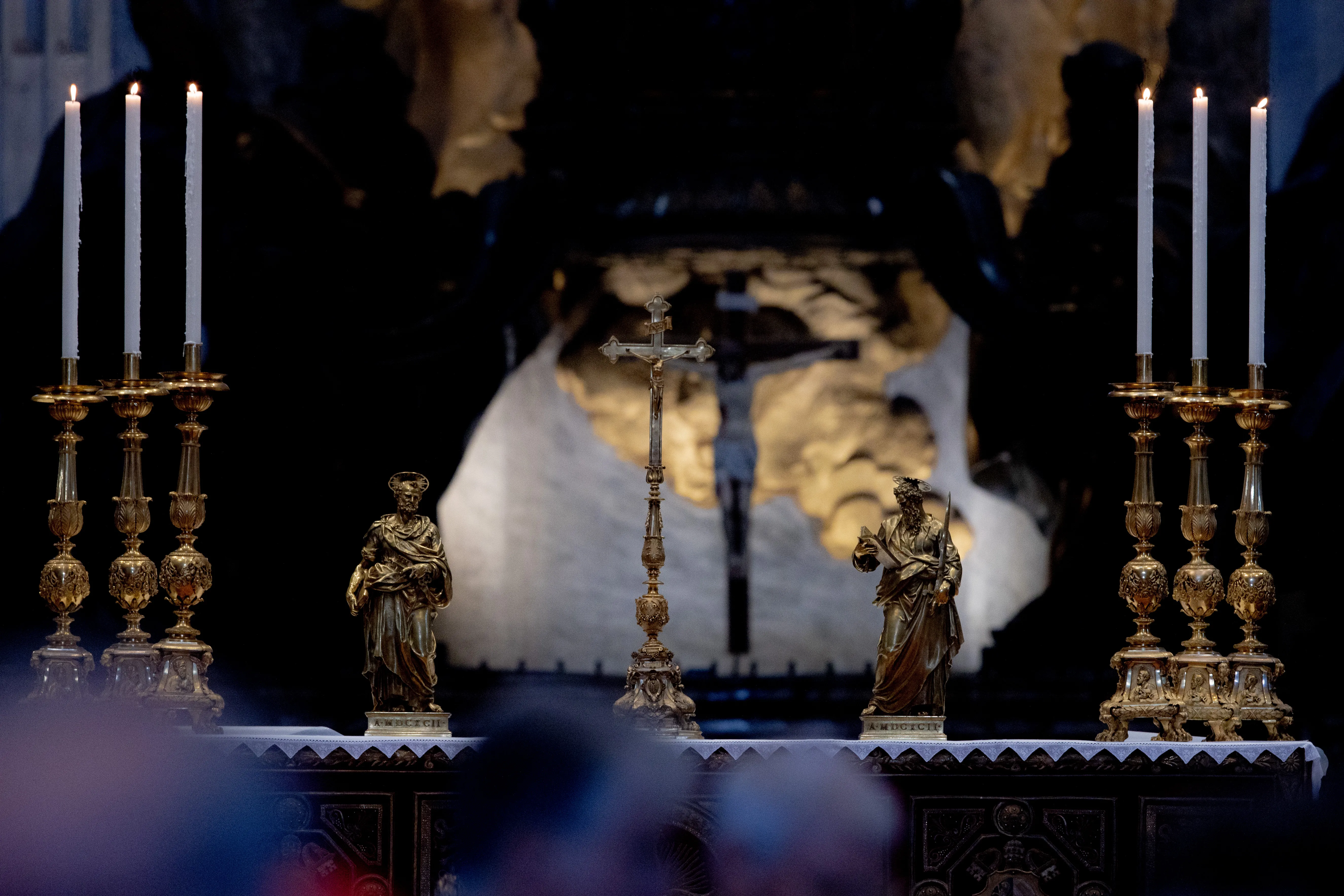
An image of St. Peter in St. Peter’s Basilica at the Vatican on June 29, 2022. / Daniel Ibañez/CNA
Vatican City, Jul 2, 2022 / 06:00 am (CNA).

The feast of Saint Peter and Saint Paul, whose official name is the joint Solemnity of Saints Peter and Paul, is the commemoration of the martyrdom in Rome of the apostles Simon Peter and Paul of Tarsus, celebrated on June 29.

As Pope Emeritus Benedict XVI recalled in 2012, “Christian tradition has always considered St. Peter and St. Paul as inseparable: together, in fact, they represent the whole Gospel of Christ… Although humanly very different from one another, and despite the fact that there was no lack of conflict in their relationship, they constituted a new way of being brothers, lived according to the Gospel, an authentic way made possible by the grace of the Gospel of Christ at work in them. Only the following of Jesus leads to the new fraternity.”

The feast of Saint Peter and Saint Paul, whose official name is the joint Solemnity of Saints Peter and  Paul, is the commemoration of the martyrdom in Rome of the apostles Simon Peter and Paul of Tarsus, celebrated on June 29. Daniel Ibañez/CNA
The feast of Saint Peter and Saint Paul, whose official name is the joint Solemnity of Saints Peter and Paul, is the commemoration of the martyrdom in Rome of the apostles Simon Peter and Paul of Tarsus, celebrated on June 29. Daniel Ibañez/CNA

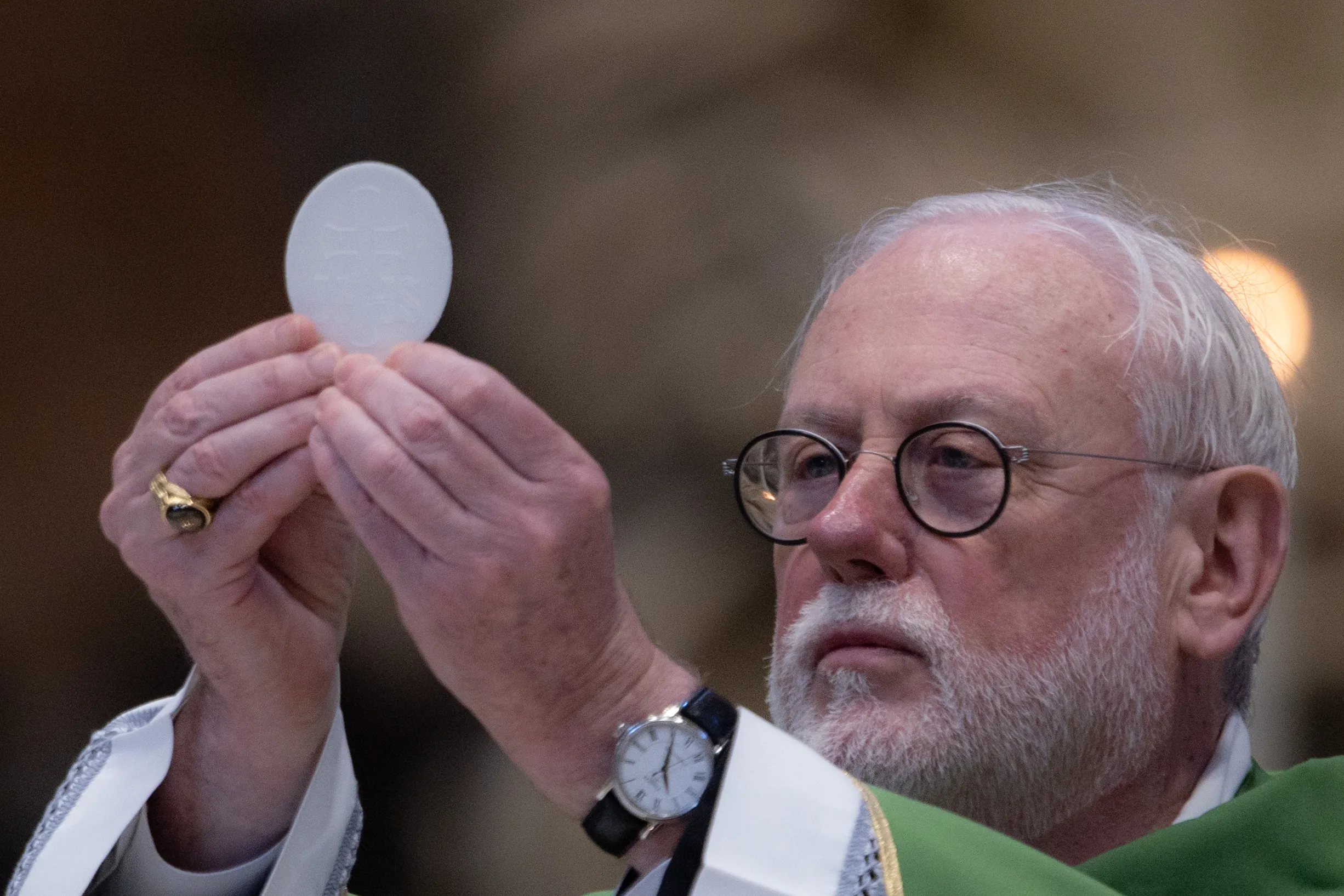
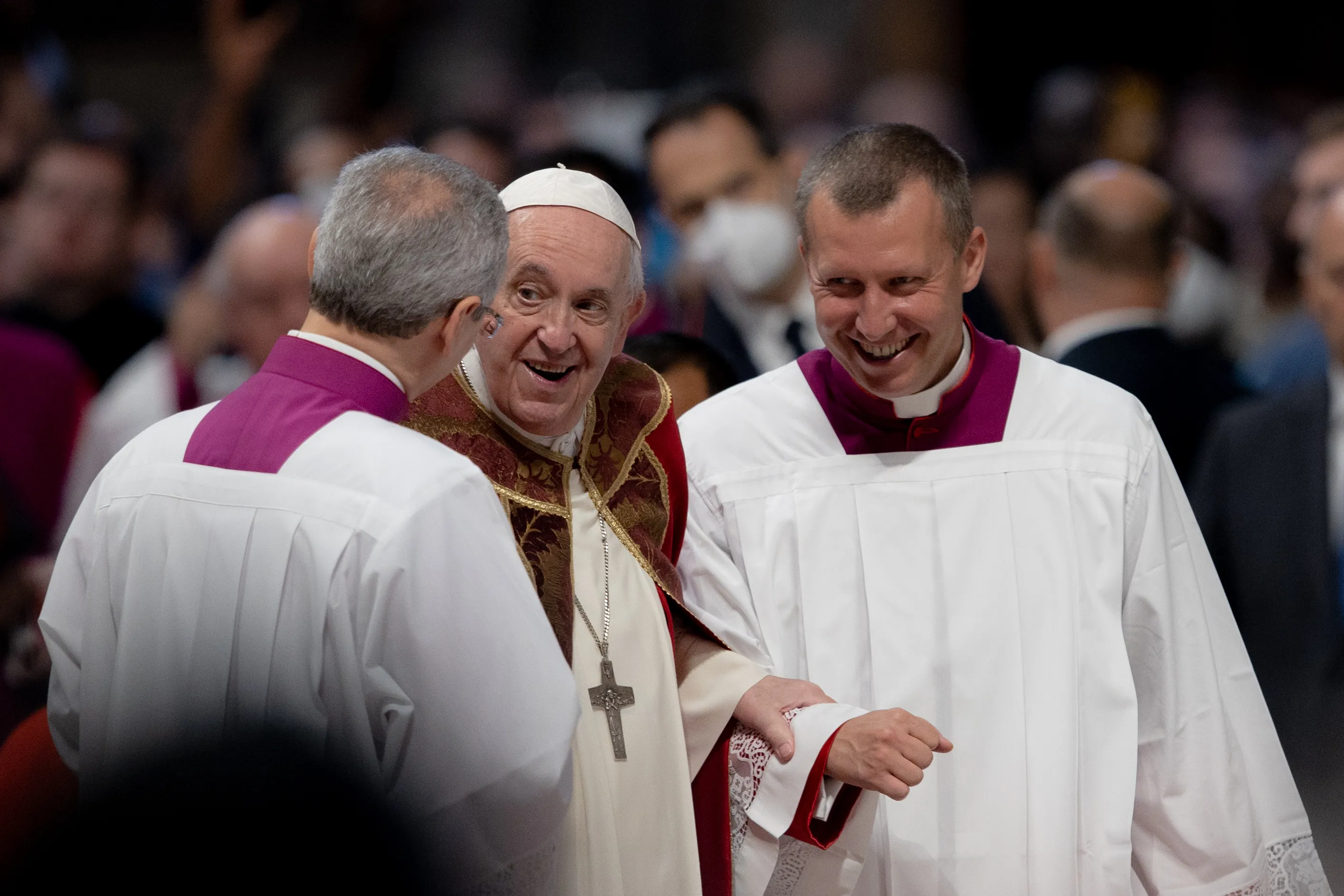
Pope Francis participated in the Mass for the Solemnity of St. Peter and St. Paul, patron saints of Rome, in St. Peter's Basilica at the Vatican. He presided over the opening rites of the Mass and gave the homily on June 29, 2022. Daniel Ibañez/CNA
Pope Francis participated in the Mass for the Solemnity of St. Peter and St. Paul, patron saints of Rome, in St. Peter’s Basilica at the Vatican. He presided over the opening rites of the Mass and gave the homily on June 29, 2022. Daniel Ibañez/CNA
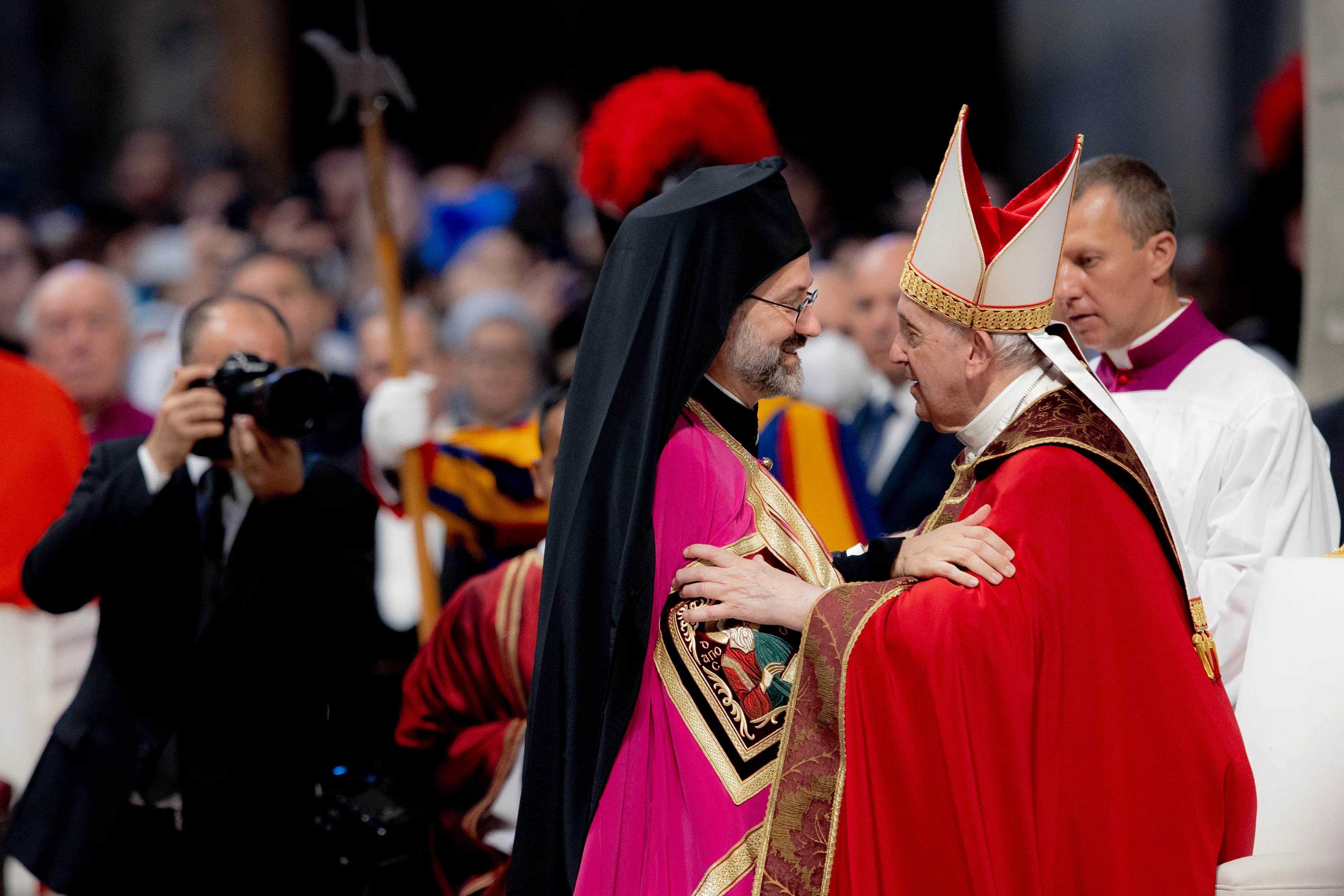
The ceremony on June 29, 2022, was attended by members of the Delegation of the Ecumenical Patriarchate of Constantinople and Pope Francis also blessed the pallia for the metropolitan archbishops appointed in the last year. Daniel Ibañez/CNA
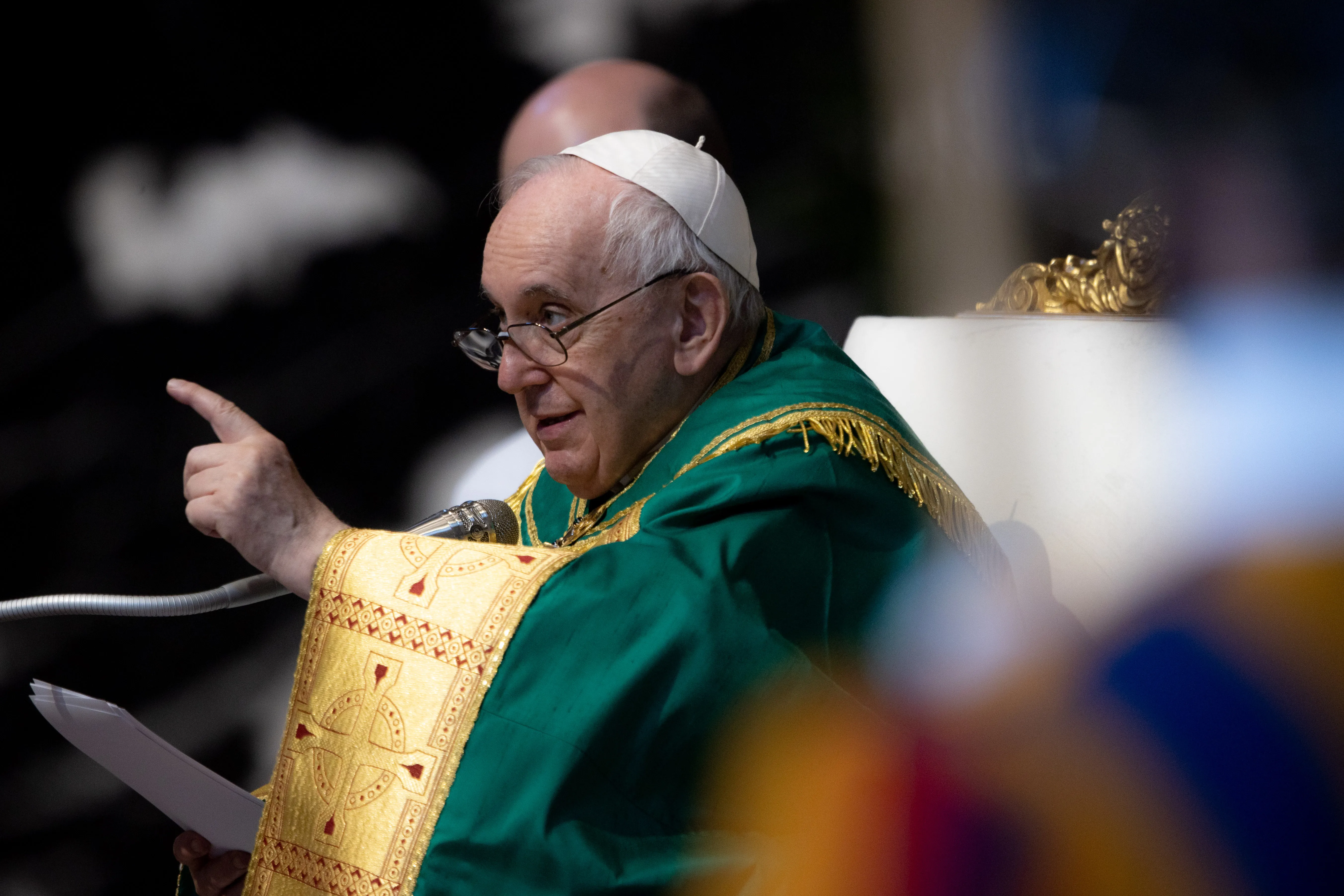
During the homily on June 29, 2022, the Pope encourage the faithful to set out beyond our inner resistance and made an invitation to stand up as a synodal Church. Pope Francis used the witness of Peter and Paul to reiterate his idea of an outgoing, moving, missionary Church. Not to fall, the Pope says, "into formalism and habit." Remembering that the proclamation of the Gospel is not neutral and does not bend to the logic of the world. Daniel Ibañez/CNA
During the homily on June 29, 2022, the Pope encourage the faithful to set out beyond our inner resistance and made an invitation to stand up as a synodal Church. Pope Francis used the witness of Peter and Paul to reiterate his idea of an outgoing, moving, missionary Church. Not to fall, the Pope says, “into formalism and habit.” Remembering that the proclamation of the Gospel is not neutral and does not bend to the logic of the world. Daniel Ibañez/CNA
As is the tradition every year on the Solemnity of Saints Peter and Paul, Pope Francis blessed the pallia of the metropolitan archbishops he appointed during the past year. At the end of the Mass, he gave each archbishop present his pallium in a small box tied with a brown ribbon on June 29, 2022. Daniel Ibañez/CNA
Pallia are white woolen vestments adorned with six black silk crosses given to metropolitan archbishops. They symbolize the metropolitan’s authority and unity with the Successor of Peter. It is similar to a stole and is used as a scapular. The wool signifies the harshness of the rebuke to the rebels; the white color, the benevolence towards the humble and penitent. It has four crosses placed in front and behind, to the right and to the left, which means that the bishop must possess life, science, doctrine and power. It is also related to the four cardinal virtues, tinged with purple by faith in the Passion of Christ. June 29, 2022. Daniel Ibañez/CNA

[…]

No Picture
News Briefs

Pope Francis: ‘I believe it is time to rethink the concept of a just war’

July 1, 2022 Catholic News Agency 6
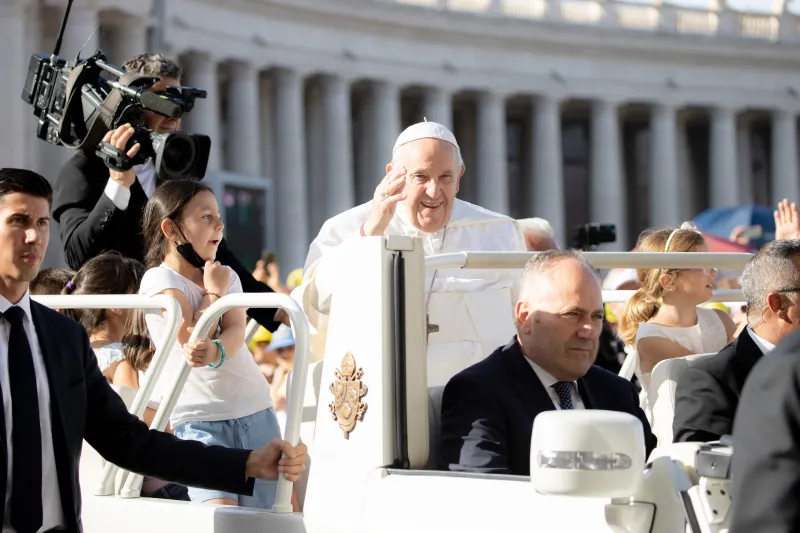
Pope Francis in St. Peter’s Square, June 25, 2022 / Daniel Ibanez/CNA

Vatican City, Jul 1, 2022 / 10:26 am (CNA).

In an interview published Friday, Pope Francis said that he believes it is time to rethink the concept of “just war.”

“I believe it is time to rethink the concept of a ‘just war.’ A war may be just, there is the right to defend oneself. But we need to rethink the way that the concept is used nowadays,” Pope Francis said.

“I have said that the use and possession of nuclear weapons are immoral. Resolving conflicts through war is saying no to verbal reasoning, to being constructive. … War is essentially a lack of dialogue.”

The pope spoke in an interview that was conducted on June 20 by Télam, Argentina’s national news agency. A 1-hour video of the interview was published on July 1. 

In response to a question about how the lack of dialogue is an aggravating factor in the current state of world affairs, the pope said that there is “an entire infrastructure of arms sales” that supports war today.

“A person who knew about statistics told me, I don’t remember the numbers well, that if weapons were not manufactured for a year, there would be no hunger in the world,” he said.

Pope Francis described how he cried during visits to war cemeteries in Europe, including the Redipuglia World War I memorial and Anzio World War II cemetery in Italy.

“And when the anniversary of the landing in Normandy was commemorated, I thought of the 30,000 boys who were left dead on the beach. They opened the boats and said, ‘get off, get off,’ they were ordered while the Nazis waited for them. Is that justified? Visiting military cemeteries in Europe helps one realize this,” he said.

The pope also said that the situation in Europe today shows that the United Nations “has no power” to stop a war.

“After World War II, trust was placed in the United Nations. It is not my intention to offend anybody, I know there are very good people working there, but at this point, the UN has no power to assert,” he said.

“It does help to avoid wars — and I am thinking of Cyprus, where there are Argentine troops. But to stop a war, to solve a conflict situation like the one we are living today in Europe, or like the ones lived in other parts of the world, it has no power.”

Church teaching on the morality of war is based on a theory expounded by St. Augustine in the 4th century known as just war theory and recognizes a potentially just reason to engage in war under certain conditions.

Theologians told CNA in 2019 that applying this theory to modern warfare, which often involves missile and air strikes rather than pitched battles between troops, is more complicated, yet normative.

The papal interview touched on a number of themes, including the Covid-19 pandemic, intergenerational dialogue, and climate change.

“You can rest assured that God always forgives, and we, men, forgive every now and then. But nature never forgives. It pays us back. If we use nature for our profit, it will bear down on us. A warmed-up world prevents the construction of a fraternal and just society,” the pope said.

When asked about the Catholic Church in Latin America, the pope said that it has a long history of being “close to the people.”

Pope Francis said: “In a way, this is the experience of the Latin American Church, although there have been attempts of ideologization, such as the use of Marxist concepts in the analysis of reality by Liberation Theology. That was an ideological exploitation …”

“There is a difference between the people and populisms,” he added.

[…]