The Dispatch

Pope Francis and Ukraine’s President Zelenskyy meet at Vatican
May 13, 2023 Catholic News Agency 9
Pope Francis met Ukraine’s President Volodymyr Zelenskyy at the Vatican on May 13, 2023, their first meeting since the start of the full-scale war with Russia. / Vatican Media.

Vatican City, May 13, 2023 / 09:52 am (CNA).

Pope Francis and the president of Ukraine, Volodymyr Zelenskyy, met at the Vatican on Saturday.

The May 13 encounter — their first since Russia initiated a full-scale war in Ukraine over 14 months ago — was around 40 minutes long.

The two met in a small office off of the Paul VI Hall, which is close to Pope Francis’ Vatican residence.

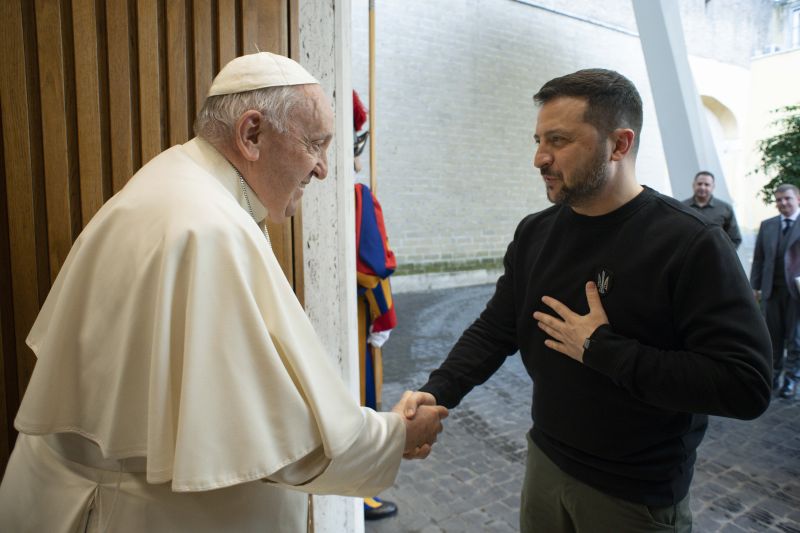
Pope Francis greeted Zelenskyy at the door of the building. The two shook hands and the Ukrainian president placed his hand on his heart and said, in English, “great honor.”
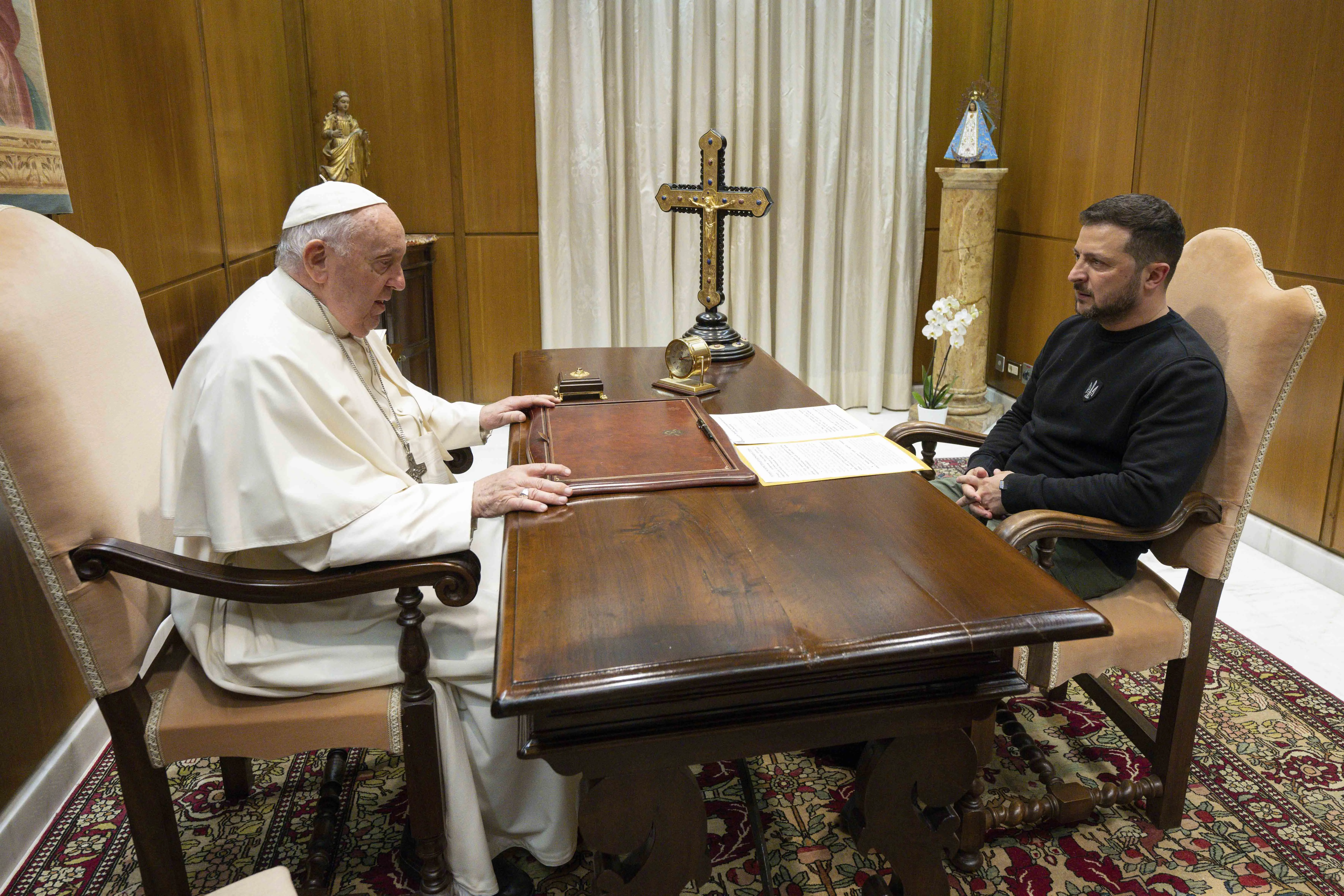
Pope Francis met Ukraine's President Volodymyr Zelenskyy at the Vatican on May 13, 2023, their first meeting since the start of the full-scale war with Russia. Vatican Media
Pope Francis met Ukraine’s President Volodymyr Zelenskyy at the Vatican on May 13, 2023, their first meeting since the start of the full-scale war with Russia. Vatican Media

The Holy See Press Office said Francis and Zelenskyy spoke about the humanitarian and political situation in Ukraine amid the conflict.

“The pope assured of his constant prayers, evidenced by his many public appeals and continuous invocations to the Lord for peace since February last year,” the press office said. “The pope particularly stressed the urgent need for ‘gestures of humanity’ toward the most fragile people, the innocent victims of the conflict.”

Zelenskyy’s gifts to Francis were a painting of the Virgin Mary and Child titled “Loss 2022-58,” about the death of children in the conflict, and a collage made of bulletproof plate, wood, and paint from a series called “Protect the Defender.” The collage also features an image of the Virgin Mary.

The Ukrainian president spent in total about one hour at the Vatican.
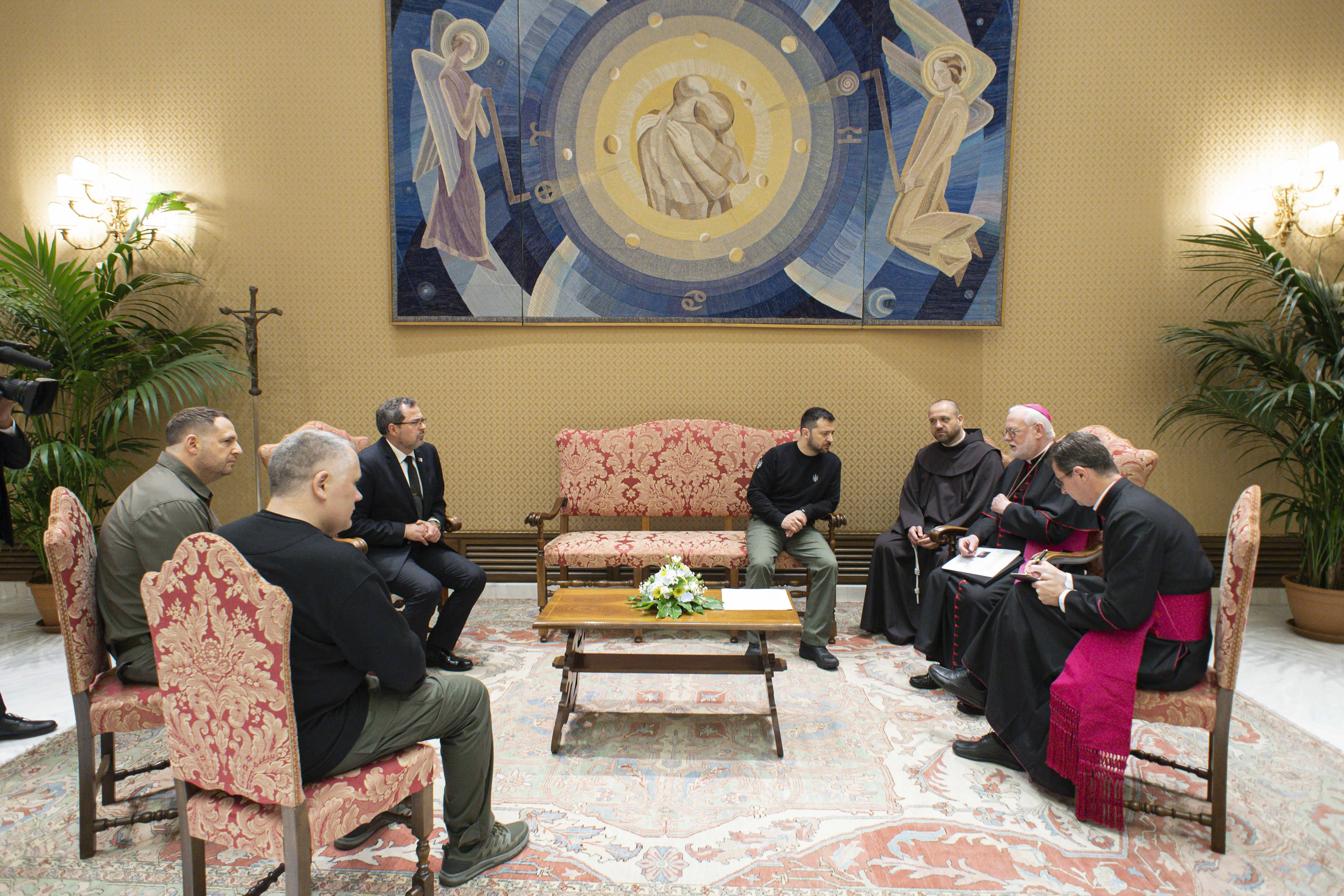
Volodymyr Zelenskyy (center) speaks with Archbishop Richard Gallagher (second from right), secretary for relations with states, in the presence of Ukraine's ambassador to the Holy See, Andrii Yurash (third from left), on May 13, 2023. Vatican Media
Volodymyr Zelenskyy (center) speaks with Archbishop Richard Gallagher (second from right), secretary for relations with states, in the presence of Ukraine’s ambassador to the Holy See, Andrii Yurash (third from left), on May 13, 2023. Vatican Media

He also spoke with the Vatican’s foreign minister, Archbishop Richard Gallagher. They conversed in English in the presence of Ukraine’s Ambassador to the Holy See, Andrii Yurash.

On Saturday morning, Zelenskyy met with Italian President Sergio Mattarella, and later, with Prime Minister Giorgia Meloni.

Meloni and Zelenskyy gave a nearly 30-minute joint press conference in the afternoon before the Ukrainian president proceeded to the Vatican for his meeting with Pope Francis.

“We are betting on Ukraine’s victory,” Meloni said at the press conference. “We will continue to provide support, including military support, so that Ukraine can arrive at the negotiations with a solid position.”

Zelenskyy thanked Meloni for welcoming him to Italy and for giving shelter to Ukrainian citizens during the war.

Meloni said Italy was Zelenskyy’s first stop in a tour of Europe this month.

The Ukrainian president is scheduled to appear live on one of Italy’s state television channels, Rai1, during a special edition of the program “Porta a Porta” on Saturday evening.

[…]

No Picture
News Briefs

Church commission investigates Baltimore Archdiocese role in slavery

May 12, 2023 Catholic News Agency 3
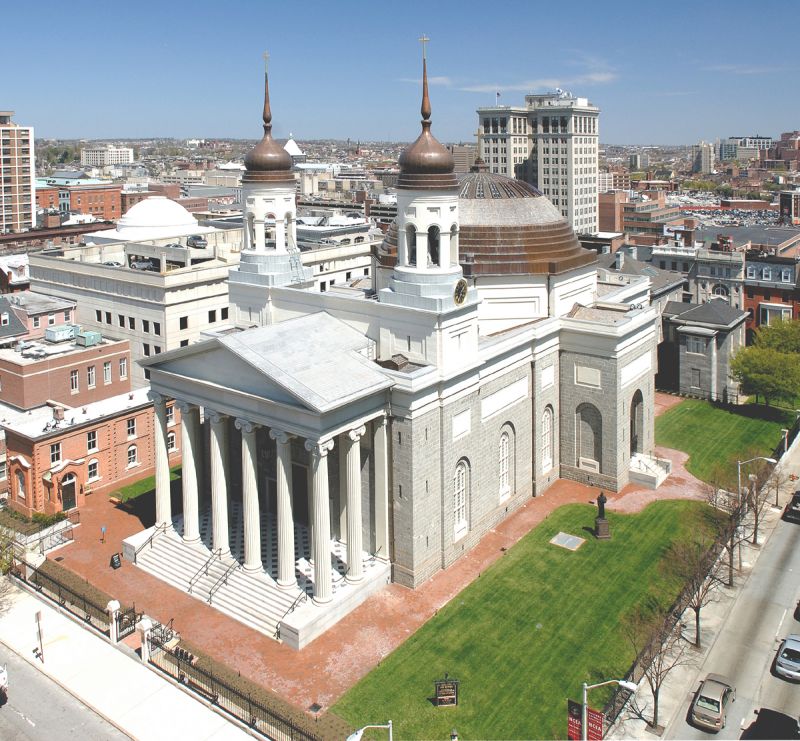
A view of Baltimore’s basilica nestled amid the city’s famed row houses. / Public domain

Washington, D.C. Newsroom, May 12, 2023 / 14:40 pm (CNA).

A 17-member commission created by the Archdiocese of Baltimore will investigate the roles that bishops, clergy, and other prominent Catholic figures within the archdiocese played in American slavery.

The commission, which is still in its early stages, includes academics, archivists, and other researchers who are poring through old documents for information on the subject. The commission first met in March and hopes to unveil some of its findings to the public within the fall of this year. 

“It’s striking that … Catholics, clergy and lay, are people of their times and accepted the institution of slavery as just part of life in America,” Bishop Bruce Lewandowski, an auxiliary bishop in the archdiocese, told CNA. “It’s very sad to say that.”

Lewandowski said the commission is engaging in “significant research” at the moment and said the goal is to eventually make the history known to the public. Although the means by which they will unveil the information are yet to be decided, he said it could be through articles, presentations, a web page online, or something in document form.

The archdiocese will also use the material for education within churches and schools.

“[We plan to] use it, for example, at the parish level, in Catholic schools, [in the] seminary, [in] education [and] formation so the history is known,” Lewandowski said.

In addition to education, Lewandowski added that the archdiocese intends to “prayerfully reflect” on the information, and the commission will provide recommendations on “atonement and reparations” for the role of the archdiocese in slavery. 

“This is part of an ongoing process … of coming to terms with racism in the present by looking deeply in the past,” Lewandowski said. 

“We also want to engage the community … [and] evaluate the efficacy of our approaches to systemic racism in the archdiocese,” Lewandowski continued.

The idea for a commission sprang from a working group that developed into a permanent structure in the archdiocese called the Racial Justice Coordinating Council. The group, which interviewed nearly 80 people about their experiences with racism within the archdiocese, provided recommendations on racial justice. At a later date, the council requested a serious study into the archdiocese’s participation in slavery. 

“That working group came up with a significant number of recommendations for the archbishop to implement,” Lewandowski said. “And those fell into different categories: education, clergy and seminary formation, the Catholic Center and its internal workings. So, a number of different recommendations.”

Lewandowski added that the participation in slavery is part of the history of the archdiocese, and “we need to continually address it.”

“This is just part of the next phase,” the bishop said.

[…]

No Picture
News Briefs

Pope Francis: Birth rate is a key indicator of a country’s hope

May 12, 2023 Catholic News Agency 1
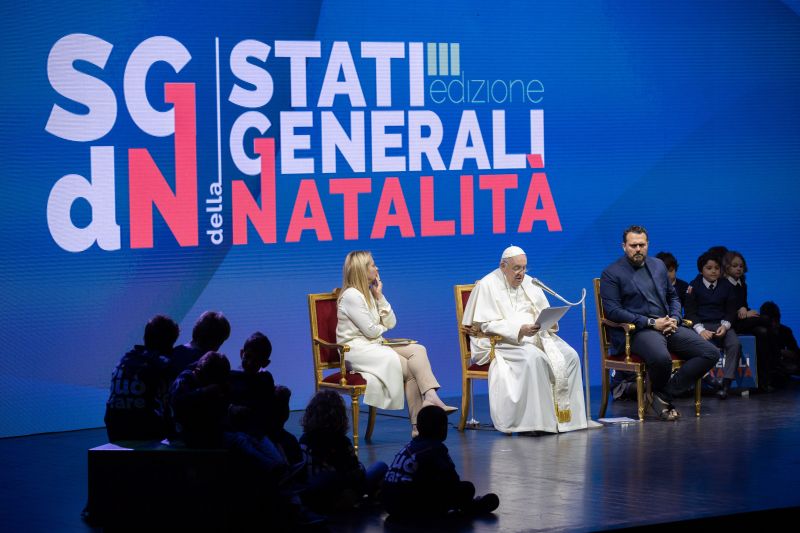
Pope Francis shared a stage with Italy’s Prime Minister Giorgia Meloni on May 12, 2023, to speak at a two-day conference on “The General State of the Birth Rate,” held at Conciliazione Auditorium close to the Vatican. / Daniel Ibanez/CNA

Rome Newsroom, May 12, 2023 / 07:00 am (CNA).

Pope Francis said Friday a society’s birth rate is a key indicator of the hope people have in the future.

The pope shared the stage on May 12 with Italy’s Prime Minister Giorgia Meloni during a two-day conference on “The General State of the Birth Rate,” held at Conciliazione Auditorium close to the Vatican.

“The birth of children, in fact, is the main indicator for measuring the hope of a people,” Pope Francis said. “If few are born it means there is little hope. And this not only has repercussions from an economic and social point of view but also undermines confidence in the future.”

“The General State of the Birth Rate” is a conference for Italian political, business, and organization leaders to reflect on Italy’s demographic crisis, caused by one of the lowest birth rates in Europe: 1.25 births per woman.

The event was organized by the Foundation for Births and the Family Associations Forum and supported by the Italian Ministry for Family, Birth, and Equal Opportunity.

This was the third annual conference and the second time Pope Francis attended. In 2022, he sent a message to be read at the event.

Italy hit a historic low number of births in 2022, with only about 393,000 children born in the country.

The same year, the country saw 700,000 deaths, marking a dangerous decline in population.

The low number of births, Pope Francis said, “is a figure that reveals a great concern for tomorrow.”

He lamented that childbearing and rearing is seen as the burden of families only, and the pressure this puts on young adults today, “who grow up in uncertainty, if not disillusionment and fear.”

Young people “experience a social climate in which starting a family has turned into a titanic effort, instead of being a shared value that everyone recognizes and supports,” he said.

The decline in communal living, together with an increasing self-reliance creates loneliness, Pope Francis said, and one consequence is that only the wealthy have the freedom to live the life they want.

“This is unfair, as well as demeaning,” he added.

The pope also criticized a culture that places pets before human children.

He said at a recent audience, he went to greet a woman of around 50 years old — “like me,” he joked — but was surprised to be asked to bless her dog, which she called, “my baby.”

“I had no patience and scolded the lady,” he said, pointing out the great number of hungry children in the world.

Pope Francis used a walker to move on stage on Friday, referencing the pain he experiences while standing.

At the beginning of his speech, the pope said: “I’m sorry for not standing up while speaking, but I cannot tolerate the pain when I am standing.”

In what appeared to be a reference not only to welcoming the birth of children but also to welcoming migrants, Pope Francis said “a happy community naturally develops desires to generate and integrate, to welcome, while an unhappy society is reduced to a sum of individuals trying to defend what they have at all costs.”

He emphasized again that “the birth rate challenge is a matter of hope,” though, he underlined, hope is not the same as optimism or “a vague positive feeling about the future.”

Hope, he said, “is not an illusion or an emotion that you feel, no; it is a concrete virtue, a life attitude. And it has to do with concrete choices. Hope is nourished by each person’s commitment to the good, it grows when we feel we are participating and involved in making meaning of our own and others’ lives.”

“Hope generates change and improves the future. It is the smallest of virtues — Péguy said — it is the smallest, but it is the one that takes you the furthest. And hope does not disappoint,” Francis said.

[…]