No Picture
News Briefs

North Carolina governor vetoes 12-week abortion ban, faces override

May 15, 2023 Catholic News Agency 2
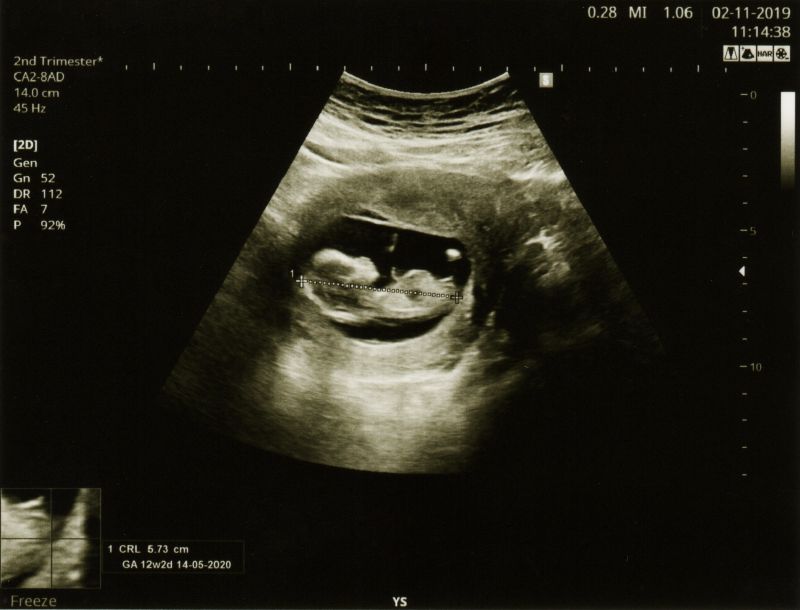
A sonogram picture of a fetus in the second trimester of a woman’s pregnancy / Shutterstock

Washington D.C., May 15, 2023 / 13:17 pm (CNA).

North Carolina’s Democratic Gov. Roy Cooper vetoed legislation passed by the state’s Republican-controlled legislature that would ban abortions after 12 weeks of pregnancy.

The veto puts the ball back in the lawmakers’ court, where Republicans enjoy a narrow supermajority – an override of the governor’s veto would require the vote of every Republican in the legislature. The current law bans abortions after 20 weeks of pregnancy.

Exceptions listed in the bill would establish a 20-week cut-off in cases of rape and incest and a 24-week cutoff for life-threatening fetal anomalies. The law would keep in place an exception for when the life of the mother is at risk.

Cooper signed the veto during a Saturday rally in which he criticized the abortion ban and urged at least one Republican to vote against the override effort. He traveled the state over the past week and held events in the districts of four potentially vulnerable Republicans in the hope of swaying one of them.

“Let’s be clear — this bill has nothing to do with making women safer, and everything to do with banning abortion,” Cooper said during the rally. “How about we leave medicine to the doctors and the decisions to the women?”

Republican leaders have accused the governor of misinforming voters about the bill and indicated their intent to override his veto.

“Gov. Cooper has spent the last week actively feeding the public lies about Senate Bill 20 and bullying members of the General Assembly,” Senate Leader Phil Berger, R-Rockingham, said in a statement. “He has been doing everything he can, including wasting taxpayer money on poorly attended events, to avoid talking about his own extreme views on abortion. I look forward to promptly overriding his veto.”

Lawmakers can begin the override process as soon as this week.

In addition to banning abortion at 12 weeks of pregnancy, the proposed law would establish a waiting period for abortions, which would require women to have an in-person visit with a doctor or health professional 72 hours before the abortion is performed and provide informed consent.

For a chemical, or drug-induced, abortion, the new law would require that the woman receive the first dose of the abortion-inducing drug in the presence of a physician after the 72-hour waiting period. The law would also require that doctors make an effort to have a follow-up appointment at about seven to 14 weeks after the abortion is completed to address potential complications, such as bleeding.

The legislation also includes funding to support families. The bill would provide eight weeks of paid parental leave to teachers and other state employees. It also includes about $180 million in funding for a variety of initiatives, which includes increased access to child care, support for foster care, and access to birth control.

[…]

No Picture
News Briefs

Tokyo archbishop elected new president of Caritas Internationalis

May 15, 2023 Catholic News Agency 1
Archbishop Tarcisius Isao Kikuchi of Tokyo was elected president of Caritas Internationalis during the Vatican-based confederation of national charities’ General Assembly on May 11-16, 2023. / Courtesy of Caritas Internationalis

Rome Newsroom, May 15, 2023 / 10:45 am (CNA).

Archbishop Tarcisius Isao Kikuchi has been elected as the new president of Caritas Internationalis, the second-largest humanitarian aid organization in the world after the Red Cross.

The Catholic archbishop of Tokyo was Japan’s first missionary priest in Africa, where he first volunteered at a Caritas refugee camp, the start of 30 years of service with the Catholic charitable organization.

More than 400 delegates taking part in Caritas Internationalis’ 22nd General Assembly in Rome May 11-16 elected Kikuchi to serve a four-year term. The body must still elect a secretary general.

“Caritas must be on the front lines to welcome, accompany, serve and defend the poor and vulnerable,” Kikuchi, 64, said in his speech to the assembly.

“This mission must be sustained and be the focus of the members of the Confederation, and I would like to be the one, together with the secretary general, to lead the entire organization to fulfill this important mission of the Church. We are all invited to walk together.”

As president of Caritas Internationalis, Kikuchi will lead a confederation of more than 160 Catholic charities operating in 200 countries and territories. He succeeds Cardinal Luis Antonio Tagle, who has served as Caritas’ president since 2019.

Japan’s first missionary priest in Africa

After he was ordained a priest in 1986 with the Society of the Divine Word, also known as the Divine Word Missionaries, Kikuchi was sent to serve as a missionary priest in rural Ghana for eight years. 

“I was sent to a ‘bush’ parish, deep in the bush, without electricity, without water. … And that was really an important experience for me and that helped create my identity, I suppose,” Kikuchi said in an interview with Vatican Radio on May 14.

He witnessed extreme poverty with “many people … dying without proper medication” and the spread of HIV-AIDS, but he was struck by how people supported each other and how that created hope.

After his work in Ghana, Kikuchi returned to Africa in 1995 as a Caritas volunteer at a refugee camp in Bukavu, Zaire, which took in hundreds of thousands of refugees during the Rwandan genocide.

Kikuchi recalls that the Rwandan refugees “had no food, no clothing, no shelter, and people were in need of everything.”

He said: “The second time I went to the camp, I met some of the leaders and asked them what they needed. And I was expecting the leader to tell me that ‘we need food, we need education, we need medication, we need shelter’ — or something like that. … But rather than that, he said, ‘Father, you come from Japan. So, when you go back to Japan, tell them that we are still here: We are all forgotten.’ And that really shocked me.”

“After that experience, I met so many people in different areas, in different countries struck by disaster, or people in war-torn or conflict areas. I heard the same story and the same cry again and again, that ‘we are forgotten; we are forgotten’. So, this is the real mission of Caritas: to help people know they are not forgotten. We want to be with them.”

Kikuchi became the executive director of Caritas Japan in 1999 and was appointed as a bishop by John Paul II in 2004. 

He went on to serve as the president of Caritas Japan from 2007 to 2022, also participating as a member of the Caritas Internationalis Executive Committee from 1999 to 2004 and leading Caritas Asia as its president from 2011 to 2019.

Pope Francis appointed Kikuchi as archbishop of Tokyo in 2017 and he currently serves as the president of the Japanese bishops’ conference and the secretary general of the Federation of Asian Bishops’ Conferences.

Pope’s reform of Caritas

The Japanese archbishop takes the helm of the Church’s charitable arm as it is going through a critical period of reform, six months after Pope Francis dismissed its top leaders.

Pope Francis issued a decree in November that removed the organization’s administration and stated that Caritas would undergo a review “to improve its management rules and procedures — even if financial matters were managed well and fundraising objectives regularly achieved — and thereby better serve its member charities around the world.”

A press release issued at the time said there was no finding of any misappropriation of funds or sexual abuse but cited deficiencies in Caritas’ “management and procedures, seriously prejudicing team spirit and staff morale.”

A provisional administration, led by a former Bain Capital management expert, has run the global organization ever since.

“It is not only that we are an NGO, but we are much more than that. We are a Catholic Church organization, and the institute of the service of the Church,” Kikuchi said.

“So, that means that Caritas is supposed to be a witness of the love of God. What we do is not only provide food or materials or any kind of assistance, but rather we want to be witnesses of the love of God to show people that this is how God loves all people.”

[…]

No Picture
News Briefs

Newest Barbie doll is ‘monumental,’ Down syndrome advocate says

May 14, 2023 Catholic News Agency 2
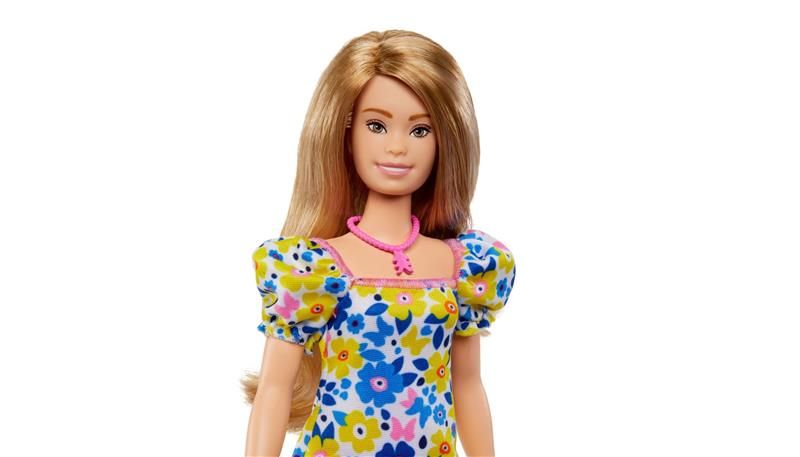
Mattel’s newest Barbie doll / Photo courtesy of Mattel

Denver Newsroom, May 14, 2023 / 07:00 am (CNA).

Many little girls grow up playing with Barbie dolls and wishing that a doll would look just like them. Now, little girls with Down syndrome can live this dream. The American toy company Mattel announced April 25 that the first Barbie with Down syndrome would soon be hitting the shelves.

The first Barbie doll was released on March 9, 1959. Over the years, Mattel has released several kinds of Barbies representing different shapes, sizes, races, and ethnicities. In 1980, Mattel released the first Black and Hispanic dolls named Barbie. In 2015, three new body types were introduced: curvy, petite, and tall. And in 2022, the first Indian Barbie was manufactured. Currently, Barbie features 35 skin tones, 97 hairstyles, and nine body types. 

Now Mattel is making headlines with their newest Barbie, who represents someone with Down syndrome, and it has already sold out online. 

To ensure an accurate representation, Barbie worked with the National Down Syndrome Society (NDSS), a group that empowers those with Down syndrome by working to create policy change, provide resources, and engage with local communities.

According to a press release from Mattel, the new doll features a new face and body sculpt to more accurately represent a woman with Down syndrome. The doll’s yellow- and blue-colored dress is patterned with butterflies, symbols, and colors associated with Down syndrome awareness. The doll also wears a pink pendant necklace with three upward chevrons, representing the three copies of the 21st chromosome. Additionally, this new Barbie is wearing pink ankle foot orthotics (AFOs), as some children with Down syndrome wear AFOs to support their feet and ankles.

“As the most diverse doll line on the market, Barbie plays an important role in a child’s early experiences, and we are dedicated to doing our part to counter social stigma through play,” said Lisa McKnight, executive vice president and global head of Barbie and Dolls, Mattel, in the press release. 

“Our goal is to enable all children to see themselves in Barbie while also encouraging children to play with dolls who do not look like themselves,” she said. “Doll play outside of a child’s own lived experience can teach understanding and build a greater sense of empathy, leading to a more accepting world.”

Erin Thielman, a Down syndrome advocate and mother of three, said she’s grateful for the new doll because her youngest son, Andrew, has Down syndrome. 

“So many people support those with Down syndrome, yet there is a lack of representation for our wonderful community with regards to dolls and toys,” she said in an interview with CNA. “I found out about the new doll from social media. I follow many teenagers and adults with Down syndrome. It warmed my heart so much to see them so happy and excited.”

Thielman added: “A doll that represents girls with Down syndrome is monumental. It helps to inspire not only representation but also, it inspires confidence. With these dolls, girls with Down syndrome can hold their heads even higher knowing that they are special.”

Thielman’s 10-year-old daughter, Abby, was also thrilled to see the new Barbie. When Abby was 8 years old she reached out to Mattel asking them to make a doll with Down syndrome. They responded quickly saying they loved the idea and would pass it along. When Abby saw this new doll, tears of joy filled her eyes.

“I feel happy about the new doll because it embraces the beauty and amazing-ness in people who are unique, especially children with Down syndrome,” Abby said in an interview with Pro-Life Update. “You should never think of a disability as a disability; you should think of it as a different ability.”

In the United States nearly 70% of babies diagnosed with Down syndrome in the womb are aborted. When Thielman received the prenatal diagnosis for Andrew, abortion was suggested.

“Unfortunately, too many babies who are diagnosed prenatally with Down syndrome aren’t given the same chance as Andrew. And it breaks my heart,” Thielman expressed.

She is hopeful this new doll will bring light to this sad reality and show how children with Down syndrome are “intentional blessings from God.”

“Perhaps a Ken doll with Down syndrome? Barbie needs a friend!” she added.

You can find resources to help those raising a child with Down syndrome here.

[…]