Tens of thousands gather outside of the Colosseum in Rome for the Via Crucis, the Way of the Cross, on Good Friday, March 29, 2024. / Credit: Daniel Ibañez/CNA
Vatican City, Mar 29, 2024 / 19:00 pm (CNA).
In an apparent last-minute decision, Po… […]
Cardinal Mario Grech and Pope Francis at the conclusion of the Synod on Synodality on Oct. 28, 2023. / Credit: National Catholic Register / Vatican Media
National Catholic Register, Mar 29, 2024 / 07:00 am (CNA).
If Cardinal Mario Grech held ne… […]
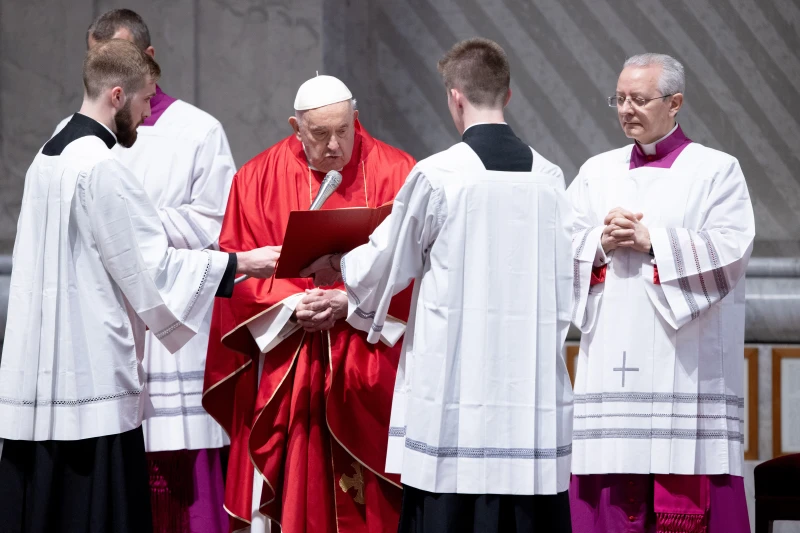
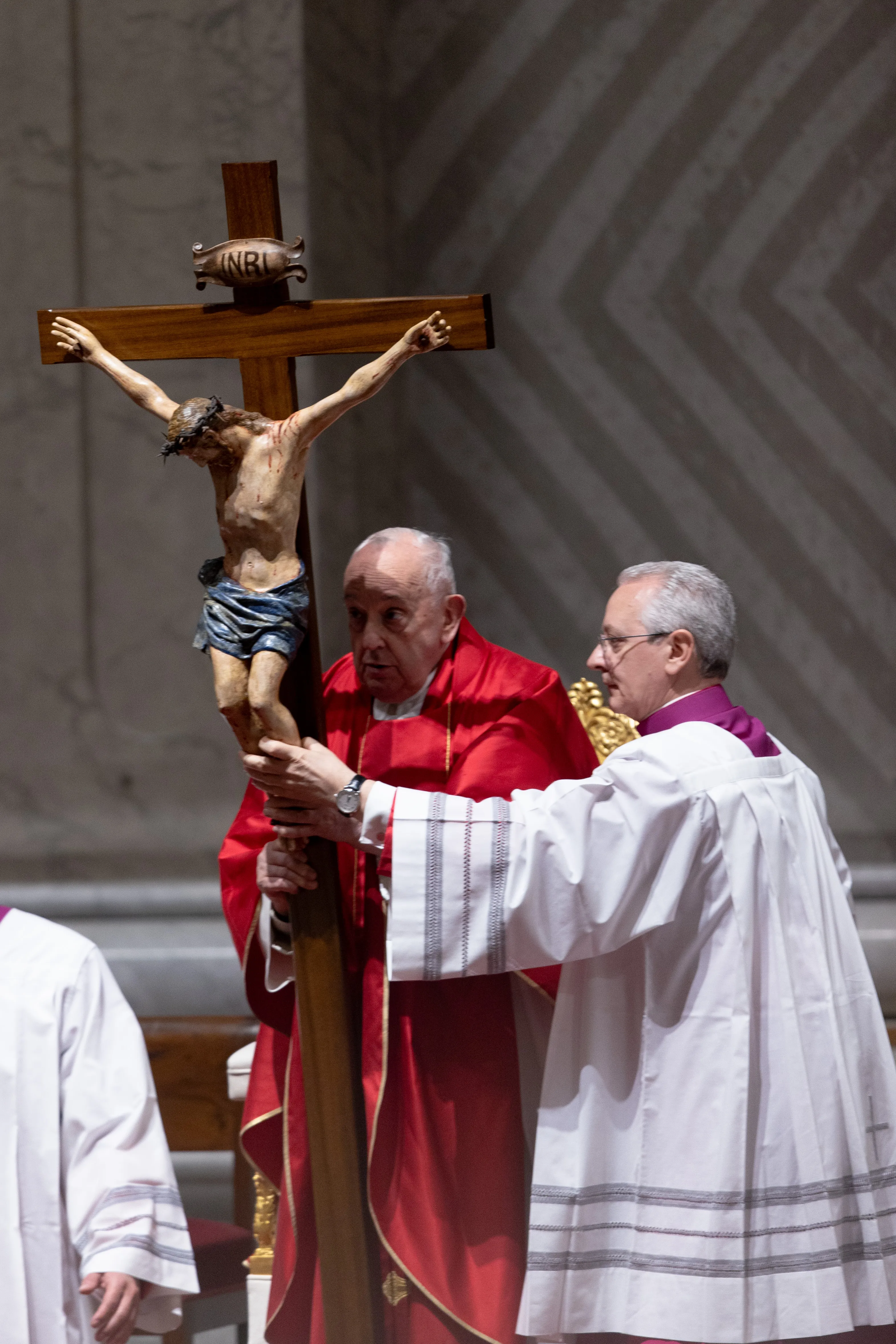
Pope Francis celebrates the Passion of the Lord on Good Friday in St. Peter’s Basilica in Rome. March 29, 2024. / Credit: Daniel Ibañez/CNA
Vatican City, Mar 29, 2024 / 15:20 pm (CNA).
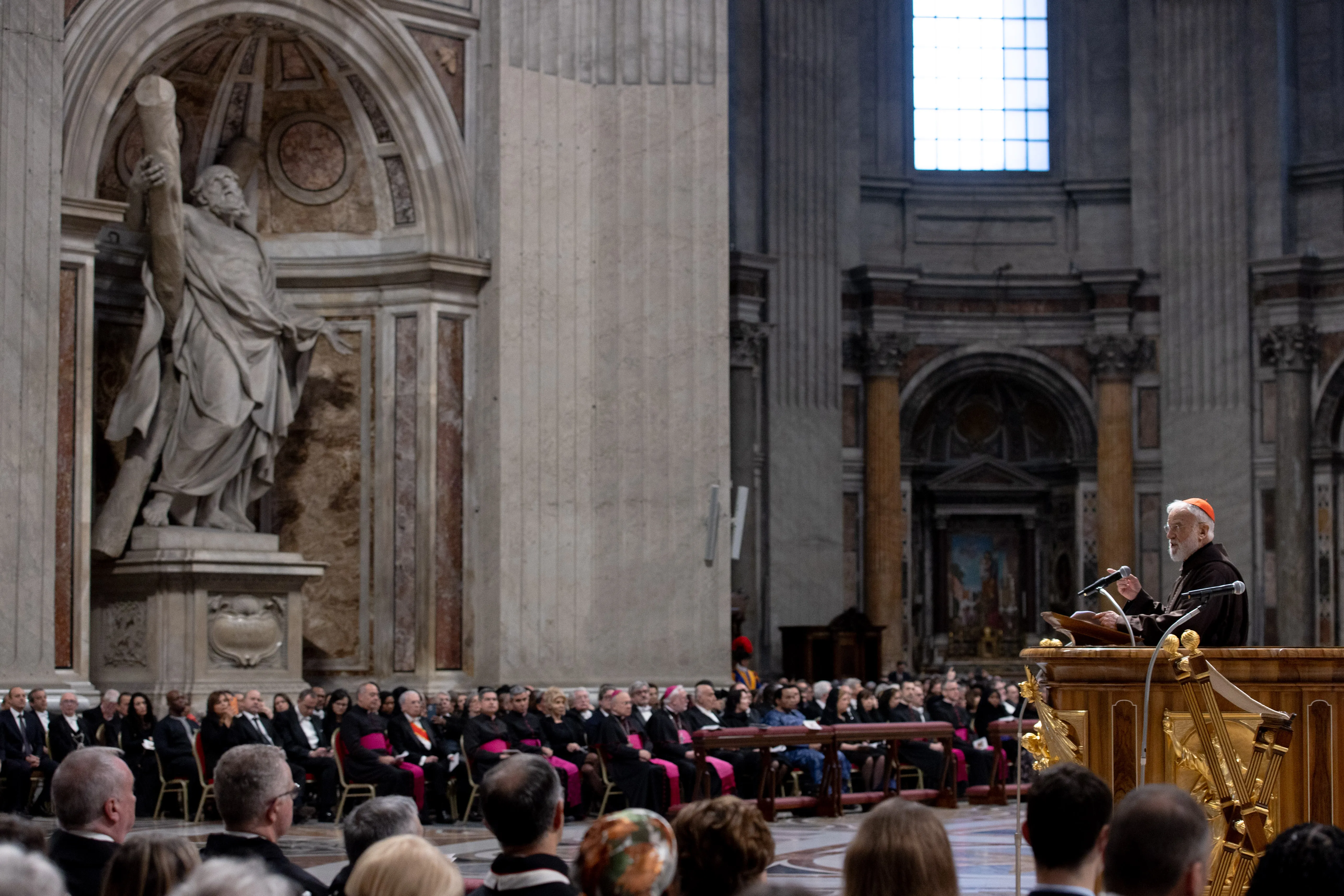
During the Good Friday liturgy at the Vatican, presided over by Pope Francis, the papal preacher reflected on the triumph of the cross, noting that it is an event that changed the universal perception of God’s omnipotence, revealing his humility.
“The true omnipotence of God is the total powerlessness of Calvary,” Cardinal Raniero Cantalamessa, O.F.M. Cap., said during his homily.
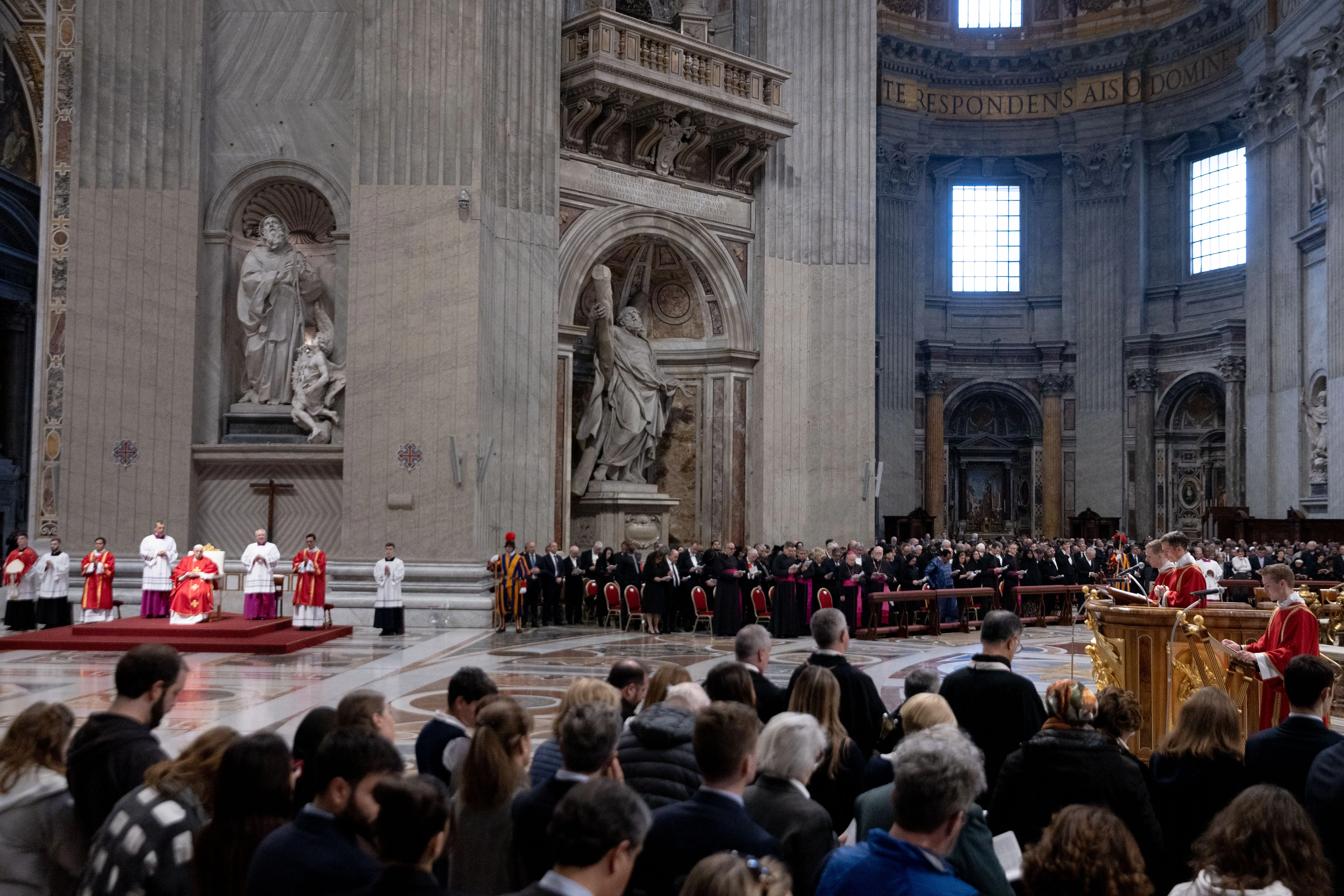
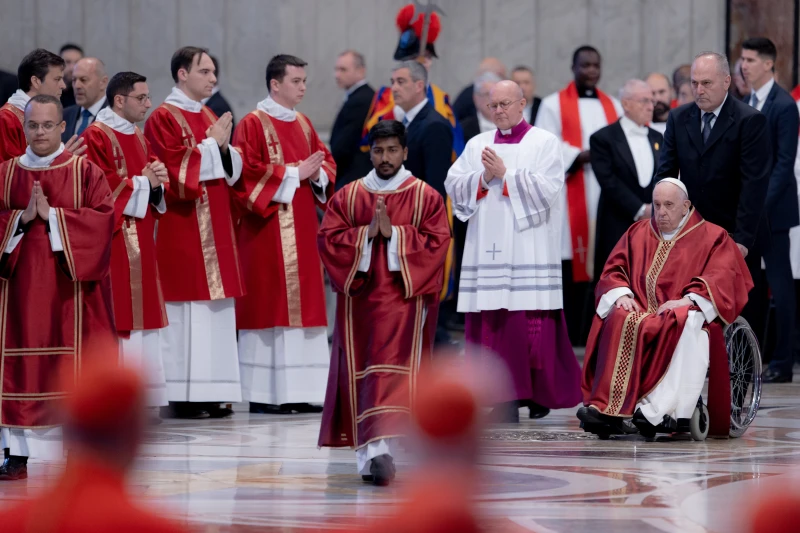
Celebration of the Passion of the Lord on Good Friday in St. Peter’s Basilica, Rome. March 29, 2024. Credit: Daniel Ibañez/CNA
At approximately 5 p.m. Rome time, Pope Francis made his way into Saint Peter’s Basilica, in a wheelchair, vested in a red chasuble. Cast against the backdrop of complete and palpable silence, the Holy Father paused in meditation before the Papal Altar underneath Bernini’s Baldacchino (covered in scaffolding for its restoration), while the congregation knelt.
For the past several years the pope has been unable to lay prostrate due to his fragile health, which includes persistent knee problems and several bouts of pulmonary inflammation.
After the chanting of the passion from the Gospel of John, Cantalamessa — who was made a cardinal in 2020 after more than 40 years as Preacher of the Papal Household — opened his homily reflecting on Christ’s self-affirmation of “I am,” words he said come without any qualification and carry “an absolute, metaphysical significance” and is an “unprecedented novelty.”
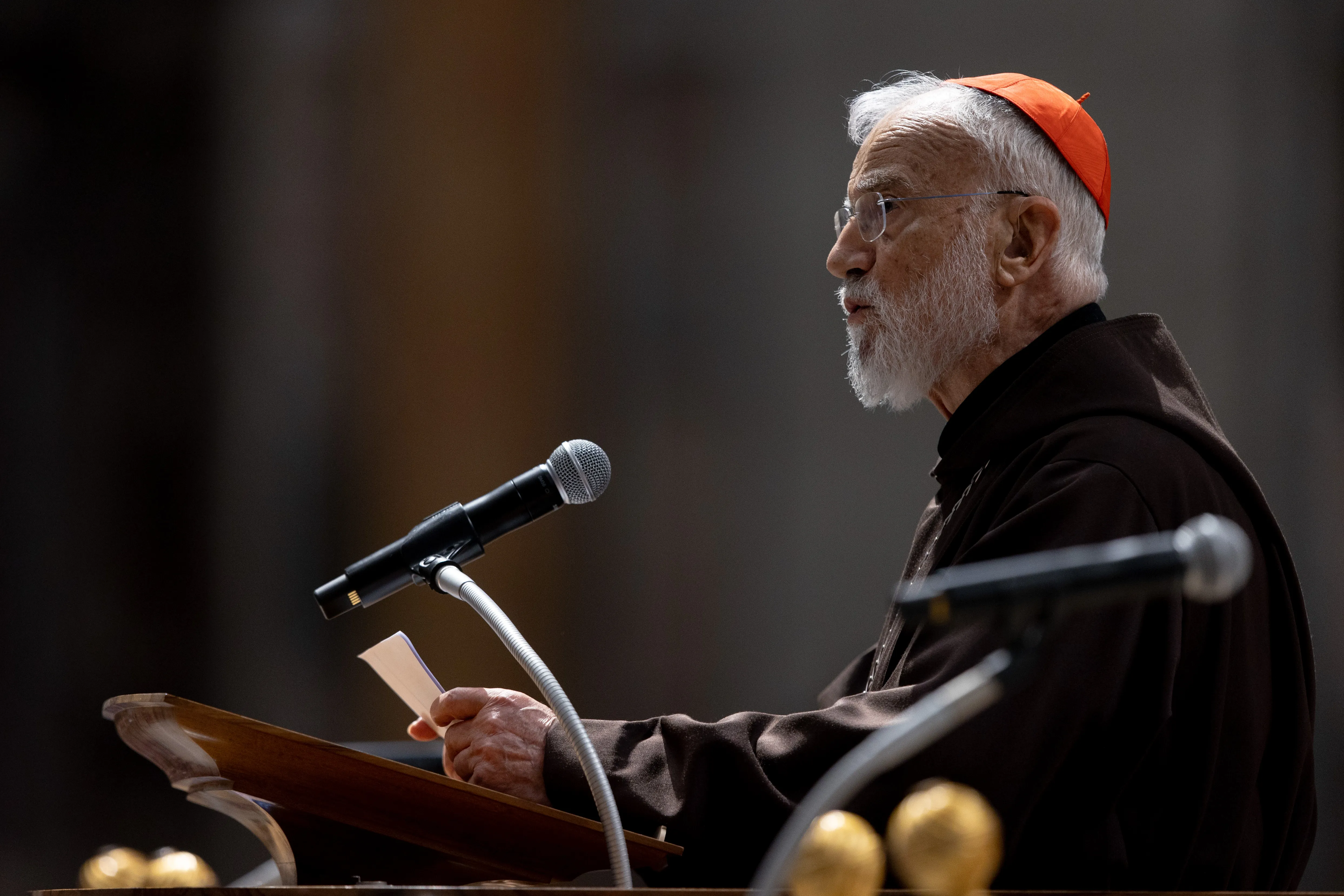
“Jesus did not come to retouch and perfect the idea that men had of him God, but, in a certain sense, to overturn it and reveal the true face of God,” Cardinal Raniero Cantalamessa, O.F.M. Cap. said during his homily at the Good Friday liturgy in St. Peter’s Basilica in Rome. March 29, 2024. Credit: Daniel Ibañez/CNA
The cardinal stressed that this new paradigm can only be understood by looking at Christ’s preceding words heard in the passion: “When you have lifted up the Son of Man.”
Observing that “to be lifted up” refers to the crucifixion, the cardinal noted that the sum of these words express a “total reversal of the human idea of God,” revealing “the true face of God.”
“Jesus did not come to retouch and perfect the idea that men had of him, but, in a certain sense, to overturn it and reveal the true face of God,” he said. ““He humbly behaves in the glory of the resurrection as in the annihilation of Calvary. The concern of the risen Jesus is not to confuse his enemies, but to immediately go and reassure his lost disciples and, before them, the women who had never stopped believing in him.”
“The true omnipotence of God is the total powerlessness of Calvary,” Cardinal Raniero Cantalamessa, O.F.M. Cap. said during his homily at the Good Friday liturgy in St. Peter’s Basilica in Rome. March 29, 2024. Credit: Daniel Ibañez/CNA
“Understood in this light,” Cantalamessa continued, “the word of Christ takes on a universal significance that challenges those who read it, in any era and situation, including ours.”
The cardinal warned not to conflate God’s omnipotence, and the “definitive and irreversible triumph” of the cross with temporal triumphs, as God’s triumph showcases humility.
“It takes little power to show off,” the cardinal noted, “Instead, it takes a lot to step aside, to cancel. God is this limitless power of self-concealment.”
“The resurrection takes place in the mystery,” he continued. “As a resurrected one, Jesus appears only to a few disciples, out of the spotlight. With this he wanted to tell us that after suffering, we must not expect an external, visible triumph, like an earthly glory.”
Pope Francis celebrates the Passion of the Lord on Good Friday in St. Peter’s Basilica in Rome. March 29, 2024. Credit: Daniel Ibañez/CNA
At the end of Cantalamessa’s homily, the faithful sat in a moment of deep silence and reflection. This was followed by the reading of the Oratio Universalis, the universal prayer also known as the Solemn Intercessions.
Then, a deacon, flanked by two candle bearers, stopped at three separate points in the central nave of the basilica, proclaiming, with an increasing pitch, “Ecce lignum crucis” (“behold the wood of the cross”). After the third proclamation, the deacon, holding an unveiled crucifix, brought it to the papal chair for the pope’s veneration.
Once the crucifix was fixed in a central place, the Sistine Chapel Choir chanted the Improperia, or the Good Friday Reproaches, a series of antiphons sung in alternating manner between a cantor and the choir. The cardinals, who sat opposite the pope, filed in line to kneel before and kiss the crucifix.
After the final prayer over the people, the pope left the basilica just as he entered: solemn, and in silence.
Pope Francis arrives at the Liturgy of the Lord’s Passion in St. Peter’s Basilica on Good Friday on April 7, 2023. / Credit: Daniel Ibanez/CNA
Rome Newsroom, Mar 29, 2024 / 08:00 am (CNA).
The Good Friday liturgy commemorates the apex of Christ’s passion with a remembrance of his crucifixion and death at Calvary.
The Good Friday Reproaches are a series of antiphons, known also as the “Improperia” or “Popule Meus” (“My people”), coming from the opening lines of the Latin text of the recitation.
Dating back to the ninth century, though not gaining a permanent place in the Roman Orders until the 14th century, the Good Friday Reproaches have long been an essential part of the Roman liturgy. But they largely disappeared from many parishes following the liturgical reforms of the Second Vatican Council.
The antiphons have, however, retained their prominence at the Vatican — and they will be chanted by the Sistine Chapel Choir during the Good Friday service presided over by Pope Francis on Friday in St. Peter’s Basilica.
In the moment leading up to the dramatic recitation, the priest chants three times, in an increasing pitch, “Ecce Lignum Crucis,” or “Behold the wood of the cross,” each time gradually unveiling the cross that hitherto has been covered in a purple veil.
Once the crucifix is placed in a central location at the edge of the sanctuary, cast against a bare altar, the faithful are invited to kneel before — and kiss — it, a powerful remembrance of Christ’s passion but also a recognition of the cross as an instrument of salvation.
During the adoration of the cross, the Good Friday Reproaches are chanted in an alternating manner between a cantor and choir. It opens: “Popule meus, quid feci tibi? Aut in quo contristavi te? Responde mihi” (“My people, what have I done to you? How have I offended you? Answer me”).
This hauntingly sorrowful and beautiful text is followed by the first reproach: “Quia eduxi te de terra Aegypti: parasti Crucem Salvatori tuo” (“Because I led thee out of the land of Egypt: thou hast prepared a cross for thy Savior”), showcasing the world’s fatal rejection of Christ despite his love and saving acts.
The following is the full text of the reproaches:
Popule meus, quid feci tibi? Aut in quo contristavi te? Responde mihi. (O my people, what have I done to thee? Or how have I offended you? Answer me.)
Quia eduxi te de terra Aegypti: parasti Crucem Salvatori tuo. (Because I led thee out of the land of Egypt: thou hast prepared a cross for thy Savior.)
Hagios o Theos. Sanctus Deus. Hagios Ischyros. Sanctus fortis. Hagios Athanatos, eleison himas. Sanctus immortalis, miserere nobis. (O holy God! O holy God! O holy strong One! O holy strong One! O holy and immortal, have mercy upon us. O holy and immortal, have mercy upon us.)
Quia eduxi te per desertum quadraginta annis: et manna cibavi te, et introduxi te in terram satis bonam: parasti Crucem Salvatori tuo. Hagios . . . (Because I led thee through the desert for forty years: and fed thee with manna, and brought thee into a land exceeding good: thou hast prepared a cross for thy Savior. O holy God! . . .)
Quid ultra debui facere tibi, et non feci? Ego quidem plantavi te vineam meam speciosissimam: et tu facta es mihi nimis amara: aceto namque sitim meam potasti: et lancea perforasti latus Salvatori tuo. Hagios . . . (What more ought I to have done for thee, that I have not done? I planted thee, indeed, my most beautiful vineyard: and thou hast become exceeding bitter to me: for in my thirst thou gavest me vinegar to drink: and with a spear thou hast pierced the side of thy Savior. O holy God! . . .)
Ego propter te flagellavi Aegyptum cum primogenitis suis: et tu me flagellatum tradidisti. Popule meus . . . (For thy sake I scourged the firstborn of Egypt: Thou hast given me up to be scourged. O my people . . .)
Ego te eduxi de Aegypto, demerso Pharone in mare Rubrum: et tu me tradidisti principibus sacerdotum. Popule meus . . . (I led thee out of Egypt, having drowned Pharaoh in the Red Sea: and thou hast delivered me to the chief priests. O my people . . .)
Ego ante te aperui mare: et tu aperuisti lancea latus meum. Popule meus . . . (I opened the sea before thee: and thou hast opened my side with a spear. O my people . . .)
Ego ante te praeivi in columna nubis: et tu me duxisti ad praetorium Pilati. Popule meus . . . (I went before thee in a pillar of cloud: and thou hast led me to the judgment hall of Pilate. O my people . . .)
Ego te pavi manna in desertum: et tu me cedisti alapis et flagellis. Popule meus . . . (I fed thee with manna in the desert: and thou hast assaulted me with blows and scourges. O my people . . .)
Ego te potavi aqua salutis de petra: et tu me potasti felle et aceto. Popule meus . . . (I gave thee the water of salvation from the rock: and thou hast given me gall and vinegar to drink. O my people . . .)
Ego propter te Chananeorum reges percussi: et tu percussisti arundine caput meum. Popule meus . . . (For thy sake I struck the kings of the Canaanites: and thou hast struck my head with a reed. O my people . . .)
Ego dedi tibi sceptrum regale: et tu dedisti capiti meo spineam coronam. Popule meus . . . (I gave thee a royal scepter: and thou hast given a crown of thorns for my head. O my people . . .)
Ego te exaltavi magna virtute: et tu me suspendisti in patibulo crucis. Popule meus . . . (I exalted thee with great strength: and thou hast hanged me on the gibbet of the cross. O my people . . .)
The custos of the Holy Land, Father Francesco Patton, walks through empty Bethlehem streets during the solemn entrance to the Basilica of the Nativity on Jan. 6, 2024. / Credit: Marinella Bandini
ACI Prensa Staff, Mar 29, 2024 / 06:00 am (CNA)…. […]
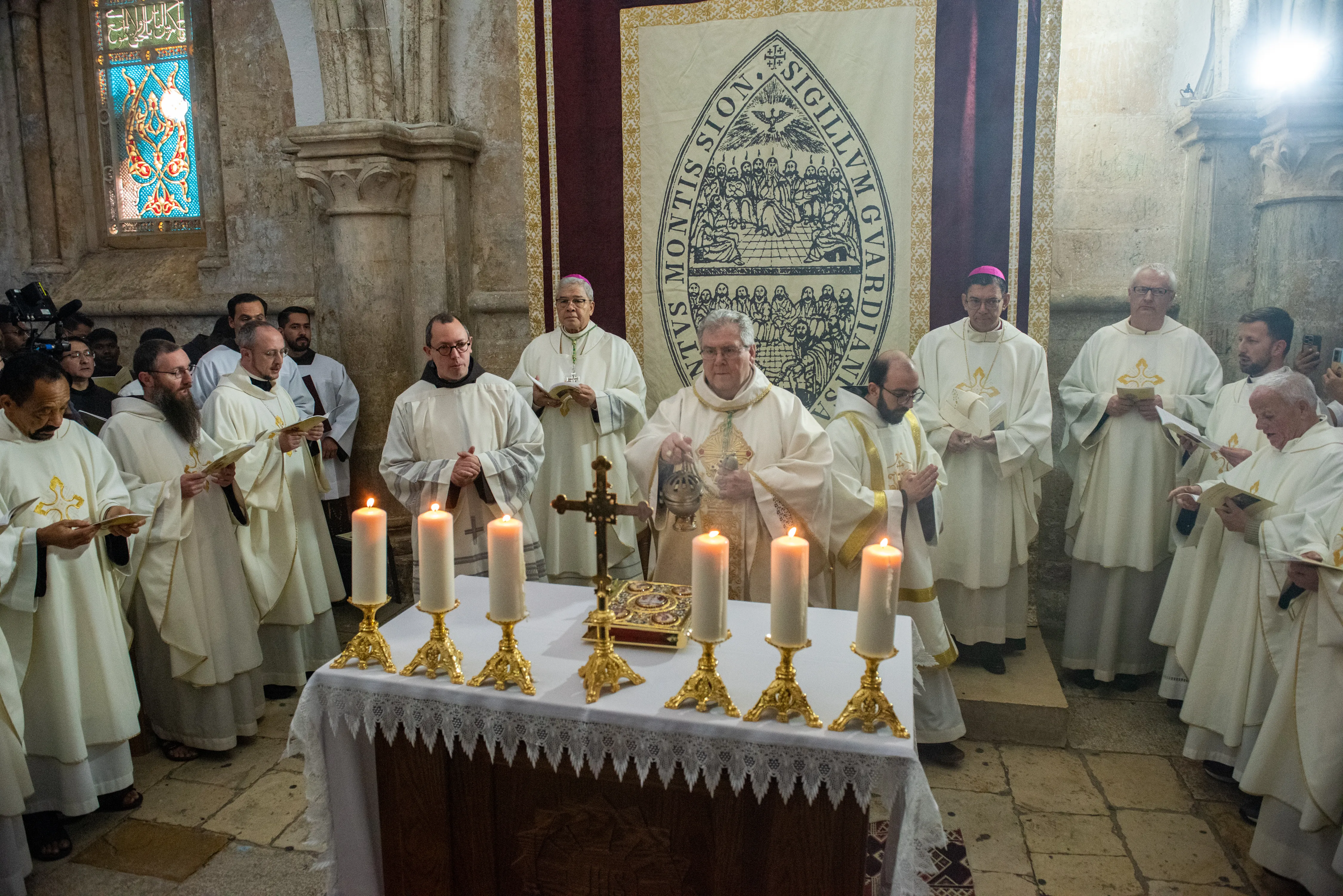
The Catholic faithful gathered in the Cenacle in Jerusalem for the Mass of the Lord’s Supper that the Franciscan friars celebrated on Holy Thursday, March 28, 2024. The Cenacle is at the center of strong tensions and disputes regarding ownership and rights of access and celebration. An ancient tradition places King David’s tomb here and over the centuries Jews and Muslims have leveraged this to first expel the Franciscans and then to prevent Christian worship, which they deemed sacrilegious. / Credit: Marinella Bandini
Jerusalem, Mar 28, 2024 / 17:15 pm (CNA).
On Holy Thursday, the doors of the Cenacle in Jerusalem were opened to welcome the Franciscans of the Custody of the Holy Land. In this “Upper Room,” called the Cenacle in the Holy Land, Jesus had his Last Supper, washed his apostles’ feet, and instituted the Eucharist.
It was here that the Franciscans celebrated the Mass of the Lord’s Supper, reenacting those same gestures. (At the Basilica of the Holy Sepulcher, however, the celebration is held on Thursday morning due to the Status Quo. Here is Cardinal Pierbattista Pizzaballa’s homily from that Mass.)
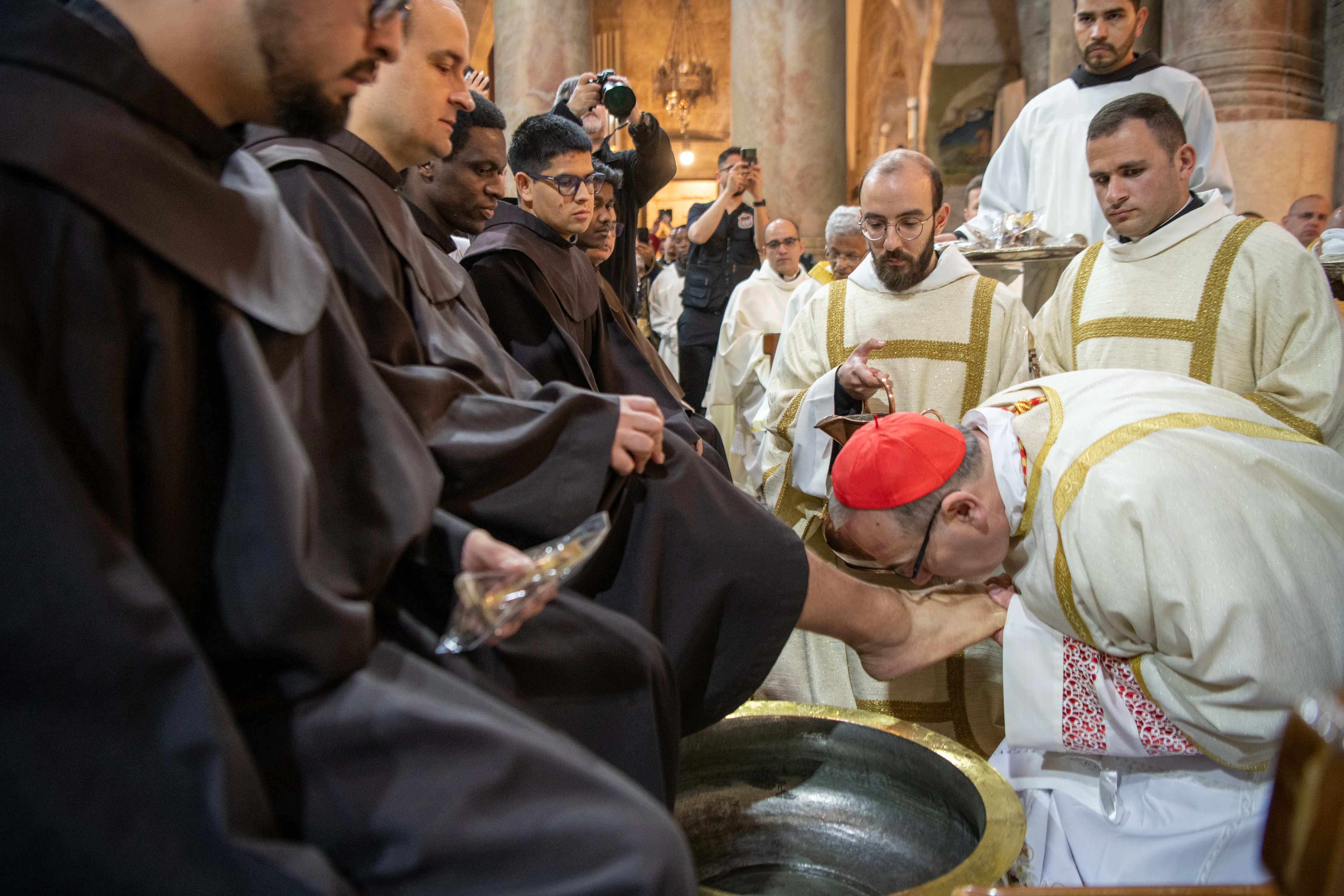
Cardinal Pierbattista Pizzaballa, the Latin Patriarch of Jerusalem, kisses the feet of a Franciscan friar during the “Washing of the Feet” ritual at the Mass of the Lord’s Supper celebrated at the Holy Sepulchre on Holy Thursday. The celebration is held on Thursday morning due to the Status Quo. March 28, 2024. Courtesy of the Custody of the Holy Land
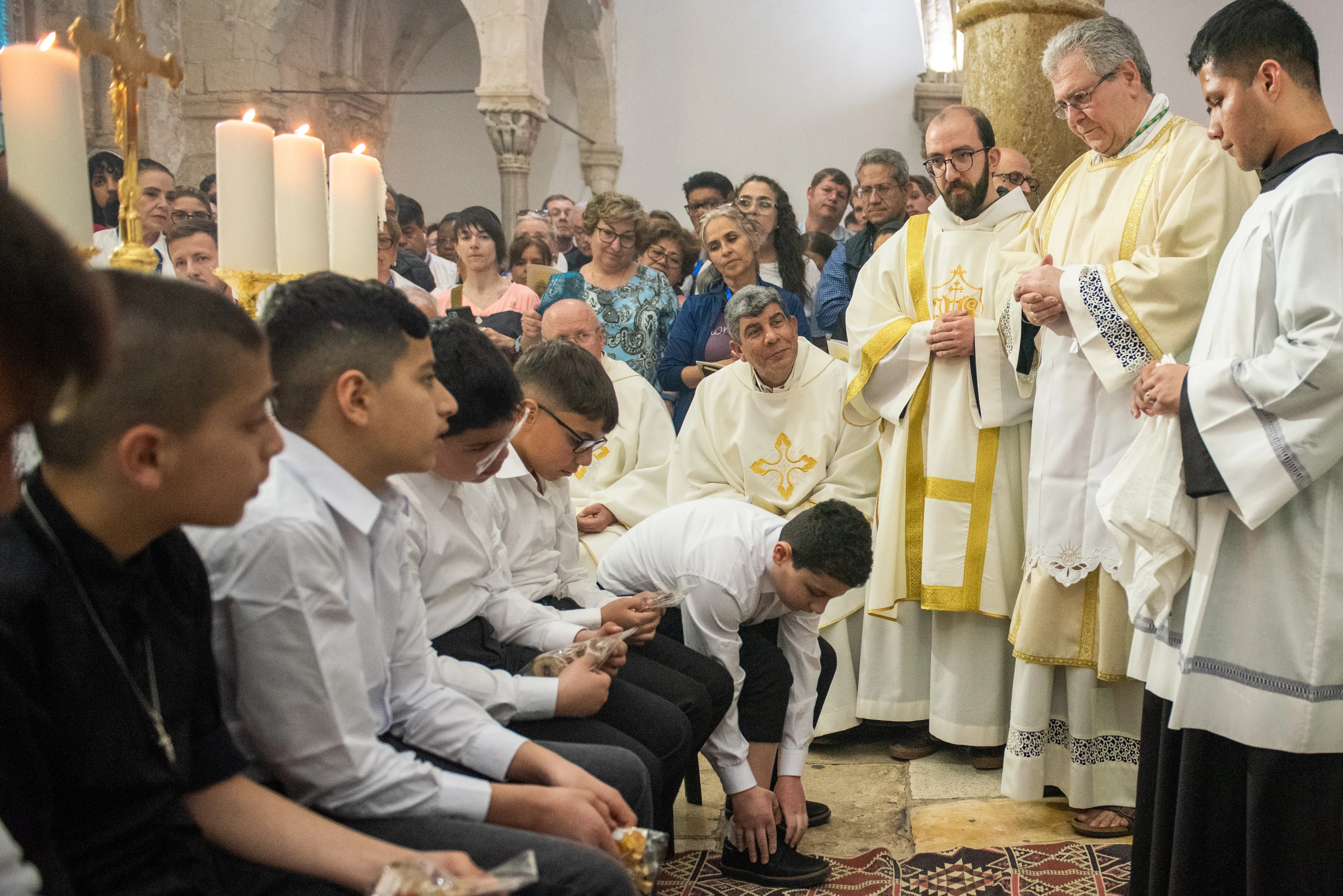
The custos of the Holy Land, Father Francesco Patton, presided over the Eucharistic celebration at the Cenacle. In his homily, before washing the feet of six teachers and six students from the Terra Sancta School in Jerusalem, he emphasized the value of the “new commandment” that Jesus gave to his apostles here: “As I have loved you, so you also should love one another” (Jn 13:34).
“To love means to give oneself and to serve,” he said. “In this celebration, we want to nourish ourselves with Jesus because if he is alive within us, then we too will become capable of loving one another as he loved us. And we also want to learn from Jesus not to be served but to serve.”
Some students from the Terra Sancta School in Jerusalem who took part in the “Washing of the Feet” ritual during the Mass of the Lord’s Supper celebrated at the Cenacle in Jerusalem on Holy Thursday, March 28, 2024. Addressing them specifically in his homily, the Custos of the Holy Land emphasized the value of the “new commandment” that Jesus gave to his apostles here: “As I have loved you, so you also should love one another” (John 13:34). Credit: Marinella Bandini
Holy Thursday is the only day, along with Pentecost Sunday, when the Franciscans have the right to gather in the Upper Room to pray. Usually, it is a liturgy of the word, but since 2021 they have celebrated Mass. Outside, Israeli Army personnel ensure security.
The Cenacle is at the center of strong tensions and disputes regarding ownership and rights of access and celebration. An ancient tradition places King David’s tomb here, and over the centuries, Jews and Muslims have leveraged this place to first expel the Franciscans and then to prevent Christian worship, which they deem sacrilegious.
Father Narciso Klimas, historian and archivist of the Custody of the Holy Land, explained to CNA: “The Custody has all the documents confirming our ownership of Mount Zion.” Even today, traces of Christian presence are visible, both in the architecture of the place and in some symbols.
“The presence of the Franciscans at the Cenacle,” Klimas explained, “dates back to 1342, but as early as 1333, the rulers of Naples, Robert of Anjou and Sancha of Majorca, acquired the land and donated it to the friars. This was the first headquarters of the Custody of the Holy Land.” To this day, the official title of the Custos of the Holy Land is “Guardian of Mount Zion and the Holy Sepulchre.”
Father Francesco Patton, custos of the Holy Land, incenses the altar at the beginning of the Mass of the Lord’s Supper that the Franciscan friars celebrated inside the Cenacle in Jerusalem on Holy Thursday, March 28, 2024. This is the only day, along with Pentecost Sunday, that the Franciscans have the right to gather here to pray. Usually, it is a liturgy of the word, but since 2021 they have celebrated Mass. Credit: Marinella Bandini
In 1421, a rabbi submitted a petition to the local emirs, claiming the right for Muslims and Jews to this place due to the presence of King David’s tomb. One hundred years later, Klimas continued, “the Ottomans used this argument to gradually expel the Franciscans, until in 1551 the sultan decreed the total expulsion of the Franciscans from Mount Zion.” The Cenacle first became a mosque and later, in the lower part, also a synagogue.
“Since then,” Klimas recounted, “the Franciscans have never stopped attempting to regain possession of the Cenacle. The friars have always tried to ensure a presence, at least on Holy Thursday and Pentecost, sometimes even with methods that are not exactly orthodox (such as bribing the local guardian).”
Something began to change in the 19th century, during the time of the Ottoman Sultan Abdülmecid. Since then, the Franciscans have had the right to pray at the Cenacle on Holy Thursday and Pentecost. After a failed attempt in the 1930s to regain control of it, the friars managed to purchase adjacent land where they built the convent of San Francesco “ad Coenaculum” (next to the Cenacle).
In 1948, with the founding of the State of Israel, the entire Mount Zion came under Israeli control, and until today, the Israeli state owns the entire complex of the Cenacle. The neighborhood has a strong Jewish religious character and is characterized by the presence of synagogues and rabbinical schools.
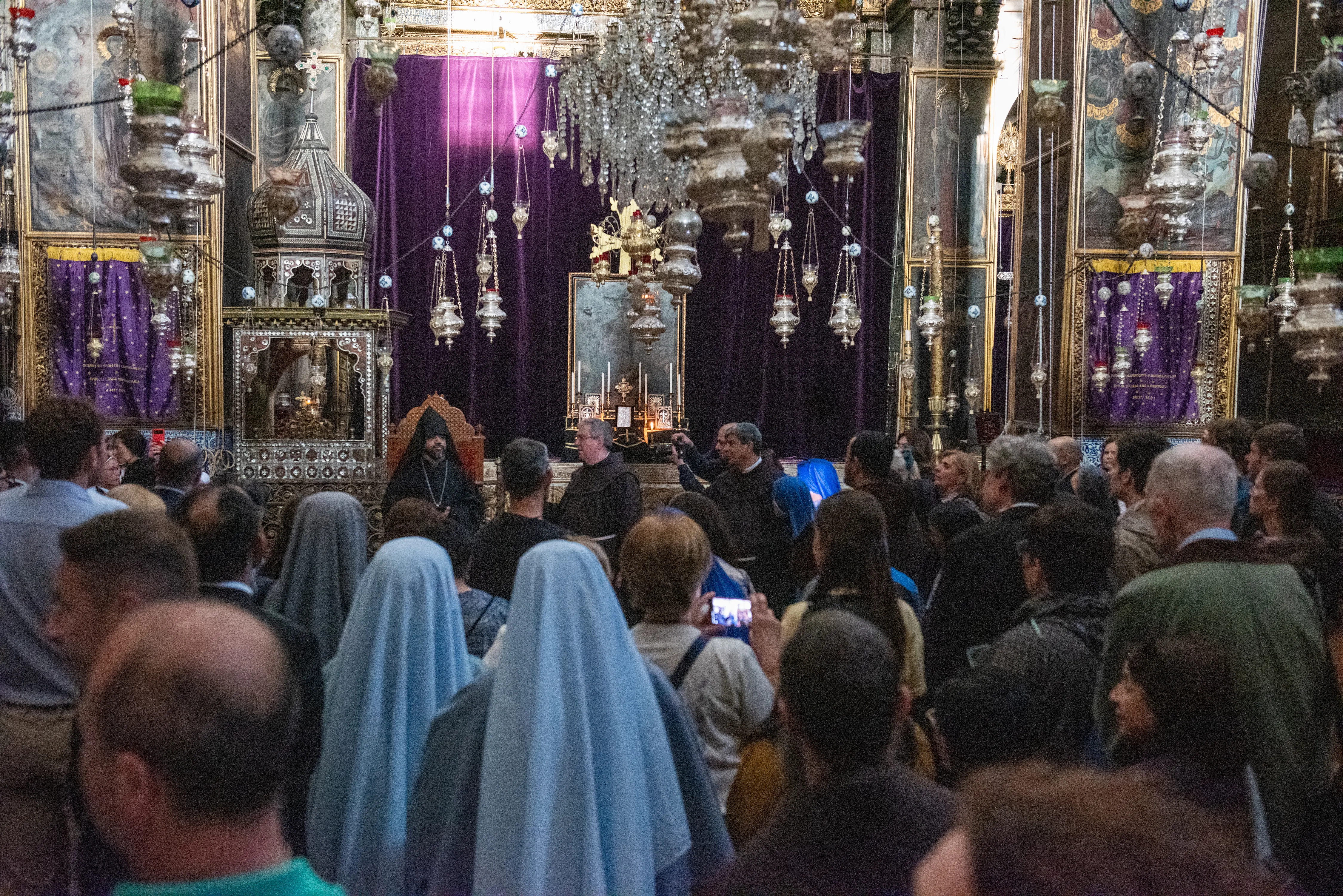
The Franciscan friars and the faithful in the Armenian Cathedral of St. James in Jerusalem after the Mass of the Lord’s Supper celebrated at the Cenacle. Here, the friars commemorate the hospitality they received here in the 16th century. After being expelled from the Cenacle, the Franciscans were welcomed by the Armenians for seven years while the convent of St. Saviour was purchased, to this day the headquarters of the Custody of the Holy Land. March 28, 2024. Credit: Marinella Bandini
“Even if the Cenacle cannot return to our hands,” Klimas explained, “we ask at least to celebrate regularly, even with pilgrims, without the need for special permits.”
Negotiations on these matters (taxation and property) have been ongoing for over 25 years between the Holy See and the State of Israel, following the signing of the Fundamental Agreement in 1993 and the agreement recognizing the legal personality of the Catholic Church in Israel in 1997.
Despite the slow pace of diplomatic negotiations, some practical progress can be observed informally. The ability to celebrate Mass on Holy Thursday at the Cenacle is among these developments. Permissions to access the site on other special occasions are usually granted without significant issues as well.
After the Mass at the Cenacle, as tradition dictates, the Franciscans proceeded in a procession to three churches in two other symbolic places: the Armenian churches of St. James and of the Holy Archangels (of the Armenian Apostolic Church), and the Syro-Orthodox Church of St. Mark.
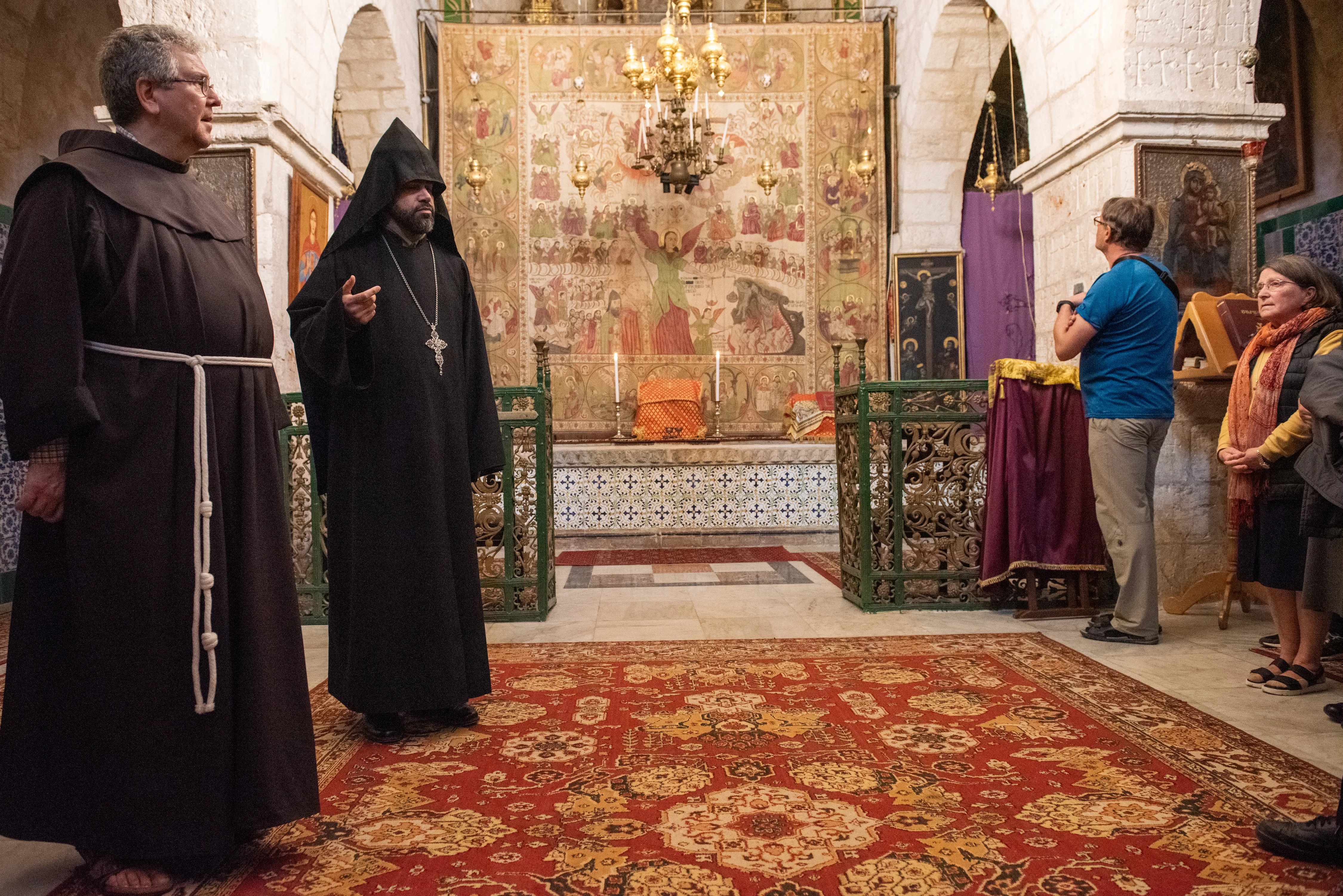
The Franciscan friars and the faithful in the Armenian Church of the Holy Archangels in Jerusalem after the Mass of the Lord’s Supper celebrated at the Cenacle on March 28, 2024. Friars and faithful pray together and receive the blessing from the representative of the Armenian Apostolic Church. Credit: Marinella Bandini
This yearly visit commemorates the hospitality the friars received in the 16th century. After being expelled from the Cenacle, the Franciscans were welcomed by the Armenians for seven years while the convent of St. Saviour was purchased, to this day the headquarters of the Custody of the Holy Land. Friars and faithful prayed together and received the blessing from the representative of the Armenian Apostolic Church.
The Syriac Orthodox Church of St. Mark is said to be built on the house of Mary, the mother of the evangelist Mark. According to Syriac tradition, this is the place where Jesus had the Last Supper. Here as well, those present prayed together and were able to listen to the Lord’s Prayer sung in Aramaic by one of the monks, who then gave a blessing.
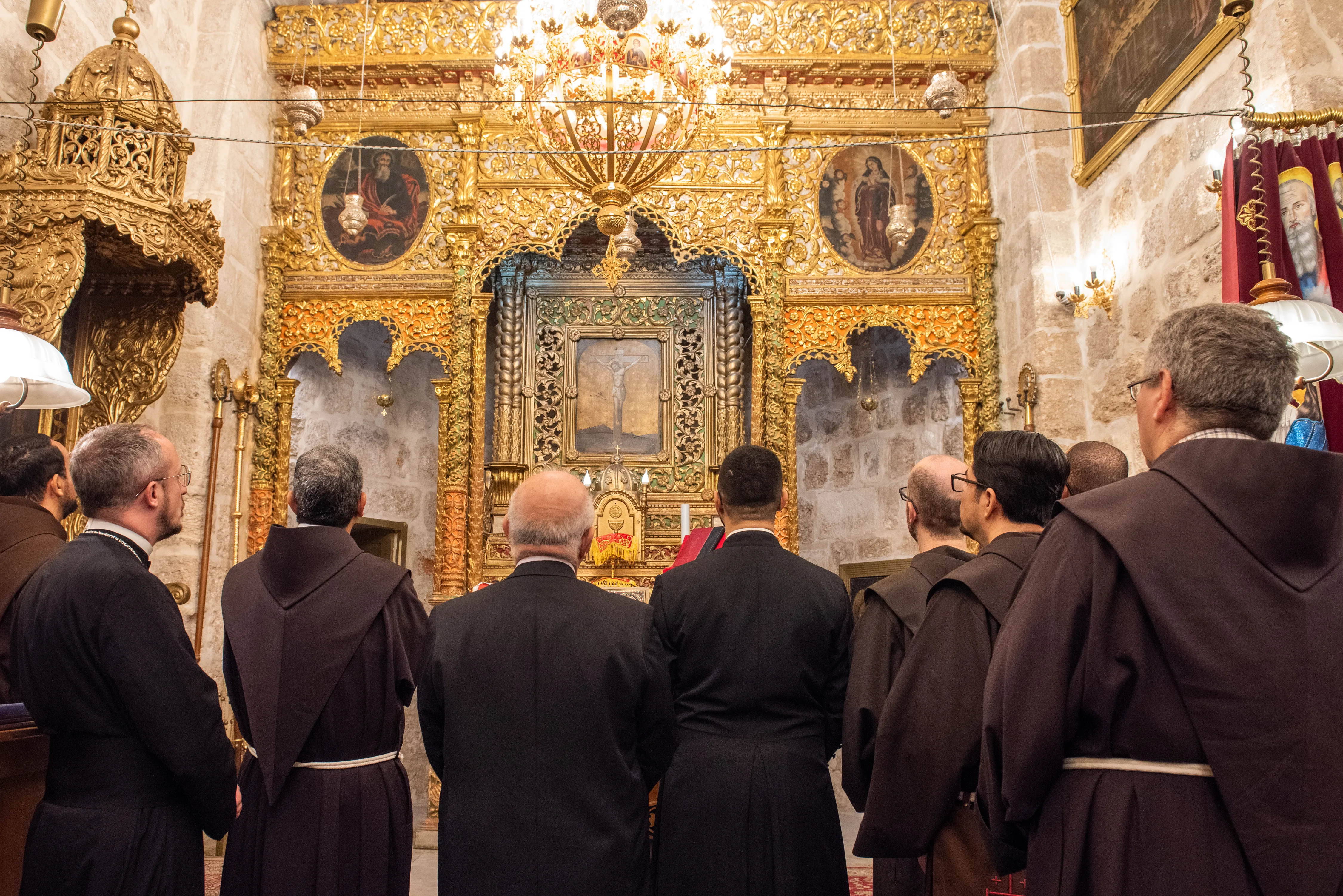
The Franciscan friars and the faithful in the Syro-Orthodox church of St. Mark in Jerusalem after the Mass of the Lord’s Supper celebrated at the Cenacle on March 28, 2024. According to Syriac tradition, this is the upper room where Jesus had the Last Supper. Here as well, those present pray together and listen to the Lord’s Prayer sung in Aramaic by one of the monks, who then gives the blessing. Credit: Marinella Bandini
The Oregon State Capitol in Salem. / Credit: Zack Frank/Shutterstock
Washington, D.C. Newsroom, Mar 28, 2024 / 15:00 pm (CNA).
The Oregon Health Authority (OHA) is reporting a significant rise in assisted suicide prescriptions and deaths in the… […]
Pope Francis kisses the foot of one of the 12 women whose feet he washed at the Rebibbia Women’s Prison in Rome on Holy Thursday, March 28, 2024. / Credit: Vatican Media
CNA Staff, Mar 28, 2024 / 14:30 pm (CNA).
Pope Francis on Thursday washed … […]