No Picture
News Briefs

Ruthenian women’s community established as eparchial monastery

October 4, 2019 CNA Daily News 1

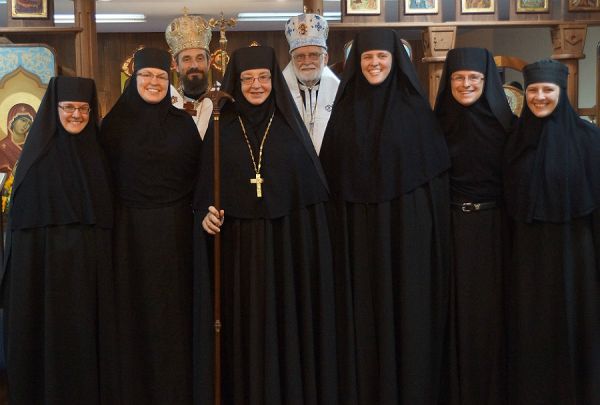
Parma, Ohio, Oct 4, 2019 / 04:18 pm (CNA).- The Ruthenian Bishop of Parma last week erected Christ the Bridegroom Monastery as a female monastery sui iuris of eparchial right.

The decision was made “in light of the present circumstances and the spiritual needs of the nuns of Christ the Bridegroom, and for the good of the people of the Byzantine Catholic Eparchy of Parma for the Ruthenians.”

Bishop Milan Lach’s decree was given Sept. 27. As a sui iuris monastery of eparchial right, the community does not depend on another monastery, it is governed by its own typicon (rule of life), and it was erected by its bishop.

Sister Natalia, a rasophore (novice) of the community, explained to CNA that “our canonical establishment is a promise that our eparchy is here for us and desires our presence. It’s a promise, too, that we are here for our eparchy, as we are for the world – dedicating our lives in prayer, fasting, and hospitality.”

She said that “what we hope to give to our eparchy, and to the world” is “a witness of the joy and love that come from radically loving Christ as our Spouse.”

With the canonical establishment, the monastery feels “a greater responsibility to live the life laid out in our typikon,” Sister Natalia reflected. “There is also a tangible change in the atmosphere of our community – an abundance of joy and peace, fruits of the Holy Spirit.”

Christ the Bridegroom Monastery, located in Burton, Ohio, fewer than 40 miles east of Parma, was first established in 2009; Bishop Lach’s decree completes the canonical process of its founding.

The bishop wrote that through the community of Christ the Bridegroom, the eparchy “has experienced in a fruitful way the gifts of the Holy Spirit. In religious consecration, the nuns of Christ the Bridegroom express and model in a new manner the gift of monastic life.”

“In silence, prayer, and hospitality, the nuns of Christ the Bridegroom are called to rediscover the spousal language from the falsifications of our culture, displaying faithfully not only that monastic consecration refers to mankind’s union with God in Heaven, but also that longings of human hearts for the beloved are meant to be fulfilled in the intimate union with Christ and participation in the life of the Holy Trinity.”

The monastery “seeks to hark back to the original call of God for all baptized Christians to seek the Kingdom of God above all else with the holiness of their lives,” Bishop Lach reflected.

In accord with the monastery’s formal establishement, the stavrophore (life-profesed) nuns elected Mother Theodora as the hegumena (abbess) Sept. 29, and the following day, the decree was publicly announced and Mother Theodora’s institution as hegumena was celebrated.

“We are so grateful to Bishop John Kudrick for his invitation to begin living this life ten years ago, for taking the initial canonical steps in our foundation, and for his spiritual fatherhood. We are also so grateful to our current bishop, Bishop Milan, for taking the final steps needed to reach this canonical approval as an eparchial monastery and for loving us as a father,” the monastery said Oct. 1.

The community has six members (four stavrophores and two rasophores), who observe poverty, chastity, and obedience.

Bishop Kudrick, who was Ruthenian Bishop of Parma from 2002 to 2016, outlined his vision for the monastery in January 2008. He saw it as a response to St. John Paul II’s 1995 apostolic letter Orientale Lumen, which called for a renewal of monastic life among the diaspora of the Eastern Catholic Churches.

The community first formed in April 2009, and was received into the eparchy as a community in March 2010. Mother Theodora became the community’s first stavrophore nun in November 2011, and in August 2015 the community was established as a public association of the faithful.

The monastery typically has Divine Liturgy on Sundays and one other day during the week. On weekdays, the daily schedule begins with Matins at 6:30 am and goes until Compline, which ends at 9:30 pm. At noon the community prays one of the Hours, as well as special intentions and the day’s epistle and gospel, and Vespers is celebrated in the evening. The remainder of the day has time set aside for exercise, personal prayer, silence, work, free time, recreation, studies, and meals.

The monastery includes several poustinias (small retreat houses) for guests to make short retreats.

The community will hold a benefit dinner called “The Bridegroom’s Banquet” Oct. 19 at St. Joseph Byzantine Catholic Church in Brecksville, Ohio.

[…]

No Picture
News Briefs

Senators introduce bill requiring states to report abortion figures

October 4, 2019 CNA Daily News 0

Washington D.C., Oct 4, 2019 / 04:00 pm (CNA).- Senators have introduced legislation that would require states to report abortion statistics to the U.S. Centres for Disease Control, including in all cases where babies survive botched abortions.

The Ensuring Accurate and Complete Abortion Data Reporting Act of 2019 would make certain Medicaid family planning funds to states conditional upon their gathering and reporting comprehensive abortion data to the CDC.

“Requiring comprehensive reporting from every state will finally give Americans-regardless of your stance on the issue-an accurate look at abortion trends in our country,” stated Sen. Joni Ernst (R-Iowa), who introduced the legislation last week with Sen. Tom Cotton (R-Ark.).

Currently, state reporting on abortions is voluntary. Currently, the CDC relies on data that has significant gaps, as three states—California, Maryland, and New Hampshire which together represent around 15% of the U.S. population—do not report abortion data, the office of Sen. Cotton said.

Cosponsors of the Senate bill include Senators Marsha Blackburn (R-Tenn.), Mike Braun (R-Ind.), Kevin Cramer (R-N.D.), Josh Hawley (R-Mo.), James Lankford (R-Okla.), Ben Sasse (R-Neb.), and Tim Scott (R-S.C.).

The pro-life Charlotte Lozier Institute (CLI) has also pointed out that incomplete abortion data makes it harder to chart abortion trends in the U.S. with any certainty.

The CDC’s national reporting surveillance system “lags two years behind other vital statistics systems, namely birth and death data,” CLI said in a statement, “and misses more than a fifth of all abortions performed in the U.S.” The three states that do not report abortions account for around 20% of abortions in the U.S., according to CLI estimates.

The Senate bill would also require states to report instances of unborn children surviving abortion attempts.

“The American people deserve to know how many babies are born alive during abortion attempts in our country,” Cotton stated. “This is life or death information, yet most states don’t collect it.”

Earlier this year, following the introduction of a controversial Virginia state bill that would have allowed abortions when a woman was in active labor, Gov. Ralph Northam (D) said that, if a baby survived an abortion attempt, under the legislation it would be made “comfortable” and the doctors and mother would discuss what to do—rather than automatically care for the baby.

Members in the House and Senate introduced the Born-Alive Abortion Survivors Protection Act that would mandate that any baby surviving a botched abortion would receive the same standard of care as would be given to “any other child born alive at the same gestational age.”

CLI has reported that, according to one CDC health policy data request, 143 babies survived abortion attempts nationwide between 2003 and 2014, but the CDC added that the number may be an underestimate. Better state reporting could help increase the certainty of how many children survive botched abortion attempts.

A companion bill to the Senate bill, H.R. 3580, was introduced in the House by Reps. Ralph Norman (R-S.C.) and Gary Palmer (R-Ala.).

The bill introduction comes after Sens. Todd Young (R-Ind.) and Mike Braun (R-Ind.) introduced legislation last week, S.2950, the Dignity for Aborted Children Act, to require the respectful treatment of the remains of abortion victims by abortion providers.

That legislation was introduced after the remains of more than 2,200 unborn babies wee found in the residence of deceased South Bend, Indiana abortionist Ulrich Klopfer.

[…]

No Picture
News Briefs

‘Keeping our eyes fixed on Jesus’- The vision of Franciscan University’s new president

October 3, 2019 CNA Daily News 0

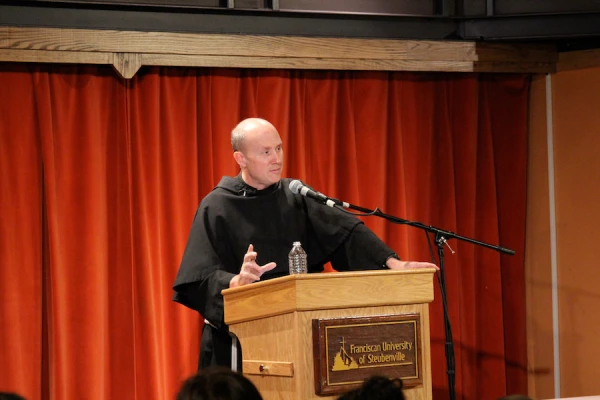
Steubenville, Ohio, Oct 3, 2019 / 06:45 pm (CNA).- The incoming president of Franciscan University of Steubenville has spent the past few months speaking, and listening, to students, alumni, and friends of the university.

He’s become well-known for a phrase he uses.

“We don’t just want God to bless what we’re doing, we want to bless what God is doing,” Fr. David Pivonka, TOR, tells students and alumni.

And God, Pivonka told CNA, is doing new things at the Ohio university he now leads.

God “is revealing himself to us and making it clear that he has a plan and a desire for us,” the priest said during an Oct. 3 interview, the day before his inauguration as the university’s seventh president.

There is, Pivonka said, “a newness, or freshness that is going on,” at the university. And, he insists, that newness is not about him, but about God’s Providence.

“In my own life and in the life of the friars in our community, we are just seeing different pieces come together and different people being placed here, and I think God is doing a really great thing, and a prophetic thing.”

Pivonka said God is inviting the university to a “refocusing” of its identity, and its priorities. How that unfolds will depend on prayer and discernment.

“It’s really keeping our eyes fixed on Jesus, being faithful to what he is asking us to do,” Pivonka told CNA.

“I think St. Francis has something to do with that,” he added, mentioning that the saint can “helping us continue to understand what makes a Franciscan university different than any other university.” 

Pivonka, 54, has some ideas about what that might look like. Franciscan identity, he emphasized, is about daily conversion, repentance, discipleship, and about solidarity with the poor.

The priest mentioned especially the importance of the university’s relationship with locals in the city of Steubenville, which suffers from high unemployment and economic depression, and the surrounding Ohio valley.

Pivonka said he’s met with local leaders to try to strengthen the university’s place in the region. He said he’s encouraged local leaders to think with him creatively about how the university – mostly set apart from the rest of the city atop a hill – can better engage with, and benefit from the community.

“What can we do in a mutual relationship? What can they do to help the university? Bause there’s gifts and talents here that have not been utilized. And, what can we do to help them?” he asked.

Noting the poverty of the region, Pivonka said that “one of the greatest things to raise people out of poverty is education. Education opens up new worlds, opens up doors. It provides people with options. The poor don’t always have options, and that’s a horrible feeling to have: that you don’t have any options or choices. I think education provides those options.”

“We want to make more resources available for the local kids who can’t afford to come to the university. We already have a grant of 50% off of tuition for any local kid. There’s some people for whom that’s enough to get them over the hump. They can come. But there are still others where that’s not enough. We want to do a better job at making sure that if an individual who lives in the Ohio Valley and wants an education from Franciscan, that we’re able to help them with that.”

He also told CNA that he wants his leadership of the university to emphasize unity—in the Church and within the university community. And he said unity will require a spiritual vision.

“We just find ourselves in a Church in a time that is really broken,” Pivonka said.

“The Church has been really wounded, but she has always been that way. There has never been a time when the Church wasn’t like that,” he added.

“But she is still the bride, and she is still beautiful, and still worth fighting for, and she is still worth protecting, and my fear is that maybe we haven’t recognized that, maybe we have been unable to see that. That is one of my prayers that the university is able to help see the bride, see the Church as she is.”

“The university,” he said, “could be a source of unity and healing.”

He prays that will be the case.

Pivonka told CNA he thinks prayer can also be a source of unity on the university’s campus.

While the Charismatic Renewal has long been associated with Franciscan University, Pivonka said that he’s mostly concerned that students live as Christian disciples, regardless of their spirituality.

“One of the things I said at the beginning of the year to students and the faculty is ultimately that I’m not concerned with people involved with Renewal as a movement, but what I am concerned about is that our lives be animated by the Holy Spirit,” he said.

Acknowledging liturgical “polarization” on the university’s campus, and more broadly in the church, the priest explained that “my prayer, and I think it’s possible but it will take work by us, is that we can, by the grace of God, really give an example that we don’t all have to pray in exactly the same way, and we can approach the Lord differently.”

“But part of being Catholic is embracing one another and giving one another freedom to do that without judgement, without dismissal. And that’s one of the goals and one of the desires I have for the university.”

“The Spirit of God is the same Spirit for all of us,” he said.

In the Church “we are supposed to be most united in our prayer and in our worship, and we are actually becoming more divided. I think that is ultimately the work of the Evil One, I really do. So can Franciscan University be a source of renewal, that we can bring this together? That’s my prayer.”

Pivonka is familiar with renewal at Franciscan University of Steubenville.

The priest graduated from the university in 1989, during the tenure of its well-known and charismatic fourth president, Fr. Michael Scanlan, TOR, who is largely credited with sparking a turnaround in the faith and culture of the university, which was nearly closed when Scanlan took the helm in 1974. Pivonka joined the Franciscans, Third Order Regular, the religious order that oversees the university, and later worked closely with Scanlan in the university’s administration.

The university’s trustees unanimously elected Pivonka president on May 21. The priest acknowledged that Scanlan, who died in 2017, has recently faced allegations of improper conduct during his term of leadership at the university.

Scanlan is alleged to have enabled and covered-up sexual misconduct on the part of another popular Franciscan friar on the campus. While Pivonka said he had not seen direct evidence supporting the claims made against Scanlan, he told CNA that he is sorry that anyone might have been harmed by failures on Scanlan’s part to respond properly in the face of allegations, and that the allegations – and his responsibility to address them- have been the subject of his prayer.

Pivonka said that as president of the university, he is committed to transparency in leadership, and to facing the past directly.

“We want to make sure that if there’s anybody who’s been a victim of any abuse or anything that was inappropriate, that we want to make sure that they’re cared for and that they’re heard and that they’re seen, and taken care of whatever circumstances, whoever was responsible for that to make sure that justice is brought about and healing is brought about,” he told CNA.

He emphasized the efforts made by the university in recent years, especially under the leadership of Fr. Sean Sheridan, his predecessor as president, to address accountability and assure a safe environment at the university.

Pivonka also emphasized the university’s commitment to forming students, to “household” faith communities, to academic freedom, and to “dynamic orthodoxy,” a phrase long associated with Franciscan, but attributed to the late Cardinal John O’Connor of New York.

“I think that when one experiences the beauty and grandeur and the glory of orthodoxy in right practice and right living, then orthodoxy is life-giving.”

“There is a need for an animated orthodoxy, an orthodoxy that’s alive, that’s fresh, that’s engaging. That’s really where we see orthodoxy here at the university,” Pivonka added.

Pivonka will be inaugurated as the university’s president Oct. 4, on the feast of St. Francis. He told CNA that as a leader, he hopes to be an instrument of conversion.

“My prayer is that people will experience conversion. That’s continually my prayer in the work that I’m doing at the university,” Pivonka said.

Calling a Catholic university a “faith community,” Pivonka said that “a faith community needs a pastor. It needs a shepherd, it needs a teacher. I really see my role in the university as that – it’s a priest and a shepherd.”

As a shepherd, he said, he hopes that after they graduate, students of Franciscan University are “engaged in their professions. That they’re outstanding doctors and lawyers and engineers and nurses and teachers and catechists and priests. That they are profoundly competent in their field. That they are influencing the people that they work with, to witness to them, to live the goodness of God’s love for them.”

“That they see the beauty of the Church, are engaged in the life of the Church, participating in their parishes, as lectors and youth ministers and Eucharistic ministers and works of mercy. That they are holy moms and dads that love their kids, that they are raising saints. That they live with hope and joy, purpose.”

He added that he hopes the university he leads will exercise a prophetic mission in the world.

God has placed on his heart, he told CNA, that “the Lord wants to do more, to use the university as a prophetic voice to a culture, to a Church, about what is possible. About hope that the situations in which we find ourselves are not the end of the story. About faithfulness.”

Ultimately, Pivonka said, he’ll measure his success by the holiness of his students.

“I told the students at the opening school year Mass that my goal and my desire is that each one of them hear the Lord say to them, ‘Well done, my good and faithful servant. Enter into joy today.’ So, big picture success is that each of the students and everyone associated with the university ultimately inherits the Kingdom of God.”


[…]

No Picture
News Briefs

Bishop Bransfield facing new abuse allegation

October 3, 2019 CNA Daily News 0

Washington D.C., Oct 3, 2019 / 03:33 pm (CNA).- Former Bishop of Wheeling-Charleston Michael Bransfield is facing an allegation that he touched inappropriately a nine year-old girl during a pilgrimage to Washington, DC, in 2012.

 
A subpoena was … […]

No Picture
News Briefs

Brooklyn’s Bishop DiMarzio to lead Vatican investigation of Bishop Richard Malone and the Diocese of Buffalo

October 3, 2019 CNA Daily News 0

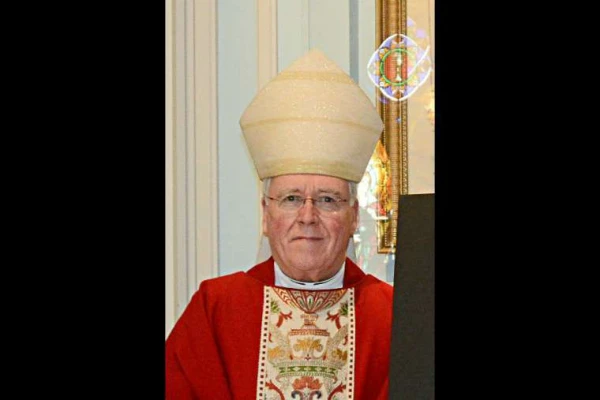
Washington D.C., Oct 3, 2019 / 02:30 pm (CNA).- The Holy See has announced that Bishop Nicholas DiMarzio of Brooklyn will lead an Apostolic Visitation of the Diocese of Buffalo.

The visitation, a canonical inspection and fact-finding mission, was ordered by Cardinal Marc Ouellet of the Congregation of Bishops in Rome, the Vatican department responsible for overseeing the personal conduct of bishops.

A notice issued by the Apostolic Nunciature in Washington, DC, on Thursday confirmed that the visitation was “non-judicial and non-administrative,” meaning that no formal charges are currently being considered against the scandal-plagued Bishop Richard Malone of Buffalo.

The nunciature did confirm that the visitation had not been ordered under the provisions of Vos estis lux mundi, the policy document on sexual abuse and diocesan administration issued May 7 by Pope Francis, which came into effect June 1.

DiMarzio will will assisted by Fr. Steven Aguggia, the judicial vicar of the Brooklyn diocese, who will act as secretary of the visitation. The nunciature did not confirm when the visitation would formally begin, or how long it would continue before transmitting its findings to the Congregation for Bishops in Rome.

“This is a difficult period in the life of the Church in Buffalo,” DiMarzio said in a statement released on Oct. 3.

“I pledge I will keep an open mind throughout the process and do my best to learn the facts and gain a thorough understanding of the situation in order to fulfill the mandate of this Apostolic Visitation.”

In a statement released Thursday afternoon, the Diocese of Buffalo said that Malone “welcomes” the apostolic visitation.

“Bishop Malone has committed to cooperate fully and stated that this Visitation is for the good of the Church in Buffalo. The purpose of an apostolic visitation is to assist the diocese and improve the local Church’s ability to minister to the people it serves,” the diocese said.

“The mission of the Church in Buffalo continues to be to seek justice and compassion for the victim-survivors of sexual abuse and their families and to continue the good works of the church, fulfilled on a daily basis, by faithful men and women who serve a wide spectrum of our diocese.”

The diocese added its “heartfelt gratitude” to DiMarzio, and “to the Catholic community of Buffalo, including the lay faithful and the clergy.”

While the nunciature in Washington made it clear the law had not been invoked in this case, the visitation is the second authorized in the U.S. since the May 7 publication of Vos estis lux mundi. Bishop Michael Hoeppner of Crookston, Minnesota was investigated in September by Archbishop Bernard Hebda of St. Paul-Minneapolis. Sources close to the archbishop tell CNA that Hebda sent to Rome in late September, and is now awaiting further instructions.
 
In a year of scandals related to clerical sexual abuse, Malone has repeatedly found himself at the center of media attention.
In November, 2018, a former employee leaked confidential diocesan documents related to the handling of claims of clerical sexual abuse.

In August, a RICO lawsuit was filed against the diocese and the bishop, alleging that the response of the diocese was comparable to an organized crime syndicate.

Recordings of private conversations released in early September appeared to show that Malone believed sexual harassment accusations made against a diocesan priest months before the bishop removed the priest from ministry.

The contents of recordings of conversations between Malone and Fr. Ryszard Biernat, his secretary and diocesan vice chancellor, were reported in early September by WKBW in Buffalo.

In the conversations, Malone seems to acknowledge the legitimacy of accusations of harassment and a violation of the seal of confession made against a diocesan priest, Fr. Jeffrey Nowak, by a seminarian, months before the diocese removed Nowak from active ministry.

In an Aug. 2 conversation, Malone can reportedly be heard saying, “We are in a true crisis situation. True crisis. And everyone in the office is convinced this could be the end for me as bishop.”

The bishop is also heard to say that if the media reported on the Nowak situation, “it could force me to resign.”

Malone, 73, has led the Buffalo diocese since 2012. He was ordained a priest of Boston in 1972, and became an auxiliary bishop in that diocese in 2000, two years before a national sexual abuse scandal emerged in the United States, centered on the Archdiocese of Boston and the leadership of Cardinal Bernard Law. Malone was Maine’s bishop from 2004 until 2012.

“Our Holy Father has a great devotion to Our Lady Untier of Knots,” DiMarzio said, “I beg the intercession of the Blessed Mother, that I may be an instrument for surfacing the truth so that justice might be served and God’s mercy experienced.”


[…]

No Picture
News Briefs

Bishop praises brother’s forgiveness of officer in fatal Dallas shooting

October 3, 2019 CNA Daily News 2

Dallas, Texas, Oct 3, 2019 / 12:03 pm (CNA).- The brother of Dallas man fatally shot by an off-duty police officer used his time in court to offer a hug and a message of forgiveness to the officer as she received her prison sentence.

“If you truly are sorry, I know I can speak for myself, I forgive you,” said 18-year-old Brandt Jean to former Dallas police officer Amber Guyger during his victim impact statement.

“I hope you go to God with all the guilt, all the bad things you may have done in the past,” he said. “If up go to God and ask him, he will forgive you.”

Guyger, 31, was sentenced to 10 years in prison on Wednesday for the murder of Botham Jean, a 27-year-old black man who was killed last September. She will be eligible for parole in 5 years.

Guyger was off-duty but still wearing her police uniform when she entered Jean’s apartment and fatally shot him. She said she had just finished a long shift, was distracted by a series of text messages from a colleague with whom she was having an affair, and did not realize she had entered the wrong apartment by mistake.

Thinking that she was in her own apartment, she saw Jean sitting on the couch, thought he was an intruder, and opened fire.

Prosecutors had sought at least 28 years in prison, in recognition of the fact that Jean was about to turn 28 years old when he was killed. Guyger’s defense had argued that the murder was a mistake rather than a malicious act.

Protestors outside the courthouse objected to the sentence, saying it was too short.

Inside the courtroom, however, Brandt choked back tears as he addressed Guyger, saying, “I don’t even want you to go to jail. I want the best for you, because I know that’s exactly what Botham would want…and the best would be give your life for Christ.”

“I love you as a person, and I don’t wish anything bad on you,” he continued, before asking – and receiving – permission to give Guyger a hug. The two shared a tearful embrace, with whispers that were not audible to those around them, according to the Dallas Morning News.

Bishop Edward Burns of Dallas praised the encounter, saying, “What an incredible example of Christian love and forgiveness we witnessed during the victim impact statement as Botham Jean’s brother, Brandt, forgave Amber Guyger, encouraged her to turn her life over to Christ and gave her a hug.”

“He said it is what Botham would’ve wanted,” Burns continued. “I pray we can all follow the example of this outstanding young man. Let us pray for peace in our community and around the world.”

After the sentencing, State District Judge Tammy Kemp offered Guyger her personal Bible, the Dallas Morning News reported. She encouraging Guyger to read it and told her, “Forgive yourself.”

[…]