How the upcoming canonization affirms the Fatima apparitions

April 21, 2017 CNA Daily News 0

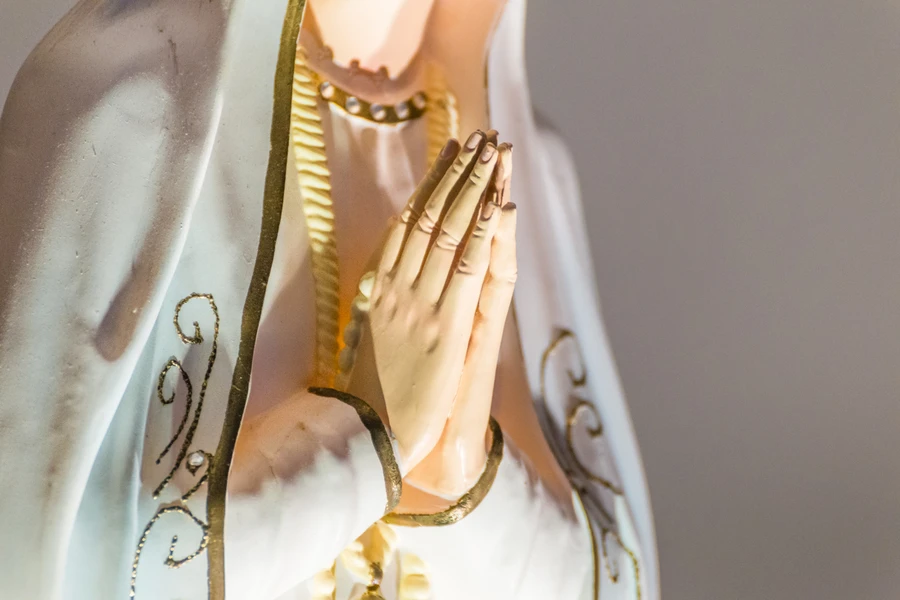
Fatima, Portugal, Apr 21, 2017 / 03:02 am (CNA/EWTN News).- The canonization of Fatima visionaries Francisco and Jacinta Marto has been hailed as an exciting moment for the Church, but the rector of the Marian shrine has said that it bears an even greater significance in terms of putting a spotlight on Our Lady’s message.

“I think the canonization in a certain way helps to give credibility to the apparitions and to the message of Fatima,” Fr. Carlos Cabecinhas told CNA.
 
This is an “indirect credibility,” he said, but one which nonetheless “makes us look to the protagonists of the events of Fatima and to see their holiness, the holiness with which they challenge us to live this message.”

Mary appeared to Francisco, Jacinta and their cousin Lucia May 13, 1917, for the first time, asking them to pray the rosary and make sacrifices for the conversion of sinners, which they did with decisive commitment.

Our Lady continued to appear to them on the 13th of each month until October of that year, making constant appeals for an increase in faith, hope, conversion and prayers for peace. In addition, she also revealed to the children three “secrets,” which are now known to be a vision of hell interpreted as scenes from World War II, the rise and fall of Soviet Communism, and what was a foreshadowing of the 1981 assassination attempt on St. John Paul II.

After the apparitions, Francisco and Jacinta Marto died in 1918 after a serious bout of the Spanish flu at 9 and 11, but were known to pray often and offered up daily sacrifices for the conversion of sinners and an increase in love for God.

In this context, Fr. Cabecinhas said he believes the canonization of siblings Francisco and Jacinta “has this value: not only two Saints in the Church, but two Saints who challenge us to look to the message of Fatima and to understand that Fatima is also a school of holiness for each one of us.”

Fr. Cabecinhas has been the rector of the Fatima Marian Shrine since 2011, and is in charge of the bulk of preparations for the Pope’s May 12-13 visit.

He said the centenary of the apparitions, the canonization and the growing anticipation of Pope Francis’ visit “is a moment of great joy” for the people of Portugal, but also for him personally.

“For me it has been a great gift of God to be able to live this moment before the shrine and to have in my hands the decisions of the Shrine. It’s a gift of God, but also a great responsibility,” he said, explaining that they are in the midst of making final preparations.

In general, preparations are going “very well,” he said, noting that all of the big decisions have been made and things are falling into place, so it’s down to the final, last-minute work of getting ready to host an estimated 500-800,000 pilgrims during the May celebrations.

Speaking of the reason why pilgrims choose to visit Fatima in particular, the priest said it’s “without a doubt” because “they seek a strong experience of God, a strong encounter with God.”

“This is specific to Fatima,” he said, noting that while other shrines and holy sites are associated with physical healings or other fruits, the people who come to Fatima “come to have a strong experience with God, they come to change their lives, and many times this is the experience they transmit.”

“We say that at Fatima there are no physical healings – there are some, but (what is) specific to Fatima is the change of heart, the change of life, orienting one’s life toward God,” he said, saying that another characteristic unique to Fatima is “silence.”

Cabecinhas said that when pilgrims speak to him about their experience visiting the shrine, many of them comment on how silent and prayerful the environment is, which is something he hopes each person who comes is able to experience.

The shrine has also been a popular place for Popes to visit, with Bl. Paul VI being the first pontiff to do so in 1967. St. John Paul II followed suit in 1982, making a trip that was largely intended to pay homage to Our Lady of Fatima, whom he credited with saving his life when he was shot May 13, 1981.

Benedict XVI also visited the Fatima shrine in 2010, continuing the papal tradition of traveling to the holy site, and cementing even further it’s link to the Pope.

Fr. Cabecinhas said he believes Popes come to Fatima so often is because it has “a universal message, a message for the entire Church,” which is something each one of them have understood.

“They have seen that Fatima has something to say to the entire Church on the place of God in the life of the believer, and it’s because of this they have come, to highlight this message,” he said, adding that he has no doubt that the presence of Popes at the shrine “has helped to then diffuse the message in the entire world.”

With an entire year of celebrations extending beyond just the May celebrations, Cabecinhas said he hopes those who come even after Pope Francis’ visit get to experience and understand Our Lady’s message on a deeper level.

The priest said he wants pilgrims to have “a joyful experience of being at Fatima” and to have “an experience of encounter with God through the Madonna.”

“She is presented here as a path toward God and a refuge in our hardship,” he said, so “what we want is that each pilgrim who visits this year can have this experience and can say, ‘yes, I went to Fatima, and the Madonna for me was a refuge in difficult moments, but a path that guided me to God.’”

[…]

Argentine priest in railway accident attributes life to Eucharist

April 21, 2017 CNA Daily News 0

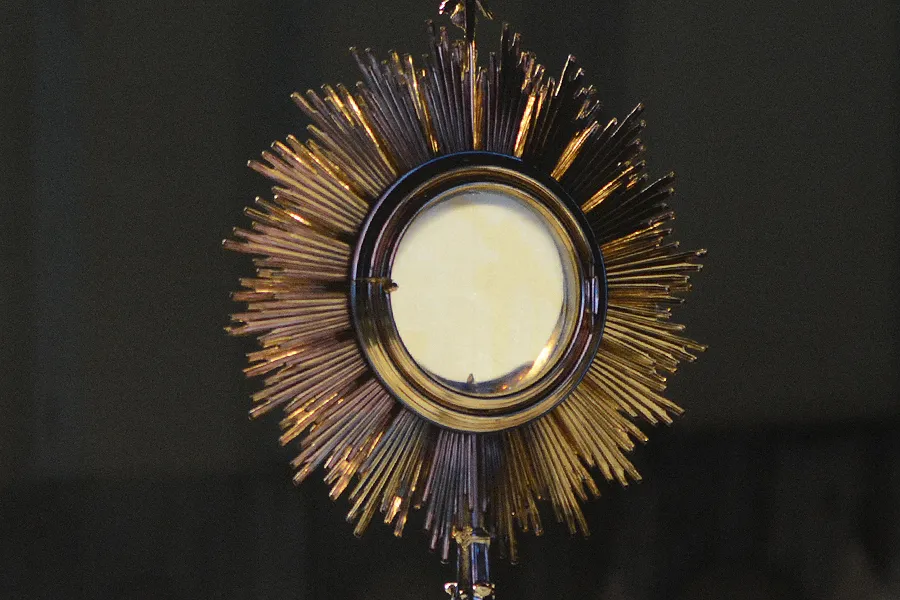
Mendoza, Argentina, Apr 21, 2017 / 12:08 am (CNA/EWTN News).- On Holy Thursday Father Alejandro Béjar, a priest of the Archdiocese of Mendoza, narrowly escaped being killed by a train. He attributes his survival to consecrated Hosts he was transporting on his way to visit the sick.

The April 13 incident took place at a railroad crossing in San Roque as Fr. Béjar was on his way to visit several sick persons, in addition to saying three Masses in the communities under his care.

Fr. Béjar, 50, told CNA that he crossed the railroad tracks that day for lack of a signal and got trapped. He explained he did not see the rails because of some bushes, and that there was no railroad crossing barrier.

Trapped on the tracks he could hear the train’s horn, and saw the train appear, coming around a curve.

Within seconds, he tried moving his car. He was unable to, so he quickly unfastened his seat belt and ran from the car.

His Ford Escort was struck, and dragged some 80 feet by the train, which was unable to brake in time. The vehicle was destroyed but the priest could not get over his astonishment that the bag holding the consecrated Hosts on the front passenger seat was undamaged and remained in place.

“That’s strange because in the back of the car there was a bag of fine flour I was taking for the community where I was going to celebrate Mass. That bag opened up and (the flour) spread all over, but the bag (with the Hosts) didn’t even move,” he said.

Fr. Béjar said he was ashamed he did not take with him the consecrated Hosts when he abandoned the vehicle, but he thanked God for saving him from the onslaught of the train.

“I thank God because I was calm and didn’t despair. It was a sign from God that he was present at that moment and helped me have those reflexes to stay calm and not give up hope,” he said.

The priest was unable to get the first Mass on his schedule for that day.

Fr. Béjar noted that eight years ago two women died in similar circumstances, and so he hopes the authorities will clean up the area from bushes and put up appropriate railroad crossing signage.

[…]

Pope Francis sends regrets to Brazil for not visiting this year

April 21, 2017 CNA Daily News 0

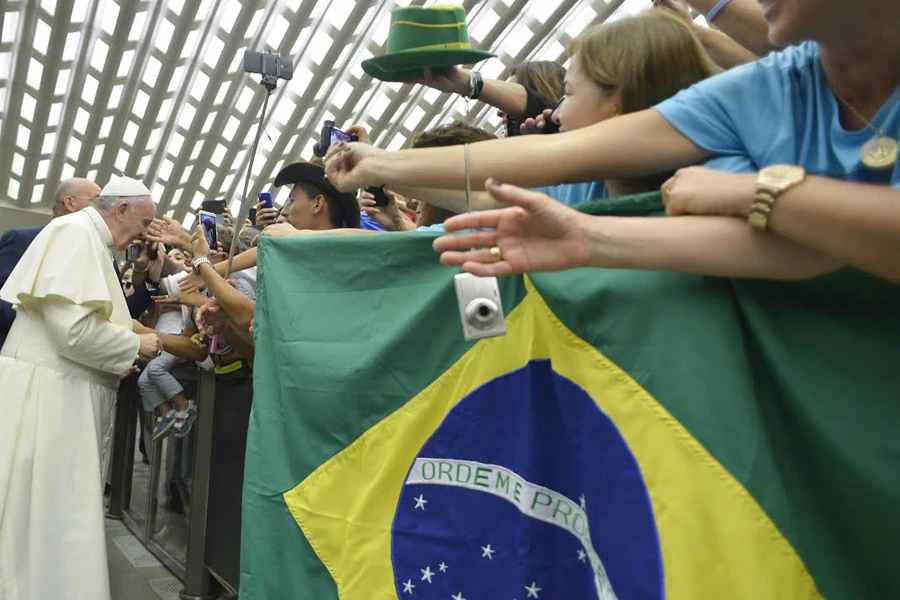
Vatican City, Apr 20, 2017 / 08:00 pm (CNA/EWTN News).- Pope Francis sent a letter to the president of Brazil, apologizing for his inability to visit in 2017 and encouraging the leader’s attention to the country’s social issues.

“Since in his letter President Temer made reference to his efforts to confront the social problems of the country, the Pope underlined that aspect and encouraged him to work for the promotion of the country’s poorest people,” the Vatican press office said April 4, confirming a letter the Pope sent a few days before.

President Michael Temer invited Pope Francis to visit Brazil for the 300th anniversary of a Marian apparition known as Our Lady of Aparecida.

The story behind the apparition involves a clay statue of Mary Immaculate that was caught by three fishermen in October 1717 in preparation for a feast dedicated to royalty passing through the town.

Guarantinqueta, a small city along the Paraiba River, was expecting to receive the Count of Assumar on his travels to a gold mining site in Vila Rica.

The feast required a vast amount of fish, but it was not the season for it and weather conditions proved to be a challenge. After a night of fishing, the men caught nothing.

Having prayed to our Lady of Immaculate Conception, the fishermen first brought up the body of the statue and then the head. After the statue was brought up, the men decided to pray with faith to “Nossa Senhora da Conceição Aparecida” – which means Our Lady of the Appeared Conception. Their nets suddenly became very full, and the catch has been considered a miracle.

During an inauguration of a statue of Aparecida at the Vatican Gardens in 2016, Pope Francis said he did not know when he would be able to visit Aparecida in Brazil again “but at least I will have her very close, here.” The new statue was designed by a Brazilian artist and depicted Our Lady of Aparecida next to the three men with full nets of fish.

The Pope said Our Lady of Aparecida is close to the heart of the working class, “especially those who need work, education, those who are deprived of dignity.”

He encouraged President Temer’s for the efforts made to resolve the county’s social issues, reiterating Aparecida’s closeness to the poor.

President Michael Temer was brought into office last August when his predecessor, Dilma Rousseff, was impeached from office for an alleged abuse of power. Brazil’s economy has been in its worst recession since the 1980s; inflation increased by 10.7 percent and unemployment increased to 9 percent in 2015. Prices for Brazilian oil, iron ore, and soya also dropped.

Since his induction into office, Temer has aimed to reduce the country’s spending and the level of public debt.

[…]

After court ruling, Tennessee to stop enforcing two pro-life laws

April 20, 2017 CNA Daily News 0

Nashville, Tenn., Apr 20, 2017 / 01:44 pm (CNA/EWTN News).- The state of Tennessee has agreed to stop enforcing two abortion restrictions which are similar to those in Texas that were struck down by the Supreme Court last year.

State Attorney General Herbert Slatery III, said the laws’ enforcement will cease immediately “in light of the Supreme Court’s current case law and to avoid the expense and utilization of resources on continued litigation.”

One of the Tennessee laws, introduced to the state in 2012, required doctors who perform abortions to receive admitting privileges at a local hospital in case there were any serious complications during or after the procedure. According to The Tennessean, two abortion clinics were forced to close after physicians failed to receive clearance.

Another restriction was added in 2014, which required clinics performing over 50 surgical abortions a year to meet the same safety requirements as ambulatory surgical care centers.

Supporters of the laws say they help ensure that women’s health and safety are protected.

In striking down the similar Texas legislation, the Supreme Court said that the laws were not medically necessary and were an unconstitutional limit on woman’s “right to an abortion.”

Three Tennessee clinics challenged the laws in 2015, but Nashville’s federal court agreed to halt the proceedings until the Supreme Court resolved a similar case in Texas last summer. That case led to the abortion regulations being struck down.

The Tennessee attorney general’s office says it will continue to defend a separate law requiring a 48-hour waiting period and counseling for those seeking an abortion. That regulation was also challenged in the lawsuits, which will proceed in the court system.

Tennessee is currently debating another pro-life measure. Entitled the “Tennessee Infants Protection Act,” the proposed legislation would bar abortions of babies who would be able to live outside the womb, except in cases of medical emergency.


[…]

Ukrainian Catholic eparchy of Chicago receives new bishop

April 20, 2017 CNA Daily News 0

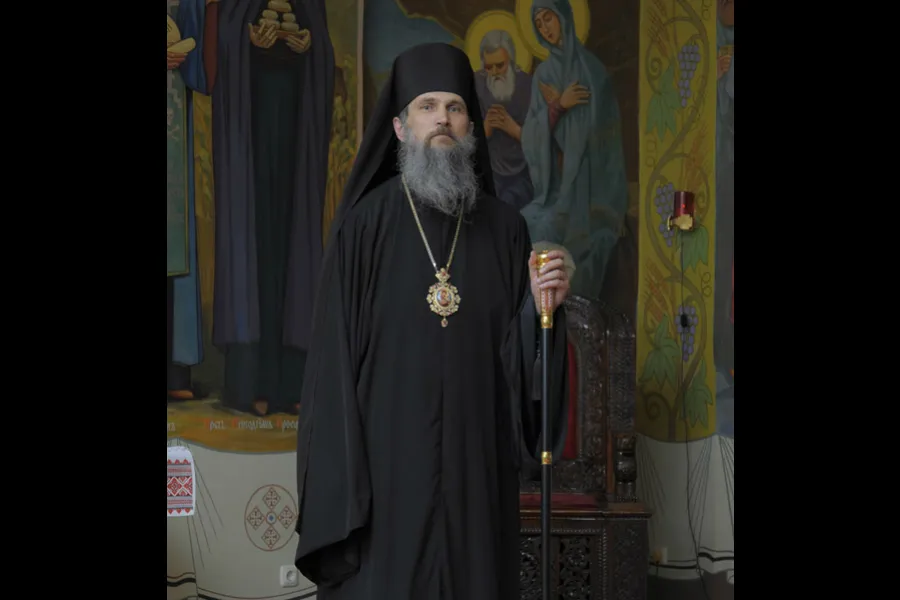
Chicago, Ill., Apr 20, 2017 / 11:24 am (CNA/EWTN News).- Pope Francis on April 20 appointed Bishop Venedykt (Valery) Aleksiychuk as Bishop of the Saint Nicholas Ukrainian Eparchy of Chicago.

Bishop Venedykt, 49, was born in Borshchivka, Ukraine in January 1968. He graduated from Rivne medical college in 1987, and worked as a physician’s assistant for several years. He also served in the Ukrainian military for two years.

He attended the seminary of Drohobych and was ordained a priest of the Ukrainian Archeparchy of Lviv in 1992, at the age of 24. Until 1994 he was responsible for organizing missionary work in eastern Ukraine, and he also served in Belarus.

He was professed as a member of the Ukrainian Studite Monks in 1995, and earned a master’s degree in theology at Lublin Catholic University the following year.

Bishop Venedykt was transferred to St. Catharines, Canada in 1996 to found a monastery, and while there he served at several parishes of the Ukrainian Eparchy of Toronto.

In 1999 he returned to Ukraine after being elected hegumen of the  Holy Dormition Univ Lavra religious community, serving three terms in this position.

Continuing his theology studies in Lublin, he received a licentiate and a doctorate in 2006 and 2008, respectively. He has written on St. John of Kronstadt, a Russian Orthodox priest of the 19th century, and St. Theodore the Studite, a Byzantine monk of the 9th century who was a defender of icons.

Bishop Venedykt also completed courses in psychology and mental disorders at three institutions in eastern Europe.

In 2010 he was consecrated a bishop, and appointed Auxiliary Bishop of the Ukrainian Archeparchy of Lviv. He has served as chief of staff of the archeparchial curia, head of the Ukrainian Greek Catholic Church’s liturgical commission, and is chair of the synodal committee on liturgy.

Since 2014 Bishop Venedykt has been a member of the Saint Sophia charitable religious community in Rome.

In June 2016 he received a master’s degree in Business Administration from the Ukrainian Catholic University.

Bishop Venedykt was preceeded as Bishop of Saint Nicholas Ukrainian Eparchy by Bishop Richard Stephen Seminack, who died Aug. 16, 2016.

The eparchy is responsible for all Ukrainian Catholics in the United States west of Ohio, Kentucky, Tennessee, and Mississippi. There are currently around 70 priests and deacons working in the eparchy in 46 parishes and mission stations.

Since the death of Bishop Richard, Saint Nicholas Ukrainian Eparchy had been served by Fr.  Richard Janowicz as administrator.

The Ukrainian Greek Catholic Church is an Eastern Catholic Church of the Byzantine rite which is in full communion with the Bishop of Rome.

[…]

Niece of Fatima visionaries reflects on her remarkable family

April 20, 2017 CNA Daily News 0

Fatima, Portugal, Apr 20, 2017 / 06:00 am (CNA/EWTN News).- The niece of Blessed Franciso and Jacinta Marto has voiced excitement for the coming canonization of her relatives, sharing stories of the time of the Fatima apparitions and personal memories of what it was like growing up in a family that had saints among its members.

“My family, my grandparents, my parents, all of us always accepted it as a gift from God,” Jacinta Pereiro Marto told CNA in an interview.

“God chose my uncle and aunt because this is what he wanted, so much that my grandfather used to say that the Virgin wanted to come to Fatima and she chose his children, but that we didn’t deserve anything,” she said.

Because of this attitude instilled in the family by her grandfather – father to Blessed Francisco and Jacinta Marto – “we always lived very simply because God chose, and he chooses who he wants. We don’t deserve anything.”

Marto, 74, is the daughter of Joao Marto, the brother of Fatima visionaries Bl. Francisco and Jacinta, and she shares the exact same name as her saintly aunt.

Just two years older than Francisco, Joao was the closest in age to the two out of the many Marto siblings.

Bl. Francisco and Jacinta this year will become the youngest non-martyrs in the history of the Church to be canonized after witnessing apparitions of Mary, now commonly known as the Our Lady of Fatima, alongside their elder cousin Lucia dos Santos in 1917.

In her interview with CNA, Marto said that she had “the joy” of being born in the same family home as Francisco and Jacinta, and to grow up there, since her father Joao continued to live in the house with his elderly parents.

“They always instilled in me a great love for God and for the Virgin, a life of simplicity, of belief and of religiosity,” she said, speaking of her grandparents.

Their home remains the property of the family, but is now open for visitors and pilgrims to see where the visionaries grew up. Across the street, Marto runs a souvenir shop and a small museum-of-sorts containing original photos and artifacts belonging to the family, including shawls used by Jacinta, the rosary Francisco prayed with before dying, and the bed he passed away in.

Marto said that it is thanks to her grandmother Olimpia Marto, mother of Franciso and Jacinta, that she received the same name as her aunt. Olimpia had wanted a grandchild that shared the exact same name as her saintly daughter, and was told by Joao’s wife that the next girl they had would get the name.

So when Marto was born, her grandmother, who was also asked to be her godmother, chose to call her Jacinta.

“I feel very happy to be Jacinta,” Marto said, explaining that “I feel a very strong presence and a great protection from my uncle and aunt. I think that Jacinta and my uncle are protecting me.”

“I am no one, I sin like the whole world,” she said, “but I believe they are protecting me, I feel that they and Our Lady protect me.”

Recalling memories shared by her father, Marto said Joao had been present with Francisco and Jacinta at the apparition of Mary in Valinhos, which took place in August, “but he didn’t see anything.”

“It was only Francisco, Jacinta, Lucia and my father, but he said that even though he opened his eyes and looked, he saw nothing,” she said.

Around the time Mary was to appear, Jacinta wasn’t there at first, she said, explaining that when Lucia asked him to go find her, Joao “didn’t want to, because he wanted to see.” He eventually went to find Jacinta, and when she arrived Mary appeared, but even though he waited with them, Joao couldn’t see anything.

Two months later when the “miracle of the sun” took place Oct. 13, 1917, Marto said her father, who was only 11 at the time, stayed behind that day because rumors were spreading, likely from other children, that “if the miracle of the sun didn’t happen the whole family would die.”

In order to help the people believe in the authenticity of the apparitions, Lucia had asked Our Lady during the apparition of July 13, 1917, to perform a miracle so people would see that they were true.

However, on that occasion Mary responded by saying that should the children continue to come each month until October, the miracle would occur. So on Oct. 13, the last apparition of Mary to the children, 30-100,000 people gathered to witness the miracle.

News reports and witnesses from the time said the miracle took place when the formerly cloudy sky parted and the sun appeared as an opaque, spinning disk in the sky. Multicolored lights flashed across the landscape and those present before the sun then spun toward earth and then zig-zagged back to its normal position in the sky. Additionally, clothes and mud previously wet from the rain had dried.

But while many members of their family were present for the miracle, Marto said her father “stayed at home (because) he was afraid to die” if the miracle didn’t happen, as the rumors had stated.

At just 11 years old, Marto said her father didn’t understand everything that was going on, but that after Francisco and Jacinta died, “my father said that he cried a lot, a lot. Because he saw that everything they said was happening.”

Speaking of her grandparents, Marto said her grandfather Manuel, father of Francisco and Jacinta, didn’t initially understand some of what was happening either, but had always believed his children were telling the truth.

Jacinta was the first one to tell her parents about seeing Mary after coming home from the first apparition, Marto said, explaining that when people began to say the children had made everything up, her grandfather would respond saying: “My children are not liars. I taught them, so if they say they saw, I think they saw.”

After the first appearance Manuel accompanied his children to the following apparitions, and although he didn’t see anything, “he said that he heard a sound, like a bee inside a jar.”

He was also present for the miracle of the sun, Marto said, explaining that “if he believed before, he continued to believe” after.

Marto said that for her, this belief was extraordinary, because “my grandparents weren’t at the beatification, none of it. When their children died they were known, but not with the fame of sanctity.”

“So they thought their children were a little different from the others, but they didn’t know how it was going to be. It was a question every day,” she said, but noted that her grandfather in particular “always believed.”

Referring to news of the acceptance of a second miracle allowing for the canonization of her uncle and aunt, Marto said she feels “a big joy” knowing they will be proclaimed saints. The two will be canonized May 13, during Pope Francis’ two-day visit to Portugal.

However, she stressed that the news “is not only for the family, it’s for Portugal and the whole world. Because Our Lady came for the world, and they were a message for the world.”

“I sometimes ask myself how two children that were seven and nine years old managed to capture and respond to the message of God. They had a message and assumed this message,” she said, noting that Francisco was all about “praising God, adoring God, worshiping God.”

Jacinta, however, was primarily concerned with conversion, and wanted that “everyone return to God, that everyone convert, that everyone went to heaven.”

“She lived this in anguish,” Marto said, explaining that she often asked herself: “we who have all these means of communication, we know what is happening in the world, all the suffering in the world, we see it on television…and what do we do?”

At just 7-years-old Jacinta had visions of wars, famines and persecutions, and as a result she “assumed the responsibility” of offering and making sacrifices so that everyone could be saved.

“And us? What are we doing?” she said, stressing that with television and social media it’s not necessary to have a vision of the suffering and tragedy in the world, but “we are part of this humanity and we are a bit responsible for everyone. Sometimes we don’t think well about this.”

Marto said that for her, she believes the core of the Our Lady of Fatima’s message is that she came “that we might return to God. That we don’t forget that God loves us, but that we have to praise him and must give thanks to him.”

In addition to this, “we must pray for each other,” she said, explaining that in her instructions to the children, Mary “didn’t ask many things that we can’t do.”

Pointing to the rosary, she said that according to Lucia, Mary asked that people pray it because “it’s an easy prayer,” and can be recited at church, in the car or while walking.

If someone isn’t able to pray the rosary, Marto suggested at least trying to pray one Hail Mary and Our Father a day, to honor Mary and give thanks to God “for being our friend.”

“God loves us very much and at times sends us his mother to refresh us a bit in order continue,” she said, explaining that “God wants us to be a bit better every day. Because we are always sinners, we are not perfect, but try to be a bit better every day.”

Marto said that she hopes to be present for Pope Francis’ visit to Fatima for the centenary of the apparitions in May. Having attended the beatification of her uncle and aunt in 2000, she said she also hopes to be present for the May 13 canonization of the visionaries.

She received communion from Bl. Pope Paul VI when he became the first Pope to visit Fatima in 1967, and was also present for the visit of St. John Paul II in 1982, but was farther away.

Although she wasn’t able to attend Mass when Benedict XVI came in 2010, she hopes to have a good seat at Mass with Francis, and “to be close to him.”

[…]

It’s official: Pope Francis to canonize Fatima visionaries during May visit

April 20, 2017 CNA Daily News 0

Vatican City, Apr 20, 2017 / 03:06 am (CNA/EWTN News).- During his trip to Portugal for the centenary of the Fatima Marian apparitions next month, Pope Francis will canonize visionaries Francisco and Jacinta Marto, making them the youngest non-martyrs to ever be declared saints.

The children will be canonized during Pope Francis’ May 13 Mass in Fatima. The decision for the date was made during a April 20 consistory of cardinals, which also voted on the dates of four other canonizations, in addition to that of Francisco and Jacinta, that will take place this year.

Some martyrs who will soon be saints are diocesan priests Andrea de Soveral and Ambrogio Francesco Ferro, and layman Matteo Moreira, killed in hatred of the faith in Brazil in 1645; and three teenagers – Cristóbal, Antonio, and Juan – killed in hatred of the faith in Mexico in 1529, who will be canonized October 15.

Bl. Angelo da Acri, a Capuchin priest who died in October 1739, and Faustino Míguez, a Piarist priest who founded the Calasanziano Institute of the Daughters of the Divine Shepherd, will also be canonized October 15.

Cardinal Jose Saraiva Martins, the Prefect Emeritus of the Congregation for the Causes of Saints, is the man who was largely responsible for advancing the visionaries’ cause, paving the way for them to become the first canonized children who were not martyred.

Previously, the Portuguese cardinal told CNA, children were not beatified, due to the belief “that children didn’t yet have the ability to practice Christian heroic virtue like adults.”

But that all changed when the cause for Francisco and Jacinta Marto arrived on his desk.

Francisco, 11, and Jacinta, 10, became the youngest non-martyr children in the history of the Church to be beatified when on May 13, 2000, the 83rd anniversary of the first apparition of Our Lady at Fatima, Pope John Paul II proclaimed them “Blessed,” officially showing that young children can become Saints.

The brother and sister, who tended to their family’s sheep with their cousin Lucia Santo in the fields of Fatima, Portugal, witnessed the apparitions of Mary now commonly known as Our Lady of Fatima.

During the first apparition, which took place May 13, 1917, Our Lady asked the three children to pray the Rosary and make sacrifices for the conversion of sinners. The children did this and were known to pray often, giving their lunch to beggars and going without food themselves. They offered up their sacrifices and even refrained from drinking water on hot days.

When Francisco and Jacinta became seriously ill with the Spanish flu in October 1918, Mary appeared to them and said she would to take them to heaven soon.

Bed-ridden, Francisco requested and received his first Communion. The following day, Francisco died, April 4, 1919. Jacinta suffered a long illness and was eventually transferred to a Lisbon hospital, where she underwent an operation for an abscess in her chest. However, her health did not improve and she died Feb. 20, 1920.

Francisco and Jacinta “practiced Christian virtue in a heroic way,” Cardinal Martins said, explaining that among other things, one of the most obvious moments in which this virtue was apparent for him was when the three shepherd children were arrested and intimidated by their mayor on August 13, 1917.

Government stability in Portugal was rocky following the revolution and coup d’état that led to the overthrow of the monarchy and subsequent establishment of the First Portuguese Republic in 1910.

A new liberal constitution separating Church and state was drafted under the influence of Freemasonry, which sought to omit the faith – which for many was the backbone of Portuguese culture and society – from public life.

It was in this context that, after catching wind of the Virgin Mary’s appearance to Francisco, Jacinta and Lucia, district Mayor Artur de Oliveira Santos had the children arrested on the day Mary was to appear to them, and threatened to boil them in hot oil unless they would confess to inventing the apparitions.
 
At one point in the conversation at the jailhouse, Jacinta was taken out of the room, leaving Francisco and Lucia alone. The two were told that Jacinta had been burned with hot oil, and that if they didn’t lie, the same would happen to them.

However, instead of caving to the pressure, the children said: “you can do whatever you want, but we cannot tell a lie. Do whatever you want to us, burn us with oil, but we cannot tell a lie.”

“This was the virtue of these children,” Cardinal Martins said, noting that to accept death rather than tell a lie is “more heroic than many adults.”

“There’s a lot to say on the heroicness of children,” he said, adding that “because of this I brought their cause forward.”

Cardinal Martins was also the one to bring Lucia’s cause to the Vatican following her death in 2005. The visionary had spent the remainder of her life after the apparitions as a Carmelite nun.

Typically the must be a five-year waiting period after a person dies before their cause can be brought forward. However, after only three years Martins ask that the remaining two be dismissed, and his request was granted.

Although the diocesan phase of the cause has already been finished, Cardinal Martins – who knew the visionary personally – said Lucia’s process will take much longer than that of Francisco and Jacinta not only due to her long life, but also because of the vast number of letters and other material from her writings and correspondence that needs to be examined.

The cardinal, who will be present in Fatima with the Pope during his May 12-13 visit for the centenary of the apparitions, said he views the occasion as the conclusion of a process that began with him changing a norm regarding the view of children “and their heroic virtue.”

This process is important, he said, because it means there could be other children who practiced heroic virtue that can now be canonized, so “it’s certainly something important.”

“It needs to be seen that (children) are truly capable of practicing heroic virtue,” not only in Fatima, but “in the Christian life,” he said.

Although canonizations, apart from a few exceptions, are typically held in Rome, it was only recently that beatifications began to be held outside of Rome, in the local Church which promoted the new Blessed’s cause.

This change was made by Cardinal Martins in September 2005, after receiving the approval of Benedict XVI.

In the past, a beatification Mass in Rome would be presided over by the Cardinal-Prefect of the Congregation for the Causes of Saints during the morning, with the Pope coming down to the basilica to pray to the new Blessed in the afternoon. Cardinal Martins said he decided to change this because the beatification and the canonization “are two different realities.”

“While the canonizations had a more universal dimension of the Church, the beatifications have a more local dimension, where they (the Blessed) came from,” he said, noting that this is reflected even in the words spoken during the rites for each Mass.

“Because of this, I made a distinction: the beatification in their (the Blessed’s) own church, in their diocese, and the canonizations in Rome.”

The result was “a fantastic revolution,” he said, explaining that while maybe 2-3,000 people would participate in the beatification ceremonies in Rome, hundreds of thousands started to come for the local beatification Masses of new Blessed in their home dioceses.

The cardinal said that “it’s beautiful” to see people – many times including friends and family members of new Blessed – join in honoring their countryman, asking for their intercession, and seeking to follow their example.

He believes the custom will remain like this, adding that it is beautiful particularly from the standpoint of evangelization.

“The new Blessed says to their brothers, many of whom they knew, ‘I am one of you, one like you, so you must follow my path and live the Gospel in depth’,” the cardinal said, explaining that this is “a formidable act of evangelization, and with everyone happy about the new Blessed, they’ll immediately do what they say!”

Cardinal Martins said the decision was also prompted by the emphasis placed on local Churches during the Second Vatican Council.

“I thought, one of the most effective ways to highlight the importance of local Churches is to conduct in the local diocese the beatification of one of their sons,” he said.

[…]