Pope: Mary’s ‘yes’ echoes the joy, suffering of every mother

May 10, 2017 CNA Daily News 0

Vatican City, May 10, 2017 / 05:56 am (CNA/EWTN News).- Days before his trip to Fatima, Pope Francis said Mary’s ‘yes’ at the Annunciation was more than a yes to bearing the Son of God, but was also an acceptance of everything she would endure after – something every mother experiences with a new child.  

“It was not easy to answer with a ‘yes’ to the angel’s invitation; yet she, a woman still in the flower of youth, answers with courage, despite not knowing anything about the fate that awaited her.”

“Mary at that moment looks like one of the many mothers of our world, brave to the extreme when it comes to welcoming in her womb the story of a new human being who is growing,” he said May 10.

Her ‘yes’ to the angel at the Annunciation was just the first step “in a long list of obedience” leading to the moment she stands at the foot of her Son’s cross, the Pope said.

During his general audience, Pope Francis centered his catechesis on the few lines from the Gospel of John that describe Mary “standing by the cross of Jesus.” Though Mary is largely a silent figure in the Gospels, she listens and “ponders every word and every event in her heart.”

“The Gospels are laconic, and extremely subtle. They record with a simple verb the presence of the Mother: She ‘was standing,’ she was standing,” he said, noting that “nothing is said of her reaction: if she weeps, if she does not weep … nothing; not even a brushstroke to describe her grief.”

Throughout history poets and painters have imagined this moment in art and literature, “but the Gospels just say, she was ‘standing.’ She was there, in the worst moment, in the cruelest time, and suffered with her son,” but “she was standing,” Francis said.

Though there had been a “slow eclipse” of her presence in the Gospels, she returns at this crucial moment when many others had fled.

“Mothers do not betray, and at that moment, at the foot of the cross, none of us can say whose was the cruelest passion; whether that of an innocent man who dies on the scaffold of the cross, or the agony of a mother who accompanies the last moments of her son’s life,” he said.

And she doesn’t get angry or protest: she simply stands and listens, Pope Francis said, pointing to the relationship between listening and the virtue of hope.

Despite everything, even the “deepest darkness,” Mary does not leave, but stands faithfully, he said. “That’s why we all love her as a Mother…We are not orphans: we have a Mother in heaven, who is the Holy Mother of God.”

Mary, he said, teaches to us “the virtue of waiting, even when everything seems meaningless: she is always confident in the mystery of God.”

Even though she didn’t know what the outcome of her Son’s Passion would be, she is loyal to the plan of God, just as she promised to the angel “on the first day of her vocation,” Francis said, explaining that it is also part of her motherly instinct to suffer for her child.

“The suffering of mothers: We have all known strong women that braved the many sufferings of their children!” he said.

Even in the first days of the Church, before Christ’s resurrection is known and the disciples are all afraid, the “Mother of Hope” stays, Francis said. “She was simply there, in the most normal of ways, as if it were a natural thing.”

Thus, he concluded, “in moments of difficulty, Mary, the Mother Jesus has given to us all, can always support our steps, can always say to our heart: ‘Get up! Look ahead, look at the horizon,’ because she is a Mother of Hope.”

[…]

Vatican astronomer: If you’re afraid of science, you don’t have faith

May 10, 2017 CNA Daily News 3

Vatican City, May 10, 2017 / 03:04 am (CNA/EWTN News).- The Jesuit director of the Vatican Observatory, who has worked as an astronomer and planetary scientist at the Vatican for more than 20 years, told journalists Monday that faith and reason are hardly at odds.

“If you have no faith in your faith, that is when you will fear science,” Brother Guy Consolmagno, S.J., said May 8.

He spoke to journalists at a press conference ahead of a May 9-12 summit on “Black Holes, Gravitational Waves, and Space-Time Singularities” being held in Castel Gandolfo at the Vatican Observatory, just outside Rome.

Presser w/ Br. Guy Consolmagno (@specolations) & col. on Vatican conference on Black Holes, Gravitational Waves & Space-Time Singularities pic.twitter.com/Q8FYJMD2y5

— Hannah Brockhaus (@HannahBrockhaus) May 8, 2017

“The Vatican Observatory was founded in 1891 by Pope Leo XIII to show that the Church supports good science, and to do that we have to have good science,” Br. Consolmagno said, explaining the reasoning behind the conference.

The hope is that the encounter will foster good science, good discussion, and even friendship. Among the speakers will be a Nobel Prize winner in physics and a Wolf Prize winner.

Among the topics of papers being presented at the conference are Strong evidence for an accelerating universe; Black hole perturbations: a review of recent analytical results; and Observing the Signature of Dynamical Space-Time through Gravitational Waves.

“Those of us that are religious, will recognize the presence of God, but you don’t have to make a theological leap to search for the truth,” Br. Consolmagno said. “There are many things we know we do not understand. We cannot be good religious people or scientists if we think that our work is done.”

The summit is also taking place in recognition of Fr. Georges Lemaître, the Belgian physicist and mathematician who is widely credited with developing the “Big Bang” theory to explain the origin of the physical universe.

Addressing common misconceptions surrounding the Big Bang, such as the idea that it did away with the need for a creator, Br. Consolmagno said the solution isn’t just to put God at the beginning of things and call that good, either.

“The creative act of God is not something that happened 13.8 billion years ago,” he said. “God is already there before space and time exist. You can’t even say ‘before’ because he is outside of time and space.”

The creative act is happening continuously: “If you look at God as merely the thing that started the Big Bang, then you get a nature god, like Jupiter throwing around lightning bolts.”

“That’s not the God that we as Christians believe in,” he went on. “We must believe in a God that is supernatural. We then recognize God as the one responsible for the existence of the universe, and our science tells us how he did it.”

The organizer of the conference, Fr. Gabriele Gionti, S.J., said Fr. Lemaître always distinguished between the beginnings of the universe and its origins.

“The beginning of the universe is a scientific question, to be able to date with precision when things started. The origins of the universe, however, is a theologically charged question.”

Answering that question “has nothing at all to do with a scientific epistemology,” he added.

Br. Consolmagno commented that “God is not something we arrive at the end of our science, it’s what we assume at the beginning. I am afraid of a God who can be proved by science, because I know my science well enough to not trust it!”

“An atheist could assume something very different, and have a very different view of the universe, but we can talk and learn from each other. The search for truth unites us.”

He suggested that to demonstrate that the Church and science are not at odds, those who are both church-goers and scientists should make that fact more known to their fellow parishioners.

He threw out some practical ideas, such as setting up a telescope in the church parking lot or leading the parish’s youth group on a nature hike.

The Church, in a sense, developed science through the medieval universities she founded, he explained. For example, Bishop Robert Grosseteste, a 13th century Bishop of Lincoln and chancellor of Oxford University, helped develop the scientific method and was often cited by Roger Bacon.

“If there is a rivalry” between the Church and science, Br. Consolmagno said, “it’s a sibling rivalry.”

“And it’s a crime against science to say that only atheists can do it, because if that were true, it would eliminate so many wonderful scientists.”

[…]

Vatican astronomer: If you’re afraid of science, you don’t have faith

May 10, 2017 CNA Daily News 0

Vatican City, May 10, 2017 / 03:04 am (CNA/EWTN News).- The Jesuit director of the Vatican Observatory, who has worked as an astronomer and planetary scientist at the Vatican for more than 20 years, told journalists Monday that faith and reason are hardly at odds.

“If you have no faith in your faith, that is when you will fear science,” Brother Guy Consolmagno, S.J., said May 8.

He spoke to journalists at a press conference ahead of a May 9-12 summit on “Black Holes, Gravitational Waves, and Space-Time Singularities” being held in Castel Gandolfo at the Vatican Observatory, just outside Rome.

Presser w/ Br. Guy Consolmagno (@specolations) & col. on Vatican conference on Black Holes, Gravitational Waves & Space-Time Singularities pic.twitter.com/Q8FYJMD2y5

— Hannah Brockhaus (@HannahBrockhaus) May 8, 2017

“The Vatican Observatory was founded in 1891 by Pope Leo XIII to show that the Church supports good science, and to do that we have to have good science,” Br. Consolmagno said, explaining the reasoning behind the conference.

The hope is that the encounter will foster good science, good discussion, and even friendship. Among the speakers will be a Nobel Prize winner in physics and a Wolf Prize winner.

Among the topics of papers being presented at the conference are Strong evidence for an accelerating universe; Black hole perturbations: a review of recent analytical results; and Observing the Signature of Dynamical Space-Time through Gravitational Waves.

“Those of us that are religious, will recognize the presence of God, but you don’t have to make a theological leap to search for the truth,” Br. Consolmagno said. “There are many things we know we do not understand. We cannot be good religious people or scientists if we think that our work is done.”

The summit is also taking place in recognition of Fr. Georges Lemaître, the Belgian physicist and mathematician who is widely credited with developing the “Big Bang” theory to explain the origin of the physical universe.

Addressing common misconceptions surrounding the Big Bang, such as the idea that it did away with the need for a creator, Br. Consolmagno said the solution isn’t just to put God at the beginning of things and call that good, either.

“The creative act of God is not something that happened 13.8 billion years ago,” he said. “God is already there before space and time exist. You can’t even say ‘before’ because he is outside of time and space.”

The creative act is happening continuously: “If you look at God as merely the thing that started the Big Bang, then you get a nature god, like Jupiter throwing around lightning bolts.”

“That’s not the God that we as Christians believe in,” he went on. “We must believe in a God that is supernatural. We then recognize God as the one responsible for the existence of the universe, and our science tells us how he did it.”

The organizer of the conference, Fr. Gabriele Gionti, S.J., said Fr. Lemaître always distinguished between the beginnings of the universe and its origins.

“The beginning of the universe is a scientific question, to be able to date with precision when things started. The origins of the universe, however, is a theologically charged question.”

Answering that question “has nothing at all to do with a scientific epistemology,” he added.

Br. Consolmagno commented that “God is not something we arrive at the end of our science, it’s what we assume at the beginning. I am afraid of a God who can be proved by science, because I know my science well enough to not trust it!”

“An atheist could assume something very different, and have a very different view of the universe, but we can talk and learn from each other. The search for truth unites us.”

He suggested that to demonstrate that the Church and science are not at odds, those who are both church-goers and scientists should make that fact more known to their fellow parishioners.

He threw out some practical ideas, such as setting up a telescope in the church parking lot or leading the parish’s youth group on a nature hike.

The Church, in a sense, developed science through the medieval universities she founded, he explained. For example, Bishop Robert Grosseteste, a 13th century Bishop of Lincoln and chancellor of Oxford University, helped develop the scientific method and was often cited by Roger Bacon.

“If there is a rivalry” between the Church and science, Br. Consolmagno said, “it’s a sibling rivalry.”

“And it’s a crime against science to say that only atheists can do it, because if that were true, it would eliminate so many wonderful scientists.”

[…]

A personal look at Fatima’s saintly Sister Lucia

May 10, 2017 CNA Daily News 0

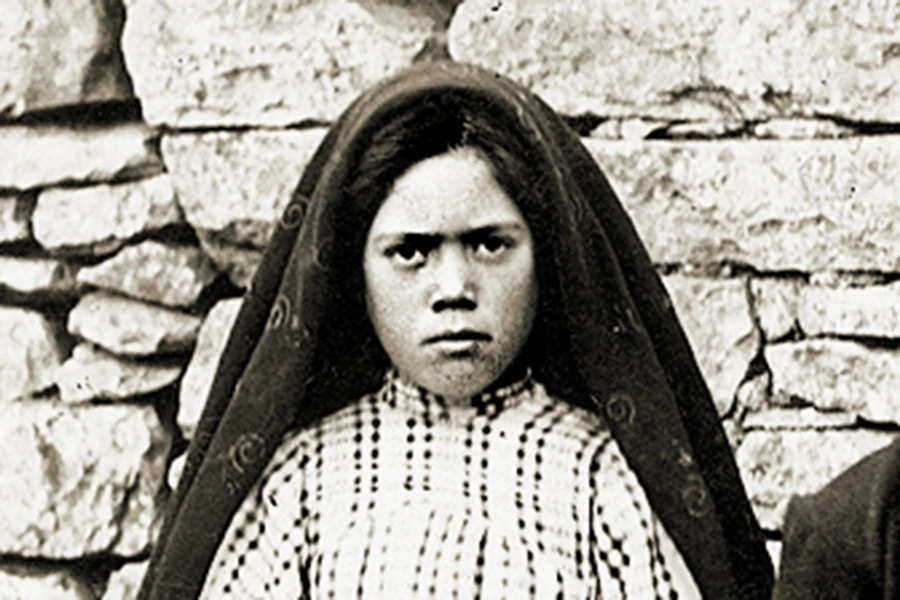
Fatima, Portugal, May 10, 2017 / 12:01 am (CNA/EWTN News).- Fatima visionary Lucia dos Santos was saintly woman – not because she saw visions of Mary, but because of her raw humanity, simplicity, and even her sense of humor, says the cardinal who opened her cause for canonization.

When asked about the most “saintly” quality Lucia had, Cardinal Jose Saraiva Martins said it was “her humanity. She was a person that was human.”

“The saints are all human, they are like any other person. Very intelligent, very concrete, very pleasant and welcoming,” he said.

As for Sister Lucia, “she was a very smart, concrete woman.” This can be seen in the way she documented what she saw during the Fatima apparitions, he said, noting that since her cousins had passed away, all of it was done by her alone.

“If Lucia weren’t a concrete, intelligent person, not all of the documentation that’s there would have been done, through which we know the whole story of Fatima,” he said.

But despite to her intelligence and her humanity, the cardinal said the visionary was “very simple,” but was also “a jokester” with a healthy sense of humor.

Cardinal Martins, 85 and the Prefect Emeritus of the Congregation for the Causes of Saints, knew Lucia personally during the last few years of her life. He spoke to CNA about his relationship with visionary, sharing memories of Lucia and some of the light-hearted jokes the two of them exchanged.

Who was Lucia?

Lucia dos Santos was the youngest in a family of seven. However, at 10-years-old, she was the oldest of the three shepherd children who witnessed apparitions of the Blessed Virgin Mary from May-October 1917. The other two were her cousins Francisco and Jacinta Marto, who were just 9 and 7, respectively.

While the Marto siblings died shortly after the apparitions, as Mary had predicted, Lucia outlived her cousins by many years, and was the one to write down accounts of everything they had seen.

Shortly after the deaths of her cousins, at age 14 Lucia was sent to attend school with the Dorothean Sisters of Villar, and in 1928 became a sister of St. Dorothy. In 1946, she transferred to the convent of the Carmelite Sisters of Coimbra, Portugal and took the name Sister Maria Lucia of the Immaculate Heart.

She received visions and messages from both Mary and Jesus on several more occasions throughout her life, including the visions in 1925 that led to the Five First Saturday devotions, which include saying the rosary, receiving communion and confession, and meditation during the first Saturday of five consecutive months.

Sr. Lucia died in 2005 at the age of 97, at the Carmelite convent of Santa Teresa in Coimbra, where she had lived since 1948.

Memories

Cardinal Martins, who himself is Portuguese, said he had “many interactions” with Sr. Lucia, particularly during his tenure at the Congregation for Saints. He headed the dicastery from 1998-2008, during which he brought forward some 1,320 blesseds, though many were part of large groups done together.

Having lived in Rome for at least three decades, serving in various capacities, the cardinal said he, like the rest of the city, typically takes his vacation in mid-August.

It was during one of these vacations that he accepted an invitation to go to Coimbra and celebrate Mass for the Carmelite sisters on the Aug. 15 Feast of the Assumption. After Mass, the cardinal sat with the community and talked with them for a while, even answering some questions.

“We spoke about everything, they asked whatever questions they wanted, without limits, and I responded,” he said, noting Sr. Lucia was also present, and he was also able to speak with her for the first time.

Lucia “was a very humble person, simple, very intelligent, and very confident,” he said, explaining during another visit, he was again sitting with the community after celebrating Mass for them.

He recalled that there was an empty seat by him, so he motioned for Lucia to come sit next to him.

Martins recalled that once she sat down, she leaned over and told him, “Eminence, you’ve made me your secretary, eh?” After a laugh, the cardinal jested, saying in return, “Sister Lucia, please, don’t say this, I am not worthy of having you as a secretary!”

Martins said Lucia was always full of little quips, and at one point jokingly threatened to stop sending rosaries to the Pope if he didn’t allow the beatification of her cousins – Francisco and Jacinta Marto – to take place in Fatima, rather than in Rome.

At the time, as a rule of thumb both canonization and beatification Masses were held Rome. However, it was Cardinal Martins who later changed this, requesting that beatifications take place in the local diocese instead. His request was approved by Benedict XVI, and the change was made in September 2005.

The cause of Francisco and Jacinta was officially opened in 1946, and although the change hadn’t officially been made yet, they were beatified by St. John Paul II May 13, 2000, the 83rd anniversary of the first apparition, during his third visit to the Fatima shrine.

But a year before the beatification, while plans were still in the works, Lucia had jokingly told Martins to relay to the Pope “if the beatification is not done in Fatima, but in Rome, I, Lucia, won’t send him rosaries anymore.”

The jest was in reference to the fact that in her final years Lucia made rosaries and sent large numbers of them to the Pope, who would distribute them to pilgrims and people he met.

“Clearly, I didn’t say it,” the cardinal said, recalling that on the day of the beatification, both he and Lucia had a brief conversation in the sacristy before the celebration began.

He told Lucia she could be now grateful to the Pope for having approved celebrating the beatification Mass in Fatima. However, Lucia again jested, saying “I’m not grateful to the Pope, absolutely no. I am grateful to God who inspired the Pope for the beatification.”

“This is how it was. With Lucia, we were like siblings,” the cardinal said, adding that Lucia’s humor wasn’t the only thing that stood out about her.

“She was also very intelligent,” he said. People often perceived her as someone “in another world,” who was perhaps a bit disconnected, but in reality, the opposite was true: “she was very concrete, and very intelligent.”

As an example, he recalled that at one point the Carmelite sisters had to build another convent when they exceeded the maximum number of sisters who can live in one of their monasteries.

When it came time to start construction on the convent after plans had been laid, Lucia was the one sent to oversee the project, making sure the architect built new monastery according to the specifics of how Carmelite convents are organized.

“Lucia went in car to tell the architects concretely how they had to do the cloister. This is a very concrete person, no?” the cardinal said. “She wasn’t an abstract person like many thought, no.”

Cause for Canonization

After Lucia passed away in 2005, the diocese had to wait five years before opening the beatification cause, as is custom in any potential saint.

However, after just two years, Cardinal Martins asked Benedict XVI to grant a dispensation for the three remaining years, allowing them to open the cause immediately.

I began the process of beatification. Certainly she knows, that to begin the beatification process for a person, five years need to pass after their death. Five years. To research the person, talk to people, etc.

Martins said he asked for the dispensation because “it’s a very big grace for the Church in Portugal and for the universal Church.” In response, Benedict granted it, saying “you know the situation better than me, so let’s do whatever you say.”

A few days later, the cardinal traveled to Coimbra with the official decree in hand. However, since the news hadn’t yet been made official, he was not allowed to say anything, not even to the sisters in Lucia’s convent.

“Everything was secret,” he said, explaining that he simply told the sisters he was passing through and requested to say Mass. “The sisters thought I was passing through Coimbra for another reason, they didn’t know anything about the reason I was there.”

“It was my duty to keep it a secret,” Martins said, recounting how at the end of Mass, before giving the final blessing, he read aloud the decree, signed by himself and the Pope, stating that the beatification process for Lucia would officially begin early.

Immediately “the sisters began to cry,” he said, and were amazed that he hadn’t let on anything of his real intention for coming beforehand.

The local Church in February 2017 finished collecting documents to examine Lucia’s heroic virtue, concluding the diocesan phase of the investigation.

“Now it’s up to the congregation for the Roman phase. They must study the documents gathered on Lucia,” he said, noting that this will be a hefty task given the fact that there are some 300-400,000 letters written by Lucia during her lifetime, including letters written by her and her responses to letters she received from other people.

Although many have speculated that the speed with which Lucia’s cause moves forward could go into turbo-mode with the aim of having a beatification during the centenary year of the apparitions, Cardinal Martins said that given the vast amount of content to study, it will likely still be a while.

[…]

Blessing of cross begins rebuilding of Iraqi towns destroyed by Islamic State

May 10, 2017 CNA Daily News 0

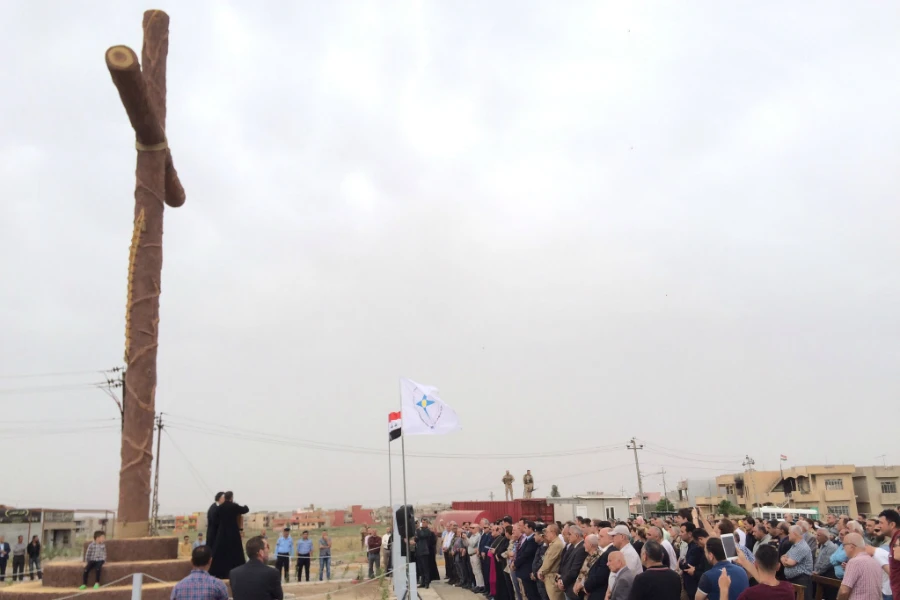
Mosul, Iraq, May 9, 2017 / 10:07 pm (CNA/EWTN News).- With the blessing of the cross raised up in the city of Bakhdida May 2, the reconstruction of the towns in the Plain of Nineveh in Iraq destroyed by the Islamic State officially began.

Syrian Catholic Archbishop Youhanna Boutros Moshe of Mosul blessed the cross on a joyous morning with emotive dances by Christians. There are 13,000 damaged houses – 669 of which were completely destroyed by the Islamists – which will be rebuilt in three towns on the Plain of Nineveh: Bartella, Karemlesh, and Bakhdida.

The pontifical foundation Aid to the Church in Need (ACN), which is collaborating on the reconstruction, estimated the total cost of the program to be in excess of $250 million.

To date ACN has provided around $500,000 to the Nineveh Reconstruction Commission.

Work has already begun on the rebuilding of 100 Christian homes in the communities, and during a May 8 ceremony the owners of each of the homes were given olive trees to be planted as symbols of peace and reconciliation.

Speaking to CNA Fr. Luis Montes, a missionary priest of the Institute of the Incarnate Word In Iraq, said that “Christians are very hopeful with the beginning of the reconstruction of the cities of the Plain of Nineveh.”

“Most of those who have remained in Iraq – some estimate that they are half of those that originally fled from ISIS more than two years ago, the other half have probably already left the country – want to stay and return to their cities,” he said.

However, he pointed out, “you can’t say the drama is over for several reasons, including the fact that the community has been greatly reduced and that is cause for sadness and for greater weakness both now and especially for the future.”

“In addition recovering all the territories that ISIS has taken doesn’t mean defeating them, because they will continue on as a clandestine group with attacks, just like the other terrorist groups,” he pointed out.

According to the research firm RAND, the Islamic State has lost about 60 percent of the territory it controlled at the height of its power in late 2014.

The largest offensive against the Islamist group conducted since in October 2016 by combined groups of the Iraqi army and the Kurdish Peshmerga militia, recovered villages in the Plain of Nineveh. Currently, the combined groups are fighting for control of Mosul.

Fr. Montes noted that “Iraq has had dozens of attacks a month for more than ten years and that will continue. And you mustn’t forget that once the battle for Mosul is over tensions between the central government in Baghdad and the Kurdistan autonomous region will sharply pick up again.”

“Nevertheless, this doesn’t mean that this reconstruction process and the soon return of Christians to their homes isn’t big news. Very big news! But we must keep praying because it’s still a very long road,” he urged.

Fr.  Andrzej Halemba, head of ACN’s Near East division, said that with the start of reconstruction work in Bartella, Karemlesh, and Bakhdida, “we want to send a clear signal to the thousands of Christian families driven from their homes in the Plain of Nineveh who now are living in an improvised and provisional way in Erbil, and other localities in Iraqi Kurdistan.”

“This is a decidedly historic moment. If we now miss the opportunity to help Christians return to their homes in the Plain of Nineveh, these families could make the decision to leave Iraq forever, and this would be a huge tragedy.”

For Fr. Halemba “the presence of Christians in this region is of vital importance, but not just from the historical point of view, but also from the political and cultural stance,” since “Christians represent a bridge of peace between the different Muslim groups at odds with each other; they make a crucial contribution to the education system and are respected by all the moderate Muslims.”

The priest appealed for both financial aid and prayers for the Christians in Iraq.

“From all our brothers and sisters in the West we are not just asking for financial aid, but also prayers with which to support the courage of thousands of Iraqi Christians who have made the decision to return to their towns and remain in Iraq.”

By the end of June 2017 ACN, which says it is the only international organization to consistently support the Christian exiles from the Nineveh plain since its capture by the Islamic State, will have spent more than $35 million in supporting the 12,000 Christian internally displaced persons in Kurdistan. Assistance has come in the form of monthly food aid, money for rent, medical help, the construction of schools, and the support of displaced clergy and women religious.

[…]

In bill veto, Oklahoma takes a stand against loan sharks

May 9, 2017 CNA Daily News 0

Oklahoma City, Okla., May 9, 2017 / 05:10 pm (CNA/EWTN News).- The governor of Oklahoma vetoed a bill that would have drastically increased the interest rates of payday loans, joining the fight of the bishops around the country who have pushed back on similar legislation.

“House Bill 1913 adds yet another level of high interest borrowing without terminating or restricting access to existing payday loan products,” Governor Mary Fallin said in her veto statement last week.

The bill was vetoed May 5, with Fallin voicing her concern that the loans created by the bill would be “more expensive than the current loan options.”

Bishops throughout the U.S. have decried the use of payday loans, and have backed legislation which would restrict the effect these loans on have on the borrowers – communities who are often targeted for their lack of education and immediate need. Catholic Charities has even opened organizations which may assist those in need or struggling with high interest loans.

Payday loans are a small amount of money with a high interest level. Often times these loans are taken out for situations such emergency doctor appointments or car troubles. The name of payday loans derives from the understanding that the loan would be paid back within the next paycheck, but the high interest rates usually suffocate the costumer who is struggling to make ends meet.

Payday loans have led people into a circular trap in which they can only pay the high monthly interest or roll over fees continue to add up and become unmanageable.

HB 1913 would mean that loan companies could increase the monthly interest rate to 17 percent, which is three to four times greater than Oklahoma’s current laws. The annual percentage rate would be about 204.

According to OKpolicy.org, in 2014 nearly 950,000 dollars was taken out in payday loans and 1.2 million in “B” loans, averaging 77 loans per 100 Oklahoman adults.

Bishops and Catholic leaders throughout the U.S. have fought similar legislation like HB 1913 and backed bills that restrict loan sharks.

Regulations have been passed in order to limit the amount of times lenders are allowed to charge borrower’s fees or how many times loan companies can access a person’s bank account before overdraft fees stack up. Legislation has also been passed that enforced lenders to evaluate whether the borrower has sufficient means to pay back the loans.

These loans will affect people in the middle-class, but they are well known to be marketed towards people who may not understand the full consequences.

In a 2015 interview with The Dallas Morning News, the pastor of St. Joseph Catholic Parish in Arlington said “it seems that every week another member of my parish tells me a horror story about one of these loans. They debilitate our families. People take out loans without fully understanding the terms.”

The Texas Catholic Conference analyzed the situation across the state, talking to both lenders and borrowers. Jennifer Allmon, associate director of the Texas Catholic Conference, said that the stores were located in areas where a loan may be more attractive or that the lenders misled borrowers with misinformation.

She said the contracts will often only be in English, but advertising and conversation in the shop would be conducted in Spanish “so oftentimes the borrower has no idea what they’re signing,” and the interest rate would be significantly hirer than what the borrower had expected.

The Kansas Loan Pool Project, in a partnership with Sunflower Bank, has assisted over 120 people who have struggled under predatory debt, and $80,000 has been refinanced since its establishment in 2013. The program provides the borrower with a more traditional loan in order to cover the payday loan. Then they will help the person develop the financial skills to budget to pay back the lower interest loan.

Catholic Charities in Kansas has also begun a program in order to provide small, low interest loans, with a maximum of a $1000, so that people who do have an immediate need are able to receive the proper funding.

[…]

Want to engage secular culture? An Irish bishop provides a guide.

May 9, 2017 CNA Daily News 0

Norwich, England, May 9, 2017 / 03:04 pm (CNA/EWTN News).- Neither the narrow narrative against religion nor the real failings of the Church should define the role of Catholics in public life, Archbishop Eamon Martin of Armagh has said.

“Our challenge is to present to the world the edifying and inspiring witness of people of faith,” said the archbishop. “We are impacted by the process of secularization. We live, breathe, work and believe alongside people of other traditions, faiths and none and the pressure on believers to conform, to become just like everyone else, is often immense and overpowering.”

The Northern Ireland-based Archbishop Martin, who is Primate of All Ireland, delivered the 2017 Newman Lecture May 8 at the University of East Anglia in Norwich. He gave an Irish perspective on the Church in the public sphere, and his speaking notes were published on the website of the Irish bishops’ conference.

About 78 percent of Ireland’s 4.76 million citizens self-identify as Catholic, according to the most recent census. This is a decline of five percentage points over a five-year period.

While Archbishop Martin noted that this is still a remarkable number of Catholics, he said social commentary in Ireland has focused on “the decline of the Church.” Some have again called to remove the Church’s perceived influence in schools, health care, and public policy.

“Such a narrative clearly challenges the Church to find new ways of presenting the Joy of the Gospel, and for example the Gospel of the Family, in the public sphere,” the archbishop said.

“There is no question that the practice of faith in Ireland has been hugely exposed to, and challenged by, the prevailing culture,” he said, according to the notes. At the same time, there seems to be little appetite for “any substantial critique of culture by people of faith,” especially if this means presenting serious questions about the “almost compulsory consensus on controversial issues.”

Archbishop Martin said scandals in the Church should not be used as an excuse to silence well-founded religious critiques of society, nor should they be allowed to conceal the dedication of Catholic priests and religious.

“When we attempt as Church to speak in the public sphere about the right to life of the unborn, some are quick to point to the scandals and to shameful stories of the past,” he said. “Decades of service by countless religious sisters and priests to the education and healthcare of the people of Ireland and all over the world is almost obliterated by a revised and narrow narrative that religious ethos cannot be good for democracy and stands against the progress and flourishing of society and the rights of citizens.”

At the same time, the archbishop said the Church has been too defensive in its reaction to criticisms. These responses show simple denial or claim unfairness or conspiracy “rather than being thankful that the lid has been lifted on a terrible and shameful chapter of our history and at last giving a voice to those who for years have been carrying a lonely trauma.”

“I am convinced, however, that the failures of the past must not be allowed to define us, but should instead help all of us in the public sphere learn lessons for the present about where Church and society might today be similarly marginalizing the poor, stigmatizing the unwanted or failing to protect the most vulnerable.”

As a model for striking a positive tone in the public sphere, Archbishop Martin cited the French bishops’ October 2016 statement to the nation, in which they cautioned against aspirations to be a “church of the pure” or “a counterculture removed from society, posing as a judge from above.”

“They speak as people of faith, but also as fellow French citizens, pastorally accompanying their troubled people with empathy and concern,” the archbishop said. “With faith and conviction we will sometimes bring uncomfortable questions into the public sphere e.g. about the impact of economic policies on the most vulnerable, or to point out the contradictions of populism, all the while being careful not to become too sensitive to criticism or always claiming to be offended.”

He rejected false claims that the Church desires to create a “theocracy.” At the same time, “the Church does expect that in a true pluralist democracy or republic, religion and faith will continue to have an important part to play in the national conversation.”

The archbishop was critical of tendencies to see faith-related institutions, like hospitals and schools, as unconnected to reason. Every Catholic position on morals is argued from reason, even when there is biblical justification.

He also countered claims that the bishops are overly interested in sexual morality, saying bishops in both north and south “makes it clear that the Bishops seek to bring the Joy of the Gospel to bear on a whole range of issues.”

The importance of culture was also a focus. While the Church may be “counter-cultural,” she is not “extra-cultural.”

Archbishop Martin noted three potential possibilities for Catholics: a “culture of openness,” which some fear dilutes Catholic beliefs and leads to unjustified compromise; a “culture of identity” that stresses Catholic distinctiveness instead of what Catholics have in common with all people of good will; and the “culture of engagement,” with two-way critical interaction and conversations between religious traditions and the broader culture.

“Despite the voices nowadays which might tempt the Church into pointless culture wars, or even suggest that Christians might opt out of the public square to some sort of ‘parallel polis,’ I am completely convinced that the voice of faith can and should remain engaged in the public square,” the archbishop said.

“Our faith is not simply for the privacy of our homes and churches. The Gospel is meant for mission. It is not to be cloistered away from the cut and thrust of public discourse.”

[…]

Catholic bishop urges Macron to fight for France’s good

May 9, 2017 CNA Daily News 0

Paris, France, May 9, 2017 / 02:19 pm (CNA/EWTN News).- After Emmanuel Macron won the presidential elections in France, the head of the country’s bishops urged the new leader to help alleviate local woes such as unemployment and political division.

“Macron’s election was significant…we have to wish him success for the good of our country,” Archbishop Georges Pontier of Marseilles said.

“Tensions are such…the changes, the uncertainties are such that he must succeed.”

On May 7, 39-year-old centrist Macron beat Marine Le Pen, the far right candidate of the National Front party with 66 percent of the vote.

Macron will take office May 14 and will have to deal with a slate of difficulties for the country such as unemployment, terrorist threats and political division.

Speaking to Vatican Radio, Archbishop Pontier said one of the priorities for Macron’s government to fight unemployment, as “this is certainly most destructive for persons, families, for prospects, projects, and especially for young people who see nothing on the horizon.”

“In these circumstances there is a confidence that is destroyed and it is a matter of regaining this confidence and people will regain this confidence by actions that produce fruits,” the archbishop said.

Archbishop Pontier noted that the upcoming legislative elections held June 11 and 18 “will determine the makeup of the new parliament.”

“We would need to recover a certain wisdom, that’s for sure. And then we are aware our country must not be put in an ungovernable situation. So the president and his government have to work,” he said.

He added that “the fight over ideas often divides while initiative in action brings us together, and it is certainly that course that we must look to.”

Archbishop Pontiers reflected that the election represented “a change in society,” given the amount of blank ballots. “More than usual, a lot more than usual,” he said, which “shows this dissatisfaction and shows this change.”

The prelate also voiced his opinion that France should stay in the European Union and “continue to give this Europe the means to manage the European entity such that each people is respected, of course, and at the same time in creating a coherent whole providing benefits for everyone.”

“We need to put in place confidence-building mechanisms and at the same time mechanisms addressing the issues such as taxation and wages, which have too great a gap between countries,” he said, “with the challenge as well of welcoming foreigners in view of the current world situation.”

[…]

Kidnapped Indian priest pleads for help in new video

May 9, 2017 CNA Daily News 0

Vatican City, May 9, 2017 / 05:04 am (CNA/EWTN News).- Fourteen months after his kidnapping in March 2016, Salesian priest Fr. Tom Uzhunnalil has appeared in another video asking for help in obtaining his release, criticizing the response of a local bishop and the Indian government.

Opening with a word of thanks, Fr. Tom apparently references either a message he’s received, or the general concern surrounding his case.

“I received the message of concern that you sent to me, my dear family people. I’m thankful to you. Thank you very much,” he said in the video, published on YouTube May 8.

The video, which has not yet been authenticated, shows a cardboard sign with the date April 15, 2017, sitting on the lap of a thin-looking Fr. Tom, who appears with overgrown hair and a beard.

Speaking slowly in English, Fr. Tom said the Indian government has been contacted several times concerning his release. The bishop of Abu Dhabi in the United Arab Emirates has also been contacted, he said, claiming that he’s seen their responses, and they were “very, very poor.”

The priest indicated that he is in poor health, saying: “my health condition is deteriorating quickly, and I require hospitalization as early as possible,” he said.

He then made an appeal for his release, asking “my little family people” to do what they can “to help me be released. Please, please do what you can to help me be released. May God bless you for that.”

Fr. Tom was kidnapped in Yemen in March of last year during an attack on a Missionaries of Charity house that left 4 sisters dead. He garnered international attention last spring when rumors spread that he was to be crucified on Good Friday. Those rumors were later discredited.

A video was posted to YouTube Dec. 26, 2016, showing Fr. Tom personally appealing to Pope Francis, and bishops all over the world, for help.

“Dear Pope Francis…as a father, please take care of my life,” Fr. Tom said. The five-minute video was the first communication from Fr. Tom since his abduction. The priest had overgrown hair and spoke slowly from a prepared script.

Pope Francis did appeal for the priest’s release April 10, 2016, after his Sunday Regina Coeli address in St. Peter’s Square.

“I renew my appeal for the freeing of all kidnapped persons in armed conflict zones,” the Pope said. “In particular, I wish to remember Salesian priest Tom Uzhunnalil, who was abducted in Aden, Yemen last March 4.”

Since his kidnapping, Salesians in the Bangalore province of India have made continued efforts for his safety and release, including holding a prayer vigil Jan. 4 and a worldwide novena Jan. 15-23.

No one has claimed responsibility for the priest’s kidnapping, making it difficult for the Indian government to broker the priest’s release. In addition, the situation has been exacerbated by the political instability in Yemen.

Yemen has been embroiled in civil war since March 2015, when Shia rebels attempted to oust Yemen’s Sunni-led government. Saudi Arabia has led a pro-government coalition. Both al-Qaeda and the Islamic State have set up strongholds in the country amid the power vacuum. More than 6,000 people have been killed in the conflict, according to the United Nations.


Below is the video released of Fr. Tom, which has not been authenticated:

<iframe width=”560″ height=”315″ src=”https://www.youtube.com/embed/AGpa-tBUvuk” frameborder=”0″ allowfullscreen></iframe>

[…]