Benedict XVI praises Cardinal Sarah as great ‘spiritual teacher’

May 18, 2017 CNA Daily News 0

Vatican City, May 18, 2017 / 04:30 pm (CNA/EWTN News).- In an afterword to a book on silence and prayer recently authored by Cardinal Robert Sarah, Benedict XVI praised the prelate as a spiritual model given the depth of his interior life, saying the liturgy is safe in his hands.

“Cardinal Sarah is a spiritual teacher, who speaks out of the depths of silence with the Lord, out of his interior union with him, and thus really has something to say to each one of us,” Benedict XVI said.

The emeritus Pope added that we ought to be grateful to Pope Francis for his 2014 appointment of Cardinal Sarah as prefect of the Congregation of Divine Worship and the Discipline of the Sacraments.

The liturgy, Benedict said, has a certain type of “specialization” which ultimately “can talk right past the essential thing unless it is grounded in a deep, interior union with the praying Church, which over and over again learns anew from the Lord himself what adoration is.”

“With Cardinal Sarah, a master of silence and of interior prayer, the liturgy is in good hands,” he said.

Benedict’s afterword to Cardinal Sarah’s book marks one of the rare occasions he has spoken publicly or published any sort of document since his retirement in 2013.

Although Cardinal Sarah’s book, The Power of Silence: Against the Dictatorship of Noise, was published last month, future printings will include Benedict’s afterword, which he wrote during the Easter Octave. The full text of the essay was published by First Things May 17.

The book is in interview format, and was conducted by French journalist and author Nicolas Diat, who also collaborated on Sarah’s 2015 interview-book God or Nothing.

In his afterword, Benedict reflected on the topic of silence itself, pointing to the letter of St. Ignatius of Antioch to the Ephesians that reads: “It is better to keep silence and be (a Christian) than to talk and not to be.”

Referring to Christ as a teacher, the text says that “even what he did silently is worthy of the Father. He who has truly made the words of Jesus his own is able also to hear his silence, so that he may be perfect: so that he may act through his speech and be known through his silence.”

Benedict then reflected on what it means to hear Christ’s silence and to know him through it, noting that in the Gospels we learn that Christ spent many nights “alone on the mountain” in prayer and conversation with the Father.

“We know that his speech, his word, comes from silence and could mature only there,” he said. “So it stands to reason that his word can be correctly understood only if we, too, enter into his silence, if we learn to hear it from his silence.”

Although historical context is necessary in order to interpret Christ’s words, that in itself is not enough “really to comprehend the Lord’s message in depth,” Benedict said.

Those who today read the “ever-thicker” commentaries on the Gospels often still end up “disappointed” he said, because they learn “a lot that is useful about those days and a lot of hypotheses that ultimately contribute nothing at all to an understanding of the text.”

“In the end you feel that in all the excess of words, something essential is lacking: entrance into Jesus’s silence, from which his word is born,” he said, adding that “if we cannot enter into this silence, we will always hear the word only on its surface and thus not really understand it.”

Pointing to Cardinal Sarah’s book, Benedict said the prelate “teaches us silence — being silent with Jesus, true inner stillness, and in just this way he helps us to grasp the word of the Lord anew.”

Although the cardinal rarely speaks of himself in the text, Benedict said his answers reveal the depth of his spiritual life.

In response to one of Diat’s questions on whether in his life he has ever felt that words were too “cumbersome” or heavy, Cardinal Sarah responds by saying, “In my prayer and in my interior life, I have always felt the need for a deeper, more complete silence…The days of solitude, silence, and absolute fasting have been a great support. They have been an unprecedented grace.”

This answer, Benedict said, makes visible “the source from which the cardinal lives, which gives his word its inner depth.”

“From this vantage point, he can then see the dangers that continually threaten the spiritual life,” he said, noting that this also goes for priest and bishops.

This threat endangers the Church as well, “in which it is not uncommon for the Word to be replaced by a verbosity that dilutes the greatness of the Word,” Benedict said.

He then pointed to another passage of the book which he said is a good examination of conscience for every bishop: “It can happen that a good, pious priest, once he is raised to the episcopal dignity, quickly falls into mediocrity and a concern for worldly success.”

“Overwhelmed by the weight of the duties that are incumbent on him, worried about his power, his authority, and the material needs of his office, he gradually runs out of steam,” Cardinal Sarah said.

Benedict said that given the depth of Cardinal Sarah’s own spiritual life, he is a “spiritual teacher” who, because of his silent prayer with God, has something to say to everyone.
[…]

The first Catholic church in 60 years is being built in Cuba

May 18, 2017 CNA Daily News 0

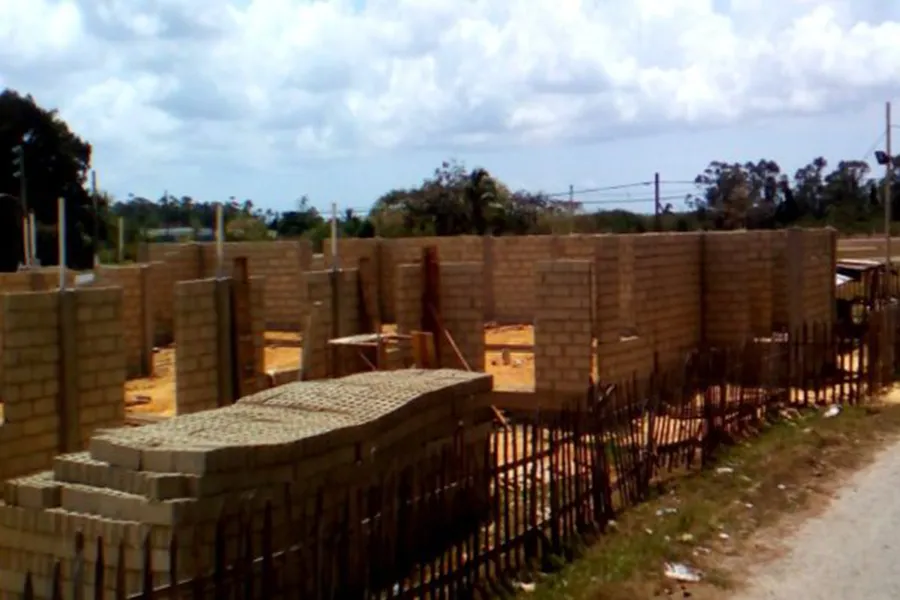
Tampa, Florida, May 18, 2017 / 04:30 pm (CNA/EWTN News).- Funded by a parish in Florida, a new Catholic church is being built in Cuba and is the first the island nation has seen in 60 years.

Father Ramon Hernandez, pastor of St. Lawrence church in Tampa, said he and his parishioners are happy to see how their funds have financed the project, and said he looks forward to the inauguration Mass taking place early next year.

Saint Lawrence provided $95,000 in donations for the church’s construction in Sandino, Cuba, located in the western corner of the country.  

The new church, alongside a refurbished synagogue in Havana, shows Cuba’s progress in religious freedom since Fidel Castro ushered in communism during his revolution in the 1960s. Atheism was established as the belief system for the entire state, and many religious leaders were faced with persecution. In 1992, however, Cuba was made a secular state.  

“Cuba is changing,” Fr. Hernandez said, according to the Tampa Bay Times. The priest is a native Cuban who celebrated Mass in churches hidden in the homes of faithful families. He left the country in the 1980s.

The new church will be called the Parish of Divine Mercy of Sandino, and will be led by Father Cirilo Castro. The 800 square foot building will have a maximum capacity of 200 people. An estimated 40,000 people live in the coastal town. The town’s main industries involve citrus fruits, coffee, and fish.

The idea for the project was first conceived in 2010 by St. Lawrence’s former pastor, who wanted a greater spiritual connection between Cuba and Tampa. Tampa and Cuba have already had strong ties over the importation of tobacco in the late 19th century.

During a visit to Tampa last month, Fr. Castro said that the roof was the last piece of the structure, expected to be installed by the end of June. The pews and the altar will be added over the next few months in preparation for the first mass taking place either in January or February of 2018.

The completion of Divine Mercy of Sandino marks a significant step towards religious freedom and amends to the faiths oppressed in previous years. Religions like Mormonism and Islam have also been given room to grow.

“I see the stories of persecution of freedom of religion in Cuba but we now have a mixture of religions,” said José Ramón Cabañas, Cuba’s ambassador to the United States in an interview with the Tampa Bay Times last week.

The U.S. Commission on International Religious Freedom acknowledged that churches have been dissembled and religious leaders have been arrested even within the past year. But the report reveals that nearly 70 percent of Cuba’s population is Catholic and additional five percent is Protestant, showing a greater attachment to the faith despite government meddling into religious affairs.

Religious persecution still lingers, but developments in religious freedom have notable increased, and this church is one of many planned to be erected in Cuba. Two other Catholic churches are currently under construction in Havana and Santiago. 

[…]

No research justifies the use of human embryos, Pope Francis says

May 18, 2017 CNA Daily News 0

Vatican City, May 18, 2017 / 10:26 am (CNA/EWTN News).- Pope Francis said that there is no outcome that can justify the use or destruction of embryos for scientific purposes – even for the commendable cause of trying to help those suffering from incurable diseases.

“Some branches of research, in fact, utilize human embryos, inevitably causing their destruction. But we know that no ends, even noble in themselves, such as a predicted utility for science, for other human beings or for society, can justify the destruction of human embryos,” he said May 18.

Pope Francis spoke during a meeting at the Vatican Thursday with people affected by a rare and incurable genetic brain disorder called Huntington’s disease, along with their families and caretakers.

His comments were significant given the massive slate of members from the medical and scientific communities who treat the patients with Huntington’s and perform research on how to prevent the disease or slow its progression. Present were some 1,700 people from 16 different countries. Sponsors for the event included major corporations such as Virgin Airlines.

There are several ethical problems surrounding the research on Huntington’s disease, including the use of embryonic stem cells taken from embryos made through in vitro fertilization.

The Pope noted this fact during the audience, encouraging scientists to pursue scientific advancement only through means that do not contribute to the “throw-away culture” which treats human beings as objects for use.

The is not the first time Francis has spoken out against embryonic stem cell research. In his 2015 environment encyclical Laudato Si, he decried “a tendency” within the field of science “to justify transgressing all boundaries when experimentation is carried out on living human embryos.”

“We forget that the inalienable worth of a human being transcends his or her degree of development,” he said, adding that once technology disregards ethical principles, “it ends up considering any practice whatsoever as licit.”

“When we fail to acknowledge as part of reality the worth of a poor person, a human embryo, a person with disabilities – to offer just a few examples – it becomes difficult to hear the cry of nature itself; everything is connected.”

Once the human being seeks absolute dominion, the foundations of our life “begin to crumble,” the Pope said in Laudato Si, so that instead of cooperating with God, man puts himself in God’s place “and thus ends up provoking a rebellion on the part of nature.”

[…]

Venerable Stanley Rother’s remains re-interred ahead of beatification

May 18, 2017 CNA Daily News 1

Oklahoma City, Okla., May 18, 2017 / 06:01 am (CNA/EWTN News).- The remains of Venerable Stanley Rother were exhumed last week and moved to a chapel in Oklahoma City in preparation for the beatification Mass of the first US-born martyr.

“The witness of Father Rother’s life and death has been a source of encouragement and inspiration to me as a seminarian, priest and now as a bishop. I consider it a great gift to be entrusted with overseeing the continuation of his cause for beatification and canonization begun by Archbishop Beltran,” Archbishop Paul Coakley of Oklahoma City said after the May 10 service.

“His beatification is an unexpected blessing for Oklahoma and for the United States as we celebrate this ordinary man from humble beginnings who answered the call to serve an extraordinary life. His witness will continue to inspire us for generations.”

The body of Fr. Rother, who served as a priest in Guatemala, was taken from Holy Trinity Cemetery in his home town of Okarche, Okla., to the chapel at Resurrection Cemetery in Oklahoma City.

Before his body was exhumed, his family led a prayerful procession to the gravesite. Fr. Rother’s remains were later removed form the vault, and examined by medical professionals and verified, as required by the process of beatification.

The martyred priest’s body was then placed in a new casket with golden vestments, along with a document signed by those in attendance. A ribbon was wrapped around the casket, sealed with the archdiocese’s seal in wax.

The Salve Regina was sung as the casket was re-interred, and a prayer service followed.

“It was a holy day. Father Rother’s presence was felt by many, and we are blessed as the Catholic Church in Oklahoma to present Father Rother’s life to the world,” Archbishop Coakley commented.

A temporary sign now marks Fr. Rother’s original gravesite in Okarche, located about 40 miles northwest of Oklahoma City, where the original vault and casket have been re-buried, and a permanent memorial marker is planned.

Fr. Rother’s Mass of Beatification will take place Sept. 23 at the Cox Convention Center in Oklahoma City. It will be said by Cardinal Angelo Amato, prefect of the Congregation for the Causes of Saints, and concelebrated by Archbishop Coakley.

Fr. Rother was born March 27, 1935 in Okarche and entered seminary soon after graduating from Holy Trinity High School.

Despite a strong calling, Rother would struggle in the seminary, failing several classes and even out of one seminary before graduating from Mount St. Mary’s in Maryland. He was ordained a priest of the Diocese of Oklahoma City and Tulsa in 1963.

He served for five years in Oklahoma before joining the Oklahoma diocese’s mission in Santiago Atitlan, Guatemala, a poor rural community of mostly indigenous persons where he would spend the next 13 years of his life.

The work ethic Fr. Rother learned on his family’s farm would serve him well in this new place. As a mission priest, he was called on not just to say Mass, but to fix the broken truck or work the fields. He built a farmers’ co-op, a school, a hospital, and the first Catholic radio station.

Over the years, the violence of the Guatemalan civil war inched closer to the once-peaceful village. Disappearances, killings, and danger soon became a part of daily life, but Fr. Rother remained steadfast and supportive of his people.

In 1980-1981, the violence escalated to an almost unbearable point; Fr. Rother was constantly seeing friends and parishioners abducted or killed.

In January 1981, in immediate danger and his name on a death list, Fr. Rother did return to Oklahoma for a few months. But as Easter approached, he wanted to spend Holy Week with his people in Guatemala.

The morning of July 28, 1981, three Ladinos, the non-indigenous men who had been fighting the native people and rural poor of Guatemala since the 1960s, broke into Fr. Rother’s rectory. They wished to disappear him, but he refused.

Not wanting to endanger the others at the parish mission, he struggled but did not call for help. Fifteen minutes and two gunshots later, Father Stanley was dead and the men fled the mission grounds.

Though his body was buried in Okarche, Fr. Rother’s heart was enshrined in the church of Santiago Atitlan where he served.

Fr. Rother’s cause for beatification was opened in 2007, and his martyrdom was recognized by the Vatican in December 2016, which cleared the way for his beatification.

[…]

Pope to ambassadors: Work for peace amid ‘complex’ global conflicts

May 18, 2017 CNA Daily News 0

Vatican City, May 18, 2017 / 05:33 am (CNA/EWTN News).- On Thursday Pope Francis received the credentials of six new ambassadors to the Holy See, telling them to work for the common good and support peace efforts that lessen tensions given the complexity of the global climate.

“The international scene is at present marked by great complexity, nor is it free of dark clouds,” the Pope said May 18. This situation, he added, requires “a greater awareness of the approaches and actions needed to pursue the path of peace and to lessen tensions.”

Francis spoke to ambassadors Ms. Zhanar Aitzhan of Kazakhstan; Ms. Aichetou Mint M’Haiham of Mauritania; Mr. Ramesh Prasad Khanal of Nepal; Mr. Boubacar Boureima of Niger; Mr. Daffa-Alla Elhag Ali Osman of Sudan and Mr. Colin Michael Connelly of Trinidad and Tobago.

He asked them to convey his respect to their respective heads of State, and offered a special greeting to M’Haiham, who is Mauritania’s first ambassador to the Holy See.

In his brief speech, the Pope said there are several factors that aggravate the problems that exist on the global stage, the first of which is “an economic and financial system that, rather than being at the service of people, is set up principally to serve itself and to evade oversight by public authorities.”

These authorities are responsible for the common good, “yet they lack the means necessary to moderate the disproportionate appetites of the few,” he said, noting that there seems to be an increasing impulse toward violence.

In many ways, there is “a greater readiness to have recourse to force,” he said, “not as a last resort but practically as one means among many, ready to be used without a full consideration of its consequences.”

Another factor exacerbating current conflicts is “fundamentalism,” the Pope said, pointing specifically to “the abuse of religion to justify a thirst for power” and the “manipulation of God’s holy name to advance by any means possible one’s own plans to gain power.”

Turning to the task the ambassadors themselves will face, Francis said the response to these “distortions” and the risks they pose to promoting peace must be the creation of “a responsible economic and financial system” that is responsive to the needs of both individuals and their communities.

“Men and women, not money, must once more become the goal of the economy!” he said, urging the diplomats to face differences with “the courageous patience of dialogue and diplomacy, with initiatives of encounter and peace, and not with shows of force and its hasty and ill-advised use.”

Likewise, Pope Francis also stressed the importance of isolating those “who seek to turn a religious affiliation or identity into a motive of hate for all others.”

“Those who befoul the image of God in this way need to be confronted by a concerted commitment to demonstrating that those who honor God’s name save lives, not take them,” he said.

If we move more decisively in the direction of peace, mercy and compassion rather than division, war and indifference, then “the cause of peace and justice – the conditions of a balanced development for all – will make tangible progress,” he said.

Francis then offered his personal greetings to the Catholic population in each of the six countries represented by the ambassadors, and assured the diplomats of the constant support of the Roman Curia in fulfilling their duties.

[…]

Menorah exhibit in Rome underlines positive Catholic-Jewish relations

May 18, 2017 CNA Daily News 0

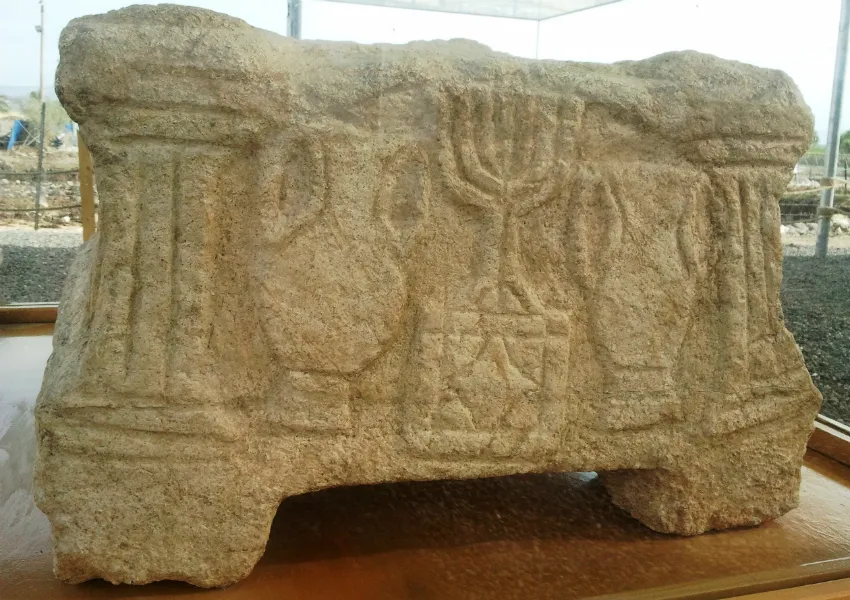
Rome, Italy, May 18, 2017 / 03:04 am (CNA/EWTN News).- At the center of the first joint exhibit between the Vatican Museums and the Jewish museum in Rome is the Magdala Stone, a large decorated stone block from a first century Galilean synagogue which has shed light on synagogue worship before the destruction of the Second Temple.

The Magdala Stone was found during the excavation of an synagogue on the site of what is believed to be Magdala, the hometown of Mary Magdalene. The 4.2 cubic feet limestone block may have been used as a bema, on which the Torah was read.

It is carved on four sides and its top with decorative symbols, most prominently the Menorah which was found in the Jewish Temple – a seven-branch menorah described in Exodus, distinct from the nine-branch menorah associated with Hannukah and the Maccabees.

The stone is the centerpiece of the exhibit “Menorah: Worship, History, and Legend”, shown simultaneously at the Jewish Museum and the Braccio di Carlo Magno Museum in the Vatican, located under the left colonnade in St. Peter’s Square.

The exhibit runs May 15-July 23 and includes roughly 130 pieces, including menorahs from various periods and depictions of them in paintings, sarcophagi, sculptures, and medieval and Renaissance drawings and manuscripts.

This is the first time the Magdala Stone has left Israel or been displayed publicly, and its presence at the Vatican is just “one more sign of the collapsing of the walls between Christianity and Judaism,” in the opinion of Fr. Juan Solana, L.C., General Director of the Magdala Project.

Fr. Solana told CNA that the stone’s presence at the exhibit marks not only an interreligious effort between the Vatican Museums and the Jewish museums in Rome, but also collaboration between Vatican City and the State of Israel.  

“I know that it was a lot of work behind the scenes to make it happen,” he explained. “I think it really shows the importance of interreligious dialogue and especially dialogue and friendship between Catholics and Jews.”

Magdala “is very close to Capernaum, in the old area where Jesus preached and taught and performed many miracles,” Fr. Solana said. “So we believe that Jesus went to Magdala and eventually he went to the synagogue and preached there.”

While they can’t know for sure, it is even possible that Christ used the Magdala Stone himself to display scrolls of the Torah.

The town and synagogue were first discovered in 2009 during excavations in preparation for building a Catholic center in Israel. Stalled by the discovery of the site, the Magdala Center, as it is called, is still in the works.

“We found the whole town of Mary Magdalene,” Fr. Solana said; and the cherry on the top, so-to-speak, was the Magdala Stone.

There are seven synagogues known of from the period of Christ’s life and more or less 50 years before and after, but in no other synagogue have they found this kind of block, he said.

Archaeologists found a total of three stone blocks in Magdala: one from what was probably a school of the synagogue and one which had been reused as a chair of Moses, the place of authority from which the scribes and Pharisees interpreted the Jewish law. The Magdala Stone was at the center of the synagogue.

The stone is considered important for Judaism because Jewish scholars believe it marks a change within Judaism itself, brought about by the influence of Christianity, Fr. Solana explained.

This is because “Jesus destroyed the idea of the Temple as the center of Judaism,” he said, “and it was confirmed by the destruction of the Temple” in AD 70.

The Magdala Stone and the synagogue both pre-date the destruction of the Temple, which has been confirmed by coins found inside which range from AD 5 to 63 – the time of Christ’s life and the first generation of Christians.

Of course, this makes them very important pieces historically, Fr. Solana continued, explaining that the stone itself is a model of the destroyed Temple in Jerusalem. Covered in carvings of Jewish symbols, more even than the Temple itself, it also displays the oldest-known carving of a menorah in Israel.


[…]

How one cardinal believes euthanasia can be shown as ‘toxic’

May 18, 2017 CNA Daily News 0

Toronto, Canada, May 18, 2017 / 12:02 am (CNA/EWTN News).- Legalized euthanasia must still be fought – and that fight requires a broad argument that can persuade people of all beliefs, Cardinal Gerhard Mueller told a Canadian audience May 15.

Euthanasia is not only wrong in itself, but its legalization creates “toxic and deadly pathologies that disproportionately afflict the weakest members of society,” the cardinal told the Canadian Catholic Bioethics Institute at a gathering at Toronto’s St. Michael’s Cathedral Basilica.

A clear understanding of legal assisted suicide’s individual and social wrongs is needed to persuade Canadians to take the steps to reverse the “dangerous legal error” of the Canadian Supreme Court and Parliament, which recently legalized euthanasia and assisted suicide nationwide.

He voiced confidence that all persons of good will should be able to see “the profound and inevitable social harms that fall disproportionately on the weak and vulnerable when euthanasia is legalized.”

“The goodness of a society can be measured by how well it treats and protects its weakest and most vulnerable members,” he said. “Nations that legalize euthanasia fail to care rightly for the least of our brothers and sisters.”

In Cardinal Mueller’s view, the prudential argument against euthanasia is the most powerful argument in a pluralistic society that can persuade people of all religious beliefs, including those without religious beliefs.

He found an example of such persuasion in early 1990s New York. A commission called the New York Task Force on Life and Law had been convened by then-New York Gov. Mario Cuomo. The commission began its work expecting to recommend legal assisted suicide.

“But when they studied the question carefully and dispassionately, they quickly realized that the toxic and deadly social pathologies that would inevitably accompany legalization were too grave and severe to justify such a course of action,” he said.

“The committee recommended that assisted suicide and euthanasia should remain illegal, because decriminalizing these practices would inexorably lead to: grave and lethal new forms of fraud, abuse, coercion and discrimination against the disabled, poor, elderly, and minorities; deadly forms of coercion by insurers and faithless family members; corrosion of the doctor-patient relationship; an eventual shift to non-voluntary and involuntary euthanasia; and widespread neglect of treatment for mental illness and pain management.”

The cardinal cited the commission’s own words:

“We believe that the practices would be profoundly dangerous for large segments of the population, especially in light of the widespread failure of American medicine to treat pain adequately or to diagnose and treat depression in many cases. The risks would extend to all individuals who are ill,” it said. They would be most severe for those whose autonomy and well-being are already compromised by poverty, lack of access to good medical care, or membership in a stigmatized social group.”

The commission said the risks of legalizing assisted suicide and euthanasia for marginalized groups are “likely to be extraordinary” given that the health care system and society “cannot effectively protect against the impact of inadequate resources and ingrained social disadvantage.”

According to the cardinal, the New York task force was particularly struck by the situation in the Netherlands at the time, where there was one case of killing without consent for every three or four who died in consensual euthanasia. The commission projected that if euthanasia were similarly practiced in the U.S., about 36,000 people would die in voluntary euthanasia per year and another 16,000 would be victims of non-consensual euthanasia.

As an example of involuntary euthanasia, the cardinal cited reports from the Netherlands in which “a doctor surreptitiously euthanized a nun over her objections, and justified it on the grounds that she was mistaken about her best interests due to an irrational and superstitious commitment to religious belief.”

In U.S. states where euthanasia has been legalized, there have been cases of insurance companies that offer to pay for assisted suicide drugs rather than pay for costly medical treatment. Family members have also pressured patients into choosing suicide.

The cardinal distinguished assisted suicide and euthanasia from aggressive pain treatment, which aims to eliminate suffering through potentially risky means, not to kill the patient.

He said assisted suicide or direct killing are deceptively described as “aid in dying.” This is “a fabricated expression whose only rhetorical function is to conceal the very nature of the death-dealing action it describes.”

“The use of euphemism or obscure terminology in issues involving life and death should always alert us to an effort to hide the truth,” Cardinal Mueller said.

He countered justification for assisted suicide that claims that euthanasia only affects the patient and people are entitled to choose the time and manner of their death.  

“Anyone who has ever experienced the suicide of a loved one or even a casual acquaintance knows the profound effects this can have on entire communities,” he said, citing the demonstrated risks of suicide spreading like a “contagion.”

Euthanasia is not self-contained, as it affects families and communities and alters the medical community’s relationship to patients and the public.

Suicidal patients are often not in a position to exercise autonomy, and suicidal desires often depart once mental illness and pain are effectively treated.

“This is true even among the terminally ill,” he said.
The cardinal defended doctors and nurses who could face coercion for refusing to participate in euthanasia.

“ No one who trains and takes an oath to care for the sick should be pressed into ending the lives of the very people that they have promised to serve,” he said, saying that refusal to aid in euthanasia “represents basic fidelity to the very medical art that the physician professes.”

Cardinal Mueller said church teaching on euthanasia is accessible and enduring.

“The Catholic Church has long recognized that every human being, no matter his or her condition or circumstance, is possessed of inalienable and equal dignity,” he said. “This beautiful truth about the human person and his matchless worth is intelligible and self evident to every person of good will, regardless of faith tradition.”

The cardinal cited the Congregation for the Doctrine of the Faith’s 1980 Declaration on Euthanasia, which said that making an attempt on the life of an innocent person opposes God’s love for the person.

While there are psychological factors that diminish or remove moral responsibility, to take one’s own life is “often a refusal of love for self, the denial of a natural instinct to live, a flight from the duties of justice and charity owed to one’s neighbor, to various communities or to the whole of society.”

[…]