Swedish town approves Islamic call to prayer after having denied church bells

May 17, 2018 CNA Daily News 1

Stockholm, Sweden, May 17, 2018 / 04:54 pm (CNA/EWTN News).- A town in southern Sweden granted permission this week to allow Islamic calls to prayer for the local mosque – a move some are calling controversial in light of the town’s previous denial of the use of bells by the Catholic parish.

Local police approved the mosque’s adhan – or call to worship – in the town of Vaxjo, more than 250 miles southwest of Stockholm, on Tuesday. The May 15 permit requires that the Islamic call to prayer, which is recited by the muezzin, does not exceed a certain level of decibels, so as not to disturb residents, and will take place every Friday for almost four minutes.

The permit will be valid for one year.

The allowance has drawn questions from the local Catholic church, St. Michael’s, whose pastor Fr. Ingvar Fogelqvist said that previous requests to ring the church bells were denied in both the 1990s and the 2000s. The Catholic church is less than a mile from Vaxjo’s mosque.

“It is a matter of fairness and with the decision granting the mosque permission to do a call to prayer, we have discussed the possibility of applying again,” Fogelqvist said, according to the Local.

Fr. Fogelqvist further noted that church’s bells are small and “would make the Catholic Church a bit more visible here in the community,” although there is a long process of seeking permission for such a request. He additionally remarked that the church may reapply for an approval of church bells to mark Sunday Masses and special occasions, such as funerals.

The permit allowing Islamic calls of prayer in Vaxjo comes just months ahead of Sweden’s September general elections, and some politicians are speaking out on the matter.

Prime Minister Stefan Lofven of the Social Democrats party stated that “society in Sweden is built on having different religions,” and saw the permit as a step toward ending segregation.

However other politicians, such as Ebba Busch Thor of the Christian Democrats, said that “people shouldn’t have to hear it [calls to prayer] in their homes.”

Other local politicians have found the move controversial, including Vaxjo’s conservative moderate’s city council, Anna Tenje, who said the permit “will not strengthen integration,” but would rather “risk pulling the city further apart,” according to TT news agency.

One spokesman from the local Muslim community in Vaxjo, Avdi Islami, viewed the call of prayer as a way of celebrating differences, saying that it is “better to think of the differences as making us stronger.”

Two other towns in Sweden have made similar allowances for mosques’ call to prayer, including Botkyrka, a suburb of Stockholm, and Karlskrona, a town in the southeast.

However, a poll found that 60 percent of its participants wanted to prohibit Islamic calls of prayer at mosques in Sweden, according to research conducted by the social research company SIFO.

According to the Swedish Agency for Support to Faith Communities, there are approximately 400,000 Muslims in Sweden. There are a little more than 113,000 Catholics, and most Swedes are Lutheran.

[…]

As Hawaii volcano rumbles, Catholic agencies help those in need

May 17, 2018 CNA Daily News 0

Hilo, Hawaii, May 17, 2018 / 04:45 pm (CNA/EWTN News).- With ongoing volcanic activity continuing to threaten the area surrounding Hawaii’s Kilauea volcano, local Catholics are offering a helping hand to those who have been evacuated.

Fr. Ernest Juarez Jr. of Sacred Heart Parish in Pahoa said that the parish has “opened its doors to be a centralized location for the different government agencies, and for the [affected] public to come and get information, permission cards to enter the affected area, and other kinds of assistance.”

The parish said in a statement this week that it has worked “to contact members of the parish who live in affected neighborhoods to find out how we can help.”

Relief efforts have included sign-up sheets to offer temporary rooms or houses for those who have been evacuated, as well as transportation and assistance with other personal needs. The parish has been collecting pillows and blankets, preparing meals for distribution at the food pantry, and offering to talk and pray with those staying in a shelter.

“The main needs are housing, transportation, and money,” Fr. Juarez told CNA.  

Blankets, toiletries, and tents are also needed. Food has been abundant, thanks to the generosity of donors, he said.

In the early hours of May 17, the Kilauea volcano on Hawaii’s Big Island erupted for the second time in two weeks, shooting a plume of ash and smoke 12,000 feet into the air. The previous eruption, which took place May 3, was followed by earthquakes and the emergence of 21 fissures, some in residential neighborhoods. More than 117 acres of the island have been covered by lava.

According to the Hawaii County Civil Defense Agency, Kilauea has destroyed 36 structures, mostly homes, since the lava began spewing. The Hawaiian Volcano Observatory also issued a hazardous fumes warning due to elevated levels of sulfur dioxide in the air.

Some 2,000 Hawaiians were evacuated in the days following the initial eruption.

Fr. Juarez said that “attitudes and emotions are everything you can imagine” – relief at being safe and hopefulness about returning home, frustration and heartbreak at damaged houses, worry for neighbors, and uncertainty over what will happen next.

While the situation is overwhelming for some, Fr. Juarez said, the people of Hawaii are in good hands with the state, local and national response teams.

“The people who are scared are those who don’t understand what is going on here and are scared for us,” he stressed, adding, “No one is in any danger as long as they heed the instructions put in place for safety.”

Although local schools were closed for the day and levels of sulfuric gas and volcanic smoke are high, the priest said that “lives are not in danger.”

“It is predicted that the trade[winds] will return tomorrow, and all of the bad air will blow out to the ocean,” he said. “If that happens, our air will be fine.”  

Fr Robert Stark, director of the Diocese of Honolulu’s Office for Social Ministry, said that the diocese is involved in relief efforts primarily through HOPE Services Hawaii, which was founded by his diocesan office and is located near the eruption area.

“HOPE is working closely with state and county government to respond to the most vulnerable affected by the eruptions,” Stark told CNA. “HOPE was asked by state and county to convene the service providers in the area to coordinate their response.”

In addition, he said, HOPE is helping with both fundraising and offering direct assistance to those affected by the volcano.

Catholic Charities of Hawaii will be working in the coming weeks and months to help those whose homes have been damaged or destroyed, aiding with temporary housing subsidies and emergency house repairs.

“We understand that certain agencies and first responders are there…to ensure the health and safety of those being affected,” said Terry Walsh, president and CEO of Catholic Charities Hawaii. “[Our] role is to assist those affected through recovery efforts during these disasters.”

The agency said in a statement that is also assisted in “long-term recovery efforts during the last lava flow through Puna in 2014 and following the 2006 Hawaii Island earthquake.”

The state agency has applied for $10,000 emergency seed grants through Catholic Charities USA.

Catholic Charities Hawaii is also asking for donations to assist those affected by the volcano, as well as continued recovery efforts in Kauai and Oahu, where severe flooding and landslides last month damaged hundreds of homes and causes some $20 million in damage to public property, according to Hawaii’s Emergency Management Agency.

[…]

Foster parents join Philadelphia’s Catholic Social Services in discrimination lawsuit

May 17, 2018 CNA Daily News 0

Philadelphia, Pa., May 17, 2018 / 02:39 pm (CNA/EWTN News).- A group of foster parents and social workers appeared in court on Wednesday, asking that the city of Philadelphia rescind its decision to ban a Catholic organization from placing children in foster homes.

The plaintiffs of Sharonell Fulton et al. v. City of Philadelphia told a US District Court May 16 that they are being discriminated against because of their agency’s deeply-held religious beliefs.

For over a century, Philadelphia has worked with Catholic Social Services of the Archdiocese of Philadelphia (CSS) to facilitate the placement of children in foster care. Catholic Social Services has assisted with home visits, training of foster parents, and placements. At any given time CSS serves about 120 foster children in 100 foster homes. In 2017, the charity says it helped more than 2,200 children in the Philadelphia area.

In March, CSS was informed that the city would no longer be referring foster children to the agency for assistance. Philadelphia then passed a resolution calling for an investigation into religiously-based foster care services, after a same-sex couple claimed they were discriminated against by a different faith-based agency.

CSS has not been the subject of discrimination complaints by same-sex couples. The agency says that it assists all children in need, regardless of a child’s race, color, sex, religion, sexual orientation or gender identity.

“Catholic Social Services will not stand in the way of anyone who wants to try and become a foster parent,” said Lori Windham, senior counsel at the Becket Fund for Religious Liberty. Becket is providing counsel for the case.

“They’re simply asking that they can continue to serve the children of Philadelphia consistent with their faith.”

The suit’s lead plaintiff, Sharonell Fulton, has “fostered more than 40 children over 25-plus years as a foster parent. She has cared for children with significant medical needs and is currently caring for two special needs foster children,” the lawsuit says.

The lawsuit claims that Fulton “could not provide the extensive care that these special-needs children require without the support she receives from Catholic Social Services.”

Other plaintiffs include a foster parent recognized in 2015 as one Philadelphia’s “Foster Parents of the Year,” and a long-time social worker, herself a foster parent, who claims that she would likely discontinue providing foster care to children if she could not work with CSS. The agency itself is also a plaintiff in the lawsuit.

If the city declines to renew its current contract with CSS, which expires at the end of June, there’s a chance that children in CSS foster-care placements will be immediately removed from their homes. Windham, however, is hopeful that this will not be the case.

Since the policy went into place, Philadelphia has put out calls for new foster parents, as the city is facing a severe shortage. According to Windham, there are at least a dozen empty foster homes in the city–which are empty because they work with CSS.

Archdiocese of Philadelphia’s Chief Communications Officer Kenneth Gavin told CNA that the archdiocese is disappointed that the city decided to stop partnering with CSS, despite its history of providing care for children.

“Catholic Social Services of the Archdiocese of Philadelphia (CSS) recognizes the vital importance of the foster care program in our city and is proud to provide safe and nurturing foster environments to young people in need. We have been providing those environments for over a century. We were extremely disappointed when the City ceased new foster care child intakes with CSS in late March of this year,” said Gavin.
 
Gavin said the foster care program provides care “for all those in need with dignity, charity, and respect regardless of their background.” Given that the Philadelphia is in “a foster care crisis,” Gavin said he hopes that CSS will be permitted to continue providing care for needy children.
 
The lawsuit is expected to be heard later this year.


[…]

Pope to Chilean bishops: Serve Christ in victims of abuse

May 17, 2018 CNA Daily News 0

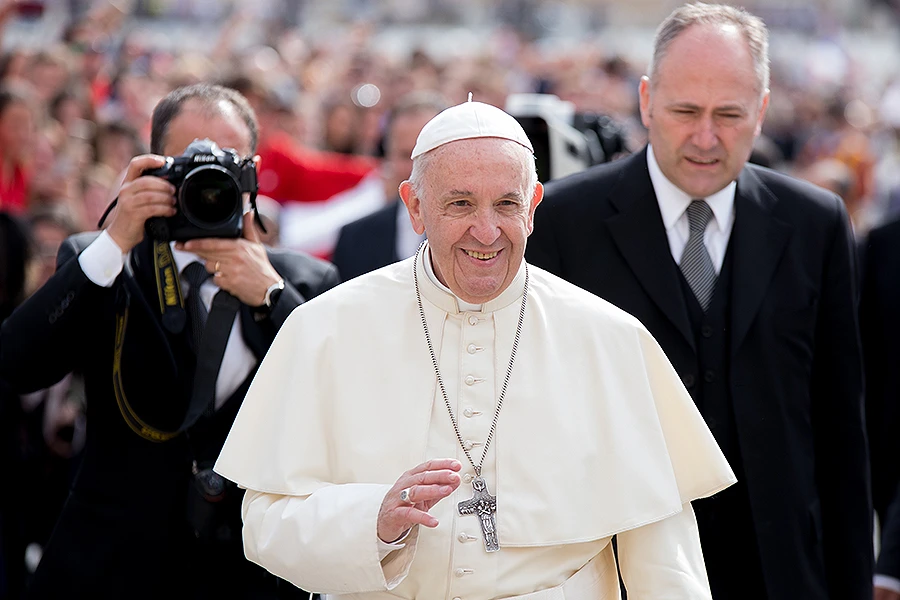
Vatican City, May 17, 2018 / 01:00 pm (CNA/EWTN News).- Pope Francis thanked Chile’s bishops for their “frank” dialogue during a 3-day Vatican meeting on the Chilean abuse scandals, and asked them to focus on serving abuse victims as they return to their dioceses and prepare to implement short and long term resolutions.

“After these days of prayer and reflection I invite you to continue building a prophetic Church, which knows how to put what is important at the center: service to the Lord in the hungry, the prisoner, the migrant and the abused,” the pope said in a letter to Chilean bishops.

Published May 17, the letter was given to each of the bishops by Pope Francis during their final meeting earlier that evening.

He thanked the bishops for their presence and for the “frank discernment” they carried out in terms of how to face the “serious acts that have damaged ecclesial communion and weakened the work of the Church in Chile in recent years.”

“In light of these painful events regarding abuse – of minors, of power and of conscience – we have delved into the severity of these [abuses] as well as in the tragic consequences they have had, particularly for the victims,” he said.

Francis reiterated his heartfelt apology to the bishops and the victims, saying he is close to them and is united with them in “one single will and with the firm intention to repair the damages done.”

He also thanked the bishops for the desire they expressed to both adhere to and collaborate in the changes and resolutions that have to be implemented going forward, which will happen on a short, medium and long-term scale in order to “restore justice and ecclesial communion.”

The three-day gathering between the pope and the 34 Chilean bishops began Tuesday with a day of prayer, and closed Thursday at 6:30 p.m., according to a Vatican communique.

Pope Francis summoned the prelates to Rome last month following an in-depth investigation into abuse cover-up by Church hierarchy in Chile. The investigation was conducted by Maltese Archbishop Charles Scicluna, resulting in a 2,300 page report on the situation.

The investigation was initially centered around Bishop Juan Barros of Osorno, who was appointed to the diocese in 2015 and who has been accused by at least one victim of covering up the abuses of Chilean priest Fernando Karadima.

In 2011, Karadima was convicted by the Congregation for the Doctrine of Faith of abusing minors and sentenced to a life of prayer and solitude.

Allegations were also made against three other bishops – Andrés Arteaga, Tomislav Koljatic and Horacio Valenzuela – whom Karadima’s victims accuse of also covering the abuser’s crimes.

In the past, Francis had defended Barros, saying he had received no evidence of the bishop’s guilt, and called accusations against him “calumny” during a trip to Chile in January. However, after receiving Scicluna’s report, Francis apologized and asked to meet the bishops and more outspoken survivors in person.

In comments to EWTN News Nightly, Bishop Juan Ignacio González of San Bernardo said the pope was very welcoming to each of them, and had voiced concern about the expenses of their trip, as some bishops come from poorer dioceses.

After reflecting on the text they were given the first day, which Gonzalez said was an ecclesial text “on the mission that the Church in Chile has,” each of the bishops was invited in following sessions to share their thoughts about the text and what struck them.

“The theme of the retreat is more of an ecclesial, theological theme which puts Christ in the center again, those things that we may have forgotten, the other things we have to continue doing,” he said, explaining that all of the bishops, including Barros, were able to speak.

Pope Francis himself didn’t say much apart from a few simple things, Gonzalez said, one of which was a comment that the problems they are facing “are not like the problem of Jonas: we’re not throwing Jonas down so he gets eaten by the whale while we continue surfing.”

Naturally the pope will have decisions to make and there will be resolutions, but those will come later, the bishop said, adding that the time they had was one of discernment and returning to their heart of their mission, which is Christ.

[…]

Vatican offices urge re-calibration of financial markets

May 17, 2018 CNA Daily News 3

Vatican City, May 17, 2018 / 12:20 pm (CNA/EWTN News).- Two Vatican offices called Thursday for the development of new forms of economy and finance with  regulations directed to the common good and respect for human dignity.

“It is especially necessary to provide an ethical reflection on certain aspects of financial transactions which, when operating without the necessary anthropological and moral foundations, have not only produced manifest abuses and injustice, but also demonstrated a capacity to create systemic and worldwide economic crisis,” read Oeconomicae et pecuniariae quaestiones, (Economic and financial issues), a document of the Congregation for the Doctrine of the Faith and of the Dicastery for Promoting Integral Human Development presented May 17.

The document, signed Jan. 6, presents considerations for an ethical discernment of economics and finances, and argues that profit should not be an end in itself, but must be pursued with the goal of achieving greater solidarity and a more equitable distribution of wealth.

It presents fundamental considerations, such as the need for ethics for the economy to function correctly, and treats at length of specific ethical issues in financial and economic markets.

It was presented during a press conference by Archbishop Luis Ladaria, prefect of the Congregation for the Doctrine of the Faith, and Cardinal Peter Turkson, prefect of the Dicastery for Promoting Integral Human Development.

Sitting alongside the prefects were professors Leonardo Becchetti from Rome’s Tor Vergata University and Lorenzo Caprio, from the Catholic University of Milan.

Archbishop Ladaria said the aim of the document is to provide a correct anthropological vision for the current market, since “the common good has disappeared” from many areas of economics and finance.

According to Becchetti, the document also identifies a major problem in the global economy: “we have a growing global wealth, which is a good thing, but we have a huge problem of distribution.”

“Regulation is key” to bringing more balance, he said, citing the need to be attentive to a growing dependence on technology while also ensuring people have work. The main problem, he said, “is fiscal,” and he stressed the need to give attention to areas with fewer resources.

The document frequently cites Pope Francis and Benedict XVI, but also includes citations from Pius XI, the Second Vatican Council, and the subsequent magisterium.

Oeconomicae et pecuniariae quaestiones cites the growing influence of financial markets, saying there is a need for “appropriate regulation of the dynamics of the markets and, on the other hand, a clear ethical foundation that assures a well-being realized through the quality of human relationships; rather than merely economic mechanisms, which by themselves cannot attain it.”

The recent global financial crisis, the text read, is an invitation to “develop a new economy, more attentive to ethical principles, and a new regulation of financial activities that would neutralize predatory and speculative tendencies and acknowledge the value of the actual economy. ”

What is at stake is the well-being of men and women throughout the planet who risk being excluded and marginalized from true well-being, while a small minority, “indifferent to the condition of the majority, exploits and reserves for itself substantial resources and wealth.”

The document said the time has come to begin recovering “what is authentically human,” and to expand minds and hearts to they recognize what is both true and good, “without which no social, political and economic system could avoid bankruptcy, failure, and, in the long term, collapse.”

Competent and responsible authorities, the text read, have the duty “to develop new forms of economy and of finance, with rules and regulations directed towards the enlargement of the common good and respect for human dignity along the lines indicated by the social teachings of the Church.”

The text flagged erroneous and misguided approaches to the economic and financial markets such as consumerism, materialism, and an over-emphasis on profit, citing them as mentalities which endanger the common good and increase inequalities throughout the world.

“Our contemporary age has shown itself to have a limited vision of the human person, as the person is understood individualistically and predominantly as a consumer, whose profit consists above all in the optimization of his or her monetary income. The human person, however, actually possesses a uniquely relational nature and has a sense for the perennial search for gains and well-being that may be more comprehensive, and not reducible either to a logic of consumption or to the economic aspects of life.”

“No profit is in fact legitimate when it falls short of the objective of the integral promotion of the human person, the universal destination of goods, and the preferential option for the poor,” the text said, stressing that a legitimate economic system “thrives not merely through the quantitative development of exchange but rather by its capacity to promote the development of the entire person and of every person.”

On this basis, the document urged that universities and business schools provide as a foundation an education by which students will “understand economics and finance in the light of a vision of the totality of the human person”, avoiding “a reductionism that sees only some dimensions of the person.”

Well-being has to be measured by more than just Gross Domestic Product but must also take into account safety and security and “the quality of human relationships and of work. Profit should be pursued but not ‘at any cost’, nor as a totalizing objective for economic action.”

Profit and solidarity “are no longer antagonists,” the document said. However, “where egoism and vested interests prevail, it is difficult for the human person to to grasp the fruitful interchange between profit and gift, as sin tends to tarnish and rupture this relationship.”

“It is impossible to ignore the fact that the financial industry, because of its pervasiveness … is a place where selfishness and the abuse of power have an enormous potential to harm the community.”

The documented lamented that “Capital annuity can trap and supplant the income from work, which is often confined to the margins of the principal interests of the economic system. Consequently, work itself, together with its dignity, is increasingly at risk of losing its value as a ‘good’ for the human person and becoming merely a means of exchange within asymmetrical social relations.”

It pointed out an inversion between means and ends, in which work has become an instrument, and money an end.

Oeconomicae et pecuniariae quaestiones said that credit has an “irreplaceable social function,” but that “applying excessively high interest rates, really beyond the range of the borrowers of funds, represents a transaction not only ethically illegitimate, but also harmful to the health of the economic system. As always, such practices, along with usurious activities, have been recognized by human conscience as iniquitous and by the economic system as contrary to its good functioning.”

Instead, financial activities are called to serve the real economy, “to create value with morally licit means, and to favour a dispersion of capital for the purpose of producing a principled circulation of wealth.”

“What is morally unacceptable is not simply to profit, but rather to avail oneself of an inequality for one’s own advantage, in order to create enormous profits that are damaging to others; or to exploit one’s dominant position in order to profit by unjustly disadvantaging others, or to make oneself rich through harming and disrupting the collective common good.”

The text then highlights the need for greater communion, collaboration, and solidarity in the market, and offers suggestions for ways in which these can be implemented.

In a healthy market “it is easier to respect and promote the dignity of the human person and the common good,” the Vatican offices wrote.

The experience of recent decades has demonstrated the need for both ethics and regulation, the document states.

With an increased globalization of financial markets, the system “requires a stable, clear and effective coordination among various national regulatory authorities,” allowing them to share binding decisions when necessary, especially when it comes to threats against the common good.

“Where massive deregulation is practiced, the evident result is a regulatory and institutional vacuum that creates space not only for moral risk and embezzlement, but also for the rise of the irrational exuberance of the markets, followed first by speculative bubbles, and then by sudden, destructive collapse, and systemic crises,” Oeconomicae et pecuniariae quaestiones states.

The text condemned the tendency of business managers to establish policies which aim “not at increasing the economic health of the companies that they serve, but at the mere profits of the shareholders, damaging therefore the legitimate interests of those who are bearing all of the work and service benefiting the same company, as well as the consumers and the various local communities (stakeholders).”

The document suggested that ethical committees be established in banks to support the administration, and to help cushion them from the impact of losses.

The text then pointed to financial instruments such as derivatives and credit default swaps, which going  unchecked, can lead to “unacceptable” consequences from an ethical point of view, essentially gambling with a person’s future.

Use of offshore accounts as tax havens was also condemned, though it was noted that tax systems throughout the world are not always equal, which can damage weaker parties in favor of wealthier ones.

Despite the fact that more nations are cracking down on offshore accounts, penalties have not been enforced and norms have either not been applied or they have not proved effective due to the political powers pulling the strings.

All of these problems are “not only the work of an entity that operates out of our control,” but are “in the sphere of our responsibilities.”

Oeconomicae et pecuniariae quaestiones states that it is “therefore quite evident how important a critical and responsible exercise of consumption and savings actually is.”

As an example, the text said shopping is a daily task by which we can choose to avoid purchasing products produced by chains which violate “the most elementary human rights,” such as sweat-shops.

“Through the gesture, apparently banal, of consumption, we actually express an ethics and are called to take a stand in front of what is good or bad for the actual human person.”

Likewise, persons are called to direct their savings to “those enterprises that operate with clear criteria inspired by an ethics respectful of the entire human person, and of every particular person, within the horizon of social responsibility.”

“Each one is called to cultivate procedures of producing wealth that may be consistent with our relational nature and tend towards an integral development of the human person.”

The document concludes with a call to hope in light of the challenges of the economy, saying, “every one of us can do so much, especially if one does not remain alone.”

“Today as never before we are all called, as sentinels, to watch over genuine life and to make ourselves catalysts of a new social behavior, shaping our actions to the search for the common good, and establishing it on the sound principles of solidarity and subsidiarity.”

[…]

Nigeria’s bishops call for processions to honor those killed in church attack

May 16, 2018 CNA Daily News 2

Abuja, Nigeria, May 16, 2018 / 05:09 pm (CNA/EWTN News).- Nigeria’s Catholic bishops have called on each of the nation’s dioceses to organize peaceful processions May 22 in solidarity with the funeral for two priests and 17 others killed in an attack by Fulani herdsmen on a parish church.

The herdsmen stormed a daily Mass at Saint Ignatius Church on the morning of April 24, killing Fathers Joseph Gor and Felix Tyolaha, along with others in the congregation.

Last Sunday’s Mass announcements throughout Nigeria encouraged Catholics and all “men and women of goodwill” to join in these upcoming rosary processions and prayer rallies around the country.

The state governor of Benue, where the attack took place, has also declared May 22 as a work holiday to honor those who died, according to Nigeria’s PM News.

Last year, nomadic Fulani herdsmen killed more than 140 Christians in central Nigeria’s Benue state, a World Watch report by Open Doors found.

Nigeria’s bishops have been vocal critics of President Muhammadu Buhari’s response to the violent attacks by nomadic herdsmen.

In a statement issued in response to the April 24 attack, the Nigerian bishops’ conference called on Buhari to step down because “he has failed in his primary duty of protecting the lives of the Nigerian citizens.”

“How can the Federal Government stand back while its security agencies deliberately turn a blind eye to the cries and wails of helpless and armless citizens who remain sitting ducks in their homes, highway and now, even in their sacred places of worship?” the bishops continued.

The northern Fulani herdsmen have been moving south due to the desertification of the soil in northern Nigeria, and have violently clashed with the farmers in the region, as the cattle have overtaken some farmed fields.

Some, including the bishops, have asserted that terrorist groups are embedded among the nomadic herdsmen.

The bishops met with Buhari Feb. 8, urging him to address the deadly violence, as well as the kidnappings in Nigeria.

“Herdsmen may be under pressure to save their livestock and economy, but this is never to be done at the expense of other people’s lives and means of livelihood,” the bishops told Buhari.

The bishops concluded, “As the voice of the voiceless, we shall therefore continue to highlight the plight of our people.”

[…]