Controversy flares over US challenge to WHO breastfeeding resolution

July 9, 2018 CNA Daily News 0

Washington D.C., Jul 9, 2018 / 04:00 pm (CNA).- After critics charged that US delegates threatened Ecuador to prevent a World Health Organization resolution supporting breastfeeding, President Trump and administration officials say the U.S. supports breastfeeding.

The New York Times reported July 8 that during a WHO meeting in May, American officials threatened Ecuador with sanctions if it would not withdraw its sponsorship for a resolution in support of breastfeeding. US officials say the matter is more complicated.

The resolution was primarily meant to prevent dishonest or inaccurate marketing of baby formula, subsequently promoting breastfeeding as the healthiest choice for babies, Britain’s Baby Milk Action Policy Director Patti Rundall said in an interview with NPR.

Rundell said the resolution was “all about trading, and trading goods that really are misleadingly marketed.”

The resolution, sponsored by the Ecuador, encouraged governments to oppose marketing that claims baby formula is better for babies than breastfeeding.

But an HHS spokeswoman said that “the resolution as originally drafted placed unnecessary hurdles for mothers seeking to provide nutrition to their children,”

Caitlin Oakley, a spokesperson for the US Department of Health and Human Services, said in a statement that “”The issues being debated were not about whether one supports breastfeeding.”

“The United States was fighting to protect women’s abilities to make the best choices for the nutrition of their babies.

“Many women are not able to breastfeed for a variety of reasons, these women should not be stigmatised; they should be equally supported with information and access to alternatives for the health of themselves and their babies.”

The New York Times reported that the US attempted to “water down” the wording of the resolution, focusing on two passages, the article said: one requiring that countries “‘protect, promote and support breast-feeding,’” and another that would place restrictions on companies selling baby formula that is, according to health officials, harmful.

Their efforts were unsuccessful, so, according to media reports, the US reportedly “threatened” any country that supported the resolution, including Ecuador and several South American and African countries. The US has denied allegations it threatened any country during negotiations.

Though Ecuador withdrew its support for the resolution, Russian delegates took up its sponsorship, and the measure passed, amended partially by the US in two ways: language was removed offering WHO support for nations trying to stop ‘inappropriate promotion of foods for infants and young children,”  and the phrase “‘evidence-based” was added to some provisions about advertisements supporting breastfeeding.

Critics charge that the US delegation is unduly influenced by lobbyists for formula manufacturers.

Erroneously advertised baby formulas, while claiming to be authentic, can be detrimental to babies’ health. They can sometimes even cause death, Rundall said.

“I don’t think people thought about it very much,” she said, “that… marketing could lead people to the extent… that you would actually have babies dying.”

In a tweet Monday, President Trump said that the “U.S. strongly supports breast feeding but we don’t believe women should be denied access to formula. Many woman need this option because of malnutrition and poverty.”
[…]

Newspapers, victims sue for release of Pa. grand jury’s clergy sex abuse report

July 9, 2018 CNA Daily News 1

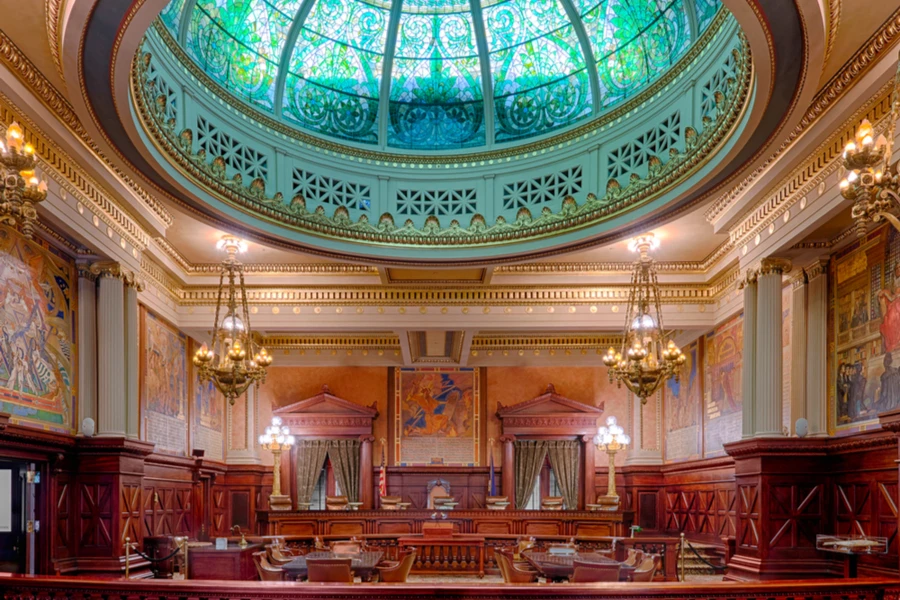
Harrisburg, Pa., Jul 9, 2018 / 02:40 pm (CNA/EWTN News).- Several Pennsylvania news outlets and victims of clergy sex abuse sued Friday for the release of a grand jury report which details cases of abuse in six of the state’s eight Catholic dioceses. The state supreme court had blocked the release.

Todd Frey, who testified to the grand jury about having been abused by a priest, filed a petition with the Pennsylvania Supreme Court July 6, saying the delayed release of the report is re-traumatizing victims. Philadelphia attorney Tom Kline has filed suit on behalf of another, unnamed victim.

Frey’s court filing said the stay on the report’s release “replicates and continues” the silencing he experienced as a youth.

Nine news outlets argued that Pennsylvania law requires that the more-than-800-page report, a “matter of extraordinary public importance”, be released publicly.

Pennsylvania Attorney General Josh Shapiro announced June 29 he would be taking legal action to force the report’s release.

The state’s two dioceses which are not subjects of the report, Philadelphia and Altoona-Johnstown, have already undergone similar investigations.

The Pennsylvania Supreme Court stayed the release of the report June 20, after numerous individuals named in the report objected to its release, citing concerns of due process and reputational rights guaranteed by the state constitution.

Those who requested a block on the release of the report have said that though they could file written rebuttals with the grand jury, they could not present their own testimony or evidence, or cross-examine witnesses.

The objections were made by around 24 persons, including current and former clerics. The dioceses named in the report have all said they did not apply for the stay, and that they support the publication of the report.

The individuals who asked for the stay said the report “denies them due process based upon the lack of a pre-deprivation hearing and/or an opportunity to be heard by the grand jury,” according to the state supreme court.

Justin Danilewitz, an attorney representing the current and former clerics who sought to block the report’s release, said the report is replete with inaccuracies. He wrote that “grand jury secrecy protects those, like the Clergy Petitioners, whose reputations may be unjustly harmed, including the innocent wrongly accused.”

Lawyers for the media outlets requesting the report’s release have said a redacted version could be released to respond to those concerns, while the court considers challenges to the full report’s release, the Pittsburgh Post-Gazette reports.

Some priests have said they would not object to the release of a redacted version of the report, according to the Philadelphia Inquirer and Daily News.

Efrem Grail, an attorney representing an individual named in the report, has written that “There is simply no reason why speed in this entire proceeding will lead to anything other than injustice and confusion.”

Witnesses who testified to the grand jury want the report “to bring sweeping change, forcing their abusers and the church to be accountable and take responsibility. They hope it encourages other victims who haven’t come forward after years of dealing alone with their trauma to get the help they need. They also hope it propels lawmakers to change Pennsylvania law to give prosecutors more time to pursue charges against child predators and victims more time to sue for damages,” according to the Associated Press.

The US Conference of Catholic Bishops adopted in 2002 a Charter for the Protection of Children and Young People, which has been the foundation for the efforts to provide a safe environment in the Church in the US.

The charter obligates all compliant dioceses and eparchies to provide resources both for victims of abuse and resources for abuse prevention. Each year, the USCCB releases an extensive report on the dioceses and eparchies, including an audit of all abuse cases and allegations, and recommended policy guidelines for dioceses. The guidelines of the current charter have been implemented in every US diocese.

The charter has been continually updated, including earlier this year.

The Pennsylvania Supreme Court has said its stay order will be revisited “when the proceedings before it have advanced to a stage at which either the petitions for review can be resolved, or an informed and fair determination can be made as to whether a continued stay is warranted.”

Petitioners must submit briefs to the court by July 10, and the attorney general is to respond by July 13.

[…]

Questions from agnostic friend lead Spanish man to the priesthood

July 8, 2018 CNA Daily News 0

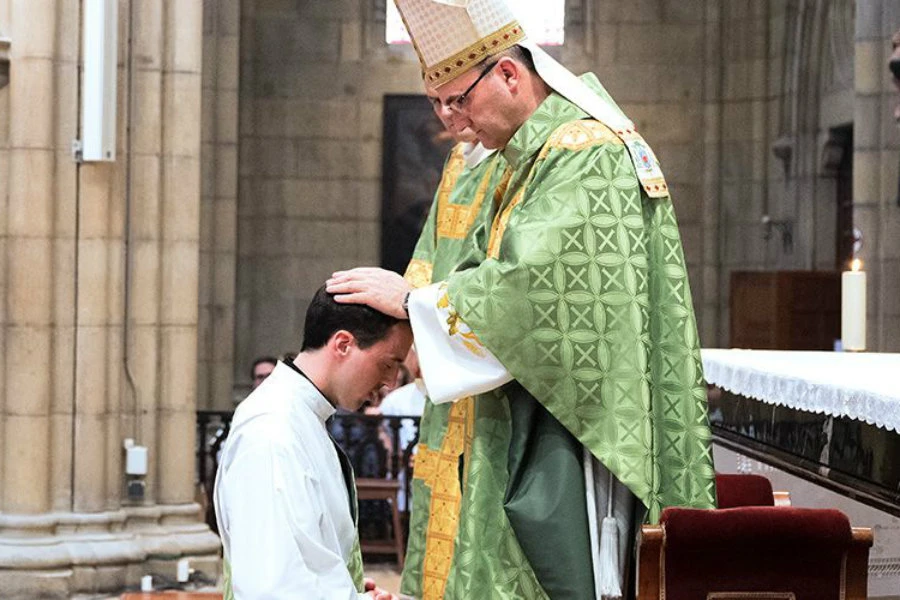
San Sebastian, Spain, Jul 8, 2018 / 04:33 pm (ACI Prensa).- Fr. Juan Pablo Aroztegi became the youngest priest in the diocese of San Sebastian, Spain, when he was ordained last weekend by Bishop José Ignacio Munilla at Good Shepherd Cathedral.

According to reports in various local media, Aroztegi, age 35, began to discern his vocation after an agnostic friend asked him why he was a Christian.

Until then, he had not questioned why he was following Jesus Christ, nor what he wanted to do with his life. He was working as an industrial engineer at a software company in Pamplona at that time, but after a profound reflection, he decided to join the seminary.

He described the decision to enter the seminary as one of the “greatest moments of freedom” in his life. When he told the agnostic friend who had questioned him that he was becoming a seminarian, the friend replied that he has been expecting it.

“Your friends know you and can intuit your decisions. It’s ironic that an agnostic friend made me question my Christian life and my vocation,” Aroztegi said.

While the majority of his friends are non-believers, the new priest said that they have respect for his faith and his decision. Some of them attended his ordination Mass last Sunday.

“The conversations I had with some of them to tell them of my decision was one of the most beautiful moments of my life. I felt free and I was open about who I am. We spoke about important issues we had never dealt with before,” he recalled.

His family was also surprised when he announced his decision to pursue the priesthood, although he had always lived his faith “in a very natural way.”

Fr. Aroztegi said that he always went to Mass with his family on Sundays, but had never imagined that he would become a priest, instead assuming that he would marry and have a family.

“[Priesthood] didn’t even cross my mind,” he told Diaro Vasco. “Certainly the best things that have happened to me in life have been unexpected.”

“In that sense I am in expectation of everything that awaits me in priestly life. I sincerely hope for an intense and exciting life, with good moments, and others with the cross and suffering as in any other path in life.”

Looking to the future, Aroztegi said he would like to follow the example of some priests who have been important in his life.

“I admire the priests who aren’t looking for success or applause, but help whoever needs it without anyone knowing about it. I am drawn to the priest who is humble in every sense, the one who sees himself as just another Christian, a disciple of Jesus who is on his way just like anybody else. The priest who is a man of God, prays for his people and seeks nothing more than the things of God. And above all I am drawn to the priest who creates unity, who knows how to be with others,” he said.

He also explained that one of the challenges of a priest is “to form Christian communities where one can live the greatness of life in Christ,” and so he encourages “going to the essential, to what’s important in life, to love and be loved,” and said that if Christianity is lived with authenticity, it is “truly attractive.”

Aroztegi told Diaro Vasco news that in the days leading up to his July 2 ordination, he was “calm and excited” because “what at the beginning was like a flame of fire within me, small but which I could not doubt, during those years was getting stronger.”

“I arrived at [the ordination] peaceful because I felt very free. And at the same time, the emotion is great. I am excited about everything it means, and because I will be able to give myself totally to that which I feel called.”


This article was originally published by our sister agency, ACI Prensa. It has been translated and adapted by CNA.


[…]

Pope: God doesn’t meet our expectations – he surprises us instead

July 8, 2018 CNA Daily News 0

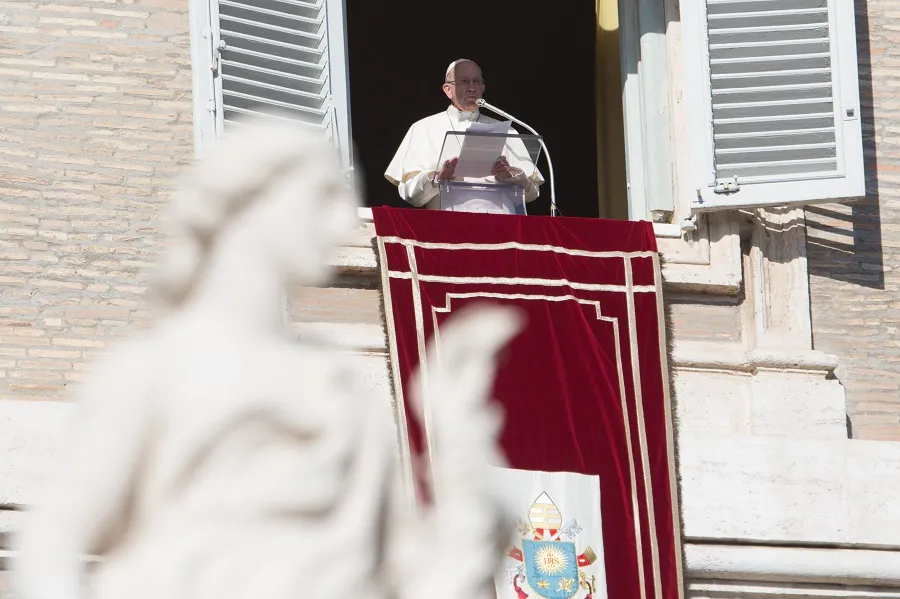
Vatican City, Jul 8, 2018 / 04:24 am (CNA/EWTN News).- Pope Francis said Sunday that God always surprises people with the way he works, and because of this, believers should be open to the Lord’s way of thinking and acting, rather than expecting him to conform to their aspirations.

“Today the Lord invites us to assume an attitude of humble listening and docile waiting, because the grace of God often presents itself to us in surprising ways, which don’t line up with our expectations,” the pope said July 8.

He noted how certain “prejudices” can be nurtured in Christians which prevent them from accepting the reality of how God works, however, “the Lord does not conform to prejudices. We have to force ourselves to open the mind and heart to welcome the divine reality that comes to meet us.”

Pope Francis spoke to pilgrims gathered in St. Peter’s Square for his Sunday Angelus address, which focused on the day’s Gospel reading from Mark. In the passage, Jesus returned to his native land to do ministry, but was unable to perform the same miraculous works he had done in other places since people knew him and were skeptical of his preaching and ministry.

In his speech, Francis said the people were “scandalized” by what Jesus was doing, since they recognized him as one of them.

Asking how it is possible for Jesus’ fellow citizens to go from marvel to disbelief, the pope said this is because they made a comparison between the “humble origins” of Jesus and his current abilities to preach and perform miracles.

“He is a carpenter, he did not study, yet he preaches better than the scribes and performs miracles. And instead of opening themselves to the reality, [the people] are scandalized,” he said, noting that for the inhabitants of Nazareth, “God is too great to lower himself to speak through such a simple man!”

This, he said, is “the scandal of the incarnation: the shocking event of a God made flesh, who thinks with a human mind, works and acts with human hands, loves with a human heart; a God who struggles, eats and sleeps as one of us.”

However, in becoming flesh, Jesus “overturns every human scheme: it is not the disciples who washed the feet of the Lord, but it is the Lord who washed the feet of the disciples,” the pope said, noting that this fact is “a cause of scandal and disbelief in every age, even today.”

In off-the-cuff remarks, Francis pointed to St. Teresa of Calcutta, who he canonized in September 2016, as a modern-day example of someone simple who performed great works. Even though she was “a small sister,”  St. Teresa through prayer and simplicity was able to “work wonders,” he said, adding that “she is an example from our day.”

Closing his address, Pope Francis said learning to have a mind and heart open to God’s logic above all means having faith.

“The lack of faith is an obstacle to God’s grace,” he said, noting that many baptized Catholics “live as if Christ does not exist: they repeat the signs and acts of faith, but they do not correspond to a real adhesion to the person of Jesus and his Gospel.”

Every Christian, he said, “is called to deepen this fundamental belonging, trying to bear witness with a coherent conduct of life, whose leitmotif is charity.”

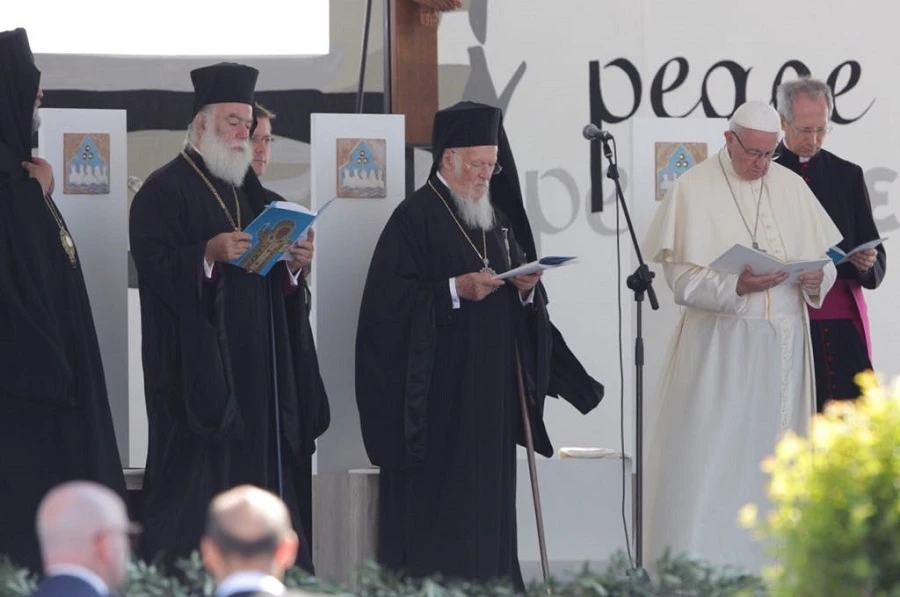
After leading pilgrims in the traditional Angelus prayer, the pope gave a shout-out to patriarchs and representatives from Eastern Catholic and Orthodox churches in the Middle East who were present for an July 7 ecumenical gathering in Bari to pray for peace in the region.

Francis said the event was “an eloquent sign of Christian unity,” and thanked all those who participated.

He also noted how July 8 marks the “Sunday of the Sea,” which is dedicated to seafarers and fisherman, and prayed for them and their families, and for the chaplains and volunteers who do ministry to them.

The pope offered a special prayer for those who live at sea in situations of “undignified work,” and for all those who are committed to freeing the sea of pollution.

[…]

Peace cannot be built with walls, Pope Francis says in Bari

July 7, 2018 CNA Daily News 1

Vatican City, Jul 7, 2018 / 05:41 am (CNA/EWTN News).- Pope Francis said Saturday that peace in the Middle East will never be achieved through division, violence or the pursuit of private interests, and called for negotiation on issues such as the status of Jerusalem and the ongoing Israeli-Palestinian conflict.

As he has often done in the past, the pope condemned the arms trade, using Hiroshima and Nagasaki as an example of the potential destruction of major weapons, and stressed the need to drop a profit mentality which exploits both the land and the poor, favoring instead a vision that puts the best interests of the person in first place.

In a July 7 speech closing an ecumenical gathering in Bari with heads of Christian churches in the Middle East, Francis said that for peace to be a realistic possibility, “it is essential that those in power choose finally and decisively to work for true peace and not for their own interests.”

“Let there be an end to the few profiting from the sufferings of many! No more occupying territories and thus tearing people apart! No more letting half-truths continue to frustrate people’s aspirations! Let there be an end to using the Middle East for gains that have nothing to do with the Middle East!” he said.

There is no alternative to peacemaking if the Middle East is to thrive, the pope said, saying these efforts toward peace must be cultivated in the “parched soil of conflict” which has plagued the region for years.

“Truces maintained by walls and displays of power will not lead to peace, but only the concrete desire to listen and to engage in dialogue,” he said, and urged Christians to commit to working and praying together in hopes that “the art of encounter will prevail over strategies of conflict.”

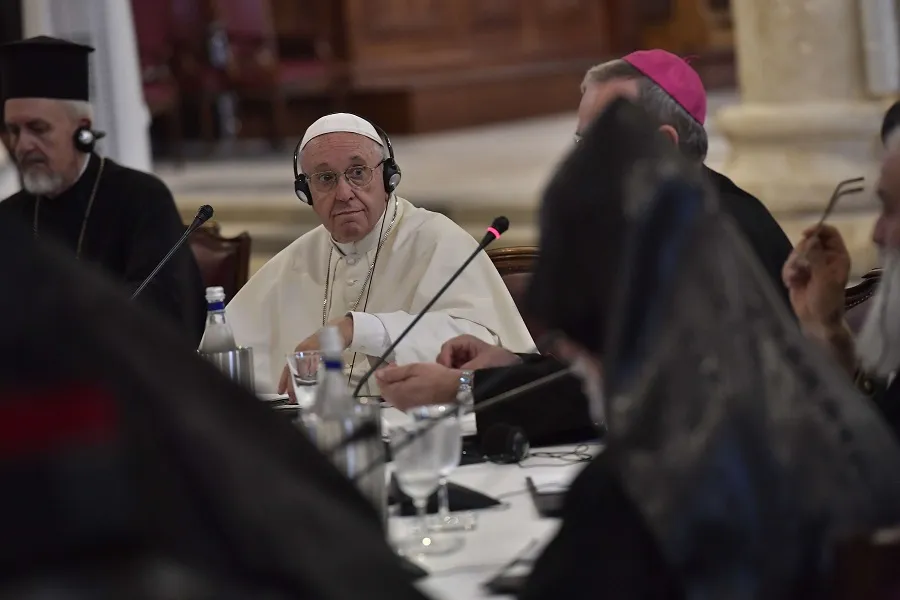
Pope Francis spoke after holding a private meeting with heads of Christian Churches in the Middle East during his July 7 daytrip to Bari for an ecumenical encounter titled “Peace be upon you! Christians together for the Middle East” and organized to discuss promoting peace in the region.

Located in the southern Italian region of Puglia, Bari is known as the “porta d’Oriente,” or the “Eastern Gate,” because of its connection to both the Catholic and Orthodox Churches through the relics of St. Nicholas, who is highly venerated in both traditions.

The ecumenical gathering in Bari drew the participation of some 19 leaders of Eastern Catholic Churches and Orthodox Churches, the Assyrian Church of the East, and other ecclesial communities.

After venerating the relics of St. Nicholas and leading both patriarchs and pilgrims in a prayer gathering, Pope Francis and the heads of churches present held a closed-door meeting to evaluate the situation of the Middle East, and discuss peace efforts.

Speaking to crowds after the private discussion, Francis issued a litany of the risks and consequences of war, beginning with the effects conflict has on the poor, who are the “principal victims” of any violence.

Pointing to Syria, he said war is the “daughter of power and poverty,” and can only be defeated by overcoming a “thirst for supremacy.”

He pointed to the problem of fundamentalism and fanaticism as driving factors in many of the world’s current conflicts, which “under the guise of religion, have profaned God’s name – which is peace – and persecuted age-old neighbors.”

Violence of any kind “is always fueled by weapons,” he said, stressing that “you cannot speak of peace while you are secretly racing to stockpile new arms. This is a most serious responsibility weighing on the conscience of nations, especially the most powerful.”

Pointing to the devastation that ensued in the aftermath of the atomic bombs in Hiroshima and Nagasaki, the pope urged the world not to forget the destructive potential of an unbridled pursuit of power and profit.

“Let us not turn the Middle East, where the Word of peace sprang up, into dark stretches of silence. Let us have enough of stubborn opposition,” he said, and condemned the “thirst for profit that surreptitiously exploits oil and gas fields without regard for our common home, with no scruples about the fact that energy market now dictates the law of coexistence among peoples!”

The pope also called for a “common citizenship” among all people in the Middle East, where Christians and other minorities are often viewed as second-class citizens, and are subject to persecution and discrimination.

Turning to Jerusalem, an inter-religious hub sacred to Christians, Jews and Muslims alike, Francis said he was “anguished” to think about the ongoing tensions in the area, and said the status quo of the city “demands to be respected, as decided by the international community and repeatedly requested by the Christian communities of the Holy Land.”

“Only a negotiated solution between Israelis and Palestinians, firmly willed and promoted by the international community, will be able to lead to a stable and lasting peace, and guarantee the coexistence of two states for two peoples,” he said.

Noting the high number of children who have died in armed conflicts, Pope Francis said hope for the Middle East “has the face of children,” and lamented the “appalling” number of children who have either died, or witnessed death in their families.

“This is the death of hope,” he said, noting that “all too many children have spent most of their lives looking at rubble instead of schools, hearing the deafening explosion of bombs rather than the happy din of playgrounds.”

“May humanity listen – this is my plea – to the cry of children,” he said, because “only by wiping away their tears will the world recover its dignity.”

Francis closed his speech voicing hope that a longing for peace would be stronger than the “dark cloud” of conflict that has overshadowed the region, and prayed that the Middle East would not longer be an “ark of war,” but an “ark of peace” which is welcoming to people from all backgrounds and beliefs.

“Beloved Middle East, may you see dispelled the darkness of war, power, violence, fanaticism, unfair gains, exploitation, poverty, inequality and lack of respect for rights,” he said, and prayed that justice would “dwell within your borders, and may God’s blessing come to rest upon you.”

[…]

In Bari, Pope decries ‘murderous’ indifference to a weeping Middle East

July 7, 2018 CNA Daily News 4

Vatican City, Jul 7, 2018 / 01:43 am (CNA/EWTN News).- Joined by heads of Christian Churches in the Middle East, Pope Francis Saturday condemned the “complicit silence” and indifference of the world to the conflicts tearing the region apart, and urged Christians to pray for peace.

“Indifference kills, and we desire to lift up our voices in opposition to this murderous indifference,” the pope said July 7.

As Christians, “we want to give a voice to those who have none, to those who can only wipe away their tears,” he said. “For the Middle East today is weeping, suffering and silent as others trample upon those lands in search of power or riches.”

“On behalf of the little ones, the simple ones, the wounded, and all those at whose side God stands, let us beg, ‘Let there be peace!’”

Pope Francis spoke at the opening of a prayer encounter during his July 7 daytrip to Bari for an ecumenical gathering of patriarchs and heads of Christian churches in the Middle East, which holds the theme “Peace be upon you! Christians together for the Middle East.”

Located in the southern Italian region of Puglia, Bari is known as the “porta d’Oriente,” or the “Eastern Gate,” because of its connection to both the Catholic and Orthodox Churches through the relics of St. Nicholas, who is highly venerated in both traditions.

The ecumenical gathering in Bari drew the participation of some 19 leaders of Eastern Catholic Churches and Orthodox Churches, the Assyrian Church of the East, as well as ecclesial communities.

Upon his arrival, the pope was greeted by local authorities before heading to the Basilica of St. Nicholas, where he personally greeted the 19 patriarchs who came to the event and venerated the relics of the saint alongside them in the basilica’s crypt.

After the prayer gathering, the pope and ecumenical leaders will return to the Basilica of St. Nicholas for a closed-door meeting opened by Archbishop Pierbattista Pizzaballa, apostolic administrator of the Latin Patriarchate of Jerusalem. The group will then have lunch before Francis heads back to Rome.

In his address during the prayer gathering, Pope Francis said veneration of St. Nicholas “crosses seas and bridges boundaries between Churches,” and prayed that the saint would intercede “to heal the wounds that so many people bear within them.”

The Middle East, he said, is the place where Jesus lived and died, and is therefore the place where “the light of faith spread throughout the world.”

However, despite the rich monastic and cultural traditions in the region, the Middle East has been overshadowed by “dark clouds of war, violence and destruction, instances of occupation and varieties of fundamentalism, forced migration and neglect,” Francis said, noting that all this has taken place “amid the complicit silence of many.”

The Middle East, he said, “has become a land of people who leave their own lands behind. There is also the danger that the presence of our brothers and sisters in the faith will disappear, disfiguring the very face of the region. For a Middle East without Christians would not be the Middle East.”

Francis recalled how at the beginning of the day, while the heads of churches were praying in front of the relics of St. Nicholas, he lit an oil lamp with a single flame as a symbol of unity.

As Christians, “we want to kindle a “flame of hope” in the Middle East, he said, and prayed that light from this lamp would be a sign of the light that continues to shine in darkness.

“Christians are the light of the world not only when everything is bright around them, but also when, in dark moments of history, they refuse to be resigned to the encircling gloom but instead feed the wick of hope with the oil of prayer and love,” he said.

Pope Francis closed his address urging those present to join in prayer for peace in the Middle East, and for all those who suffer.

He offered a special prayer for Jerusalem, which has been the center of religious and political tensions for years, and which became a fresh source of conflict following U.S. President Donald Trump’s decision to recognize Jerusalem as the capital of Israel, a decision that goes against the position taken by the United Nations.

The Lord “continues to weep” for Jerusalem, the pope said, and prayed for peace in the city, which is “beloved of God and wounded by men.”

Francis closed his address praying for all those who suffer, asking that “the God of all consolation, who heals the brokenhearted and binds up every wound, hear our prayer.”

[…]