This London Catholic school uses its garden to feed homeless

October 17, 2018 CNA Daily News 0

London, England, Oct 17, 2018 / 12:34 pm (CNA).- A Catholic school in London has turned its horticulture lessons into meals for the homeless.

St Gregory’s Catholic Science College in northwest London educates nearly 1000 children, aged 11-18. Many of the students volunteer for social and environmental work.

This year, horticulture students grew pumpkins from seed in the summer term and harvested their fruit in early October. The pupils used the pumpkins, along with thyme from their garden, to make soup. They sent that soup to London’s Ealing Abbey Soup Kitchen, an ecumenical initiative of service for the city’s homeless population.

Ealing Abbey Soup Kitchen has been serving people in need since 1973. The pumpkin-thyme soup provided more than 150 portions.

“I’m really proud of our pupils for sharing the fruits of their labours with those in our community who will benefit the most,” the school’s headteacher, Andrew Prindiville told the UK’s Independent Catholic News website.

The students of St Gregory’s have also been recently involved with environmental projects, among them helping to clean nearby Woodcock Park. Wealdstone Brook, which runs through the park, has had a problem with misconnected water lines dumping waste into the water from some 140 nearby homes.

Thames Water and Friends of Woodcock Park, who worked alongside the students, have been flushing dirty water away from the brook for the past five years. Receiving $1,300 worth of donated flowers, shrubs, and bulbs, the students and other community volunteers were able to revitalize the landscape.

Earlier this year, St Gregory’s Catholic Science College won the Horticultural Society’s School Gardening Team of the year award. The school has also been awarded the Eco Schools Green Flag Award for its commitment to the environment as seen in its curriculum.

The school was nominated for the 2018 Sustainable Schools TES AWARD. Headteacher Andy Prindiville said consideration for that award was an incredible honor.

“This is a wonderful accolade for St Gregory’s as we are one of only eight schools to have been shortlisted and is the result of the hard work and dedication of the staff, governors, local community and pupils of St Gregory’s,” said Prindiville, the Harrow Times reported.


[…]

Tiananmen Square to St. Peter’s: Who are the Chinese bishops at the synod?

October 17, 2018 CNA Daily News 0

Vatican City, Oct 17, 2018 / 08:40 am (CNA).- While Chinese Bishop Joseph Guo Jincai is new to the Vatican’s Synod of Bishops, he has served three terms as a deputy to the National People’s Congress in Beijing.


As a member of China’s legislative body, Bishop Guo publicly supported an amendment to eliminate presidential term limits and enshrine “Xi Jinping Thought on Socialism with Chinese Characteristics for a New Era” in the Chinese Constitution in March 2018.


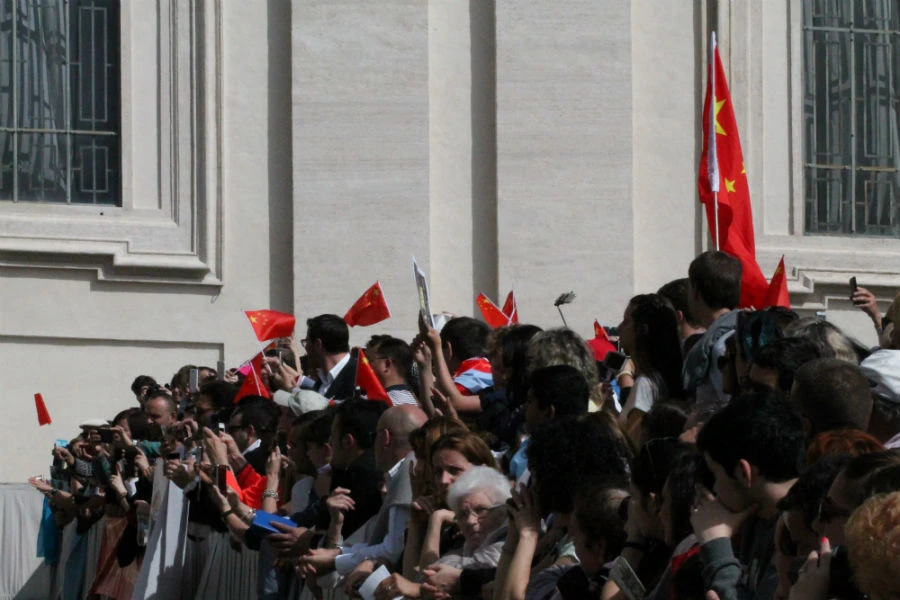
Weeks after his excommunication was lifted last month as a part of an agreement between China and the Holy See, Bishop Guo garnered attention in Rome as one of the first Chinese bishops to ever participate in an ecclesial synod, along with Bishop Yang Xiaoting of Yan’an.


Pope Francis opened the synod with a greeting for the two Chinese arrivals, saying that “the communion of the entire episcopate with the Successor of Peter is yet more visible thanks to their presence.”


The two Chinese bishops took part in the synod on young people, the faith, and vocation.


Young people in China face unique challenges in relation to faith. For example, due to a change in the Chinese government’s religious oversight earlier this year, it is now illegal for anyone under 18 years old to enter a church or religious building.


Bishop Guo told Chinese state media  that he did not see any conflict between his role as a legislator and a bishop as the National People’s Congress convened last March.


“My position as a national legislator will not and cannot affect my religious service, as China implements the principle of separation of church and State,” Guo told the state-sponsored newspaper Global Times.


The Global Times reported that Guo went on to say that Catholics must adapt to socialist society in order to survive and develop in China, and a fundamental requirement for this is to be patriotic.


This echoes President Xi Jinping’s repeated comments that all religion in China must “Sinicize” or adapt to Chinese culture and society as defined by the state. In 2016, Xi told Chinese Communist Party leaders that they must “resolutely guard against overseas infiltrations via religious means.”


For decades, China’s 12 million Catholics have been split between an underground Catholic Church in full communion with the Holy See, sometimes subject to government persecution, and the government-run Chinese Patriotic Catholic Association, whose bishops are appointed by the Communist government and have sometimes been ordained without papal approval.


Bishop Guo serves as secretary-general for the Bishops’ Conference of the Catholic Church in China (BCCCC). Bishop Yang, the other Chinese synod delegate, serves as its vice-president.


This Chinese “episcopal conference” was deemed illegitimate in Pope Benedict XVI’s 2007 letter to Catholics in China because it is “governed by statutes that contain elements incompatible with Catholic doctrine.” It is unclear whether the Sept. 22 agreement between the Holy See and China recognized the Chinese government’s bishops’ conference as legitimate.


Vatican spokesman Greg Burke said the objective of the September accord is “not political but pastoral” and will allow “the faithful to have bishops who are in communion with Rome but at the same time recognized by Chinese authorities.”


Yang was ordained a bishop with both papal approval and government recognition in July 2010. The Yan’an bishop studied theology in Rome, obtaining a doctorate in 1999.


“As the family made up of husband and wife is always united, so is the Church, which is one, holy, catholic and apostolic. In Italy, in China or in other countries, the love of Christ is always the same. Pope Francis, who knows very well our situation in the Catholic Church in China, does not want to leave us, does not want to separate us from the universal Church,” Yang said at a Roman parish on Oct. 7, SIR, a news agency sustained by the Italian bishops’ conference, reported.
 

“I still ask you for help for this Church in China. Our Church is like a child, it is not very mature, so we need your accompaniment, your help and your prayer, always in the love of the Lord,” Yang continued after celebrating Mass at Santa Maria ai Monti.


Before leaving the synod early on Oct. 15 without explanation, the two Chinese bishops had the opportunity to speak with Pope Francis and invite him to visit China.


Guo and Yang stayed in Vatican City’s Santa Marta guesthouse, where “we could live together in daily life with the pope,” Bishop Guo told Avvenire, the newspaper of the Italian bishops conference, in an interview published Oct. 16.


“We could speak with familiarity as children with their father. He told us that he loves us, loves our country and always prays a lot to Christians in China,” Guo continued.

[…]

Pope Francis: To hate is to kill in the heart

October 17, 2018 CNA Daily News 3

Vatican City, Oct 17, 2018 / 03:22 am (CNA/EWTN News).- A person may not have killed someone, but if they are angry or have hate toward another person, it is like they have killed him or her in their heart, Pope Francis said Wednesday.

To insult or ha… […]

Radical feminists attack church and town hall in Argentina

October 16, 2018 CNA Daily News 0

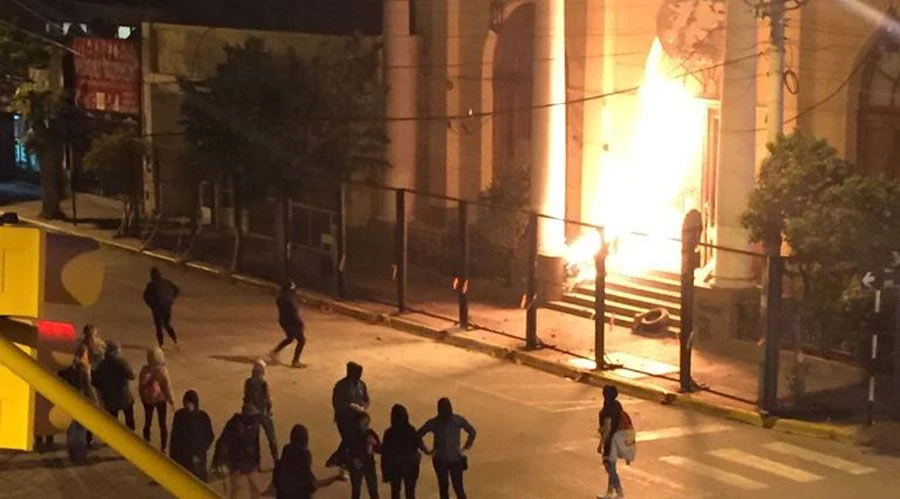
Buenos Aires, Argentina, Oct 16, 2018 / 03:30 pm (CNA/EWTN News).- Radical feminists firebombed a town hall and spray painted a Catholic Church in Argentina. The series of attacks came during a women’s conference held in the Patagonia region this past weekend.

The conference was the 33rd National Women’s Encounter held October 13-15 in the city of Trelew in Chubut province, and focused primarily on promoting abortion and so-called gender ideology.

On October 14, participants in the conference marched through the streets of Trelew with signs in favor of legalized abortion and the separation of church and state. During the demonstration, a group of bare-chested feminists stood in front of Mary Help of Christians parish and attacked Trelew town hall with Molotov cocktail firebombs.

The women also attacked other public buildings with bombs, stones, and graffiti. The police and locals eventually managed to control the mob and ten women were arrested.

Police also had to shut down two gas stations for selling gasoline to young women who were suspected to be collecting gasoline for the Molotov cocktails.

This incident is one of numerous attacks on Catholic churches since the Argentinian senate rejected a bill legalizing abortion in August of this year.

In September, a Catholic school in the town of San Justo had hate messages spray painted on it, and students at different universities have forcibly removed religious images from their campuses, saying that they demand legalized abortion and the separation of church and state.

[…]

Forty years later, Polish bishops revisit election of Pope John Paul II

October 16, 2018 CNA Daily News 0

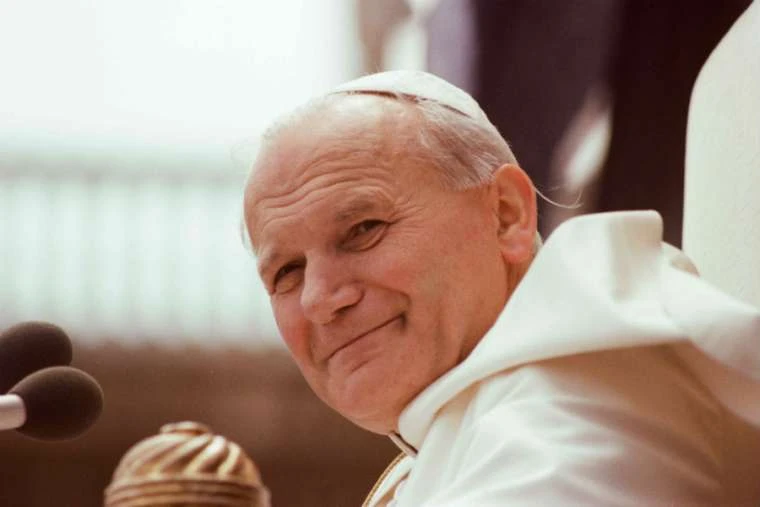
Warsaw, Poland, Oct 16, 2018 / 02:30 pm (CNA).- The Polish bishops’ conference is celebrating the anniversary of the election of St. John Paul II. October 16 marks 40 years since Cardinal Karol Wojtyla’s rise to the throne of St. Peter.


Archbishop Józef Michalik of Przemyśl, who was the rector of the Polish College in Rome at the time of the 1978 conclaves – the second of which elected Wojtyla, gave his personal insight into the days following up to the election of Pope John Paul II.


“We joked, commented on the press reports and, sometimes, spoke seriously,” said Archbishop Michalik in an account released by the Polish Bishops’ Conference to mark the anniversary.


Cardinal Wojtyla had joined the college often for meals and daily prayers before the conclave began.


“The Cardinal always took these jokes and conversations with a smile, and sometimes he responded with humor,” he said.


He addressed the days following the death of Pope John Paul I, who had passed away from a heart attack 33 days after his election to the papacy. He highlighted the apparent interest of the other cardinals toward Cardinal Wojtyla’s election.


Archbishop Michalik had welcomed Cardinal Wojtyla at the airport shortly before the conclave. On their way to the view the body of Pope John Paul I at St. Peter’s Basilica, he asked the soon-to-be pope how many cardinal’s he had not known.


“Cardinal [Wojtyla] thought about it and replied: seven. For me, it was an indirect answer, that there is actually no other Cardinal who would know personally only seven Cardinals. This indicated that our Cardinal’s chances were serious in the upcoming conclave,” said Archbishop Michalik.


The Polish bishops’ conference said Wojtyla was a major figure in the Church, who participated in synods, led retreats for the Roman Curia, and was a friend of Pope Paul VI.


Archbishop Michalik said, though Cardinal Wojtyla was a respected clergymen and scholar, the polish saint had remained humble.


The Polish bishops’ release included the anecdote that, on the day of the conclave, “one of the priests spontaneously prayed that Cardinal Karol Wojtyla would become pope.” Cardinal Wojtyla responded with prayer, invoking the words of Christ in the Gospel of Matthew: “Get out of my sight, Satan,” the future pope is quoted as responding.


“Finally, he added his own intention, asking that God’s servant, who would accept the choice with humility and accomplish God’s will, be chosen,” the statement added.


Immediately following the election of Pope John Paul II, the Polish College gathered in the chapel and sang the Te Deum, “giving thanks for this event and…recommending the new Pope to God,” said Archbishop Michalik.


The Polish bishops’ conference highlighted a conversation between John Paul II and Cardinal Stefan Wyszyński, who had suggested the name John Paul II to the new pope.


“Primate Stefan Wyszyński asked John Paul II how he felt here in the Vatican, and the Pope replied: ‘As if I have always been here.’ ‘This is the grace of God, the grace of the state,’ commented Cardinal Wyszyński,” according to the statement.

[…]