Catholics assist those impacted by Cyclone Fani in India, Bangladesh

May 3, 2019 CNA Daily News 1

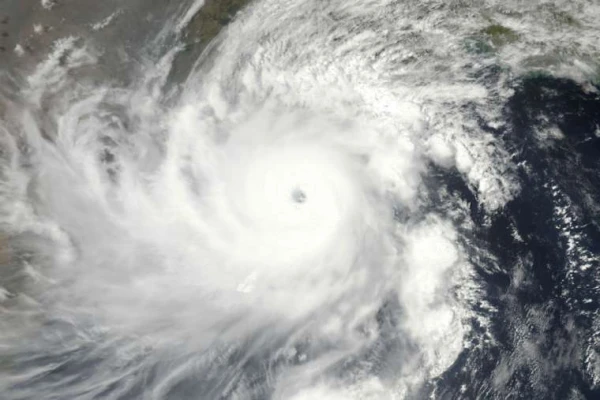
Bhubaneswar, India, May 3, 2019 / 02:10 pm (CNA).- A category four cyclone struck India’s Odisha state Friday morning, but humanitarian groups and government forces are better prepared than in previous years.

Cyclone Fani made landfall in Puri, about 40 miles south of Bhubaneswar, May 3. According to Al Jazeera, three deaths connected to the storm have been reported on so far.

In a May 2 statement, Catholic Relief Services explained that preparations were being made to ensure the safety of residents in Odisha and in Bangladesh, whither Cylcone Fani is heading. CRS had distributed supplies to Cox’s Bazaar refugee camp in Bangladesh, where almost 1 million Rohingya refugees reside.

“Our teams on the ground are making last-minute preparations so we can respond as soon as the storm moves on,” said Caroline Brennan, communications director for CRS’ humanitarian response team.

“We are working closely with our Church partners in both India and Bangladesh who are best placed to assess the damage and respond quickly.”

Quartz India reported that the government has taken tremendous strides in preparatory storm programs since a cyclone in 1999 claimed over 15,000 lives. After improvements to forecast and mitigation systems, over 1 million people were evacuated before May 2.

According to WSBT 22, more than 800 shelters were opened and 100,000 dry food packets were airdropped. The government also used the India Coast Guard to distribute supplies, including water and other necessities.

While in the Bay of Bengal May 1-2, the cyclone was measured to have winds more than 150 mph and was considered to be “extremely severe.” It has since weakened and authorities have claimed it to be “very severe,” according to the India Meteorological Department

The department reported that the storm made landfall with about 100 mph winds, which has continued to decrease. It also cautioned that ocean levels could rise to an estimated 1.5 to 3 feet above the astronomical tide, affecting lower areas like Kendrapara, Balasore, and Bhadrak districts.

The storm continues to move northeast toward Bengal, which it is expected to hit some time later today. Forecasters said wind speeds will likely drop to around 40 mph by the time the storm arrives in Bangladesh May 4.

[…]

Catholic Relief Services aids cyclone-stricken northern Mozambique

May 2, 2019 CNA Daily News 1

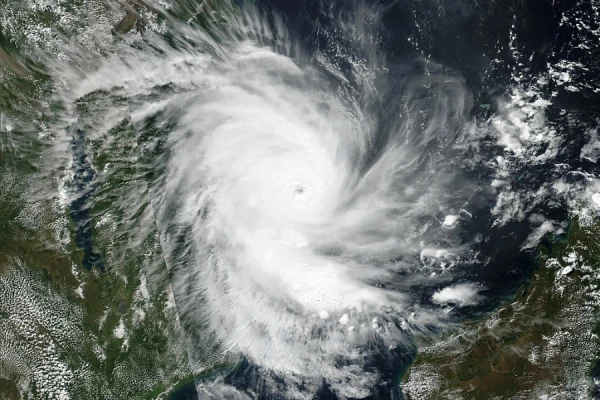
Pemba, Mozambique, May 2, 2019 / 05:29 pm (CNA).- Catholic Relief Services is appealing for additional aid after Cyclone Kenneth struck northern Mozambique last week, the second such storm to hit the country in recent months.

“Entire villages have been flattened. Roads have been washed out. And bridges have been destroyed,” Erica Dahl-Bredine, CRS’ country representative of Lesotho and Mozambique, said April 30. “We’re just beginning to fully understand the extent of the damage. In fact, the number of people who have been impacted by this storm continues to climb.”

Cyclone Kenneth struck northeastern Mozambique April 25, killing 38. It destroyed 35,000 homes and left homeless tens of thousands. Cyclone Idai had hit the country’s south in March, killing at least 900.

“The local Church is doing an incredible job of helping the people of Mozambique in both regions and has mobilized an enormous army of volunteers to assist in these dual relief efforts,” Dahl-Bredine commented.

“But additional support will be needed from the international community before more people lose their lives.”

Landslides have destroyed numerous roads, making it difficult for humanitarian groups to access vulnerable areas, and a lack of resources and immediate aid is a concern, according to CRS.

Cyclone Kenneth particularly damaged the coastal districts of Cabo Delgado Province. Even after the cyclone passed, heavy rainfalls have continued to devastate the provincial capital, Pemba.

Catholic Relief Services said there are more than 168,000 people in urgent need of help. Mozambique is one of the poorest African countries, with 65% below the poverty line.

Dahl-Bredine said some areas are more at risk: “On Sunday, landslides triggered by a torrential downpour were reported in certain low-lying neighborhoods. In one case, a landslide dumped so much trash on top of people’s houses that the ensuing debris caused several reported deaths.”

“This is a part of Mozambique that is already more vulnerable to these types of storms because of its relative lack of resources.”  

Beside a lack of food and clean water, one of the major concerns is waterborne diseases, such as cholera, typhoid, and malaria.

“When a storm like this hits with so much devastation, ensuring proper hygiene and sanitation practices becomes vital to stemming a deadly disease outbreak,” she further added.

CRS is working with the local government to provide support to some of the hardest hit areas in Pemba, including temporary shelter, food, and other necessities. The country has also received aid from Caritas, Save the Children, and the UN, who recently offered $13 million to Mozambique and Comoros Island.

Maria Auxiliadora parish in Pema is housing nearly 1,000 people displaced by the cyclone.

As the area has a large Muslim population, Father Ricardo Filipe Rosa Marques told the Associated Press that the Catholic Church is open to all.

“We don’t ask about people’s religions, human life is all we value,” he said.

Although some Muslims have refused help because they have not wanted to enter a Catholic church, he said, a large portion of people have appreciated the support and banded together in solidarity.

“People here have suffered a lot. They have been through (Portuguese) colonialism, civil war and the recent killings. They have been living with scars for years yet their love and sense of sharing is amazing,” he said.

[…]

Catholic Charities defends serving teen trafficking victims without abortion

May 2, 2019 CNA Daily News 0

Sacramento, Calif., May 2, 2019 / 05:06 pm (CNA).- Catholic Charities of the East Bay (CCEB) in California is remaining firm in its conviction against referring teenage victims of sex trafficking for contraception and abortions at a new facility, while emphasizing that medical care is not the new facility’s primary mission.

“We are not licensed to provide medical services,” said Mary Kuhn, spokesperson for CCEB. “We provide therapeutic services, shelter, case manage, and make sure the girls are getting either homeschooling or the right school, all of that…We’re not involved in their medical decisions.”

Catholic Charities is planning to open a home for teenage victims of sex trafficking, but has faced opposition from neighbors and critics who oppose the Church’s teaching on contraception and abortion.

The San Francisco Chronicle reports that the planned home will house up to 12 teenage sex-trafficking victims, ages 12 to 17, in Sequoyah, a forested neighborhood of the eastern Oakland hills. The facility, a former rectory, is still awaiting state approval to begin operations.

Alameda County District Attorney Nancy O’Malley had approached the diocese with an initiative to tackle human trafficking in the area. The new facility will be named “Claire’s House,” after O’Malley’s mother.

Kuhn told CNA that the biggest problem faced by social services agencies and advocacy groups for victims of sex trafficking is a lack of supportive homes, and Claire’s House is intended to fill that need.

The district attorney approached Oakland Bishop Michael Barber in 2015, along with other faith-based agencies in the area, asking for their help in addressing the problem of sex trafficking.

“There’s a lot of support for this program in Alameda County and the greater Bay Area,” Kuhn told CNA.

“Unfortunately there are a few people that are, quite understandably, nervous or opposed because they really just don’t want this near where they live.”

The president of the Coalition of Residents Protecting Sequoyah, the neighborhood where the home will operate, has expressed concern about human traffickers coming to the neighborhood looking for girls they have abused.

“Claire’s House is not a safehouse, and it’s not a shelter,” Kuhn clarified.

“And that’s really important…a safehouse means you’re hiding from someone, and a shelter means you’re getting a bed, but little else. Claire’s House is a home, and it’s a home for healing. It’s a home for girls who have already been separated from their exploiter,” she said.

The young people that the house will be serving will primarily be referred to the house by the county social services agency, and will be children that are already in the foster care system.

Without a place like Claire’s House, Kuhn said, they could be placed in a foster home with a family that “really isn’t prepared to provide the sort of therapeutic services and support that they need, because of their experience [of being trafficked].”

“They’re not coming in as an emergency placement or a crisis situation, so there is an assessment process. So they’re at a place where they are contemplating where to go next in their lives, and they just don’t have housing and they don’t have a place where they can be kids again.”

In alignment with Catholic teaching on the immorality of artificial contraception and abortion, the facility will not make appointments for clients at clinics that provide contraception or abortion and will also not provide transportation to those facilities.

Instead, the home will post a sign in a common area that explains the teens’ medical options. It will be up to the teens’ parents or guardians to arrange for abortion or contraception if they so choose.

“We are not a provider of medical services,” Kuhn clarified.

Per the house’s licensing, they contract with a third party medical provider who Kuhn said is equipped to work with the vulnerable group that they serve.

If there are conversations or decisions regarding abortion or contraception, that would be between the girls, their doctors, and their guardians. She said the house will likely not talk to the girls much about those topics, but that pro-life pregnancy resources are a service Catholic Charities of the East Bay would like to provide in the future.

“They do have access to third-party medical care providers,” she said.

“Of course, we’ll talk about health and hygiene, life skills, things like that. But our goal is to get them stabilized, enable them to pursue their education, get them the therapeutic services they need, and enable them to start participating in things kids do.”

The overarching Catholic values that come from their work help the teenagers to heal, she said.

“A lack of supportive homes for children who have left their exploiters— that is the single biggest problem that’s faced by social service organizations and advocacy groups, and Claire’s House fills this desperate need,” she reiterated.

The survivor led-community is supportive of the house, she said, and she said she hopes that other Catholic Charities organizations around the country can follow the same model.

“We are a national system, and we have deep experience serving people on the margins,” Kuhn said.

“And other entities would have a difficult time matching what Catholic Charities is able to do.”

The home plans to begin accepting its first clients as soon as the state approves a care license for the facility. Kuhn said Catholic Charities of East Bay will not be publicly announcing when they begin their services out of respect for the privacy of the children.

[…]