Analysis: Pope Francis’ position on Venezuela

February 16, 2019 CNA Daily News 2

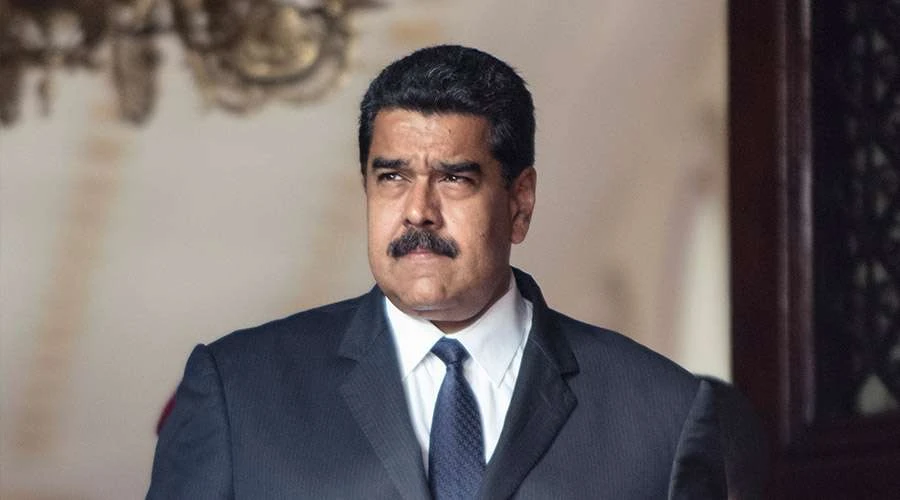
Vatican City, Feb 16, 2019 / 11:00 pm (CNA).- Pope Francis’ recent letter to Venezuela’s Nicolas Maduro confirmed the Holy See’s position on the Venezuelan crisis, while demonstrating that Maduro has become an increasingly isolated global figure.

While the Holy See has long maintained its diplomatic ties with Venezuela, and for this reason a papal representative to Caracas took part in Maduro’s swearing in for his second term Jan. 10, Pope Francis and the Holy See’s diplomacy has always been on the Venezuelan bishops side, and backed their efforts to restore social peace, relief the population and call for new and free elections.

The pope’s letter, however, showed that Maduro’s request for a mediation can take place only under some specific conditions.
 
This is the reason why the letter was not leaked by Maduro’s entourage, but from other sources that gave it to the Italian newspaper Il Corriere della Sera. The Holy See Press Office limited itself to saying that it would not commentc on a private letter, indirectly confirming that the pope might have actually written the letter.
 
The letter, two pages and a half long, is dated Feb. 7, 2019, and it is addressed to “Excelentismo señor Nicolas Maduro Moros, Caracas” (To Most Excellent Mister Nicolas Maduro Moros).
 
The pope did not refer to Maduro as president, and in that way his letter backed the Venezuelan bishops. Gathered for their 111st plenary assembly on Jan. 9, the bishops said that “Maduro’s claim to start a new presidential mandate on Jan 10 is illegitimate at his roots, and paves the way for the unrecognition of the government, as democratic foundations on justice and right are lacking.
 
In the letter, Pope Francis reminded Maduro that the Holy See has been committed to mediation in the past, but in all of the attempts “what had been agreed in the meetings was not followed by concrete action to carry out the accords,” and that “words seemed to delegitimize
the good propositions put into a written form.”
 
Pope Francis also stressed that he did not back “any kind of dialogue,” but only “the dialogue that takes places when all conflicting parties put the common good above any other interest and work for unity and peace.”
 
Pope Francis also recalled a letter by Cardinal Pietro Parolin, Vatican secretary of State, that set the conditions for a dialogue: liberation of political prisoners, re-establishment of the constitutional assembly, open access for humanitarian aid, free political elections.
 
Those conditions are still in effect.

The letter is tailored in a perfect diplomatic style.

On one hand, Pope Francis takes the bishops’ position. On the other hand, he places the Holy See in the middle between two positions: that of the US and Europe, eager to recognize Juan Guaidò as interim president; and that of China, Russia, Turkey and Iran, who are on the opposite position.
 
As a diplomatic habit, the Holy See never breaks diplomatic ties. Papal ambassadors are called to stay on the ground as long as it is possible, to support the bishops and to carry on institutional dialogue that can resolve into an aid for population.
 
For example, the Holy See never broke diplomatic ties with Cuba, not even when Castro regime persecuted Christians. In fact, ties stayed because there was an ongoing persecution.

Read through this lens, the Secretariat of State’s decision not to meet at an institutional level the delegation Guaidò sent to Italy for talks with Italian government on Feb. 11 should be no surprise.
 
The Holy See makes no interference in domestic policies, and the meeting with Guaidò could have been instrumentalized. The delegation reportedly met with Archbishop Edgar Pena Parra, deputy to the Secretariat of State, who is Venezuelan. The meeting was framed as a meeting of a Venezuelan that works in Secretariat of State and his concerned for his country and some representatives coming from his country.
 
Pope Francis’ statements on the matter have always been prudent. Coming back from Panama on Jan. 28, Pope Francis told journalists that it is not his role as a pastor to pick political sides, and said he is terrified of the possibility of a bloodshed there.
 
However, the narrative that presents the pope on a different side from that of Venezuelan bishops is not correct at all.
 
It must not be forgotten that Pope Francis, after a visit from the presidency of the Venezuelan bishops’ conference, said his voice “resounds in the voice of the Venezuelan bishops.”
 
Pope Francis’ followed each step of the Venezuelan crisis. On April 10, 2014 he addressed an appeal to political leaders of Venezuela and asked to respect truth and justice. On March 1, 2015, the Pope condemned the death of some students involved in pacific protests.
 
The Holy See accepted to conduct a facilitation of the dialogue in October 2016, and on Dec. 2, 2016 Cardinal Parolin stressed the four conditions. Coming back from Egypt on Apr. 29, 2017, Pope Francis denounced that the government did not accomplish these conditions.
 
On April 30, 2017 after the prayer of Regina Coeli, Pope Francis spoke of the “dramatic news” on Venezuela and “the worsening of clashes there, with many people reported dead, injured and detained”, and appealed “to the government and all the members of Venezuelan society to avoid any further forms of violence, to respect human rights and to negotiate solutions to the serious humanitarian, social, political and economic crisis that is exhausting the population”.
 
The action of bishops moved along with Pope Francis’ declaration. This combined action encouraged all the local and regional Catholic realities of Latin America to take a common stance: the Conference of Religious Brothers and Sisters in Venezuela, the Jesuits of Venezuela, but also the Colombian, Ecuadorian, Uruguayan, Chilean and Bolivian bishops conference took strong stances on the Venezuelan crisis, which weakened Maduro position.
 
Despite the will to keep a diplomatic neutrality, also the Holy See diplomacy was very active.

Cardinal Parolin, who was nuncio to Venezuela from 2009 to 2013, stressed on May 13, 2017 that “the only solution for Venezuela is elections.”

On Aug. 4, 2017, the Pope sent via the Secretariat of State a communiqué asking “all the political actors, and in particular the government, to ensure the full respect of the human rights and fundamental freedoms, as well as of current Constitution; to suspend initiative like the new constitutional assembly that, instead of favoring reconciliation and paz, foster a climate of tensions and confrontations; to create conditions for a negotiated solution”.
 
It is also noteworthy that, in his urbi et orbi message of Christmas 2018, Pope Francis included Venezuela among the countries that are enduring serious humanitarian crisis, on a par with Yemen, Syria and Nicaragua: the decision turned out to be prescient.
 
The pope also spoke about Venezuela on his new year speech to the diplomatic corps, and said that he wishes “that peaceful institutional means can be found to provide solutions to the political, social and economic crisis, means that can make it possible to help all those suffering from the tensions of recent years, and to offer all the Venezuelan people a horizon of hope and peace.”
 
The pope’s letter to Maduro comes at the end of a path that the pope and the Venezuelan bishops have been following since the beginning. The Holy See will never break diplomatic ties, and will always seek dialogue and reconciliation. But, on the other hand, bishops on the ground are backed in supporting the population and to work for the common good.
 
This is, in the end, how the pontifical diplomacy works.


[…]

U.S. bishops react to McCarrick laicization

February 16, 2019 CNA Daily News 1

Washington D.C., Feb 16, 2019 / 09:32 am (CNA).- Bishops from across the United States have reacted to the news that Theodore McCarrick has been found guilty of sexual abuse and expelled from the clerical state.


The disgraced former cardinal a… […]

Australian bishop urges faithful to fight ‘radical’ abortion bill

February 16, 2019 CNA Daily News 0

Adelaide, Australia, Feb 16, 2019 / 05:15 am (CNA/EWTN News).- A local bishop is speaking out against a bill to remove regulations on abortion in Adelaide, Australia, saying it would be the nation’s most radical abortion law.

“The unborn deserve love and protection, not destruction,” said Bishop Gregory O’Kelly SJ, apostolic administrator of the Diocese of Port Pirie.

He warned that the legislation being considered “drastically reduces safeguards for the unborn” and would allow abortions “even well into the ninth month of pregnancy.”

In a Feb. 14 letter to the people of his diocese, O’Kelly said the faithful “should all be extremely concerned about the proposed Abortion Law Reform Bill.”

The Adelaide proposal would place abortion under the regulations of the state’s health laws, rather than the state’s criminal code. This would remove current rules such a requirement that a woman have been a resident in South Australia for at least two months before procuring an abortion.

The legislation would also ban protestors from entering within 150 meters of an abortion clinic.

The bill was introduced to Parliament by Greens MP Tammy Franks and will be debated in the comings weeks, with a vote later this year.

Similar legislation was recently passed in Queensland.

“This bill treats abortion simply as a medical procedure without moral significance,” O’Kelly said in his letter. “There is no need for a medical opinion or a doctor’s involvement and no reason need be given for an abortion. It will be the most radical abortion law in the country.”

“We believe life to be a gift of God, to be cherished and revered,” the bishop continued. “Christ said that he came that we might have life and have it to the full. Abortion is the destruction of the human life, an act that defies the sacred.”

He urged people to contact their local Member of Parliament and ask them to vote against the bill.

Bishop O’Kelly also published a letter from Dr. Elvis Šeman, a gynecologist and member of the Guild of St Luke.

The doctor stressed the adverse effects that abortion can have on a woman’s physical, psychological and emotional health.

He warned that the proposed legislation “aims to radically deregulate abortion and outlaw two important things – conscientious objection to abortion and the freedom to pray and offer pregnancy support near abortion clinics.”

Under the bill, he said, abortion could “be performed by a non-medical provider, using any method and for any reason (including sex-selection for social reasons), at any gestation (up to term), leaving babies born alive to die, and using SA Health funding without the accountability of reporting.”

Furthermore, Šeman warned, “Imposing a ‘health access’ zone makes pregnancy support services unlawful within 150m, restricts freedom of speech, denies potential support to vulnerable women who are ambivalent or may have been coerced, and provides excessive powers to police.”

The doctor also emphasized the need to do more for women facing difficult pregnancies.  

“As a Church community, I believe that, with few notable exceptions, we have done poorly in supporting those women and their families facing an unplanned pregnancy. They are left at the mercy of a health system which fast-tracks women to abortion and offers no alternatives.”

Bishop O’Kelly agreed that the Church must reach out to women in need.

“We believe our main focus should be on supporting women who find themselves faced with an unplanned pregnancy and are grappling with this terrible choice,” he said, “while also offering our unequivocal support and prayers to those women who are experiencing grief and loss.”


[…]

McCarrick abuse trial: A CNA timeline

February 16, 2019 CNA Daily News 0

Washington D.C., Feb 16, 2019 / 02:14 am (CNA).- Theodore McCarrick has been laicized, nearly 10 months after sex abuse allegations against him were first made public. Here is a timeline of major events since last summer.


June 20 – The A… […]

Aid agencies highlight Christian persecution on anniversary of ‘Coptic Martyrs’

February 15, 2019 CNA Daily News 1

Denver, Colo., Feb 15, 2019 / 05:00 pm (CNA).- Four years after the so-called Islamic State released a propaganda video showing the beheading of 21 abducted Coptic Christians in Libya, aid workers and politicians continue to highlight the dangers facing Christians in the Middle East and across the world.


On Feb. 15, 2015, a video was released showing IS fighters beheading Egyptian workers,as they knelt on a Libyan beach wearing prison-style orange jumpsuits. The Egyptian government and the Coptic Church later confirmed the video’s authenticity.


Edward Clancy, director of outreach for Aid to the Church in Need USA, told CNA that the killing of the Coptic martyrs helped to bring the issue to Christian persecution into focus for the wider Western culture and media, and spurred an outpouring of donations for charitable aid.


“It definitely brought the Christian persecution to the forefront and put it on page one,” Clancy told CNA in an interview Feb. 15.


Soon afterward the video’s release. the Coptic Church announced that the men would be commemorated as martyrs in its Church calendar. In October 2018, authorities found a mass grave believed to contain the bodies of the 21 men.


“Seemingly every day at that time there was a story of something going on, whether it was the fall of Raqqa; the enslavement of women; obviously the killing of the Coptic martyrs. And all of these did bring this [issue] into focus, and people did respond. Obviously it touched a lot of people’s hearts, and because of that they were very generous,” Clancy said.


Aid to the Church in Need has been working to help persecuted Christians since its founding in 1947. Clancy told CNA that while the public martyrdoms brought the dangers facing persecuted Christians to wider attention, Aid to the Church in Need had considered the issue a core concern for some time.


“I wouldn’t say that the videos changed much as far as [ACN’s priorities] go; our commitment to the Christian community there was as high before and after;” Clancy said.


“And that was because we saw the existential threat to the Christian communities by what was going on, by the violence, by the terrorism…The videos strengthened our resolve, I guess, to say we’re not going to let this happen.”


To this day, Clancy said, ancient Christian communities in the Middle East are at risk of disappearing. In Syria alone hundreds of thousands of Christians have been driven from their homes in places like Nineveh, Damascus, Homs, and Aleppo.


Last December, a mass grave of 34 Ethiopian Christians was unearthed. That grave is believed to contain the bodies of Christians killed by IS forces in a propaganda video posted on social media in April 2015, two months after the first video was released.


That video, similar to the first one, appeared to show the Islamic State members shooting and beheading the Ethiopian Christians, who were all wearing orange jumpsuits, on a beach.


Clancy told CNA that ancient Christian communities in the Middle East remain at risk of disappearing. In Syria alone hundreds of thousands of Christians have been driven from their homes in places like Nineveh, Damascus, Homs, and Aleppo.


“We’ve been able to support $55 million in aid over the years in Iraq and probably about $40 million in Syria in different programs to help keep the Christian communities alive,” Clancy said.


“Unfortunately though, even with all of those efforts, there’s been a great decline in the number of Christians. Iraq is down to about 20% of its Christian population as compared to 2000. And Syria’s down probably something like 40% since that time too.”


Clancy highlighted the continued dangers faced by Christians all over the region and the world, and noted the moral imperative on the international community to remember and support them.


“For us here in the United States, in the West, in the sort of ‘safe world,’ we actually take for granted that our faith is part of our lives. There, it’s part of their lives, but it could also be a reason for their death. So we should do our best to pray for them, to be aware of what’s going on and to support them by financial means and also for advocating on their behalf in the public arena.”


Clancy highlighted the recent announcement that the United States would withdraw troops from Syria as a source of fear among some in the Christian community. The move, he said, raised anxiety that terrorist forces might be emboldened by the decision.


“I think we have to be fair enough to say that when there’s a need for [military] protection that we should do it,” he said.


“It’s really all dependent on international governments, on the United States, the West, Europe, to stand up and say we’re not going to allow Christianity to die there. As Catholics, we can’t be afraid to say that, ” Clancy said.


One such advocate in the United States is Arkansas Congressman French Hill, who introduced a resolution Jan. 16 supporting the religious freedom of Coptic Christians in Egypt.


Hill’s resolution called on the Egyptian government to “end the culture of impunity” with which Christians were attacked and to “make examples by arresting, prosecuting, and convicting those responsible for attacks on Christians.”


“We forget that it’s not wrong to say that Christians belong [in the Middle East] and Christians should stay there. That’s what I always ask people to remember,” Clancy said.

[…]

Kentucky Senate approves fetal heartbeat bill

February 15, 2019 CNA Daily News 0

Frankfort, Ky., Feb 15, 2019 / 04:23 pm (CNA/EWTN News).- The Kentucky Senate has approved a bill that would ban abortions after a fetal heartbeat is detected, usually around six weeks into pregnancy.

The bill passed 31-6 on Feb. 14. It will now head … […]