Chartres Pentecost pilgrimage draws 14,000

June 13, 2019 CNA Daily News 0

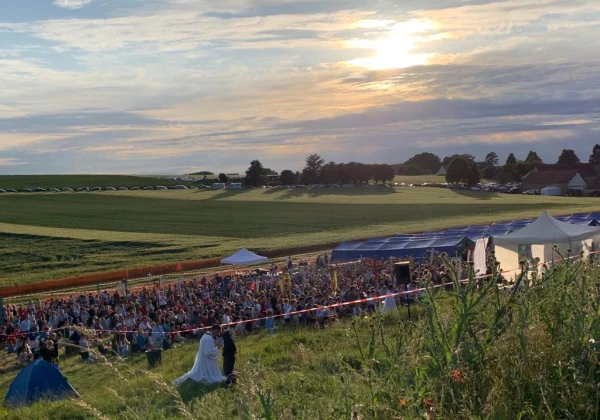
Chartres, France, Jun 13, 2019 / 03:01 am (CNA).- More than 14,000 Catholics walked 62 miles from Paris to Chartres Cathedral in three days in an annual Pentecost pilgrimage of prayer and penance.

Pilgrims from across the globe trekked through the French countryside June 8-10 praying the rosary, singing, and talking together, stopping only for Mass and to camp for the night.

“Each year it is a great moment because we can leave our work, leave Paris, leave everything to concentrate on our faith and prayer. I think it is the spiritual summit of our year,” 31-year-old Parisian Raphaëlle de Feydeau told CNA.

Feydeau has walked the Chartres pilgrimage together with her family over Pentecost weekend annually for the past thirty years. Her mother carried her along the way when she was an infant.

“When we walk sometimes we are in silence, sometimes we sing, we pray, and we have time to speak to each other,” Raphaelle’s mother, Sybil Feydeau, added. “It is a good place to meet Christ, and to look at one’s life and decide what I could do better … What does God want me to do with my life?”

The tradition of walking from Notre Dame to Chartres Cathedral dates back to the 12th century as a stage in the route of the Camino de Santiago. Chartres Cathedral, built between 1194 and 1220, has been an important pilgrimage destination throughout French history due to its relic of the Virgin Mary’s veil and its blue rose window depicting Mary holding Christ.

Today the Pentecost Chartres pilgrimage is the largest of its kind in Western Europe, in both number of participants and distance covered.

The pilgrimage’s opening Mass, traditionally held in Notre-Dame de Paris, was moved this year to Paris’ second largest church, San Sulpice, due to the damage caused by a fire that destroyed Notre-Dame’s spire and timber roof in April.

The pilgrimage is divided into four age groups with varying difficulty and pace, including a “family group” in which parents with children 6 and under camp and walk a portion of the route together.

Many of the pilgrimage participants were part of youth groups or Catholic scouting troops, who walked together carrying flags representing their country or region, crosses, and banners with the image of their chosen patron saint.

A 16 year-old from Ireland carried the Irish flag with babies’ feet painted on it to represent her prayer intention for the unborn after abortion was legalized in her country. An engaged couple from Portugal walked the pilgrimage together to consecrate their state of life to Mary. A delegation from New Zealand carried the banner of a French saint, Peter Chanel, who was martyred as a missionary in Oceania.

Catholics from Syria, Iraq, Lebanon, and other Middle Eastern countries walked the pilgrimage with a group representing the French organization SOS Chrétiens d’Orient. The humanitarian group also organized two coinciding pilgrimages for Catholics in Iraq and Syria over Pentecost weekend in solidarity with the Chartres walk.

Twenty-six year old Majd Kassouha, a Syrian, said his intention for his pilgrimage was a prayer for peace.

“I have prayed for peace, especially in Syria, and in all the world because I don’t want other people to live what I have lived, my experience,” Kassouha told CNA. He and his family remained in Aleppo throughout the country’s civil war and said he witnessed the death of many of his friends and family.

“We have to pray … we cannot do anything without praying. We are so weak. That is my experience,” Kassouha, a 26 year-old Melkite Catholic, said. “We need this time to think about our lives and make a meditation.”

Priest chaplains could often be seen walking behind the pilgrimage groups hearing confessions of the young participants. Each group had a chaplain who provided meditations on the saints and catechesis on the social doctrine of the Church and this year’s pilgrimage theme, “The Peace of Christ through the Reign of Christ,” as they walked.

Since 1983 the Pentecost pilgrimage has been organized by Notre-Dame de Chrétienté, currently led by layman Jean des Tauriers and chaplain, Father Alexis Garnier of the Priestly Fraternity of St. Peter.

Because so many people come out in the streets to watch the pilgrimage pass by, this year the organizers added an “evangelization team” to engage with curious onlookers, Notre-Dame de Chrétienté Vice President Hervé Rolland explained.

“Each year we have people asking if they can follow us,” Rolland told CNA. “Two years ago there was a lady who was struck by the children walking … she asked, ‘Can I follow you?’ She did, and six months later she asked to be baptized.”

Rolland said that many vocations have also been discovered or confirmed for young people as they prayerfully walk the pilgrimage.

Three Masses took place over the course of the pilgrimage, each in the extraordinary form, though many private Masses were said as well. On Pentecost Mass took place in a field in the countryside midway through the day’s 20 mile walk.

The culminating Mass was celebrated in Chartres Cathedral by Archbishop André-Joseph Léonard, the emeritus Archbishop of Mechelen-Brussel.

“I want to tell the pilgrims something: the Catholic Church, no matter what anyone says, remains the most beautiful multinational of the world, that is the multinational of faith, hope and charity. Even if we are going through difficult times, we must always say the creed with conviction: I believe that the Church is one, holy, Catholic and apostolic. We must remember it is holy,” Archbishop Léonard told EWTN.

“In troubled times like ours, everywhere but especially in countries like France or Belgium, my country, there is a lot of confusion after the series of scandals we’ve faced, people definitely need to hang on to something sound. I think that an initiative like the Chartres Pilgrimage helps people to become stronger in faith and hope.”

[…]

Meet the new bishops in the USCCB

June 12, 2019 CNA Daily News 1

Baltimore, Md., Jun 12, 2019 / 03:48 pm (CNA).- At the US Conference of Catholic Bishops’ biannual assemblies, new members of the US episcopate are announced, to much applause. CNA spoke to the newest members of the USCCB to find out what it’s like to be the new kid on the block.

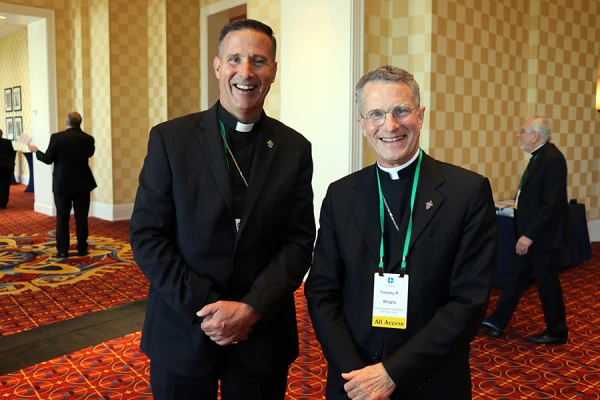
Two of this year’s newcomers, Bishops William Muhm and Joseph Coffey have much in common. They have both served in the Navy, both as chaplains and prior to entering seminary; both were announced as the auxiliary bishops of the Archdiocese for the Military Services Jan. 22; and both were consecrated March 25. Neither expected to be bishops.

This is the first time either of them have attended a USCCB general assembly, and they told CNA they were a little bit intimidated at first by some of their brother bishops.

Bishop Coffey said that he did not anticipate speaking up much during this assembly, and that “as a new guy, I’m going to do a lot of observing.” Coffey was chosen to be one of the tellers of the assembly, an administrative duty that means he will be verifying the vote totals of the elections. He told CNA that he suspects he was chosen for this role because he is a brand new bishop.

Mild episcopal hazing aside, Coffey said that “it’s pretty darn exciting” to be at the general assembly and to be sitting next to the men he has read about and admired for years. He said he felt as though he has joined an “incredibly warm and friendly and welcoming community of brothers.”

Coffey said that as a bishop, he has been given the chance to represent Archbishop Timothy Broglio at events, and has traveled around the country with the permission of the military. As he is still active duty in the Navy, he said he will be seeking retirement or entering the reserves in order to work full-time as a bishop.

The whole experience, said Coffey, has been surreal.

“I was not expecting this at all, and so, it has only been a couple of months, so I’m still getting used to God’s providence and how it’s really changed my life, but it’s exciting, to say ‘yes’ and see what happens,” he said.

Bishop Muhm likened the feeling to the first day of school, but said that “everyone’s been really welcoming.” He relished the chance to get to know the other bishops and to develop fraternal bonds, which he said was “one of the most important reasons to be here.”

Like Coffey, Muhm also said he planned on “doing a lot more listening than talking”, and that he was adjusting to the nuances associated with the bishops’ conference. With his primary priestly experience as a military chaplain, and only about six weeks administering a parish prior to being appointed a bishop, Muhm’s ecclesiastical career has been very different from most of his brother bishops.

“It’s been a little bit overwhelming, with the level of detail that’s being discussed,” said Muhm. “I don’t have a background in many of these things that they’re talking about, and I hadn’t seen the documents until recently.”

Muhm told CNA that he has been enjoying his time at the general assembly nevertheless, and is excited to move forward with his duties as bishop, which will involve tending to the needs of Catholics in the military serving in Asia and Europe.

Bishop Alex Aclan, an auxiliary bishop of the Archdiocese of Los Angeles, was driving when he received a call from the nuncio Feb. 17. Aclan, who was on a sabbatical at the time, said that he was “pretty calm” when he found out his new role, and that he had “really no strong emotions.”

As the Archdiocese of Los Angeles is home to about 11.6 million people, with about 4.3 million Catholics, the auxiliary bishops are assigned to regions. Aclan is assigned to the San Fernando region, which includes 55 parishes, 13 high schools, and three hospitals. He said he has had a chance to visit a little less than half of the parishes so far, and that he has been very busy.

Aclan told CNA that he has been warmly received by the other bishops, who are “very welcoming” and “very hospitable, you know, when they see that you look lost.”

“They walk up to you and they’re talking to you, so they’re very really nice,” he said with a laugh.

While Aclan may be new to the USCCB, his prior role as the Vicar for Clergy for Losg Angeles archdiocese meant that he was already familiar with some of the bishops, and was not entirely alone at his first general assembly.

“Some of the bishops actually attended the conferences that we had (for other Vicars for Clergy), and some of those Vicars for Clergy now have also become bishops themselves,” he said.

While Bishops Aclan, Coffey, and Muhm are all newly consecrated, Archbishop Borys Gudziak was consecrated nearly seven years ago. Gudziak was installed June 4 as head of the Ukrainian Archeparchy of Philadelphia. Prior to that, he was Bishop of the Ukrainian Eparchy of Saint Vladimir the Great of Paris, and thus a member of the French bishops’ conference. The spring meeting marked the first time he has attended a USCCB general assembly.

Gudziak said that transitioning from a European eparchy to an American archeparchy was an adjustment, and that the Ukrainian Catholic population in the United States is substantially different than that of Europe. His past eparchy included five western European countries, and the war in Ukraine has resulted in an influx of very poor, often undocumented, Ukrainian emigrants moving to the European Union.

For Gudziak, his time in Paris “wasn’t a place or position or a job, it really became a family.” So when he when he was asked to come to America, it was “mixed emotions.”

He said he felt “sadness of leaving family members whom we went through thin and thin, I would say, not thin and thick. But great joy at coming back home,” he said. Gudziak was born and raised in the United States.

Comparatively, the Ukrainian Catholics in the United States have “about 70 years more history” than their western European counterparts, as well as “much more infrastructure.”

“The number of churches, schools, facilities, that are archeparchy here I would say has 50-70 times as much as we had in France,” said Gudziak.

Despite this, Gudziak said that his new parishioners face many of the same issues as his older ones, particularly among young people.

“With the young generation, there’s a need for coming down as Jesus came down and meeting people heart to heart,” he said. “Or as one young person had told me, ‘I need to be met at my broken heart.’”

The Ukrainian Catholic Church is one of the 23 Eastern Catholic Churches. And although he is not a Latin rite bishop like the majority of the bishops in the USCCB, Gudziak said that his new brother bishops have been “particularly friendly, knowledgeable, and embracing.”

And while he declined, citing his relative newness, specifically to say how he planned on using his unique experience to help the USCCB, Gudziak told CNA that he thinks he can play a role in improving relations between the Church in the US and Churches around the world.

“One thing that I would like to witness to is the universality of the Church,” said Gudziak. He said that due to the lack of American priests and seminarians who study in other countries, “it’s becoming more difficult to keep a knowledgeable, friendly relationship with other episcopal conferences and other bishops.”

“And I hope that I can contribute to a friendship between the Church in the U.S. and the Church in Western and Eastern Europe,” said Gudziak, “since I lived in both parts of that continent for many years.”

[…]

Notre-Dame’s first Mass since fire to be said Saturday

June 12, 2019 CNA Daily News 2

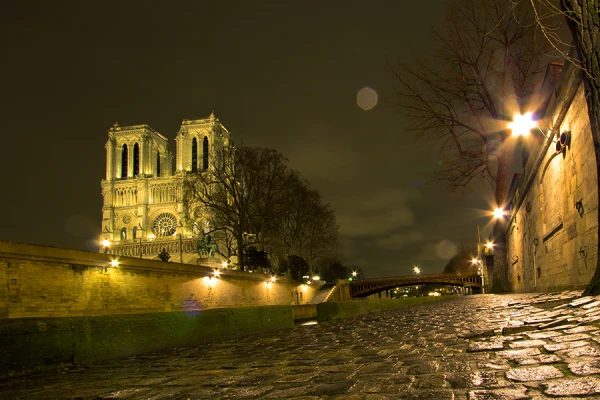
Paris, France, Jun 12, 2019 / 03:28 pm (CNA).- The first Mass in Notre-Dame de Paris since the cathedral’s April fire will be said Saturday evening in a side chapel that houses the crown of thorns.

The June 15 Mass will be of the feast of the dedication of Notre-Dame, which is held June 16. It will be said by Archbishop Michel Aupetit of Paris.

“It is very important to be able to make the world aware that the role of the cathedral is to show the glory of God,” said Msgr. Patrick Chauvet, rector of the cathedral.

“Celebrating the Eucharist on that day, even in very small groups, will be the sign of this glory and grace,” he told La Croix International.

About 20 people will assist at the Mass, including canons of the cathedral and other priests. They will be expected to wear hard hats for safety.

Vespers may be held beforehand in the square in front of the cathedral, where a Marian shrine will soon be set up.

A fire broke out in the cathedral shortly before 7 pm April 15. The roof and the spire, which dated to the 19th century, were destroyed. Shortly after midnight April 16, firefighters announced that the cathedral’s main structure had been preserved from collapse.

The major religious and artistic treasures of the cathedral were removed as the fire began, including a relic of the crown of thorns.

Originally built between the twelfth through fourteenth centuries, the landmark cathedral in the French capital is one of the most recognizable churches in the world, receiving more than 12 million visitors each year.

The cathedral was undergoing some restorative work at the time the fire broke out, though it is unknown if the fire originated in the area of the work.

Officials had been in the process of a massive fundraising effort to renovate the cathedral against centuries of decay, pollution, and an inundation of visitors. French conservationists and the archdiocese announced in 2017 that the renovations needed for the building’s structural integrity could cost as much as $112 million to complete.

Last month the French Senate passed a bill mandating that Notre-Dame be rebuilt as it was before the fire. President Emmanuel Macron had called for “an inventive reconstruction” of the cathedral.

Since the adoption of the 1905 law on separation of church and state, which formalized laïcité (a strict form of public secularism), religious buildings in France have been property of the state.

[…]

Nicaraguan cardinal withholds judgement on amnesty law

June 12, 2019 CNA Daily News 0

Managua, Nicaragua, Jun 12, 2019 / 02:13 pm (CNA).- The results of a Nicaraguan law granting amnesty to both anti-government activists and security forces will determine whether the legislation is good for the country, the Archbishop of Managua has said.

Nicaragua’s unicameral National Assembly passed the amnesty law June 8. Though it has allowed the release of a group of political prisoners, the law has been criticized by the opposition over fears it will also give impunity to troops and paramilitaries responsible for crimes and arbitrary arrests that have taken place during the past 14 months of protests.

The law also requires those released to refrain from future protests.

Fifty-six activists were released June 11, and 50 protesters June 10. The government has detained more than 700 in connection with the protests.

Cardinal Leopoldo José Brenes Solorzano of Managua commented June 9: “I’m just thinking of a text in Saint Matthew and Saint Luke: ‘By their fruits you will know them.’ I think there have been a lot of amnesties that have been given in Nicaragua, and here we would have to evaluate what fruits they have borne.”

He added that it will be the implementation of the law that will end up vindicating the detractors or defenders of this legislation. However, he said that more time “ would have been helpful” to deliberate calmly “such an important law like amnesty.”

“That all the prisoners are getting out is a joy for the families because they’re waiting for them to return. Now we’re going to see how this law will be implemented and hopefully it won’t be to their detriment, and that all detainees can live freely in their country,” Cardinal Brenes reflected.

Anti-government protests in Nicaragua began in April 2018. They have resulted in more than 320 deaths, and the country’s bishops mediated on-again, off-again peace talks until they broke down that June.

A new round of dialogue began in February, but the opposition has made the timely release of all protesters a condition of its resumption.

Nicaragua’s crisis began last year after president Daniel Ortega announced social security and pension reforms. The changes were soon abandoned in the face of widespread, vocal opposition, but protests only intensified after more than 40 protestors were killed by security forces.

The pension reforms which triggered the unrest were modest, but protests quickly turned to Ortega’s authoritarian bent.

Ortega has been president of Nicaragua since 2007, and oversaw the abolition of presidential term limits in 2014.

The Church had suggested that elections, which are not scheduled until 2021, be held this year, but Ortega has ruled this out.

Ortega was a leader in the Sandinista National Liberation Front, which had ousted the Somoza dictatorship in 1979 and fought US-backed right-wing counterrevolutionaries during the 1980s. Ortega was also leader of Nicaragua from 1979 to 1990.

[…]

Fr. Augustus Tolton, former African American slave, advances toward sainthood

June 12, 2019 CNA Daily News 1

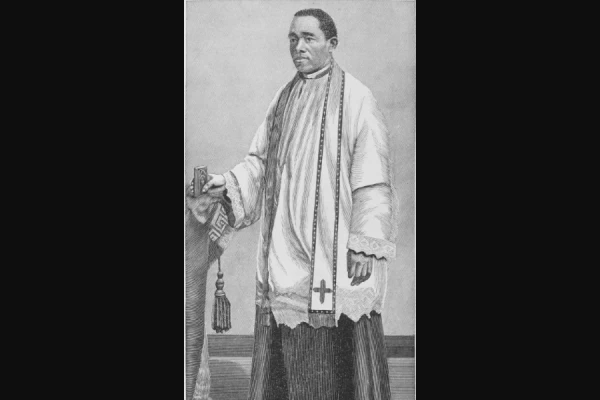
Vatican City, Jun 12, 2019 / 05:03 am (CNA).- Fr. Augustus Tolton advanced along the path to sainthood Wednesday, making the runaway slave-turned-priest one step closer to being the first black American saint.

Pope Francis recognized the heroic virtue of Fr. Tolton June 12 making him “venerable” within the Church, only two steps away from canonization. With the decree, Catholics are now authorized to pray directly to Tolton as an intercessor before God.

Venerable John Augustus Tolton was born into slavery in Monroe County, Missouri in 1854. He escaped slavery with his family during the Civil War by crossing the Mississippi River into Illinois.

“John, boy, you’re free. Never forget the goodness of the Lord,” Tolton’s mother reportedly told him after the crossing.

The young Tolton entered St. Peter’s Catholic School in Quincy, Illinois with the help of the school’s pastor, Fr. Peter McGirr. The priest went on to baptize Tolton, instruct him for his first Holy Communion, and recognize his vocation to the priesthood.

No American seminary would accept Tolton because of his race, so he studied for the priesthood in Rome. However, when Father Tolton returned to the U.S. after his ordination in 1889, thousands of people lined the streets to greet him. A brass band played hymns and Negro Spirituals, and black and white people processesed together into the local church.

Father Tolton was the first African American to be ordained a priest. He served for three years at a parish in Quincy, before moving to Chicago to start a parish for black Catholics, St. Monica Parish, where he remained until his death in 1897.

The Congregation for the Causes of Saints also recognized the heroic virtue of six other new “Venerables” June 12. Five Italians: Father Enzo Boschetti, Brother Felice Tantardini, layman Giovanni Nadiani, and Mother Maria Paola Muzzeddu.

The Filipino foundress of the Dominican Sisters of the Holy Rosary of the Philippines, Maria Rosario of the Visitation, was also declared venerable, and the martyrdom of Servants of God Maria Colón Gullón Yturriaga and two companions was recognized. Yturriaga and her companions were laypeople killed for their faith in Somiedo, Spain in 1936.

After two miracles through their particular intercession are verified by the Vatican, Father Tolton and the other new venerables can be declared saints.

[…]