Supreme Court hears arguments on Louisiana abortion law

March 4, 2020 CNA Daily News 0

Washington D.C., Mar 4, 2020 / 01:05 pm (CNA).- The Supreme Court heard arguments on Louisiana’s Unsafe Abortion Protection Act on Wednesday, as justices questioned lawyers from both sides on the state’s safety regulations for abortion clinics, including a requirement that abortion doctors have admitting privileges at a local hospital.

The court met March 4 to hear oral arguments in the case of June Medical Services v. Russo. As justices probed the necessity of the state’s requirements, outside the court an advocate for post-abortive women took issue with the justices’ skepticism toward the law.

Cynthia Collins, founder of the Louisiana Abortion Recovery Alliance, and herself a post-abortive woman, told CNA after arguments that the justices “were trying to silence our voices, of the women that have been hurt by abortion.”

“And their voices are the same as the abortionists, to get up, get out, and stay silent, when we’ve been injured by abortion,” she said.

The Louisiana law (Act 620) was enacted in 2014 and requires that abortionists in the state have admitting privileges at a hospital within 30 miles in case of complications that may arise during or after the procedure. The law would hold abortion clinics to the same safety standards that apply to other medical clinics in the state.

The Shreveport abortion clinic Hope Medical Group for Women sued, saying the regulations posed an undue burden on the ability of women to have an abortion.

A district court first issued a restraining order on the enforcement of the law’s penalties. Then, in 2016, the court issued a preliminary injunction on the law. Later that year, after the Supreme Court later struck down a similar Texas law in Whole Woman’s Health v. Hellerstedt, the district court permanently enjoined Louisiana’s law from going into effect.

That decision was reversed by the U.S. Fifth Circuit Court of Appeals which said that the law posed a benefit to women’s health and did not put substantial burdens on abortion in the state.

Unlike in Texas where most clinics closed because of its law, “only one doctor at one clinic is currently unable to obtain [admitting] privileges” in Louisiana, the Fifth Circuit said. 

Reviewing the evidence of the case before the district circuit, the Fifth Circuit also found that some abortionists did not try hard enough to obtain admitting privileges at hospitals.

The case went to the Supreme Court, and more than 200 members of Congress signed an amicus brief in favor of the law. Rep. Dan Lipinski (D-Ill.), who is facing a tough primary battle against a pro-abortion opponent, signed the brief, an act his opponent Marie Newman highlighted in an attack against him.

Wednesday’s arguments focused on two main questions—on whether an abortion clinic, rather than women in the state, has “third-party standing” to bring such a case before the Court, and whether the admitting privileges requirements violate the Constitution by imposing a substantial burden on legal abortion rights.

Justices Neil Gorsuch and Brett Kavanaugh—the newest justices on the bench who could be deciding votes in a 5-4 case—said little on Wednesday, with Justice Samuel Alito being the most vocal member in questioning the abortion clinic’s case against the law.

The “third-party standing” question referred to the legitimacy of abortion clinics, instead of women of the state, arguing before the Court that the law would substantially burden abortion.

Elizabeth Murrill, Louisiana’s Solicitor General arguing in favor of the law, said that “these doctors should not be able to challenge regulations intended to protect a certain class of people.”

The attorney representing June Medical Services, L.L.C., defended the rights of abortion clinics to bring “third-party” lawsuits against state laws, even if a conflict of interest might exist between the clinics’ desire to do business and the safety of women they claim to represent.

Justice Alito called the argument “amazing.” 

“You think that if the plaintiff actually has interests that are directly contrary to those individuals on whose behalf the plaintiff is claiming to sue, nevertheless that plaintiff can have standing?”  

Justice Ruth Bader Ginsburg repeatedly asked why the admitting privileges requirement was relevant to women’s health, given that many women might experience abortion-related complications at home, after having visited a clinic, and thus would go to the hospital by themselves.

Questions also arose as to whether Louisiana’s law is substantially different from Texas regulations struck down by the Supreme Court in 2016 in the Hellerstedt case, with lawyers for the state arguing that the law was “justified by abundant evidence of life-threatening health and safety violations, malpractice, noncompliance with professional licensing rules, legislative testimony from post-abortive women, [and] testimony from doctors who took care of abortion providers’ abandoned patients.”

In one case, Murrill said, an abortionist testified that he transferred four women to a hospital for abortion-related hemorrhaging. The same doctor also admitted in testimony that he hired a radiologist and an ophthalmologist to do abortions, she said, posing clear safety risks to women.

Jeffrey Wall, U.S. Principal Deputy Solicitor General who argued in support of Louisiana’s law on Wednesday, noted that the doctor’s testimony of transferring the four women to hospitals was proof that, while “often” complications might be experienced by women at their home and not at the clinic, they “sometimes” do occur while women are still at the clinic.

In such cases, Wall said, the best practice would be admission to a hospital—something backed up even by the abortionist’s testimony.

Abortionists “could and did” obtain admitting privileges at hospitals, she said, but did not maintain close relationships with their patients who had to litigate their own cases involving harmful effects of abortion.

The chair of the pro-life committee of the U.S. bishops’ conference, Archbishop Joseph Naumann of Kansas City, said on Wednesday that states “have a strong interest in regulating a procedure which is lethal to children and immensely damaging to women.”

“Women, their bodies, and their babies are immeasurably valuable,” the archbishop said in a statement. “It adds insult to injury, and speaks to the callousness of the abortion industry, that providers are seeking to overturn basic, standard protections for women seeking this life-altering procedure.”

In his statement issued after Wednesday’s oral arguments, Archbishop Naumann called on Catholics to pray for the outcome.

“The Catholic Church encourages all people of faith to pray about the outcome to this very important case,” Archbishop Naumann stated on Wednesday.

“We also ask all to pray for the women who are compelled to seek abortion: that they may find alternatives that value their health and well-being, and the lives of their precious children.”


[…]

Pontifical universities close as coronavirus deaths in Italy surpass 100

March 4, 2020 CNA Daily News 1

Vatican City, Mar 4, 2020 / 12:45 pm (CNA).- Rome’s pontifical universities will temporarily shut down tomorrow, after Italy’s death toll from Covid-19 surpassed 100 people March 4.

Italian officials announced March 4 that all schools and universities in the country will be closed March 5-15 because of the country’s coronavirus outbreak.

Pontifical universities in Rome – Vatican-accredited schools teaching theology, philosophy, and other related disciples – are expected to follow the government directive.

The Pontifical University Santa Croce issued a statement Tuesday, telling students that “following the announcement of the Italian government,” the university will suspend classes until March 15.

“The same will happen for conferences and congresses, which are postponed to new dates that will be communicated by their organizers,” the university added, noting that online distance education classes would continue.

The Pontifical University of St. Thomas, the Angelicum, posted on its website March 4 that it will suspend its classes until March 15. The university also cancelled March 9 events which had been scheduled to celebrate the Feast of St. Thomas Aquinas 

With 107 coronavirus-related deaths since Feb. 22, Italy has surpassed Iran in having the most documented mortalities outside of China.

Most of the confirmed cases of Covid-19 have been in the northern regions in Italy. In Lazio, the region surrounding Rome, there are 30 infected with the coronavirus as of March 4.

Italy has the oldest population in the world after Japan; more than 23% of Italy’s population is 65 years old or older in 2020.

As of March 3, the youngest Italian to die of Covid-19 was 55 years old. The majority of those who have died with coronavirus have been older than 60.

The Vatican has responded to the outbreak by postponing large spring events with significant anticipated international attendance to the fall.

Among them, the pope’s economic summit, “The Economy of Francesco.” Originally scheduled for March 26-28, the economic conference in Assisi will now take place Nov. 2.

The Vatican announced March 3 that Pope Francis’ Global Compact on Education, scheduled to take place in May, will be postponed until October 11-18.

“The uncertainty linked to the spread of Coronavirus, along with the decisions taken by public authorities on a global scale, have led to the decision to postpone the anticipated meeting in order to allow the widest and most serene participation possible,” the Vatican’s Congregation for Catholic Education said in a statement.

“The Global Pact is not limited to educational and academic institutions but rather, in the belief that commitment to education must be shared by all, involves representatives of religions,
international bodies and the various humanitarian institutions, of the academic, economic, political and cultural world,” it added.

Holy See press office director Matteo Bruni also shared that steps have been taken in Vatican City as precautionary measures to protect against the virus.

Hand sanitizer dispensers have been installed in Vatican City offices, and there is a nurse and a doctor on call at a Vatican clinic to give immediate assistance, Bruni told Vatican News.

According to the World Health Organization, Italy has the third highest number of reported cases of novel coronavirus after China and South Korea.

Covid-19 is a new strain of coronavirus, which can cause fever, cough, and difficulty breathing. In some cases, it can lead to pneumonia, kidney failure, and severe acute respiratory syndrome.

Most of the cases are in the Lombardy region in the north, followed by the regions of Emilia-Romagna and Veneto. Of these cases, many are mild and being treated at home.

 The Italian Health Ministry reports that as of March 4, 276 people in the country have recovered from Covid-19.

[…]

German bishops reelect secretary on interim basis

March 4, 2020 CNA Daily News 2

Mainz, Germany, Mar 4, 2020 / 11:30 am (CNA).- The secretary of the German bishops’ conference has been reelected to his position, despite announcing last week that he was not a candidate to remain in the role.

Jesuit Father Hans Langendörfer was returned in office by the German bishops on Tuesday, during their spring assembly, currently meeting in the city of Mainz. The priest had said he was stepping down to allow a younger person to fill the role.

On Feb. 26, Langendörfer announced that “I have come to the conclusion that it is now a good time to hand this position over to younger hands,” and suggested that a layperson could fill the role.

Several media outlets in Germany speculated that many in the conference, including Langendörfer, hoped that a woman would be elected to fill the position, which plays a key organizational role in the ongoing “synodal process” being conducted by the German bishops’ conference and the Central Committee of German Catholics (ZdK).

Langendörfer, who has held the position since 1996, indicated on Wednesday that he had  accepted his reelection on a temporary basis, fueling speculation that the bishops had failed to agree on a suitable candidate to replace him.

A brief press release from the German bishops’ conference, released March 4, said that he would not remain in office for the full term, and was continuing in the role on an interim basis.

“The spring general assembly of the German bishops’ conference today (March 3, 2020) in Mainz has reelected the previous secretary of the bishops’ conference, Father Dr. Hans Langendörfer, SJ. re-elected,” the statement said.

“Fr. Langendörfer has announced that he will be performing this task until the end of 2020 at the latest.”

Langendörfer’s announcement last week that he would quit the position he has held for nearly 25 years came shortly after the news that the chairman of the conference, Cardinal Reinhard Marx of Münich and Freising, was also stepping down from the conference leadership. In a statement in February, Marx said he hoped to spend more time in his diocese and that it was time for a “younger generation” to assume leadership of the Church in Germany.

Langendörfer’s reelection as secretary followed the announcement of the new chairman of the conference.

Bishop Georg Bätzing of Limburg was confirmed as the new chairman on Tuesday, replacing Cardinal Marx.

Bätzing was elected after no candidate received the necessary two-thirds majority during the first two rounds of voting; he was chosen on the third ballot with a simple majority of votes cast and will lead the conference for a six year term.

In his first remarks as chairman, Bätzing expressed his “full support” for the so-called binding synodal process, which formally opened during the first week of Advent, 2019, but held the first meeting of the synodal assembly in January.

Despite several cautionary interventions from Rome, the assembly’s working groups will offer proposed changes to various aspects of Church teaching and discipline, including on women’s ordination, clerical celibacy, and human sexuality.

Bätzing himself co-chairs the synodal working group on “Life in Successful Relationships – Love Live in Sexuality and Partnership,” together with Birgit Mock, the ZdK spokeswoman on family policy. The ZdK has called for a total revision of Church teaching on homosexuality and for the blessing of same-sex relationships in churches.

[…]

Proposed amendment in Russia would define marriage as between a man and woman

March 3, 2020 CNA Daily News 2

Moscow, Russia, Mar 3, 2020 / 08:01 pm (CNA).- A definition of marriage as between a man and a woman are among several amendments to the Russian constitution proposed by president Vladimir Putin.

The State Duma, Russia’s lower parliamentary house, approved the constitutional reform bill in January. Putin’s amendments will be included in a second reading next week.

A public vote on the constitutional amendments will take place April 22, but will first have to undergo approval from the Constitutional Court.

Neither same-sex marriage nor civil unions are legal in Russia.

Two weeks ago, Putin spoke on same-sex marriage, saying Russia would not legalize the practice while he is in power.

“As far as ‘parent number 1’ and ‘parent number 2’ goes, I’ve already spoken publicly about this and I’ll repeat it again: As long as I’m president this will not happen. There will be dad and mum,” Putin said.

Critics charge that the changes to the constitution are a means for Putin to maintain power, whose fourth term as president ends in 2024.

Other proposed amendments would include a reference Russians’ “faith in God”, and one on “historical truth” that would preserve “the great achievement of the people in their defence of the Fatherland”.

The historical truth amendment would emphasize the Soviet Union’s role in World War II, during which some 27 million Soviets lost their lives fighting Nazi Germany.

Another amendment would forbid the turning over of any Russian territory, which could strengthen Russia’s claims to Crimea, a Ukrainian region it annexed in 2014, and to the Kuril Islands, an archipelago it administers but some of which is claimed by Japan.

[…]

‘Freed because of Jesus’- Asia Bibi shares her story

March 3, 2020 CNA Daily News 1

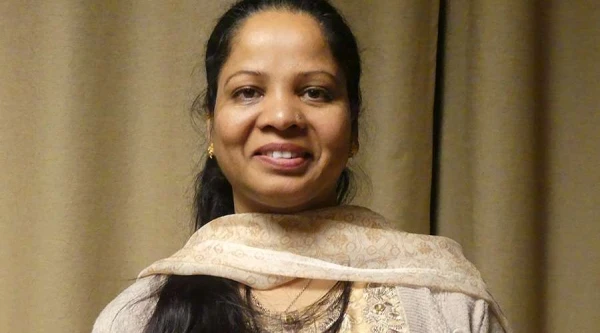
Paris, France, Mar 3, 2020 / 07:00 pm (CNA).- Asia Bibi is a Pakistani Catholic woman who was sentenced to death in 2010 for blasphemy against Islam.  After more than eight years in prison, she was acquitted by the Supreme Court of Pakistan in 2018.

“I was accused because of the name of Jesus and I knew I would be freed because of Jesus,” Bibi said at a Paris press conference last week.

Bibi said that during her time on death row, her faith “was always strong because I knew that God was with me, God never leaves you alone, he always accompanies you.” 

Together with French journalist Anne-Isabelle Tollet, Bibi has written her autobiography,“Enfin Libre” (Free at Last). The English edition is due out in September.

According to UCA News, Tollet campaigned for Bibi’s release and is the only journalist to interview her in Canada, where Bibi was granted refugee status last year.

Bibi has been living with her husband and two daughters in Canada since last May. Her refugee status is due to expire at the end of this year, and she is seeking political asylum in France, where she met with French president Emmanuel Macron Feb. 28.

Accompanied by her daughter at the press conference, Bibi recounted how the priest who baptized her told her parents that “this little girl will be tested by God.”

“My parents told me that and I knew that something would happen one day,” she said.

During her incarceration, even when she was sentenced to death by hanging, Bibi said she prayed to God for his help to overcome her ordeal.

“If you trust in God, your faith becomes stronger,” she said.

“I knew I was going to be released because I was accused because of  the name of Jesus and I would be freed because of Jesus,” Bibi said.

A mother of five, Bibi especially thanked all the people who prayed for her during her years in prison, especially pope emeritus Benedict XVI.

“When my husband came to tell me that His Holiness the Pope prayed for me, I felt really blessed from the bottom of my heart because I knew that was a blessing from God. I was very happy, I don’t have the words to thank him,” she added.

Bibi said one of her greatest desires is to meet Pope Francis.

Asked how her children handled her years in prison, Bibi’s daughter broke into tears. 

“Don’t worry, your mom is here,” Bibi consoled her daughter.

“All these people have come to see you, to meet you, to give you their love…smile,” Bibi added.

Bibi also honored the memory of the Minister for Minorities, Shabbaz Batthi, who was assassinated for defending her innocence and opposing the law on blasphemy.

She said she mourned his death very much and that “whoever dies for the truth and for his faith, is always alive, he never dies.”

Anne Hidalgo, the mayor of Paris, named Bibi an honorary citizen of the city Feb. 24, RTL news reported.

A version of this story was first published by ACI Prensa, CNA’s Spanish-language news partner. It has been translated and adapted by CNA.

[…]

Colombian court leaves abortion regulations unchanged

March 3, 2020 CNA Daily News 0

Bogotá, Colombia, Mar 3, 2020 / 04:06 pm (CNA).- Colombia’s Constitutional Court ruled Monday to maintain the country’s status quo on abortion, neither banning the practice entirely nor legalizing elective abortion up to 16 weeks.

The court maintained its 2006 decision that legalized abortion on the grounds of risk to the life of the mother, rape, and fetal deformities.

In its 6-3 decision March 2, the court declined to rule on two lawsuits brought before it in January by law professor Natalia Bernal, which sought to outlaw abortion entirely.Bernal argued abortion violates the rights of unborn children and of women, and amounts to torture.

The majority said that Bernal had “not presented sufficient arguments” to justify reconsidering the 2006 decision, and her petition was characterized by “substantial ineptitude.”

Three judges voted that the court should rule on the lawsuit, and authored dissenting opinions favoring the legalization of abortion.

One of the three, Alejandro Linares, had proposed legalizing elective abortion during the first 16 weeks of pregnancy. His proposed ruling was presented to the court last week, and had been leaked to the media.

Unidos por la Vida Colombia, a prolife platform, lamented that the court “did not rule on the merits and will not consider Dr. Bernal’s lawsuits.”

“The tide is turning in favor of the most defenseless: the unborn babies, their mothers and fathers, Colombian society has woken up and will continue until the right to life is fully respected, from the moment of conception until natural death,” it said.

The group also asked that the court implement “jurisprudence that safeguards the constitution and the lives of all Colombians,” and that it “respect Article 11 of the constitution,” declaring unconstitutional its 2018 decision.

The court had recognized abortion as a right in 2018, while the eleventh article of the Colombian constitution bars capital punishment, saying that “the right to life is inviolable.”

The Colombian Ministry of Health is drafting regulations to comply with the 2018 ruling.

Jesús Magaña, president of Unidos por la Vida Colombia, told ACI Prensa that the court’s decision this week was “a victory that gives hope.”

“We have won a battle but not the war with the abortion lobby, which sought to expand the time frame for this practice to 16 weeks. Although we can say we’re in a tie, this can in fact be considered a defeat for the abortion lobby, which was unable to further advance its agenda.”

Erika Guevara-Rosas, Americas Director at Amnesty International, said the group “regrets the Court’s decision to continue restricting women’s sexual and reproductive rights instead of setting a positive example for the region.”

[…]

Nigerian priest kidnapped after Sunday Mass has been released

March 3, 2020 CNA Daily News 0

Otukpo, Nigeria, Mar 3, 2020 / 02:37 pm (CNA).- A Nigerian priest who was kidnapped after offering Sunday Mass March 1 has been freed, his diocese has reported.

“I have been reliably informed that Fr. David Echioda has been released by his abductors,” Nigeria’s Diocese of Otukpo said in a message to priests March 3.

“Thank you for your prayers and support during this trying time,” the diocese added.

Fr. David Echioda, who is assigned to ministry at Otukpo’s minor seminary, was abducted by gunmen as he returned to the seminary from his missionary outpost in central Nigeria, where he had been celebrating Mass.

The kidnapping is the latest in a series of abductions and killings in Nigeria which have involved Catholics and other Christians; clergy, seminarians, and lay people.

Archbishop Ignatius Kaigama of Abuja called on Nigerian President Muhammadu Buhari to address the violence and kidnappings in his homily March 1 at a Mass with the Catholic Bishops’ Conference of Nigeria.

“We need to have access to our leaders; president, vice president. We need to work together to eradicate poverty, killings, bad governance and all sorts of challenges facing us as a nation,” Kaigama said according to Naija News.

In February, another priest was kidnapped by gunmen in the state of Edo in the southwest region of the country.

Seminarian Michael Nnadi, 18, was killed in late January, weeks after he and three other seminarians were abducted from their seminary in Nigeria. The seminarians kidnapped with Nnadi have been released, but one is facing life-threatening injuries.

Boko Haram, an Islamist militant group that has sworn allegiance to the Islamic State, has been active in Nigeria for years. While the group has attacked both Muslims and Christians in the past, recent attacks have focused on the killing and kidnapping of Christians.

Also in January, Rev. Lawan Andima, a local Government Chairman of the Christian Association of Nigeria and the married father of nine children, was beheaded by Boko Haram.

Archbishop Augustine Obiora Akubeze of Benin City said Andima was killed “simply because he was a Christian.”

“This is the time to turn to God to save us and our dear country, Nigeria. We are told that once there is life there is hope,” Kaigama said. “We refuse to give in to pessimism. We are resilient, that’s why we are Nigerians.”

On Feb. 27, U.S Ambassador at Large for Religious Freedom Sam Brownback told CNA that the situation in Nigeria was deteriorating.

“There’s a lot of people getting killed in Nigeria, and we’re afraid it is going to spread a great deal in that region,” he told CNA. “It is one that’s really popped up on my radar screens — in the last couple of years, but particularly this past year.”

“I think we’ve got to prod the [Nigerian President Muhammadu] Buhari government more. They can do more,” he said. “They’re not bringing these people to justice that are killing religious adherents. They don’t seem to have the sense of urgency to act.”

On Ash Wednesday, last week, Catholics in the country were invited to wear black to highlight the ongoing violence against Chrisitans.

In a letter read in all the country’s parishes on Feb. 26, Archbishop Augustine Obiora Akubeze of Benin City, head of the country’s bishops’ conference, said that the black clothing would be a show of solidarity with victims of violent crime, as well as a display of mourning for victims of religious violence.

Also last week, the secretary general of the Catholic Secretariat of Nigeria issued a request for Catholics around the world to pray for peace in Nigeria and security for the nation’s Christians.

“I have been directed by the administrative board of the Catholic Bishops Conference of Nigeria (CBCN) to communicate to you that in the face of the current security situation, the Church needs to speak out in word and action against the level of insecurity in the country,” said Fr. Zacharia Nyantiso Samjumi on Feb. 25 to Nigerian press.

Samjumi said that Nigerians throughout the country live in a constant state of fear, and there is a ever-present state of insecurity. Christians are subjected to “repeated barbaric executions” and “incessant cases of kidnapping for ransom” by the Islamist group Boko Haram, and other terrorist organizations, he said.

The violence has “traumatized many citizens,” Samjumi concluded.


ACI Africa, CNA’s African news partner, contributed to the reporting of this story.


[…]