Former French priest convicted of sexual abuse of minors

March 18, 2020 CNA Daily News 0

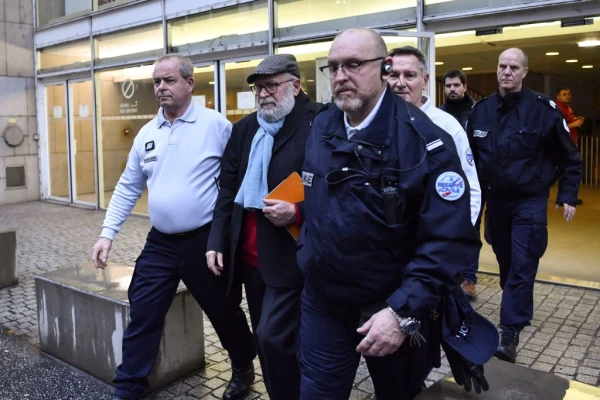
Lyon, France, Mar 18, 2020 / 11:42 am (CNA).- Bernard Preynat, a former priest of the Archdiocese of Lyon, was convicted and sentenced by a civil court Monday for the sexual abuse of minors.

He abused dozens of minors between 1971 and 1991, and he had been found guilty by an ecclesiastical tribunal last year.

He was charged with sexual assault of 10 minors from 1986 to 1991.

He was found guilty, and sentenced March 16 to five years in prison. He could have been sentenced to 10 years imprisonment, and prosecutors sought eight years.

Allegations against Preynat, 75, became public in 2015. Prosecutors dropped the case the following year after an initial investigation, but a victims’ group with more than 80 members who say they were abused by Preynat led to a reopening of the case.

Preynat led a scouting camp until 1991, when parents accused him of abuse to the Lyon-Vienne archdiocese. He was then banned from leading scouting groups, but remained in ministry until being removed by Cardinal Philippe Barbarin, then-Archbishop of Lyon, in 2015.

An ecclesiastical trial against Preynat was opened in August 2018, and he was convicted in July 2019 of committing delicts of a sexual character against minors under the age of 16. He was sentenced to dismissal from the clerical state.

“In view of the facts and their recurrence, the large number of victims, the fact that Father Bernard Preynat abused the authority conferred on him by his position within the scout group that he had founded and which he led since its creation, assuming the dual responsibility of head and chaplain, the tribunal decided to apply the maximum penalty provided for by the law of the Church, namely dismissal from the clerical state,” the Lyon archdiocese stated July 4, 2019.

At his civil trial in Lyon Jan. 14, Preynat acknowledged “caressing” boys, saying, “it could be four or five children a week.”

“I have heard the suffering of these people, which I’m guilty of causing,” he said. “I hope that this trial can take place as quickly as possible.”

He has been accused of abusing some 80 boy scouts who were between 7 and 15, beginning in the 1970s, but many of the incidents had passed the statute of limitations.

Preynat’s trial was to have begun Jan. 13, but was delayed a day so lawyers could participate in a protest of planned pension reforms.

In 2017, Cardinal Barbarin told Le Monde that he did not conceal allegations against Preynat, but that his response to the allegations had been “inadequate.” He said he opened an investigation against Preynat after becoming aware of the allegations against him.

Cardinal Barbarin was convicted by a French civil court in March 2019 on charges of failing to report the allegations against Preynat, but his conviction was overturned on appeal Jan. 30.

The appeals court had accepted evidence from one of Preynat’s victims, who had thanked the cardinal for his advice in bringing the former priest to justice. Cardinal Barbarin had told the victim that while his abuse had passed the statute of limitation, he should find more recent instances to bring to court.

Jean-Felix Luciani, the cardinal’s lawyer, told reporters that “the court has just acquitted the cardinal on the fundamentals of the case, by indicating that no offence has been committed, for a number of reasons…and for one key reason in particular: that the cardinal never intended to obstruct justice.”

“This wrong was today righted … Cardinal Barbarin is innocent.”

Cardinal Barbarin, who is 69, offered to resign as Archbishop of Lyon after his 2019 conviction and he stepped back from the governance of his local Church. The acceptance of his resignation was delayed.

Papal spokesman Alessandro Gisotti said in March 2019 that Francis had chosen to not accept the resignation of the cardinal as Archbishop of Lyon but, aware of the “difficulties” of the archdiocese at the present moment, “left Cardinal Barbarin free to make the best decision for the diocese.”

After his successful appeal, Cardinal Barbarin’s resignation was accepted March 6.

Bishop Michel Dubost, 77, who is Bishop Emeritus of Evry-Corbeil-Essonnes, has served as apostolic administrator of Lyon since June 2019.

[…]

Lipinski loses primary

March 18, 2020 CNA Daily News 1

Chicago, Ill., Mar 18, 2020 / 08:00 am (CNA).- Rep. Dan Lipinski (D-Ill.), one of the last pro-life Democrats in Congress, lost his primary election to pro-abortion challenger Marie Newman on Tuesday.

Election results from the New York Times showed Ne… […]

Pope Francis encourages small acts of love during coronavirus quarantine

March 18, 2020 CNA Daily News 4

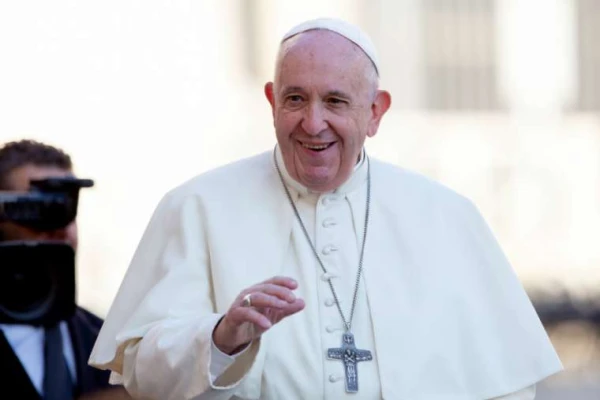
Vatican City, Mar 18, 2020 / 04:40 am (CNA).- While many are stuck at home during the coronavirus pandemic, Pope Francis says that there are many small acts of love and kindness one can do for others without leaving the house.

“We must rediscover the concreteness of little things, small gestures of attention we can offer those close to us, our family, our friends. We must understand that in small things lies our treasure,” Pope Francis said in an interview in an Italian newspaper published on March 18.

“For example, a hot meal, a caress, a hug, a phone call… They are familiar gestures of attention to the details of everyday life that make life meaningful and that create communion and communication among us,” the pope said.

Pope Francis said that the quarantine many people are living through right now provides a particular opportunity to grow in personal relationships at home, but this requires disconnecting from technology to spend quality time together.

“In their homes, families often eat together in great silence, but not as a result of listening to each other, rather because the parents watch television while they eat, and children are on their mobile phones,” he said. “Here there is no communication, whereas listening to each other is important because that’s how we can understand the needs, efforts, desires of the other.”

The pope also asked everyone to reach out to those who are alone or who have lost loved ones. “Consolation must not be everyone’s commitment,” he added.

In the interview with Italian journalist Paolo Rodari published in La Repubblica, Pope Francis explained what was on his mind when he made a short walking pilgrimage through the empty streets of Rome on Sunday to pray in front of a Marian icon in the Basilica of St. Mary Major and a crucifix in another church that had been used in prayer processions during the plagues in Rome’s history.

“I asked the Lord to stop the epidemic: ‘Lord, stop it with your hand.’ That’s what I prayed for,” he said.

Nearly 200,000 people have been infected by COVID-19, a respiratory illness that has been linked to the deaths of 7,954 people worldwide as of March 18, according to Johns Hopkins University.

Italy has been the hardest hit country outside of China with over 31,500 documented coronavirus cases, and 2,941 deaths, mostly in the north of the country.

Francis urged people to remember that one’s personal choices and actions have consequences for the lives of others.

The pope cited an article written by Italian journalist, Fabio Fazio, who said that people’s failure to pay their taxes in Italy has hurt the country’s ability to provide for all those who are sick.

“He [Fazio] is right, for example, when he says: ‘It has become evident that those who do not pay taxes do not only commit a felony but also a crime: if there are not enough hospital beds and artificial respirators, it is also their fault’. I was very impressed by this,’” Pope Francis said quoting the journalist.

Pope Francis also said that people can find strength in their families and in the love of the people around them, even if they do not yet have the gift of faith.

“They are all God’s children and are looked upon by Him. Even those who have not yet met God, those who do not have the gift of faith, can find their way through this, in the good things they believe in: they can find strength in love for their children, for their family, for their brothers and sisters,” he said.

“During these difficult days we can find small, concrete gestures expressing closeness and concreteness towards the people closest to us, a caress for our grandparents, a kiss for our children, for the people we love. These are important, decisive gestures. If we live these days like this, they won’t be wasted,” Pope Francis said.

[…]

Pope Francis prays for those who have died from coronavirus

March 18, 2020 CNA Daily News 2

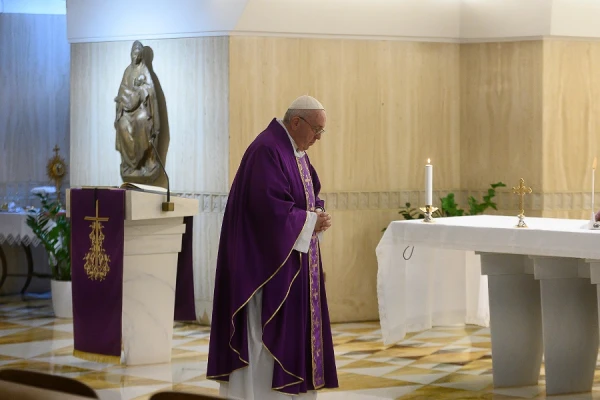
Vatican City, Mar 18, 2020 / 04:36 am (CNA).- Pope Francis offered Mass Wednesday for all the people who have died from the coronavirus, including medical staff who have lost their lives after helping the sick.

“Today we pray for the deceased, those who have lost their lives because of the virus,” Pope Francis said before his morning Mass in the chapel of the Santa Marta guesthouse March 18.

“In a special way,” he added, “I would like us to pray for healthcare workers who have died during these days. They gave their life in service to the sick.”

The pope’s daily Mass, which he offers for those affected by coronavirus, is being livestreamed every day during the emergency.

His homily was on the gift of divine law, which God gave to his people “as an attitude of closeness,” he said.

“Our God is close and asks us to be close to each other, not to move away from each other,” he urged.

Francis said during this time of crisis caused by the coronavirus pandemic, Catholics are called to show even greater closeness to each other.

“We cannot, perhaps, get physically closer because of the fear of contagion,” he noted, “but yes, we can awaken in ourselves an attitude of closeness among us: with prayer, with help, [there are] many ways to be close.”

He said people be close to each other “because our God is close, he wanted to accompany us in life.”

“For this reason, we are not isolated people,” he emphasized.

Speaking about divine law, Francis explained that God does not hand down rules like a far-off leader or dictator.

“We know by revelation that it is a fatherly, fatherly closeness that accompanies his people by giving them the gift of the Law,” he said.

He explained that God wrote the laws on the stone with his own hands, and after giving the stone tablets to Moses, he does not go away.

God walks with his people, he said, but in the first few pages of the Bible, people respond with the opposite, by trying to “get away from God.”

“He gets close and we get away,” he stated.

Adam and Eve hide from God because they are ashamed, because they have sinned, the pope explained: “Sin leads us to hide, not wanting closeness.”

The second attitude of running away from God is demonstrated by when Cane killed his brother Abel, saying “I am not my brother’s keeper.”

“We ask the Lord for the grace to be close to each other; do not hide from each other; do not wash your hands, as Cain did, of the problem of others,” the pope urged.

“Neighbors, proximity, nearness,” he said. “‘Indeed, what great nation has the gods so close to him, as the Lord our God is close to us, every time we invoke Him?’”

[…]

‘Bless me, Father – but from 6 feet away!’ Coronavirus and confession

March 18, 2020 CNA Daily News 2

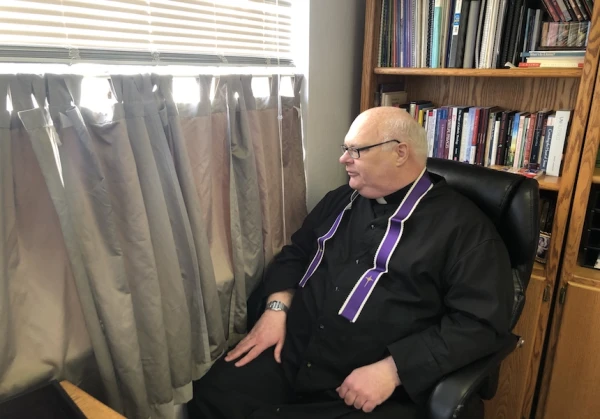
Lincoln, Neb., Mar 18, 2020 / 04:00 am (CNA).- Demand for confessions at St. Mary’s in downtown Lincoln, Nebraska, has always been high: it’s a centrally-located church with convenient, daily confession times and often multiple confessors.

During the parish’s normal 11:30-noon weekday confession times, penitents on their lunch breaks line up, often 20 people or more deep, for absolution and sacramental grace, before returning to work, or before attending the 12:10 p.m. Mass.

“It’s a big ministry,” Fr. Douglas Dietrich, the pastor of St. Mary’s, told CNA. “And then we have a lot of people who come by the door and call up and just want to go to confession; that’s great.”

“I always joked about how I should just put up a walk-up confessional” available outside his rectory office window, Dietrich told CNA.

These days, the usual daily confession lines would violate new state and federal coronavirus guidelines, which dictate that no more than 10 people should be gathered in any space. To further complicate matters, the Diocese of Lincoln announced on Monday that public Masses would be suspended until further notice, also in an effort to combat coronavirus.

But Fr. Dietrich is not deterred.

What started out as a joke has now become a reality, in an effort to keep the sacraments available to Nebraska’s Catholics during this uncharted time of restrictions on public gatherings.

“When we got the word that they were suspending all public liturgies and the churches were basically shut down, that was my first concern was – what about people who have to get to confession?”

Starting just one day after the new restrictions, Fr. Dietrich set up shop at his office window, and advertised the new set-up to his parishioners. The line was a little shorter than usual, but Dietrich said he heard confessions until a little past noon.

Dietrich is not the only priest getting creative at this time of unprecedented closures of liturgies and churches in the United States and beyond.  Over the weekend, a photo circulated on social media of Fr. Scott Holmer of St. Edward the Confessor Catholic Church in Bowie, Md., offering drive-up confessions.


BRILLIANT! Drive-through confessions…. perfectly legal, good social-distancing. Awesome idea, Fr, way to adapt! I gotta figure how to do this at ASU … works with cars, skateboards, bikes, scooters, I s’pose. #ASUCatholic #coronapocalypse pic.twitter.com/pwgFnw29Gm

— Fr Rob Clements (@Fr_RobC) March 16, 2020


Holmer sat on a chair outside in the church parking lot, a safe six feet away from cars, which lined up behind traffic cones for the sacrament.

In a note on his parish website, Holmer said that while it was a “great sorrow” to be unable to offer public Mass, the “drive through confessional” was one way he could offer sacraments to the people at this time.

“As we go through this Coronavirus, I hope to be in daily communication with you to create a sense of being connected as a parish throughout these uncertain days,” he said.

The drive-up confessions will be available every day at varying times posted on the parish website, with an extended time of confessions from 7:30 a.m. to 12:30 p.m. on Sundays. A seminarian has been recruited to direct traffic, the priest noted, and the confessional will only be closed in cases of inclement weather, like heavy rain.

“This is turning out to be a Lent unlike any other. I believe the Lord is inviting us to an increased concern for the welfare of our neighbors and offering us the opportunity to make sacrifices for them. What a great Lenten penance for us all,” Holmer said in the letter to parishioners on the parish website.

“Be assured of my prayers for you. Please pray for the health and welfare of all in our parish and in the surrounding community. I miss you all terribly,” he added. The photo of Holmer’s creative confessional inspired Fr. Ryan Salisbury of Syracuse, Nebraska to think about what he could offer his parishioners.

“A number of parishioners kept sharing that photo with me, and it was like, yeah, this is something we need to do.”

Like Dietrich, he decided to set up a walk-up confessional through a window of the parish social hall.

“The way our social hall is designed, we have a classroom (where) the roof overhangs it. That way they’re kind of protected even if it would rain or anything like that. And it has a direct line of sight from the parking lot. So, I can open a window, be inside and be there with my back to the window to remain anonymous for confession,” Salisbury told CNA.

Salisbury said he planned on posting the new available confession times on the parishes website and social media pages, and that he planned on offering even more times than normal.

The priest said so far he has had about seven or eight parishioners ask him how they will be able to access confessions while ordinary Masses are suspended, so he knows it’s something on the mind of many Catholics. He encouraged people to use the walk-up confessional even if they just wanted to talk.

“We as priests, we are praying for (Catholics) and during this time we’re always there to offer anything that you need,” he said.

He added that he would encourage people “not to be afraid, to reach out with any concerns or questions or ideas that they might have. But most of all, (they should) know of our love for them and our prayer for them. And as difficult as this is for everyone, on our priestly hearts it’s also very difficult not being able to administer to them in the way that we’re used to. But we offer it up in every little sacrifice that we do,” he said.

Fr. Cassidy Stinson, a priest at St. Bede Catholic Church in Williamsburg, Virginia, told CNA that his parish has “really big confessionals with good ventilation”, so he is still offering confessions with or without a privacy screen, but at a safe distance of 6 feet or more.

Stinson has been promoting his still-open confessions on Twitter.

“We’re trying to be creative to stay safe,” he told CNA.

Fr. Carl Arcosa, like Fr. Holmer, is offering his parishioners at St Michael Parish in Livermore, California, a drive-up confessional, as well as “parking lot Benediction”, starting on Thursday, the feast of St. Joseph.

“Only one occupant per car. Drive up to the courtyard driveway and remain in your car. A priest will keep a 6-foot distance from your car window to hear your confession and absolve you,” say the instructions for drive-up confession, sent in an email to parishioners.

Drive-up confessions will be offered every day from March 19-April 7 at two different times, including bilingual confessions. Drive-up Benediction will be offered twice daily, at 8:30 a.m. and 6:00 p.m.

Directions for drive-up Benediction read: “Park in St Michael’s parking lot and remain in your car. Our clergy will process with Jesus present in the Eucharist and pass by all cars.  While in your car pray this prayer three times: ‘O Sacrament most Holy, O Sacrament Divine, All praise and all thanksgiving, Be every moment Thine.’”

Arcosa said that the priests will use their phones in order to hear people confess their sins but maintain distance, and then will bless and absolve the penitents from a safe six-foot distance.

Arcosa told CNA that he wanted his people to be “spiritually and pastoral supported” during this time, even if he cannot offer them public Masses.

The church doors are also being kept open during the day so that people may pray in front of the Blessed Sacrament, or pray the Stations of the Cross, which is normally offered publicly every Friday during Lent.

“This a very Catholic parish, they love the Eucharist and everything,” Arcosa said. “So that’s why we’re giving the sacraments back to them, and the Blessed Sacrament, and opening the church, (it) makes them feel that the church is there for them. Their priest is there pastorally, spiritually.”

“I believe that the sacraments are really important for us Catholics,” Arcosa added.

“In the midst of all the other Christian churches locking their doors or canceling their services, we’re still doing (what we can) because we know that Jesus still walks with us and Jesus wants to be with us and support us and give us strength…in our sacraments, even in this time of crisis.”

[…]

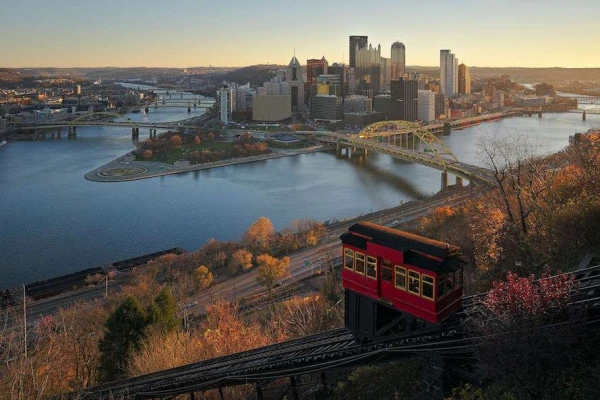
Pittsburgh procession will ask for divine protection from coronavirus

March 17, 2020 CNA Daily News 1

Pittsburgh, Pa., Mar 17, 2020 / 03:55 pm (CNA).- Fr. Nick Vaskov wanted to do something. He wanted to invoke God’s protection against the pandemic of the coronavirus, and call for the protection of the saints. He wanted to give witness to faith. So he decided to have a procession.

The procession was to take place after a Mass in Pittsburgh, where Vaskov is diocesan director of shrines. Both procession and Mass would call for divine protection from plagues, epidemics, and contagious diseases. And there would be a lot of relics.

The priest scheduled everything for March 22. And then on March 16, the diocese suspended public Masses, in response to the guidance of public health officials. And gatherings of more than just a few people were discouraged.

So Fr. Vaskov’s plans had to change.

The Mass will still take place on March 22nd, but now it will be livestreamed, and Catholics encouraged to watch online.

The procession will still take place too. Catholics are invited to stand on the sidewalk along the procession route, keeping a safe distance from each other. Pittsburgh priests will carry the Blessed Sacrament, along with relics from the True Cross, St. Rocco, and St. Rosalia, through a Pittsburgh neighborhood. They’ll pray, and invite onlookers to do the same.

“The celebration of Holy Mass, obviously it’s a participation in the liturgy of heaven. So whether we are present or not, as the body of Christ, it has a powerful effect for the intentions that we bring there – that we want to be transformed and made new and healed, certainly in a time of a health crisis for people’s health and protection,” Vaskov told CNA.

“[The] procession … [is] bringing God into the world and bringing people hope and faith and trust. We have a great opportunity to do that,” he told CNA.

Vaskov said the idea for the Mass and procession started with the large collection of relics at St. Anthony’s Chapel in Pittsburgh.  Among the collection are relics from intercessors against contagious diseases, like Saints Rocco and Rosalia. Those saints will be important intercessors during the time of the coronavirus pandemic, the priest said.

“We have that opportunity here since we have the relics of many saints that are invoked in times of plague and epidemic … We just have a great opportunity on our hands to be able to do something, show people that we do trust in God in moments like this to heal and to protect,” he told CNA.

The coronavirus, COVID-19, has infected nearly 190,000 people worldwide, and killed almost 8,000. Pennsylvania’s Department of Health reported that there have been 76 cases of the viruses in the state.

As many dioceses have closed their churches in response to the pandemic, Vaskov said there is need to be creative ways to involve people in prayer and spiritual practices, even if those are digital opportunities.

The priest told a story about Saint Charles Borromeo who, during a plague in 1500s Italy, would set up Mass on the street corners and people would pray through the windows of their apartments.

“That was a creative way to allow people to draw near to the Lord. We look now to digital ways to do that, and maybe other ways,” he said.

“Just because the church is closed doesn’t mean that we’re sitting here doing nothing, we’re going to do all the more.

“If nothing [else], this is going to be our own prayer for our people during this time. So praying with and for each other is going to be such an important part of this.”

Vaskov said the Mass for protection, streamed online, will not replace the reception of the Eucharist, but it will still be a powerful experience of prayer and unity. He told CNA he hopes the event will bring peace to people who feel stress or anxiety over the virus.

“It doesn’t replace for them what it means to go to Mass and to receive the Eucharist, but it certainly is a help, during challenging days, for so many people with anxiety and worry,” he said.

“[This event is a way] to have interactions with people digitally or opportunities for people to ask questions. People are worried and anxious and they look to the Church, they look to saints,” he said.


[…]

How are Catholics coping with school closures?

March 17, 2020 CNA Daily News 0

Washington D.C., Mar 17, 2020 / 03:00 pm (CNA).- The coronavirus pandemic has caused Catholic schools across the United States to close. With no clear timeline for when they might reopen, parents, students, teachers and schools are finding innovative w… […]

Coronavirus and the collection basket: Parishes feel quarantine cash crunch

March 17, 2020 CNA Daily News 1

Denver, Colo., Mar 17, 2020 / 12:20 pm (CNA).- While dioceses across the country have canceled public Masses in response to the COVID-19 coronavirus, many parishes are remaining open for prayer, Eucharistic adoration, and confession, and continuing charitable work in the community.

But some parishes, especially those serving poor communities, have already begun feeling a financial pinch as they lose access to in-person parish collections.

For Father Joseph Lajoie, pastor at Sacred Heart Parish in Denver, dwindling cash flow during the coronavirus crisis constitutes a “potentially crippling, if not mortal, blow” to the parish. 

“We are as antiquated as our registration system. It’s a three-ring binder,” Lajoie told CNA.

The Archdiocese of Denver suspended public Masses March 13.   

“So we’re looking at this past Sunday, and the next three at least, with no Mass, no collection at all,” Lajoie said.

Sacred Heart is one of the oldest parishes in the archdiocese, occupying a 140-year-old building. It is also one of the poorest, and its congregation is largely elderly and low-income.

The parish has no online giving portal, no electronic database of registered parishioners, and no way to communicate with the entire community electronically, except through social media.

Lajoie said that in recent days he’s been able to lead Benediction with the Blessed Sacrament from a balcony of the church for those in the community who are able to come outside.

Though many parishes keep reserves on hand— and Lajoie stressed that Sacred Heart does have some savings— the prospect of months without passing the basket has Lajoie worried about being able to pay his small staff, especially after the few weeks.

Nearly 100 dioceses in the United States have canceled public liturgies until further notice.

“I think a lot of the things in our country, and in our Church, are going to look very different when we’re allowed to have public Mass again,” Lajoie said.

Small and large parishes affected

The financial implications of canceling Mass are not just affecting small parishes, either.

Father Ronald Cattany, rector of the Cathedral Basilica of the Immaculate Conception in downtown Denver, said over the first weekend after Masses were suspended, in-person donations at the cathedral were down about 75% from a typical weekend. What did come came from those going to confession at the cathedral, or stopping to pray.

Online giving for that weekend totaled about $800, he said, but Cattany stressed that the cathedral basilica is not funded like most other parishes in Denver.

Despite its large size, Cattany said the parish has only about 600 registered parishioners, many of whom are elderly or low-income. A large portion of each Sunday’s congregation is made up of visitors, or what Cattany calls “Friends of the Cathedral” who attend on Sunday, but do not live in the area and are registered at other parishes.

For some other large parishes in the Denver area, the number of registered parishioners could range anywhere from 2,500 to over 6,000.

At the cathedral, “the populations here are very different,” Cattany said.

The cathedral has remained open for Eucharistic adoration. The confession schedule will— for now— remain the same, Father Cattany said.

The priest said the cathedral canceled its entire order of palms for Palm Sunday, and he fears that the palm supplier may go out of business. Still, he has been seeking to reassure parishioners that Jesus will be waiting for them in Eucharist when the pandemic ends.

“Despite the lack of liturgy, He’s still there, and he wants to see them,” Cattany said.

“The Blessed Mother’s helped us before, and she’s going to get us through this.”

The cathedral’s breakfast sandwich line for the homeless and the food pantry will continue to operate for the time being, he said. But the local chapter of St. Vincent DePaul, which typically provides about $5,000 worth of support per month to families in need, is “out of money.”

Catholics will likely help parishes first

Mario Enzler, program director for the Online Masters of Science in Ecclesial Administration and Management at the Catholic University of America, told CNA he recommends to priests that a parish keep on hand enough money for at least one month of operations.

He said parish priests— many of whom are former students in his program— have been calling him asking for advice during the coronavirus crisis.

“Yes, cash flow will suffer…but as I told several priests, you’ll be blown away by how your parishioners will become a force for unity,” Enzler said.

He said he also recently spoke to a diocesan vicar general, who is concerned about the diocesan annual appeal. That’s different, he said.

“Parishioners will, first and foremost, identify themselves as a member of a specific parish, rather than of a diocese,” Enzler said.

“So people will help the pastor before they think, I have to also help the bishop and the chancery and so on and so forth.”

Enzler said he has been telling priests who have been reaching out to him asking for advice on how to communicate with parishioners simply not to go into “panic mode.”

Talking to the priests who have contacted him, he said, “I did not sense a panic. There is a concern, they are aware of the financial repercussions, but at the same time with good crisis management skills, with good communication skills, with good use of digital platforms, they’re not going to be penalized.”

Reserves can help

Parishes in many dioceses have the option of depositing funds with the diocese as a kind of savings account. 

Father Ryan Hilderbrand, pastor of St. Mary’s Catholic Church in Huntingburg, Indiana, told CNA that in the Diocese of Evansville, parishes sends excess money to a reserve fund managed by diocese which functions like a bank for parishes; he told CNA deposits can be withdrawn at any time for any reason.

Hilderbrand said this method of saving keeps the parish’s cash safe from market fluctuations.

“Generally speaking, if I ask the diocese for cash out of our savings, I will have a check in-hand within 48 hours,” he said.

Hilderbrand said his savings at diocese, along with endowments from parishioners has allowed the parish to build up a reserve fund. The priest estimates he could pay for parish staff and upkeep of the parish for six months, even if all income dried up. 

‘My parish has been blessed with great financial stability in the past. We have not had to use those proceeds [from the endowments] for many years,” he said.

“Thus, those proceeds have been building up over the years. If we need to tap into them, we can.”

Enzler said many priests throughout the country will have to make a similar calculation, and many people will likely have to share resources to keep parishes afloat during the coronavirus crisis.

He recommended that parishes especially well-prepared for a crisis ought to call up struggling parishes and offer to share resources. Dioceses, too, ought to do the same for fellow dioceses, he said.

“If a pastor knows that a neighboring parish is suffering, and he has an abundance of assets or goods, yes, he should share them with common sense. Because the goods of the parish belong to the people of God,” he said. 

Ultimately, Enzler said, if parishes don’t have access to an emergency fund, it’s simply time to turn the heat in the church down to 50— something Father Lajoie said he plans to do as soon as he can.

“If we have to all sacrifice, this is what we as Catholics are called to,” Enzler said.

“This is an amazing opportunity for all of us to come together and help one another and love one another, and to not leave our priests alone.”

[…]