Pope Francis appoints Bishop Mitchell T. Rozanski to lead St. Louis

June 10, 2020 CNA Daily News 0

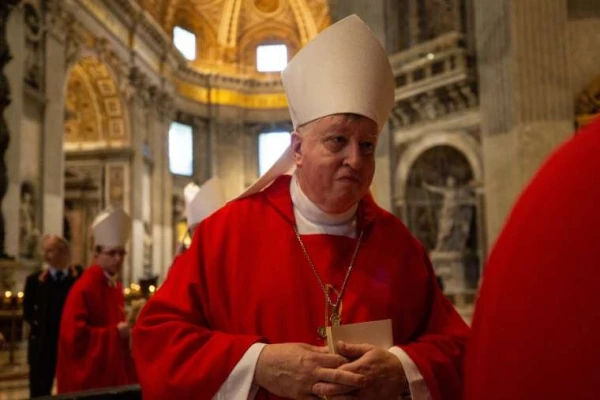
Vatican City, Jun 10, 2020 / 05:15 am (CNA).- Pope Francis appointed Wednesday Bishop Mitchell T. Rozanski to lead the Metropolitan Archdiocese of St. Louis.

Rozanski, 61, is the current Bishop of Springfield, Massachusetts, where he has served since 2014. He succeeds Archbishop Robert Carlson, who presented his resignation to Pope Francis at the age of 75.

“I am confident in the future of God’s strong Church in St. Louis with Archbishop-elect Rozanski as its shepherd,” Archbishop Carlson wrote on Twitter following the announcement on June 10.

A Baltimore native, Rozanski was born in 1958, and attended Catholic schools in the city. He attended seminary at the Catholic University of America, and was ordained a priest of the Archdiocese of Baltimore in 1984. He served in parish ministry, the archdiocesan curia, and with its seminary, and was named a monsignor in 2003.

Pope John Paul II appointed Rozanski as auxiliary bishop of Baltimore in 2004. He oversaw one of Baltimore archdiocese’s geographical vicariates while parishes were merged, and served as vicar for Hispanics. He was vocal in supporting Maryland’s DREAM act, allowing some undocumented immigrants to receive in-state college tuition.

At the time of his episcopal consecration, Rozanski was the youngest bishop in the United States. He went on to serve as chair of the U.S. bishops’ conference committee for Ecumenical and Interreligious Affairs and as a consultant to the National Association for the Inclusion of Persons with Disabilities.

A Polish-American, Rozanski has co-chaired the Polish National Catholic – Roman Catholic Dialogue. The Polish National Catholic Church is an ecclesial community founded in the U.S. in the late 19th-century by Polish-American immigrants.

He is a member of the Knights of Columbus and a Knight Commander of the Order of the Holy Sepulchre of Jerusalem.

As Metropolitan Archbishop of St. Louis, Rozanski will oversee the largest city in Missouri, with a population of 2.25 million people across the archdiocese, 509,280 of which are Catholic. 

The title of “metropolitan bishop” refers to the diocesan bishop or archbishop of a metropolis, namely, the primary city of an ecclesiastical province or regional capital.

Archbishop Robert Carlson led the Archdiocese of St. Louis since 2009.

“I am honored to have served as leader of the Archdiocese of St. Louis for more than a decade,” Carlson said following Rozanaki’s appointment.

“This large and generous community of faithful Catholics will continue to encourage me in my faith journey, and I know that Bishop Rozanski will cherish his new ministry.”

Pope Francis also appointed Fr. Bruce Lewandowski as an auxiliary bishop for the Archdiocese of Baltimore June 10.

[…]

‘God is inviting us to be part of the solution’- Black Catholic priests on racism and healing

June 10, 2020 CNA Daily News 4

Denver Newsroom, Jun 10, 2020 / 03:00 am (CNA).- Two black Catholic priests— one ordained six years, the other 42— shared their thoughts with CNA this week on the sin of racism, and the importance of praying, fasting, and advocating for healing.

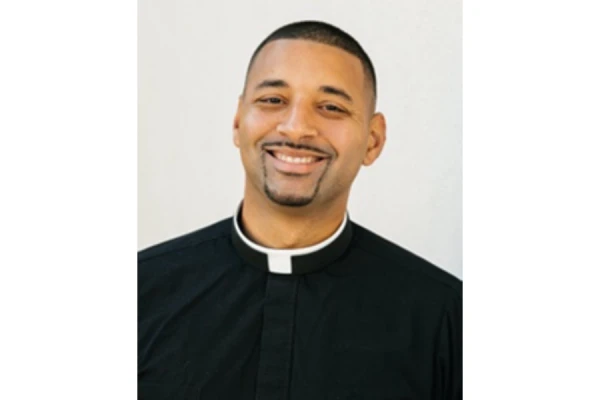
Father Josh Johnson, pastor of Our Lady of the Holy Rosary Catholic Church in the diocese of Baton Rouge, told CNA he has been encouraging prayer for healing from racism for years.

George Floyd’s death on May 25 at the hands of Minneapolis police spurred protests across the world. Father Johnson said a friend sent him the video of the arrest either the day it happened or the day after.

“I shouldn’t have done it, I shouldn’t have done it, but I watched the video,” he said.

Johnson says he didn’t just see a fellow black man as he watched Floyd’s death play out on video— he saw a Christian man, a fellow member of the body of Jesus Christ. 

“To watch a human being die, to watch a member of the body of Christ die on camera…He’s saying, ‘I can’t breathe,’ his calling out for his mom…to watch another human being die on camera was traumatizing,” Father Johnson told CNA.

“As a Christian, as a Catholic priest, I can’t watch that happen and not be affected and not grieve, not be sad, not experience anger that I pray was just, and then also just not be reminded of my own experiences, too,” he said.

Johnson’s father was a cop— in fact, he was captain of the Baton Rouge Police Department. Johnson says he has had the opportunity to collaborate with local law enforcement throughout his priesthood.

“However, that does not change the fact that when I’m not wearing my clerics, people in society don’t see me as Father Josh, they see me as another black man,” he said.

Johnson said he, like many people of color, has experienced harassment from law enforcement in the past.

“[George Floyd] could have been me. I can’t not think that way, because I’ve had negative experiences” he said.

“It’s painful. It’s really, really painful to watch that, and it’s even more painful for people to just disregard it, for Catholics to just disregard it and say, ‘Oh yeah, it was bad, but other things are bad too.’ It’s like, no, let’s stop. As disciples of Jesus Christ, let’s just stop, and let’s grieve together that one of our brothers, one of God’s beloved sons, was killed. Can we just please stop and grieve together and not dismiss his life as if it was nothing? This is a life we’re talking about.”

For too long, it seemed to Johnson, most Catholics have been inattentive to racism or overly entrenched in a left-or-right political mindset over the issue.

Johnson told CNA that in addition to talking, writing, and preaching about these topics for years, he has been constantly praying and fasting for an end to racism.

A few weeks before the Minneapolis officers killed George Floyd, Father Johnson had been inviting listeners of his podcast to pray a rosary for racial reconciliation.

“Finally now, this is the very first time in my life…that a number of Catholics have come together and decided, “We’re going to acknowledge that there’s a problem and we’re going to acknowledge that God is inviting us to be part of the solution,” Johnson said.

“If the disciples of Jesus Christ could come together, then we could be used by God to combat this evil that has just brought about so much damage to the body of Christ, and to men and women made in the image of God in the United States of America, for hundreds and hundreds and hundreds of years.”

Any effort to combat racism must start in the heart, with prayer, he said.

“Through our prayers— our intentional prayers— through our fasting, through our listening and learning things that we didn’t know, and through collaborating with each other, to work together, to bring down and to reform and transform these systems that continue to perpetuate division in the body of Christ.”

Johnson said his encouragement toward prayer has garnered positive feedback from people of faith, especially white people, he said, with many realizing “that they could do something— that even though they might not personally have ever said the n-word, or they might not participate in a practice or policy that accommodates white people and alienates black people or brown people, even though they don’t participate in that, that they’re still responsible to pray against racism.”

Johnson stressed the power of penance and fasting as a way to heal the Body of Christ. Throughout the recent revelations of clerical sexual abuse in the US, Johnson says he has been taking on fasts and sacrifices for the healing of those affected.

He also recommended following black Catholic leaders online, such as Sister Josephine Garrett and Deacon Larry Oney, and also encouraged Catholics to consider making pilgrimages to places like the Equal Justice Initiative Legacy Museum in Montgomery, Alabama.

Above all, prayer is the key, he reiterated.

“I believe that the Lord has created me for this time, for a time such as this,” Johnson said.

“I’m so excited to finally have allies and other disciples of Jesus Christ walking with me to fight this battle, to bring about healing in the body of Christ and restoration, renewal and racial reconciliation in our country.”

“This is one that we cannot ignore”

Father James Boddie, pastor of Christ the King Catholic Church in Jacksonville, Florida, has been a priest for 42 years.

Christ the King is a very diverse community. In addition to many African Americans— like Father Boddie— there are large numbers of Vietnamese people, Hispanics, families from Haiti, from Africa, and many white parishioners as well.

Like Father Johnson, Father Boddie’s first reaction upon seeing the video of George Floyd’s death was horror, and an immediate desire to pray.

“I went immediately into prayer for Mr. George Floyd, for his family and for the police department,” Father Boddie told CNA.

“The actions of a few police officers does not cast a shadow over the entire police department, but those individuals who acted that way was just…it was unimaginable.”

When he entered St. John Vianney Minor Seminary in Miami back in the 1970s, he was the first African-American seminarian from Florida to study there.

Father Boddie remembers the civil rights movement of the 1960s firsthand. In fact, his father was involved in civil rights efforts in the Jacksonville area.

“He worked very hard in the community, addressing those issues [and] working with others…whether it’s for the desegregating schools or issues that affect the African American community, but also issues that affect the community at large, because there’s a lot of issues out there that the only way to really approach it is the entire community coming together,” Boddie said.

“I saw [in] the first mobilization that people were marching, from the old, the young people from various cultures, various backgrounds from very different communities,” he said.

Goal setting is an important part of the process, he said. Government leaders, faith leaders, and other community members should work together to plan out what they want to achieve.

When protests begin to turn violent, a re-focusing on the issues is necessary, Father Boddie said.

“When you started to see the violence and destruction taking place, that’s when I felt that it began to lose focus. Why is that destruction? Why are particular groups destroying people’s property, livelihood?” he said.

“Focus back on what they’re marching for: to address the issue of racism, the issue of injustice, but also do it in peaceful means and involving everyone from the community and not going towards destruction of property, of burning down buildings, because that is contrary to everything,” he said.

He also suggested that Catholics read the US bishops’ 2018 pastoral letter against racism, Open Wide Our Hearts, perhaps even in a group study setting at their parish.

“My hope is that everyone comes together— everyone comes together as one— identifying that, yes, this is a problem. This is one that we cannot ignore,” he said.


Father Johnson and Father Boddie can be heard on the June 8, 2020 episode of the CNA Newsroom podcast.


Kate Olivera contributed to this story.


[…]

Catholics cannot remain indifferent to racism, Phoenix bishop says

June 9, 2020 CNA Daily News 1

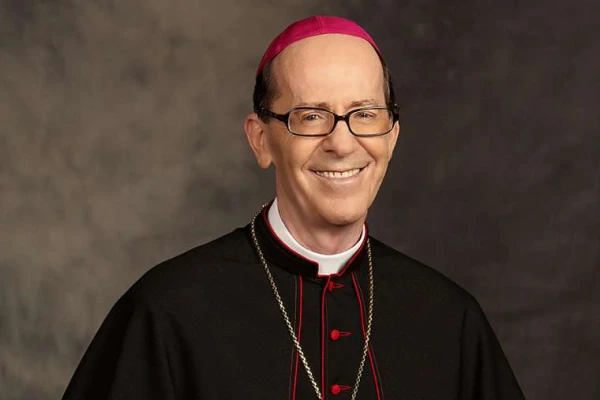
CNA Staff, Jun 10, 2020 / 12:34 am (CNA).- Catholics have a key part to play— in cooperation with God’s grace— in overcoming racism, the bishop of Phoenix said at the diocesan Mass for Forgiveness of the Sin of Racism this week.

“George Floyd did not die alone. Jesus was with him—praying with him and for him. At every time and every place, Jesus draws near to every person, especially in times of suffering and at the hour of death,” Bishop Thomas Olmsted of Phoenix said in the homily June 8.

As the Church gathers to pray for forgiveness for the sin of racism, Olmsted said, it is important to define what Catholics mean by the term.

The Catechism of the Catholic Church offers guidance, he said, defining it as “unjust discrimination on the basis of a person’s race.”

In Paragraph 1935 of the Catechism, it says “every form of social or cultural discrimination in fundamental personal rights on the grounds of sex, race, color, social conditions, language, or religion must be curbed and eradicated as incompatible with God’s design.”

Olmsted said he has seen racial discrimination manifest itself among some Catholics in Arizona. Nearly half of Phoenix’s pastors were born in other countries, he said, and sadly not all have been received well by Catholics in the diocese.

For example, “on the day that I installed one of our finest pastors, protestors came to the parking lot and distributed flyers on car windows denouncing the bishop for replacing their beloved former pastor with ‘these Africans,’” Olmsted said.

The Church provides, through the Sacrament of Confession, a means by which those who have perpetuated the sin of racism can seek God’s mercy.

“The rich mercy of God restores human dignity, even to the most hardened of sinners, if we have the humility to say six words: ‘I am sorry. Please forgive me,’” he said.

Jesus himself, and saints like Pope John Paul II, have modeled the kind of forgiveness that is necessary for healing from racism, Olmsted said.

“[Racism] is overcome by God, by His mercy. It is not our achievement. We have a key part to play, in cooperation with His grace, but only God can change minds and hearts. That’s why the Sacraments of Confession and the Eucharist play such vital roles in overcoming the sin of racism,” Olmsted said.

In responding to racism, Catholics— even if they are not themselves racist— must not allow their hearts to harden, frozen by indifference, and simply fail to respond altogether, Olmsted said.

“While racism is a sinful act that prejudice, injustice, and lack of respect for human dignity brings about, racism also hides itself behind indifference. Racists may not get caught because they are doing “nothing.” But, in Jesus’ description of the Last Judgment, found in Matthew 25:4, sin is depicted not as what people did but ‘what they failed to do,’” he said.

Olmsted recalled that during March 2000, Pope John Paul II led the whole Church in a Day of Pardon, in which he asked the entire Church to place itself “before Christ, who out of love, took our guilt upon Himself,” and to make a “profound examination of conscience,” and to “forgive and ask forgiveness.”

“Inspired by the example of St. John Paul II, let us beg the Lord Jesus, at this Mass, for the grace we need to overcome the evil of racism and to build a society of Jesus and solidarity,” Olmsted concluded.


[…]

The policeman who might be a saint

June 9, 2020 CNA Daily News 1

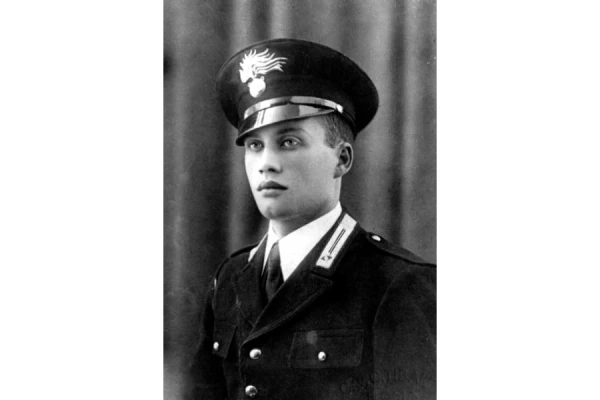
Rome, Italy, Jun 9, 2020 / 02:05 pm (CNA).- With police brutality in focus around the world, one priest says it is important to remember a policeman who might one day be declared a saint: Vice-Sergeant Salvo D’Acquisto, an Italian policeman who gave his life for those he had sworn to protect.

During the Second World War, Salvo D’Acquisto was a member of Italy’s Carabinieri police force, and deputy commander of the rural police station of Torrimpietra, outside of Rome.

In September 1943, German soldiers were inspecting boxes of ammunition at a military base nearby. One box exploded, and two German soldiers died. German officials decided the explosion wasn’t an accident. For that, they rounded up and arrested 22 people.

As the local police official, D’Acquisto did an investigation into the explosion, questioning the 22 people who had been arrested.  After his interviews, he tried to explain to the Germans that the explosion was an accident, and that no one in the area was responsible.

But the Nazis were determined to exact revenge. They had the prisoners dig a mass grave, and announced they would be executed.

So Salvo D’Acquisto told the Nazis that he had arranged the explosion, and that he had acted alone.

The civilians were released. D’Acquisto was shot before a firing squad. He was 22 years old.
 
The Italian Military Ordinariate opened a cause for his canonization in 1983 in 1983.

Monsignor Gabriele Teti was the postulator of the policeman’s cause from 2014 to 2018. Himself a former member of the Carabiniere, Teti knows the story of Salvo D’Acquisto in depth.

Teti said that Salvo D’Acquisto considered his membership to Carabinieri a service for his countrymen.

The policeman “went so far as to demonstrate that his life was truly at the service of the people, even to self-sacrifice,” the priest said.

Before his death, said the former postulator, D’Acquisto met a friend who had attended Carabinieri training with him. By then, a large group of Carabinieri had gone underground to fight the Germans in Rome, and this  friend invited D’Acquisto to leave the uniform and join the resistance.

“And he replied that his duty was to protect order and safety, and that his task was not to leave.”

In 2001, Pope St. John Paul II told Italian national police officers that “The history of the Italian Carabinieri shows that the heights of holiness can be reached in the faithful and generous fulfillment of the duties of one’s state. I am thinking here of your colleague, Sergeant Salvo D’Acquisto, awarded a gold medal for military valor, whose cause of beatification is under way.”

The sacrifice of D’Acquisto should be seen in the context of his whole life, the priest said.

“Certainly, he grew up in a very religious family.”

“Since childhood, then, there are small episodes that make us understand the nature of Salvo D’Acquisto. As a child, returning from school, he donated his shoes to a child he always met when returning from school and who was barefoot. Another time, he rushed to save a child who was about to end up under a train.”

The policeman’s cause for beatification ran aground on “bureaucratic” issues, Teti said. A cause for his martyrdom was set up, but Salvo D’Acquisto’s sacrifice falls more easily into a new category of saints, those who have made a “gift of life,” the priest said. His cause continues to be considered at the Vatican.

In Italy, the priests said, “devotion to Salvo D’Acquisto is everywhere. So much so that some even say that there is no need to make him a saint, given that they already consider him a blessed servant of God.”


[…]