Mundelein seminary accepts nominations for ‘hero priests’ of the pandemic
September 7, 2020 CNA Daily News 2

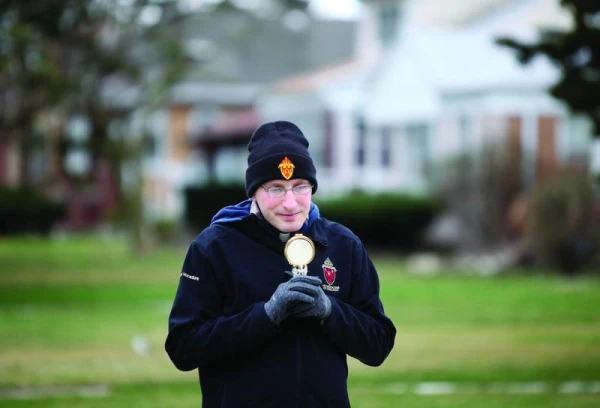
Denver Newsroom, Sep 7, 2020 / 06:01 am (CNA).- In a photo from this spring, Fr. Bobby Krueger dons a black beanie, thick grey gloves, and a jacket with a hood over his clerics.

In his gloved hands, he carries a small gold and glass monstrance with the Blessed Sacrament – which he carried on foot to every block in St. Leonard’s parish on two occasions during the coronavirus lockdowns in Berwyn, Illinois, a suburb of Chicago.

Anyone who has experienced spring in Chicago, or merely sees the photo of Fr. Krueger, knows that those could not have been balmy walks.

“When we couldn’t get to Mass, He brought Jesus to us – even in the snow and rain,” Kathy Rokosz, a St. Leonard’s parishioner, wrote in her nomination of Krueger as a “hero priest” of the pandemic.

Through Sept. 14, Mundelien Seminary is accepting nominations of “hero priests” throughout the United States who went above and beyond during the weeks when public Masses and other normal parish activities were cancelled due to the coronavirus pandemic.

These priests will be honored collectively as part of Mundelein’s 2020 In Service of One Another Catholic Humanitarian Award. “As COVID-19 has changed so much about the way we live in 2020, the Church has remained an essential source of hope, inspiration and support. Heroic priests across the country have answered the chaos of the pandemic with extraordinary creativity and resolve to continue serving as a bridge between Christ and his people,” the seminary states on their website, where nominations may be submitted. Fr. John Kartje, the rector of Mundelein, told CNA that the idea for the recognition of these priests came from a desire to focus on the good that has come from these unprecedented times.
“It just came from the realization that in the midst of the pandemic and frankly also with everything that’s been going on over the last several months, all the social unrest, we’ve certainly seen that here in Chicago… that there have been a lot of people stepping up in amazing ways,” including many priests, Kartje said. Indeed, as public Masses and gatherings closed throughout the country for weeks on end starting in mid-March, priests started getting creative. Drive-through and walk-up confessionals, parking lot Masses, livestream retreats, and teams of priests specially trained to enter ICU wards and administer the sacraments to coronavirus patients became the norm in many dioceses throughout the U.S.
Fr. Kartje said they want to recognize the extraordinary efforts of priests during these times – no matter how flashy or not their efforts seem. “Even aside from those kinds of things that often get headlines, it’s just the ways that they’ve been trying to minister to their people, however that’s possible,” he said, “whether that’s an increased number of home visits, or obviously the ways social media has made the sacraments available and accessible to people.” Kartje said one of his favorite submissions so far has been of an elderly priest who spent time visiting people outside of their windows at nursing homes, which experienced some of the strictest measures of lockdown and isolation.
“He could not only pray for them and offer their blessing from the outside, but then he could be with their families who are right outside the window beside him,” Kartje said. “You know, these are just heartbreaking cases of grown children and grandchildren, their hearts aching to go inside and be with their loved ones. And here’s an elderly priest who can provide real ministry and solace to the family, as well as providing prayer and blessing for a person who’s inside the nursing home and not able to receive visitors.” Another submission of a hero priest is Father Christopher DiTomo, who served in Elburn, Illinois during the pandemic. Besides hearing confessions outside in the elements and live-streaming Masses and prayer services, DiTomo also drove the Blessed Sacrament around his parish and held a Palm Sunday procession. “He brought Jesus to the streets of Elburn for over four hours on foot to people who were unable to attend Mass due to restrictions, and to a people who were starving for the Lord, both physically and spiritually,” Theresa Carter wrote of DiTomo in her nomination. “He brought people a glimpse of hope and peace at a very scary, uncertain time. He was all in at all times to help ensure his flock were spiritually nourished during this proverbial wandering in the desert,” she added. Kartje said that while there have been several submissions of priests in the area of Chicago, the campaign is open to submissions of priests throughout the country. Parishioners who would like to honor their priests may fill out a questionnaire located on the seminary website through Sept. 14. On Sept. 17, a small ceremony will be held at the Rector’s Classic Golf Outing in Mundelein, with a few local priests who will accept the honor on behalf of all of the nominated priests.

“The extraordinary times we’re living in obviously put a spotlight on the work these priests are doing, but as I’m sure many of your readers know, even outside of such extraordinary times, there are just thousands and thousands of good priests doing the work of the Lord,” Kartje said.  “We certainly appreciate them, and it’s humbling and an honor for us to be able to hold up some of these men’s stories in gratitude.”
[…]

Only 18 babies with Down syndrome born in Denmark in 2019

September 6, 2020 CNA Daily News 2

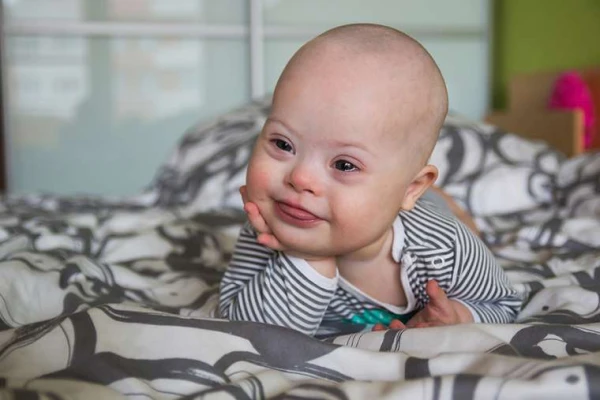
CNA Staff, Sep 6, 2020 / 01:00 pm (CNA).- Only 18 children with Down syndrome were born in Denmark in 2019, the lowest number on record in the Scandinavian country, according to a new report from the Danish Central Cytogenetic Registry (DCCR).

The DCCR, whose statistics date back to 1970, is a national registry of people who have undergone prenatal or postnatal chromosomal tests, molecular genetic tests, or biochemical tests.

The 18 babies born with Down syndrome in Denmark last year represent 0.029% of total births. The CDC estimates that about 1 in 700  (0.14%) children in the U.S. is born with Down syndrome, or about 6,000 babies annually.

In Denmark, “the low number is probably an expression of a random fluctuation in numbers that are already quite small. But it should be followed by an important debate on society’s approach to children with disabilities,” said Olav Bjørn Petersen, chief physician and professor of fetal medicine at Rigshospitalet and the University of Copenhagen

Denmark was the first country in the world to implement national free prenatal Down syndrome screening for all pregnant women.

With the introduction of free prenatal screening in 2004, the number of children born with Down syndrome decreased significantly, but subsequently stabilized at 23 to 35 live births per year.

In 2018, 22 babies were born with Down syndrome, but in 2019 number plummeted even further.

According to the Danish National Board of Health, “95% of pregnant women whose fetus is found to have a chromosomal abnormality opt for an abortion.”

In Iceland, “nearly 100 percent” of pregnancies that tested positive for Down syndrome were aborted, according to a 2017 CBS News report.

Denmark allows abortion on demand within the first 12 weeks of pregnancy. After that period, abortion is only allowed if a medical council considers there to be a physical and mental risk to the health of the mother or risk of birth defects in the unborn child. Minors under 18 need parental consent to get an abortion.


[…]

Pope Francis pleads with Catholics not to gossip

September 6, 2020 CNA Daily News 2

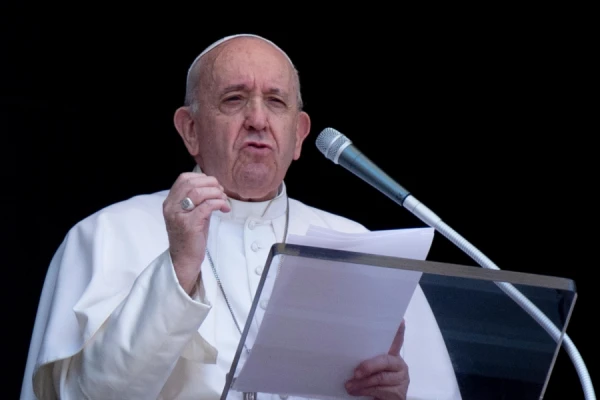
Vatican City, Sep 6, 2020 / 05:45 am (CNA).- Pope Francis implored Catholics Sunday not to gossip about one another’s faults, but instead to follow Jesus’ directive on fraternal correction in the Gospel of Matthew.

“When we see a mistake, a defect, a slip of a brother or sister, usually the first thing we do is go and tell others about it, to gossip. And gossip closes the heart of the community, disrupts the unity of the Church,” Pope Francis said in his Angelus address Sept. 6.

“The great talker is the devil, who always goes about saying the bad things of others, because he is the liar who tries to disunite the Church, alienating brothers and sisters and unmaking community. Please, brothers and sisters, let’s make an effort not to gossip. Gossiping is a plague worse than COVID,” he told pilgrims gathered in St. Peter’s Square.

Pope Francis said that Catholics need to live out Jesus’ “pedagogy of rehabilitation” — described in chapter 18 of the Gospel of Matthew — “if your brother sins against you”.

He explained: “To correct a brother who has done wrong, Jesus suggests a pedagogy for rehabilitation … articulated in three steps. In the first place he says: ‘point out the fault when the two of you are alone’, that is, do not air his sin in public. It is about going to your brother with discretion, not to judge him but to help him realize what he has done.”

“How many times have we had this experience: someone comes and tells us: ‘But, listen, you are wrong in this. You should change a little in this.’ Perhaps at first we get angry, but then we are grateful because it is a gesture of brotherhood, of communion, of help, of recovery,” the pope said.

Acknowledging that at times this private disclosure of another’s fault may not be received well, Pope Francis pointed out that the Gospel says not to give up but to seek the support of another person.

“Jesus says: ‘If he does not listen, take one or two others along with you, that every word may be confirmed by the evidence of two or three witnesses,’” the pope said.

“This is the attitude of recovery that Jesus wants from us,” he added.

The third step of Jesus’ pedagogy of rehabilitation is to tell the community, that is the Church, Francis said. “In some situations the whole community gets involved.”

“Jesus’ pedagogy is always a pedagogy of rehabilitation; He always tries to recover, to save,” the pope said.

Pope Francis explained that Jesus expanded upon existing Mosaic law in going on to explain that community intervention may be insufficient. “It takes a greater love to rehabilitate a brother,” he said.

“Jesus says: ‘And if he refuses to listen even to the church, let him be to you as a Gentile and a tax collector.’ This expression, seemingly so scornful, in reality invites us to put the brother in God’s hands: Only the Father will be able to show a greater love than that of all brothers and sisters put together … It is the love of Jesus, who had embraced the tax collectors and Gentiles, scandalizing the conformists of the time.”

This is also a recognition that after our human attempts may fail, we can still entrust our brother who is in error to God “in silence and prayer,” he added.

“Only by being alone before God can the brother face his own conscience and responsibility for his actions,” he said. “If things don’t go right, prayer and silence for the brother and sister who is wrong, but never gossip.”

After praying the Angelus, Pope Francis greeted pilgrims gathered in St. Peter’s Square, including the newly arrived American seminarians living at the Pontifical North American College in Rome and women with multiple sclerosis who completed a walking pilgrimage from Siena to Rome along the Via Francigena.

“May the Virgin Mary help us to make fraternal correction a healthy practice, so that in our communities ever new fraternal relationships, founded on mutual forgiveness and above all on the invincible power of God’s mercy, may be instilled,” Pope Francis said.


[…]

‘Somebody has to make a big move’: Catholic priest who walked Belfast gauntlet on reconciliation

September 5, 2020 CNA Daily News 1

CNA Staff, Sep 5, 2020 / 04:00 am (CNA).-  

On Sept. 3, 2001, Fr. Aidan Troy set off with a group of children in the Ardoyne district of north Belfast walking to their Catholic school. To reach it, they had to pass through a Protestant area.

Troy, a Passionist priest from Dublin, had recently arrived in Northern Ireland from Rome. He was about to undergo a baptism of fire.

“We set off on Sept. 3 and they asked me to walk with them. And it was horrendous,” he recalled.

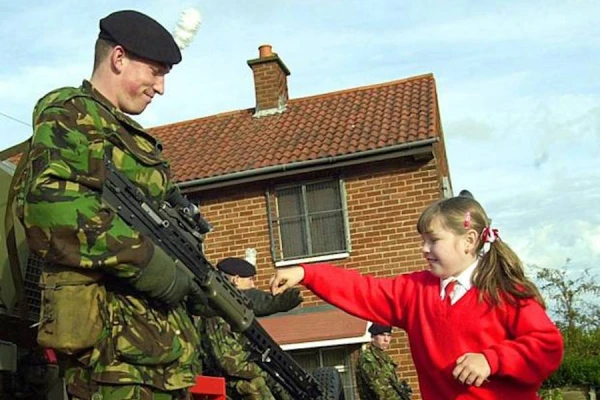
Protesters attempted to block the road leading to the school, forcing girls as young as four to run a terrifying gauntlet, with the help of the police, backed by the British Army. The children and their parents were showered with jeers and sectarian abuse, as well as stones and bottles.

The incident caught the attention of the global media and shocked observers because it occurred after the 1998 Good Friday Agreement, which many thought had ended the Troubles that had raged since the late 1960s.

“Looking back now, I think that the community living near the school — we’ll call them the unionist community — had reached a desperation point, where they felt that nobody really cared, and that there was nobody to defend their rights against their fears,” Troy told CNA.

“Their fears were very, very real: they were afraid that their houses would be attacked and taken over. There was a big shortage of housing. They had very little leadership.”

“Therefore when they ran out of options, they said, ‘The only way we can do this is that the perceived enemy is the nationalist community in Ardoyne, and they are bringing their children up and down to school. If we can disrupt that then we’re going to at least get some attention, and we may be able to do something about it.’ So they blocked the road.”

As the new local pastor, Troy had been appointed chair of the board of governors of Holy Cross Girls’ School. Tensions had flared around the school in June, before his arrival. As pupils prepared to return after the summer vacation, the priest had asked parents what they wanted to do. They told him they wished to bring their children to school via the front gate, and he agreed to lead them.  

On the second day, there were more ugly scenes. On the third, protesters threw a blast bomb — an improvised explosive device — towards the children and their parents. The children scattered in all directions while Troy held up his arms, urging parents not to panic.

Troy recalled that he was prepared to die rather than abandon the children.

“When I went back to Dublin, people used to say to me: ‘You’re mad. What in the name of God are you doing going up and down that road with those children?’ And they were throwing urine, this and that, and all sorts of terrible things. But you believed that those children were going to grow up and they were either going to know that they were as good as the next or they weren’t,” he said.

He added: “The bishop gave me a terrible tough time. He wanted me to tell the parents to bring them in through the back gate. And I said, ‘Well, if you’re telling me to do that, I’m taking the train back to Dublin tomorrow.’”

Troy feared most that if he backed down, then paramilitary groups would step in.

He said: “No one will ever know, thank God, but some of the paramilitaries might have taken it over and then it would have ended in bloodshed. And that’s what kept me walking, because I said: ‘This can be solved.’”

With the situation deteriorating, Troy realized that the two communities needed to find a communication channel. But reaching out might be regarded as an act of betrayal and, besides, it wasn’t clear who to talk to among the protesters.

Nevertheless, the priest began speaking to unionist leaders.

“And then some of the protesters were invited in, and they were terrible meetings. They were so bad, because the animosity, particularly against me as a Catholic priest, was horrendous,” he said.

“We stuck at it, and eventually, I remember handing over my mobile number to them and saying: ‘This is ridiculous. We keep meeting every two weeks. The children are suffering. You’re suffering.’”

The two sides met separately with politicians at Stormont, the Parliament Buildings in Northern Ireland. Slowly, a plan was formulated that would end the protests.

“On Nov. 23, 2001, the local community in Glenbryn had a meeting and by a very narrow majority, I believe, they agreed to suspend the action of blockade,” he said.

It would take two years to iron out the protocols enabling the girls to walk the route to school.

“Bit by bit by bit, it died down,” Troy recalled. “There was the occasional flare-up. Maybe at the beginning of the school year in September there would be a pipe bomb at the school gate. I know it sounds blasé, but that was minor in comparison to what we’d come through.”

Troy aimed throughout to ensure that no one felt that they were either a victor or a loser.

Speaking of the protesters, he said: “I had actually got to know one or two of them sort of by sight, and occasionally, just to nod to them and say hello. And one of them, his sister died very suddenly. Through the clergy I found his phone number and I called him and expressed my sympathy. Well, he didn’t know what to say and he didn’t know what to do.”

“That’s what I mean by saying, never rub salt in the wound and say: ‘This is a battle to the death till one side or the other wins.’”

“Now, I’m a football supporter. In sport, a draw’s no use. You have to win. But in reconciliation, you have to find a higher level, and that is where both sides can go on living, even though one side is right and one side is wrong.”

Only a minority of those involved in the conflict — both Catholics and Protestants — were weekly church-goers, Troy said, but nevertheless they were all shaped by Christianity.

“There was a sort of allegiance — even if it was only like a folk memory — to a higher value, which was the kingdom of God in some sense, of a church, a spiritual thing, and I could use that quite significantly,” he noted.

“When I was talking to them in the school hall, I could actually appeal to them morally. And that, I think, is a very powerful thing. It won’t always be a Christian thing. It won’t always be a very religious thing. But I do think you need to be able to lift the argument beyond where the argument started, or else it can never end.”

He added: “I found that Christianity was the platform that I used. I wore my habit every day. I never denied who I was. If they were going to kill me, they knew who they were killing.”

Today, almost 20 years on, Troy is pastor of St. Joseph’s, an English-speaking Catholic parish in Paris. He told CNA that he had been following the unrest in the United States after the killing of George Floyd in May. He was struck by both the similarities and differences to what he experienced in Belfast.

The 74-year-old priest said that between law enforcement and the government, on one side, and protesters, on the other, there needed to be a third group.

“You need within that somewhere — I don’t know who they would be, they might be religious people — somebody doing a little bit of what we were doing: talking across the divide,” he explained.

He continued: “The biggest thing of all in those situations is to keep listening and watching. And if you see a glimmer of light — it might be the most insignificant-looking thing — maybe that’s the breakthrough.”

“I don’t know enough to speak with any sort of certainty. But it breaks my heart to see what’s happening because it’s the exact same as Holy Cross in that sense: there are no winners in this.”

“Most of all, you need somebody with a prophetic voice. And oftentimes within any community there are prophets. And if we could find that, it’s extraordinary,” he observed.

Troy, who lived in the U.S. for two years in the 1980s while studying at the University of San Francisco, said that the deep historical roots of the unrest made reconciliation difficult. But he was hopeful because there was an “underlying spiritual awareness” in America.

“This is such a long-standing and such a deep issue that it is going to take a huge amount. But something has to be done to defuse the level it’s at the moment. It’s just terrible, night after night,” he said.

He recalled that peace only came to Northern Ireland after politicians dared to do “the unthinkable.” He gave the example of John Hume, the former SDLP leader who died Aug. 3, deciding to hold talks with Sinn Féin president Gerry Adams.

“That would be like asking the leaders of the protesters to talk to Donald Trump personally,” he said. “Somebody has to make a big move.”

He added: “If there’s any lesson out of Northern Ireland, it was that if everybody had stayed where they were then we would still be pouring blood down our streets, bombs would still be going off, and people would still be living in absolute misery at what was going on.”


[…]