No Picture
News Briefs

Pope Francis: Corrupt people can never be saints

February 8, 2018 CNA Daily News 1

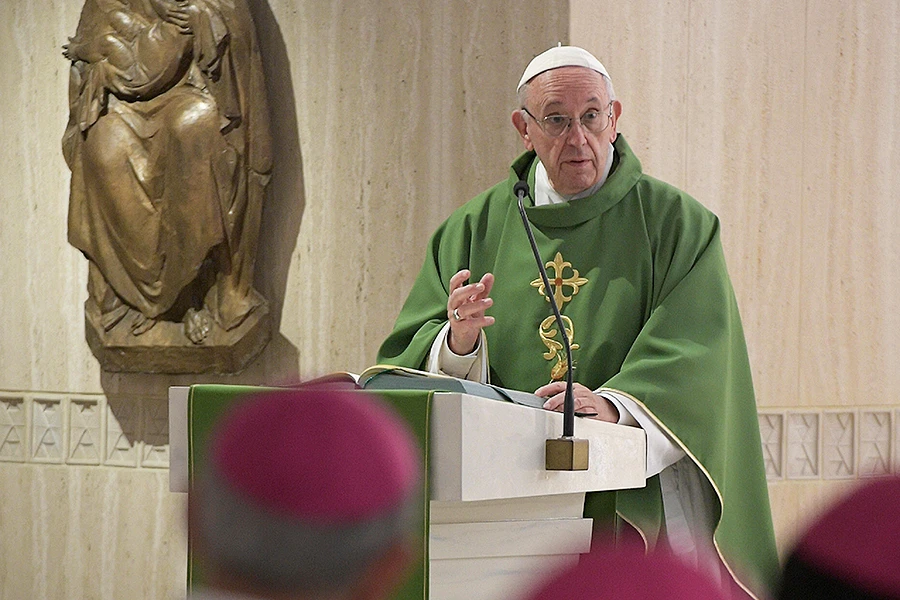
Vatican City, Feb 8, 2018 / 10:08 am (CNA/EWTN News).- In his daily homily Thursday Pope Francis drew a distinction between the biblical figures of David and his son Solomon, saying that, like David, sinners who repent are still able to become saints, but the corrupt will not achieve holiness.

“David was a saint. He was a sinner. A sinner, and he became a saint. Solomon was rejected because he was corrupt,” the Pope said Feb. 8, adding that “someone who is corrupt cannot become a saint.”

Speaking from the small chapel inside the Vatican’s Saint Martha guesthouse where he lives, the Pope centered his reflection on the day’s first reading from the First Book of Kings, which recounted how God became angry with Solomon for worshiping false gods that his wives believed in.

In the reading, God told Solomon that he would “deprive you of the kingdom.” However, for the sake of David’s righteousness, God said he would take it from Solomon’s son instead, leaving him only a small portion of his kingdom.

The reading recounted something “a bit strange,” Francis said, because God took away the kingdom from Solomon, but didn’t say whether he had committed any major sins. However, from scripture we know that David had difficulties and was a sinner.

Despite this fact, David is a saint, while Solomon – who at the beginning of his reign had been praised by God for seeking wisdom rather than riches – was condemned because his heart had “turned away from the Lord.”

This can be explained, Francis said, by the fact that David, knowing he had sinned, asked for forgiveness, whereas Solomon was praised throughout the world, but never recognized his fault when he distanced himself from the Lord and followed false gods.

“The heart of Solomon was not entirely with the Lord, his God, as the heart of David, his father, had been.”

Francis said the problem comes from a “weakness of heart,” which, he said isn’t like a typical sin that is recognized “immediately” after being committed. Rather, this sort of weakness, he said, is more subtle, and is “a slow journey that slides along step by step, step by step, step by step.”

“Solomon, adorned in his glory, in his fame, began to take this road,” he said, explaining that “the clarity of a sin is better than weakness of the heart.”

Despite being praised for his wisdom, “the great king Solomon wound up corrupted: serenely corrupt, because his heart was weakened,” the Pope said, adding that the same danger exists for every Christian.

A man or woman with a weak heart is “defeated,” he said, and “this is the process of many Christians, of many of us.”

While many people might be able to say “No, I haven’t committed grave sins,” Francis countered, asking “how is your heart? Is it strong? Does it stay faithful to the Lord, or does is it slowly sliding away?”

This subtle sliding away can happen to anyone, he said, saying the remedy to ensure this doesn’t happen is to always be “watchful” and vigilant.

“Guard your heart. Be watchful. Every day, be careful about what is happening in your heart,” he said, explaining that a person becomes corrupt “by following the path of weakness of the heart.”

Pope Francis closed his reflection telling the congregation to “guard your heart at all times” and to ask themselves how their relationship with the Lord is going, urging them to “enjoy the beauty and the joy of fidelity.”


[…]

No Picture
News Briefs

Holy Land pilgrimages on the rise, despite political tensions

February 7, 2018 CNA Daily News 0

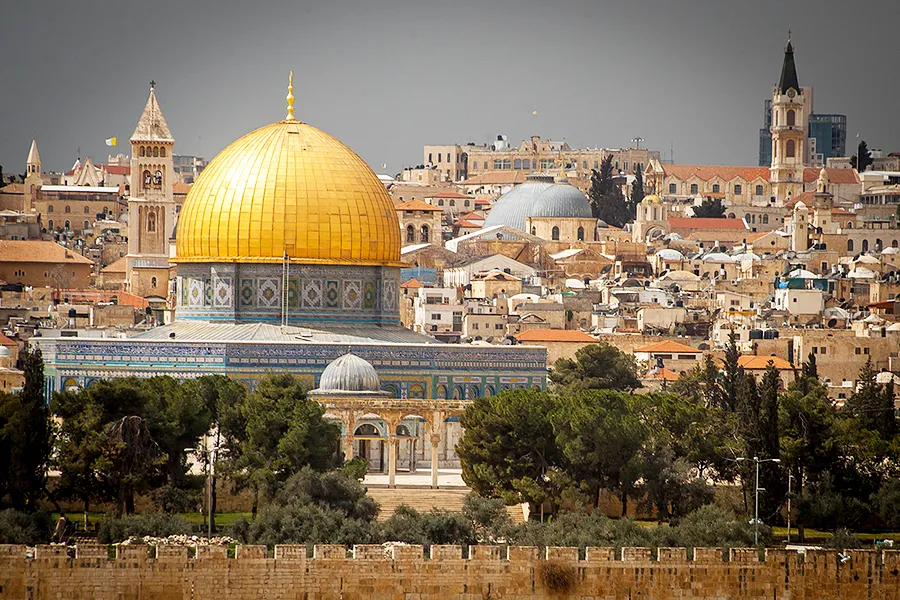
Denver, Colo., Feb 7, 2018 / 03:00 pm (CNA).- While the transition of the American embassy to Jerusalem has exacerbated regional tension in recent months, the number of Christian pilgrims traveling to the Holy Land has increased.

Last month 770 registered pilgrimage groups, some 26,000 people, visited Jerusalem, while 529 groups visited in the same time period last year, and 390 visited in January 2016. The statistics were recently released by Israel’s Christian Information Center,

A priest who recently took a group of young adults to the Holy Land told CNA that the pilgrimage was peaceful, and seemed to be unaffected by political tensions.

“The experience for everyone was very peaceful. You don’t necessarily experience any conflict in the environment,” said Father Daniel Cardo, pastor of Holy Name Church in Englewood, CO.

Sobhy Makhoul, deacon of the Maronite Patriarchate of Jerusalem, told Asia News that the rise in pilgrims began at the end of 2017. “Between November and mid-December there were many pilgrims, so many that for the first time we had to house some of them in the city like Hebron, almost 30 km south of Bethlehem,” he said.

There has also been a notable increase in pilgrims from China, Russia, and Eastern Europe, among them are many pilgrims from Eastern Orthodox churches, Makhoul told Asia News.

Makhoul also said that a peaceful reaction in Palestine to the US Embassy’s move from Tel Aviv to Jerusalem has reassured pilgrims that Israel is a safe place to travel.

He said that most people in the region want peace, and that most recognize the economic importance of pilgrimage trips.

Fr. Cardo told CNA that there is also a general respect in the region for the sacredness of pilgrimages to Holy Land, which he called the “father land” to many religions.

“People from the Holy Land, whether they are Christians or not, and actually a vast majority as we know aren’t Christians, recognize … the sacredness of the practice of pilgrimage,” he said.

“It is moving to me to see how many people, whether they are fully into the spiritual experience or not, are attracted to” sacred sites in the Holy Land, he said.

“The experience of going to Holy Sepulchre in particular … It’s just entering into a mystery, pointing to the place that reflects the mystery of God’s victory, but such a stark contrast, with the craziness of our humanity – the many languages [and] the noise of the place.”

Father Cardo encouraged more groups of Catholics to travel to the Holy Land. He said the experience allows pilgrims to envision the reality of  Scripture’s settings, and that pilgrimages help Christians in the Holy Land, who only make up a small fraction of the population.

“To visit Christian places and support local Christian businesses is a very important thing we have to do in order to maintain the life of the Church in those holy places,” he said.


[…]

No Picture
News Briefs

Colosseum to be lit red for persecuted Christians

February 7, 2018 CNA Daily News 0

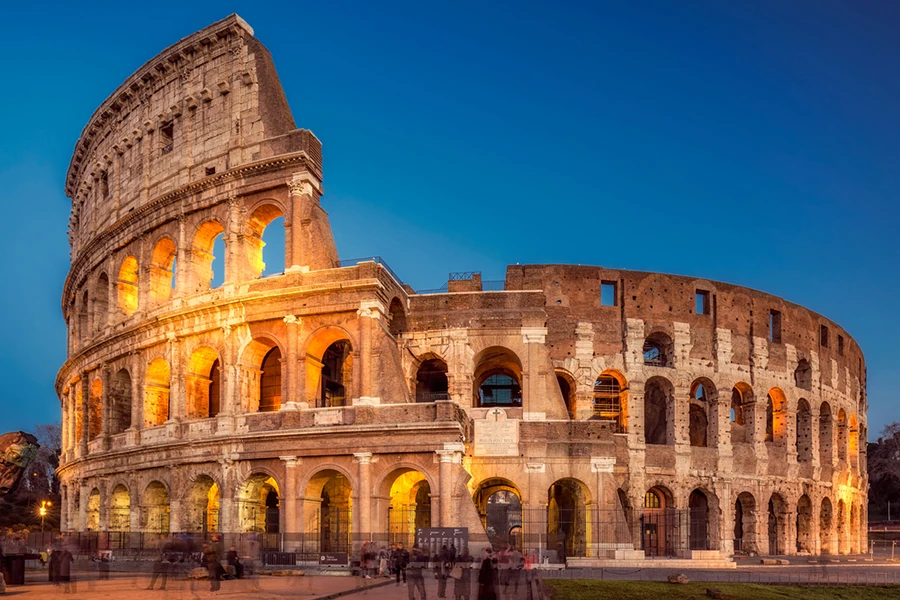
Rome, Italy, Feb 7, 2018 / 01:49 pm (CNA/EWTN News).- The Roman Colosseum will be illuminated by red lights later this month to draw attention to the persecution of Christians around the world, and especially in Syria and Iraq.

On Saturday, Feb. 24, at 6 p.m. the Colosseum will be spotlighted in red, to represent the blood of Christians who have been wounded or lost their lives due to religious persecution.

Simultaneously, in Syria and Iraq, prominent churches will be illuminated with red lights. In Aleppo, the St. Elijah Maronite Cathedral will be lighted, and in Mosul, the Church of St. Paul, where this past Dec. 24, the first Mass was celebrated after the city’s liberation from ISIS.

The event, sponsored by Aid to the Church in Need (ACN), follows a similar initiative last year, which lit-up London’s Parliament building in red, as well as the Basilica of the Sacred Heart in Paris and the cathedral in Manila, Philippines. In 2016, the famous Trevi Fountain in Rome was lit.

Alessandro Monteduro, director of ACN, told journalists Feb. 7 that the “illumination [of the Colosseum] will have two symbolic figures: Asia Bibi, the Pakistani Christian condemned to death for blasphemy and whose umpteenth judgment is expected to revoke the sentence; and Rebecca, a girl kidnapped by Boko Haram along with her two children when she was pregnant with a third.”

“One of the children was killed,” he said, “she lost the baby she was carrying, and then became pregnant after one of the many brutalities she was subjected to by her captors.”

Once she was freed and reunited with her husband, she decided she “could not hate those who caused her so much pain,” Monteduro said.

Aid to the Church in Need released a biennial report on anti-Christian persecution Oct. 12, 2017, detailing how Christianity is “the world’s most oppressed faith community,” and how anti-Christian persecution in the worst regions has reached “a new peak.”

The report reviewed 13 countries, and concluded that in all but one, the situation for Christians was worse in overall terms for the period 2015-2017 than during the prior two years.  

“The one exception is Saudi Arabia, where the situation was already so bad it could scarcely get any worse,” the report said.

China, Eritrea, Iraq, Nigeria, North Korea, Pakistan, Saudi Arabia, Sudan, and Syria were ranked “extreme” in the scale of anti-Christian persecution. Egypt, India, and Iran were rated “high to extreme,” while Turkey was rated “moderate to high.”

The Middle East is a major focus for the report.

“Governments in the West and the U.N. failed to offer Christians in countries such as Iraq and Syria the emergency help they needed as genocide got underway,” the report said. “If Christian organizations and other institutions had not filled the gap, the Christian presence could already have disappeared in Iraq and other parts of the Middle East.”

The exodus of Christians from Iraq has been “very severe.” Christians in the country now may number as few as 150,000, a decline from 275,000 in mid-2015. By spring 2017 there were some signs of hope, with the defeat of the Islamic State group and the return of some Christians to their homes on the Nineveh Plains.

The departure of Christians from Syria has also threatened the survival of their communities in the country, including historic Christian centers like Aleppo, ACN said. Syrian Christians there suffer threats of forced conversion and extortion. One Chaldean bishop in the country estimates the Christian population to be at 500,000, down from 1.2 million before the war.

Many Christians in the region fear going to official refugee camps, due to concerns about rape and other violence, according to the report.

ACN also discussed the genocide committed in Syrian and Iraq by the Islamic State and other militants. While ISIS and other groups have lost their major strongholds, ACN said that many Christian groups are threatened with extinction and would likely not survive another attack.


[…]

No Picture
News Briefs

Communist-backed Chinese paper weighs in on possible Vatican-Beijing deal

February 6, 2018 CNA Daily News 1

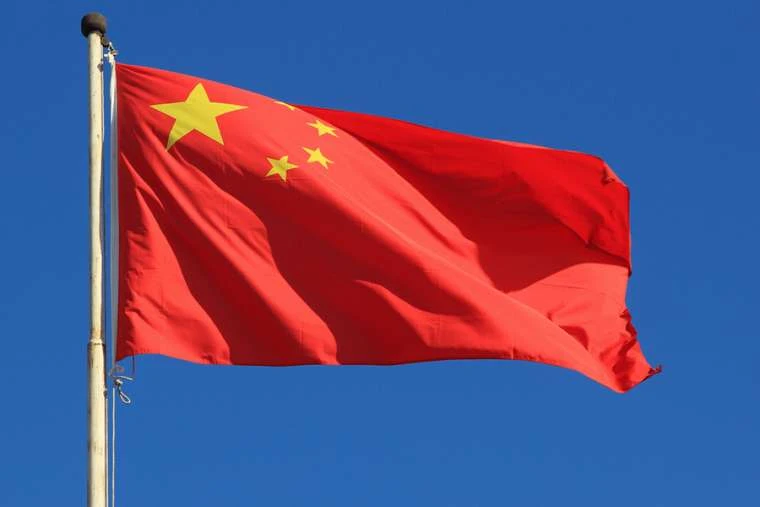
Beijing, China, Feb 6, 2018 / 02:01 pm (CNA/EWTN News).- A Chinese newspaper with close ties to the nation’s communist party has added its voice to the discussion of a possible agreement with the Vatican on the appointment of bishops.

The Global Times, a Chinese daily, published a Feb. 5 editorial advocating a possible Chinese agreement with the Vatican, and considering the possible implications for Taiwan of a Vatican agreement with the People’s Republic of China.

Published under the auspices of The People’s Daily, flagship of the largest newspaper group in China and an official newspaper of the Chinese Communist Party, the Global Times focuses on international issues, reporting from a communist perspective.

The editorial also said any agreement between the Vatican and Beijing would deal “a heavy blow” to the Democratic Progressive Party in Taiwan, since the Vatican is the nation’s “only ally” in Europe.

The Vatican is currently the only European state that maintains relations with Taiwan, also known as the Republic of China.

Mainland China broke ties with the Vatican in 1951 after communists overthrew the country’s nationalist government.

In 1957, the People’s Republic of China established the Chinese Patriotic Catholic Association to oversee Catholics in the country. Because the CPCA has appointed bishops independently of the pope, in collaboration with the Chinese government, relations with the Catholic Church have been difficult, with many churches closed and priests imprisoned. Chinese Catholics are only officially allowed to practice their faith in state-sanctioned churches.

Since the 1980s the Vatican and Beijing have loosely cooperated in episcopal appointments, however, the government has also named bishops without Vatican approval.

The result has led to a complicated and tense relationship between the patriotic association and the “underground Church,” which includes priests and bishops who are not recognized by the government.

Recently, reports have suggested that a Vatican-Beijing agreement on the appointment of bishops is “imminent” and could be announced in the next few months.

Some have voiced concern that should the Vatican establish official ties with Beijing, they would break relations with Taiwan, leaving them without a European ally. The Holy See is currently one of just 20 countries with full diplomatic relations with Taiwan.

CNA contacted the Taiwanese embassy to the Holy See for comment on the possible deal, however, they were not available for comment.

In their editorial, the Global Times said the question regarding Taiwan “isn’t Beijing’s top concern” when dealing with the Vatican, since the mainland “has many tools to pressure Taiwan.”

However, the communist newspaper said a deal between China and the Vatican would be “tremendously beneficial to Catholics.”

“As a result of changes in secular political patterns, disputes are inevitable in the history of religion, and may evolve into religious splits in many circumstances,” the paper said, noting that the Holy See was able to reach a consensus with Vietnam on bishop appointments, so an agreement with China on the issue “would reflect Catholics’ ability to adapt to changes.”

The paper said Beijing has been “patient” in negotiations with the Vatican and has “stuck to principle” while also managing differences. And despite what the paper called a “difficult process,” it said most non-Catholics in China “have never been strongly against the Vatican. The Chinese public generally respects each Pope.”

“Beijing and the Vatican will establish diplomatic relations sooner or later. We believe Beijing’s diplomats can manage the negotiations well, taking account of the national interest and the religious beliefs of Catholics.”

Pope Francis, the paper said, has a positive image with the Chinese public, and “it is expected he will push China-Vatican ties forward and solve related problems with his wisdom.”

In a separate Feb. 6 analysis , The Global Times cited the possibility that the Vatican and China could use the Vatican’s agreement with Vietnam on bishop appointments as an example for how to shape their own deal.

Implemented by Cardinal Pietro Parolin, now Secretary of State, in 1996, the Vietnam model requires bishop candidates to be approved by the Vatican and Vietnam, with the Holy See proposing three bishops to the Hanoi government, and Hanoi making the final choice.

This approach has long been considered a model for a Vatican-Beijing deal, and as the possibility of an agreement takes clearer shape, the theory seems more likely.

According to the Global Times, Yan Kejia, director of the Institute of Religious Studies at the Shanghai Academy of Social Sciences, said it’s too early to tell what exactly the deal between China and the Vatican will look like, but a “special mechanism” ought to be put into place to help avoid confusion and the possible breach of the agreement in the future.


[…]

No Picture
News Briefs

Vatican official praises China for witness to Catholic social teaching

February 6, 2018 CNA Daily News 0

Vatican City, Feb 6, 2018 / 12:45 pm (CNA/EWTN News).- The chancellor of the Pontifical Academy of Social Sciences has said that China is exercising global moral leadership in the principles of Catholic social teaching and defense of human dignity.

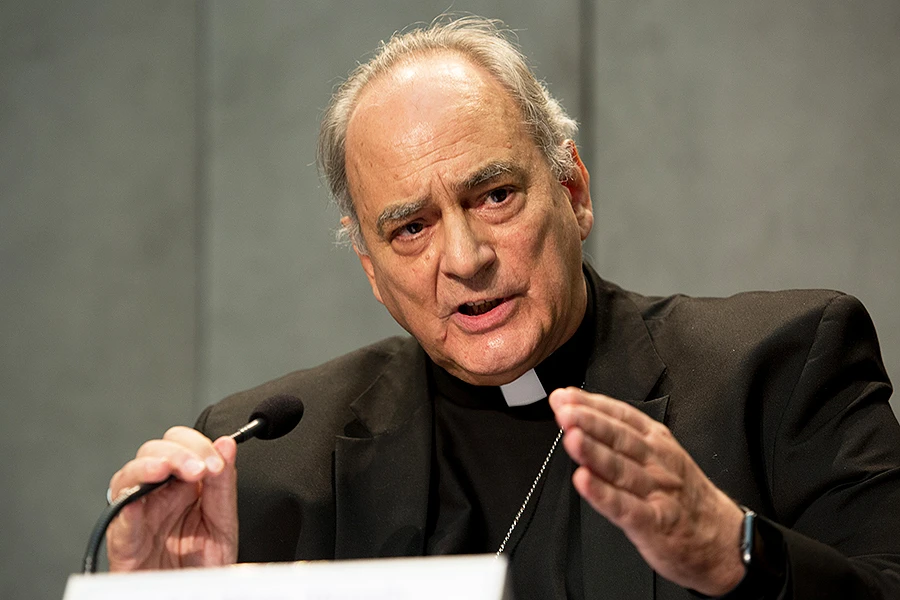
Bishop Marcelo Sanchez Sorondo, an Argentinian, is chancellor of the Pontifical Academy of Sciences and the Pontifical Academy of Social Sciences. In an interview with Vatican Insider, he recently said that “at this moment, those who best realize the social doctrine of the Church are the Chinese.”

Sorondo told Vatican Insider that he had recently visited China, where he says he found that “they [the Chinese] seek the common good, subordinate things to the general good.”

“I found an extraordinary China; what people do not know is that the central Chinese principle is ‘work, work, work.’ …As Paul said: ‘he who does not work, who does not eat.’ You do not have shantytowns, you do not have drugs, young people do not have drugs. There is a positive national consciousness, they want to show that they have changed, they already accept private property,” he said of his trip.

The bishop said that the People’s Republic of China has “defended the dignity of the human person,” and, in the area of climate change, is “assuming a moral leadership that others have abandoned.”

Sorondo criticized the United States, where, he said, the economy dominates politics. “How is it possible that oil multinationals manage Trump,” he asked.

“Liberal thought has liquidated the concept of the common good, they do not even want to take it into account, it affirms that it is an empty idea, without any interest.” On the other hand, he said, the Chinese propose work and the common good.  

The bishop said that “China is evolving very well,” adding that “you can not think that the China of today is the China [during the pontificate of] John Paul II or the Russia of the Cold War.”

In October 2017, the US Congressional-Executive Commission on China criticized the country’s human rights practices.

The commission condemned “the Chinese government and Communist Party’s continued efforts to silence dissent, criminalize activities of human rights lawyers, control civil society, suppress religious activity, and restrict the operations of foreign media outlets, businesses, and nongovernmental organizations (NGOs) over the past 12 months”

“Nothing good happens in the dark,” Congressman Chris Smith (R-NJ) said in an October statement on China. “That is why the Administration should shine a light on the Chinese government’s failures to abide by universal standards, shine a light on the cases of tortured and abused political prisoners, shine a light on China’s unfair trade practices and still coercive population control policies.”


[…]