No Picture
News Briefs

Relic of St Clement found in trash settles into Westminster Cathedral

June 19, 2018 CNA Daily News 0

London, England, Jun 19, 2018 / 03:24 pm (CNA/EWTN News).- A relic discovered last year by a U.K. waste management company found a home Tuesday in London’s Westminster Cathedral.

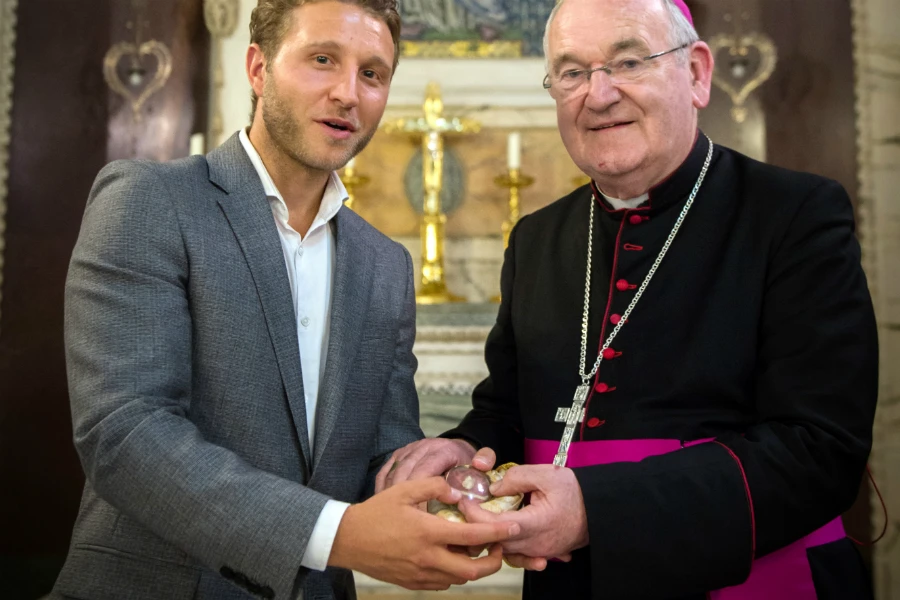
“Choosing an appropriate resting place was very important to us,” said Enviro Waste Owner James Rubin in a statement on the company’s website. “Therefore, we think Westminster Cathedral is the best and safest place for the bone due to its importance to the church and to ensure that it won’t get lost again!”

Rubin presented the relic to Archbishop George Stack of Cardiff at the cathedral’s Lady Chapel June 19. Archbishop Stack is chair of the English and Welsh bishops’ patrimony committee.

The relic will be displayed in the Treasures of Westminster Cathedral Exhibition.

The bone fragment is encased in a wax-sealed case and includes an inscription that it is “from the bones of St. Clement, Pope and Martyr.”

St. Clement was a first-century Christian thought to have been a disciple of Sts. Peter and Paul.

It is believed that St. Clement converted from Judaism to Catholicism, and may have shared in some of the missionary journeys of St. Peter or St. Paul, and assisted them in running the Church at the local level.

Around the year 90, he was raised to the position of Pope, following Peter, Linus, and Cletus. His writings reveal much about the early Church, but little about his own life.

According to one account, he died in exile during the reign of the Emperor Trajan, who purportedly banished Clement to Crimea and had him killed in retaliation for evangelizing the local people, around the year 100. He is among the saints mentioned in the Roman Canon.

In 868, the Greek missionary St. Cyril claimed to have recovered St. Clement’s bones.

Enviro Waste conducted public research before deciding what to do with the relic. They posted about it on their website blog in April, requesting input from viewers.

“650+ suggestions and over 9,000 visits to the page” later, the updated post said, they decided that the Westminster Cathedral in London should have it.

The relic’s owner has said it was stolen from his car when it was broken into, and agreed to loan it permanently to Westminster Cathedral.

Vice Chair of the patrimony committee of the Catholic Bishops’ Conference of England and Wales Sophie Andreae was the one who reached out to Enviro Waste, requesting the relic’s placement be in the cathedral.

She explained to the BBC why relics are important to Catholics.

“Catholics feel that they have not just a link with a very holy person from the past, but also a link with the divine,” Andreae said.

[…]

No Picture
News Briefs

‘How many times can our hearts break?’ Bishop of Trenton asks after shooting

June 18, 2018 CNA Daily News 1

Trenton, N.J., Jun 18, 2018 / 07:00 pm (CNA).- The Bishop of Trenton condemned gun violence and called for prayer in a statement following a shooting early Sunday that left one dead and 22 injured.

“The epidemic of gun violence has struck once again, this time close to home,” Bishop David M. O’Connell of the Diocese of Trenton said in a statement Sunday.

“The people of Trenton awoke this morning to the tragic news that twenty of our brothers and sisters – our families, neighbors and friends – were injured during a mass shooting in the early hours of Sunday morning…”  he said.

According to reports from authorities, the shooting happened around 2:45 a.m. on Sunday, June 17 at the Art All Night-Trenton festival, a 24-hour art exhibit that has been displayed annually for 12 years.

A 33 year-old man, Tahaij Wells, was reportedly identified as a suspect and shot and killed by police. Wells had just been released from prison on homicide-related charges, according to CNN. Another man, Amir Armstrong, 23, has also reportedly been charged in connection to the incident.

“We pray for the injured and their families, for comfort and healing. We pray in thanksgiving for the first responders and emergency workers. And we pray for our community here in Trenton that God’s peace and our love for one another might prevail,” O’Connell said.

O’Connell’s sentiments echo those of bishops throughout the country who have found themselves looking for words to comfort their grieving communities in the wake of mass shootings.

He joins numerous other bishops who have had to respond to similar tragedies in the months since the October 2017 Las Vegas shooting, which killed 58 people and left hundreds more injured, and has been called the deadliest mass shooting in modern American history.

“Our hearts go out to everyone,” Bishop Joseph A. Pepe of Las Vegas said in his response to that shooting. He offered prayers for the victims and their families, as well as the first responders and all involved in the incident.

He added that he was “very heartened’ by the stories of the Good Samaritans amidst the tragedy, and prayed for an end to violence throughout the world.

The following month, at least two bishops responded to shootings in their dioceses, including  Archbishop Gustavo Garcia-Siller of San Antonio, Texas, who offered his prayers and condolences following the shooting at the First Baptist Church in Sutherland Springs, which killed 26 people.

“We need prayers! The families affected in the shooting this morning at the First Baptist Church in Sutherland Springs need prayers. The evil perpetrated on these who were gathered to worship God on the Lord’s Day – especially children and the elderly – makes no sense and will never be fully understood,” Garcia-Siller said at the time.

The following week, Bishop Jaime Soto of Sacramento led the U.S. bishops’ general assembly in prayer following a shooting in his diocese in which at least four people and several more were  injured at several sites in and around Ranch Tehema Reserve, a small community located about 130 miles northwest of Sacramento.

“I would ask if we could take a moment to ask God’s mercy not only on those affected by this [incident], but on all affected by gun violence in these times. Let us ask for Mary’s intercession for these people,” he said Nov. 14, before leading the bishops in the Hail Mary.

In January 2018, Cardinal Daniel DiNardo, president of the United States Conference of Catholic Bishops, and two other bishops responded to two school shootings that occurred within the same week, one in Texas and one in Kentucky.

On Jan. 22 at Italy High School in Italy, Texas, about 50 miles south of Dallas, a teenage girl was injured in a shooting.

On Jan. 23, a student opened fire at Marshall County High School in Benton, Ky., about 120 miles southwest of Owensboro, killing two students and injuring 20 others.

The shootings were “painful reminders of how gun violence can tragically alter the lives of those so precious to us – our school children,” DiNardo said in a statement at the time.

Bishop William Medley of Owensboro offered his prayers for the victims as well as for the shooter in the Marshall County shooting. “May the Lord bring comfort to the family who lost their loved one today, and to all of the students and their families who have to endure the aftermath of this school shooting. Let us all pray for peace across our nation,” he said in a Jan. 23 statement.

In response to the Benton shooting, Archbishop Joseph Kurtz of Louisville offered his “deepest sympathies to the families of the victims and their friends, teachers and staff as well as the first responders and the whole community of Benton.”

“We know that God’s love overcomes all evil. May the souls of the departed rest in peace and may God’s merciful love sustain the victims and those who love and support them as they heal from the physical and emotional wounds of this senseless act of violence,” Kurtz added.

In February of this year, Archbishop Thomas Wenski of Miami urged unity and strength in his diocese following a shooting at Marjory Stoneman Douglas High School in Parkland which killed 17 students and injured dozens more.

“We pray for the deceased and wounded, for their families and loved ones, for our first responders and our entire South Florida community,” Wenski said at the time. He urged all Floridians to come together as a community, remain strong, and “resist evil in all its manifestations.”

Following the Parkland shooting, Bishop Frank J. Dewane of Venice, Fla., and Bishop George V. Murry, S.J., of Youngstown, Ohio, also issued a joint statement calling for “common-sense gun measures” and dialogue about specific proposals that could reduce gun violence, improve school safety and improve access to mental health resources.

In May, DiNardo once again responded to a mass shooting, this time in his own diocese, when a shooter at Santa Fe High School outside of Houston killed 10 and injured 13 others.

“Sadly, I must yet again point out the obvious brokenness in our culture and society, such that children who went to school this morning to learn and teachers who went to inspire them will not come home,” he said. “We as a nation must, here and now, say definitively: no more death! Our Lord is the Lord of life. May He be with us in our sorrow and show us how to honor the precious gift of life and live in peace.”

Prayer as a response to shootings or other deadly incidents has in recent years been criticized by some commentators, called pointless or secondary in comparison to advocacy for gun control policies or mental health resources.

The day after a shooting in San Bernardino, Calif. killed 14 on Dec. 2, 2015, the cover of the New York Daily News said “God isn’t fixing this” – a response to politicians and public figures who offered “thoughts and prayers” after the tragedy, but allegedly took insufficient action to prevent such shootings from occurring in the future.

However, Monsignor Robert Weiss, who was pastor in Newtown, Connecticut in December 2012 when a shooter killed 11 children at an elementary school, has said that turning to God is a necessary part of the response to tragedy.

“To whom do you go? Do you rely on yourself? Because there’s no way you can individually handle these kinds of experiences,” he told CNA in a 2017 interview following the Las Vegas shooting. He recalled professionals telling him in the wake of the Sandy Hook shooting that “we can only do so much for these people” to help them heal from the tragedy.

“There is only one place to turn, and it’s to turn to the Lord and find some sort of understanding of this,” he said.

Police in Trenton have said that Sunday’s shooting seems to be gang-related, and not an act of terrorism.

“There is no motive, however, that can justify these ongoing, seemingly relentless acts of gun violence plaguing our cities.  How many times can our hearts break?” O’Connell said. “Once again, we fall to our knees to beg the Almighty to help us end these senseless assaults on innocent life in our communities.”    


[…]

No Picture
News Briefs

Ceasefire reached in Nicaragua crisis as Church-mediated talks resume

June 18, 2018 CNA Daily News 0

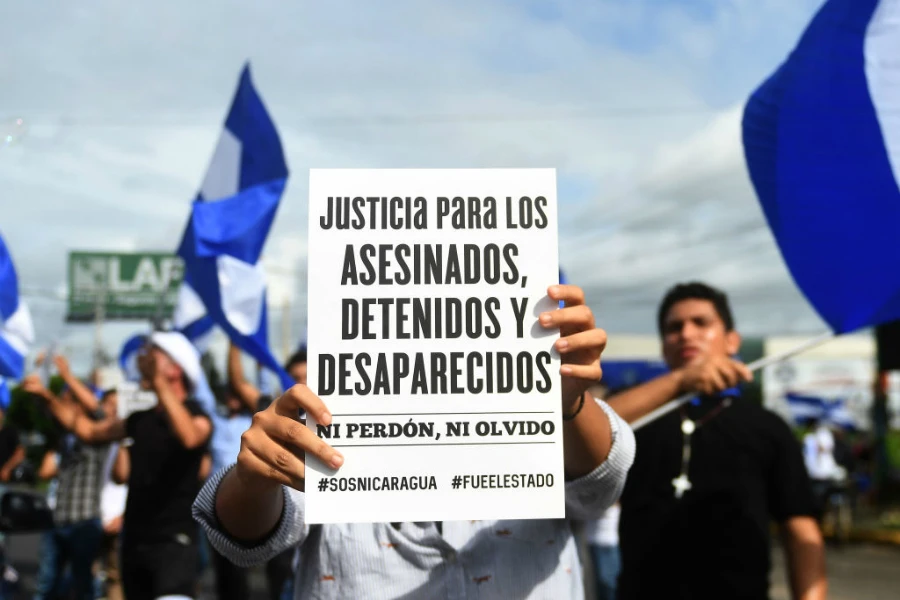
Managua, Nicaragua, Jun 18, 2018 / 05:02 pm (ACI Prensa).- The Nicaraguan government and opposition groups agreed Friday to a truce during talks mediated by the Nicaraguan bishops, after nearly two months of protests that have left 170 dead.

Nevertheless, at least eight people died in violent incidents across Managua, the Nicaraguan capital, the following day.

The bishops of Nicaragua reconvened a national dialogue June 15 to make known the response of president Daniel Ortega to the proposals he was given in order to end the crisis. The talks (which began May 16) had been suspended May 23 for lack of consensus.

A 24-hour general strike had closed many businesses June 14, though some violent clashes were reported. Bishop Silvio José Báez Ortega, Auxiliary Bishop of Managua, said a 15-year-old altar boy had been shot and killed by security forces.

Protests began April 18 after Ortega announced social security and pension reforms. The changes were soon abandoned in the face of widespread, vocal opposition, but protests only intensified after more than 40 protestors were killed by security forces initially.

The Church in Nicaragua was quick to acknowledge the protestors’ complaints. Barricades and roadblocks are now found throughout the country, and clashes frequently turn lethal.

Participating in the talks June 15 were representatives of the government, private businesses, students, universities, civil society, workers, rural residents, evangelical ecclesial communities, indigenous communities, and people of African descent. They were overseen by Cardinal Leopoldo José Brenes Solorzano of Managua.

The ceasefire agreement calls for the establishment of a truth commission, the presence of international observers from several groups, and the removal of roadblocks.

The truth and security commission is to “verify if an atmosphere of peace and security exists for all Nicaraguans,” according to a communique from the National Dialogue, and to investigate all deaths and violence, and to identify those responsible.

The commique added that “process of the the democratization of the country, which includes the agenda items presented to the President of the Republic by the Bishops’ Conference on June 7” will be among the conditions of continuing dialogue.

Their June 7 statement had said that dialogue could not resume while Nicaraguans continue to be denied the right to demonstrate freely and are “repressed and assassinated.”

Despite the signing of the ceasefire, a family of at least six died in an arson attack on their home and business in Managua June 16. Opposition groups have said a pro-government militia was responsible for the blaze, a charge the government has denied.

Two more people in Managua were killed the same day in incidents “attributed to masked pro-government groups backed up by armed police,” the BBC reported.

Bishops and priests across Nicaragua have worked to separate protestors and security forces, and have been threatened and shot.

The Nicaraguan government has suggested that protestors are killing their own supporters so as to destabilize Ortega’s administration.

The pension reforms which triggered the unrest were modest, but protests quickly turned to Ortega’s authoritarian bent.

Ortega has shown resistance to calls for elections to be held early. His term is scheduled to end in 2021.

Ortega has been president of Nicaragua since 2007, and oversaw the abolition of presidential term limits in 2014.

He was a leader in the Sandinista National Liberation Front, which had ousted the Somoza dictatorship in 1979 and fought US-backed right-wing counterrevolutionaries during the 1980s. Ortega was also leader of Nicaragua from 1979 to 1990.


This article was originally published by our sister agency, ACI Prensa. It has been translated and adapted by CNA.

[…]

No Picture
News Briefs

What are the new border policies? A CNA explainer

June 18, 2018 CNA Daily News 3

Washington D.C., Jun 18, 2018 / 03:57 pm (CNA).- In recent weeks, changes to the U.S. enforcement of immigration policy have made headlines, as an effort to pursue criminal prosecution has led to family separations.

What exactly are the new policies? How did the changes come about? And how have Church leaders responded?


In May 2018, Attorney General Jeff Sessions announced a “zero tolerance” policy that seeks to criminally prosecute 100 percent of immigrants who are caught crossing the border illegally.

Until that policy was announced, people caught crossing the border illegally were sent to an immigration judge, who would determine whether they would be deported. While waiting for a hearing, they would be held in immigration detention centers, or – due to lack of resources or legal limits on how long certain types of immigrants could be detained – be given a court date and released.

The Trump administration’s decision to pursue criminal prosecution means that immigrants are held in a federal jail until they go before a federal judge, who must determine whether immigrants will receive prison sentences for crossing the border illegally.  

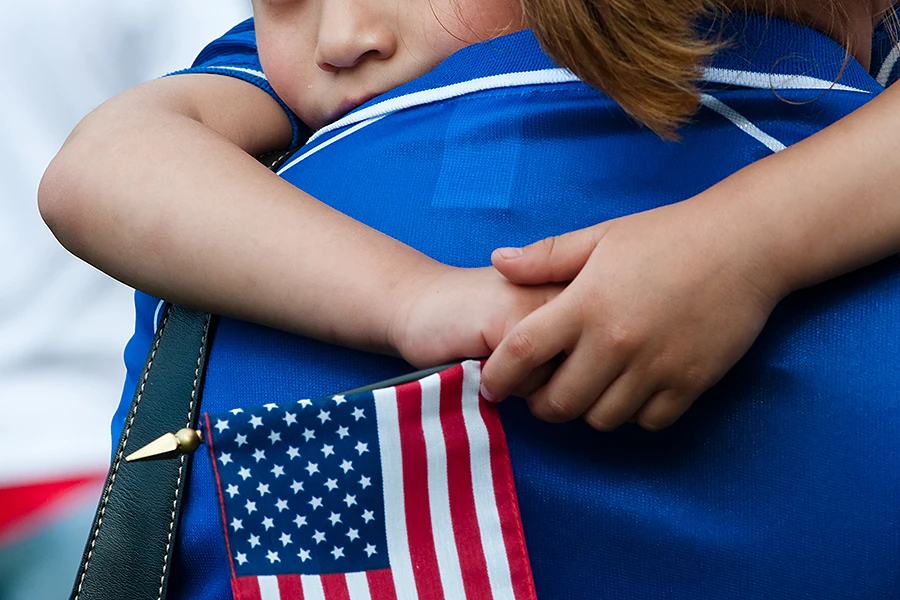
This shift to the criminal justice system is what leads to family separation, because children cannot be held legally in a federal jail with their parents.

The family separation policy has been described by Sessions as a deterrent to illegal immigration. “If you don’t like that, then don’t smuggle children over our border,” he said May 7.

Once the children are separated from their parents, they are classified as unaccompanied minors and placed in the custody of the Department of Health and Human Services’ Office of Refugee Resettlement. The children are kept in government facilities while arrangements are made to release them to a relative in the country, if one can be identified, or to place them in foster care, while their parents’ immigration case moves forward.

According to the Department of Homeland Security, some 2,000 immigrant children have been separated from their parents in recent months. They are held along with detained minors who crossed the border unaccompanied by an adult.

In total, it is estimated that upwards of 10,000 migrant children are currently being held in over 100 shelters, which are at 95 percent capacity, according to a McClatchyDC report. The Department of Health and Human Services is reportedly considering the construction of “tent cities” to hold the children.

The Bush administration had enacted a similar “zero tolerance” policy to criminally prosecute illegal border crossings. However, it made an exception for unaccompanied minors or families with children. The Obama administration enacted zero tolerance for a short period, but did not separate families as a matter of policy.

Critics of previous administrations warned that legal exceptions for families, children, and asylum seekers created loopholes that could be abused by immigrants to cross the border without facing criminal prosecution, for example, that would-be migrants might travel with children unrelated to them and falsely claim to be a family. Critics also said that family loopholes could enable, or even encourage, child trafficking. President Donald Trump has said that he wants to close these loopholes.

However, immigration and human rights advocates say they are concerned that, like other families illegally crossing the border, asylum-seeking families are also being separated.  

The right to claim asylum is recognized by international law. To claim asylum in the U.S., one must show a well-founded fear of persecution in his home country, on the grounds of race, religion, nationality, political opinion, or particular social group.

An individual can make an asylum claim at a U.S. port of entry. A judge will then determine whether to accept the asylum claim.

However, reports indicate that some people attempting to claim asylum legally at the border are turned away repeatedly, told that the system is unable to accept new applications to be processed. While prohibiting someone from making an asylum appeal is illegal under international law, delaying a claim, which essentially denies that it be made, is a legal grey area.

People can also claim asylum by crossing the border illegally and then turning themselves in to officials. While the act of crossing the border in this case is illegal, the right to claim asylum is still valid, under international law.

Immigration advocates and human rights groups say that legitimate asylum applicants are forced to cross the border illegally in order to make their claims, and are then separated from their children for breaking the law.

The United Nations has condemned the practice of family separation as “a serious violation of the rights of the child,” which “amounts to arbitrary and unlawful interference in family life.”

The U.S. bishops have been vocally opposed to the new policy, as well as a recent move to remove gang violence and domestic abuse from the list of asylum claims that will be accepted as valid.

Bishop Joe S. Vásquez of Austin, chair of the U.S. bishops’ committee on migration, has stressed that “Rupturing the bond between parent and child causes scientifically-proven trauma that often leads to irreparable emotional scarring.”

Cardinal Daniel DiNardo of Galveston-Houston stressed that the U.S. government “has the discretion in our laws to ensure that young children are not separated from their parents and exposed to irreparable harm and trauma.”

Because families are “the foundational element of our society,” they “must be able to stay together,” he said. “While protecting our borders is important, we can and must do better as a government, and as a society, to find other ways to ensure that safety.”


[…]

No Picture
News Briefs

In Western Europe, Christians who don’t go to church outnumber those who do

June 18, 2018 CNA Daily News 0

Rome, Italy, Jun 18, 2018 / 03:15 pm (CNA/EWTN News).- Most Western Europeans identify as Christian, but say they do not, or seldom, attend church services – outnumbering those Christians who do attend church, a survey from the Pew Research Center has reported.

Released May 29, results found in 12 of the 15 surveyed Western European countries, non-practicing Christians (defined as those who self-identify as Christian but report attending church services less than once per month) made up the largest religious group, beating out both religious “nones” and churchgoing Christians.

The telephone survey was conducted in mid-2017 with more than 24,000 participants from Austria, Belgium, Denmark, Finland, France, Germany, Ireland, Italy, the Netherlands, Norway, Portugal, Spain, Sweden, Switzerland, and the United Kingdom.

The median percentage of the population of Western Europe identifying as Christian was 71 percent, though only 22 percent of Western Europeans attend church at least monthly. Across all 15 countries surveyed, the median percent of those who had been baptized was 91, and 81 percent reported they were raised Christian.  

Median percentages were analyzed across the 15 surveyed countries to gain a view of the region overall, though countries varied in total Christian identification by as much as 42 percentage points.

Countries such as Italy, Portugal, and Ireland reported total Christian identification around 80 percent, while Norway and Sweden reported Christian identification at slightly above 50 percent.

In every country surveyed except the Netherlands and Norway, where the religiously unaffiliated are the largest religious group, non-practicing Christians make up the majority of Europe’s Christians. Italy is also an exception, where non-practicing Christians and church-attending Christians are split.

Non-practicing Christians in Western Europe were also found to outnumber people of all other religions combined.

The 71 percent Christian identification of Western Europe matches up with Christian identification in the United States. Western Europe also parallels the United States’ declining rates of Christians overall and the increase in “nones.”

Particularly in Belgium, Norway, the Netherlands, Spain, and Sweden, the difference in the percentage of the population raised Christian versus the percentage of the population who still practices Christianity is a difference of 22 to 28 percent.

In the same countries, the percentage of people who now identify as religiously unaffiliated is between 21 and 28 percentage points higher than those raised without a religion.

In comparison to the U.S., however, religious fervor overall in Western Europe is significantly lower. While close to half of Americans say religion is “very important” in their lives, the median percentage of Western European adults who say the same is 11.

This difference becomes even more marked between American Christians and European Christians. Sixty eight percent of American Christians report religion is very important to them, compared with only 14 percent of Western European Christians.

The Pew survey on Western Europe also compared the attitudes of non-practicing Christians, church attending Christians, and the religiously unaffiliated on certain political, cultural, and religious issues, such as views toward immigrants, religious minorities, nationalist sentiment, abortion, and same-sex marriage.

On some issues, the views of non-practicing Christians were found to align more closely with religious “nones,” while on others they aligned more closely with church attending Christians.

Most non-churchgoing Christians reported belief in God or a higher power and had favorable views toward churches and other religious organizations.

On abortion, same-sex marriage, and the role of religion in government, a majority of both non-practicing Christians and the non-religious said they support legal abortion in all or most cases and support legalizing same-sex marriage. They also think religion should be kept out of government policies.

[…]