No Picture
News Briefs

After new appointments, will Pope Francis’ stalled curial reform start moving?
July 11, 2018 CNA Daily News 1

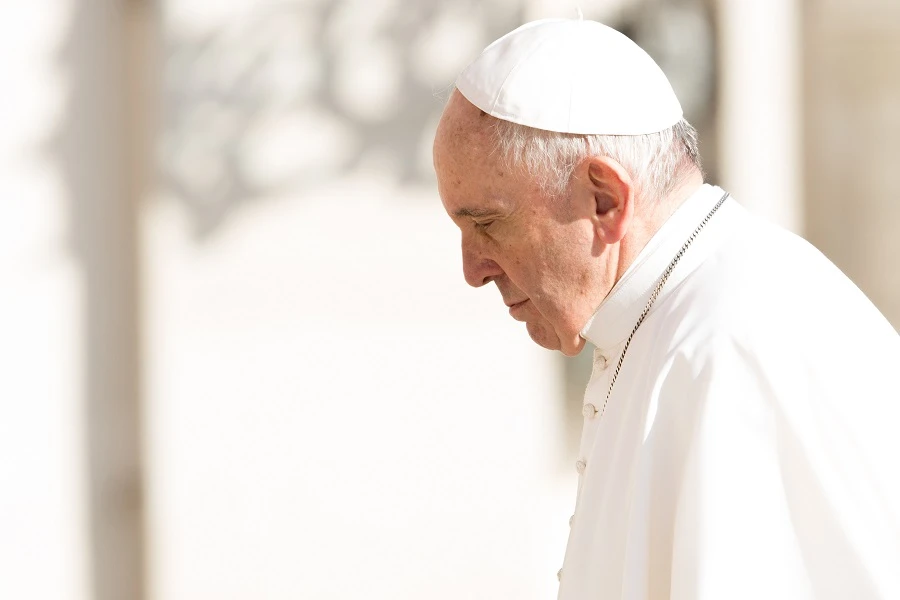
Vatican City, Jul 11, 2018 / 01:15 pm (CNA).- A long-time priority of Pope Francis, curial reform – specifically the overhaul of Vatican finances and communications – has been hanging by a thread for the past few years, and some wonder about the pope’s ability to make any meaningful or lasting changes in the Vatican’s way of doing business.

Observers seem to be underwhelmed at the progress Francis has made on major governance issues, among them financial oversight and sexual abuse policy. Some insiders have noted a palpable sense of confusion about what the pope’s reforms are meant to be, and where exactly they are going.

Since June 2017, the man tasked with leading the Vatican’s financial reform, Australian Cardinal George Pell, has been on leave, and is now preparing to face a historic trial for accusations of sexual abuse in his homeland. Some observers have argued that even when Pell was working at full-strength, the financial oversight structures Francis put into place were so tangled by internal power grabs that pursuing meaningful progress had become a delayed goal.

The pope’s communications overhaul seemed to be in shambles after the man charged with overseeing the process, Msgr. Dario Edoardo Vigano, stepped down amid the fallout of March’s “Lettergate” fiasco.

In recent months Francis has also come under fire for inaction on the topic of clerical sexual abuse, specifically in Chile.

Accused of insulting victims and ignoring their complaints, the pope had a major turnaround on the situation in Chile after receiving fresh evidence against a leading abuser priest in the country and launching an investigation which yielded findings frightening enough to make the pope stop dead in his tracks and speed into reverse.

But one of Pope Francis’ closest aides over the past five years, newly-minted Cardinal Giovanni Angelo Becciu, who is leaving the Secretariat of State for a new position as head of the Vatican’s office for canonizations, said recently that the pope’s reform still lacks an overall vision.

In comments to the press ahead of the June 28 ceremony in which he was given his red biretta, Becciu said that while many steps had been taken, it is still “too early” to give a comprehensive judgment on the Curial reform, since it is not yet finished.

An overall unifying vision is still missing, he said, explaining that “so far we’ve had elements, but not a unified idea.” This vision, he said, will likely be provided in the new apostolic constitution drafted by the pope’s nine cardinal advisors, called “Predicate Evangelium,” or “Preach the Gospel,” which has reportedly been completed and is now awaiting approval from Pope Francis.

A gloomy-seeming outlook for curial reform is often pinned on poor personnel decision-making at the Vatican. But two recent appointments to major posts could mark a turning point for Francis, and provide a much-needed morale boost for Catholics looking for the pope to clean house in Vatican offices.

The first of these is the appointment of a close Francis ally, Archbishop Nunzio Galantino, to take the reigns at the Administration of the Patrimony of the Holy See (APSA), which oversees the Vatican’s real estate holdings and investments.

During pre-conclave meetings in 2013, APSA was a key point in discussions on curial reform, as many cardinals recognized it had been being plagued by corruption and was in serious need of greater oversight.

Until Galantino’s June 26 appointment, APSA was led by Cardinal Domenico Calcagno, who has been accused of corruption and was, at one point, under investigation for charges of embezzlement in a previous diocese.

It took Francis more than five years to take action on APSA, which has been a sore spot for many who were hoping to see the pope crack down on financial issues. In a recent interview with Reuters the pope admitted that “there is no transparency” at APSA.

“We have to move ahead on transparency, and that depends on APSA,” he said in the interview. Many Vatican watchers are hopeful that Galantino will be able to bring in the accountability and oversight the office has typically resisted.

The second important personnel change is the appointment of Italian layman Paolo Ruffini as head of the Vatican’s communications office, making him the first layperson to lead a Vatican department, also called a dicastery.

Though Ruffini’s nomination was highly celebrated among Italians, who are pleased to have one of their own moving to such an important post, the new prefect is also seen as highly competent, bringing with him professional experience in journalism dating back to 1979.

Until his appointment Ruffini worked as the director of TV2000, the network of the Italian Bishops’ Conference, and he brings with him extensive experience in television, radio, and print, making him a choice perceived as a competent, well-rounded pick for the job.

Ruffini is considered to be in line with key priorities of the current pontificate, and his appointment can be read as follow-through on Pope Francis’ commitment to eradicate a clericalist mentality in the curia and to add more laypeople to the mix.

Despite the fact that Msgr. Dario Vigano, who headed the office until the “Lettergate” scandal, is expected to stay in the dicastery in the advisory role the pope gave him, observers are hopeful that at least some of the pope’s stubbornness in decision-making is gone, and that the days of poor personnel choices will be a thing of the past.

And with several decisions made that seem to indicate reform is moving in the right – or at least a better – direction when it seemed to be on the brink of failure, a natural question comes to mind: what changed?

Some believe the turning point was the pope’s reaction to the Chilean abuse crisis. After initially defending the bishop at the center of the debate, calling accusations of cover-up on the part of the bishop “calumny” and claiming that no evidence of the prelate’s guilt had been brought forward, Francis had a major turnaround when news came out that evidence had been presented years prior which he either never got, or potentially ignored.

It was a serious blow to Francis’ credibility in the fight against sex-abuse in the Church, and to his public image. Soon after he sent his top investigator on abuse to Chile to look into the situation, and after receiving a 2,300 page report, the pope issued a letter to Chilean bishops saying he had made “serious errors” in judging the situation due to a lack of “truthful and balanced information.”

Many observers pinned the blame on 84-year-old Chilean Cardinal Javier Francisco Errazuriz, who is a member of the pope’s nine-member Council of Cardinals and who has come under heavy fire from victims for covering up abuse while archbishop of Santiago, and for trying to discredit victims’ testimonies.

In his recent interview with Reuters, Pope Francis said his council of cardinal advisors, called the “C9” and whose mandate will be up in October, would be refreshed with new members.

Though such a decision is natural after term limits end, some observers have pondered whether the Chilean crisis and the accusations against Errazuriz, the absence of Cardinal Pell and separate accusations of financial misdealing on the part of Honduran Cardinal Oscar Maradiaga, also a member of the advisory team, have, to a certain degree, awakened Francis to the need to be more selective with his inner circle.

The answers to these questions, of course, are pure speculation, but if one thing can be said about the pope’s latest round of appointments, it’s that while his track record on reform efforts has not been the best, and while there are still loose ends to tie up, he is at least aware of the problems and he seems intent on making good on his promises, even if that does not happen immediately.

And if the first five years of Pope Francis’ curial reform have largely been seen as ineffective, the appointment of Ruffini and Galantino just might give the flicker of hope needed for Catholics to decide that the jury is still out on the long-term process. However, as with any reform, really only time will tell.
 

[…]

No Picture
News Briefs

Calls to ban or regulate ‘Orange walks’ after priest spat on in Scotland

July 11, 2018 CNA Daily News 1

Glasgow, Scotland, Jul 11, 2018 / 12:18 pm (CNA/EWTN News).- After a priest was spat at, verbally abused, and lunged at with a pole while an “Orange walk” passed by his parish in Glasgow Saturday, there have been widespread calls to regulate further or to ban outright the Protestant processions.

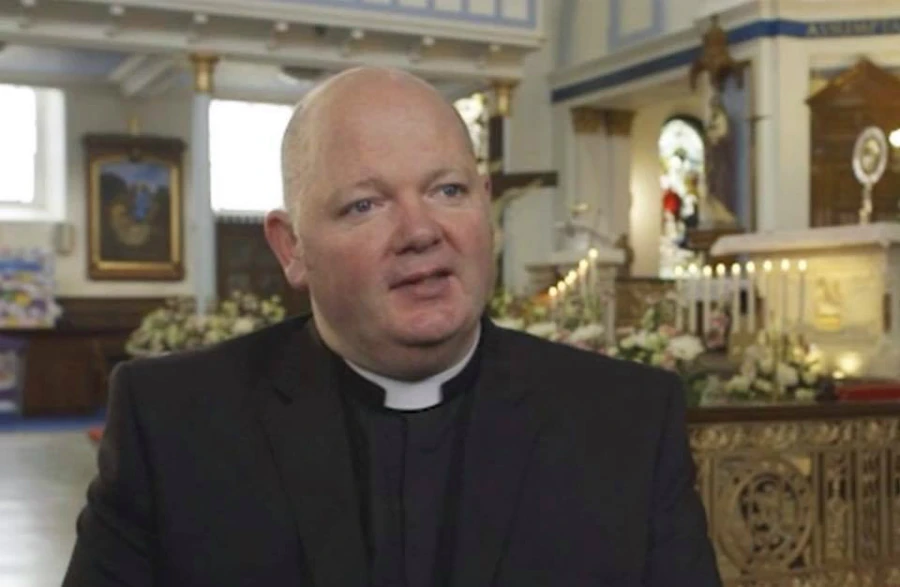
“Canon Tom White was meeting and greeting parishioners” following the anticipated Mass at St. Alphonsus parish in Glasgow July 7, according to a Facebook post by the Archdiocese of Glasgow.

“An Orange march approached. Police – who had been guarding the church – were called away to deal with another nearby incident … Canon White and parishioners were subjected to vile abuse … ‘Fenian bastard’ being the most typical.”

The archdiocese reported that “Spittle landed on the back of [Canon White’s] head. He wiped it away. Another mouthful of thick spittle was spat into his eye socket. Again he wiped it away leaving his hand full of the vile liquid. He was then further insulted and lunged at by a man carrying a pole before police arrived to restore some kind of order.”

The Glasgow archdiocese asked Police Scotland and Glasgow City Council “What kind of society is it that allows ministers of religion and church goers to be intimidated and attacked by a group which has a long history of fomenting fear and anxiety on city streets?”, and “Why is the Orange Order still allowed to schedule its intimidating parades on streets containing Catholic Churches at times when people are trying to get in and out for Mass?”

Orange walks are organized by the Protestant fraternal group the Orange Order, largely in Northern Ireland and Scotland, to commemorate the defeat of James II by William of Orange at the Battle of the Boyne in 1690.

James had been deposed as king of England, Ireland, and Scotland in a 1688 revolution by the Parliament of England after he had expanded toleration of Catholics and Protestant nonconformists in the officially Protestant kingdoms.

According to the Scottish Sun, Glasgow’s Orange walk included thousands of marchers, and four arrests were made in connection with the demonstration, though none were related to the attack on Canon White.

Scotland has experienced significant sectarian division since the Scottish Reformation of the 16th century, which led to the formation of the Church of Scotland, an ecclesial community in the Calvinist and Presbyterian tradition which is the country’s largest religious community.

Sectarianism and and crimes motivated by anti-Catholicism have been on the rise in Scotland in recent years.

Police Scotland are investigating the assault on Canon White as a hate crime. A spokeswoman said that “Whilst the parade was passing the church at the time, any involvement, if at all, by someone from the Orange Walk, is still to be established.”

The Grand Orange Lodge of Scotland has denied any involvement in the assault.

“We understand that abusive comments were directed at a local Priest from a group of young men who were not part of the parade,” read a statement from the fraternal order. “We can confirm that no members of the parade were involved in this or any of the reported incidents. The Orange Order is founded on the principle of religious liberty and respect for people of all faiths. We totally condemn the bigoted actions of those involved and hope that they are dealt with to the full extent of the law.”

St. Alphonsus parish, along with nearby St. Mary’s parish, have issued a statement which welcomed the Orange Order’s condemnation of the assault, while adding that “we are distressed and deeply saddened that, in the 21st century, we are unable to exercise our human rights of freedom of association, freedom of assembly and the right to celebrate our faith free from intimidation and violence.”

They asked the Scottish Parliament “to ensure all those exercising their right to religious freedom will be protected by the appropriate statutory authorities.”

A petition calling on the Glasgow City Council to end the Orange walks has garnered more than 70,000 signatures.

The petition at change.org said that now “is the time to have a real debate on how we can stop this outdated and repressive display …  They have a long history of spreading anxiety and fear amongst everyday Glaswegians.”

“There is no room in our society for this type of bigotry and division. Sign the petition and call time on the Orange Order marching on our streets!”

A variety of Scottish politicians have condemned the assault on Canon White.

Nicola Sturgeon, First Minister of Scotland and leader of the Scottish National Party, tweeted that “behaviour like this – hate crime of and kind – is simply unacceptable, and we will always sonider what more we must do to eradicate it.”

Annie Wells, Member of Scottish Parliament for Glasgow and a member of the Scottish Conservative Party, said that “This was a shocking attack against a respected member of the local community. Police Scotland must move quickly to identify those involved and bring charges.”

Monica Lennon, an MSP of the Scottish Labour Party, lamented that “Anti-Catholic hate crime remains prevalent in Scotland, accounting for 57% of religiously aggravated charges in 2016-17 … Scotland must do better.”

And Caron Lindsay, equalities spokeswoman for the Scottish Liberal Democrats, said, “No-one in Scotland should feel threatened or intimidated as they go about their daily business.”

An April poll of Catholics in Scotland found that 20 percent reported personally experiencing abuse of prejudice toward their faith; and a government report on religiously-motivated crime in 2016 and 2017 found a concentration of incidents in Glasgow.

[…]

No Picture
News Briefs

New Mexico bishop made coadjutor of San Jose

July 11, 2018 CNA Daily News 0

Vatican City, Jul 11, 2018 / 05:57 am (CNA/EWTN News).- The Vatican announced Wednesday Pope Francis’ appointment of Bishop Oscar Cantú of Las Cruces, New Mexico to be coadjutor bishop of San Jose, California.

As coadjutor, Cantú will assist Bishop Patrick J. McGrath, 73, in the administration of the Diocese of San Jose. It is customary for the coadjutor bishop to succeed the diocesan bishop upon his retirement or death.

Cantú, 51, has served as bishop of Las Cruces, New Mexico since February 2013. He is fluent in English, Spanish, Italian, and French.

In 2016, the bishop was one of two delegates chosen to represent the U.S. bishops’ conference during Pope Francis’ visit to Mexico. After the pope’s visit, the bishop told CNA it showed Mexico “that the Holy Father cares about you, and that God is with us even in difficult moments, even in the darkness of life.”

Cantú has served as chairman of the United States bishops’ Committee on International Justice and Peace and is a member of the subcommittees on the Church in Latin America and Hispanic Affairs.

Born in Houston Dec. 5, 1966, he is the fifth of eight children. His parents, Ramiro and Maria de Jesus Cantú, are from small towns near Monterey, Mexico.

“There’s no dichotomy in being a Mexican-American. We love both countries because we have part of ourselves in both countries,” Bishop Cantú told CNA in a February 2016 interview

Houston Catholic schools were vital to the bishop’s formation and the formation of six of his siblings. Although Bishop Cantú’s father only received schooling up to 6th grade, he taught the value of education to his children, four of whom graduated college and three of whom have earned master’s degrees.

As a seminarian, Cantú worked on a committee with then-Bishop James Tamayo of Laredo to promote Hispanic ministry.

Ordained to the priesthood May 21, 1994, Cantú was made a bishop in 2008, at the age of 41, when Pope Benedict XVI appointed him auxiliary bishop of San Antonio.

During his 14 years as a priest of the Diocese of Galveston-Houston, he was involved in the Christian Family movement leading youth retreats; Engaged Encounter ministry; and the Metropolitan Organization (TMO), which addresses social issues in the community.

He earned his Bachelor of Arts from the University of Dallas, and a master’s in divinity and a master’s in theological studies from the University of St. Thomas in Houston. He also earned his Doctorate of Sacred Theology in dogmatic theology from the Pontifical Gregorian University in Rome.

Before being ordained a bishop, he was pastor of his childhood parish, Holy Name, in Houston. He also served as parochial vicar of St. Christopher Parish and taught at the University of St. Thomas and St. Mary’s Seminary.

The Diocese of San Jose was canonically established in 1981 and belongs to the ecclesiastical province of San Francisco.

[…]

No Picture
News Briefs

Pakistani prime minister candidate endorses blasphemy laws

July 10, 2018 CNA Daily News 0

Islamabad, Pakistan, Jul 10, 2018 / 05:17 pm (CNA/EWTN News).- A candidate for prime minister in Pakistan’s upcoming general election has defended the country’s controversial blasphemy laws, which have been used to harass, jail, and kill members of religious minorities disproportionately.

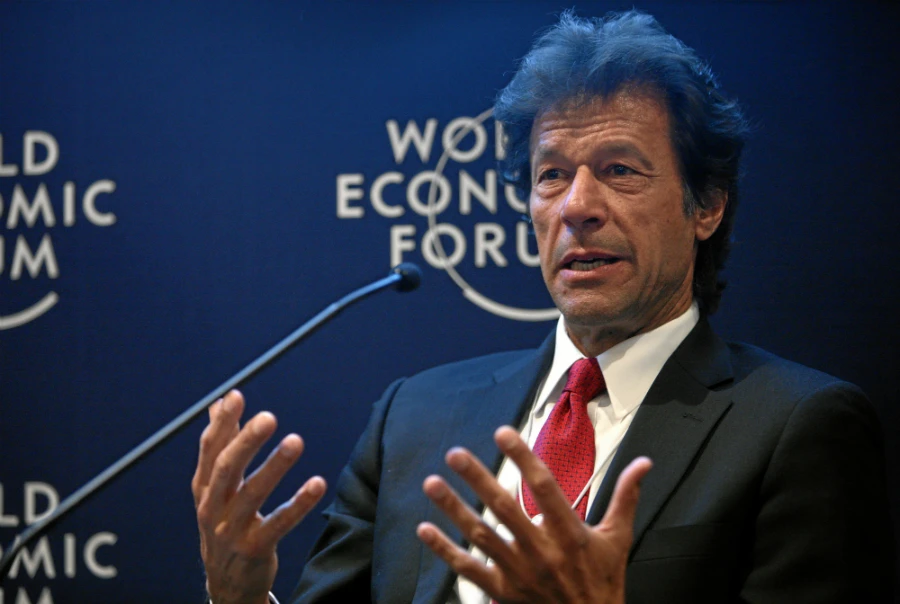
Imran Khan, chairman of Pakistan Tehreek-e-Insaf, a centrist party, said he fully supports the blasphemy law of the Pakistan Penal Code. The statement was made July 7 after giving an address at the Ulema and Mashaikh Conference at Golra Sharif in the capital of Pakistan, Islamabad.

“We are standing with Article 295c and will defend it,” said Khan, according to the Guardian.

A former member of the National Assembly of Pakistan, Khan will be considered for prime minister along with Shehbaz Sharif of the Pakistan Muslim Leage (N) and Bilawal Zardari of the Pakistan Peoples Party.

The general election will take place July 25. PML-N is forecast to win the election, though there have been allegations of vote rigging in favor of PTI.

Pakistan’s blasphemy laws impose strict punishment on those who desecrate the Quran or who defame or insult Muhammad. Pakistan’s state religion is Islam, and around 97 percent of the population is Muslim.

Although the government has never executed a person under the blasphemy law, accusations alone have inspired mob and vigilante violence.

Blasphemy laws are reportedly used to settle scores or to persecute religious minorities; while non-Muslims constitute only 3 percent of the Pakistani population, 14 percent of blasphemy cases have been levied against them.

Many of those accused of blasphemy are murdered, and advocates of changing the law are also targeted by violence.

In 2011 the Punjab governor Salmaan Taseer, a Muslim critic of the blasphemy laws, was assassinated. Shahbaz Bhatti, a Catholic and the only Christian in Pakistan’s cabinet, was also assassinated the same year by militant supporters of the blasphemy laws. Bhatti’s cause for beatification was opened by the Diocese of Islamabad-Rawalpindi in 2016.

The blasphemy laws were introduced between 1980 and 1986. The National Commission for Justice and Peace said over 1,300 people were accused under this law from 1987 until 2014. The Centre for Research and Security Studies reported that at least 65 people have been killed by vigilantes since 1990.

Pakistan’s authorities have consistently failed to implement safeguards on behalf of religious minorities, despite numerous policies in favor of economic and physical protections for members of non-Muslim religions.

In 2013, PML-N, the governing party, promised a quota for jobs in the educational institutes and the public sector for members of religious minorities. That same year, the PPP discussed an Equality Commission to monitor job quotas in Sindh.

After Muslim extremists attacked All Saints Church in Peshawar, killing over 70 people in 2014, Chief Justice Tassaduq Jillani issued an eight-point decree to improve access to jobs, education, and protective forces.

However, none of these safeguards have moved beyond verbal affirmation into action.

Last year, Bethel Memorial Methodist Church in Quetta was attacked by two suicide bombers. The attack killed 9 people and injured 35 others, according to the New York Times.  

A member of the Implementation of Minority Rights Forum said government support was not made available after the attack.

“The government was not ready to even disburse compensation cheques among families, and none of the minority parliamentarians were interested in making noise about it,” said Imtiaz, according to Dawn, Pakistan’s largest English-language newspaper.

[…]

No Picture
News Briefs

Bishops attacked by pro-government mob at basilica in Nicaragua

July 10, 2018 CNA Daily News 0

Managua, Nicaragua, Jul 10, 2018 / 04:01 pm (CNA/EWTN News).- A group of bishops in Nicaragua who went Monday to free a group of protesters who had taken refuge in a basilica the previous day were themselves assaulted by a pro-government group.

Protests against president Daniel Ortega which began April 18 have resulted in more than 300 deaths. The country’s bishops have mediated on-again, off-again peace talks between the government and opposition groups.

Cardinal Leopoldo José Brenes Solorzano of Managua, 69; his auxiliary, Bishop Silvio José Baez Ortega, 60; and Archbishop Waldemar Sommertag, 50, apostolic nuncio to Nicaragua, were surrounded July 9 when they tried to enter San Sebastian basilica in Diriamba, about 25 miles south of Managua.

Their route was blocked, and the pro-government groups called them murderers and liars. Among those trapped in the basilica were volunteer medics.

Bishop Baez posted a tweet showing a cut on his arm, and saying, “Besieged by an angry mob who wanted to enter the Basilica of San Sebastian in Diriamba, I was wounded, hit in the stomach, robbed of my episcopal insignia and verbally attacked. I am well, thanks be to God. The basilica was liberated, and those who were within.”


Asediado por una turba enardecida que quería ingresar a la Basílica San Sebastián en Diriamba, fui herido, golpeado en el estómago, me arrebataron las insignias episcopales  y agredido verbalmente. Estoy bien gracias a Dios. Se liberó la basílica y a quienes allí estaban. pic.twitter.com/9qTgugBjic

— Silvio José Báez (@silviojbaez) July 9, 2018


The Archdiocese of Managua called the attack committed “by persons close to the government and paramilitaries” was “condemnable and repudiable.”

The bishops were visiting Diriamba after what the Nicaraguan Centre for Human Rights reported as deadliest day in the country since the country’s unrest began more than two months ago.

The rights group said that 38 people were killed during clashes July 8. Of these, 31 were anti-government protesters, four were police officers, and three were members of pro-government groups. Most of those killed were in Diriamba and nearby Jinotepe.

The Nicaraguan bishops’ conference said the delegation of bishops was “fulfilling the mission of Jesus Christ, to be at the side of the suffering people, a pastoral visit to the priests and faithful of the Carazo department, the victims of police, paramilitaries and crowds producing death and dolour.”

Cardinal Brenes said he had “felt the brutal force” exercised against his priests. “We have gone to the parishes to console our priests, to accompany them in their suffering, and we have received aggressions.”


«Padre, perdónalos, porque no saben lo que hacen» (Lc 23,34). Orando en la capilla de la Catedral de Managua hoy después de ser agredidos. pic.twitter.com/NiKxORL9lh

— Silvio José Báez (@silviojbaez) July 10, 2018


Barricades and roadblocks are now found throughout the country, and clashes frequently turn lethal. Bishops and priests across Nicaragua have worked to separate protesters and security forces, and have been threatened and shot.

The violence in Diriamba and Jinotepe was focused on police and paramilitaries trying to clear barricades set up and manned by protesters.

Bishop Rolando José Alvarez Lagos of Matagalpa said the government efforts to clear roadblocks were made “at the price of blood and death,” and that the government has become blinded by “arrogance and pride”.

Shortly after the bishops were assaulted in Diriamba, paramilitaries and government sympathizers were profaning and sacking St James the Apostle parish in Jinotepe.

The parish showed on Facebook that it had been desecrated by “persons, paramilitaries accompanied by police forces” who were “destroying pews, tables, and medications”.

The medications had been used in part to provide medical care for those wounded in the July 8 riots in Diriamba.

The profaners threw garbage at the parish’s priests, and threatened to burn the church.

The Nicaraguan bishops’ conference has called off the working groups meant to mediate in the country’s crisis, and protesters are planning a strike July 12.

Nicaragua’s crisis began after Ortega announced social security and pension reforms. The changes were soon abandoned in the face of widespread, vocal opposition, but protests only intensified after more than 40 protestors were killed by security forces initially.

Anti-government protesters have been attacked by “combined forces” made up of regular police, riot police, paramilitaries, and pro-government vigilantes.

The Nicaraguan government has suggested that protestors are killing their own supporters so as to destabilize Ortega’s administration.

The Church in Nicaragua was quick to acknowledge the protestors’ complaints.

The pension reforms which triggered the unrest were modest, but protests quickly turned to Ortega’s authoritarian bent.

Ortega has been president of Nicaragua since 2007, and oversaw the abolition of presidential term limits in 2014.

The Church has suggested that elections, which are not scheduled until 2021, be held in 2019, but Ortega ruled this out July 7.

Ortega was a leader in the Sandinista National Liberation Front, which had ousted the Somoza dictatorship in 1979 and fought US-backed right-wing counterrevolutionaries during the 1980s. Ortega was also leader of Nicaragua from 1979 to 1990.

[…]

No Picture
News Briefs

What happens when a church is no longer a church?

July 10, 2018 CNA Daily News 1

Vatican City, Jul 10, 2018 / 02:49 pm (CNA/EWTN News).- St. Catherine of Siena Church was built by immigrants in a Catholic Boston neighborhood, in the late nineteenth century. For more than a century, it welcomed the poor, the lost, and the searching. Then in 2008, the church was closed.

A decade later the building opened its doors again, welcoming a new generation of seekers. But while the sanctuary is empty, the basement of the building has become a Dollar Tree, and those who enter are searching mostly for a bargain.

Around the world, with demographic shifts and a decline of worshippers in some countries, a growing number of church buildings are being closed. Safeguarding the sanctity of the once-hallowed ground where believers prayed and worshiped is becoming a perplexing problem for Church leaders.

To answer the tough question about what to do with shuttered churches, the Vatican has decided to host a conference from Nov. 29-30, addressing the issue from a multi-disciplinary perspective, in light of a growing interest in protecting the historic and cultural significance many churches still hold, even if they are unused.

The“God No Longer Lives Here?” conference is being organized by the cultural goods department of the Pontifical Council for Culture, the Italian bishops conference, and the Pontifical Gregorian University’s Faculty of History and Cultural Heritage of the Church.

At a July 10 press conference announcing the November event, Cardinal Gianfranco Ravasi, president of the Vatican’s culture office, said the problem of what to do with churches or sacred places that are no longer used is a “transversal” problem, with historic, spatial, socio-cultural and even academic and legal dimensions.

When the idea to host a conference about the topic was initially pitched, Ravsi said he was skeptical, thinking the issue would only be of interest to a small pool of experts, however, instead there was an “extraordinary reaction” not only from bishops conferences, but also academics and even UNESCO, who in the past has sent representatives to episcopal conference meetings to hear their thoughts on the closing of ancient religious structures believed to hold special cultural and historic significance.

In comments to the press, Ravasi said that while the issue of what to do with churches that have been closed has always been an issue, the current increase in interest is “one of the mirrors of the decline of religious practice, of secularization,” and of “a lack of priests.”

The prime reasons churches are shut down is due to the small size of the congregation that attends services, to a lack of priests, or when parishes merge for pastoral reasons, Ravisi said.

The conference, then, will help to highlight the crisis in the decline of belief, but it will also ensure that churches and other sacred places are not sold off to buyers who will but them to profane use given the history of the structure.

Part of the goal of the November conference will be to draft guidelines for what to do with churches that are de-consecrated and potentially sold.

The first day of the conference will be dedicated to several talks pitching ideas for solutions, followed by discussion. The second and final day will be dedicated to further discussion and the drafting of the guidelines, which will either be published as a directive from the Vatican’s Council for Culture, or they will be adopted and published at a more universal level as a document from the Holy See, though modifications will likely be made if the latter is the case.

Representatives of bishops’ conferences, the Vatican’s culture office and university professors will add their voice to the discussion, offering their own contribution for what the guidelines should include.

Conference organizers also announced a photo contest that will take place primarily on Instagram, with the hashtag “#nolongerchurches,” and will encourage photographers to document what happens to de-consecrated churches. The photos selected will also be displayed in an exhibit, and they will be published in the Italian Magazine “Arte cristiana, Casabella e Chiesa: architettura e communicazione.”

In comments to the press, Archbishop Nunzio Galantino, president of the Administration of the Patrimony of the Holy See (APSA) and until now secretary general of the Italian bishops conference, said the topic of what to do with de-consecrated churches is a “salient issue,” and one that is important for the Italian bishops.

Though the question of what to do with an increase in churches being closed is primarily a problem in France, Belgium, Holland, Germany and Switzerland, according to a press release on the conference, Italy, the United States and Canada have also faced similar dilemmas.

And opposition to the sale of sacred spaces has increased even among non-believers, many of whom believe churches, even if unused, add historic, cultural and artistic value to their communities.

“What is the situation today? We have a change of context,” he said, pointing to the problem of decreasing Mass attendance, priest shortages and the closing of rural churches which have gone unused for years.

The issue is a social, cultural and economic problem, he said, explaining that when these churches belong to dioceses and parishes, it is easier to keep them in use and take care of them, but when these churches are no longer associated with a diocese or parish, often and unfortunately “there is a private interest” involved in what happens to it.

Professor Ottavio Bucarelli, who works at the Faculty of History and Cultural Heritage of the Church at the Gregorian University in Rome, was also present at the press conference, and told journalists the “sacred nature” of places of worship must always be respected.

“A church remains a church even when it is no longer a church, even when it has been transformed into something else,” he said, “so at a certain point we have to respect the faith of so many believers who have prayed and worshiped there for centuries.”


[…]

No Picture
News Briefs

FSSP elects new superior general

July 10, 2018 CNA Daily News 0

Lincoln, Neb., Jul 10, 2018 / 10:42 am (CNA/EWTN News).- The general chapter of the Priestly Fraternity of St. Peter, a society of apostolic life which celebrates the extraordinary form of the Roman rite, on Monday elected Fr. Andrzej Komorowski as its next superior general.

The July 9 election was made at the FSSP’s Our Lady of Guadalupe Seminary in Denton, Neb., about 10 miles southwest of Lincoln. The general chapter is being held July 3-18.

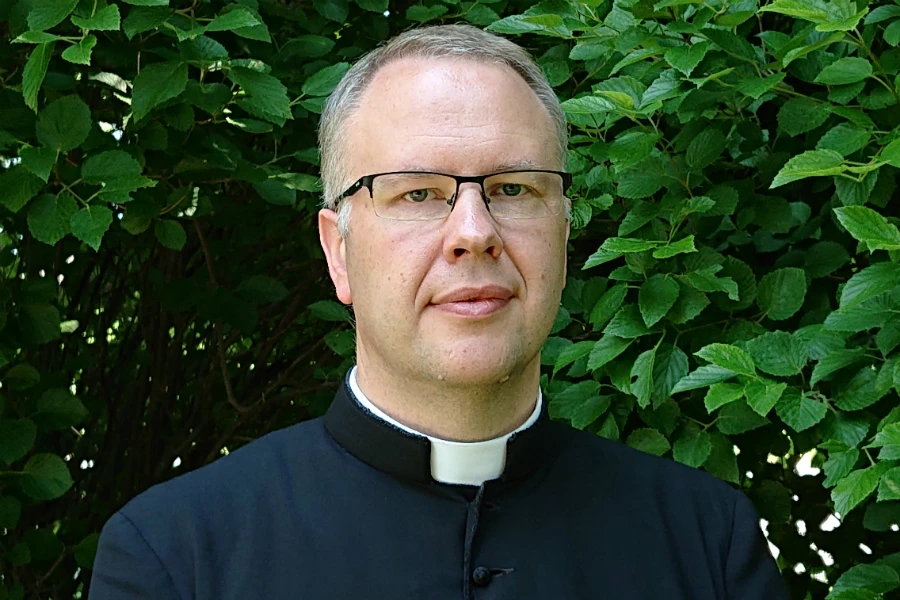
Fr. Komorowski was born in Poland in 1975, and studied economics at the University of Poznań. He then joined the FSSP’s European seminary, St. Peter’s Seminary in Wigratzbad, Germany, and was ordained a priest in 2006.

He has ministered at FSSP apostolates in Poland, Belgium, Switzerland, and the Netherlands. He has served as assistant of the superior general since 2012, and as general bursar.

Fr. Komorowski succeeds Fr. John Berg as superior general of the FSSP, and is the fourth man to the hold that position.

The FSSP forms priests for the use of the extraordinary form of the Roman Rite, and having formed them, deploys priests in parishes for the service of the Church.

The priestly fraternity was founded in 1988 by 12 priests of the Society of St. Pius X. The founders left the SSPX to establish the FSSP after the society’s leader, Archbishop Marcel Lefebvre, consecrated four bishops without the permission of St. John Paul II.

There are currently almost 287 priests and 150 seminarians in the fraternity. It has parishes and chapels in North America, Europe, Oceania, Nigeria, and Colombia.

[…]