No Picture
News Briefs

Australian state hesitates to require priests to break seal of confession

July 12, 2018 CNA Daily News 0

Melbourne, Australia, Jul 12, 2018 / 10:37 am (CNA/EWTN News).- The Australian state of Victoria has said a recommendation by the royal commission that it pass a law requiring priests to break the confessional seal to report cases of child sex abuse requires further consideration.

Victoria attorney general Martin Pakula said July 11 that the government needs to further consider 24 of the 317 recommendations made to the state by the Royal Commission into Institutional Responses to Child Sexual Abuse.

Pakula said the state government accepted 128 recommendations, and another 165 in principle, according to The Guardian.

He told ABC radio that the proposal to require the breaking of the seal of confession “needs a degree of national agreement.”

The Australian Capital Territory, South Australia, and Tasmania have already adopted laws making it illegal for priests to fail to report the confession of a child sex abuse crime.

In South Australia, priests who fail to report child sex abuse which they learned of while hearing a confession will face a AUD 10,000 fine ($7,400) beginning Oct. 1.

Like Victoria, New South Wales is subjecting that recommendation to further consideration, though it accepted 336 of the royal commission’s recommendations.

The New South Wales government said last month that “whether or how the offence will apply to members of the clergy where the information about an offence was gathered through religious confessions is a complex issue that has been referred to the Council of Attorney’s-General for national consideration.”

The Catholic Church in Australia has vehemently opposed the imposition of laws mandating reporting from the confessional. Many priests have said they would go to jail before violating the seal.

The Code of Canon Law states that “The sacramental seal is inviolable; therefore it is absolutely forbidden for a confessor to betray in any way a penitent in words or in any manner and for any reason.” A priest who intentionally violates the seal incurs an automatic excommunication.

The Catechism of the Catholic Church teaches that “every priest who hears confessions is bound under severe penalties to keep absolute secrecy regarding the sins that his penitents have confessed to him,” due to the “delicacy and greatness of this ministry and the respect due to persons.”

Archbishop Christopher Prowse of Canberra-Goulburn has said that “Priests are bound by a sacred vow to maintain the seal of confession. Without that vow, who would be willing to unburden themselves of their sins?”

“The government threatens religious freedom by appointing itself an expert on religious practices and by attempting to change the sacrament of confession while delivering no improvement in the safety of children,” he said. “Sadly, breaking the seal of confession won’t prevent abuse and it won’t help our ongoing efforts to improve the safety of children in Catholic institutions.”

Archbishop Anthony Fisher of Sydney has said that “priests will, we know, suffer punishment, even martyrdom, rather than break the seal of Confession,” which he called “a privileged encounter between penitent and God.”

Clerics are not the only critics of the new legislation. Andrew Wall, a member of the Australian Capital Territory Legislative Assembly, said forcing priests to break the seal of confession oversteps an individual’s “freedom of association, freedom of expression and freedom of religious rights.”

[…]

No Picture
News Briefs

Funeral Mass scheduled for Monterey bishop

July 12, 2018 CNA Daily News 0

Monterey, Calif., Jul 12, 2018 / 10:15 am (CNA/EWTN News).- A funeral Mass will be celebrated July 19 for Bishop Richard John Garcia, the late Bishop of Monterey, California, who died July 11 from complications related to Alzheimer’s disease. Garcia was 71.

Garcia was ordained a priest in 1973 in the Archdiocese of San Francisco, was a seminary professor and directed Hispanic ministry, and, in 1998, became an auxiliary bishop in the Diocese of Sacramento. The bishop was appointed to lead the coastal California Diocese of Monterey in 2006.

He was a board member of Catholic Relief Services and the Catholic Legal Immigration Network, and involved in several committees of the United States Conference of Catholic Bishops.

He was diagnosed with Alzheimer’s disease in April.

His episcopal motto was “En El Vivimos”- “In Him We Live.”  

In a 2017 pastoral letter, Garcia encouraged Eucharistic adoration in the parishes of his diocese, writing that “The Eucharist is a multifaceted, precious jewel in the Sacramental Life of our Church. We cherish and reverence this celebration of our salvation — a perpetual memorial of Christ’s Death and Resurrection.”

In 2007, he wrote “In my life…I have encountered God’s ‘grace upon grace’ even though I did not always fully comprehend or appreciate God’s never being far from me.”

[…]

No Picture
News Briefs

The deep roots of Portugal’s Marian devotion

July 12, 2018 CNA Daily News 1

Lisbon, Portugal, Jul 12, 2018 / 03:01 am (CNA/EWTN News).- When the Virgin Mary appeared to three shepherd children in Fatima in 1917, Portugal had already acclaimed Mary as their reigning Queen for hundreds of years. After the coronation of Our Lady of the Immaculate Conception as “Queen of Portugal” by King João IV in 1646, no Portuguese monarch ever wore a crown again.

The history of exceptional Marian devotion near Fatima dates back even further.

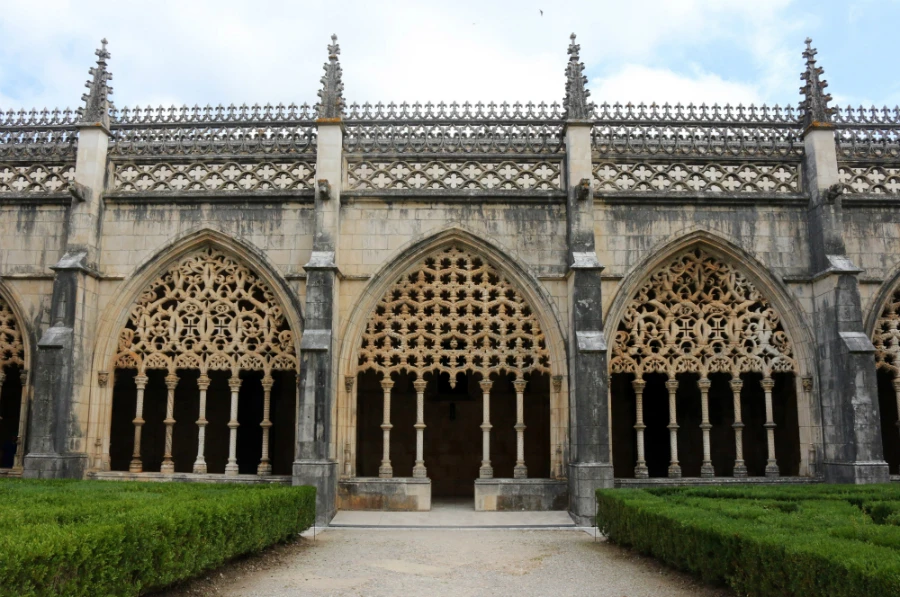
Fourteen miles from the Fatima Shrine is the Batalha Monastery, where several dozen Dominican friars were commissioned in 1388 to pray a perpetual rosary in thanksgiving for the Virgin Mary’s protection of Portugal.

The gothic monastery in Batalha was built in dedication to Our Lady of Victory in gratitude for an answered prayer. In 1385 King Joao I made a vow to the Virgin Mary that he would build a great monastery if she would deliver him victory in a battle against the Spanish.

The Dominican community remained in the monastery until 1834, when all religious orders were driven out of Portugal. Today it continues to function as both the local parish and a tourist attraction.

In nearby Alcobaca, a Cistercian monastery has stood in honor of Mary for over 800 years. The king of Portugal endowed the monastery to Saint Bernard of Clairvaux in 1153, shortly before the Cistercian founder’s death. The gothic church was completed in 1223.

Benedict XVI has described Saint Bernard of Clairvaux as “a Doctor of Mariology” because “he understood her essential role in the Church, presenting her as the perfect model of the monastic life and of every other form of the Christian life.”

An altarpiece in the Alcobaca Monastery, added in 1705, depicts the death of Saint Bernard under the protection of Mary. The walls in the monastery’s King’s Hall are decorated with 16th century blue and white rococo tile scenes depicting the history of the Cistercian order. An ornate oval baroque reliquary chapel containing 71 terracotta reliquary busts from floor to ceiling can be found in the sacristy. Napoleon’s troops plundered the monastery in 1811, shortly before the Cistercians, like Batalha’s Dominicans, were forced to leave Portugal.

Fewer than 10 miles from Alcobaca is the beachside town of Nazaré, named for a statue of the Virgin Mary brought from Nazareth by a monk in the 8th century, according to the local tradition.

Before Nazaré became a world-famous surfing destination with 80-foot waves, it was a popular medieval pilgrimage site. In 1182, a Portuguese knight was hunting a deer near the coast. When his horse nearly ran over one of Nazaré’s steep cliffs, he called out “Our Lady, Help Me!” and his horse stopped just at the cliff’s precipice next to the small grotto with the Nazareth statue.

In thanksgiving for his life, the knight had a small chapel built around the statue, which went on to receive so many visitors that a larger church dedicated to Our Lady of Nazaré was built near the cliffs by the King of Portugal in 1377 to house the statue and its pilgrims.

Despite the centuries-long tradition of Marian devotion in Portugal, when Our Lady of Fatima appeared in 1917, Catholics were not thriving in the country.

When the monarchy was abolished in 1910, the revolutionaries attempted to root out Catholicism and its Marian queen along with it, seizing all of the Church’s property and assets. A popular illustration of the 1910 revolution includes an image of armed men marching out priests at gunpoint.

Anticlericalism peaked in the years leading up to the Fatima apparitions, causing the pope to speak out about the persecution of the Church under the First Portuguese Republic.

In 1911, Saint Pius X issued an encyclical, Iamdudum, decrying the secularization occuring in Portugal.

“We have seen, arising out of an obstinate determination to secularize every civil organization and to leave no trace of religion in the acts of common life, the deletion of the feast days of the Church from the number of public festivals, the abolition of religious oaths, the hasty establishment of the law of divorce and religious instruction banished from the public schools,” wrote the pope.

St. Pius X’s successor, Benedict XV, would go on to write a letter to his secretary of state for all the world’s bishops on May 5, 1917 asking for prayers to the Virgin Mary for peace amid the ongoing devastation of World War I throughout Europe. In this letter, the pope made permanent an additional title for Mary in the Litany of Loreto: “Regina pacis,” or “Queen of peace.”

When Mary appeared in Portugal as Our Lady of the Rosary nine days later, she instructed, “Pray the Rosary every day, in order to obtain peace for the world and the end of the war.” The Portuguese tradition of the perpetual rosary, dating back more than 500 years, would continue.

[…]

No Picture
News Briefs

The cycle of porn and loneliness

July 11, 2018 CNA Daily News 0

Richmond, Va., Jul 11, 2018 / 05:46 pm (CNA/EWTN News).- Andy*, a devout Catholic and recently married man in his twenties, encountered a vicious cycle of pornography in high school and some college – a cycle of porn and loneliness.  

“[Porn] would create this whole loneliness, but then, [because of] that loneliness itself, I was seeking for some sort of connection and I was seeking that through the use of pornography, like this reciprocating cycle,” he told CNA.

Starting sophomore year of high school and ending sometime in college, Andy’s porn use would also make him feel shame about interacting with people. It would lead him to be more anti-social, then to loneliness, and ultimately to more porn use. He said it was real, human connection which broke that cycle.

“I found that one of the things that actually helped me break that cycle was actually more interaction with people that were really good friends and people that were there for me.”

Andy’s experience is not uncommon, according to a recent study from the Institute of Family Studies.

IFS linked greater porn use to increased loneliness and higher levels of loneliness to more porn use, pointing to a vicious and unhealthy cycle. One of the men behind the study, Mark Butler, wrote an article describing the research.

“If loneliness can lead to pornography use, and pornography use may bring about or intensify loneliness, these circular linkages may create a vicious cycle, pulling the user even further from health-promoting relationship connections,” he wrote July 3.

The study surveyed more than 1,000 people from around the world, and a statistical model was developed to analyze the potential reasons behind this cycle of loneliness and porn use.

Butler wrote that “each incremental increase in loneliness was associated with an increase in pornography use (by a factor of 0.16), and each incremental increase in pornography use predicted a significant increase in loneliness (by a factor of 0.20).”

“While the magnitude of effects was small, they were statistically significant,” Butler wrote. “Interlocking partnerships like this are worrisome since they represent an entrapment template associated with addiction.”

The model highlights the biological experience and results of the sexual system that ought to produce greater relational connection through pleasure and comfort.

“First, there’s the physical pleasure of arousal, intercourse, and climax – the engine designed to ensure offspring. Then, after climax, partners experience the brain’s ‘love’ plan for pair bonding, when oxytocin … is released, producing feelings of comfort, connection, and closeness.”

However, without a partner with whom to bond, the sexual activity produces a false relationship experience, “offering temporary ‘relief’ from lonely feeling, but soon enough, the user again faces a real-world relationship void,” he said.  

The mental fantasy of a relationship experience invited by pornography “only tricks the brain for a while,” Butler said.

“The user can’t escape the fact that when the experience is over, they’re still alone in an empty room. So, when sexual intoxication wears off, the experience may only end up excavating a deeper emptiness – a setup for a vicious cycle.”

The temporary escape from the long term loneliness creates a false-belief that porn is a “fix” for loneliness, he said, noting that it is similar to drug addictions.  

“The sexual system’s combination of two very different rewards – intense sensual gratification during arousal and climax, followed by oxytocin’s relief and comfort during the resolution period – could be thought of like a combined cocaine-valium experience and ‘hook.’”

“We hypothesize that this experience could create the potential for getting trapped in the short-term, feel-good escape of pornography joined with long-term loneliness.”

Butler also pointed to other studies that show a decrease in porn use after marriage, suggesting that human connection contrasts with this vicious cycle.

“Married persons use pornography less than single persons. The fact that pornography use decreases after marriage may hint at a link between pornography, relational success, and loneliness.”


*Name changed to respect privacy

[…]

No Picture
News Briefs

New superior general elected by SSPX

July 11, 2018 CNA Daily News 0

Sion, Switzerland, Jul 11, 2018 / 04:32 pm (CNA).- On Wednesday the general chapter of the Society of Saint Pius X, a canonically irregular priestly society, elected Fr. Davide Pagliarani as its superior general.

The July 11 election was made at the Seminary of St. Pius X in Ecône, about 10 miles southwest of Sion, Switzerland. The general chapter is being held through July 21.

Elected as general assistants were Bishop Alfonso Gallareta and Fr. Christian Bouchacourt.

The SSPX was founded by Archbishop Marcel Lefebvre in 1970 to form priests, as a response to what he described as errors that had crept into the Church after the Second Vatican Council.

Its relations with the Holy See became particularly strained in 1988 when Archbishop Lefebvre and Bishop Antonio de Castro Mayer consecrated four bishops without the permission of St. John Paul II.

Fr. Pagliarani, 47, succeeds Bishop Bernard Fellay as superior general of the SSPX. He has a mandate of 12 years in his office as superior general.

He was ordained a priest in 1996, and served at chapels in Italy and Singapore before he was appointed superior of the Italian district of the SSPX. He has been rector of Our Lady Co-Redemptrix Seminary in Argentina since 2012.

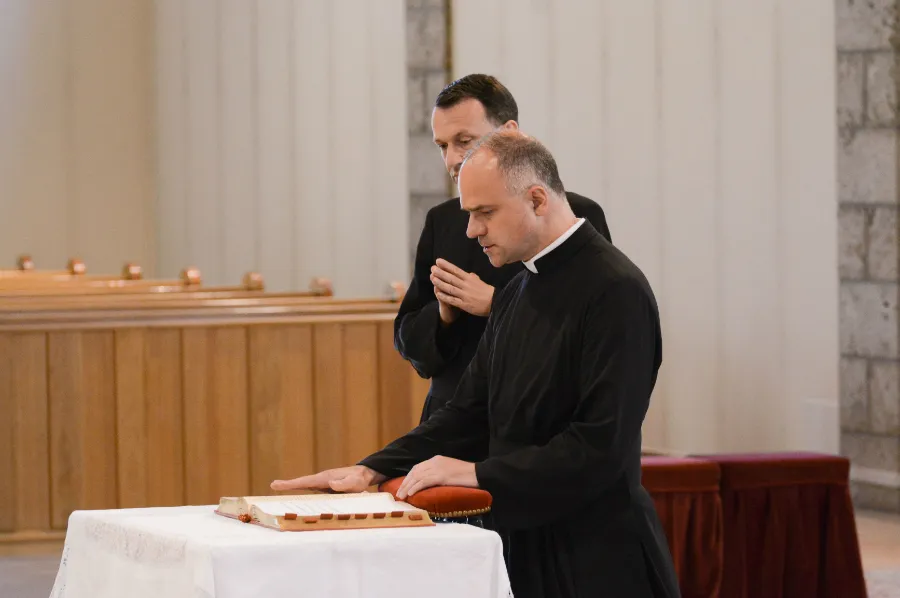
After accepting his office, Fr. Pagliarani made a profession of faith and took the Anti-Modernist Oath.

The illicit episcopal consecrations made in 1988 resulted in the excommunication of the bishops involved. The excommunications of the surviving bishops were lifted in 2009 by Benedict XVI, and since then negotiations “to rediscover full communion with the Church” have continued between the SSPX and the Vatican.

When he remitted the excommunications, Benedict noted that “doctrinal questions obviously remain and until they are clarified the Society has no canonical status in the Church and its ministers cannot legitimately exercise any ministry.”

The biggest obstacles for the SSPX’s reconciliation have been the statements on religious liberty in Vatican II’s declaration Dignitatis humanae as well as the declaration Nostra aetate, which it claims contradict previous Catholic teaching.

There were indications in recent years of movement towards regularization of the priestly society, which has some 590 priest-members.

In March 2017, Pope Francis gave diocesan bishops or other local ordinaries the authorization to grant priests of the SSPX the ability to celebrate licitly and validly the marriages of the faithful who follow the Society’s pastoral activity.

Archbishop Guido Pozzo, secretary for the Pontifical Commission Ecclesia Dei, spoke about interactions with the SSPX in an April 2016 interview with La Croix. The archbishop, whose commission is responsible for discussions with the SSPX, said that discussions over the last few years have led to “an important clarification” that the Second Vatican Council “can be adequately understood only in the context of the full Tradition of the Church and her constant Magisterium.”

And in September 2015, the Pope announced that the faithful would be able to validly and licitly receive absolution from priests of the SSPX during the Jubilee Year of Mercy. This ability was later extended indefinitely by Francis in his apostolic letter Misericordia et misera, published Nov. 20, 2016.

[…]