No Picture
News Briefs

Dominican bishops encourage citizens to respect life at all stages

July 13, 2018 CNA Daily News 0

Santo Domingo, Dominican Republic, Jul 13, 2018 / 03:50 pm (ACI Prensa).- The bishops’ conference of the Dominican Republic published Wednesday a statement affirming the importance for the Church of forming persons to value and respect life in all its stages.

“The bishops, conscience of the challenges facing our society, consider the integral formation of a human being to permit him to value and to respect life in all its stages a very important challenge,” reads the July 11 statement from the Dominican bishops. The nation’s episcopal conference had held a plenary assembly July 1-6.

The bishops’ focus on respect for life comes as various groups, including the Christian Alliance of the Dominican Republic, press for the decriminalization of abortion in cases of the mother’s life, fetal inviability, or rape.

Moreover, the bishops said there must be work done “so that the people do not let themselves be discouraged, because what the Church encourages is that we fight for all lives. We have reaffirmed, before science, law, and before God that no-one has the right to condemn to death an innocent, and much less an indefensible child.”

“We promote public policies, which rather than leading to death, are the foundation for defending all human rights, beginning with the first and most important: the life of all,” they exhorted.

The bishops also noted that they are anticipating the celebration of the 525th anniversary of the first known Mass to have been said in the Americas, on Epiphany in 1494.

That Mass was said during Columbus’ second voyage to the New World, on the northern coast of Hispaniola, in what is now the Dominican Republic.

“The congresses, pilgrimages, and gatherings around this festivity demonstrate to us a Church which responds to its faith, despite the great challenges which continue regarding evangelizing and revealing the face of the love of God, amid a society seduced by evil, and the boredom of the realities which it suffers.”


This article was originally published by our sister agency, ACI Prensa. It has been translated and adapted by CNA.

[…]

No Picture
News Briefs

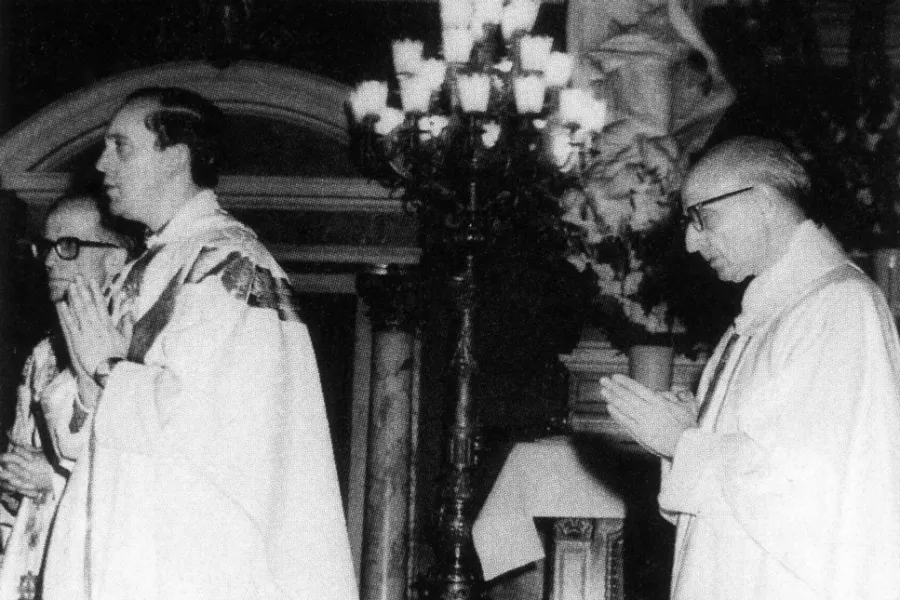
Beatification cause opens for Jesuit Pedro Arrupe, early mentor to Pope Francis

July 13, 2018 CNA Daily News 2

Vatican City, Jul 13, 2018 / 12:43 pm (CNA).- A cause has begun in the Diocese of Rome for the beatification of Fr. Pedro Arrupe SJ, former superior general of the Society of Jesus. The priest, who served as a mentor to the future Pope Francis, was a controversial figure within the Society of Jesus.

Jesuit Father General Fr. Arturo Sosa announced Arrupe’s cause at a meeting in Bilbao, Spain with some 300 Jesuits and lay associates involved with the International Association of Jesuit Universities.

The news was confirmed to CNA by the communications director for the Jesuit Curia in Rome, Fr. Patrick Mulemi, who said the cause is “has been opened,” but has just begun. “We are right at the beginning of the process,” he said, explaining that the Jesuits will follow the same procedure as any other cause.

Born in Spain in 1907, Arrupe served as superior general for the Society of Jesus from 1965-1983, leading the order through the aftermath of the Second Vatican Council. During that time, he also served three consecutive terms as president of the Union of Religious Superiors General, from 1967-1982.

According to papal biographer Austen Ivereigh, who wrote the widely read biography of Pope Francis, “The Great Reformer,” Arrupe and then-Fr. Bergoglio “had a very good and close relationship, and Bergoglio saw him as a spiritual father, he enormously admired him and was inspired by him.”

It was Arrupe who appointed Bergoglio the Jesuit provincial of Argentina in 1973, and the two remained close. The  made a joint-visit to the Diocese of La Rioja to support Bishop Enrique Ángel Angelelli Carletti, who was assassinated in 1976 during Argentina’s Dirty War.

Arrupe entered the Society of Jesus in 1927 after studying medicine. After the order was expelled from Spain in 1932, he went to study in Belgium, the Netherlands and the United States as part of his formation before being ordained a priest.

He was ordained in 1936 and obtained a degree in medical ethics before being sent to Japan in 1938 to work as a missionary. While abroad, he became the master of novices for the Jesuit novitiate in Japan, and was living in Hiroshima when the U.S. dropped the atomic bomb on Aug. 6, 1945.

With his history in medicine, the young priest converted the novitiate into a makeshift hospital for the wounded. A decade later, in 1958, he was named the first provincial for Japan, overseeing all Jesuits who lived in the country.

Arrupe held the position until May 1965, when he was elected Father General of the Jesuits during the 31st General Congregation of the Society of Jesus, just six months before the closing of the Second Vatican Council.

After the council, the Jesuits, who were the largest religious order in the world at the time, shifted focus and embraced a more social-justice oriented approach to their apostolic work, under Arrupe’s direction.

During the order’s 1974-75 32nd general congregation, Arrupe passed a number of new decrees, including one titled: “Our Mission Today: The Service of Faith and the Promotion of Justice,” which focused heavily on social justice issues and became a blueprint for the Society’s direction.

Arrupe’s changes were met with opposition by many Jesuits, and under his leadership, the order clashed with Pope Paul VI and other Vatican and ecclesial figures.

In 1973, Pope Paul VI issued a warning to Arrupe about experimentation in the Society of Jesus. Six years later, Pope John Paul II accused the Jesuit leadership of “causing confusion among the Christian people and anxieties to the church and also personally to the Pope,” criticizing in particular “secularizing tendencies” and “doctrinal unorthodoxy” within the order.

Arrupe acknowledged issues within the Society of Jesus, and made efforts to reprimand some priests accused of public doctrinal deviances. Some in the order questioned whether he should have made systemic changes in responses to papal criticism, rather than issuing individual corrections.

Within the Society of Jesus, one of the groups who opposed Arrupe’s changes called themselves “la vera sociedad,” or “the true society,” and were on the verge of splitting from the order, intending to intervene in the 1974 general congregation meeting until Bergoglio stepped in, at Arrupe’s request, to calm the fury.

Arrupe, Ivereigh said, “held [Bergoglio] in high esteem, he trusted him.”

As for the future pope, Ivereigh said Bergoglio was “unquestionably” influenced by Arrupe’s leadership, and often cited his former superior general in speeches.

“Arrupe was something of a model for Francis,” the biographer said, explaining that the main threads of similarity between the two were not only a shared concern for the poor, but also their approach to modernity, believing that what was needed was “an engagement” between faith and the modern world.

“Not to reject modernity, but to discern what was good, what was threatening to the Gospel, and what wasn’t. I think that was Arrupe’s big thing, rather than being in this constant confrontation with the modern world, to have a dialogue with it,” Ivereigh said.

After suffering a stroke in 1981, Arrupe resigned as superior general of the order and recommended American Jesuit Vincent O’Keefe take his place. However in a move some perceived as a rebuke, Pope John Paul II appointed Jesuits Paola Dezza and Giuseppe Pittau to oversee the society until a new leader was elected.

During the September 1983 general congregation, Peter-Hans Kolvenbach, S.J., was elected as the new minister general, a position he held until 2008, when he resigned and was succeeded by Fr. Adolfo Nicolas.

Arrupe died Feb. 5, 1991.

[…]

No Picture
News Briefs

Three children rescued amid baby-selling investigation involving MC sister

July 13, 2018 CNA Daily News 0

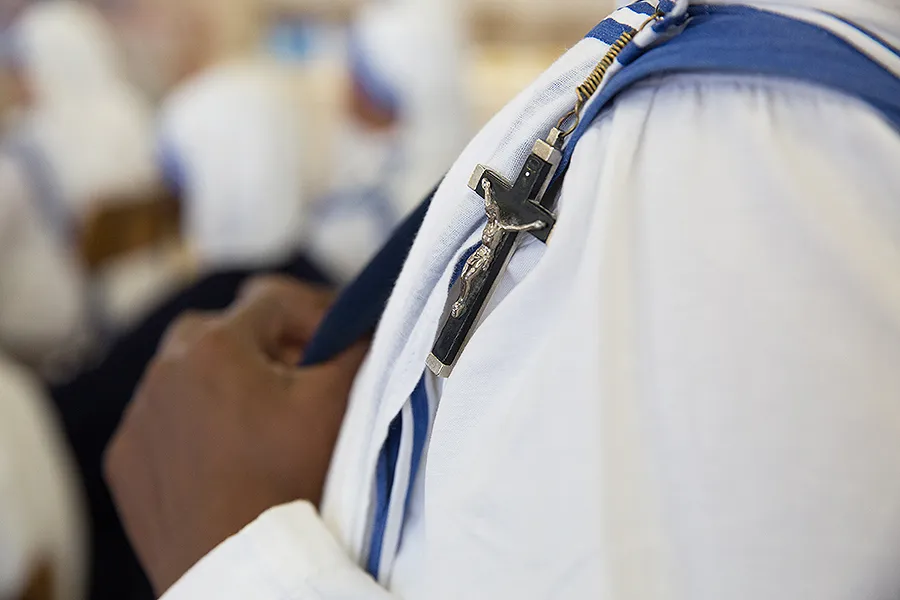
Ranchi, India, Jul 13, 2018 / 10:27 am (CNA/EWTN News).- Three children who were allegedly sold by an employee of the Missionaries of Charity have been rescued, and a politician has accused a political party of unfairly targeting the religious order.

Last week two women affiliated with the Missionaries of Charity, one a religious sister and one an employee, were arrested after a couple complained that they were sold a baby boy, who was then taken back by the shelter.

Since then, three other children have been recovered by authorities, who are still on the lookout for a fourth baby. The children all came from the same Missionaries of Charity-operated home for pregnant women, Nirmal Hriday, in Ranchi, the capital of the state of Jharkhand. The women residing at the home were moved to a government-run shelter.

Initially, it was reported by Indian media that 280 children were missing from the Missionaries of Charity home in Ranchi. This number was eventually revised to four, and of the four, three have been located safely.

The Senior Superintendent of Police for Ranchi, Anis Gupta, said that they learned about the other children after questioning the initial two women arrested. The third child was rescued on Thursday from the city of Simdega, which is also in Jharkhand.

Gupta told Indian media that “a few people have been detained for questioning” after this latest rescue, but further details were not available.

Missionaries of Charity spokeswoman Sunita Kumar said last week in a statement that the order was “shocked” by the allegations, “which totally goes against the value and ethics espoused by the Missionaries of Charity, the nuns, and its founder.”

Kumar said that the order will be investigating the accused employees in Jharkhand “with all seriousness,” and that the Missionaries of Charity had stopped handling adoptions in India three years ago.

Church officials in India, along with a politician, have raised concerns that the Missionaries of Charity have been unfairly targeted by India’s ruling party, the Hindu-nationalist group the Bharatiya Janata Party.

The Chief Minister of West Bengal, Mamata Banerjee, a member of the All India Trinamool Congress, tweeted Friday that “Mother Teresa herself set up Missionaries of Charity. And now they are not being spared.”

Banerjee called the accusations against the order “malicious attempts to malign their name,” and said the “The Sisters are being targeted” by the BJP, who “want to spare no one.”

“Let MOC continue to do their work for the poorest of the poor,” she tweeted.

Bishop Theodore Mascarenhas, Auxiliary Bishop of Ranchi and secretary general of the Catholic Bishops’ Conference of India, defended the Missionaries of Charity on Twitter.

“This is a deliberate attempt to malign one of the world’s and India’s most loved institutions, Mother Teresa’s Missionaries of Charity,” said Bishop Mascarenhas on the Catholic Bishops’ Conference of India’s Twitter account.

“The truth will come out,” he tweeted.

In another tweet, the bishop accused the state of corruption, saying the Missionaries of Charity are “simple innocent sisters” who are unable to “match the manipulations of the crooked.”

Bishop Mascarenhas also posted a report from an official government visit to the shelter in Ranchi about a week before the baby-sale allegations. The conditions were described as an “excellent environment.”

The Missionaries of Charity were founded in 1950 in Kolkata, by Albanian Anjezë Gonxhe Bojaxhiu, who became known as Mother Teresa. In 2017, she was canonized as St.Teresa of Calcutta. There are about 3,000 Missionaries of Charity sisters worldwide.

In addition to the vows of chastity, poverty, and obedience, members of the Missionaries of Charity take a fourth vow pledging “wholehearted free service to the poorest of the poor.”

[…]

No Picture
News Briefs

Kansas ministry brings Adoration Under the Stars

July 13, 2018 CNA Daily News 0

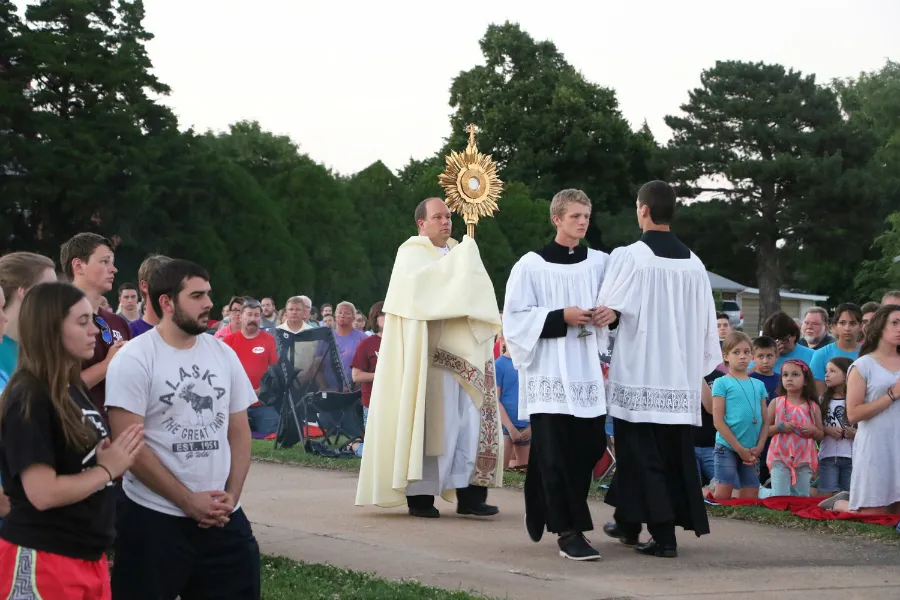
Wichita, Kan., Jul 13, 2018 / 03:04 am (CNA/EWTN News).- A Kansas-based ministry led more than a thousand people in Eucharistic adoration last week, allowing Catholics and non-Catholics to worship the Creator among the stars.

Wichita Adore Ministries hosted “Adoration Under the Stars” July 5 at the cemetery outside St. Joseph’s Catholic Church in Ost, fewer than 30 miles northwest of Wichita.

Jesse Elpers, president of WAM, said the event is a simple yet profound encounter with God.

The event ties “together the creation of God with he who created it on an altar in the middle of nowhere underneath a starlit sky,” he told CNA. “[It] has a beautiful simplicity to it.”

“If nothing else, in such a serene place like that, just to be face to face with your Lord … it’s a beautiful thing.”

An estimated 1,300 people, including 24 priests, attended the event, which also included confession and music.

Elpers said confession is one of the most important aspects of the event. More than 500 people received absolution at the event last year.

Father Dan Duling, pastor of St Joseph’s, has been at the church for the past two years. The event is important, he said, because it teaches young people the value of adoration and emphasizes the glory of God in all creation.

It’s “teaching our young people about adoration and giving them an environment [in which] they can pray and adore Jesus,” he told CNA. “I think the important thing for the people is knowing God’s presence out there in his creation and everything around us.”

The event began six years ago with just over 60 attendees and was one of the first ministries of WAM. The organization is a non-profit solely run on volunteer time.

Last year, WAM handled more than 100 events, including parish adoration and diocesan conferences. The company will also lend out production equipment to parishes to put together adoration events themselves.

Elpers said the non-profit’s mission is to lead people to encounter Christ, promoting conversion and personal engagement with the loving creator.    

“The ultimate goal of every effort we do, both in adoration events and in the production ministry, is to give each soul a chance at an encounter with Christ” he said, using adoration to bring people “face to face with the heart of the one who made [them], the heart of the one who longs for them.”

[…]

No Picture
News Briefs

Catholic Charities Hawai’i to build housing for low-income seniors

July 12, 2018 CNA Daily News 1

Honolulu, Hawaii, Jul 13, 2018 / 12:08 am (CNA/EWTN News).- The Catholic Charities Housing Development Corporation (CCHDC) recently purchased several acres of land in Kahului on the island of Maui in order to build a rental housing complex for low-income senior citizens.

They closed the deal with Alexander and Baldwin, a Hawaiian real estate company, June 27. Catholic Charities Hawai’i received 3.86 acres, but no other terms were revealed.

“We are pleased to have played a role in helping Catholic Charities Hawaii to bring more affordable housing to Maui, in particular for Maui’s seniors, who are very important to A&B,” said A&B chief real estate officer Lance Parker, as quoted in a July 10 Maui News article. “We are confident that Catholic Charities understands the needs of this special group and will provide housing that they all can truly call home.”

Called the “Kahului Lani senior affordable rental project,” the complex will have over 160 units accompanied by 260 parking stalls. The first of two building phases, it will be funded by low- income housing state and federal tax credits and a multi-family bond.

The second phase includes an 83-unit, six story complex, along with a two-story multipurpose building for Catholic Charities management offices. Construction will begin at the end of this year, and it is projected to be completed in 2020. Costs will total nearly $48 million.

Seniors ages 55 and up who “earn 60 percent or less of the county’s area median income,” according to a July 9 Pacific Business News article, are eligible to stay in the complex. The project will provide “an affordable permanent living option, offering complementary amenities” for seniors, said the Maui News.

“We are excited that this land purchase will allow us to move ahead in the development of this important facility,” CCHDC President Rick Stack said in a statement.

[…]

No Picture
News Briefs

In India, nun accuses bishop of rape

July 12, 2018 CNA Daily News 0

New Delhi, India, Jul 12, 2018 / 07:00 pm (CNA).- Authorities are investigating Bishop Franco Mulakkal of Jalandhar after a Kerala nun accused him of raping her in 2014 and sexually abusing her on multiple occasions over two years—but the bishop … […]

No Picture
News Briefs

House committee moves to protect religious adoption agencies

July 12, 2018 CNA Daily News 0

Washington D.C., Jul 12, 2018 / 04:45 pm (CNA).- The House Appropriations Committee moved to protect the conscience rights and religious freedom of faith-based adoption agencies on Wednesday.

The committee adopted an amendment to an upcoming funding bill that would preserve federal funding for agencies who do not want to place children with same-sex couples.

The amendment was introduced by Rep. Robert Aderholt (R-AL). In a statement published on his website, Aderholt said that the opioid epidemic has caused the number of foster care cases to “skyrocket,” and that religious charities are needed to assist with this crisis.

However, “several states and localities across the country are not allowing religious organizations, such as Catholic Charities and Bethany Christian services, to operate child welfare agencies,” due to their refusal to place children with same-sex couples, in accord with their religious beliefs.

Alderholt said this amendment will aim to prevent religious discrimination against those agencies. The amendment mandates that the Department of Health and Human Services withhold 15 percent of federal funds for child welfare services in states that do not allow religiously-based child welfare agencies to operate in accordance with their beliefs.

Faith-based agencies in several states have had to shut down their adoption divisions because they did not want to violate their religious beliefs.

Catholic Charities of the Boston archdiocese ceased handling adoptions in Massachusetts in 2006, a little less than two years after the state legalized same-sex marriage. Catholic Charities in California followed suit later that year. In 2011, Catholic Charities of Illinois also stopped handling adoption cases.

In Illinois, about 2,000 children were displaced when Catholic Charities shut down, forcing other agencies to take on their cases.

The city of Philadelphia is being sued by several foster mothers after it stopped working with Catholic Social Services to place foster children. While Catholic Social Services would not place children with a same-sex couple, no same-sex couple ever made a complaint about the agency before its relationship with the city was severed.

Rep. Nancy Pelosi (D-CA) accused Republicans of pushing a “bigoted, anti-LGBTQ agenda” that could result in children being without homes.

In a statement released July 11, she pledged to fight the “disgusting, deeply immoral and profoundly offensive effort,” and said there was “no place for bigotry.”

This, says Heritage Foundation Research Assistant Melanie Israel, is falsehood.

“The other side is falsely saying that this prevents LGBT couples from adopting. That’s not true,” said Israel. “They are still welcome to foster and adopt from a plethora of agencies, in particular the state-run agencies, and even some faith-based agencies. Not all faith-based agencies take issue with placing children outside of a home with a married mom and dad.”

Faith-based agencies can play a supportive role for a child’s birth-mother as well, said Israel. These women, and families that are seeking to foster and adopt, “deserve the chance to be able to work with an agency that’s going to share their faith, and their values.”

“For many birth-moms, the decision to give a child up for adoption, it’s a very loving decision, it’s a very brave decision, but it’s also very scary,” she told CNA.

A faith-based agency could provide assistance to her spiritual needs in addition to anything else that would arise during the adoption process, and could provide assurance that the child would go to a family with a similar set of values, Israel added.


[…]

No Picture
News Briefs

Venezuelan bishops say country is going in ‘suicidal’ direction under Maduro

July 12, 2018 CNA Daily News 1

Caracas, Venezuela, Jul 12, 2018 / 01:37 pm (CNA/EWTN News).- The bishops of Venezuela issued Wednesday a scathing critique of the country’s political leadership, calling for greater respect for basic needs and rights.

Since Nicolas Maduro succeeded Hugo Chávez as president of Venezuela in 2013, the country has been marred by violence and social upheaval.

“Attitudes of arrogance, authoritarianism and abuse of power, as well as the constant violation of human rights, are accumulating on their actors a rejection that future generations will claim,” the bishops said in a July 11 statement at the close of their plenary assembly.

“It is suicidal to continue stubbornly insisting on a path of self-destruction that will turn against its promoters,” they said, stressing that the Church does not endorse acts of revenge or retaliation, “but neither does it promote impunity for crimes that threaten life and fundamental rights.”

The United Nation’s human rights office said in June that Venezuelan security forces carried out more than 500 extra-judicial killings amid purported crime-fighting efforts between July 2015 and March 2017. The report highlighted the failure of authorities to hold accountable perpetrators of serious human rights violations which include killings, the use of excessive force against demonstrators, arbitrary detentions, ill-treatment, and torture.

The bishops’ statement, “Do not be afraid, I am with you,” offers an overview of the political and humanitarian crisis plaguing the country and their reaction as pastors.

The bishops said the future of the nation is at stake, and the situation is becoming “increasingly more serious.”

Citing “monstrous hyperinflation” as a key reason for much of the country’s crisis, the bishops noted that the quality of life for the majority of Venezuelans, which was “already extremely precarious, is deteriorating day by day.”

Added to shortages in food, healthcare supplies, public services such as water and electricity, which were already a cause for serious concern, are problems with personal safety, employment, the circulation and sale of cash, and problems with public transport.

With most methods of public transport disappearing from the streets, citizens have created their own means getting around, packing themselves into overflowing truck beds or holding onto cage-looking structures on the back of large lorries, causing an increase in traffic accidents and deaths.

Poor economic policies, including strict price controls, coupled with high inflation rates, have resulted in a severe lack of basic necessities such as toilet paper, milk, flour, diapers and medicines.

Venezuela’s socialist government is widely blamed for the crisis. Since 2003, price controls on some 160 products, including cooking oil, soap and flour, have meant that while they are affordable, they fly off store shelves only to be resold on the black market at much higher rates.

In  2017, Maduro announced plans to re-write the country’s constitution, a decision that was widely opposed by citizens and the Church. Millions of people turned out to protest in the lead-up to a July 30, 2017, nation-wide election which approved a constitutional assembly to reform the country’s 1999 constitution.

In their statement, Venezuela’s bishops pointed to the ongoing political crisis the country is facing, saying the primary cause for their woes is the national government, “for putting its political project over any other consideration, including the humanitarian.”

They also criticized the government for “erroneous” financial policies, for its “contempt for productive activity and for private property and for its constant attitude of placing obstacles in the way of those who want to resolve some aspect of the current problem.”

The government is playing the victim in both internal and external ways, they said, explaining that this is “nothing more than the confession of their own inability to manage the country. One cannot pretend to resolve the situation of a failed economy with emergency measures such as food bags and bonuses.”

Elections held in May, which many Venezuelans, including the bishops, protested as illegitimate, has only cemented the current government’s hold on power, rather than leading to legal and democratic presidential elections, they said, noting that the boycott by high numbers of the population is a “silent message of rejection” toward a regime that seeks to impose “a totalitarian ideology.”

Calling Venezuela’s National Constituent Assembly “illegitimate,” the bishops said the entity violates “the most sacred rights of the Venezuelan people: the fundamental freedom to elect their own leaders in a fair electoral competition” without manipulation or favoritism.

Bishops said they live under a “de facto regime” which does not live by the constitution, and stressed the need for national leadership which puts people and ethics at the center, rather than power, control, or the pursuit of “petty interests.”

They also pointed to the growing Venezuelan diaspora throughout the world, mostly in neighboring Latin American countries, who risk trafficking and often struggle to integrate into their new countries. The Unied Nations Refugee Agency recently estimated that 5,000 Venezuelans emigrate daily.

Noting the high numbers of youth who have left, bishops said their absence is a loss of “human talent” for the country and of hope for the future.

However, the bishops stressed that  “God guides his people from slavery to freedom, but he also educates them, through trials and hardship, so that it reaches the necessary maturity as a nation.”

They urged citizens to pray, saying no prayer or sacrifice is useless, even if the result is not immediately seen.

In the midst of the crisis, the Church, they said, has en evangelic task of looking after the interests of the people.

They stressed that the Church is not a substitute for political leaders, and does not wish to “dominate the social panorama, nor to become a factor of government or opposition.”

“However, it encourages the duly educated and aware laity of their citizens’ rights and obligations to make their voices heart and to actively intervene in the political arena, so that the high principles and values that the Christian faith transmits to us can also be lived in the scope of the public and translate into works of common good.”

The bishops invited members of civil society to look for creative solutions to the crisis, urging citizens not to grow accustomed to living in “humiliating” conditions, and to be active in using every means possible to return power to the people.

Addressing the Venezuelan armed forces, bishops urged them to be faithful to their oath before God and homeland to “defend the constitution and democracy, and not to be carried away by political and ideological bias.”

They also advocated for greater solidarity on the part of parishes and ecclesial institutions in keeping with the Church’s social doctrine, despite the difficulties. The Church community, they said, is called “to promote a structural change in favor of the transformation of our society.”

“We must never be discouraged in front of the challenges of an uncertain and difficult present,” they said. “On the contrary, we place our trust in God, who gives us the strength to bear witness and to do good, and we strengthen the demands in favor of justice and freedom.”

[…]