No Picture
News Briefs

Pittsburgh bishop says not all grand jury accusations are ‘substantiated’

August 13, 2018 CNA Daily News 1

Pittsburgh, Pa., Aug 13, 2018 / 09:30 am (CNA).- Bishop David Zubik of Pittsburgh has confirmed that some of the priests named in the Pennsylvania grand jury report into sexual abuse remain in active ministry. The report is expected to be released at 2pm on Tuesday, August 14.

Bishop Zubik made the announcement while speaking to the Pittsburgh Post-Gazette on August 10. At the same time, the bishop stressed that there is “no priest or deacon in an assignment today against whom there was a substantiated allegation of child sexual abuse.” He also pledged to meet with parishioners in the days following the report’s release to underscore how and why an allegation was found to be unsubstantiated.

Canon law provides that, whenever an allegation of sexual abuse of a minor is received by diocesan authorities, the bishop is obligated to hold a preliminary investigation to determine if there is a “semblance of truth” to the claim. This standard, canon lawyers say, is minimal and only determines if the accusation is not “manifestly false or frivolous.”

If the accusation is not demonstrably false, the case is sent to Rome for further consideration at the Congregation for the Doctrine of the Faith, who determine how the canonical process should proceed.

While Bishop Zubik said he would not comment on specific individuals or allegations until the report was released, he underscored that all those priests still in active ministry named in the report had had their cases re-examined by the diocese’s independent review board – in each case finding the accusations remained unsubstantiated.

Seeking to illustrate that some claims could simply be false, Zubik made reference to his own experience. In 2011, he said, a man accused him and several others of past sexual abuse after being denied a parish volunteering position because of his criminal record. Local law enforcement, the diocesan review board, and Vatican authorities were all informed.

Fortunately for the bishop, the accuser had previously sent him an email threatening retaliation. The local district attorney investigated and dismissed the allegations, calling them “offensive.” 

In that case, it was fortunate that there was clear evidence of malicious intent by the accuser but, as Zubik pointed out, that was not always the case.

“I often say to myself, ‘What if that email wasn’t there?’” he told the Post-Gazette. Without such clear proof it would have been a matter of I-say-he-says and Zubik said he “could swear on a stack of Bibles I didn’t do what I was charged with” but it might not have been enough to stop a presumption of guilt.

“Maybe that’s where my sensitivity comes to people who have been accused, to say just because somebody’s been accused doesn’t necessarily mean they’re guilty.”

Zubik also pointed out that it was not always easy to come to a firm assessment of an allegation.

“What if the activity that was reported was not child sexual abuse? Or what if it was by third-hand source, and with every effort to try to reach out to the victim, the victim never came forward? Well, how could you see that as substantiated?”

The bishop’s remarks echo concerns raised by some of those named in the report, who have challenged their inclusion in the final publication, saying that they have been denied due process of law and risk permanent damage to their reputations. The Pennsylvania Supreme Court agreed, delaying publication and ordering the names of those appealing to be redacted while they hear further legal arguments.

The report, due to be released tomorrow afternoon, was initially scheduled for publication in June, but was delayed following legal challenges by some of those named in it.

It is not known if any of the Pittsburgh priests referred to by Zubik have participated in the legal appeals which have delayed the release of the report.

[…]

No Picture
News Briefs

Teens are requesting plastic surgery to look like Snapchat filters

August 12, 2018 CNA Daily News 0

Boston, Mass., Aug 12, 2018 / 04:56 pm (CNA).- Social media is increasingly making teens dissatisfied with their appearance and obsessed with achieving a filtered version of “perfection,” even going so far as to pursue plastic surgery, say medical professionals.

Dr. Neelam Vashi, director of Ethnic Skin Center at Boston University’s School of Medicine, published an article analyzing the new trend in Jama Facial Plastic Surgery last week.

“A new phenomenon, dubbed ‘Snapchat dysmorphia,’ has patients seeking out cosmetic surgery to look like filtered versions of themselves…with fuller lips, bigger eyes, or a thinner nose,” she said.

Among Snapchat’s more popular features are its facial filters, which change users’ appearance in a phone camera. New filters are offered regularly. Some change a person’s face to look like animals, superheroes, or inanimate objects. Others create a more subtle, modified version of the users themselves – smoothing their skin, whitening their teeth, narrowing their face, enhancing their lips and eyes.

Before photo-editing was readily available for the public to use, Vashi wrote, people idolized the often-unrealistic beauty of celebrities, who were the only people with easy access to photo-editing technology.

But now that the general public has access to this technology, she said, it has altered their expectations of beauty. Instead of bringing photos of celebrities to plastic surgery consultations, patients are bringing in pictures of themselves, with specific angles or lighting.

“I just see a lot of images that are just really unrealistic, and it sets up unrealistic expectations for patients because they’re trying to look like a fantasized version of themselves,” she told Inverse.

According to the American Academy of Facial Plastic and Reconstructive Surgery, more than half of clinicians in 2017 saw patients asking to “look better in their selfies.”  

Dr. Laura Cusamano, a postdoctoral fellow at Potomac Behavioral Solutions in Arlington, Va., works with patients struggling with body image and has seen the same trend. She said the idealization of celebrities has morphed into users of social media idealizing altered images of themselves.

“In recent decades, American media has propagated a distorted view of beauty, privileging certain body types, skin tones, hair colors, and facial features. Beauty ideals have come in the form of celebrities, whose ‘perfect’ images are often Photoshopped,” she told CNA.

“With the advent of social media, the ability to alter one’s appearance is literally at one’s fingertips. Applications like Snapchat provide the opportunity for users to discover the ‘perfect’ image of themselves to share with their peers and the world.”

Cusamano voiced concern that Snapchat Dysmorphia may lead young people to compare their bodies not only with digitally altered images of themselves, but also with similar images of family and friends. This could lead to eating disorders, self-esteem problems, and other issues, she said.

She also worries that the new trend may push ill individuals further into Body Dysmorphic Disorder, a condition related to Obsessive-Compulsive Disorder in which individuals suffer from “excessive preoccupation with perceived defects or flaws in their physical appearance.”

“They become obsessed with what they consider to be imperfections, and they often spend a great deal of time trying to examine, improve, or mask their supposed flaws,” she said. The disorder is associated with anxiety and depression, as well as shame and low self-esteem.

Cusamano said nearly 75 percent of people with the disorder seek surgery, cosmetic treatment, and dermatological work. She said these individuals may also encounter suicidal ideation.

When asked about how to correct this trend of Snapchat Dysmorphia, she said people should pay attention to how social media is affecting their life, noticing whether they find themselves becoming jealous of other users.  

People may need to take a temporary break from social media or follow accounts designed to spread positive messages about the human body, she said.

Cusamano also stressed the importance of recognizing the dignity of the human person.

“Remembering that you are created in the image and likeness of God and asking God to help you see yourself as He sees you is a wonderful way to work on transforming your self-image,” she said.


[…]

No Picture
News Briefs

Chile’s military diocese raided in abuse investigation

August 11, 2018 CNA Daily News 1

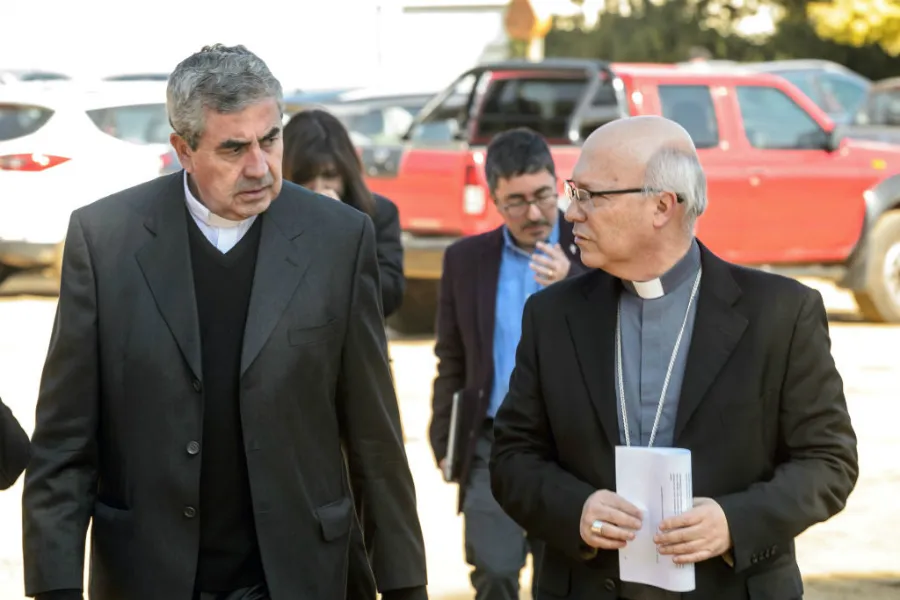
Santiago, Chile, Aug 11, 2018 / 06:01 am (ACI Prensa).- Police seized documents and equipment from the office of the bishop of Chile’s military diocese Thursday as part of an investigation into accusations that Church officials in the country covered up clerical sexual abuse.

Personnel from Chile’s Carabineros arrived at the headquarters Aug. 9 in Santiago with a court order from the O’Higgins Regional Prosecutor’s Office. The offices of eight senior Church officials have been raided as part of the investigation, according to Reuters.

Chile’s military diocese was led from 2004 to 2015 by Bishop Juan de la Cruz Barros Madrid. Attention to clerical sex abuse has heightened since Bishop Barros’ 2015 transfer to the Diocese of Osorno. Barros had been accused of covering up abuses committed by Fr. Fernando Karadima, who was convicted by the Congregation for the Doctrine of the Faith in 2011 of abusing minors.

In a statement, the military diocese said it turned over the requested documents and equipment and expressed its willingness to cooperate in the investigative process “in everything that is required.”

According to the Public Prosecutor’s Office, prosecutor Mariano Arias ordered the raid because the investigations “indicate that a cover-up by the military diocese may have been committed”, considering that the head of this office must report these incidents in his capacity as a public official of the armed forces.

The raid was authorized by the Chilean defense minister and the commander-in-chief of the armed forces.

Bishop Santiago Jaime Silva Retamales of the military diocese was outside Chile at the time of the raid. Bishop Silva is also head of the Chilean bishops’ conference.

As part of the investigation, the Rancagua Regional Prosecutor’s Office summoned Cardinal Ricardo Ezzati Andrello of Santiago to testify Aug. 21 concerning his possible responsibility for the crime of cover-up in cases of sexual abuse and the abuse of power and conscience.

On Aug. 9, the Archdiocese of Santiago reported that Cardinal Ezzati will be hospitalized for two days for a routine checkup following the insertion of a pacemaker in March.

On June 13 and July 12 the O’Higgins Regional Prosecutor’s Office seized documents of the Diocese of Rancagua and the Santiago archdiocese respectively in the process of this investigation.

Other dioceses, including Villarica and Temuco, also were the target of orders to seize their files as a result of the investigations being conducted on sexual abuse. Files from the Archdiocese of Santiago have been seized on two occasions.

On Aug. 9, the Diocese of Talca reported a new complaint of sexual abuse against Fr. Luciano Arriagada Vergara, who was in charge of the diocesan youth ministry.

Following the accusation, a preliminary investigation was initiated in order to determine the credibility of the allegation. A complaint was also filed with the regional prosecutor’s office.   

The diocese stated that while this process is going on, the accused is barred from the public exercise of priestly ministry.

This article was originally published by our sister agency, ACI Prensa. It has been translated and adapted by CNA.

[…]

No Picture
News Briefs

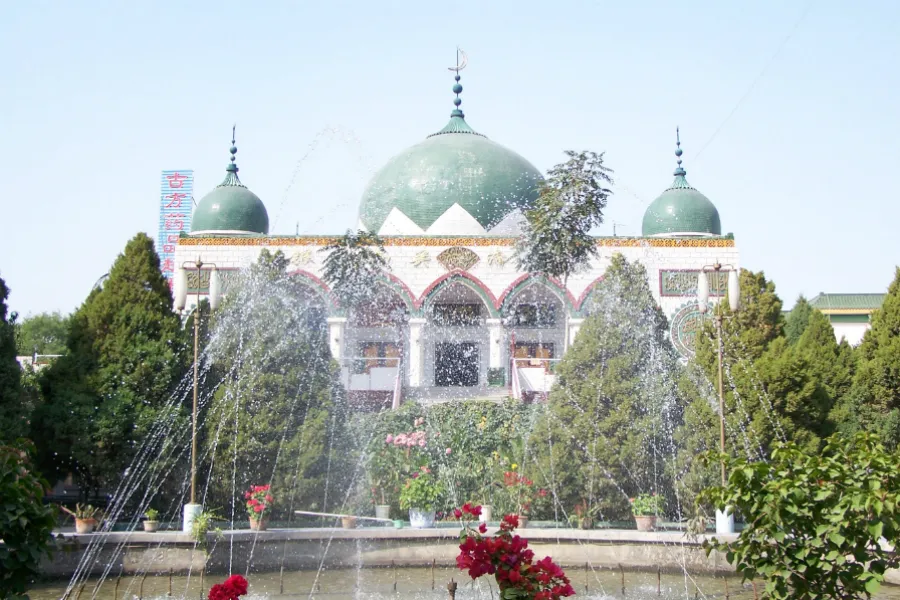
Chinese region sought to demolish mosque amid crackdown on religion

August 10, 2018 CNA Daily News 0

Yinchuan, China, Aug 10, 2018 / 04:01 pm (CNA/EWTN News).- Officials in an autonomous region of northwest mainland China intended to demolish a mosque on Friday, but were met by hundreds of protesters. The move comes amid a nation-wide effort to clamp down on free religious expression.

Due to the protests, the local government has agreed not to demolish the mosque, but does insist on remodelling it in a more Chinese, and less Arabic, style, according to Nectar Gan of the South China Morning Post, a Hong Kong daily.

Officials had said Aug. 3 that the mosque would be demolished, on the grounds that it has not been granted the proper planning and construction permits. Protesters gathered in the mosque Aug. 9-10 to prevent its destruction.

Construction of the mosque had taken two years, and was not stopped by government officials.

The Weizhou Grand Mosque is located in Ningxia Hui Autonomous Region, more than 100 miles south of Yinchuan. Ningxia is a region set up for the Hui people, a Muslim ethnoreligious group.

The US Commission on International Religion wrote in its 2018 report that last year China “advanced its so-called ‘sinicization’ of religion, a far-reaching strategy to control, govern, and manipulate all aspects of faith into a socialist mold infused with ‘Chinese characteristics.’”

Christians, Muslims, Tibetan Buddhists, and Falun Gong practitioners have all been affected.

Earlier this year, widespread rumors suggested that the Vatican and the Chinese government were on the verge of regularizing the status of the Church in China and ending the split between the state-sponsored Chinese Patriotic Catholic Association, whose leaders include illicitly-consecrated bishops, and the underground Church.

In Ningxia, sinicization has meant the removal from buildings of Islamic icons and Arabic signs, the South China Morning Post reported, as well as the removal of domes from mosques.

After scrapping the plan to demolish Weizhou mosque, officials first called for its domes to be replaced with pagodas, then for the removal of eight of its nine domes. Both have been rejected by the Hui.

Many mosques in Ningxia had been built in a Chinese style, but were destroyed during the Cultural Revolution of Mao Zedong. They have increasingly been replaced by more Arabic-looking buildings.

In neighboring Gansu province, local officials in Linxia banned children in January from attending religious events during winter break. Many Hui also live in Gansu.

In July, AFP reported that Communist Party officials in Linxia had banned children under 16 from religious activity or study. They have also restricted the number of students over 16 allowed to study at mosques and the certification process for new imams. Mosques have been instructed to display the Chinese flag and not to transmit calls to prayer.

“They want to secularise Muslims, to cut off Islam at the roots,” an imam told AFP. “These days, children are not allowed to believe in religion: only in Communism and the party.”

The AP reported in May about the existence of re-education camps for Muslims in Xinjiang Uyghur Autonomous Region. The region, which borders Gansu’s west, is home to the Uyghurs, another Muslim ethnoreligious group.

According to the AP, authorities in Xinjiang “have ensnared tens, possibly hundreds of thousands of Muslim Chinese – and even foreign citizens – in mass internment camps.”

A UN human rights committee heard Aug. 10 that these camps hold more than 1 million Uyghurs.

In August 2014 officials in Karamay, a city of Xinjiang, banned “youths with long beards” and anyone wearing headscarves, veils, burqas, or clothes with the crescent moon and star symbol from using public transit. That May, universities across the region banned fasting during Ramadan.

Chinese president Xi Jinping announced in October 2017 that he wants to tighten Beijing’s strict government controls on religion. At the National Congress of the Communist Party, he said religions not sufficiently conformed to communist ideals pose a threat to the country’s government, and therefore must become more “Chinese-oriented.”

In March 2018 the Chinese Communist Party became directly responsible for government oversight of religion.

Catholics and other Christians have had their church buildings demolished in numerous Chinese provinces in recent years, including Shandong, Henan, Zhejiang, and Shaanxi.

On March, Bishop Vincent Guo Xijin, who ministers to the underground Church, loyal to Rome and not the state, was detained for refusing to concelebrate a Chrism Mass with an illicitly consecrated, state-backed bishop. He was then released but forbidden from celebrating his own Chrism Mass.

[…]