No Picture
News Briefs

China criticized for repression of Muslim ethnic group

September 25, 2018 CNA Daily News 0

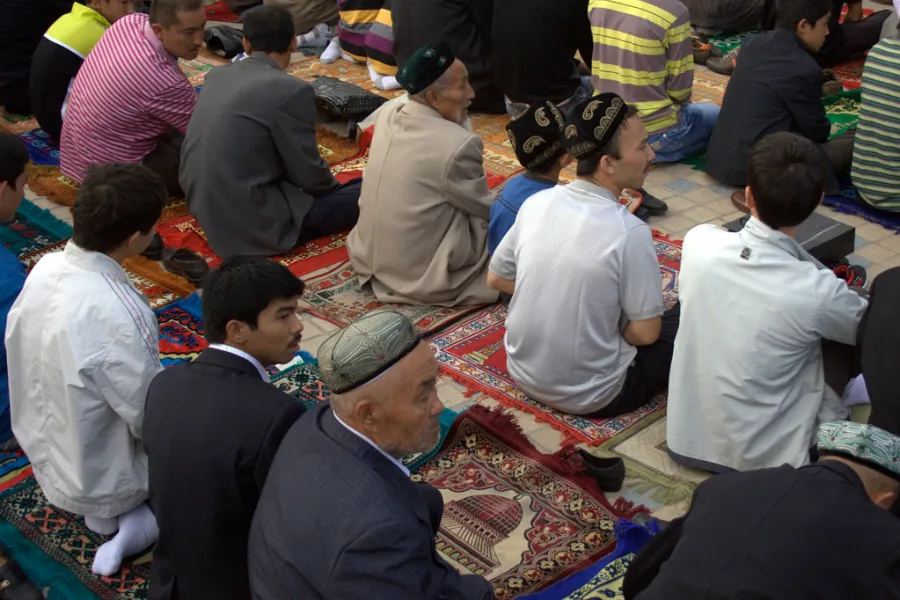
Urumqi, China, Sep 25, 2018 / 06:01 pm (CNA/EWTN News).- U.S. Secretary of State Mike Pompeo on Sept. 21 joined voices from Pakistan and around the world in denouncing Chinese repression against a Muslim minority, as China continues to put pressure on almost all religions within its borders.

Uyghurs are a Turkic-speaking ethnic minority that mainly inhabit the vast Xinjiang Uyghur Autonomous Region. The advocacy group Uyghur Human Rights Project estimates that approximately ten percent of the Uyghur population, or some 1 million individuals, are being extrajudicially detained in a system of internment camps.

While also mentioning his concern for Christians in China amid a recent intensifying of governmental repression, Pompeo decried the treatment of the Uyghurs by Chinese authorities.

“Their religious beliefs are decimated,” Pompeo said.

An Aug. 13 report from the United Nations detailed the violent crackdowns on members of the minority in Xinjiang, which China claims is not based upon religion but rather in response to terrorism threats in general. According to the BBC, violence in the region escalated in the 1990s and again in 2008.

“In the name of combating ‘religious extremism’ and maintaining ‘social stability’…China had turned the Xinjiang Uyghur Autonomous Region into something that resembled a massive internment camp shrouded in secrecy, a ‘no rights zone’,” the report states.

“[M]embers of the Xinjiang Uyghur minority, along with others who were identified as Muslim, were being treated as enemies of the State based on nothing more than their ethno-religious identity.”

Authorities in Pakistan, China’s closest ally in the Muslim world, also warned against escalating persecution of the Uyghurs.

Noorul Haq Qadri, Pakistan’s Federal Minister for Religious Affairs and Inter-faith Harmony, advised Chinese Ambassador Yao Jing that Beijing’s crackdowns on Uyghur activity would only fuel extremism rather than mitigate it.

The Chinese ambassador reportedly promised that his government would allow a Pakistani delegation of religious scholars to visit Xinjiang, according to Pakistani media.

The Chinese government, led by President Xi Jinping, has made numerous moves recently to curb religious freedom in the country, including the demolishing of Christian churches and sending Muslims to so-called “reeducation camps” for offenses as minor as wearing beards, veils and other distinctive markers of Islam. In September, the government made it illegal for any religious prayers, catechesis, or preaching to be published online.

The US Commission on International Religion wrote in its 2018 report that last year China “advanced its so-called ‘sinicization’ of religion, a far-reaching strategy to control, govern, and manipulate all aspects of faith into a socialist mold infused with ‘Chinese characteristics.’”

Christians, Muslims, Tibetan Buddhists, and Falun Gong practitioners have all been affected.

The Holy See signed a deal with Beijing Sept. 22 to give the Chinese government some power over episcopal appointments in exchange for bringing the underground Church above ground, ending the split with the state-sanctioned Chinese Patriotic Catholic Association.

[…]

No Picture
News Briefs

Cardinal Marx apologizes for sex abuse by clerics in Germany

September 25, 2018 CNA Daily News 4

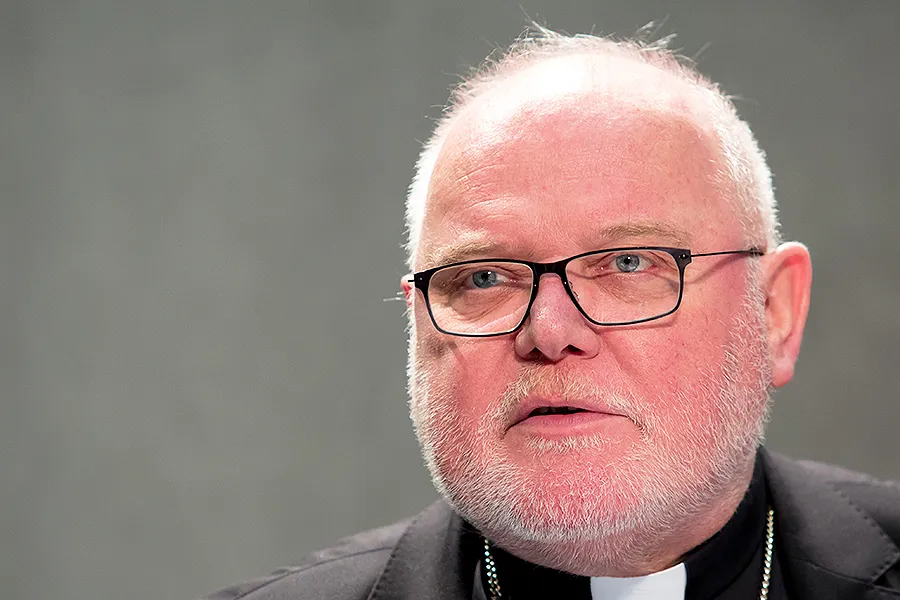
Fulda, Germany, Sep 25, 2018 / 04:51 pm (CNA/EWTN News).- Cardinal Reinhard Marx of Munich and Freising, chairman of the German bishops’ conference, personally apologized Tuesday for “failure and pain” following an extensive report that German clergy had abused thousands of children between 1946 and 2014.

“For too long in the church we have looked away, denied, covered up and didn’t want it to be true,” said Cardinal Marx at a news conference in Fulda, as reported by Reuters. “For all the failure, pain and suffering, I must apologize as the chairman of the Bishops’ Conference as well as personally.”

“Those who are guilty must be punished,” he added.

The report detailing the abuse in Germany was leaked to the German press Sept. 12.

The report, commissioned by the German bishops in 2014 and officially released Sept. 25, found allegations against 1,670 German clerics, or “4.4 percent of all clerics from 1946 to 2014 whose personnel records and other documents were reviewed in the dioceses.” Nearly 63 percent of the 3,677 alleged victims were male.

According to the German bishops’ conference, the aim of the study, in which all 27 dioceses of Germany took part, was “to obtain more clarity and transparency about this dark side in our church, not only for the sake of those affected, but also in order to be able to see the misdemeanours for ourselves and do everything possible to ensure that they do not repeat themselves.”

[…]

No Picture
News Briefs

Pope Francis takes responsibility for China deal

September 25, 2018 CNA Daily News 0

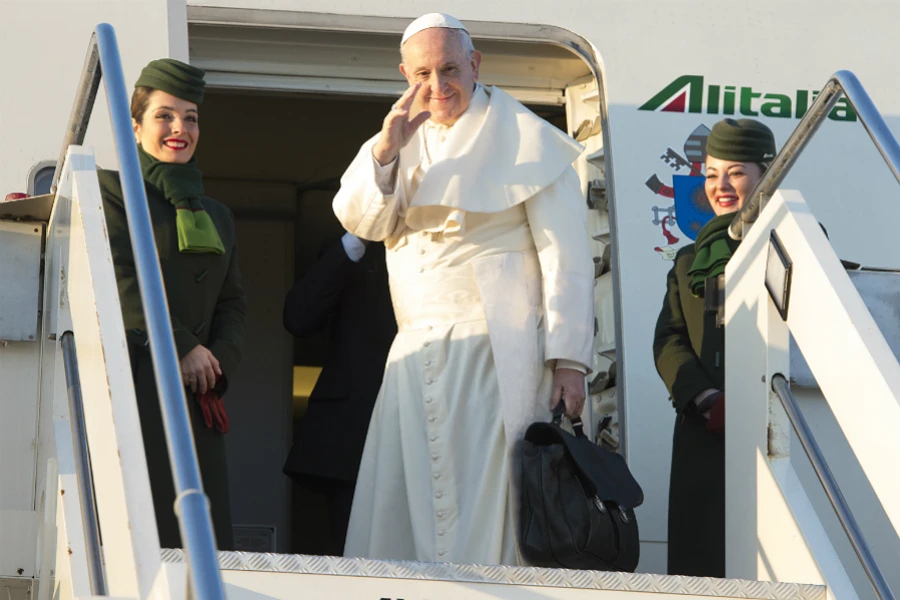
Aboard the papal plane, Sep 25, 2018 / 03:06 pm (CNA/EWTN News).- Pope Francis took responsibility Tuesday for the agreement between the Holy See and the People’s Republic of China, noting that in any such negotiation, “both sides lose something.”

He was asked about the agreement Sept. 25 during the flight from Tallinn to Rome by Antonio Pelayo of Vida Nueva.

The agreement on the appointment of bishops in mainland China was signed Sept. 22 in Beijing. It will allow for bishops who are in communion with the Holy Father and at the same time are recognized by the Chinese government.

Francis said the agreement was the fruit of a dialogue that has taken several years.

“The Vatican team worked a lot,” he said. He noted the efforts of Archbishop Claudio Maria Celli, president emeritus of the Pontifical Council for social Communications; Fr. Rota Graziosi, an official of the Roman curia; and Cardinal Pietro Parolin, the Vatican Secretary of State.

Cardinal Parolin, he said, “has a special devotion to the lens; he studies all of the documents down to the period, comma, notes, and this gives me a great assurance.”

“You know that when you make a peace agreement or a negotiation, both sides lose something,” Pope Francis reflected. “This is the law. Both sides. And you move ahead.”

The Bishop of Rome said that the dialogue which led to the agreement was a process of going two steps forward and one step back. “Then, months passed without speaking to each other and then the time of God, which appears to be [the time of the] Chinese. Slowly. This is wisdom, the wisdom of the Chinese.”

He said that “the bishops who were in difficulty were studied case-by-case,” and that “dossiers came on to my desk about each one. And I was responsible for signing the case of the bishops.”

Following this, drafts of the agreement were put on his desk, Pope Francis said. They were discussed and “I gave my ideas.”

“I think of the resistance, the Catholics who have suffered. It’s true. And they will suffer. Always, in an agreement, there is suffering. They have a great faith.”

He said they have written him, saying that “what the Holy See, what Peter says, is that which Jesus says. The martyrial faith of these people today goes ahead. They are the great ones!”

“I signed the agreement,” Pope Francis stated. “I am responsible.”

“The others, whom I appointed, in all have worked for more than 10 years. It’s not an improvisation. It’s a path, a true path.”

He noted that after a “famous communique of an ex-apostolic nuncio, the episcopates of the world wrote me, saying clearly that they felt close, that they were praying for me.”

“The Chinese faithful wrote and the signature of this writ was from a bishop, let’s say it this way, of the traditional Catholic Church and from a bishop of the patriotic Church, together and faithful, both of them. For me, it was a sign from God,” Pope Francis stated.

The pope also recalled, saying “thanks be to God that this is over”, that in Latin America “for 350 years it was for the king of Portugal and of Spain to appoint the bishops, and the Pope only gave jurisdiction.”

“We forget the case of the Austro-Hungarian Empire: Maria Teresa was tired of signing the appointments of bishops and gave jurisdiction to the Vatican. These were other times, and thanks be to God that they aren’t repeated.”

He stated that under the agreement with China, the Chinese government will not appoint the bishops: “No, this is a dialogue about eventual candidates but Rome appoints, the Pope appoints.”

“And let us pray for the suffering of some who don’t understand, and who have behind them so many years of being clandestine.”

Announcing the deal on Saturday, the Holy See had said that “the shared hope is that this agreement may favor a fruitful and forward-looking process of institutional dialogue and may contribute positively to the life of the Catholic Church in China, to the common good of the Chinese people and to peace in the world.”

Beijing established the Chinese Patriotic Catholic Association in 1957 to regulate Catholics living in China, and Catholics in the country have been divided between members of the patriotic Church and the “underground Church”.

The agreement between the Holy See and the People’s Republic is meant to end the split between the patriotic and underground Churches.

The Chinese Catholic Patriotic Association is under the day-to-day direct supervision of the Chinese Communist Party since a March 2018 decision by which the Chinese government shifted direct control of religious affairs to the Chinese Communist Party’s United Front Work Department.

In recent years, Chinese authorities have cracked down on underground Christian churches, as well as on Muslims throughout western provinces.

[…]

No Picture
News Briefs

Catholics in DR Congo continue to press for credible elections

September 25, 2018 CNA Daily News 0

Kinshasa, Democratic Republic of the Congo, Sep 25, 2018 / 12:44 pm (CNA/EWTN News).- As the Democratic Republic of the Congo prepares to hold a general election in December, after a two-year delay, Catholics in the capital continue to be activists to encourage a peaceful transition of power.

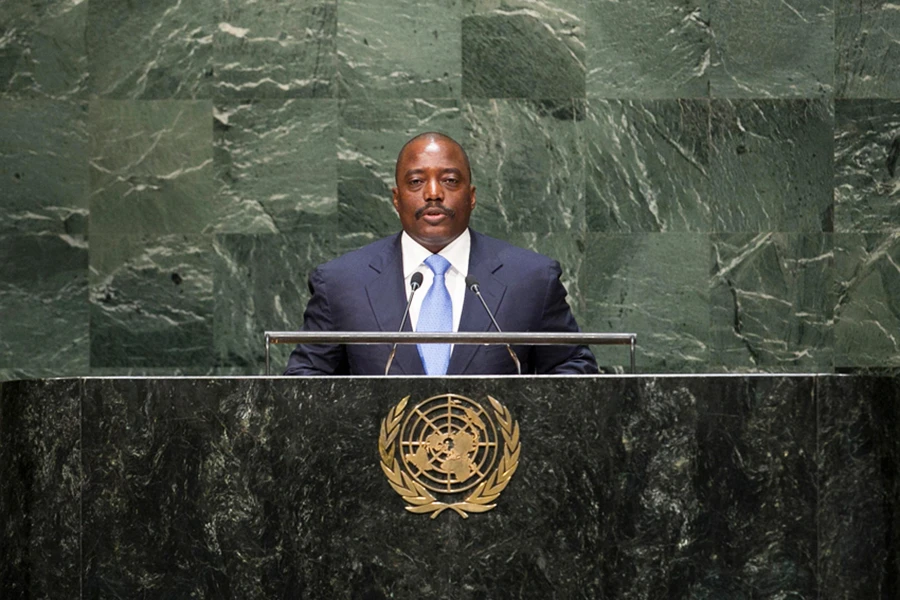
Last month president Joseph Kabila announced he would step down after 17 years in power. The announcement follows years of protests, supported by Catholics bishops, against the delaying of elections.

Kabila has been ruling in defiance of term limits, remaining president two years after he was required to leave office in 2016.

General elections have been scheduled for Dec. 23.

A Mass was held in Kinshasa’s Our Lady of the Congo Cathedral Sept. 19 to commemorate those who died in protests against Kabila in 2016.

The Catholic Lay Committee, a group of lay Catholic activists, organized three protests calling for Kabila to step down after an earlier cancellation of general elections.

Isidor Ndaywel, a member of the group, told La Croix earlier this month that “Kabila’s decision not to stand for a third term was, without doubt, influenced by the church.”

Hesitations about the legitimacy of the scheduled elections remain. The Congolese bishops wrote to the UN Security Council last month with concerns, including the electoral commission’s decision not to allow some opposition parties’ candidates to stand; irregularities of electoral rolls; and the reliability of electronic voting machines.

In early August, security forces fired on opposition protesters with live ammunition and teargas during candidate registration.

The bishops have also appealed to the South African Development Community to help ensure free elections.

Jonas Tshiombela, a spokesman for the Catholic Lay Committee, said that “we want the pre-electoral environment to be safe enough before going to the December vote,” Voice of America reported Sept. 23.

“For now, it is not the case. The contest is filled with uncertainties and irregularities and under such conditions a credible and fair election can’t be held. This the main point of our fight

The Congolese government has accused both the bishops and western governments for interfering in domestic politics.

Both the bishops and lay people alike have been very outspoken critics of Congolese political corruption. The Catholic leadership previously negotiated agreements between Kabila and the opposition, and then actively supported the protests against Kabila when he broke the agreement’s terms.

The Catholic Church is well-respected in the DRC and Catholics make up about 40 percent of the country’s population. Catholic clergy in the Congo are known for courageously standing up to corrupt leaders, such as Mobutu Sese Seko, the DRC’s military dictator from 1965 to 1997.

An estimated five million people were killed between 1997 and 2003 in ethnic violence in the Democratic Republic of Congo under Joseph Kabila’s father, Laurent Kabila, who violently overthrew Mobutu. Joseph Kabila took power in 2001 at age of 29 after the assassination of his father.

[…]